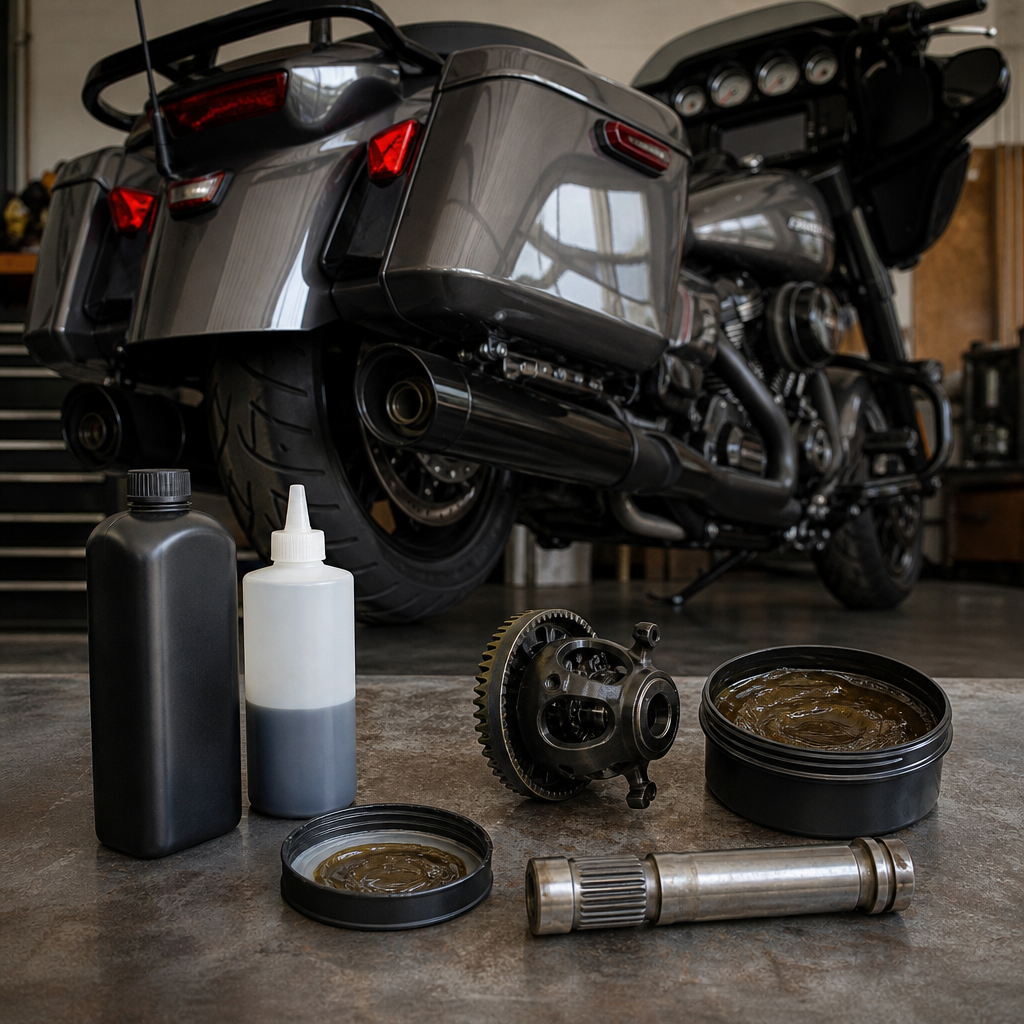
The 2026 Road Glide 3 de Dion suspension lube recipe is a practical service topic with broader importance for anyone maintaining Harley-Davidson trikes, because lubrication choice directly affects ride quality, component life, corrosion resistance, and the consistency of the 2027 service interval. In plain terms, a lube recipe is the exact combination of grease type, application points, cleaning method, quantity, and inspection steps used during maintenance. On the Road Glide 3, that matters more than many riders expect. The de Dion rear suspension layout uses a rigid cross-member arrangement that controls wheel relationship differently than a conventional independent rear system, so bushings, pivot points, fasteners, and protective surfaces all see specific loading patterns. If lubrication is too thin, it washes away. If it is too heavy or incompatible with seals, it can trap grit or degrade elastomers. Either mistake shortens service life.
I have serviced touring Harleys and trikes long enough to know that owners often ask the same questions: What lubricant should I use, where exactly should it go, how much is enough, and what changes for the next model-year service cycle? Those are the right questions. This hub article answers them while also framing the bigger topic of model-specific ergonomics and performance recipes. On a Harley-Davidson, a recipe is not just a fluid list. It is a repeatable setup method tailored to one machine and one use case, such as long-distance touring, urban riding, two-up travel, hot-weather operation, or wet-climate storage. For the 2026 Road Glide 3, the suspension lube recipe sits at the center of that approach because rear-end behavior influences comfort, steering confidence, tire wear, braking stability, and the rider’s perception of seat and floorboard ergonomics.
This page is designed as the hub for the wider subtopic because the Road Glide 3 is a machine where maintenance and ergonomics overlap. A trike that binds at the rear suspension can feel harsher through the seat, less predictable over expansion joints, and more fatiguing during long days. A correctly serviced de Dion system tracks cleanly, resists squeaks and corrosion, and helps the chassis respond the way Harley-Davidson intended. That is why the 2027 service conversation begins with lubrication discipline rather than bolt-on parts. Riders often spend money on shocks, seats, bars, and tires before confirming that the factory mechanical interfaces are clean, protected, and operating smoothly. In my experience, that sequence is backwards.
Before going further, one important point needs to be clear: always confirm the latest Harley-Davidson service literature, torque specifications, and approved lubricant categories for your exact VIN and production date. Model-year naming does not replace official service documentation. Still, the underlying principles are consistent. Suspension lubrication on a Road Glide 3 should prioritize load-carrying ability, water resistance, oxidation stability, and compatibility with painted, plated, and rubber-adjacent surfaces. A quality NLGI 2 lithium-complex or calcium-sulfonate-complex grease with strong anti-corrosion performance is usually the right starting category for exposed chassis points, while anti-seize belongs only on specific threaded interfaces where the manual allows it. Spray lubricants have a place for cleaning and light protection, but they are not a substitute for proper grease film on loaded contact areas.
Understanding the de Dion system and why lubrication affects performance
The de Dion design links the rear wheels with a rigid member while allowing suspension movement relative to the chassis. On a touring trike, this layout helps preserve wheel geometry and supports predictable tracking under load. The practical takeaway is simple: several interfaces work hard every mile, especially when the trike carries a passenger, luggage, or accessory trunk weight. Bushings can compress, sleeves can fret, and road splash can push contaminants into areas that look sealed but are not immune to moisture. Lubrication is not cosmetic here. It is a functional barrier against metal-to-metal wear and environmental attack.
From a rider’s perspective, poor lubrication often shows up as secondary symptoms rather than an obvious failure. The rear of the trike may feel busy over sharp pavement edges. Low-speed transitions can produce creaks. The chassis can develop a slightly resistant feel after wet riding and storage, especially if the machine is used near coastal air or salted roads. I have also seen neglected rear interfaces contribute to uneven tire behavior because friction in pivoting components changes how loads transfer across the rear assembly. Lubrication will not correct misalignment or worn parts, but it prevents healthy parts from degrading prematurely.
This also connects directly to ergonomics. Riders describe suspension issues in body terms: tailbone impact, lower-back fatigue, passenger complaint, or pressure through floorboards. That language matters because many service writers hear an ergonomic complaint and assume the solution is a comfort accessory. Sometimes it is. But on the Road Glide 3, restoring free and protected suspension movement can materially improve comfort without changing the seat, bars, or pegs. That is why a lube recipe belongs in any serious performance and ergonomics discussion.
The 2026 lube recipe that sets up a clean 2027 service
A sound 2026 Road Glide 3 de Dion suspension lube recipe starts with inspection and cleaning, not grease application. Raise and secure the trike according to shop-safety procedure, remove road grime with a non-chlorinated cleaner, and dry the work area completely. Inspect for torn boots, cracked bushings, witness marks around pivot sleeves, corrosion bloom on fasteners, and any sling pattern that suggests previous over-application. Grease spread across nearby surfaces usually means someone used too much or the wrong product. Loaded chassis points need a controlled film, not a mess.
The core grease category should be a premium water-resistant chassis grease, ideally lithium-complex or calcium-sulfonate-complex, NLGI 2, with EP additives. Examples in the broader market include Mobilgrease XHP 222, Chevron Delo Heavy Duty EP 2, and Mystik JT-6 Hi-Temp. Those products are known for mechanical stability and washout resistance, both relevant on a touring trike exposed to rain, heat, and storage swings. For approved threaded areas where galling or corrosion is a concern, a nickel or aluminum anti-seize may be appropriate, but only where specified; anti-seize is not a universal substitute for grease. For exposed non-load-bearing surfaces, a light corrosion inhibitor such as ACF-50 can be useful after cleaning, provided it is kept off braking surfaces and tire tread.
| Service point | Recommended product type | Purpose | Common mistake |
|---|---|---|---|
| Pivot and bushing interfaces | NLGI 2 water-resistant EP grease | Reduce wear and block moisture | Using thin spray lube only |
| Specified threaded interfaces | Manual-approved anti-seize | Prevent galling and ease future service | Applying to every fastener |
| Cleaned exterior metal surfaces | Light corrosion inhibitor | Supplement rust protection | Overspray near brakes |
| Rubber-adjacent areas | Compatible grease only | Protect parts without seal damage | Mixing incompatible products |
Application should be deliberate. Use clean tools, apply a thin continuous film to the intended contact area, and wipe away excess immediately. If a point uses a grease fitting, pump only until fresh grease appears or resistance changes appropriately; overfilling can displace seals or attract grit. If a pivot must be disassembled for proper access, clean old grease fully before reassembly. Mixing unknown soap thickeners can cause consistency breakdown. That is one of the most overlooked workshop errors. I have opened components where mixed grease turned into a paste that held moisture instead of repelling it.
For 2027 service planning, document what you used in 2026, including product brand, batch if available, ambient conditions, and mileage. That record matters. If the trike returns with excellent film retention and clean component faces, repeat the recipe. If you see washout, staining, or dust adhesion, adjust the product choice rather than blindly repeating habit. Service quality improves when maintenance is treated like testing, not ritual.
How this hub connects lubrication, ergonomics, and model-specific performance recipes
The Road Glide 3 sits within a larger Harley-Davidson conversation about setup by model, rider size, and mission profile. That is what model-specific ergonomics and performance recipes means in practice. One article may cover handlebar reach, another seat contour, another tire pressure strategy for loaded touring, and another brake feel tuning through pad selection and fluid maintenance. This hub uses the suspension lube recipe as the anchor because it demonstrates the method clearly: identify the machine-specific system, understand the riding problem, select the correct materials, apply them consistently, and measure the result over a service interval.
For example, a rider who reports harshness on a 500-mile day may actually be experiencing a stack of small issues: dry rear interfaces increasing sharp impact feel, aging seat foam concentrating pressure, and floorboard posture locking the hips. A proper recipe approach separates those variables. First restore baseline mechanical condition. Then evaluate ergonomic contact points. Then assess performance add-ons. In the shop, this sequence prevents expensive guessing. On the road, it produces a trike that feels settled and intentional rather than randomly modified.
This hub should also guide internal topic exploration within the Harley-Davidson ecosystem. Once the suspension baseline is correct, the next logical articles are rider triangle adjustments, passenger comfort tuning, touring load distribution, tire selection for trikes, and seasonal storage service. Those subjects are connected. A rider who changes rear preload behavior, cargo weight, or seat height changes how the body experiences the same road. That is why lubrication is not an isolated maintenance chore. It is part of the machine’s whole comfort and control equation.
Another reason this topic deserves hub status is that trike owners tend to keep detailed service histories and rack up meaningful touring miles. They notice patterns. They can tell when the rear assembly feels quieter after a proper grease service or when washboard pavement becomes less tiring after sticking to a disciplined maintenance schedule. That owner feedback is valuable because it turns workshop theory into repeatable field evidence.
Best practices, limitations, and signs you need deeper inspection
Even the best de Dion suspension lube recipe has limits. Lubrication cannot compensate for worn bushings, bent hardware, loose mounts, incorrect torque, failed dampers, cracked brackets, or tire problems. If noise returns quickly after service, stop assuming the grease was wrong and start checking part condition. Look for ovalized sleeves, bushing extrusion, rust trails from moving joints, and shiny metal where no rubbing should occur. On a test ride, note whether symptoms appear under one-wheel bumps, braking, acceleration, or corner entry. Those clues help isolate whether the issue is in the suspension assembly, frame interface, or another chassis system.
Climate and use case also matter. A Road Glide 3 ridden in Arizona heat with infrequent rain will challenge oxidation stability differently than one used in the Southeast, where humidity and sudden washout are constant threats. Coastal environments introduce salt exposure that accelerates corrosion under seemingly intact grease films. Riders who tow small trailers or carry heavy touring loads impose higher sustained stress on rear components, which may justify shorter inspection intervals even if the grease itself remains serviceable. There is no single mileage number that fits every owner. Condition-based inspection is the professional approach.
Tool choice influences results as well. Use a calibrated torque wrench, dedicated grease gun kept clean and labeled for one product, nylon or brass brushes for cleanup, lint-free wipes, and a bright inspection light. If you switch grease brands, purge the grease gun thoroughly rather than topping off. Small discipline points like that separate clean, reliable service from repeat comebacks. They also preserve trust. Owners can accept normal wear. They do not accept avoidable contamination or sloppy over-application.
The key takeaway is straightforward: treat the 2026 Road Glide 3 de Dion suspension lube recipe as the foundation of 2027 service planning and as the hub entry point for broader Harley-Davidson ergonomics and performance recipes. Use the right grease category, apply it only where intended, inspect before and after, and document what the machine tells you over time. When the rear suspension moves freely and stays protected, comfort improves, wear slows, and every other setup change becomes easier to evaluate. Start with the baseline, follow the service literature, and build your next maintenance interval around evidence, not guesswork.
Frequently Asked Questions
What does the “2026 Road Glide 3 de Dion suspension lube recipe” actually include?
The lube recipe is more than just picking a grease and applying it wherever it seems appropriate. On a 2026 Road Glide 3, it refers to the complete service approach used on the de Dion rear suspension system: the lubricant type, where it is applied, how old residue and contamination are removed, how much fresh lubricant is used, and what inspection steps are completed before reassembly. A proper recipe typically includes a premium water-resistant, high-pressure grease suitable for suspension pivot and chassis applications, careful cleaning of old grease and road debris, and a deliberate inspection for corrosion, hardened residue, torn seals, bushing wear, and abnormal movement at pivot points.
In practical terms, the “recipe” is what turns a basic grease job into a repeatable maintenance procedure. It helps ensure that the same lubrication standard can be followed at the next 2027 service interval without guesswork. That consistency matters because trike rear suspension components live in a harsh environment: road spray, heat cycles, vibration, and storage conditions can all degrade lubricant performance over time. A well-defined recipe protects ride quality, keeps articulation smooth, reduces squeaks and binding, and helps prevent premature wear in expensive suspension components.
Why is lubrication so important for the de Dion suspension on a Harley-Davidson trike?
Lubrication is critical because the de Dion setup depends on controlled, smooth movement across loaded components that are constantly exposed to vibration, weather, and roadway contamination. On a Harley-Davidson trike such as the Road Glide 3, rear suspension behavior has a direct effect on comfort, tire contact, tracking stability, and long-term durability. If the correct grease is not used, or if it is applied inconsistently, the result can be increased friction, moisture intrusion, accelerated corrosion, noisy operation, and uneven component wear.
Unlike a cosmetic maintenance task, suspension lubrication directly influences mechanical function. Proper grease helps form a barrier against water and oxidation while also cushioning metal-to-metal interfaces under load. That means pivot points and related components can move as intended instead of dragging, sticking, or wearing unevenly. Over time, those benefits translate into more predictable handling, less harshness over bumps, better protection during off-season storage, and a stronger chance that the 2027 service inspection will reveal normal wear instead of preventable damage. In short, good lubrication is one of the simplest ways to preserve both performance and serviceability.
What type of grease and cleaning method are generally recommended for this kind of 2027 suspension service?
For this type of service, the goal is usually to use a high-quality chassis or suspension grease with strong water resistance, shear stability, corrosion protection, and load-carrying capability. In many cases, technicians look for a premium lithium-complex or similarly robust grease that is compatible with the materials used in suspension pivots, bushings, and related hardware. The exact product should always match manufacturer guidance and compatibility requirements, but the broader principle is clear: use a grease formulated for demanding mechanical movement, not a general-purpose product with unknown performance under pressure and moisture exposure.
Cleaning is just as important as grease selection. Before fresh lubricant is applied, old grease, dirt, and any abrasive contamination should be carefully removed from service points and nearby surfaces. This is typically done with shop-safe cleaning materials, lint-free towels, and a non-damaging solvent or parts cleaner approved for the components involved. The purpose is not to flood or wash sensitive areas indiscriminately, but to remove degraded lubricant and debris without harming seals, finishes, or surrounding materials. Once clean, the parts should be dry and inspected before new grease is installed. Skipping the cleaning step often traps contamination inside the lubricated area, which can accelerate wear rather than prevent it.
How do you know if the de Dion suspension lubrication was neglected or done incorrectly?
There are several warning signs that suggest lubrication has been overlooked, contaminated, or applied improperly. One of the most common is unwanted noise, such as squeaking, creaking, or groaning from the rear suspension area during movement. Another clue is stiffness or inconsistent articulation, where the suspension does not move as smoothly as expected. During inspection, you might also find dried, caked, or discolored grease, visible rust at or near lubrication points, accumulated road grit mixed into old lubricant, or evidence that grease was overapplied and pushed into places where it attracts dirt instead of protecting components.
Ride symptoms can also reveal a problem. A trike that feels harsher than usual over bumps, less settled in transitions, or inconsistent in rear suspension response may be experiencing friction-related issues. That does not automatically mean lubrication is the only cause, but it is a common and serviceable contributor. During a hands-on inspection, excessive play, binding, uneven wear patterns, damaged protective boots or seals, and signs of moisture intrusion all point to a lubrication routine that needs correction. Catching those issues during the 2027 service window is valuable because it allows maintenance to remain preventive rather than turning into a component replacement job.
What inspection steps should be included along with the lube recipe to make the 2027 service interval more effective?
A complete service should always pair lubrication with inspection. At minimum, that means checking all accessible suspension-related lubrication points, pivot areas, mounting hardware, bushings, seals, and adjacent components for wear, looseness, corrosion, deformation, or contamination. Hardware condition matters because even the best grease cannot compensate for fasteners that are loose, damaged, or no longer holding alignment correctly. The inspection should also look for signs of water entry, torn dust protection, unusual metal debris, and grease condition changes that indicate overheating, aging, or chemical breakdown.
It is also smart to evaluate the system as a whole instead of focusing only on individual grease points. That includes observing suspension travel, listening for noise, checking for smooth movement, and noting any asymmetry or unusual resistance. Tire wear patterns and overall rear-end behavior can provide useful clues about whether the suspension is operating normally. Documenting what was cleaned, lubricated, and inspected creates a baseline for the next service cycle and helps maintain consistency from 2026 preparation into the 2027 interval. That kind of repeatable process is what separates a quick maintenance task from a truly professional suspension service.