Stage I performance exhaust recipe for Harley-Davidson riders in 2026 is no longer just a parts list; it is a compliance, tuning, ergonomics, and sound-planning exercise that has to satisfy federal emissions rules while still delivering the throttle response and rider feel owners expect. In Harley-Davidson terms, Stage I usually means a freer-flowing air cleaner, a less restrictive exhaust, and calibration work that matches fueling and spark to the new airflow. In practice, the best Stage I result is not the loudest system or the highest dyno peak. It is a balanced package that preserves rideability, avoids check-engine lights, respects Environmental Protection Agency requirements, and fits the rider’s body, luggage, passenger needs, and preferred road speed. That balance matters more in 2026 because enforcement around defeat devices, tampered catalysts, and noncompliant calibrations has become more serious across the aftermarket. Riders also face a practical issue: many “performance” setups that sound aggressive in a parking lot become tiring after two hours at 75 mph, especially on touring bikes with helmets, fairings, and intercoms. I have built Stage I combinations for baggers, Softails, Dynas, and Sportsters, and the strongest outcomes always came from choosing parts as a system instead of chasing marketing claims. This hub explains how to build a model-specific performance exhaust recipe that protects compliance, manages sound, and improves real-world comfort while linking the core ergonomics and performance decisions riders should make before buying parts.
What a compliant Stage I recipe includes in 2026
A compliant Stage I performance exhaust recipe starts with three questions: does the exhaust retain appropriate emissions hardware, is the calibration legal for road use, and does the finished motorcycle remain pleasant to ride for the owner’s posture and typical mileage? The emissions side comes first. For 2026, street-legal Harley-Davidson exhaust selection should begin with systems explicitly sold for on-road use where applicable, with catalyst provisions and labeling that match the intended fitment. “For closed-course competition only” language is not a harmless footnote. It signals that a product may create registration, inspection, warranty, or enforcement risk when installed on a street bike. The calibration side is equally important. A tune that disables diagnostics or alters emissions controls outside legal limits can create the same problem as a noncompliant pipe. Good builders document part numbers, retain receipts, confirm oxygen sensor compatibility, and verify there are no exhaust leaks at the head pipes or slip-fit joints before any software changes are evaluated.
The performance side of Stage I is often misunderstood. Exhaust alone rarely transforms a modern Harley-Davidson. The measurable gains usually come from reducing pumping losses while keeping exhaust gas velocity and scavenging appropriate for the cam timing and displacement. That is why pipe diameter, collector design, muffler core construction, and catalyst placement matter more than the word “performance” on the box. On a Milwaukee-Eight touring bike, for example, a quality 2-into-1 can improve midrange torque and throttle crispness, but only if the rider accepts different bag clearance, passenger heat paths, and right-side service access. On a Softail cruiser used for short urban rides, a catalyst-equipped slip-on may be the smarter recipe because it trims weight, keeps the bike visually close to stock, and avoids the fatigue that comes with droning mufflers. In other words, the right Stage I recipe is bike-specific and use-case specific.
Exhaust architecture: 2-into-1, duals, slip-ons, and catalysts
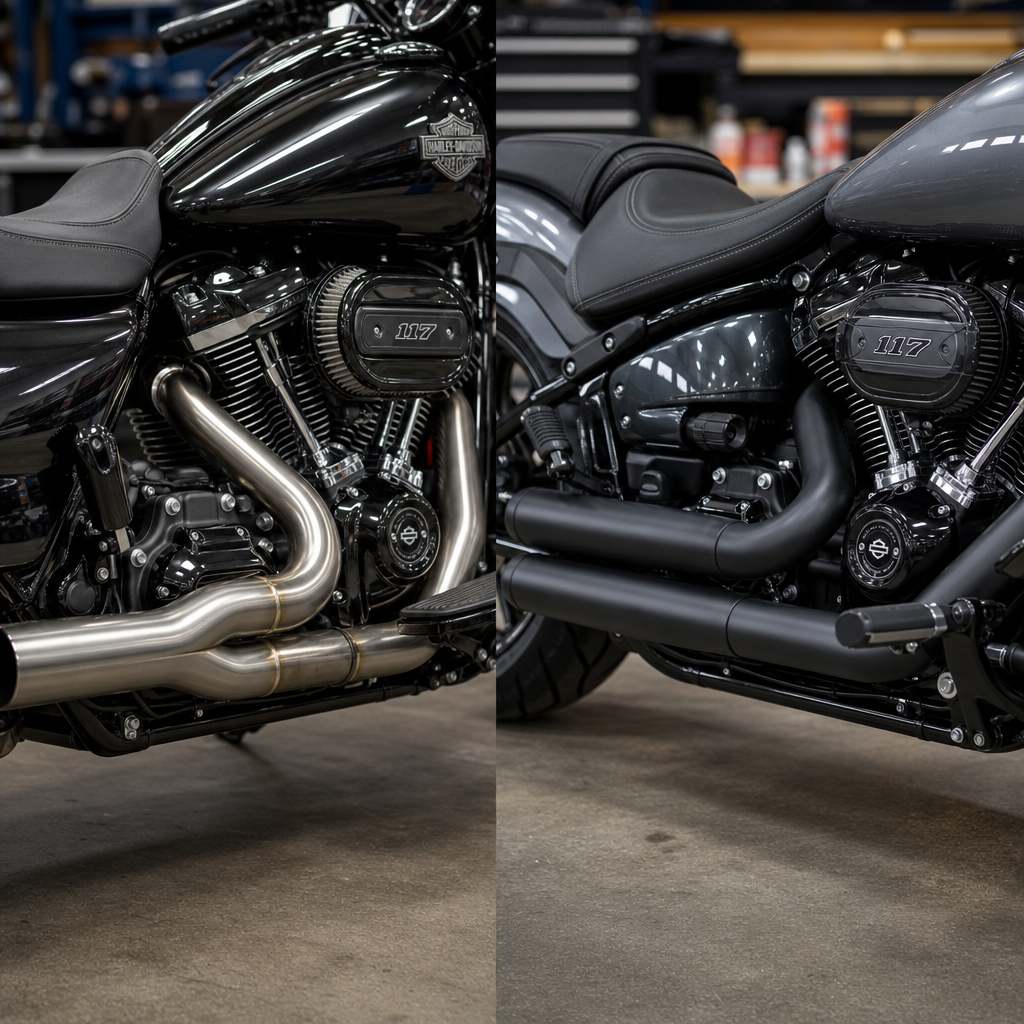
Harley-Davidson exhaust choices fall into four practical categories: slip-ons, full duals, crossover duals, and 2-into-1 systems. Slip-ons replace only the mufflers and are the easiest path when the owner wants modest sound change and low installation complexity. They typically preserve the stock header and catalyst arrangement, which makes them the safest route when compliance is a priority. Full duals create classic visual symmetry and can support strong top-end with the right internals, but packaging and scavenging can vary widely. Crossover duals use a balance tube to improve pulse sharing and usually smooth torque. A 2-into-1 merges both cylinders into a collector before a single muffler, and that layout commonly produces the broadest usable midrange on street Harleys. The reason is straightforward: the collector can create a stronger scavenging signal, helping evacuate cylinders during overlap at practical road speeds.
Sound is shaped by more than decibel level. Frequency content, pulse sharpness, and resonance determine whether an exhaust sounds deep and clean or harsh and fatiguing. Riders often compare systems by smartphone videos, but that method misses in-person bass energy, off-throttle crackle, and in-helmet drone. I advise owners to listen at three conditions: idle beside the bike, 3,000 rpm steady cruise, and moderate roll-on under load. Some mufflers that sound refined at idle produce a narrow-band drone on freeway grades, especially with frame-mounted fairings and full-face helmets. Catalyst design also influences tone because the substrate and associated packing can attenuate high-frequency edges. There is no single best sound. The right target for a Road Glide commuter differs from the right target for a Low Rider ST weekend rider or a Heritage owner carrying a passenger.
| Exhaust type | Main strength | Main compromise | Best fit |
|---|---|---|---|
| Slip-ons | Simple install, lower risk, often keeps stock emissions hardware | Smallest power change | Touring, commuter, warranty-conscious riders |
| Duals with crossover | Classic look with improved balance | Usually heavier than 2-into-1 | Riders prioritizing style and broad street manners |
| Full duals | Strong visual appeal and distinct sound | Can give up midrange if poorly designed | Show-bike or traditional bagger builds |
| 2-into-1 | Best typical midrange torque and scavenging | Asymmetrical look, bag and heat considerations | Performance-focused baggers and sporty cruisers |
Model-specific recipes across Harley-Davidson platforms
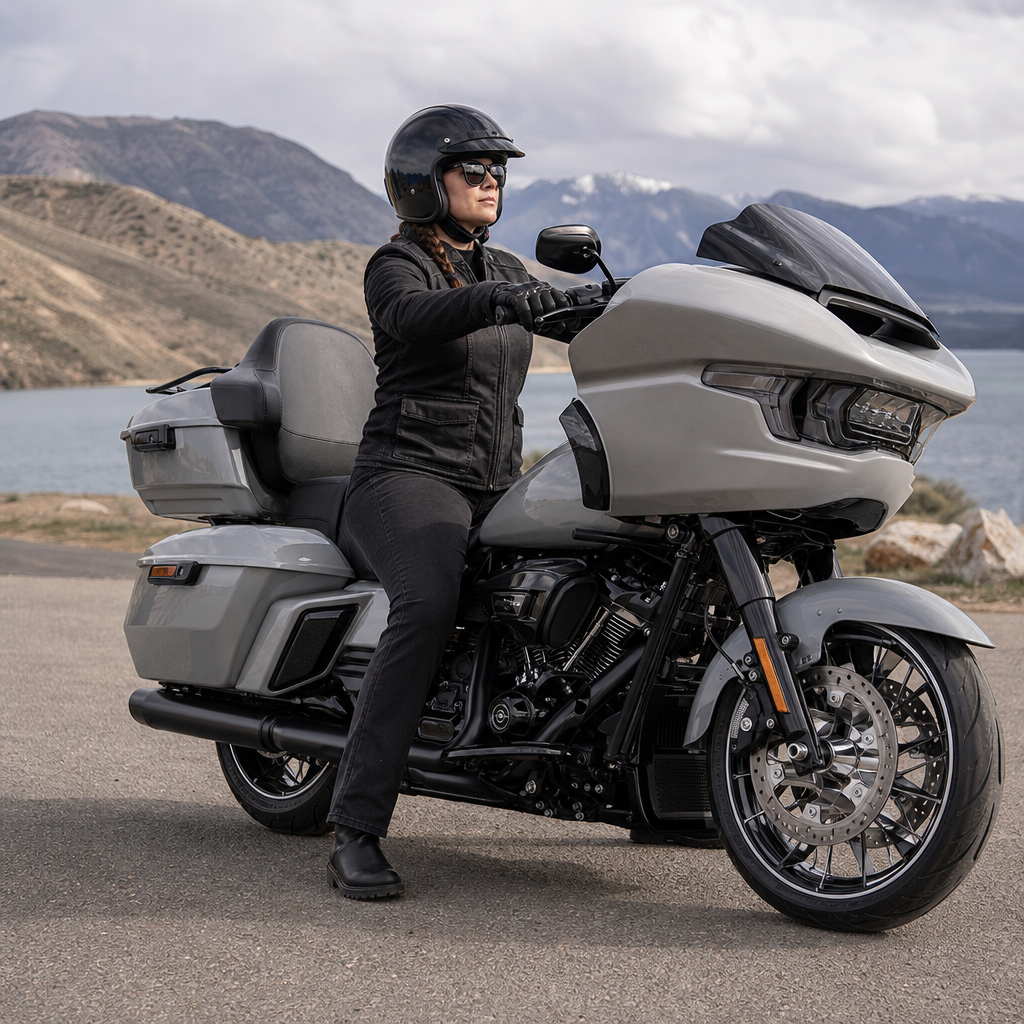
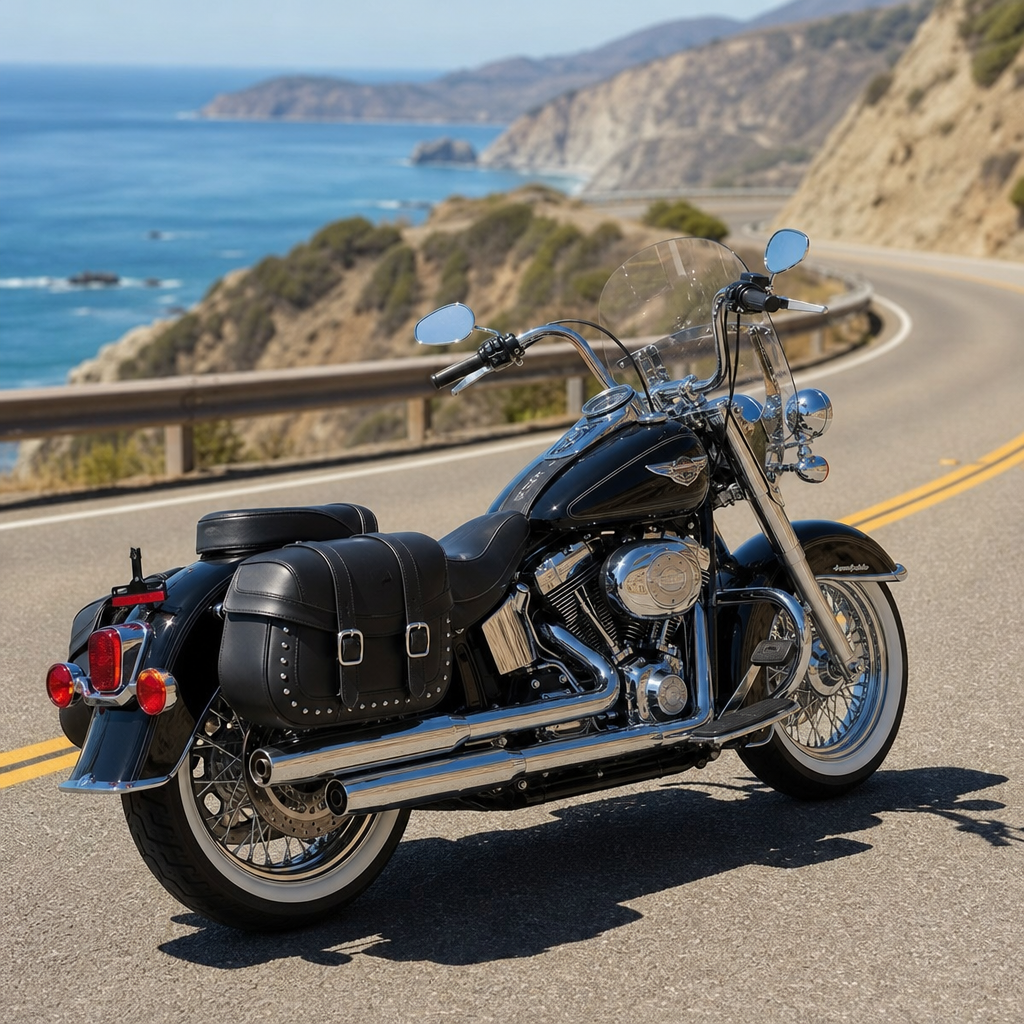
Touring models such as the Street Glide, Road Glide, Road King, and Ultra demand a different exhaust recipe from Softails or Sportsters because rider position, fairing pressure, passenger use, and sustained highway operation change what “better” means. For a bagger, the safest high-value Stage I path is often catalyst-conscious slip-ons or a street-legal header-and-muffler package paired with a high-flow air cleaner that does not create rain ingestion problems. The priority should be low drone, preserved saddlebag function, and strong 2,500 to 4,000 rpm torque, because that is where these bikes live. Riders who tour two-up should also check right-side passenger foot comfort. I have seen excellent dyno combinations rejected after a weekend trip because the muffler body or collector raised heat at the calf or interfered with easy mounting.
Softail models require more tailoring. A Low Rider S or Low Rider ST benefits from a 2-into-1 if the owner wants sharper corner-exit drive and reduced mass, but floorboard and lean-angle interactions must be checked on Heritage and Fat Boy variants. Breakout owners usually care more about profile and rear-wheel visual space, so a compact dual or well-finished slip-on can be the better recipe even if peak gains are smaller. Sportster and Nightster riders should pay extra attention to primary use. Around-town machines respond well to short mufflers only if the owner accepts more pulse intensity and less long-ride comfort. Dyna owners, especially on FXDLS-style builds, often gain the most from a collector-based system because these bikes reward midrange. Across all platforms, one fitment rule is universal: ground clearance, side cover access, and suspension travel matter just as much as dyno charts.
Ergonomics, heat, and long-ride sound management
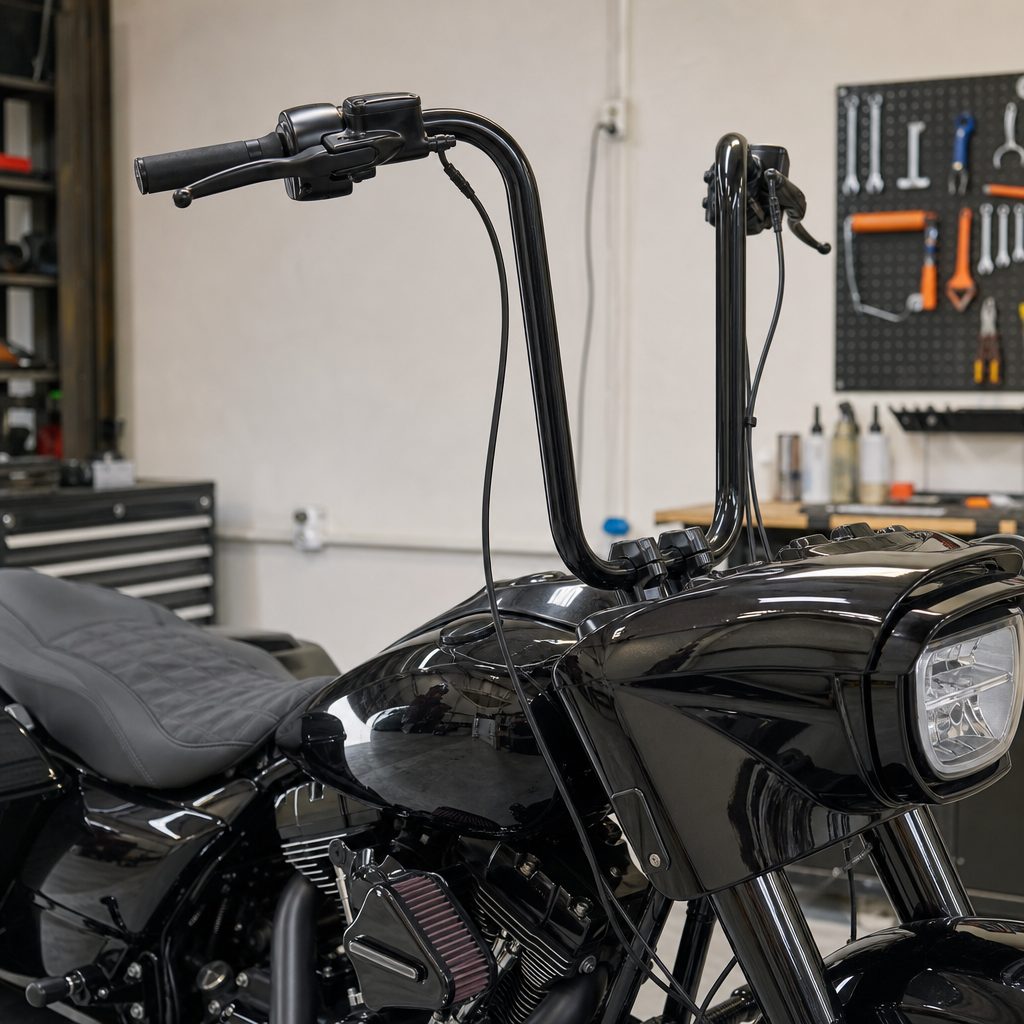
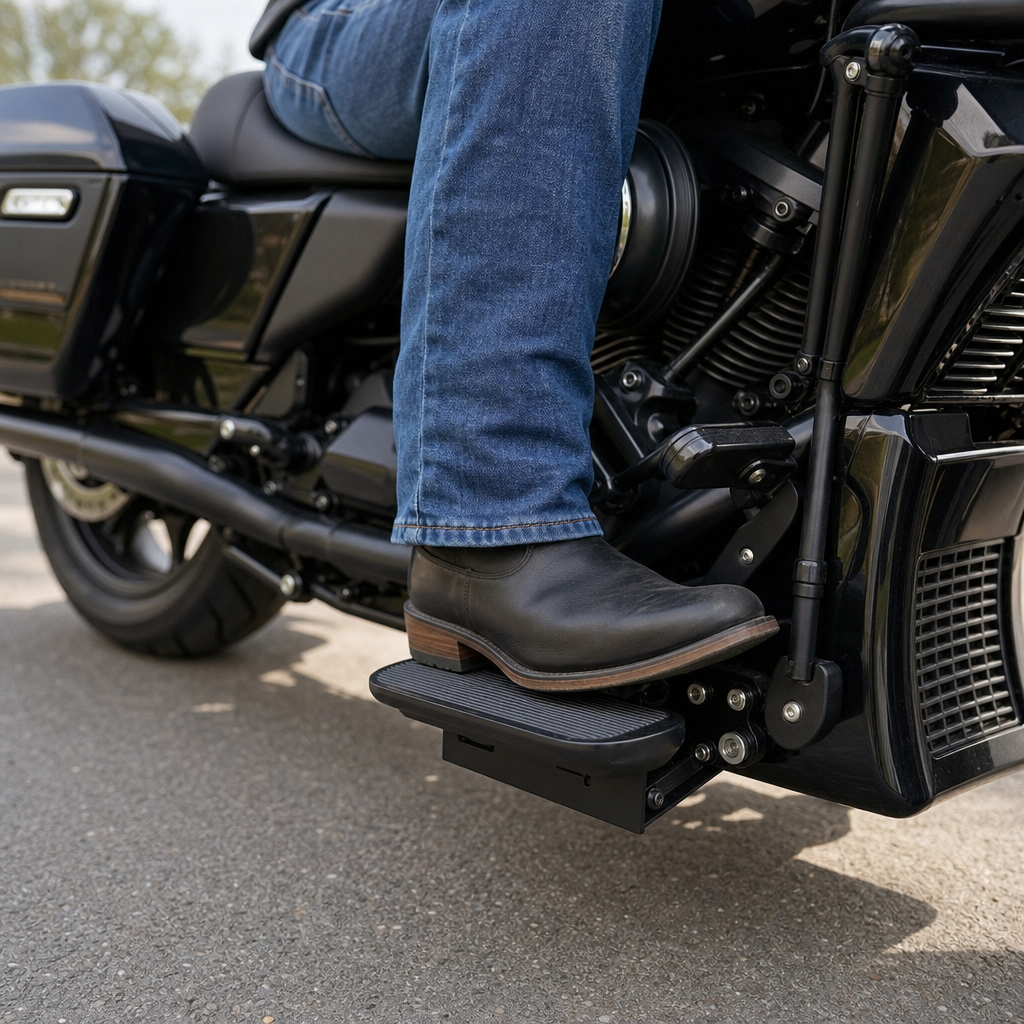
This hub centers model-specific ergonomics and performance recipes because exhaust choices affect the rider’s body more than many catalogs admit. Muffler length changes where pressure waves exit relative to the rider and passenger. Header routing changes radiant heat exposure to the inner thigh and boot. Collector placement can interfere with aftermarket floorboards, rearsets, heel shifters, center stands on non-Harley platforms, or service procedures like oil changes and shock adjustments. On a Harley touring bike with lower fairings, an exhaust that looks tidy on a lift can create a low-frequency cabin effect around the rider’s helmet at interstate speed. That is why a proper recipe should be tested against seat height, handlebar reach, windshield height, and helmet type. The same pipe can be acceptable with a short screen and miserable with a tall recurve windshield that traps sound.
Heat control is equally practical. Leaner calibrations, catalyst placement near the rider, and slow-speed summer traffic all raise thermal load. Heat shields help skin comfort, but they do not solve all problems. Wrapping pipes is usually a poor answer on street Harleys because it can trap moisture and accelerate corrosion. Better solutions include choosing systems with effective shielding, maintaining correct fueling within legal limits, and making sure idle strategy and cooling features on applicable engines function as designed. Riders should also think about hearing preservation. Repeated exposure above safe sound levels contributes to fatigue and gradual hearing damage even with a helmet on. If the goal is daily usability, select the quietest system that delivers the desired response. A motorcycle that feels fast, clean, and composed for five hours is a better Stage I success than one that only sounds exciting for five minutes.
Tuning, validation, and buying parts with confidence
A Stage I recipe is complete only after validation. The bike should start cleanly hot and cold, idle steadily, hold consistent cruise fueling, and transition smoothly on small throttle openings. Surging, popping from leaks, excessive decel crackle, and abrupt engine braking are signs to inspect the installation and calibration rather than assume “that is just how performance pipes are.” Use established tools and methods. A reputable dyno shop, wideband data logging, and scan diagnostics are more valuable than internet folklore. Check torque values, exhaust gasket condition, sensor routing, and clamp alignment. If a product claims horsepower gains, ask where in the rpm range they occur and under what test conditions. A bagger that gains six foot-pounds at 3,000 rpm may feel dramatically better on the road even if peak horsepower barely changes. That is the kind of result experienced builders prioritize.
As the hub for Harley-Davidson model-specific ergonomics and performance recipes, this page should guide every related purchase decision: exhaust layout, intake choice, tune strategy, passenger comfort, luggage compatibility, and sound tolerance. The winning 2026 formula is simple. Start with legal, documented parts intended for street use. Match the exhaust architecture to the motorcycle’s platform and the rider’s real posture, mileage, and cargo needs. Favor broad torque, low drone, and manageable heat over marketing noise. Then validate the result with careful installation checks and professional calibration support. When riders take that disciplined approach, Stage I becomes more than a louder motorcycle; it becomes a cleaner, smarter, more comfortable Harley-Davidson that performs better where it is actually ridden. Use this hub as the starting point for your next model-specific recipe, and build your exhaust package around compliance, comfort, and durable street performance.
Frequently Asked Questions
What does a Stage I performance exhaust recipe include for a 2026 Harley-Davidson, and why is it more complicated now?
A true Stage I setup for a 2026 Harley-Davidson still centers on the same three core elements riders have known for years: a freer-flowing air cleaner, a less restrictive exhaust system, and calibration work that adjusts fueling and spark for the new airflow. What has changed is the decision-making around those parts. In 2026, Stage I is no longer just about picking the loudest slip-ons or the highest-flow intake and calling it done. Riders now have to think in terms of emissions legality, onboard diagnostics compatibility, catalyst placement, heat management, tune strategy, and how the bike will actually be used on the street.
That matters because modern Harley-Davidson models are tightly integrated systems. Exhaust flow affects backpressure, scavenging, catalytic converter behavior, oxygen sensor readings, and ultimately the bike’s ability to maintain clean combustion. The intake side influences not just airflow volume, but also how stable sensor readings remain under part throttle and transient conditions. Calibration is the bridge between the hardware and the riding experience, and without a properly matched tune, even premium parts can produce disappointing results such as surging, excess heat, weak throttle transitions, or check-engine lights.
In practical terms, a strong 2026 Stage I recipe begins with a clearly defined goal. Some riders want a mild performance bump with full peace of mind about street compliance. Others care most about lower operating temperatures, smoother throttle response, or a deeper exhaust note without crossing into fatiguing highway drone. The best build is the one that balances all of those variables instead of chasing a single spec. For many riders, that means choosing emissions-conscious exhaust components, retaining or properly integrating catalytic elements where required, using quality sensors and mounting hardware, and selecting a calibration solution that is specifically intended to work with the model year and engine platform in question.
So yes, Stage I is still the entry-level performance formula, but it now functions more like a coordinated package than a simple bolt-on upgrade. Done correctly, it can still deliver the sharper throttle feel, improved rideability, and more satisfying sound Harley owners want. The key is treating it as a complete system rather than a collection of individual parts.
How does 2026 EPA compliance affect exhaust choices for Harley-Davidson Stage I upgrades?
EPA compliance affects nearly every exhaust decision because emissions requirements are not limited to what comes out of the mufflers in a broad sense; they also influence how the entire exhaust and fuel-control system must operate together. For Harley-Davidson riders considering a Stage I upgrade in 2026, this means the safest path is to focus on exhaust components designed and marketed for legal street use where applicable, with careful attention to catalyst retention, oxygen sensor compatibility, and approved calibration pathways. A pipe that flows well but disrupts emissions controls can create legal exposure and driveability problems at the same time.
One of the biggest issues is the distinction between “for off-road use only” parts and emissions-compliant street parts. Many aftermarket exhaust systems are engineered for performance but are not certified for public-road use. Installing those parts on a street-registered motorcycle can put the owner in a gray area or an outright noncompliant position, depending on local enforcement and how the product is labeled. Riders should not assume that because a part physically fits the bike, it is automatically appropriate for a 2026 street build. Product descriptions, emissions statements, and manufacturer documentation matter more than ever.
Another important factor is catalyst strategy. On many modern motorcycles, the catalyst is central to emissions compliance, and removing it or replacing it with a non-equivalent component can trigger a cascade of problems. Those can include altered sensor behavior, fault codes, increased exhaust smell, and a bike that feels harsher or less refined in daily riding. In some cases, riders are surprised to learn that an exhaust preserving catalyst function can still improve sound quality and ride feel when paired with a matching intake and calibration. Compliance does not always mean dull performance; often it means a more disciplined, better-engineered combination.
From a buying standpoint, riders should prioritize exhaust systems from reputable manufacturers that provide clear documentation about intended use, sensor provisions, catalyst integration, and compatibility with 2026 tuning solutions. A compliant Stage I build is generally less about maximum raw flow and more about optimized flow within the bike’s emissions-control framework. That approach tends to deliver better long-term ownership outcomes: fewer warning lights, more predictable tuning results, and lower risk of regretting the modification after the initial excitement wears off.
Will a compliant Stage I exhaust still improve sound and throttle response, or does emissions legality limit the benefits too much?
Yes, a compliant Stage I exhaust can still provide meaningful improvements in sound and throttle response. The gains may be more refined than extreme, but for many riders, refined is exactly what makes a Stage I package enjoyable over the long haul. A well-chosen exhaust with proper catalyst management, a freer-flowing intake, and a matched calibration can make the bike feel more awake at small and mid-throttle openings, which is where street riders spend most of their time. That often translates into cleaner roll-on acceleration, less hesitation, and a stronger sense of connection between the throttle hand and the rear wheel.
On the sound side, emissions legality does not automatically mean the bike must remain flat or uninspiring. Sound character comes from several factors beyond simple volume, including muffler design, packing material, pipe length, crossover behavior, catalyst placement, and engine calibration. Many riders are happiest not with the loudest system, but with one that adds a deeper idle, more defined pulse, and a fuller tone under acceleration without becoming abrasive at cruising speed. The best 2026 Stage I setups aim for that balance. They preserve enough civility for commuting, touring, and neighborhood courtesy while still giving the bike the personality owners expect from a Harley-Davidson.
It is also important to understand that throttle response is not just an exhaust issue. A rider can install a more aggressive exhaust and still come away disappointed if the tuning is generic or poorly matched. The calibration determines how fueling and ignition adapt to the increased airflow, especially during transient throttle events. When the tune is sorted correctly, the bike often feels smoother and more responsive even if peak horsepower gains are modest. That improved rideability is one of the most valuable benefits of a proper Stage I package.
In other words, compliance narrows the margin for reckless modification, but it does not erase the benefits of a thoughtful upgrade. For a 2026 street rider, a successful Stage I should feel intentional: better tone, sharper response, improved manners, and no constant worry about fault codes or questionable legality. That is a far better outcome than chasing maximum noise and ending up with a bike that is tiring, temperamental, or difficult to live with.
What should riders know about tuning and calibration when installing a Stage I exhaust recipe in 2026?
Tuning is the part of the Stage I recipe that ties everything together, and in 2026 it deserves at least as much attention as the intake or exhaust hardware. When airflow changes, the engine management system has to account for those changes in fueling, spark timing, and load calculation. If it does not, the bike can run hotter, respond inconsistently, or set diagnostic trouble codes. For that reason, riders should treat calibration as a required component of the build rather than an optional finishing touch.
The main point is compatibility. Not every tuner, flash device, or map solution will support every 2026 Harley-Davidson platform in the same way, and not every tuning path is intended for emissions-compliant street use. Before buying hardware, riders should confirm that the calibration solution is specifically designed for their model, their chosen intake and exhaust combination, and their intended use. That includes understanding whether the system supports closed-loop operation correctly, how it handles oxygen sensor feedback, and whether the mapping strategy preserves stable part-throttle behavior for real-world riding.
Good calibration work tends to improve more than headline power numbers. It can reduce abruptness off idle, smooth out low-speed maneuvering, sharpen passing response, and help manage combustion heat. Those benefits matter on heavy V-twins, especially in stop-and-go traffic or summer conditions. They also influence comfort and confidence, which are often more noticeable to riders than an extra top-end horsepower figure. A tuned Stage I bike that starts cleanly, idles consistently, and rolls on smoothly is usually more satisfying than one that makes bigger dyno claims but feels rough in daily use.
Riders should also be cautious about one-size-fits-all maps and bargain tuning shortcuts. Engines vary, parts combinations vary, and riding environments vary. Elevation, fuel quality, ambient temperature, and exhaust design all influence final behavior. That does not mean every bike needs an elaborate custom dyno session, but it does mean the tune should be credible, current, and appropriate for the setup. In 2026, the best practice is simple: choose parts first with compliance and compatibility in mind, then use a calibration strategy that is engineered to support that exact combination. That sequence gives the highest odds of strong performance, reliability, and a trouble-free ownership experience.
How do you choose the right Stage I exhaust setup for comfort, ergonomics, and long-term rideability—not just peak performance?
This is where many Stage