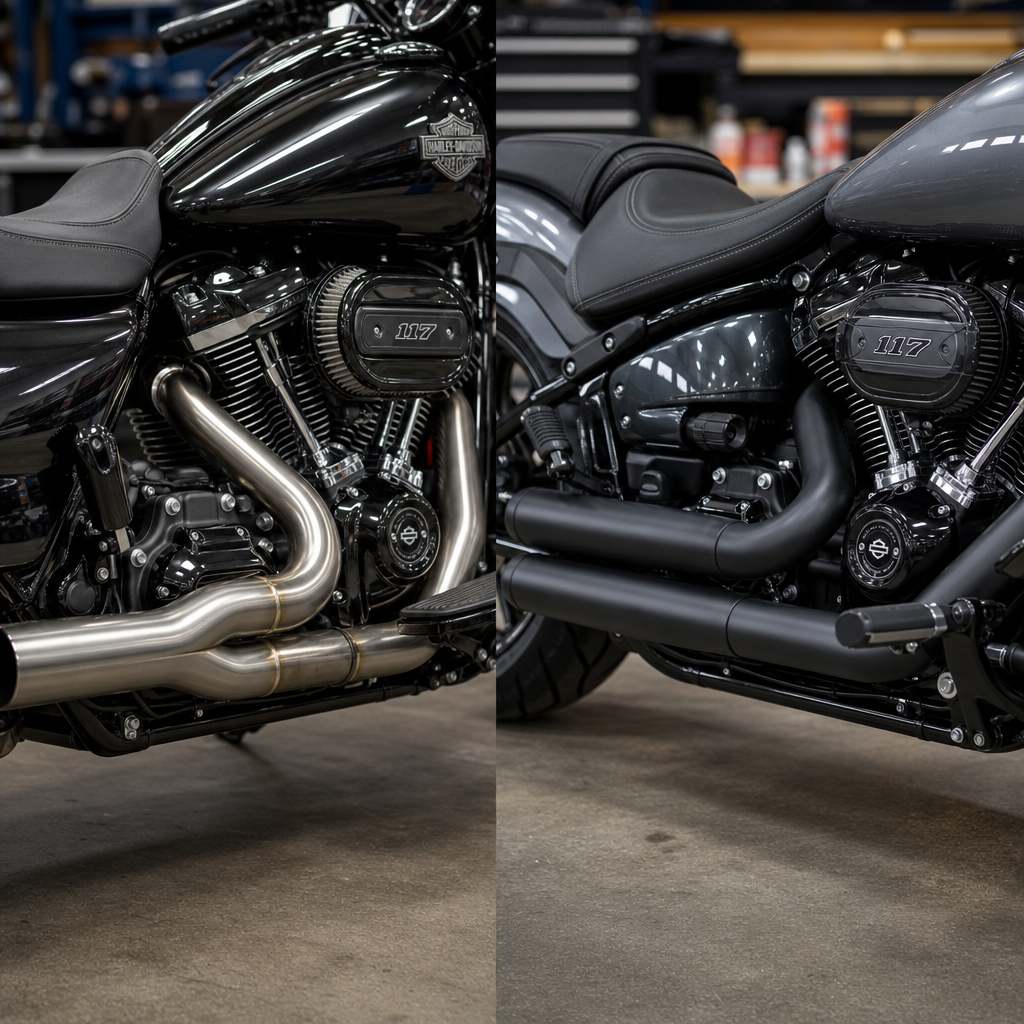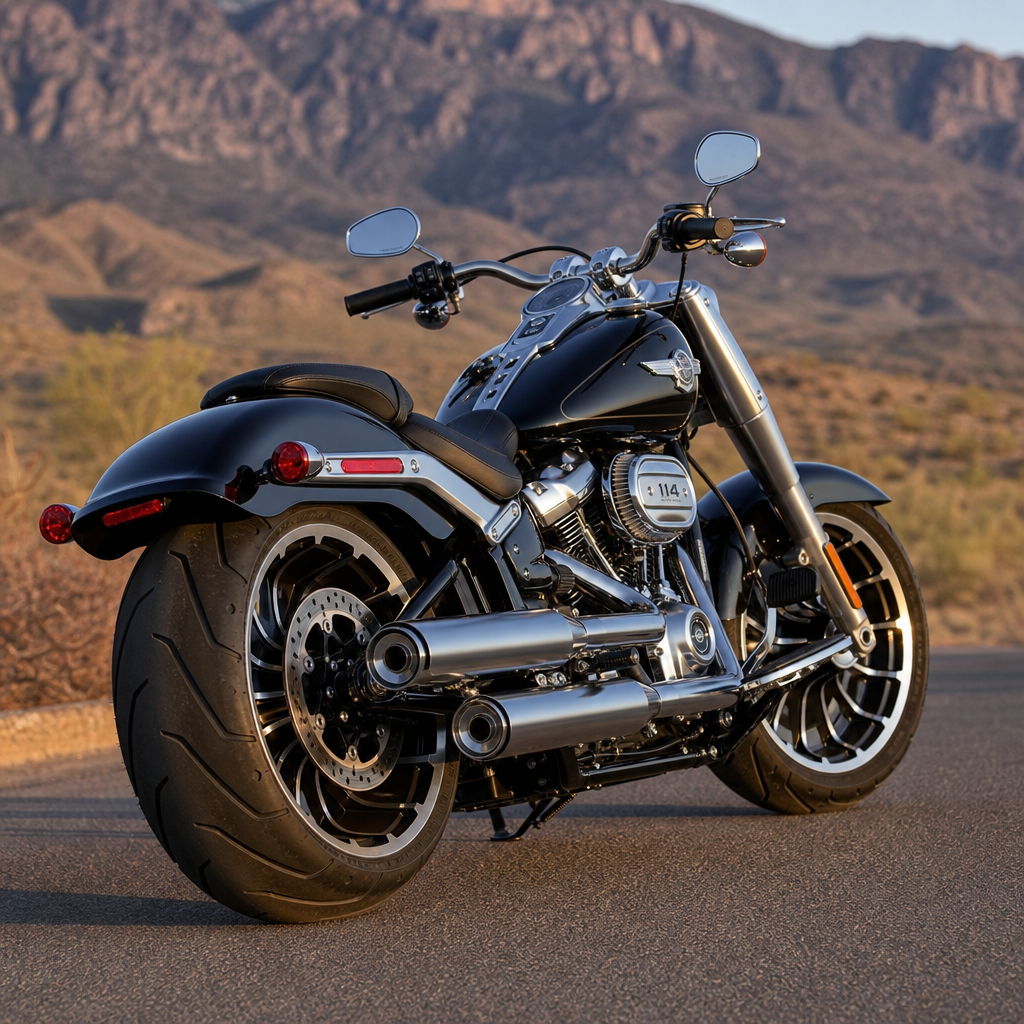
The 2026 Fat Boy 114 looks built for boulevard swagger, but its wide 240mm rear tire and low-slung Softail stance create a setup that punishes guesswork. When preload is too light, the rear suspension uses travel too quickly, the chassis squats, and riders describe the result as bottoming out over sharp bumps, freeway joints, or two-up transitions. A proper 2026 Fat Boy 114 preload guide starts with one truth: preload does not make the shock stiffer in the damping sense, yet it does determine ride height, available sag, cornering attitude, and how effectively that big rear contact patch follows the road.
On this motorcycle, preload means the initial compression applied to the rear shock spring before the bike is loaded by rider, passenger, luggage, or accessories. Bottoming out means the suspension reaches the end of its travel and hits the mechanical stop, usually felt as a hard thud through the seat and spine. Because the Fat Boy combines a relatively short-travel rear suspension with substantial curb weight and a fat rear tire, preload setup matters more than many owners expect. I have set up Softail rear suspension for solo riders under 160 pounds, tall riders over 230, and couples touring with detachable bags, and the difference between “harsh” and “controlled” often came down to getting sag and tire pressure right before touching anything else.
This hub article covers model-specific ergonomics and performance recipes for the 2026 Fat Boy 114. It explains how to avoid bottoming out, how rider size changes the ideal setting, what happens when floorboards scrape early, and when preload is not the real problem. It also acts as the central reference point for related Harley-Davidson setup articles, because the Fat Boy is unusually sensitive to changes in seat height, passenger load, and rear tire behavior. If you want a plain-language answer to “How much preload should I run on a 2026 Fat Boy 114?” the short version is this: enough to achieve correct rider sag, preserve bump travel, and keep the chassis level under your real riding load, not the brochure load.
Why the 2026 Fat Boy 114 bottoms out so easily when preload is wrong
The 2026 Fat Boy 114 uses Harley-Davidson’s Softail chassis with a hidden monoshock layout. That design helps styling, but it does not create extra travel. A heavy cruiser with limited travel has less margin for error than an ADV bike or sport-tourer. Add the 240mm rear tire, which increases straight-line stability and visual mass, and you get a motorcycle that rewards proper support at the rear. When preload is set too low for rider weight, passenger weight, or luggage, static sag and rider sag become excessive. The rear rides deep in the stroke before the first real bump arrives. Then every pothole or bridge seam consumes the little travel that remains.
Riders often misdiagnose this as “the shock is junk” or “the tire is too wide.” In practice, three things usually stack up. First, excessive sag reduces available compression travel. Second, the steering geometry relaxes as the rear squats, which can make the front feel light and vague. Third, the bike can contact hard parts earlier because the chassis is sitting lower. On a Fat Boy, that means less confidence in sweepers and a harsher hit over square-edged bumps. The 240mm tire itself is not the cause of bottoming out, but it does change how impacts feel because its profile and sidewall behavior can make the rear end seem planted right until the shock suddenly runs out of travel.
There is also a comfort misconception worth correcting. Many cruiser owners back off preload because they want a softer ride. On the Fat Boy, too little preload often makes the ride feel harsher, not softer, because the suspension blows through the initial stroke and slams into the bump stop. Correct preload lets the shock work in the middle of its travel where it can absorb repeated impacts with more control. That is why the best preload setting is rarely the loosest one.
How to set preload on a 2026 Fat Boy 114 using sag, not guesswork
The reliable way to set rear preload is to measure sag under the load you actually carry. Use the same gear, boots, and passenger arrangement you ride with most often. Start by checking tire pressures against the owner’s manual and loading chart, because an underinflated rear tire can mimic suspension problems. Then measure unloaded length from a fixed rear axle point to a repeatable point on the fender or frame. Put the bike on the ground, settle it, and measure again for static sag. Finally, sit on the bike in normal position, ideally with a helper balancing it upright, and measure rider sag.
For a cruiser like the Fat Boy 114, the exact target varies by rider priority, but a practical rule is to keep rider sag around one quarter to one third of total rear wheel travel. If sag exceeds that range, add preload. If the rear barely settles under load, reduce preload. I usually tune solo boulevard setups toward the comfort side of that window and two-up highway setups toward the support side. The key is consistency. Measure, adjust, remeasure, and test ride the same route with the same bumps.
| Riding load | Typical symptom with too little preload | What to change | Expected result |
|---|---|---|---|
| Solo rider under 180 lb | Rear thud on large bumps, mild wallow in sweepers | Increase preload one small step, recheck sag | Better support without losing compliance |
| Solo rider 180 to 240 lb | Frequent bottoming, early floorboard scrape | Increase preload to achieve target rider sag | Higher ride height and more remaining travel |
| Two-up, no luggage | Sharp impacts over joints, rear squat on throttle | Add significant preload, confirm tire pressure | Reduced squat and fewer hard bottom-outs |
| Two-up with luggage | Persistent bottoming, vague steering, instability | Set near upper preload range; inspect shock condition | Restored chassis balance and safer margin |
If your motorcycle uses a hydraulic preload adjuster, make changes in counted turns and log them. If it uses a stepped or threaded collar, count visible positions or thread exposure. The point is repeatability. One of the most useful habits I recommend to Harley owners is creating three known settings: solo, aggressive solo, and two-up. That turns setup into a recipe instead of a memory test.
Model-specific ergonomics and performance recipes for the Fat Boy 114
The Fat Boy is not just a suspension problem to solve. It is an ergonomics system. Handlebar reach, seat shape, floorboard position, boot sole thickness, and passenger backrest all influence how weight is distributed and how the shock reacts. A shorter rider who sits deep in the saddle often loads the rear differently than a taller rider who braces against the bars and floorboards. That is why the same preload number can feel perfect for one owner and miserable for another.
For shorter solo riders, usually under about 5-foot-8, the common recipe is moderate preload, stock or slightly reduced bar reach, and careful attention to seat foam support. If the seat lets the pelvis sink too far, effective ride height drops and impacts feel worse. For average-height riders doing mixed city and highway miles, the best recipe usually combines measured sag, stock geometry, and tire pressures checked weekly. This group often benefits most from simply adding preload after the break-in period, because the spring and seat settle while owners continue using the factory delivery setting.
For taller or heavier solo riders, especially above 210 pounds with gear, a support-first recipe works better. Increase preload enough to restore ride height, then evaluate whether the stock damping keeps up on repeated bumps. If the rear still pogo-sticks or crashes despite correct sag, the issue is no longer preload alone. For two-up cruising, preload should be adjusted every time, not occasionally. Passenger weight places a large moment over the rear axle on a low cruiser, and the 240mm tire’s visual bulk can hide how far the suspension has already collapsed. If your passenger says the ride feels like a “slam” over expansion joints, believe that feedback and remeasure sag before blaming the road.
Performance on the Fat Boy also means preserving steering response. As the rear sinks, rake and trail effectively increase and the bike resists turning. Many riders interpret that as normal heavyweight-cruiser behavior, but a correctly supported Fat Boy steers cleaner, tracks better through long curves, and scrapes less abruptly. The preload recipe is therefore part ergonomics, part chassis geometry, and part comfort strategy.
When preload is not enough: tires, damping, shock health, and load management
If you add preload and the bike still bottoms out, do not keep cranking blindly. Preload cannot compensate for every problem. Start with the rear tire. Tire pressure that is even a few psi low on a heavy cruiser changes carcass behavior, adds heat, and increases impact harshness. The owner’s manual pressure recommendations exist for a reason, especially with passenger loads. Next, inspect for shock wear or damage. A leaking shock, collapsed bump stop, or fatigued spring will not recover with preload alone.
Damping matters too. Preload sets position in the travel; damping controls the rate of movement. If the rear rebounds too quickly after a bump, the bike can feel unsettled. If compression control is insufficient, repeated bumps can still drive the shock into the stop even with acceptable sag. On some bikes, owners discover that aftermarket shocks from respected brands such as Öhlins, Progressive Suspension, Fox, or Legend Suspensions provide better damping control and spring options matched to rider weight. That is a legitimate upgrade when measured setup on the stock unit still falls short.
Load management also deserves attention. Detachable luggage, sissy bars, trunk systems, and heavy accessory seats all add mass, often behind the axle where they have outsized effect. I have seen Fat Boys set up “perfectly” for a solo rider become unrideable after adding a packed tail bag and passenger backrest. The fix was not mysterious: increase preload, correct tire pressure, and move weight forward where possible. If you regularly switch between city solo use and weekend two-up rides, keep a setup log with date, load, tire pressure, and adjuster position. That record will save time and improve consistency.
Best practices for building a long-term setup recipe and linking it to other Harley-Davidson guides
A hub article should do more than answer one question. It should give you a repeatable framework for every future adjustment. For the 2026 Fat Boy 114, that framework begins with baseline measurements, then branches into scenario-specific recipes. Record your unloaded measurement, your solo sag, your two-up sag, preferred tire pressures, and any accessory changes. Ride a test loop that includes smooth pavement, broken pavement, one mid-corner bump, and one braking zone. Use the same loop after every change so your feedback is comparable.
From there, connect this setup to the broader Harley-Davidson ownership picture. Ergonomics articles on seat height, reach to bars, floorboard clearance, and passenger comfort all influence suspension setup because rider posture changes load distribution. Performance guides on tires, shocks, braking feel, and cornering clearance also belong in the same ecosystem. In practice, the best sub-pillar structure groups related pages by use case: solo comfort, tall-rider fit, two-up touring, urban pothole control, and upgraded suspension packages. The Fat Boy benefits from this approach because one change rarely exists in isolation.
There are also maintenance intervals to respect. Recheck sag after adding accessories, after a new seat, after major weight change, and at regular service intervals. Springs settle, tires wear, and rider habits evolve. A setup that worked in spring may feel wrong in midsummer when luggage and passenger frequency change. That is normal. Good motorcycle setup is iterative, not one-and-done.
The main benefit of a proper 2026 Fat Boy 114 preload guide is simple: you turn a stylish heavyweight cruiser into a machine that uses its suspension correctly. Avoiding bottoming out protects comfort, preserves control, and makes the 240mm rear tire feel like an asset instead of a compromise. Start with tire pressure, measure sag, adjust preload for your real load, and test one change at a time. Build your own solo and two-up recipes, then use this page as the hub for every related Harley-Davidson ergonomics and performance setup decision. If your Fat Boy still slams the bump stop after measured adjustments, inspect the shock and consider a spring or damper upgrade. Take an hour this week, document your baseline, and set the bike up for how you actually ride.
Frequently Asked Questions
What causes a 2026 Fat Boy 114 to bottom out, especially with the 240mm rear tire and low Softail stance?
Bottoming out on the 2026 Fat Boy 114 usually comes down to the rear suspension riding too deep in its travel before the big hit even arrives. The motorcycle’s low-slung Softail layout and wide 240mm rear tire create a planted, muscular look, but they also reduce how forgiving the chassis feels when preload is set too light for the actual load on the bike. If the spring starts from an under-supported position, the rear end squats more under the rider’s weight, uses up available suspension travel faster, and has less room left to absorb sharp impacts like expansion joints, pothole edges, or abrupt dips. That is when riders feel the rear hit hard and describe it as bottoming out.
It is also important to separate preload from damping. Preload does not make the shock “stiffer” in the way damping controls shock speed. What preload does is establish ride height and the amount of sag the bike carries under its load. On a heavy cruiser like the Fat Boy 114, correct sag is critical because the chassis attitude affects not only comfort, but also steering feel, ground clearance, and how the bike transitions through bumps. If preload is too low, the rear sits down, the swingarm works from a compromised angle, and impacts that should have been managed by normal travel get transferred more directly into the chassis and rider.
Passenger weight, luggage, and even riding style can make the issue more obvious. A setup that feels acceptable solo on smooth roads may bottom repeatedly when carrying a passenger or crossing rough freeway sections at speed. In other words, bottoming out is rarely just about the tire width alone. The 240mm tire contributes to the bike’s visual identity and can influence feel, but the more direct cause is a rear suspension setup that is not matched to the load and road conditions.
Does increasing preload make the rear shock stiffer on the 2026 Fat Boy 114?
Not in the strict suspension-tuning sense. Increasing preload does not change the actual spring rate of the shock, and it does not add damping force. The spring is still the same spring. What changes is the amount of initial compression placed on that spring before the rider gets on the bike. That changes how much the suspension settles under load, which changes ride height, sag, and how much travel remains available for bumps.
That distinction matters because many riders describe a preload increase as making the rear feel “stiffer,” and subjectively that can be true. When preload is increased from a too-soft starting point, the bike rides higher in the rear, resists excessive squat better, and avoids blowing through travel so early. The result feels firmer and more controlled, but the spring itself has not become stiffer. Instead, the suspension is now operating in a more appropriate part of its travel range.
On the 2026 Fat Boy 114, this is especially relevant because the bike’s styling encourages a low, slammed visual impression, while the real-world suspension still needs enough support to deal with rider weight, passenger weight, and road shock. If preload is set too low, the rear can feel plush at first but harsh over larger bumps because it reaches the end of its travel too quickly. If preload is set more appropriately, the ride often feels more composed, more stable, and less crashy, even if it seems a touch firmer over small inputs. That is why preload should be thought of as a load-matching and geometry-setting adjustment, not a shortcut for changing spring rate or damping behavior.
How can I tell if my Fat Boy 114 preload is too low or too high?
The easiest way to identify preload issues is to pay attention to sag, ride behavior, and the kinds of bumps that upset the bike. If preload is too low, the most common symptoms are rear-end squat, frequent bottoming over sharp impacts, a sensation that the bike wallows or settles too deeply when accelerating, and a harsh “thud” from the rear despite the bike seeming soft at low speed. You may also notice reduced confidence in fast sweepers or while carrying a passenger, because the rear rides low and the chassis attitude becomes lazy and under-supported.
Another clue is how the bike reacts during transitions. If the rear compresses heavily when you sit down, then feels like it has little left in reserve once the road turns rough, preload is probably too light. Two-up riding exaggerates this immediately. A setup that is merely soft solo can become obviously wrong with a passenger, causing the bike to sit too low, react abruptly to freeway joints, and feel unsettled when the load shifts.
If preload is too high, the symptoms tend to move in the opposite direction. The rear may ride overly tall, feel choppy, skip across small bumps, or transmit road texture more directly into the seat. The bike can feel less compliant because the suspension is not settling enough into its working range. Excessive preload may also reduce traction feel over uneven pavement because the rear wheel is not following the road as naturally as it should.
The best approach is not to guess based on feel alone, but to combine feel with measurement. Establish rider sag with your normal riding load, then compare that with how the bike behaves on real roads. If the rear still bottoms after sag is set reasonably, the issue may point beyond preload alone and toward spring rate, shock limitations, or riding conditions that exceed the stock suspension’s ideal range. But for many Fat Boy 114 owners, correcting preload is the first and most important step.
What is the best way to set preload on a 2026 Fat Boy 114 for solo, passenger, or luggage use?
The best method is to treat preload as a load-specific setup rather than a one-time adjustment. Start with the motorcycle in good condition, with tire pressures correct and whatever luggage or accessories you normally carry already on the bike. Then decide which use case matters most: solo cruising, aggressive solo riding, frequent two-up riding, or touring with cargo. Preload should be set for the actual weight the suspension must support, not for an idealized “average” that never really happens on the road.
For solo riding, begin by measuring how much the rear suspension settles under your weight in full riding gear. This gives you a practical baseline. If the rear settles excessively, add preload in small increments and recheck. The goal is to keep the bike from riding too deep in the stroke while still allowing enough compliance to absorb normal road irregularities. On the Fat Boy 114, a correct solo setting should reduce squat, improve chassis balance, and leave enough remaining travel that sharp bumps do not immediately drive the shock into the end of its stroke.
For passenger use, expect to need noticeably more preload. The mistake many riders make is leaving the solo setting in place and hoping the suspension will cope. On a cruiser with a low stance, that usually leads straight to bottoming out, especially over bridge joints, urban pavement breaks, or dips taken at speed. Add preload before the ride, not after the first hard impact. The same principle applies to luggage. Even if the added weight seems modest, weight placed behind the rider can have a meaningful effect on rear sag and leverage.
The most practical long-term strategy is to establish repeatable settings. If your shock adjuster allows clear indexing or countable steps, note your preferred solo setting and your preferred two-up or loaded setting. That way you are not starting from scratch every time. A few minutes spent dialing in preload can dramatically improve comfort, control, and confidence on the 2026 Fat Boy 114, particularly because this model’s styling and rear tire width leave less room for setup mistakes than many riders expect.
If my 2026 Fat Boy 114 still bottoms out after adjusting preload, what should I check next?
If preload is set appropriately and the bike still bottoms out regularly, the next step is to look beyond preload and evaluate the whole rear suspension system. First, confirm that you are actually using a realistic preload setting for the load involved. If rider sag remains excessive even near the upper end of adjustment, that may indicate the stock spring is not ideal for your body weight, passenger use, or cargo demands. In that case, the problem is not that preload “isn’t working,” but that preload adjustment cannot compensate forever for a spring that is undersized for the job.
Next, inspect the shock itself. A worn or compromised shock can lose control, overheat, or fail to manage repeated impacts properly. Even if the spring preload is correct, poor damping control can let the suspension move too quickly through its travel, making bottoming more likely and recovery less composed. On a bike like the Fat Boy 114, riders may interpret this as simple harshness when in fact the shock is struggling to control energy over rough pavement.
You should also check tire pressure, wheel condition, and overall load distribution. Underinflated rear tires can worsen impact feel and add instability. Poorly distributed luggage can increase leverage on the rear suspension. Riding style matters too. Hitting square-edge bumps at speed while carrying a passenger will challenge any low-profile cruiser setup more than casual solo boulevard use.
Finally, be realistic about the stock suspension’s limits. The 2026 Fat Boy 114 is designed to