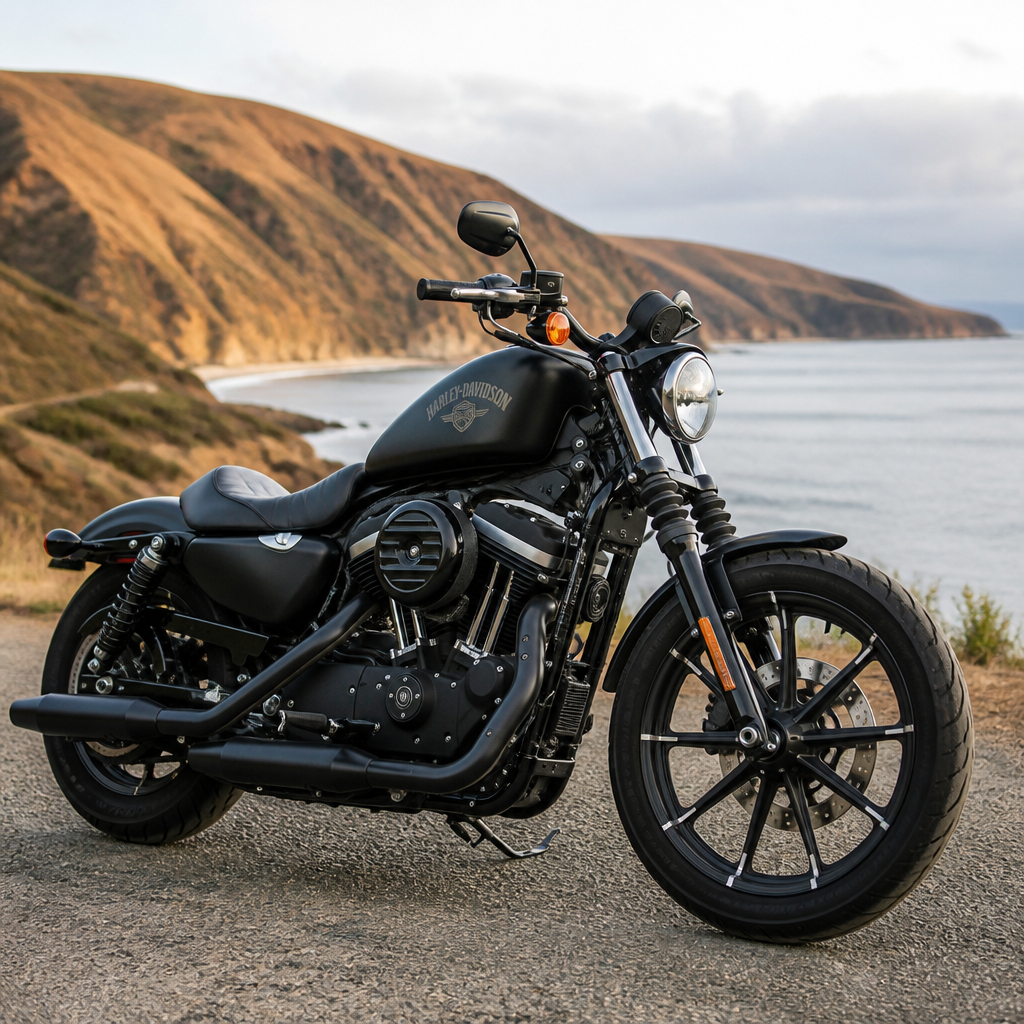
The 2020-2025 Harley-Davidson Iron 883 sits at a turning point in Sportster history, and that is exactly why values are climbing. It was among the last air-cooled Evolution Sportsters sold in meaningful numbers before Harley-Davidson shifted the line toward the liquid-cooled Sportster S and Nightster, machines that are faster and more sophisticated but fundamentally different in feel, sound, maintenance, and identity. For used-bike shoppers, collectors, and riders who want a simple American V-twin they can actually use, the Iron 883 has become more than an entry-level cruiser. It is now the end chapter of a platform that defined Harley ownership for decades.
When people ask why these bikes are appreciating, the short answer is scarcity plus significance. The Iron 883 represented the final, accessible form of the rubber-mounted XL platform powered by the 883cc Evolution engine. Air-cooled means the cylinders are cooled primarily by airflow and engine finning rather than a radiator. Sportster refers to Harley-Davidson’s long-running middleweight line introduced in 1957. Appreciation, in this context, does not mean every used example is suddenly an investment-grade collectible. It means clean, unmodified, low-mileage, well-documented bikes are holding value better than expected and, in some markets, selling for more than they did a few years ago.
I have watched this pattern before with discontinued motorcycles that seemed ordinary when new. The market shrugs at them for years, then emissions rules tighten, product lines change, and riders realize the replacement does not scratch the same itch. That realization is now happening with the Iron 883. Buyers who once dismissed it as a beginner Harley are re-evaluating what it offers: approachable size, classic proportions, enormous aftermarket support, straightforward maintenance, and the unmistakable pulse of a 45-degree air-cooled V-twin. Those traits matter because they are increasingly rare in new motorcycles sold by major manufacturers.
This hub article explains why 2020-2025 Iron 883 models are gaining attention, what changed across the final years, what buyers should inspect, how pricing works, and where this bike fits within the broader Harley-Davidson used buyer guide landscape from 1990 through 2048. Think of it as the central reference point for shoppers comparing late Sportsters with older carbureted XLs, 1200 variants, Dyna models, Softails, and the newer Revolution Max era. If you understand the Iron 883 clearly, you understand a major piece of modern Harley-Davidson market behavior.
Why the final Iron 883 matters in Harley-Davidson history
The Iron 883 matters because it closed the book on a lineage that remained mechanically recognizable for generations. By 2020, the platform was mature, sorted, and well understood. Harley had spent years refining fuel injection, rubber mounting, belt drive durability, switchgear, and ABS availability. The result was a bike that still felt traditional without carrying many of the quirks found in earlier used Sportsters. In practical terms, that makes late Iron 883 examples easier to recommend than many romanticized older Harleys that demand more owner tolerance.
The bigger historical factor was regulation and model strategy. Harley-Davidson discontinued the Iron 883 and the broader air-cooled Sportster family in several markets as emissions and product priorities changed. Once buyers understood there would be no direct replacement for this exact formula, demand tightened. The newer Nightster is competent and objectively quicker, but it has a very different engine character, riding position, and ownership experience. That distinction is critical. Motorcycle markets do not reward “better” in a vacuum; they reward vehicles that deliver something no longer available.
The Iron 883 also occupies a sweet spot inside the Harley brand. It was less intimidating than a big twin, cheaper to insure than many larger models, easier to customize than most modern motorcycles, and familiar to riders stepping up from standards, metric cruisers, or training-school machines. Because so many riders started on one, nostalgia is feeding demand. That nostalgia is now intersecting with limited supply, especially for stock bikes with factory exhaust, original bars, complete take-off parts, service receipts, and no crash history.
2020-2025 model-year context and what buyers should know
Strictly speaking, the Iron 883’s production run does not continue as a mainstream new model through 2025 in most regions, but shoppers and searchers use “2020-2025 Iron 883” as a market window. They are usually referring to the final years of availability, dealer leftovers, registration timing, and the period in which these motorcycles shifted from current inventory to collectible used stock. That search behavior matters because price tracking often follows registration year, not just build year. A 2022-titled leftover can trade differently from a 2020 bike even when specifications are nearly identical.
Mechanically, late Iron 883 models are known for the air-cooled 883cc Evolution V-twin, electronic fuel injection, five-speed transmission, belt final drive, and low seat height around 25.7 inches laden. Power output is modest by modern standards, generally discussed in the high-40-horsepower range with torque around 54 lb-ft, but the numbers miss the point. These bikes deliver torque early, feel mechanically alive at urban speeds, and encourage unhurried riding. For many owners, that analog personality is the product.
What changed most in the final years was not the core hardware but the market around it. Pandemic-era buying temporarily distorted prices across motorcycles, then the discontinuation narrative gave late Sportsters a second life. Dealers that once treated Iron 883 trade-ins as commodity inventory began advertising them as “last air-cooled Sportsters.” Private sellers noticed. The best examples now move quickly, especially in black, with ABS, low mileage, and tasteful reversible modifications such as slip-ons, better shocks, or a solo seat with original parts included.
| Buyer factor | Why it affects value | Best-case example |
|---|---|---|
| Originality | Stock bikes appeal to both collectors and first-time Harley buyers | Factory exhaust, bars, air cleaner, reflectors, and take-off parts included |
| Documentation | Receipts reduce uncertainty and support premium asking prices | Dealer or independent service records from new |
| ABS | Many riders prefer the added safety margin and resale flexibility | Late-model bike with ABS and clean title |
| Mileage | Low mileage helps, but condition matters more than the odometer alone | 4,000-mile bike stored correctly and exercised regularly |
| Modifications | Heavy customization narrows the buyer pool and can lower value | Mild upgrades with stock parts retained |
Why prices are appreciating instead of falling normally
Used motorcycles usually follow a predictable curve: first owner absorbs the steepest depreciation, midlife examples become cheap transportation, then the best survivors rise if the model earns classic status. The Iron 883 is compressing that timeline. It has not become expensive because it is rare in absolute numbers. It is appreciating because truly desirable examples are rarer than production totals suggest. Many were customized aggressively, dropped at low speed, parked for long periods, or maintained casually under the assumption that they would always be plentiful and cheap.
Another reason is replacement cost. If a rider wants a new Harley-Davidson with a low seat, urban-friendly ergonomics, exposed twin-shock rear suspension, and old-school engine pulse, there is no exact showroom equivalent. The Sportster S and Nightster occupy different performance and styling territory. That pushes traditional buyers back into the used market. Whenever a discontinued product has strong brand identity and weak direct substitution, residual values strengthen. You can see similar patterns with air-cooled Porsche 911s, Jeep TJ Wranglers, and Toyota FJ Cruisers.
There is also a financing effect. Late-model used Harleys are easier for many buyers to justify than a far more expensive new model, especially when interest rates are elevated. An Iron 883 that feels honest, simple, and proven can be a safer emotional purchase than a complex machine that depreciates harder. Appreciation will not be uniform, though. Salvage-title bikes, neglected examples, and trendy customs built to someone else’s taste still struggle. The money chases originality, documentation, and condition. That is the central rule buyers should remember.
How to inspect a used Iron 883 like a serious buyer
Start with the basics: title status, VIN consistency, service history, cold-start behavior, tire age, brake fluid color, and battery health. On an Iron 883, I pay close attention to evidence of poor storage. Surface corrosion on fasteners, stale fuel smell, weak idle after startup, and a battery tender lead permanently hanging off the side can indicate a bike that sat too often. Sitting is not automatically bad, but long inactivity causes more real-world issues than moderate use. Fuel-injected bikes tolerate downtime better than carbureted machines, yet old fuel, sulfated batteries, and dried tires still cost money.
Then inspect common modification zones. Exhaust swaps are normal, but ask whether the fueling was adjusted with a Screamin’ Eagle tuner, Vance & Hines Fuelpak, Dynojet Power Vision, or similar device. A loud pipe without proper calibration can create poor throttle response, excess heat, and popping on deceleration. Check the air cleaner, wiring around handlebar changes, front turn signal relocation, and fender strut area for amateur workmanship. I also look for scraped peg feelers, bar-end rash, dented mufflers, and slightly twisted bars that suggest a tip-over the seller calls “garage damage.”
On the road, expect vibration, but distinguish normal Harley character from trouble. A healthy rubber-mounted Sportster vibrates at idle and smooths noticeably once rolling. Clutch take-up should be predictable, shifts firm but not alarming, and belt drive quiet. Watch for fork seal weep, rear shock neglect, and wheel-bearing roughness. None of these are exotic failures, which is good news: parts availability is strong, independent Harley specialists understand the platform intimately, and owner communities have documented nearly every issue. That support network is one reason late Iron 883s remain liquid in the market.
Where the Iron 883 fits within used buyer guides from 1990 to 2048
As a hub topic, used Harley-Davidson buyer guidance from 1990 to 2048 needs structure. The best way to place the Iron 883 is by eras. The 1990s cover rigid-mount Evolution Sportsters, carburetion, and more mechanical rawness. The 2004 update introduced rubber mounting and transformed day-to-day comfort. Fuel injection arrived on later models, improving cold starts and consistency. By 2020, the Iron 883 had become the refined endpoint of that arc. It carries the traditional template with fewer compromises than earlier generations.
That makes it a gateway comparison bike. If a shopper is deciding between a 1998 883 Hugger, a 2007 1200 Nightster, a 2016 Forty-Eight, and a 2021 Iron 883, the late Iron often becomes the baseline because it is simple to live with and easy to value. From there, buyers can branch outward. Want more torque? Compare 1200 Evolution Sportsters. Want highway composure? Cross-shop Dynas and Softails. Want modern performance over heritage feel? Move to the Revolution Max family. The Iron 883 sits in the center because it clarifies priorities quickly.
Looking forward to 2048 may sound speculative, but long-range buyer guides are really about ownership trajectories. Which bikes will still have parts, community knowledge, and emotional relevance? The final air-cooled Sportsters score well on all three. Harley built enough of them to sustain supply, the aftermarket is deep, and the cultural footprint is secure. That does not guarantee every example will appreciate dramatically. It does mean the best bikes should remain desirable, serviceable, and easy to sell, which is more useful to most owners than auction-headline prices.
Who should buy one, and who should pass
The Iron 883 is ideal for riders who value character, simplicity, and customization headroom more than outright performance. It suits urban riders, shorter riders, returning motorcyclists, and Harley buyers who want an authentic experience without the size or cost of a touring model. It also makes sense for collectors of modern classics who prefer usable machines over static garage art. If you buy carefully, maintain it correctly, and resist irreversible customization, ownership risk is lower than many trendy motorcycles with weaker parts support.
It is not the right bike for everyone. Two-up comfort is limited, suspension travel is short, cornering clearance is modest, and sustained interstate travel can feel busy compared with larger Harleys. Riders who want quick acceleration, advanced electronics, or superior braking should look elsewhere. The 883 engine can also tempt owners into chasing 1200 conversion fantasies. Some conversions are excellent, but many reduce resale because buyers worry about workmanship, tuning, and insurance disclosure. Stock displacement remains the safest play if future value matters.
For shoppers building a Harley-Davidson used-bike strategy, the key lesson is simple: the 2020-2025 Iron 883 represents the end of an era buyers can still afford. It combines approachable ownership with genuine historical significance, and that combination is why appreciation is real. Use this article as your hub, then compare years, trims, and neighboring model lines with the same discipline: verify originality, inspect maintenance, understand market context, and buy the best example you can justify. If an air-cooled Sportster still speaks to you, start searching now before the remaining clean bikes get even harder to find.
Frequently Asked Questions
Why are 2020-2025 Harley-Davidson Iron 883 models starting to appreciate in value?
The biggest reason is timing. The 2020-2025 Iron 883 represents the end of an era for Harley-Davidson’s traditional air-cooled Sportster platform, and buyers increasingly recognize that. For decades, the Sportster line delivered a very specific experience: an air-cooled Evolution V-twin, visible mechanical character, straightforward maintenance, compact proportions, and a riding feel that was rawer and more elemental than Harley’s larger touring and cruiser models. When Harley-Davidson shifted the lineup toward newer liquid-cooled machines like the Sportster S and Nightster, it did not simply update the old formula—it replaced it with something faster, more modern, and very different in personality.
That difference matters in the used market. Enthusiasts, collectors, and first-time Harley buyers often place a premium on motorcycles that mark the end of a long-running design philosophy. The Iron 883 is not just another entry-level cruiser anymore; it is one of the last widely available examples of the classic air-cooled Sportster formula in its most recognizable modern form. It also benefits from strong styling appeal, broad aftermarket support, and Harley-Davidson badge value, all of which help sustain demand. As supply becomes fixed and more riders decide they want a “real” old-school Sportster before prices move further, clean, low-mileage examples become more desirable and values firm up accordingly.
What makes the Iron 883 different from the newer Sportster S and Nightster?
The Iron 883 differs from the newer generation in almost every way that shapes rider experience. The 883 is built around the long-running air-cooled Evolution engine, a simple, charismatic V-twin that emphasizes feel, sound, and mechanical connection over outright speed. It has a narrower operating envelope, more vibration, a more traditional power delivery, and a stripped-down, elemental personality. Riders often describe it as a bike with more “heartbeat” than polish. It invites a slower, more deliberate style of riding and ownership that many Harley enthusiasts actively prefer.
By contrast, the Sportster S and Nightster use modern liquid-cooled engines, updated electronics, and performance-oriented engineering. They are objectively quicker, more advanced, and more capable in many measurable ways, but they belong to a different category of motorcycle. Their throttle response, engine character, maintenance profile, ergonomics, and styling direction move away from the classic Sportster identity that buyers associated with the name for generations. That is why the Iron 883 is becoming more important: it stands as one of the last bikes to deliver the traditional compact Harley V-twin experience without being filtered through a contemporary performance-first design brief.
Is the 2020-2025 Iron 883 a good bike for collectors, riders, or both?
It has appeal to both groups, which is a major reason values are strengthening. For collectors, the Iron 883 checks several important boxes: it is tied to a historically significant model line, it marks the close of the air-cooled Sportster chapter, it was sold in meaningful numbers so parts and documentation remain accessible, and it has a clear identity within Harley-Davidson history. Collectible motorcycles are often either too rare to own comfortably or too common to stand out, but the Iron 883 sits in a useful middle ground. It is common enough to support ownership and maintenance, yet significant enough to gain recognition as the market reassesses its importance.
For riders, the Iron 883 remains attractive because it is usable, approachable, and easy to personalize. It offers manageable size, classic styling, and a broad support network of dealers, independent shops, and aftermarket suppliers. That means owners can enjoy the bike on the road while still preserving long-term value, especially if modifications are reversible and the original parts are retained. In many cases, the strongest ownership strategy is to buy a clean, well-kept example, ride it responsibly, maintain it properly, and avoid irreversible customization. That approach preserves the bike’s future desirability while still letting the owner enjoy what made the model special in the first place.
What should buyers look for if they want an Iron 883 that will hold or gain value?
Condition, originality, and documentation matter most. Buyers who care about future value should prioritize motorcycles that are clean, unmodified or lightly modified, and backed by service records. A stock exhaust, factory paint, original lighting, intact emissions equipment where applicable, and the presence of take-off parts can all help. Harley buyers have always customized Sportsters heavily, so original examples tend to stand out more over time. If a bike has been modified, quality matters: tasteful upgrades from known brands are preferable to poorly installed budget parts, but factory-correct bikes generally remain the safest play for long-term collectibility.
Mileage is important, but it should be viewed in context. Extremely low mileage can boost value, especially on late-production bikes in exceptional condition, but a well-maintained Iron 883 with moderate use can still be highly desirable. Buyers should inspect for signs of neglect rather than simply chasing the lowest odometer reading. Look closely at tires, belt condition, battery health, fluid maintenance, corrosion, fasteners, and evidence of tip-overs or cosmetic damage. Verify the VIN, confirm title status, and compare the bike’s setup to factory specifications. The best appreciation candidates are usually honest, complete motorcycles with strong cosmetic condition, careful ownership history, and no mystery surrounding maintenance or accident exposure.
Will Iron 883 values keep rising, or is this just temporary hype?
Values will likely continue to strengthen gradually rather than explode overnight, because the forces behind appreciation are structural, not purely speculative. The Iron 883 benefits from a lasting change in the Harley-Davidson product landscape: the traditional air-cooled Sportster is no longer the center of the entry-level Harley experience. Once a model that defined an era is replaced by something mechanically and culturally different, nostalgia and historical importance tend to build steadily. That does not guarantee every Iron 883 will become a high-dollar collectible, but it does support the idea that clean, well-preserved examples should remain in demand.
That said, appreciation will probably be selective. The strongest gains are likely to go to late, original, low-mileage bikes in desirable colors and excellent condition. Heavily modified, neglected, or damaged bikes may simply hold value better than expected rather than becoming true collectibles. The market will also be shaped by broader economic conditions, interest in analog motorcycles, and how future riders define authenticity within the Harley brand. Still, the core argument remains solid: the 2020-2025 Iron 883 is tied to the final years of a beloved air-cooled platform, and motorcycles that close an important chapter in a major brand’s history often age better in the market than people first expect.