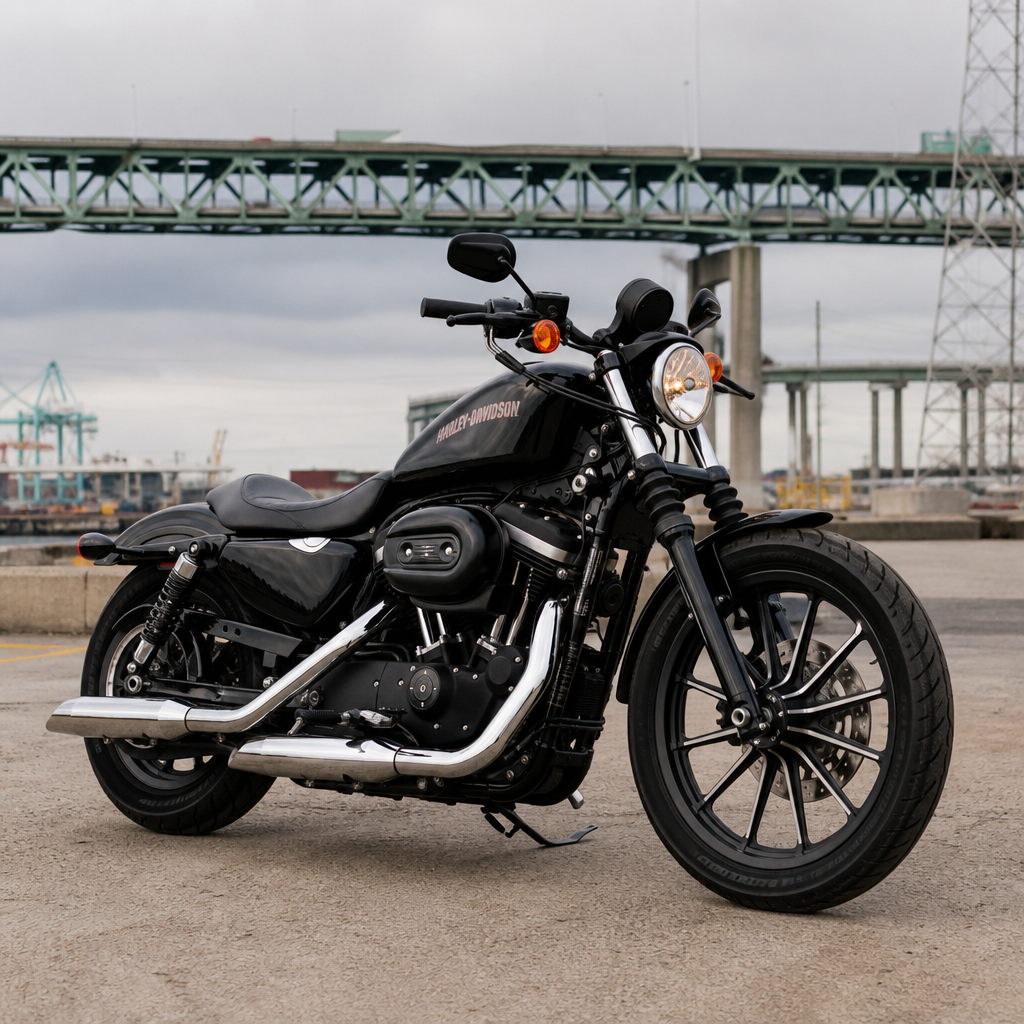
The 2007-2011 Nightster 1200 occupies a specific place in Harley-Davidson history: it was one of the first factory dark customs to feel intentionally stripped, urban, and contemporary while still rooted in the long-running Sportster platform. For used buyers, that matters because the original Nightster combined classic Evolution V-twin durability with a look that many later owners tried to copy, often with mixed results. Finding a clean example today means understanding not only what makes the Nightster distinctive, but also how to separate an honest motorcycle from a heavily altered bike that has lost the qualities that made the model desirable in the first place.
In plain terms, the 2007-2011 Nightster 1200 is the XL1200N version of the Sportster sold during the first wave of Harley’s blacked-out custom trend. “Clean example” does not just mean shiny paint. In the used market, it means correct model identity, sound mechanical condition, straight chassis, quality maintenance history, and tasteful or minimal modification. Because this page sits within a broader used buyer guide series covering Harley-Davidson models from 1990 through 2045, it also serves as a hub: the Nightster is one chapter in a larger story about how Harley platforms evolved, what years represent the best value, and how to inspect bikes era by era. If you know how to assess this model, you will make better decisions across the entire used Harley landscape.
I have inspected enough Sportsters to know that the Nightster attracts two kinds of sellers. One group kept the bike stock, serviced it on time, and understood the appeal of the model’s low stance, solo seat, mid controls, and black treatment. The other group chased style over function, cutting fenders, deleting practical parts, installing bargain suspension, and neglecting routine service because the bike still “ran fine.” The difference shows up immediately in ownership cost. A clean, mostly original Nightster can be a dependable middleweight cruiser and a strong long-term buy. A poorly modified one can become an expensive correction project.
The reason this model still draws attention is simple. It delivered a cohesive factory design at a time when many riders were building similar customs from standard Sportsters. The peanut tank, laced wheels, side-mounted plate, chopped fenders, and blacked-out finishes gave it an identity beyond trim-level cosmetics. It also sits at an interesting point in the Sportster timeline: fuel injection had arrived by this period, rubber mounting had already improved ride comfort, and the 1200 engine offered enough torque to feel serious without becoming intimidating. For riders shopping a used Harley under the larger 1990-2045 buyer-guide umbrella, the Nightster remains one of the clearest examples of a model where originality and condition directly influence value.
What Makes the Original Nightster Different
The Nightster was not just a black Sportster with a name decal. Harley-Davidson gave the XL1200N a recognizable package that included a lowered stance, narrow front end feel, solo seat, low handlebars, wire-spoke wheels, and a visual treatment that emphasized satin and black finishes over chrome. The engine was the air-cooled Evolution 1200 V-twin, mounted in the rubber-mounted Sportster chassis introduced earlier in the decade. That matters because buyers comparing Nightsters with pre-2004 rigid-mounted Sportsters need to understand they are shopping very different experiences in terms of vibration, mounting hardware, and frame architecture.
From a practical buyer’s standpoint, the 2007-2011 bikes share the core ingredients that define the model. Fuel injection is a major advantage in the real world. Cold starts are easier, altitude changes are less troublesome, and many of the rough-running issues associated with neglected carbureted setups simply do not apply. At the same time, these bikes are still simple by modern motorcycle standards. Hydraulic lifters eliminate routine valve adjustment, belt final drive reduces daily mess compared with chain systems, and parts availability remains excellent through Harley-Davidson dealers, independent specialists, and the aftermarket.
Where buyers get tripped up is assuming all Nightsters are equally collectible or equally usable. They are not. The best examples preserve the original design cues without sacrificing function. If a seller has replaced the stock seat, bars, exhaust, mirrors, turn signals, rear shocks, and fender supports, you are no longer evaluating the original dark custom so much as someone’s interpretation of it. That may still be fine if the work was done properly, but it changes value. On a hub level, this is a lesson that applies across used Harleys from 1990 onward: platform strength can survive modifications, but model identity often does not.
Model-Year Context and Where This Bike Fits in the 1990-2045 Used Harley Story
Within the larger used buyer guide range of 1990-2045, the 2007-2011 Nightster belongs to a highly relevant transition era. Earlier 1990s Harleys often appeal for mechanical simplicity, but buyers must account for age-related wear, carburetion, and older charging and braking expectations. By contrast, the late-2000s Sportster family benefits from modernized electronics and a more settled production formula while still avoiding the heavier technological complexity of much newer models. That makes the Nightster an excellent anchor point for riders who want character without stepping into either vintage ownership burdens or very recent pricing.
It also functions well as a hub bike for the broader Harley-Davidson subtopic because it connects several major buying themes. It introduces the Evolution engine, one of Harley’s most durable modern powerplants. It illustrates the difference between model-specific desirability and generic platform value. And it shows how styling packages can become historically important in their own right. In the wider series, buyers might move from this article to guides on rigid-mount Sportsters, Dyna models, Softails, Twin Cam touring bikes, or future-era used assessments. The Nightster sits near the middle of that map, linking old-school Harley architecture with a newer, factory-custom market identity.
If your goal is to buy one bike rather than build a collection, this period is attractive because depreciation has largely stabilized on good examples. Clean Nightsters are usually not the cheapest Sportsters, but they are often better long-term buys than abused lower-spec models. The market consistently rewards originality, complete documentation, and uncut factory components. That market behavior mirrors what I see across other sought-after Harley trims: once a model becomes known for a particular look, returning a modified bike to factory-correct condition is rarely cheap.
How to Inspect a Used 2007-2011 Nightster 1200
A disciplined inspection starts with identity, then condition, then maintenance. Confirm the VIN matches the title and corresponds to an XL1200N. Check for crash damage before you get distracted by cosmetic accessories. Look at the fork tubes for pitting or leakage, inspect the steering stops for impact marks, and sight down the bike to see whether the bars, fork, and rear wheel line up naturally. Uneven gaps, fresh paint on one side only, or a side-mounted plate bracket that has been roughly rewelded can signal a drop or worse. Because Nightsters often lived as style bikes in urban settings, low-speed tip-over evidence is common.
The engine should start easily, idle steadily once settled, and pull cleanly without excessive mechanical noise. Sportster top ends naturally make some valvetrain sound, but harsh knocking is not normal. Inspect around rocker boxes, primary covers, and derby covers for weeping. Check the belt carefully for stones, cracks, or missing teeth. On test rides, pay attention to clutch take-up, transmission engagement, and charging performance. The system voltage should rise appropriately when running; a weak charging system is not unusual on any older Harley and should be priced into the deal if present.
Suspension and controls deserve close attention because many Nightsters were modified cheaply. The stock low suspension already limits travel, so bargain-lowered shocks can make the ride punishing and compromise handling. Check whether the sidestand angle looks extreme, whether the exhaust scrapes too easily, and whether the bike tracks neutrally over bumps. Front brake feel should be predictable, not wooden or pulsing. Finally, look at service records. A seller who can show regular oil changes, brake fluid replacement, battery history, tire dates, and documented recalls or dealer updates is offering more than a motorcycle; they are offering reduced uncertainty.
| Inspection Area | What to Look For | Why It Matters |
|---|---|---|
| VIN and title | Matching numbers, correct XL1200N designation, no salvage branding | Protects resale value and confirms true model identity |
| Chassis and forks | Straight bars, intact steering stops, no fork leaks, aligned wheels | Reveals crash damage or neglected front-end service |
| Engine and primary | Easy starting, steady idle, no heavy knocking, minimal oil seepage | Separates normal Sportster character from expensive repairs |
| Belt, tires, brakes | Healthy belt, recent tires, even pad wear, smooth braking | These are immediate safety and ownership-cost items |
| Modifications | Quality parts, neat wiring, original take-off parts included | Indicates whether the bike was improved or merely personalized cheaply |
| Records | Receipts, owner’s manual, keys, service intervals documented | Good paperwork usually reflects careful ownership |
Common Problems, Smart Upgrades, and Bad Modifications
No used buyer guide is credible if it pretends any motorcycle is flawless. The Nightster’s issues are usually manageable, but buyers should know them in advance. Battery and charging complaints are common on older Harleys that sit too long. Stale fuel, weak batteries, and corroded connections can create misleading symptoms that sellers downplay. Wheel bearings, steering-head bearings, fork seals, and aged rubber mounts also deserve attention simply because these bikes are now old enough for time-based wear. None of this is unique to the Nightster, but it affects the total cost of ownership.
The bigger question is modification quality. A smart upgrade list is short and practical: better rear shocks from Progressive Suspension, Öhlins, or quality take-offs; fork springs matched to rider weight; a well-mapped exhaust and intake combination using reputable tuners such as Dynojet Power Vision or Screamin’ Eagle calibration support where legal and appropriate; and comfort improvements like a better seat if the original is included in the sale. These changes improve the Nightster without erasing it. They are reversible, documented, and based on known weaknesses such as limited suspension travel.
Bad modifications are easy to spot once you know the pattern. Mini turn signals with poor visibility, chopped harnesses, loud unmapped exhausts, rigid struts replacing shocks, eBay mirrors, deleted front fenders, and side-mounted plates installed without regard for legality all hurt usability and often indicate broader neglect. I also treat any “hardtailed look” conversion with caution unless the workmanship is exceptional and fully documented. Across the wider 1990-2045 Harley used guide landscape, this is one of the most consistent buying truths: tasteful upgrades support value, but irreversible cosmetic hacking usually destroys it.
Pricing, Originality, and Who Should Buy One
A fair Nightster price depends on mileage, originality, maintenance, local demand, and whether the bike comes with factory take-off parts. Mileage alone is not the deciding factor. I would rather buy a 20,000-mile example with records, stock bodywork, fresh tires, and a healthy charging system than a 6,000-mile bike that sat for years with old fuel, mismatched accessories, and no paperwork. Market shoppers often overvalue odometer readings and undervalue consistency of care. That mistake becomes expensive after purchase.
Originality carries a premium because the Nightster’s appeal is tied to its factory execution. Collectors and informed riders both want the real thing, not a standard Sportster dressed in black parts. If the bike has the correct wheels, fenders, tank, side covers, exhaust mounting, and trim details, it stands apart immediately. Sellers who include the stock seat, bars, indicators, and exhaust along with upgraded components make their motorcycles easier to trust and easier to resell. This principle applies broadly to used Harley buyer guides: complete bikes with provenance outperform mystery builds.
Who should buy a 2007-2011 Nightster 1200? It suits riders who want a lighter, simpler Harley with strong aftermarket support, manageable size, and authentic factory-custom style. It does not suit riders expecting touring comfort, long-travel suspension, or modern sport-bike braking. As a hub article within the Harley-Davidson “Used Buyer Guides: 1990-2045” topic, the Nightster represents a smart entry point. It teaches the habits that lead to better purchases across the brand: verify the model, inspect the chassis, prioritize records, value originality, and buy the best example you can afford.
The best 2007-2011 Nightster 1200 is not the loudest, lowest, or cheapest bike in the classifieds. It is the one that still reflects Harley-Davidson’s original dark custom formula while showing clear signs of careful ownership. For most buyers, that means a straight chassis, stock or reversible modifications, complete paperwork, healthy charging system, good belt and tires, and none of the cosmetic shortcuts that often hide poor mechanical judgment. When you find that combination, the Nightster makes sense not only as a stylish used Harley, but as a durable machine with lasting appeal.
Within the broader Harley-Davidson used-buyer landscape from 1990 through 2045, this model also teaches a bigger lesson. The strongest purchases usually sit at the intersection of mature engineering, stable parts support, and recognizable factory identity. The Nightster checks all three boxes. It benefits from the proven Evolution Sportster platform, remains easy to service with dealer and aftermarket parts, and carries a look important enough that the market still distinguishes genuine examples from imitations. That makes it more than a niche trim level; it is a reference point for how to evaluate any used Harley intelligently.
If you are building your shortlist, start by filtering for unmolested XL1200N bikes with records and clear photos of both sides, the VIN area, and service receipts. Ask direct questions about battery age, tire date codes, charging output, suspension changes, and whether the original parts are included. Then inspect patiently and be willing to walk away from cosmetic hype. A clean original dark custom is worth the search. Use this Nightster guide as your starting point, then continue through the rest of the Harley-Davidson used buyer series to compare eras, engines, and platforms before you buy.
Frequently Asked Questions
What makes the 2007-2011 Nightster 1200 different from a standard Sportster, and why does that matter when shopping used?
The 2007-2011 Nightster 1200 matters because it was one of Harley-Davidson’s earliest factory attempts at the dark custom idea that later became a major styling direction across the lineup. It was not just a Sportster with a few black parts bolted on. The Nightster arrived with a deliberately stripped, low-slung, urban look that felt more intentional than many customs of the time. Its blacked-out treatment, solo-seat attitude, chopped visual profile, and minimalist trim gave it a cohesive identity that buyers immediately recognized. That identity is a big part of why these bikes still attract attention today.
For used buyers, the key issue is authenticity versus imitation. The original Nightster inspired countless owner-built replicas and partial conversions based on other Sportster models. Some were done well, but many were assembled from mixed parts, budget aftermarket components, or cosmetic shortcuts. That means a bike can look roughly like a Nightster at a glance while lacking the original model’s correct combination of trim, finish, stance, and overall coherence. If you are paying a premium for a real Nightster, you want to confirm that it began life as one, not as a standard XL that someone blacked out over a few winters.
It also matters because the Nightster sits at a sweet spot in Harley history. It still benefits from the long-established Evolution V-twin reputation for durability and parts support, but it predates some of the styling dilution that came later as the dark custom theme became more widespread. In practical terms, a clean, largely unmolested 2007-2011 Nightster can offer a compelling mix of classic Harley mechanical simplicity, strong aftermarket support, and a factory look that remains hard to duplicate convincingly. That is exactly why originality, condition, and completeness matter more here than with an ordinary used Sportster commuter.
How can you tell if a Nightster 1200 is a clean, original example rather than a heavily modified or pieced-together bike?
Start with the basics: verify the VIN, check the title, and make sure the model designation matches what the seller claims. That should always come before cosmetic impressions. From there, evaluate the bike as a whole rather than focusing on one or two standout features. A clean original example usually has consistency. The finishes match, the hardware looks period-correct, the controls and lighting feel coherent, and the bike does not give off the sense that it has been repeatedly disassembled and reimagined by different owners.
The biggest clue is often the quality and extent of modification. Many Nightsters were used exactly as intended: as a canvas for personalization. That is not automatically bad, but heavy customization can hide crash damage, neglect, poor wiring, or low-grade aftermarket parts. Watch for non-factory paint, mismatched black finishes, cut fenders, relocated electronics, altered turn signals, sloppy wiring near the bars or under the seat, and cheap exhaust or intake setups that suggest more style chasing than careful ownership. A few tasteful bolt-ons are normal. A bike that has been endlessly “improved” deserves much closer scrutiny.
Look carefully at the wear patterns. A clean bike tends to show honest use, not strange neglect. Check the fasteners for rounded heads, inspect the frame and engine cases for tool marks, and study areas that owners often overlook when preparing a bike for sale, such as behind side covers, under the seat, around battery terminals, and beneath the rear fender. Corrosion, loose wiring, oily grime buildup, and improvised brackets usually tell a more truthful story than glossy tank paint.
Service records are another major separator. A seller who can explain maintenance history, fluid changes, battery replacement, tire age, and any upgrades with receipts is usually easier to trust than one who only talks about how “rare” or “cool” the bike is. The best finds are often bikes that remain mostly stock, have sensible mileage, show regular upkeep, and have not been transformed to chase every passing trend in bars, pipes, seats, and lighting.
What common issues should buyers inspect on a 2007-2011 Nightster 1200 before purchasing?
Mechanically, these bikes benefit from the durability of the Evolution Sportster platform, but age, use, and owner behavior matter far more now than original engineering alone. Start by checking for oil leaks or seepage around common gasket and seal areas, and do not confuse a recently detailed engine with a truly dry one. An engine that is clean but suspiciously wet in corners or around case joints after a short ride deserves attention. Also inspect the primary area, derby cover, and around the rocker boxes for signs of neglect or repeated resealing.
Fueling and intake modifications are common on Nightsters, so pay close attention to how the bike starts, idles, and responds off idle. Many owners changed exhausts and air cleaners, but not every bike was tuned properly afterward. Hesitation, popping, uneven idle, or hot-running behavior can point to an imperfect setup. None of those issues are necessarily catastrophic, but they can indicate a bike that was modified with more enthusiasm than discipline. A properly sorted Nightster should feel straightforward and predictable rather than temperamental.
Inspect the suspension and chassis with realistic expectations. These bikes were styled for attitude, not plush travel, and many examples have seen hard urban riding. Check fork seals, fork tube condition, rear shock wear, wheel bearings, tire date codes, and any signs of bent wheels or curb contact. Since the Nightster appealed to newer riders as well as experienced custom-minded owners, it is not unusual to find bikes that have been dropped at low speed. Look for bar-end rash, scuffed controls, dented exhaust, scratched primary covers, and slight misalignment in pegs or levers.
The electrical system deserves special attention because customizers often interfere with it. Test every light, switch, gauge function, charging behavior, and starting consistency. Make sure any accessory wiring is fused properly and routed cleanly. Hard starting, dim lighting, intermittent signals, or random added switches usually suggest amateur electrical work. A healthy charging system and tidy wiring are especially important on a bike that may have spent years with batteries, tenders, and add-on accessories cycling in and out of its life.
Finally, judge the bike as a total package. A supposedly premium Nightster with old tires, weak brakes, sloppy cables, and no maintenance story is not a clean example, no matter how attractive it looks in photos. Condition and evidence of thoughtful ownership should always outweigh cosmetic hype.
Is mileage important on a used Nightster 1200, or is overall condition more important?
Overall condition is usually more important than mileage alone. The Evolution-powered Sportster has a well-earned reputation for durability, so a Nightster with moderate or even somewhat higher mileage is not automatically a poor buy if it has been maintained properly. In fact, a bike that has been ridden regularly and serviced consistently can be a safer purchase than a very low-mile example that spent years sitting, aging on old fluids, old tires, and stale fuel. Low mileage only adds value when the rest of the bike supports the story.
That said, mileage still matters in context. It can help you understand where the bike is in its maintenance life cycle and whether the asking price is realistic. Compare odometer reading with wear on grips, footpegs, seat, brake pedal, shifter, and fasteners. If a bike claims unusually low mileage but shows heavy cosmetic wear or a long list of replaced parts, ask why. The answer may be harmless, but it should make sense. Consistency between mileage, condition, and service history is far more important than chasing the lowest number you can find.
On older Nightsters, storage history is almost as important as road mileage. A bike that sat in a damp garage can develop corrosion, stale fuel issues, battery problems, and dried seals despite barely being ridden. Conversely, a bike with honest mileage that was kept indoors, exercised regularly, and maintained on schedule may feel fresher and more trustworthy on the road. Buyers often overpay for low-odometer examples without factoring in the cost of recommissioning age-related items.
The best approach is to treat mileage as one data point among several. Ask for maintenance records, inspect consumables carefully, and evaluate how the bike starts, runs, stops, and presents in person. A clean Nightster is one that feels cared for, coherent, and mechanically healthy. That is more valuable than an odometer figure that looks good in a listing headline.
What should a buyer prioritize if they want a Nightster 1200 that will hold its appeal and value over time?
If long-term appeal and value matter, prioritize originality, cleanliness, and documentation. The market tends to reward bikes that best capture what made the Nightster special in the first place: the authentic factory dark custom formula, not a generic used Sportster dressed up to resemble one. A bike with original paint, correct core components, clean finishes, and minimal irreversible modifications will usually be more desirable than one with a pile of aftermarket parts and a vague backstory.
Buyers should also prioritize reversibility when considering modified examples. A Nightster with a different exhaust, air cleaner