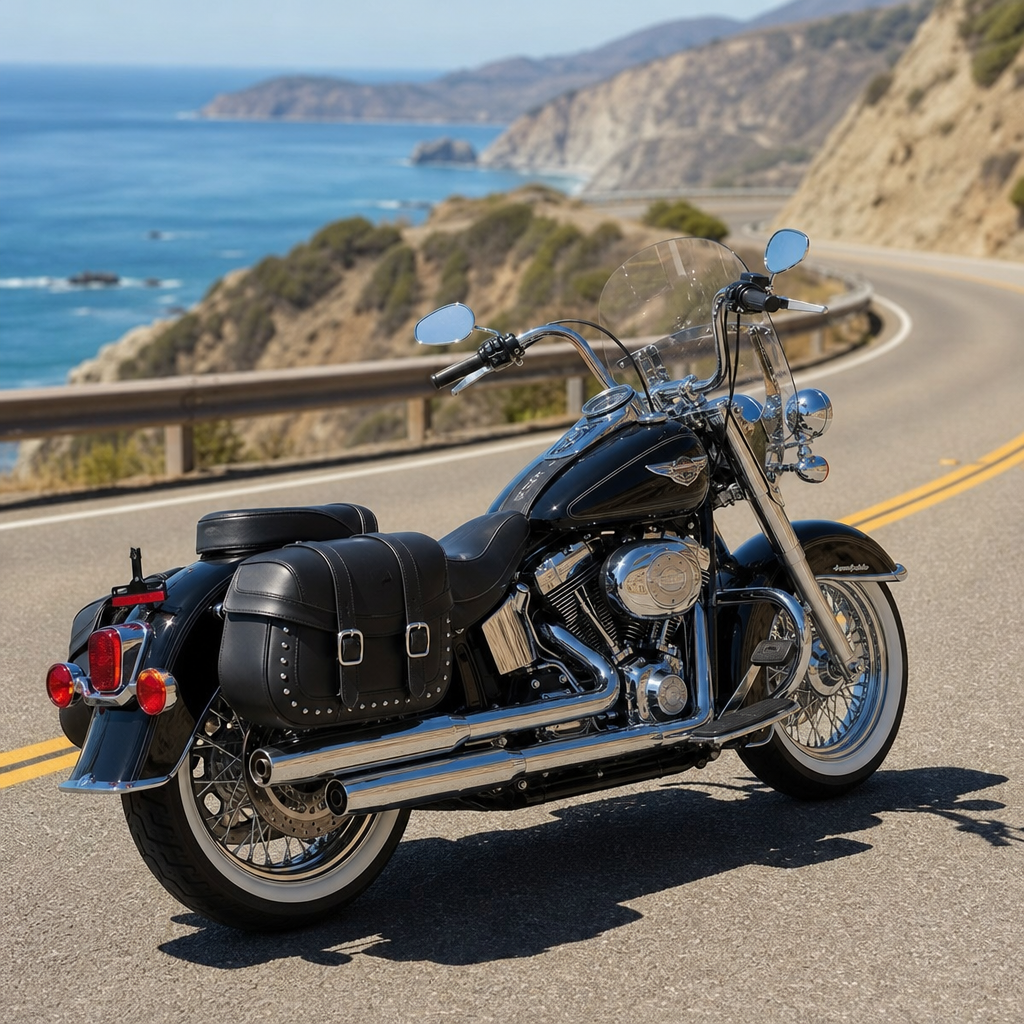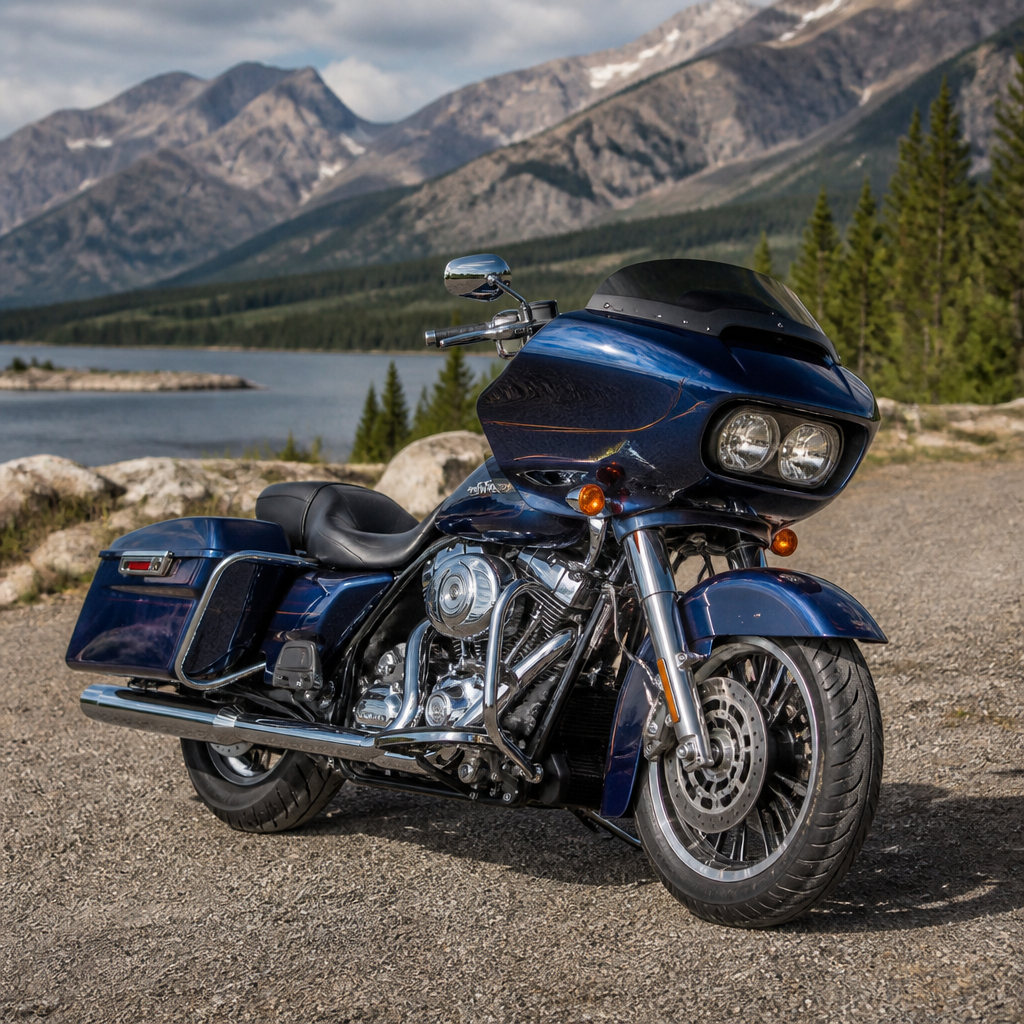
The 1998 Road Glide sits in one of the most misunderstood corners of Harley-Davidson history. Buyers searching for a used touring bike often see the words fuel injection, Evolution, Magneti Marelli, and transition years used together without much explanation. In practice, the 1998 Road Glide represents a period when Harley-Davidson was moving from older mechanical simplicity toward more electronically managed touring motorcycles, and that shift created strengths, quirks, and ownership risks that still matter in today’s used market.
For a buyer guide focused on used Harley-Davidson models from 1990 to 2046, this machine works as an ideal hub topic because it forces the right questions. What exactly changed in the late 1990s? Which systems are durable, and which ones become expensive when neglected? How do you inspect a used touring Harley that may have twenty-five years of wear, aftermarket parts, and partial repairs behind it? I have evaluated enough older FL touring bikes to know that a clean-looking Road Glide can still hide charging issues, intake leaks, weak fuel delivery, and parts-availability headaches. Cosmetics are easy. Sorting transition-era systems is where the real buyer value lives.
Before going further, define the core terms. The Road Glide is Harley-Davidson’s frame-mounted-fairing touring platform, built for highway stability and long-distance comfort. Fuel injection, in this context, refers to the early electronic fuel delivery system replacing a traditional carburetor. The phrase transition years describes motorcycles built while Harley-Davidson was evolving component design, engine management, service practices, and dealer familiarity. That matters because transition bikes often ride better than their reputation suggests, but they demand a more informed inspection and a more disciplined maintenance plan than later, more standardized models.
The 1998 model year matters for another reason: it sits at the intersection of old-school chassis expectations and early electronic control logic. You still get the familiar feel of a late-Evolution touring bike, but you also inherit sensors, wiring, and throttle-body components that many independent shops now approach with caution. Some owners convert these motorcycles to carburetion. Others keep the original injection and learn how to diagnose it properly. Neither path is automatically right. The best choice depends on your budget, mechanical confidence, emissions rules in your area, and whether originality affects resale. If you are shopping the broader 1990–2046 used Harley-Davidson market, understanding this bike teaches you how to evaluate every major era that followed.
Why the 1998 Road Glide Matters in a Used Harley-Davidson Buyer Guide
A sub-pillar hub for used buyer guides needs more than model trivia; it needs a framework. The 1998 Road Glide provides one because it bridges the concerns that define Harley-Davidson ownership across decades: engine architecture, fuel system design, touring chassis wear, electrical reliability, and parts support. When I compare used Harleys for buyers, I group them into practical eras rather than simple calendar blocks. Early 1990s bikes are largely analog and straightforward. Late 1990s bikes begin introducing systems that require scan-based thinking. Twin Cam years add cam chain tensioner concerns and broader EFI familiarity. Rushmore-era and later machines improve brakes, cooling strategies, infotainment, and diagnostics, but they also increase dependence on software and modules.
The 1998 Road Glide therefore belongs in the center of any 1990–2046 buyer guide index. It helps shoppers understand how to trade simplicity for refinement. A carbureted Electra Glide from the early 1990s can be easier to revive after long storage, but it may not match the cold-start consistency or altitude compensation that EFI can offer when healthy. A later Twin Cam or Milwaukee-Eight touring bike gives better aftermarket support and more robust dealer knowledge, but purchase prices are usually much higher. The 1998 model often lands in the middle: affordable entry cost, classic touring character, and enough complexity to separate informed buyers from impulse buyers.
That is why this page should connect readers to later deep dives on Evolution touring models, early Harley fuel injection systems, Twin Cam used-buying checklists, touring frame changes, and long-term ownership cost comparisons. If you understand this one model, you can navigate most used Harley-Davidson touring listings with better judgment.
The Fuel Injection Transition: What Harley-Davidson Was Changing
In plain terms, Harley-Davidson was trying to deliver more consistent fueling, cleaner emissions performance, and easier starting than a carburetor could provide. The early electronic fuel injection system used on late-1990s touring models did accomplish that when tuned and maintained correctly, but it did so with hardware that now sits in an awkward historic zone. It is too modern to be serviced like a purely mechanical setup and too old to enjoy the plug-and-play ecosystem that later Delphi-equipped bikes benefit from.
The common pain point is not that fuel injection itself is bad. The pain point is aging early EFI infrastructure. On a 1998 Road Glide, you need to think about injector condition, fuel pressure, intake seals, sensor integrity, throttle-body wear, wiring health, and whether previous owners modified the bike without understanding the system. I have seen motorcycles blamed for “bad injection” when the true faults were cracked vacuum lines, corroded grounds, stale fuel varnish, or a charging system that dropped voltage under load. Early EFI is less forgiving of weak electrical basics than a carbureted bike.
Another transition issue involves technician familiarity. Many current dealership technicians spend most of their time on Twin Cam, M8, and modern diagnostic platforms. Independent Harley specialists are often better resources for a 1998 machine, especially if they worked on late-Evolution touring models when these bikes were current. That reality affects ownership costs. A bike can be mechanically sound yet become expensive if local shops refuse the work or simply replace parts by guesswork.
What to Inspect Before You Buy a 1998 Road Glide
Start with the motorcycle cold. A seller who pre-warms the engine may be masking hard-start behavior, idle instability, or top-end noise. Listen for a clean, consistent start and a stable idle after the initial warm-up period. Surging, coughing through the intake, fuel smell, or repeated stalling can point to air leaks, dirty injectors, failing sensors, or incorrect prior tuning. None of those automatically kill a deal, but all should change price and expectations.
Next, inspect the charging system with a meter. Touring Harleys of this era can suffer from weak batteries, tired stators, regulator problems, and poor cable connections. Low system voltage creates false symptoms across ignition and fuel delivery. Check battery age, charging output, and cable condition before chasing anything else. Then move to the fuel tank interior, pump function if equipped, fuel lines, and signs of long-term storage. Old fuel destroys confidence quickly on transition-era EFI.
On the road, the bike should track straight, brake predictably, and shift without drama. Touring chassis wear shows up as vague steering, wobble under deceleration, and rear suspension harshness. Swingarm bearings, steering-head bearings, fork bushings, motor mounts, and tires all matter. A smooth engine with a loose chassis is still an expensive project.
| Inspection Area | What to Look For | Why It Matters |
|---|---|---|
| Cold start | Long cranking, stalling, fuel smell, unstable idle | Reveals EFI, sensor, or intake leak issues |
| Charging system | Weak battery, low voltage, burned connectors | Electrical weakness mimics fuel problems |
| Fuel system | Old fuel, cracked lines, inconsistent throttle response | Aging components are common on stored bikes |
| Chassis | Headshake, wobble, wallowing, fork leaks | Touring comfort depends on suspension health |
| Service records | Receipts, part numbers, dated maintenance notes | Confirms whether problems were repaired correctly |
How to Fix the Common Problems Without Guessing
The smartest repair strategy is to work from baseline mechanical condition outward. Do not start by swapping expensive EFI parts because the bike “runs weird.” First verify compression, intake sealing, spark quality, charging voltage, ground integrity, and fresh fuel. On older Harley-Davidson touring bikes, especially transition models, foundational issues are more common than failed electronic modules.
If the bike starts but runs lean, hunts at idle, or pops through the intake, smoke-test the intake tract or inspect seals carefully. Intake leaks are notorious for creating symptoms that owners misread as injector failure. If throttle response is inconsistent, measure fuel pressure and inspect injector spray pattern or have injectors professionally cleaned and flow-tested. If the motorcycle stalls hot, check heat-related electrical faults, crank position inputs where applicable, coil condition, and harness rub points. A systematic test plan saves hundreds of dollars.
When repair parts are needed, prioritize known-quality sources. Genuine Harley-Davidson parts, reputable aftermarket suppliers, and established specialists are worth the extra cost. I would avoid mystery electronics from generic marketplaces on a 1998 Road Glide. They often create intermittent faults that waste diagnostic time. For technical support, factory service manuals remain essential, and tools such as a quality multimeter, fuel-pressure gauge, compression tester, and smoke tester do more good than random parts replacement ever will.
The carburetor-conversion question comes up often. Converting can simplify long-term ownership if original EFI components are unavailable or repeatedly misdiagnosed. However, conversion is not always cheaper once you include manifold parts, fuel-system changes, tuning, labor, and legal compliance concerns. A healthy original injection system usually delivers better starting consistency than a budget conversion. Buy the bike based on current condition, not on the assumption that conversion will magically solve every issue.
How the 1998 Road Glide Compares With Other Used Harley-Davidson Eras, 1990–2046
Across the full used Harley-Davidson timeline, this model occupies a very specific value band. Compared with 1990–1993 touring bikes, it offers a more modern feel and usually better day-to-day rideability when sorted. Compared with 1999–2006 Twin Cam touring models, it avoids cam-chain-tensioner concerns because it remains in the Evolution family, though it gives up some aftermarket breadth and later service familiarity. Compared with 2007–2013 touring bikes, it is lighter on electronics and purchase price, but also older in every rubber part, bearing, and connector. Compared with 2014-and-later touring models, it is radically simpler, but less refined in braking, chassis stiffness, heat management, and integrated touring features.
That positioning matters for buyers building a shortlist. If your priority is classic character, owner-serviceable mechanicals, and lower acquisition cost, the 1998 Road Glide deserves attention. If your priority is turnkey nationwide service support, broad tuning options, and easier module replacement, a later platform may be the better buy even at a higher upfront price. The right answer depends on total ownership cost, not just purchase price. I tell buyers to budget immediately for tires, fluids, battery, brake work, intake seals, and fuel-system cleaning on any older touring Harley unless documentation proves those jobs were done recently. That advice applies from early 1990s bikes all the way to future used models entering the market over the next two decades: condition and documentation beat model-year mythology.
Ownership Strategy, Parts Planning, and Who Should Buy One
The best owner for a 1998 Road Glide is either mechanically engaged or connected to a shop that understands late-Evolution touring bikes. This is not the ideal Harley for someone who wants zero learning curve and same-day dealer fixes in every town. It is, however, an excellent machine for riders who value highway comfort, style, and the satisfaction of owning a bike that rewards careful setup. Once sorted, these motorcycles can be dependable long-distance tourers.
Plan ownership like an aircraft preflight, not like a casual weekend toy. Keep battery health monitored, fuel stabilized during storage, grounds cleaned, connectors protected, and service records organized. Source hard-to-find components before you urgently need them. Join owner forums, identify a competent independent specialist, and buy the factory manual early. Those habits reduce downtime more than any single upgrade.
The biggest mistake used buyers make is shopping by shine. The smarter move is to buy the most completely documented bike with the cleanest mechanical baseline, even if the paint has a few flaws. Chrome does not offset neglected fuel lines, weak charging output, or improvised wiring repairs.
The 1998 Road Glide matters because it teaches the central lesson of every used Harley-Davidson buyer guide from 1990 to 2046: understand the era, inspect the systems that era changed, and buy documentation as much as metal. This model’s fuel injection transition years are neither a deal-breaker nor a free pass. They simply demand informed ownership.
If you remember three things, make them these. First, early Harley fuel injection is fixable when diagnosed methodically. Second, baseline electrical and intake health must be verified before blaming expensive components. Third, the best used touring Harley is rarely the cheapest listing; it is the bike with evidence of correct maintenance, thoughtful parts choices, and honest stewardship.
As the hub for Used Buyer Guides: 1990–2046 under Harley-Davidson, this page should point you toward deeper comparisons by engine family, touring generation, and maintenance risk profile. Use it as your starting framework whenever you evaluate an older Road Glide, Electra Glide, Road King, or newer touring alternative. Inspect carefully, budget realistically, and choose the bike whose history is as solid as its highway presence.
Frequently Asked Questions
What makes the 1998 Road Glide a “transition year” Harley-Davidson?
The 1998 Road Glide is called a transition-year bike because it sits right in the middle of Harley-Davidson’s move from simpler, more mechanical touring motorcycles to models with more electronic fuel and ignition management. It still carries many old-school Harley traits that owners like, including the Evolution-based touring character and relatively straightforward chassis and drivetrain serviceability, but it also introduced electronic systems that were not yet as refined or as well supported as later setups. That combination is exactly why these motorcycles are so often misunderstood on the used market.
For many buyers, the confusion starts with terminology. People hear “fuel injection” and assume modern reliability, easy diagnostics, and broad parts availability. On a 1998 Road Glide, that assumption can be misleading. This was the era of the Magneti Marelli fuel injection system, and while it was an important step forward for Harley-Davidson, it did not offer the same tuning flexibility, diagnostic simplicity, or aftermarket support that later systems would. So the bike represents a genuine technological bridge: more advanced than a carbureted touring Harley, but not yet as user-friendly or serviceable as the fuel-injected Twin Cam models that followed.
That transition status matters because ownership experience depends heavily on how original the bike is, how well the injection system has been maintained, and whether previous owners understood what they were working on. A well-sorted 1998 Road Glide can be a satisfying touring machine with distinctive historical value. A neglected or poorly modified one can become frustrating quickly. In other words, the “transition year” label is not just a trivia point. It directly affects reliability, troubleshooting, repair cost, and long-term parts planning.
Is the Magneti Marelli fuel injection system on a 1998 Road Glide reliable, or is it something to avoid?
The honest answer is that the Magneti Marelli system is not automatically bad, but it does demand realistic expectations. When it is functioning correctly, it can provide good rideability, decent cold starts, and cleaner fueling than a carbureted setup of the same era. The problem is not that every Marelli-equipped Road Glide is unreliable by design. The problem is that age, limited technician familiarity, shrinking parts availability, and years of owner modifications have made these systems harder to keep right than later Harley fuel injection systems.
One of the biggest issues is diagnosis. Modern riders are used to plug-in scan tools, abundant online support, and a large aftermarket ecosystem. The Marelli setup exists in a much narrower support world. That means a running issue that would be straightforward on a later bike can turn into a drawn-out process on a 1998 model. Sensors, wiring, throttle body condition, injector function, and calibration all matter, and not every shop has experience with this system anymore. As a result, owners sometimes misdiagnose fuel injection problems that are actually related to intake leaks, poor grounds, weak charging output, failing ignition components, or degraded connectors.
Another concern is that many of these motorcycles are now old enough that the fuel system itself may need restoration-level attention. Rubber lines age, electrical contacts corrode, injectors can gum up, and previous owners may have installed parts or tuning changes that created new problems. If a 1998 Road Glide still has its original fuel injection hardware and it runs well, that is a positive sign, but it should not be treated as proof that everything is perfect. Preventive inspection is still important.
So should you avoid it? Not necessarily. If you want an easy, low-drama touring Harley with the broadest possible service support, later models are usually the safer choice. But if you appreciate the historical place of the 1998 Road Glide and you are willing to either learn the system or work with a knowledgeable shop, the Marelli setup is manageable. The key is to buy based on condition, correctness, and documentation rather than simply buying the cheapest example you can find.
What are the most common fuel injection problems on a 1998 Road Glide, and how do you fix them?
The most common complaints tend to include hard starting, unstable idle, hesitation off idle, surging at steady throttle, poor hot restarts, random stalling, and inconsistent throttle response. Those symptoms are often described online as if they all point to a failed injection system, but in practice, the fix usually starts with a disciplined inspection rather than immediate parts replacement. On a bike this old, the smartest approach is to verify the basics first: battery health, charging system output, clean and tight grounds, intact vacuum lines, manifold seals, throttle body condition, sensor connections, and fuel delivery integrity.
Vacuum leaks are high on the list because they can mimic more serious fuel injection faults. Cracked hoses, aging intake seals, or air leaks around the manifold can cause erratic idle and lean running symptoms that owners sometimes blame on the ECU. Electrical condition is just as important. A weak battery or poor system voltage can create strange behavior in electronically managed motorcycles, especially older ones with aging connectors and grounds. Before chasing exotic failures, make sure the bike has stable voltage and clean electrical pathways.
Fuel quality and injector condition also matter. If the bike has sat for long periods, varnish and deposits can affect injector spray pattern and overall drivability. Cleaning or professionally servicing injectors can help, and the fuel filter and pressure side of the system should be evaluated as part of the same process. Sensor-related issues are another possibility. Depending on the specific symptom, items such as temperature sensors, throttle position behavior, or connector corrosion may be involved. However, random sensor replacement is rarely the best strategy. Testing and inspection are much cheaper than guessing.
In practical terms, the best “fix” for many 1998 Road Glide problems is a reset of the motorcycle’s foundation. That means refreshing old hoses, inspecting the intake system, cleaning grounds, checking charging performance, evaluating injector condition, and confirming that the bike has not been saddled with mismatched aftermarket components. If tuning changes, exhaust modifications, or intake upgrades were made years ago without proper setup, returning the bike closer to a known-good baseline is often the shortest path to reliability. The transition-year bikes reward methodical work. They punish assumptions.
Should you keep the original fuel injection on a 1998 Road Glide, or convert it to a carburetor?
This is one of the biggest debates surrounding these motorcycles, and the right answer depends on your goals. If originality matters to you, or if the bike already runs properly with its factory injection setup, there is a strong argument for keeping the Magneti Marelli system intact. A complete, functioning original setup has historical value, and preserving it can make the motorcycle more interesting to buyers who specifically want an authentic late-Evolution touring model from Harley-Davidson’s early injection era.
On the other hand, some owners convert these bikes to carburetors because they want simpler roadside troubleshooting, easier tuning access, and more familiar parts support. A carbureted setup can reduce dependence on aging electronic injection components that may be harder to source or diagnose. For riders who prioritize long-term serviceability over originality, that can be a practical choice. It is especially tempting when an injection system is incomplete, badly modified, or facing multiple expensive component failures at once.
That said, carb conversion is not a magic cure for every problem. A sloppy conversion can create its own headaches, including mismatched ignition strategy, poor fuel delivery, inconsistent tuning, and loss of the bike’s original character. If a conversion is done, it should be planned carefully with the correct parts and a clear understanding of how the engine, ignition, and intake need to work together. Owners sometimes underestimate the total cost of doing it correctly and then end up with a bike that runs no better than before.
For most buyers and owners, the best rule is simple: if the original system is complete, healthy, and correctly sorted, keeping it often makes sense. If the system is missing parts, has chronic unresolved issues, or would require major expense to restore with uncertain results, a carb conversion may be the smarter long-term path. The important thing is not to make the decision based on internet folklore alone. Make it based on the actual condition of the motorcycle in front of you.
What should you inspect before buying a used 1998 Road Glide with fuel injection?
Start by assuming that age matters as much as mileage. A low-mileage 1998 Road Glide can still be a risky buy if it sat unused for years, has stale fuel history, or carries old electrical and rubber components. Ask whether the fuel injection system is complete, original, and currently functional. Look for evidence of tampering, spliced wiring, missing emissions-related or intake-related pieces, and signs that previous owners tried to cure drivability problems by swapping random parts. A clean-looking touring bike can still hide an expensive fuel and electrical sorting project.
At inspection, pay close attention to startup behavior, idle quality, throttle response, and hot restart performance. A seller may tell you that “it just needs fresh gas” or “they all do that,” but hard starting, stalling, coughing through the intake, or erratic idle should be treated as real warning signs. Check for intake leaks, cracked hoses, brittle wiring insulation, corroded connectors, and charging system weakness. Also inspect service records