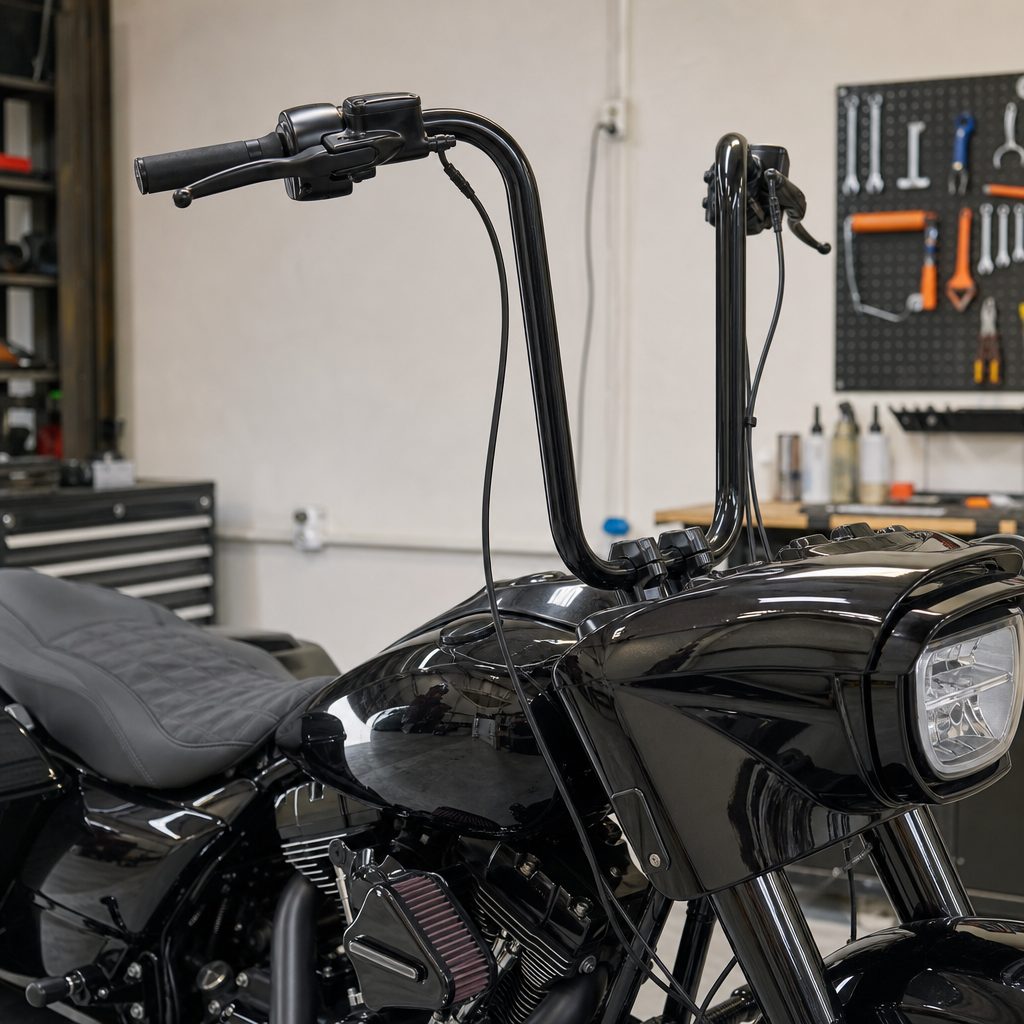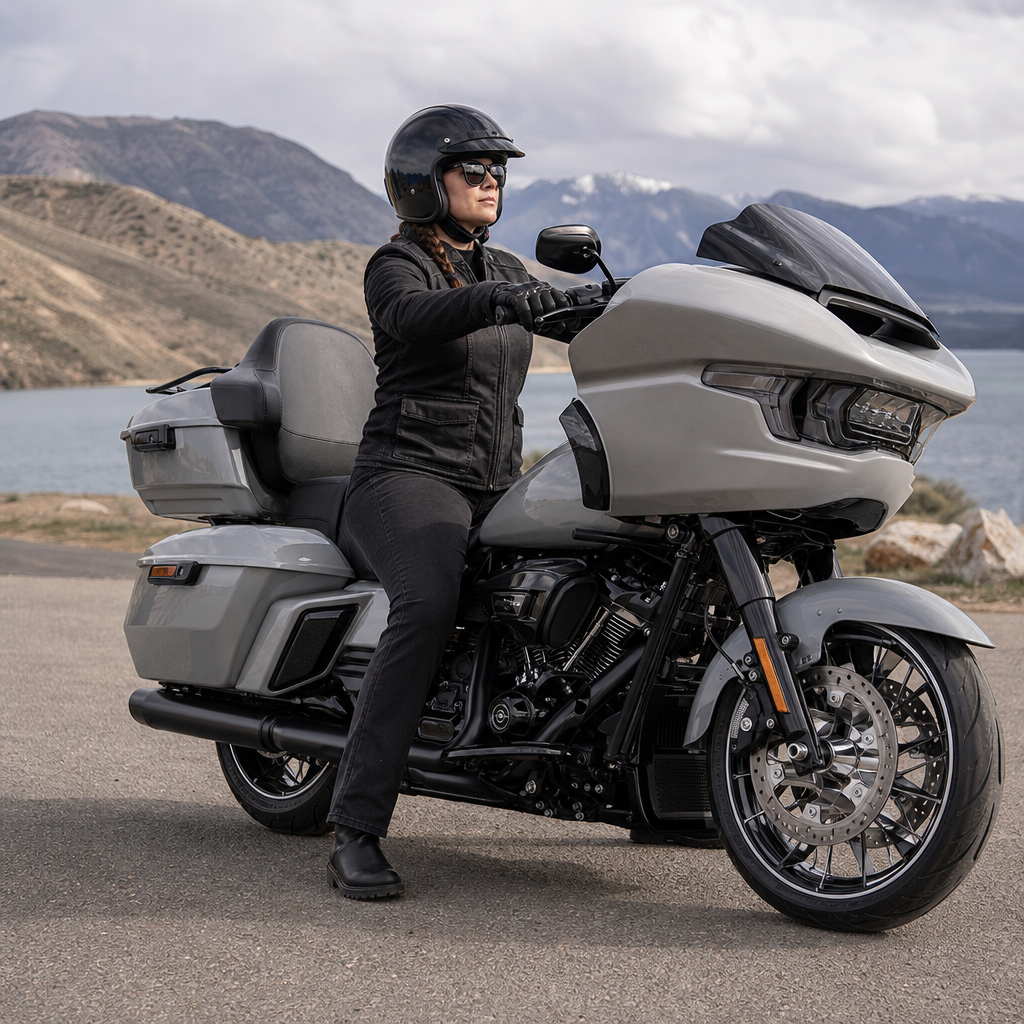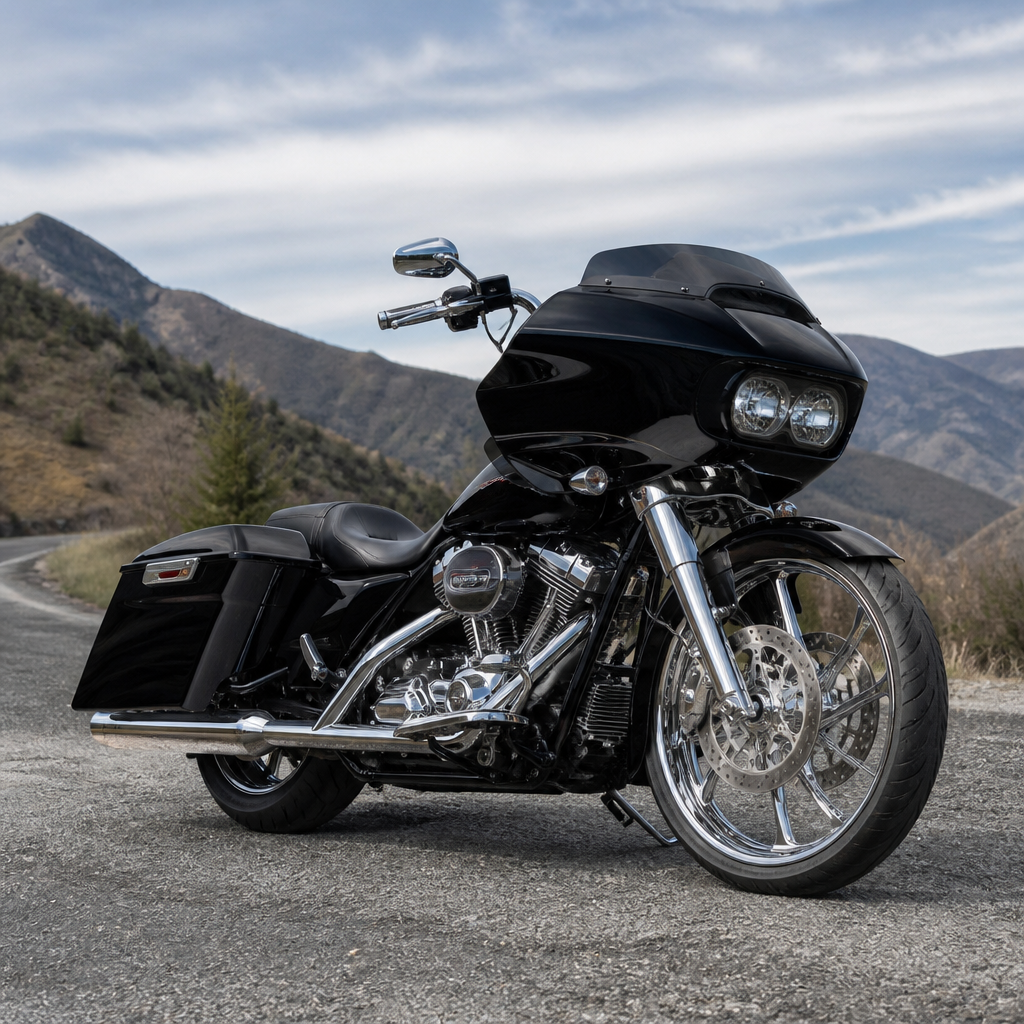
The 2005-2013 Harley-Davidson Road Glide Sharknose occupies a sweet spot in the used touring market because it combines the fixed fairing look riders want, enough factory refinement to make long miles easy, and a mechanical layout that still welcomes deep customization. For buyers researching used Harley-Davidson touring models from 1990 through 2029, this generation is a natural hub because it bridges old-school Twin Cam simplicity and newer bagger expectations. The term Sharknose refers to the frame-mounted fairing introduced on the Road Glide, distinct from the batwing fairing used on Street Glide and Electra Glide models. In custom-build terms, the best year is not simply the newest or cheapest; it is the model year whose frame, engine, electronics, brakes, wheels, and aftermarket support best match the project you want to build.
I have inspected, bought, and helped rebuild enough Twin Cam touring bikes to say this clearly: the 2005-2013 Road Glide can be an excellent foundation, but the right year depends on whether you want a performance bagger, long-haul tourer, audio bike, or stripped custom. These motorcycles matter in the broader used buyer guide landscape because they remain attainable, parts are everywhere, and most known issues are documented. That makes them ideal not only for buyers shopping this specific platform, but also for anyone comparing Harley-Davidson used touring bikes across four decades. If you understand the major changes within the 2005-2013 Sharknose run, you can judge value faster, avoid expensive mismatches, and choose a donor bike that saves money before the first wrench turn.
At a high level, the 2005-2006 models represent the last years before Harley-Davidson’s six-speed touring transmission arrived. The 2007 model introduced the Cruise Drive six-speed and the larger 96 cubic inch Twin Cam engine. In 2009, Harley released a redesigned touring frame, swingarm, engine isolation system, and wider rear tire package that materially improved handling and load stability. By 2011, the Road Glide Ultra returned after a brief absence, giving used buyers another factory-equipment baseline for touring builds. In 2012 and 2013, anti-lock brakes and premium trim became more common depending on submodel. Those milestones are what separate an average used buy from the best custom-build year.
What changed from 2005 to 2013 and why it matters
The fastest way to evaluate a Sharknose donor bike is to group the years by platform changes rather than paint colors or trim. From 2005 to 2006, Road Glide models used the Twin Cam 88 engine paired with a five-speed transmission. These bikes are mechanically straightforward, and many builders like them because the electronics are simpler and the purchase price is often lower. The tradeoff is that a serious highway rider usually wants the six-speed introduced in 2007, and many owners eventually upgrade cams, compensators, charging components, and suspension anyway.
The 2007 and 2008 Road Glide brought two meaningful improvements: the Twin Cam 96 and the six-speed Cruise Drive transmission. That combination lowered highway rpm and gave touring riders a more relaxed gear spread. In real use, that means a custom bagger with taller wheels, extra audio weight, or passenger luggage feels less strained at interstate speed. These years still use the earlier touring chassis, so they do not benefit from the major 2009 frame redesign, but they often hit a value sweet spot for builders who want better drivetrain fundamentals without paying late-model prices.
The 2009-2013 models sit on the revised touring chassis that most experienced buyers prefer. Harley-Davidson increased frame stiffness, changed the swingarm, revised rear tire sizing to 180 millimeters, and improved the engine mounting arrangement. On the road, the bike tracks better in sweepers, reacts more calmly to crosswinds, and feels less busy when loaded. If your build plan includes upgraded suspension, a larger front wheel conversion, hard miles, or aggressive cornering, starting with the 2009-up platform saves effort and reduces compromise.
Best years for custom builds by project type
The best year for a custom Road Glide depends on the goal. For a value-driven stripped bagger or club-style touring build, the 2007-2008 bikes are often the smartest buys. You get the Twin Cam 96 and six-speed, and the purchase price is usually lower than a 2009-up machine. If the bike will receive aftermarket suspension, bars, wheels, exhaust, and audio while keeping moderate power, those years make sense. They are also popular when the owner prefers cable-throttle simplicity and plans to do most work in a home garage.
For the broadest mix of handling, comfort, and resale strength, 2009-2013 are generally the best custom-build years. In my experience, a 2009-2011 Road Glide Custom or standard Road Glide gives the cleanest starting point for riders building a performance bagger that still tours. The improved chassis is not marketing fluff; it is noticeable. Add quality shocks from Öhlins, Legend, or Progressive Suspension, a cartridge fork kit from Racetech or Traxxion Dynamics, and the motorcycle becomes significantly more composed than earlier frames under the same modifications.
If your plan includes heavy touring, passenger use, and factory-integrated features, the 2011-2013 Road Glide Ultra deserves extra attention. These bikes come with tour-focused equipment that would cost thousands to duplicate, including trunk hardware, passenger accommodations, and touring trim. They are not always the cheapest donor bikes, and builders seeking a minimalist custom may remove many of those parts, but for distance riders they can be the most cost-effective option. The best year for many buyers ends up being 2012 or 2013 because condition is often better, braking options improved, and the bikes tend to have fewer deferred-maintenance surprises than earlier examples.
| Year range | Key strengths | Main drawbacks | Best for |
|---|---|---|---|
| 2005-2006 | Lower entry price, simple setup, easy donor platform | Twin Cam 88, five-speed, older chassis | Budget customs and experienced home builders |
| 2007-2008 | Twin Cam 96, six-speed, strong value | Pre-2009 frame and swingarm | Value baggers and moderate performance builds |
| 2009-2011 | Revised chassis, better stability, strong aftermarket fit | Higher purchase price than earlier bikes | Balanced custom touring and performance builds |
| 2012-2013 | Mature platform, late-run refinement, ABS availability | Usually highest prices in this generation | Premium customs and long-distance touring builds |
Known issues, inspection points, and ownership costs
Any used buyer guide for Harley-Davidson touring bikes must address failure points honestly, because the cheapest purchase can become the most expensive build. On 2005-2006 Twin Cam 88 models, ask whether the cam chain tensioner system has been inspected or upgraded. Spring-loaded tensioners on Twin Cam engines can wear, and neglected wear can damage the cam chest. Many owners convert to hydraulic tensioners or upgrade cams at the same time. This is not an automatic reason to reject a bike, but it should affect price and service planning.
Across the 2007-2013 Twin Cam 96 years, check compensator noise, charging system health, primary service history, wheel bearings, steering head bearings, and signs of heat stress around exhaust-adjacent wiring. Some bikes also develop worn rear air shocks, weak fork damping, and rubber mount issues as mileage rises. Touring Harleys often accumulate accessories, so inspect wiring quality carefully. I have seen more electrical headaches caused by poor audio and lighting installs than by factory systems. Look for crimp connectors, overloaded fuse taps, and hacked fairing harnesses.
On 2009-up models, confirm that the chassis tracks straight and that saddlebag mounts, rear fender supports, and swingarm areas show no crash damage. Builders often focus on engines and overlook alignment. A bagger with bent support brackets or a poorly repaired rear section becomes a money pit once you start fitting stretched bags, larger wheels, or precision exhaust systems. Service records matter. At minimum, a strong used candidate should show regular fluid changes, tire age awareness, brake rotor condition, and evidence that known wear items were addressed before failure. Budget at least several thousand dollars above purchase price for baseline service, tires, suspension refresh, and inevitable cosmetic corrections.
How the Sharknose compares with other Harley-Davidson used touring eras
As the hub for used buyer guides from 1990 to 2029, this page should help you place the 2005-2013 Road Glide in context. Compared with 1990s Evolution-powered touring models, the Sharknose generation offers better power, stronger aftermarket support for modern bagger customization, and more available used inventory. Evo tourers still appeal to purists because of simplicity and character, but they typically require more age-related restoration and are less ideal if your end goal is a contemporary performance bagger with big-wheel, stereo, and suspension upgrades.
Compared with 1999-2006 early Twin Cam touring models, the 2007-2013 Road Glide gains displacement, better highway gearing from the six-speed on 2007-up bikes, and, from 2009 onward, a substantially improved touring chassis. For most buyers, those are practical advantages, not spec-sheet trivia. They affect comfort, drivability, and how well the bike responds to custom parts. That is why so many builders skip earlier donors unless the price gap is substantial or the build theme specifically favors an old-school mechanical feel.
Against 2014-later Project Rushmore touring bikes, the 2005-2013 Sharknose gives up some braking, infotainment, linked systems integration, and factory refinement. Yet it wins on cost, mechanical accessibility, and the ability to customize without navigating as much electronic complexity. For many riders, that is the point. You can buy a clean 2009-2013 Road Glide, add suspension, cams, intake, exhaust, bars, seat, and paint, and still stay below the cost of a newer machine before modifications. That value proposition keeps this generation central in any Harley-Davidson used buyer guide spanning 1990-2029.
Buying strategy, pricing logic, and build planning
The smartest way to buy a 2005-2013 Road Glide is to shop for condition and completeness first, year second. A well-maintained 2008 with documented service, quality parts, and clean wiring can be a better custom donor than a neglected 2012 with crash history and bargain accessories. Start by defining your finished bike. If you want a simple custom cruiser with occasional touring, buy the cleanest 2007-2008 you can find. If you want a hard-ridden performance bagger or long-distance build, target 2009-2013 and pay extra for a straight frame, healthy drivetrain, and unmolested electrical system.
Pricing varies by mileage, region, season, and title status, but used-market logic remains consistent. Stock or lightly modified bikes usually hold value better than heavily personalized builds unless the parts list is from respected brands and the work is documented. Do not overpay for cosmetic bolt-ons while ignoring the expensive fundamentals. Suspension, brakes, tires, charging upgrades, and service records matter more than chrome covers or loud speakers. A seller’s claims about engine work should be backed by invoices from known shops, compression numbers, or at least a coherent parts list naming cam grinds, tuner type, and dyno results.
For most buyers asking which Road Glide Sharknose years are best for custom builds, the answer is straightforward. Choose 2007-2008 if budget matters most and you still want the six-speed Twin Cam 96 package. Choose 2009-2013 if you want the best all-around platform and expect to keep the bike long term. Within that group, 2012-2013 often represent the most refined and easiest-to-live-with examples, while 2009-2011 can deliver better value. Build plans differ, but the principle does not: buying the right donor reduces wasted money and produces a better motorcycle.
The 2005-2013 Road Glide Sharknose remains one of the smartest entries in the Harley-Davidson used touring market because it offers identity, proven mechanicals, and a clear upgrade path. Buyers who understand the generation breakpoints can shop with confidence instead of chasing the newest badge or the lowest asking price. The five-speed 2005-2006 bikes work best for budget-led builds. The 2007-2008 models add the drivetrain many riders want. The 2009-2013 motorcycles stand out as the strongest overall custom platforms thanks to the revised chassis and broader real-world capability.
For a sub-pillar hub covering used buyer guides from 1990 to 2029, this Sharknose generation is a key reference point because it explains what many Harley buyers are really balancing: price, complexity, comfort, and customization potential. If you want the shortest recommendation, buy the cleanest 2009-2013 example you can afford, and prioritize service history over accessories. If the budget is tighter, a sorted 2007-2008 remains an excellent foundation. Review comparable Harley-Davidson used buyer guides in this series, define your build goal before shopping, and inspect every candidate like the project starts the day you hand over the cash.
Frequently Asked Questions
Why is the 2005-2013 Road Glide Sharknose considered such a strong platform for custom builds?
The 2005-2013 Road Glide Sharknose hits a rare middle ground that custom builders and used-bike shoppers both appreciate. It has the unmistakable fixed-fairing Road Glide look, the long-distance comfort expected from a Harley-Davidson touring chassis, and a mechanical package that is modern enough to be practical without becoming overly complicated. For many riders, that balance is exactly what makes this generation so attractive. You get the visual identity people want when they say “Sharknose,” along with a platform that still responds well to suspension upgrades, wheel changes, audio work, engine tuning, paint, lighting, and touring-to-performance-bagger conversions.
Another major reason this generation stands out is aftermarket support. Because these model years remain popular, parts availability is broad and deep. Builders can choose from factory take-offs, premium bolt-on components, full custom body pieces, touring suspension kits, big-wheel packages, and engine performance upgrades without having to reinvent the wheel. That matters because a good custom platform is not just about style; it is also about how easy it is to source compatible parts and how predictable the finished result will be.
These bikes also appeal to riders who prefer the Twin Cam era. The 2005-2013 range preserves a more straightforward mechanical feel than later touring models while still delivering real highway capability. For buyers coming from older Harley-Davidson touring bikes, this generation feels like a refinement of the traditional formula rather than a complete technological reset. That makes it easier to personalize the bike without losing the character that attracted them to a Sharknose in the first place.
What are generally considered the best years within the 2005-2013 Road Glide Sharknose range for a custom build?
The “best” year depends on the goal of the build, but many buyers and builders tend to focus on the later end of the 2005-2013 run because those bikes usually combine the strongest factory refinement with the same core Sharknose appeal. In broad terms, later examples often benefit from incremental improvements in touring comfort, chassis feel, braking confidence, and day-to-day usability. That makes them especially attractive if the plan is to build a bike that not only looks sharp but also rides hard and covers real miles.
That said, earlier bikes in the range can be excellent values, especially for riders who want a lower entry price and intend to replace major components anyway. If a build plan already includes upgraded suspension, handlebars, seat, audio, exhaust, cam work, wheels, and paint, the difference between an early and a late example may matter less than the condition of the specific motorcycle. A clean, well-maintained earlier Road Glide can easily be a better foundation than a neglected later one.
Many experienced shoppers approach this generation by separating “best year” from “best candidate.” The best candidate is usually the bike with a straight frame, clean title, solid service history, healthy engine and transmission, no crash damage, and minimal questionable modifications. In other words, condition often outranks model year. If you can find a later 2005-2013 Sharknose with documented maintenance and stock or tastefully upgraded components, that is often the sweet spot. But if your budget is tighter and the goal is a full custom transformation, an earlier bike in excellent mechanical condition may be the smartest buy.
What should buyers inspect before choosing a used 2005-2013 Road Glide Sharknose as a build base?
Start with the basics: title status, VIN consistency, service records, and signs of accident damage. Touring Harleys are frequently ridden long distances, and mileage alone is not the deciding factor. A higher-mile, well-serviced Road Glide can be a better purchase than a lower-mile bike that sat, was neglected, or was badly modified. Inspect the fairing mounts, fork alignment, saddlebag supports, crash bars, and frame areas for signs of impact or poor repair. Because custom builds often involve investing substantial money after purchase, the last thing you want is to discover hidden damage once the project is underway.
Mechanically, pay close attention to engine health, oil leaks, transmission feel, clutch operation, charging performance, and starting behavior. Listen for unusual noises on cold start and after warm-up. Check whether the bike idles smoothly, tracks straight, and shifts cleanly through the gears. Touring models also deserve a careful suspension and steering-head inspection, especially if the bike will be turned into a performance-oriented bagger or loaded for two-up travel. Worn suspension components are common on older touring bikes, but they are also one of the easiest and most worthwhile upgrades if the rest of the motorcycle is solid.
Electrical condition matters more than many buyers realize. A Road Glide with hacked wiring for lights, stereos, alarms, or amateur accessory installs can turn into a frustrating and expensive project. Inspect the battery, charging system, connectors, fuse areas, switchgear, and anything added behind the fairing. Clean wiring and thoughtful accessory installation are good signs. Messy splices, dead audio systems, and intermittent gauges are warning signs. Since the Road Glide’s custom appeal often includes audio and lighting, it is best to start with a bike that has not already been compromised electrically.
Is it better to buy a mostly stock Road Glide Sharknose or one that has already been customized?
In most cases, a mostly stock bike is the safer choice. A stock or near-stock 2005-2013 Road Glide gives you a clearer picture of how the motorcycle has aged and makes it easier to evaluate what needs attention. You also avoid paying for someone else’s taste, shortcuts, or mistakes. That is important in the custom world because not all upgrades are improvements. Cheap suspension parts, poorly tuned engine work, oversized wheels installed without proper geometry correction, and sloppy wiring can all create problems that cost more to undo than they would have cost to avoid.
That does not mean all modified bikes should be dismissed. A properly customized Road Glide with receipts, reputable parts, professional installation, and a coherent build plan can represent very good value. If a prior owner already installed premium suspension, quality brakes, trusted engine components, and well-documented audio or touring upgrades, that can save a buyer significant money. The key is documentation and execution. A build done by a respected shop or a meticulous owner is very different from a bike assembled from mixed parts with no records.
The smartest approach is to judge modifications by how closely they align with your own end goal. If you want a reliable long-range tourer with subtle personalization, a clean stock bike is often ideal. If you want a performance bagger and the used bike already has top-tier suspension, braking, and engine upgrades from known brands, it may be worth serious consideration. But if the customization forces you to compromise or reverse major decisions, it is usually better to start fresh with a cleaner base motorcycle.
What kinds of custom builds work especially well on a 2005-2013 Road Glide Sharknose?
This generation supports a wide range of build styles because the platform is visually distinctive and structurally versatile. One of the most popular directions is the performance bagger route: upgraded suspension front and rear, stronger brakes, improved tires, engine tuning, freer-flowing exhaust, and ergonomics tailored for aggressive but comfortable riding. The fixed fairing helps define that modern Road Glide attitude, and the underlying touring chassis gives the builder plenty to work with when chasing better real-world handling.
Another strong fit is the long-range custom tourer. In that format, the Road Glide keeps its mile-eating mission but adds thoughtful upgrades such as a better seat, taller or reshaped bars, improved wind management, luggage refinements, navigation or audio enhancements, auxiliary lighting, and suspension calibrated for passenger or loaded travel. This kind of build appeals to riders who want the Sharknose look without sacrificing comfort, reliability, or road-trip practicality. Because 2005-2013 models still feel relatively approachable from a maintenance standpoint, they are excellent candidates for riders who plan to use them heavily rather than simply show them.
Of course, cosmetic customs also work extremely well here. The broad fairing, stretched visual proportions, saddlebags, tank, and fender surfaces create a strong canvas for paint, wheel packages, blackout themes, chrome contrast, lighting accents, and stance changes. The important thing is to match the build style to the bike’s condition and your actual riding plans. A Road Glide Sharknose can become a stripped-down cruiser, a high-spec canyon-capable bagger, or a polished cross-country show-tourer. That flexibility is exactly why the 2005-2013 generation remains one of the most compelling used Harley-Davidson touring platforms for custom builds.