The 1991 Sturgis Edition FXDB sits at a useful crossroads for Harley-Davidson collectors in 2026: it is old enough to qualify as a true modern classic, recent enough to ride regularly, and distinctive enough to anchor a serious used buyer guide for 1990–2041 Harley-Davidson models. In practical terms, this motorcycle matters because it blends factory custom identity, limited-edition cachet, and the mechanical familiarity of the Evolution era. After years of inspecting, buying, and advising on used Harleys, I have found that the FXDB rewards buyers who understand both what it is and what it is not. It is not merely a badge package, and it is not a full custom. It is a factory-built Dyna-based special edition tied to the Sturgis name, aimed at riders who wanted exclusivity without giving up serviceability.
A collector’s perspective in 2026 must start with definitions. The “Sturgis Edition FXDB” refers to the blacked-out Dyna Glide Sturgis variant sold for the 1991 model year, drawing on Harley-Davidson’s long association with the Sturgis rally and the FXB/FXDB lineage of factory customs. “Collector grade” means originality, documented history, correct finishes, and numbers-matching major components. “Rider grade” means sound mechanical condition with some cosmetic deviation, reversible modifications, or age-related wear. “Used buyer guide” means more than pricing. It includes production context, failure points, parts support, title verification, restoration risk, and ownership costs. Because this article serves as a hub for Harley-Davidson used buyer guides spanning 1990–2041, the FXDB is a strong starting point: its market behavior teaches the same lessons that later buyers need for Twin Cam, Milwaukee-Eight, CVO, anniversary, and low-volume models.
Why does the 1991 FXDB matter now? First, collectors in 2026 are aging into a phase where 1980s and 1990s Harleys are being reevaluated beyond nostalgia. Second, the Evolution engine has a reputation for durability that supports long-term ownership. Third, special-edition Harley-Davidsons have widened from niche enthusiast interest to a more structured collector segment, where originality and documentation noticeably affect price. Finally, this motorcycle bridges two audiences: established Harley owners who remember the era and younger collectors priced out of Knucklehead, Panhead, or even prime Shovelhead territory. For a hub article on used buyer guides from 1990 through 2041, the FXDB demonstrates the core method: identify the model’s place in Harley history, assess condition with discipline, compare originality against usability, and buy the best example your budget allows.
What the 1991 Sturgis Edition FXDB Is and Why Collectors Care
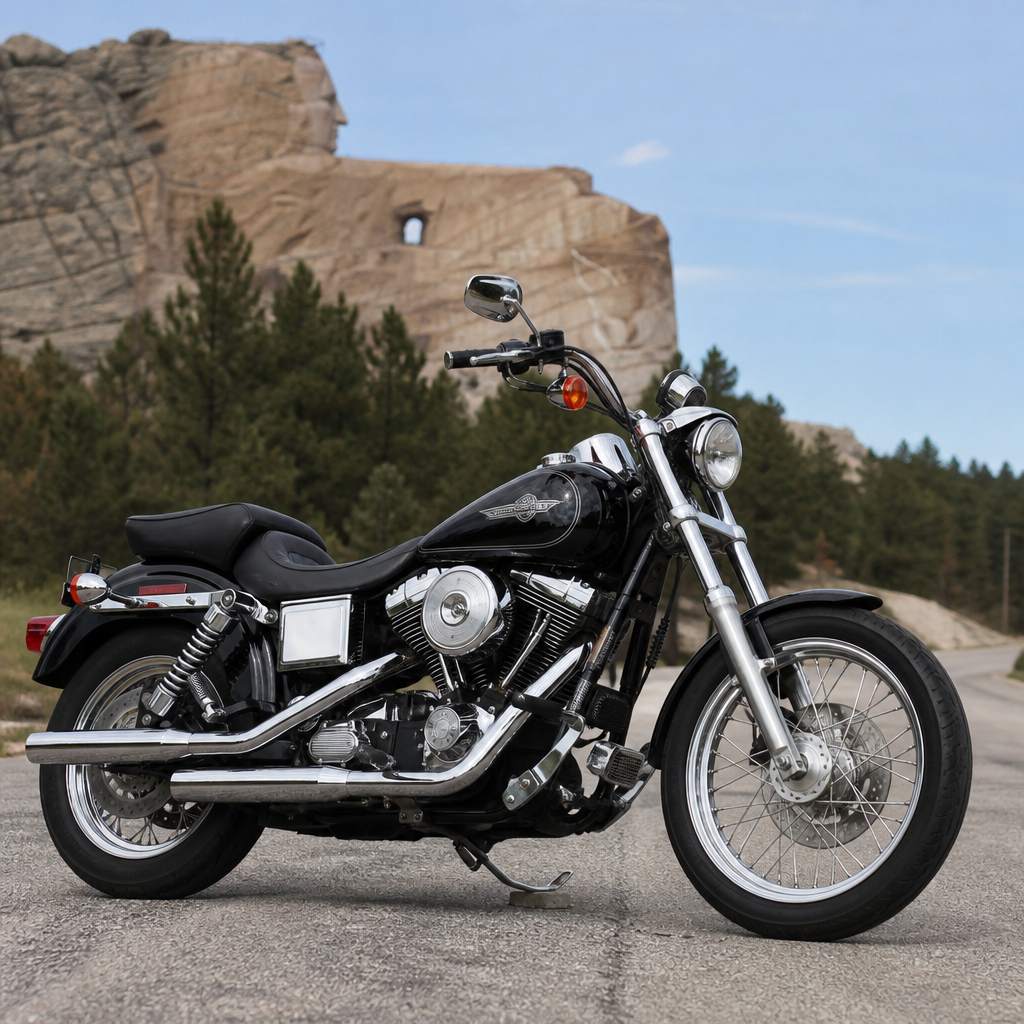
The 1991 Sturgis Edition FXDB is best understood as a limited-production, blacked-out factory custom built on the Dyna platform and powered by the 1340cc Evolution V-twin. It carried styling cues that separated it from standard production Harleys, including dark finishes and visual treatment intended to evoke a tougher custom identity. Collectors care because Harley-Davidson special editions from this period were not produced in the same volumes or with the same marketing saturation seen in later decades. That gives the FXDB a specific appeal: recognizable enough to have an audience, uncommon enough to stand apart at a show or in a curated garage.
In the market, rarity alone does not create value; recognizable rarity does. The FXDB benefits from being tied to the Sturgis name, which already has embedded meaning within Harley culture. That cultural shorthand helps resale because buyers immediately understand the model’s significance. When I evaluate one, I look at three things before discussing price: whether the finishes remain correct, whether period-specific components are still present, and whether the bike’s story is documented by title history, sales paperwork, service records, or judging sheets. A low-mile example with replacement tins can be less desirable than a higher-mile bike with original paint, correct hardware, and a clear maintenance paper trail.
How the FXDB Fits the 1990–2041 Harley-Davidson Used Buyer Guide Landscape
As a hub for “Used Buyer Guides: 1990–2041,” this page should help readers evaluate not just one motorcycle but an entire era of Harley-Davidson development. The 1991 FXDB belongs to the early modern period, when Harley had stabilized quality, benefited from the Evolution engine’s credibility, and was defining model identities that later expanded into collectible sub-brands. Buyers researching a 1991 Sturgis Edition often end up cross-shopping a 1990 Fat Boy, a 1991 FXR, a later Dyna Convertible, or even early Twin Cam Dynas. That is why the FXDB works as a hub anchor: it forces clear thinking about platform history, parts interchange, and value versus mythology.
Across the 1990–2041 range, Harley used buyer guides generally fall into six groups: Evolution-era big twins, late Evo transition models, Twin Cam first generation, Twin Cam refined generation, early Milwaukee-Eight, and later special editions or limited-production variants. The buying questions change, but the evaluation framework does not. On a 1991 FXDB, you ask about carburetion, charging output, rubber mounting, age-hardened seals, and originality. On a 2006 Dyna, you ask about cam chain tensioners and charging heat. On a 2017 Milwaukee-Eight touring bike, you ask about oil migration complaints, software updates, and heat management. The lesson is consistent: each era has signature strengths and predictable weak points, and a good buyer guide names them plainly.
What to Inspect Before Buying a 1991 Sturgis Edition FXDB
Condition inspection on an FXDB should be methodical, not emotional. Start with identity. Verify the VIN on the steering head and match it to the title. Confirm engine case numbers are appropriate and show no signs of tampering. Examine frame welds, steering stops, and lower rails for crash repair or improper jack damage. Look at paint depth and texture under natural light. Original Harley finishes from this era wear differently than modern resprays; edges, pinstriping consistency, and fastener witness marks often reveal what has been changed. Check wheel condition, fork straightness, belt alignment, and signs of long-term storage such as corrosion in hidden areas.
Mechanically, the Evolution engine is robust, but age matters. A 35-year-old motorcycle can run well and still need comprehensive recommissioning. Check cold-start behavior, oil leaks at rocker boxes and primary areas, charging voltage at idle and 3,000 rpm, clutch engagement, transmission shift quality, and brake performance. Rubber intake seals, fuel lines, vacuum lines, and carb diaphragms often age out even on low-mile machines. Suspension bushings and fork seals are consumables. On test rides, I listen for top-end clatter beyond normal Evo mechanical noise, feel for driveline lash, and watch whether the bike tracks neutrally with hands lightly resting on the bars. Deferred maintenance costs more than honest mileage.
| Inspection Area | What Good Looks Like | Common Problem | Why It Matters |
|---|---|---|---|
| VIN and title | Clear match, no altered stampings | Title gaps or replacement frame questions | Legal ownership and future resale |
| Paint and finishes | Consistent aging, correct details | Resprays, missing decals, wrong hardware | Originality drives collector value |
| Evolution engine | Easy start, stable idle, healthy compression | Oil seepage, intake leaks, neglected tune | Repair costs add up quickly |
| Charging system | Proper voltage output | Weak stator or regulator issues | Electrical faults strand riders |
| Chassis and suspension | Straight tracking, no play | Fork leaks, worn bushings, crash damage | Safety and ride quality |
Originality, Modifications, and the Real Value Question
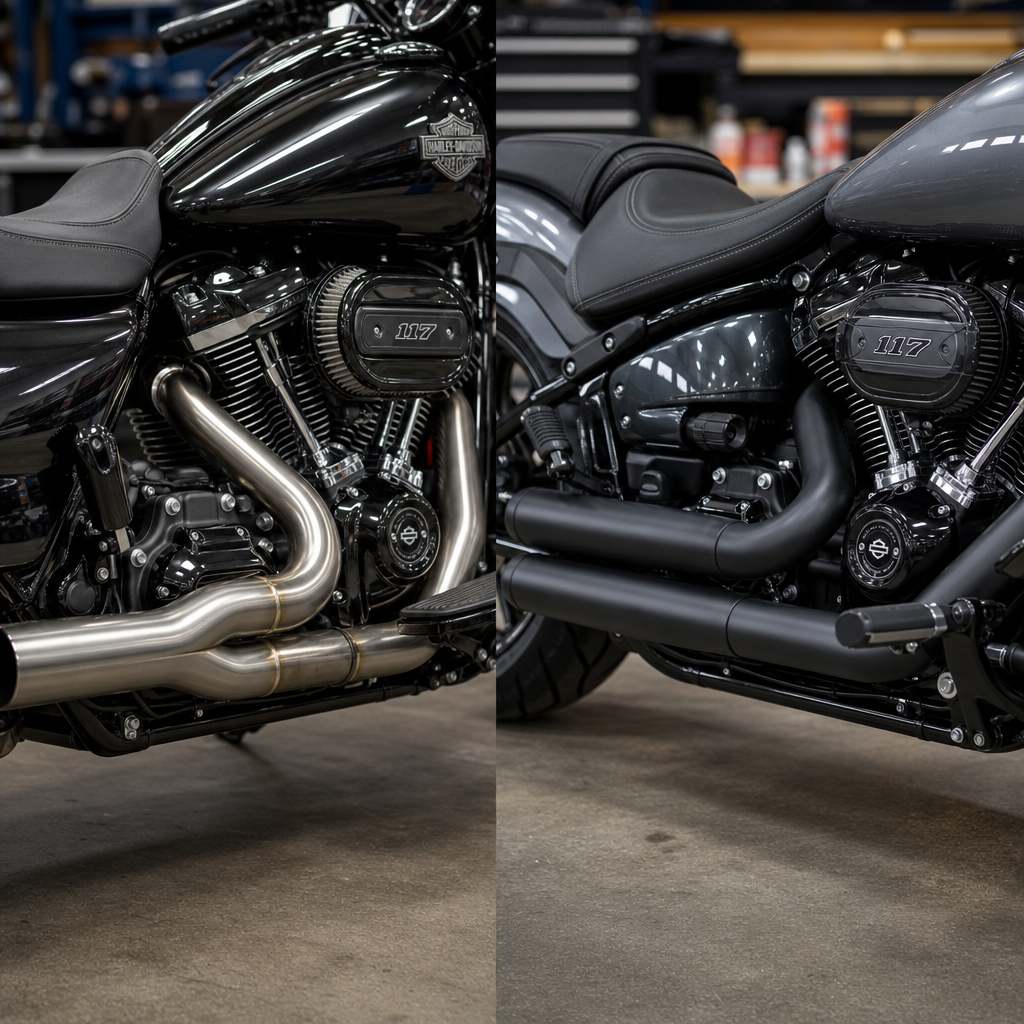
The biggest mistake buyers make with special-edition Harleys is assuming every old accessory adds value. In reality, originality usually beats period modification unless the parts are highly desirable, documented, and reversible. Many FXDBs were customized because Harley owners tend to personalize their motorcycles immediately. Screamin’ Eagle mufflers, aftermarket bars, seats, air cleaners, and chrome swaps are common. None of these automatically disqualify a bike, but they do change its market tier. In 2026, top collectors pay strongest money for bikes that still present as correct factory examples. Rider-grade buyers, however, can often get a better riding motorcycle for less money by accepting tasteful upgrades.
When judging modifications, separate mechanical improvements from cosmetic drift. Stainless brake lines, modern tires, updated battery technology, and careful carb tuning can improve usability without hurting the ownership experience. Powder-coated parts in the wrong sheen, non-original tanks, chopped fenders, or extensive wiring changes are more serious because returning the bike to stock takes time and money. I advise buyers to ask sellers for every removed original part. Even imperfect original components can preserve future value. This principle applies throughout the 1990–2041 Harley-Davidson buyer-guide universe. Whether you are shopping a 1991 FXDB or a 2030 limited-run performance cruiser, factory-correct specification remains the benchmark against which all used examples are judged.
Ownership Costs, Parts Support, and Riding Experience in 2026
One reason the 1991 Sturgis Edition FXDB remains attractive is that ownership costs are usually manageable compared with older, more fragile collector Harleys. The Evolution engine enjoys broad aftermarket and specialist support. Independent shops understand it, factory service literature is available, and many consumables are still obtainable through aftermarket suppliers such as Drag Specialties, S&S Cycle, James Gaskets, and Dynatek. Even when exact cosmetic pieces are scarce, core mechanical maintenance is straightforward. That matters for collectors who want to ride. A motorcycle that can be serviced competently without hunting rare internal parts is easier to own and easier to justify as part of a long-term collection.
Riding the FXDB in 2026 also helps explain its appeal. It feels mechanical in the best sense: direct throttle response through carburetion, visible engine character, and a less isolated riding experience than later touring-oriented Harleys. At the same time, it is not archaic. Rubber-mounted Dyna architecture and Evo reliability make it practical for weekend use, local shows, and back-road runs. The tradeoff is that braking, chassis stiffness, and lighting performance will not match newer bikes. Buyers coming from Twin Cam or Milwaukee-Eight machines should adjust expectations. The reward is authenticity. You are not buying peak Harley performance; you are buying a specific chapter in Harley-Davidson history that still functions as a real motorcycle.
Price Trends, Documentation, and How to Buy Smart
Pricing in 2026 depends less on a single “book value” than on tiered condition. Rough project bikes trade on entry cost alone. Clean rider-grade examples sell on usability and appearance. Excellent originals with records command a premium because serious collectors understand how difficult it is to replace authenticity once lost. Mileage matters, but documentation matters more. I would rather buy a 22,000-mile FXDB with service invoices, title continuity, original sales materials, and correct finishes than a mysterious 4,000-mile bike that sat neglected, leaked from every gasket, and wears reproduction parts. The market consistently rewards confidence, and confidence comes from evidence.
To buy smart, inspect in person if possible, ask for cold-start video if remote, request detailed photos of engine cases, frame numbers, underside areas, and known wear points, and verify that the seller can explain what has been changed. Use NADA and Hagerty valuation data only as a baseline, then compare recent auction results, forum sales, and enthusiast-group transactions. For this Harley-Davidson used buyer guide hub, the broader takeaway is simple. Every 1990–2041 Harley has a story made of engineering era, ownership behavior, and market perception. The 1991 Sturgis Edition FXDB stands out because that story is especially clear: buy originality, verify condition, budget for age-related service, and favor documented examples over shiny uncertainty. If you are building a collection or entering the Harley market thoughtfully, start here, then use the same disciplined approach across the rest of the range.
The 1991 Sturgis Edition FXDB earns its place in a 2026 collector conversation because it combines recognizable identity, dependable Evolution-era mechanics, and enough rarity to matter without becoming impossible to own. As a hub for Harley-Davidson used buyer guides from 1990 through 2041, it teaches the fundamentals that apply across the lineup. Know the model’s historical position. Verify the bike’s identity and paperwork. Inspect condition in a structured way. Distinguish between originality and personalization. Price the motorcycle according to evidence, not seller enthusiasm. Those are the habits that protect buyers from expensive mistakes and help collectors build stronger garages over time.
For many enthusiasts, the FXDB hits a rare sweet spot. It can still be ridden and serviced with relative ease, yet it already benefits from the market logic that supports collectible motorcycles: limited appeal to casual buyers, strong appeal to informed ones, and clear premiums for unmolested examples. That makes it both a worthwhile machine in its own right and a practical reference point for evaluating other Harleys in the 1990–2041 used market. If you are researching your next purchase, use this page as your starting framework, then apply the same standards to every model on your shortlist.
The main benefit of a disciplined buyer-guide approach is simple: you end up with a Harley-Davidson that matches your goals, whether those goals are riding, preserving, or collecting. The 1991 Sturgis Edition FXDB proves that age alone does not define value; specification, condition, provenance, and mechanical honesty do. Begin with the best documented example you can afford, ask harder questions than the average shopper, and keep originality at the center of your decision. Then continue through the rest of the Harley-Davidson used buyer guide series and compare each model with the same clear-eyed method before you buy.
Frequently Asked Questions
Why does the 1991 Sturgis Edition FXDB matter so much to collectors in 2026?
The 1991 Sturgis Edition FXDB matters because it sits in a sweet spot that very few Harley-Davidson models occupy. By 2026, it has enough age to be taken seriously as a true modern classic, but it is not so old, rare, or fragile that ownership becomes purely museum-based. That balance is a major part of its appeal. Collectors appreciate that it represents the Evolution-era factory custom movement, while riders value that it can still be started, serviced, and enjoyed without the same level of anxiety attached to significantly older machines.
It also carries stronger identity than many standard-production Harleys from the early 1990s. The Sturgis name brings built-in recognition, and the FXDB format gives the bike a distinct place in the Dyna family story. In collector terms, identity matters almost as much as production volume. A model with a clear theme, period-correct styling, and a recognizable backstory tends to remain more memorable in the market than a mechanically similar bike without that branding. That is exactly why the 1991 Sturgis Edition continues to attract attention from buyers who want something more focused than a generic used Big Twin.
From a practical perspective, the bike also works well as a benchmark machine for anyone studying Harley-Davidson values from 1990 through the early 2000s and even beyond. It reflects a period when Harley was refining factory customs, leaning into limited-edition appeal, and building motorcycles that still feel mechanically straightforward today. For collectors, that combination supports long-term desirability. For buyers, it means the bike can serve as both a collectible and a usable road machine. In 2026, that dual-purpose value is a big reason the 1991 Sturgis Edition FXDB remains relevant.
What should a buyer inspect first when evaluating a 1991 Sturgis Edition FXDB today?
The first thing to inspect is originality, because that is where much of the model’s collector value lives. Start with the frame and engine numbers, confirm the bike’s identity against title and registration paperwork, and verify that the machine really is a Sturgis Edition rather than a standard FXDB dressed to resemble one. Then move to model-specific cosmetic and trim details, including paint, badging, finishes, wheels, controls, and other period-correct equipment. On a collector-grade Harley, small details matter. Incorrect fasteners, aftermarket tins, non-original seat assemblies, modern bars, or replacement exhaust systems may not make the bike worse to ride, but they can absolutely change how serious collectors value it.
After originality, inspect condition with an Evolution-era mindset. Check for oil leaks around rocker boxes, base gaskets, primary covers, transmission areas, and pushrod tubes. Some seepage is not unusual on an older Harley, but there is a difference between age-related misting and neglect. Listen for top-end noise, look for charging-system health, inspect the wiring harness for owner-made repairs, and examine fuel-system condition closely, especially if the bike has sat for long periods. Carbs, petcocks, tank interiors, and intake seals often reveal whether a motorcycle has been routinely exercised or merely stored and cosmetically maintained.
Next, assess chassis and consumables. Fork seals, swingarm play, wheel bearings, brake performance, tire age, and suspension wear all tell a story. A bike can look excellent in photos and still need meaningful recommissioning. Also pay attention to evidence of crash damage or hard use: mismatched paint texture, bent controls, scraped cases, replacement turn signals, or alignment issues. Finally, ask for service records and ownership history. A documented bike with known mileage, careful storage, and sensible maintenance usually proves to be a better purchase than a shinier example with vague history. In 2026, the best Sturgis Edition FXDBs are not just original-looking; they show a believable, traceable life.
Is the 1991 Sturgis Edition FXDB better kept stock, or can tasteful modifications still make sense?
If the goal is maximum collector credibility, keeping the bike as close to factory specification as possible is usually the smarter path. The 1991 Sturgis Edition FXDB earns much of its appeal from being a recognizable, finite expression of Harley-Davidson’s factory custom philosophy. Once a limited-edition model loses its original paint, trim, intake, exhaust, or stance, it can start to blur into the broader population of modified Evolution-era Harleys. That may be acceptable for a rider-focused owner, but it generally narrows the pool of serious collectors willing to pay a premium.
That said, tasteful and reversible modifications can make sense, especially if the motorcycle is being ridden regularly. Safety and reliability upgrades are often easier to justify than cosmetic personalization. For example, replacing aged tires, refreshing brake components, updating battery and charging-system hardware, or improving fuel lines and rubber parts does not usually harm the bike’s long-term standing, particularly if the work is done cleanly and documented. Even certain comfort-related changes, such as a more practical seat or improved lighting, can be acceptable if the original parts are retained and included with the sale.
The key principle is reversibility and honesty. If you install aftermarket pipes, handlebars, or suspension pieces, keep the factory components. If a repaint or major customization has already happened, describe the bike accordingly rather than trying to position it as an untouched collector example. In the 2026 market, buyers are generally sophisticated enough to separate a high-quality rider from a preservation-grade collectible. A modified Sturgis Edition can still be desirable, but it should be valued as a rider with special pedigree, not as a top-tier original. For most owners, the best compromise is simple: preserve what makes the bike a Sturgis Edition, improve only what helps reliability or safety, and save every original part you remove.
How does the 1991 Sturgis Edition FXDB compare with other early-1990s Harley-Davidson models as an investment and a rider?
Compared with many early-1990s Harley-Davidson models, the 1991 Sturgis Edition FXDB tends to offer a stronger blend of personality, usability, and collector narrative. As an investment, it benefits from being specific rather than generic. Many Harleys from the period are enjoyable motorcycles, but not all of them have a clearly defined identity that future buyers remember and seek out. The Sturgis Edition has that identity. It carries limited-edition cachet, period-correct factory custom styling, and the broader appeal of the Evolution era, which remains one of the most approachable ownership windows in Harley history.
As a rider, it is also easier to live with than many older collector motorcycles. Parts support for core mechanical systems remains comparatively strong, independent shops understand Evolution-era bikes well, and the riding experience is still very usable in modern conditions. It gives owners the sound, feel, and visual weight people expect from a classic Harley without requiring the compromises associated with much older machines. That practicality matters. In the real world, buyers often pay more confidently for a bike they can actually use rather than one they must preserve at all costs.
As an investment, though, it should be viewed with nuance. The 1991 Sturgis Edition FXDB is better understood as a quality collector hold than a guaranteed speculative windfall. The strongest examples are likely to remain desirable because originality, documentation, and recognizable factory identity continue to matter in the market. But condition, mileage, provenance, and correctness will separate average bikes from exceptional ones. A clean, honest, well-documented FXDB Sturgis generally makes more sense than chasing an over-restored or poorly represented example. In 2026, that is the collector logic: buy the best, most authentic bike you can afford, enjoy the fact that it is still highly rideable, and let long-term desirability work in your favor.
What ownership mistakes most often hurt the long-term value of a 1991 Sturgis Edition FXDB?
The biggest mistake is treating it like just another old used Harley rather than a model with collector-specific value. That mindset leads owners to make choices that are convenient in the moment but expensive later. Common examples include discarding original parts, installing irreversible custom pieces, repainting the bike without preserving factory-correct finishes, or allowing paperwork and historical records to disappear. Even if a modification improves ride quality, losing the original exhaust, seat, air cleaner, or trim can reduce appeal to future buyers who want a more authentic example.
Another frequent mistake is cosmetic-first ownership. Some bikes are polished, detailed, and photographed beautifully, yet neglected underneath. Old tires, stale fuel systems, weak charging components, leaking seals, worn brake lines, and amateur wiring repairs can turn an attractive purchase into a costly one. Serious buyers in 2026 are increasingly experienced with this pattern. They know that a collector motorcycle needs mechanical stewardship as much as visual care. A machine that starts easily, charges correctly, runs cleanly, and shows evidence of regular maintenance will usually outperform a shinier but less honestly maintained bike in the market.
Poor storage is another major value killer. Long-term exposure to moisture, temperature swings, UV damage, and inactivity accelerates corrosion, degrades rubber, clouds finishes, and creates fuel-related issues that spread through tanks,