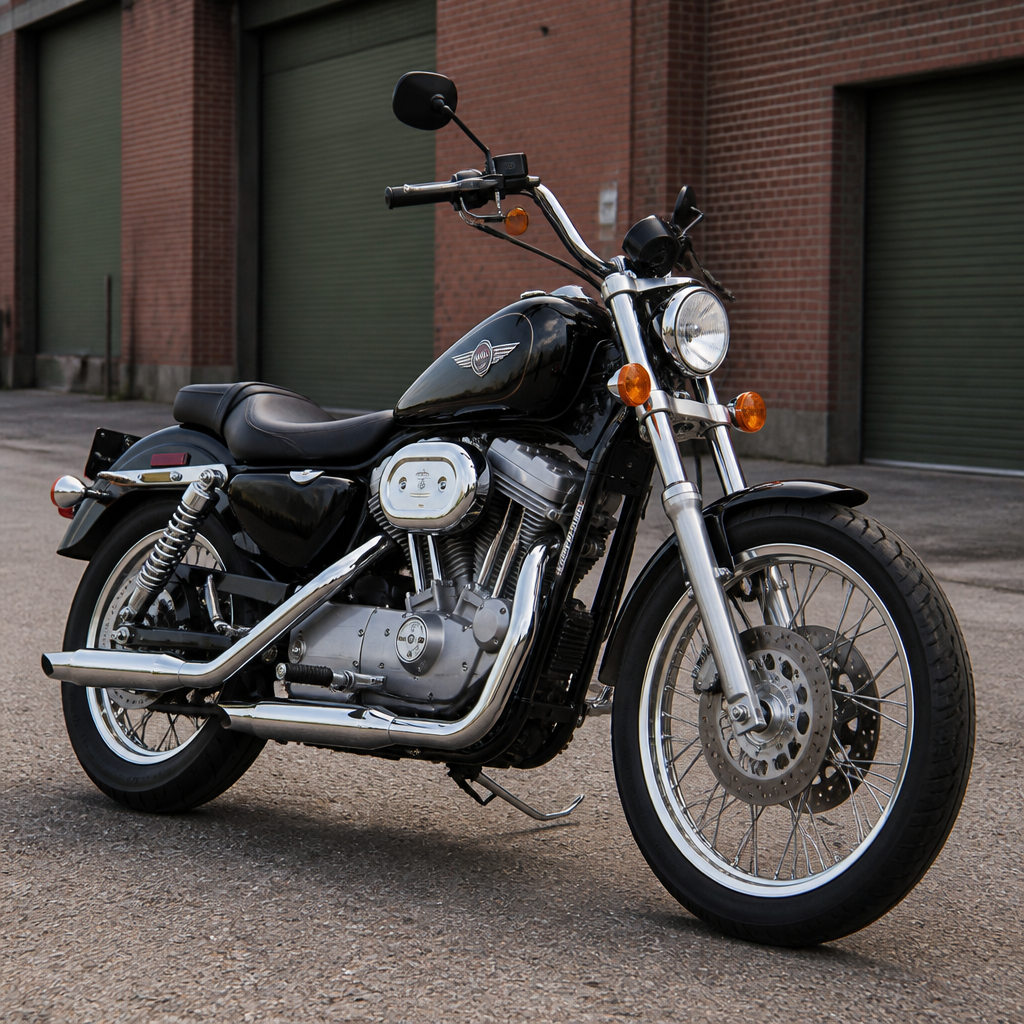
The 1990s Evolution Sportster occupies a rare sweet spot in Harley-Davidson history: affordable enough for first-time buyers, mechanical enough for home maintenance, and durable enough to serve as a dependable daily rider. When riders ask me for the best entry point into Harley ownership at around $5,000, this is the machine I bring up first. In the used market, “Evolution Sportster” refers to XL models powered by Harley-Davidson’s air-cooled Evolution V-twin, especially the 883 and 1200 variants built through the 1990s before later chassis, fuel, and rubber-mount changes altered the ownership experience. For a buyer who wants the look, sound, and community of a Harley without jumping straight into big-twin pricing, the 1990s Sportster remains one of the most rational purchases available.
This hub covers Used Buyer Guides: 1990–2037 through the lens of the 1990s Evolution Sportster because it explains the core questions every Harley shopper asks. Which years are best? What changed over time? What usually breaks? How expensive are parts, labor, insurance, and upgrades? A strong hub page should answer those questions directly while helping readers navigate the broader Harley-Davidson used market, from carbureted analog bikes to later fuel-injected and more electronically managed models. The 1990s Sportster matters because it teaches the fundamentals of used Harley buying: verify maintenance, inspect charging systems, understand carburetion, watch for cosmetic customization hiding mechanical neglect, and choose a machine that matches intended riding rather than image alone.
Harley-Davidson sold the Sportster as the brand’s accessible platform, but accessible never meant disposable. These bikes used unit-construction engines, hydraulic lifters, belt final drive on most later examples, and a huge interchange of factory and aftermarket parts. In practical terms, that means a well-kept 883 or 1200 can be revived, personalized, and maintained more cheaply than many modern middleweight motorcycles. It also means the 1990s Evolution Sportster works exceptionally well as a gateway bike for riders entering the brand, returning after years away, or downsizing from heavier touring models. Values have stayed grounded because production volume was high, styling remains familiar, and many examples exist in honest rider condition rather than collector-only trim.
From experience inspecting used Harleys, the 1990s Evolution Sportster usually tells the truth quickly. A clean cold start, stable idle, quiet top end, consistent charging voltage, and paperwork for routine service reveal more than polished chrome ever will. Buyers should know, however, that not every cheap Sportster is a bargain. Deferred maintenance, amateur wiring, neglected fork seals, rusty tanks, and hardtailed or heavily chopped examples can turn a $5,000 dream into a frustrating project. The purpose of this article is to make the market legible. By understanding model evolution, common faults, pricing logic, and ownership costs, you can buy confidently and use this page as a launch point for deeper year-by-year Harley-Davidson buyer research.
Why the 1990s Evolution Sportster Is the Smart Entry Point
The biggest reason the 1990s Evolution Sportster makes sense is simple: it delivers the essential Harley experience without the financial and mechanical complexity of larger models. The Evolution Sportster engine had already matured by the 1990s, and by then Harley had addressed many earlier teething issues tied to charging components, fit-and-finish inconsistencies, and parts durability. You still get solid-mounted V-twin character, narrow proportions, and classic peanut-tank or larger-tank styling, but you avoid Twin Cam cam-chain tensioner worries, expensive touring-bike bulk, and the rising prices attached to increasingly collectible older big twins.
For many buyers, the 883 is the better value than the 1200. Insurance can be lower, purchase prices often sit hundreds or thousands below equivalent 1200 models, and the engine shares much of the same durable architecture. A stock 883 is not fast, but it is perfectly usable and rewards realistic expectations. The 1200 adds stronger roll-on performance and less need for immediate modification, making it preferable for highway use or two-lane passing. In either case, the basic machine is honest: five-speed gearbox on later 1991-up models, straightforward carburetor tuning, broad parts support, and a chassis that responds noticeably to shocks, springs, tires, and brake maintenance.
Another advantage is market transparency. Plenty of 1990s Sportsters have changed hands repeatedly, so common issues are now widely understood by independent mechanics, owner forums, and specialist shops. Consumables are easy to source from Harley-Davidson dealers, Drag Specialties, JP Cycles, Lowbrow Customs, S&S, CV Performance, and many local aftermarket distributors. If you are building a long-term ownership plan, that parts ecosystem matters as much as the bike itself. A machine with abundant replacements for cables, seals, charging components, intake boots, clutch plates, wheel bearings, and carb parts will always be easier to keep on the road than a niche motorcycle with weak support.
Model-Year Changes That Matter to Buyers
Not every 1990s Sportster should be evaluated the same way. The decade includes meaningful updates that affect ride quality, serviceability, and value. The most important dividing line is 1991, when the Sportster gained a five-speed transmission, making highway riding easier and usually improving resale desirability. Many experienced buyers specifically target 1991-up bikes for that reason alone. Around the middle and later part of the decade, detail improvements in electrics, brakes, suspension calibration, and trim quality made the bikes incrementally better, even if the overall formula stayed familiar.
| Year range | What changed | Why it matters |
|---|---|---|
| 1990 | Final year before five-speed adoption | Usually cheaper, but less flexible at highway speeds |
| 1991–1993 | Five-speed transmission introduced | Best early target for budget buyers wanting improved usability |
| 1994–1999 | Gradual refinements in brakes, finish, and parts interchange | Often the sweet spot for reliability, support, and resale appeal |
| 883 models | Lower purchase price, modest output | Excellent entry option, upgradeable later |
| 1200 models | Stronger factory performance | Better for highway riders and buyers avoiding conversion costs |
The 1994–1999 bikes are often the easiest recommendation because they combine the five-speed with mature production quality and broad aftermarket compatibility. That does not mean a 1991–1993 bike should be ignored; a well-maintained example is usually better than a neglected later one. Condition always outweighs micro-year differences. If a seller has service records, original take-off parts, and evidence of careful ownership, I would take an early five-speed bike over a cosmetically flashier machine with mystery wiring and no maintenance history.
This hub also sits within the broader Used Buyer Guides: 1990–2037 framework, so it helps to understand the Sportster’s place in Harley-Davidson’s timeline. The 1990s carbureted Evolution bikes represent the analog baseline. Early 2000s models added later refinements, 2004 introduced rubber mounting for the Sportster line, and by the 2007 model year fuel injection reshaped cold starts, altitude compensation, and tuning strategy. Future-facing buyer guides through 2037 will increasingly discuss electronics, emissions hardware, CAN bus systems, and software-dependent diagnostics. The 1990s Evolution Sportster stands at the opposite end of that arc, which is exactly why many riders still want one.
What to Inspect Before You Buy
A good used Sportster inspection starts before the engine is running. Ask for a cold start, not a warmed-up bike. Look for oil leaks around rocker boxes, pushrod tube bases, primary cover, and transmission area. Some seepage is common on old Harleys, but fresh wet leaks or a heavily coated engine suggest deferred gasket work or careless cleaning. Check the frame neck, engine cases, and lower rails for crash damage. Closely inspect wiring under the seat, around the battery, and behind the headlight bucket. Poor crimp connectors, twisted bare wires, and random accessory leads are warning signs because electrical troubleshooting can consume more time than mechanical repairs.
When started cold, the bike should fire with reasonable choke use, settle into a consistent idle as it warms, and respond cleanly to light throttle. Excessive top-end clatter, persistent carb coughing after warm-up, or heavy smoke deserves further investigation. The Keihin carburetor used on many of these bikes is simple and reliable when stock or mildly tuned, but intake leaks at the manifold seals can mimic jetting problems. I always spray-test or at least listen closely around the intake area once the bike is warm. Charging voltage should land roughly in the high 13s to low 14s at fast idle with a meter. Weak charging can mean stator or regulator trouble, both common enough to budget for.
During the test ride, pay attention to clutch take-up, shift action, brake feel, and stability under deceleration. Sportsters of this era are not sophisticated handlers, but they should track straight. A weave, bar shake, or vague front end often points to worn tires, steering-head bearings, swingarm play, or poor aftermarket suspension setup. Hardtail conversions, stretched forks, lowered-to-the-point-of-useless suspension, and ape-hanger wiring hacks generally reduce value unless you specifically want a custom project. For most buyers seeking a reliable $5,000 Harley, stock or lightly modified examples are the safest choice.
Documentation matters. Ask when the primary fluid, engine oil, and transmission lubricant were last changed, even if the seller casually says “just serviced.” Confirm VIN consistency, title status, and any state inspection requirements. On older used Harleys, receipts for tires, battery, charging repairs, fork seals, brake lines, and carb service are nearly as important as mileage. Odometer numbers on a 1990s bike can be informative, but miles alone do not determine condition. A 30,000-mile Sportster that was ridden regularly and serviced on schedule is often healthier than a 7,000-mile example left sitting with stale fuel and corroded electrical contacts.
Common Problems, Ownership Costs, and Upgrade Paths
The phrase “reliable Harley” often sounds contradictory to non-owners, but the 1990s Evolution Sportster genuinely earns that description when maintained properly. The engine is fundamentally stout. Most recurring issues are age-related rather than design-fatal: charging system failures, old rubber intake seals, worn fork seals, sticky carb internals from sitting, and clutch or shifter wear on abused bikes. None of these problems are unusual or financially catastrophic if caught early. A regulator, stator, battery, and basic gasket refresh may feel expensive during the first year of ownership, but once sorted, many of these bikes run for years with ordinary service.
Budget realistically. A $4,500 Sportster may need $1,000 to $1,500 in catch-up work if tires are aged, fluids are old, brakes need attention, and the battery is weak. That is still often better value than paying $6,500 for a shinier bike with the same hidden needs. Tires from Michelin, Dunlop, or Metzeler, fork service, fresh brake pads, stainless lines, and quality rear shocks can transform how a Sportster rides. If the bike is an 883, buyers sometimes consider a 1200 conversion using factory or aftermarket components. It works, but the economics only make sense when starting with a particularly clean 883 bought at the right price. Otherwise, an original 1200 is usually cheaper overall.
Comfort upgrades are common and worthwhile. The stock seat may be acceptable for short rides but poor for distance. Mid-controls versus forward controls should match inseam and riding posture rather than fashion. Suspension is the most underrated improvement. Many riders spend money on exhaust first, yet a set of quality shocks from Progressive Suspension or Öhlins, paired with proper fork springs and fresh fork oil, does more for safety and enjoyment than louder pipes. Exhaust and intake changes can sharpen response, but badly tuned combinations often create flat spots and starting issues. A near-stock machine with correct jetting is usually the most dependable setup.
As the hub for Used Buyer Guides: 1990–2037, this page should also frame who should skip the 1990s Evolution Sportster. Riders wanting strong passenger comfort, integrated luggage, anti-lock brakes, low vibration at interstate speeds, or modern diagnostic convenience may be better served by later Harley-Davidson models. The Sportster’s strengths are clarity, simplicity, and character, not refinement. If that tradeoff fits your priorities, few motorcycles offer such an inexpensive, fixable, and culturally iconic route into Harley ownership. The next step is simple: compare local listings, prioritize condition over accessories, and use this hub to guide your deeper year-by-year search across the Harley-Davidson range.
Frequently Asked Questions
Why is a 1990s Evolution Sportster often considered the best Harley-Davidson entry point around $5,000?
The 1990s Evolution Sportster hits a balance that is hard to find anywhere else in the Harley-Davidson lineup. It gives first-time buyers a real Harley experience without the higher purchase price, added weight, and greater complexity that come with larger Big Twin models. In the used market, these bikes are still attainable enough that a buyer can often find a solid-running example near the $5,000 mark, especially if they are patient and willing to shop carefully. That alone makes it appealing, but affordability is only part of the story.
What really makes the Evo Sportster such a smart gateway bike is the combination of durability, simplicity, and broad parts support. The air-cooled Evolution V-twin developed a reputation for being much more dependable than many older Harley engines, and the Sportster chassis itself is straightforward and well understood. These motorcycles are mechanical in a very approachable way. For owners who want to learn how to maintain their own bike, the platform invites that. Basic service work, troubleshooting, and common upgrades are all far less intimidating than they might be on newer, more electronics-heavy motorcycles.
It also helps that the riding experience still feels authentically Harley. A 1990s Sportster has the sound, the torque-rich power delivery, and the visual identity that draw many riders to the brand in the first place. Yet it does so in a more compact, manageable package that is less overwhelming for newer riders and less expensive to own. For someone who wants a machine that can be ridden regularly, maintained at home, and entered into Harley ownership without stretching the budget too far, the 1990s Evolution Sportster remains one of the strongest values on the market.
What is the difference between the 883 and 1200 Evolution Sportster, and which one is better for most buyers?
The two versions share the same basic platform, but they deliver noticeably different personalities. The 883 is generally the lower-cost, more approachable option. It tends to be friendlier for newer riders because the power delivery is milder, and many used examples come in at slightly lower prices than equivalent 1200 models. Insurance can also be more affordable in some cases, which matters for first-time Harley owners trying to keep total ownership costs under control. If the goal is simply to get into a dependable Harley for reasonable money, the 883 is often the smarter buy.
The 1200, on the other hand, offers stronger acceleration and a more relaxed feel at highway speeds. It is the version many riders eventually want if they plan to do regular freeway miles, carry more weight, or simply prefer a more muscular engine character. It still retains the same essential Sportster simplicity, but the added displacement gives it more authority in real-world riding. For buyers who know they want stronger performance from the beginning, the 1200 can be worth the premium if the overall condition of the bike is good.
For most buyers, the better choice depends less on prestige and more on intended use. A clean, well-maintained 883 is almost always a better purchase than a neglected 1200. Condition, maintenance history, and evidence of sensible ownership matter far more than engine size alone. It is also worth remembering that many 883s have been converted to 1200 specification over the years, so buyers should inspect those bikes carefully and confirm whether the work was done properly. In practical terms, the best choice is usually the bike with the strongest mechanical health, the cleanest paperwork, and the fewest questionable modifications.
How reliable is a 1990s Evolution Sportster as a daily rider?
A well-kept 1990s Evolution Sportster can be a very dependable daily rider. That is one of the main reasons it stands out in the used Harley market. The Evolution engine helped establish a more modern standard of reliability for Harley-Davidson, and in Sportster form it proved especially durable when maintained on schedule. These bikes are not fragile collectibles that need constant pampering. They are simple, hardworking motorcycles that can rack up serious mileage if the owner keeps up with the basics.
That said, reliability depends heavily on the condition of the individual motorcycle. At this age, neglect is a bigger threat than design weakness. A bike that has been regularly serviced, stored properly, and kept mostly stock will usually be a better bet than one that has passed through many owners and accumulated questionable modifications. Things like oil leaks, charging system wear, carburetor issues, old fuel lines, tired wheel bearings, and aging rubber components are not unusual on a 1990s machine, but they are generally manageable and well understood. None of those issues automatically disqualify a bike, but they do affect what it will cost to bring it up to daily-use standard.
For commuting and regular weekend use, the Sportster is often more reliable than its price suggests. Its relative mechanical simplicity works in its favor. There are fewer systems to fail, parts availability remains excellent, and most independent Harley shops know these bikes inside and out. If a buyer starts with a fundamentally healthy example and addresses age-related wear proactively, a 1990s Evo Sportster can serve as an honest, dependable motorcycle rather than just a cheap entry ticket into the brand.
What should you look for when buying a used 1990s Evolution Sportster?
The first priority is overall condition and evidence of consistent care. Service records are a major plus, but even without paperwork, a bike can tell you a lot. Look for signs that the owner maintained it rather than merely decorated it. Clean but not freshly hidden engine surfaces, proper fluid levels, tidy wiring, and quality fasteners all suggest thoughtful ownership. Excessive oil residue, hacked electrical add-ons, mismatched hardware, or obvious neglect should make you slow down and inspect more carefully. A cold start is especially revealing. Listen for how easily the bike starts, whether it idles cleanly, and whether there are concerning noises beyond the normal mechanical character of an Evo Sportster.
Pay close attention to common wear areas. Check for charging system health, battery condition, clutch operation, transmission behavior, fork seal leaks, tire age, brake condition, and belt or chain condition depending on the setup. On carbureted models, make sure throttle response is clean and that the bike does not stumble excessively once warmed up. Inspect the tank for rust, look at the fuel petcock and lines, and verify that lights, signals, and charging voltage are working as they should. If the bike has aftermarket parts, the question is not whether modifications exist, but whether they were installed intelligently. A tasteful exhaust, seat, or suspension upgrade is very different from a stripped wiring harness and poorly tuned carb.
Finally, consider fit and expectations. Many 1990s Sportsters have been customized, and not all of those changes improve usability. Very low bars, cut fenders, uncomfortable seats, or altered suspension may look good in photos but make the bike worse in real life. A near-stock motorcycle is often the best platform, especially for a first-time Harley owner. It gives you a known baseline, preserves resale value, and makes future maintenance easier. If possible, have a knowledgeable mechanic or experienced Harley owner inspect the bike before purchase. At this price point, a careful pre-buy evaluation can save far more money than it costs.
Is a 1990s Evolution Sportster expensive to maintain and own compared with other used motorcycles?
Compared with many larger Harleys, ownership costs are refreshingly reasonable. That is a big part of the appeal. Purchase prices are usually lower, parts are widely available, and routine service is straightforward. Because the bike is air-cooled and relatively simple, there is less complexity driving labor costs upward. Owners who are willing to do basic maintenance themselves can save even more. Oil changes, spark plugs, battery replacement, brake work, and many common service items are all very manageable on this platform.
The real financial variable is age, not inherent design cost. A cheap purchase can become less cheap if the bike needs tires, suspension work, charging components, carburetor service, brake lines, and deferred maintenance all at once. That is why the best value is rarely the absolute lowest-priced example. Spending a bit more for a cleaner, better-sorted motorcycle often results in a lower total cost of ownership over the first year. Insurance is often reasonable, fuel economy is respectable, and the aftermarket makes it easy to source both stock replacement parts and upgrades without hunting endlessly.
In the broader used-bike world, the 1990s Evo Sportster occupies a very favorable middle ground. It is not as appliance-like as some Japanese standards, and it may require a little more owner involvement, but it rewards that involvement with character, durability, and easy service access. For riders who want a Harley that does not demand premium-bike money to buy or maintain, it remains one of the most cost-effective ways into the brand. If you choose carefully and budget for age-related refresh work, ownership can be surprisingly affordable and very satisfying.