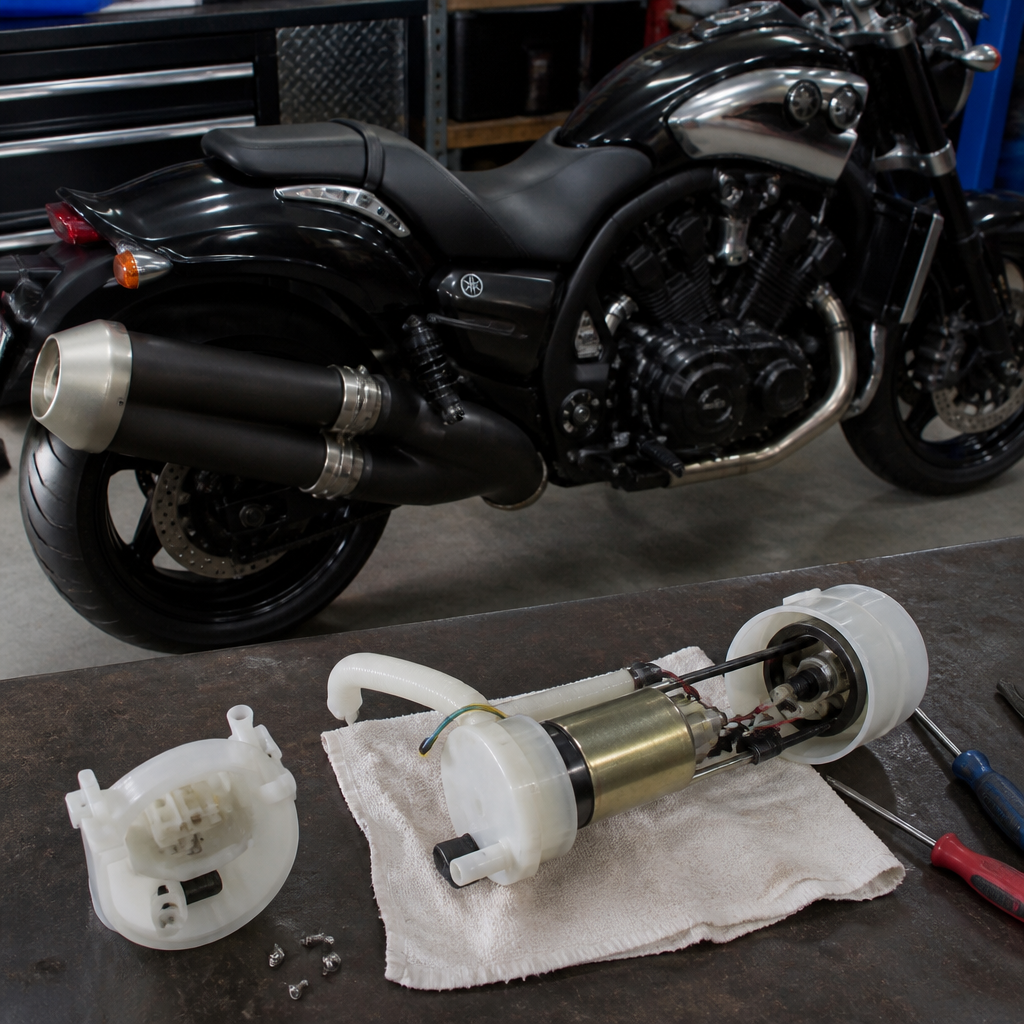
The 2009-2020 Yamaha VMAX is famous for brutal acceleration, a unique 1679cc V4, and electronics that made it feel years ahead of many muscle bikes, yet owners and technicians know another reputation follows it: intermittent stalling often traced to the fuel pump system. On this generation of VMAX, “fuel pump stalling” usually describes a hot or random engine cutout, hard restart, weak prime, or complete no-start caused by inadequate fuel pressure, electrical interruption, overheating pump internals, or contamination in the tank and delivery circuit. I have diagnosed this pattern on high-mileage street bikes, garage queens revived after long storage, and modified machines running exhaust, flash tunes, or neglected batteries, and the important point is simple: the pump itself is only one piece of a larger diagnostic chain.
This matters because the VMAX uses a high-pressure electronic fuel injection system that depends on stable voltage, clean fuel, and a correctly sealed tank module. A misdiagnosed stall wastes money fast. Owners replace injectors, coils, side-stand switches, or ECUs when the real fault is a pressure drop after heat soak or a connector with rising resistance. The stakes are higher on this model because the bike’s compact packaging, under-seat tank layout, and heat concentration can mask symptoms until they become repeatable. A proper approach also fits the wider maintenance culture of modern metric motorcycles: understanding Japanese Industrial Standard fasteners, applying disciplined electrical testing, and respecting platform-specific quirks instead of treating every motorcycle like an old cable-fed carb bike. As a hub article, this guide explains the VMAX fuel pump issue in depth while connecting it to the broader skills needed for metric maintenance, including JIS screw practices, dual-clutch service thinking, and the small design differences that often decide whether a repair is clean or costly.
What the Infamous VMAX Fuel Pump Stalling Problem Actually Looks Like
The classic symptom set is consistent. The bike starts cold, idles normally, then stumbles under throttle after reaching operating temperature. Some bikes die when rolling off for a stop, then restart after cooling for a few minutes. Others crank strongly but do not fire because fuel pressure never reaches injector demand. On the 2009-2020 VMAX, riders also report a muted or absent prime when the key is switched on. That does not automatically confirm a failed pump, but it is an important clue. If the instrument cluster powers up normally and the battery is healthy, lack of prime points toward the pump circuit, relay control, connectors, ground path, or the in-tank module.
Context matters. Ethanol-blended fuel left in storage can varnish the pump strainer and stress the commutator. A weak battery can still spin the starter while dropping system voltage low enough that the ECU and pump no longer behave predictably. Heat soak after a hard ride can expose a marginal pump that passes a cold test. I have seen one VMAX with a flawless idle in the workshop fail repeatedly only after ten minutes of stop-and-go traffic because the pump current rose sharply as internal clearances changed with temperature. Another bike had been incorrectly blamed on traction control because it cut power on acceleration, but fuel pressure logging showed the rail collapsing under load.
Why the VMAX Fuel System Is Sensitive to Small Faults
Yamaha designed the second-generation VMAX around performance first. The fuel pump module sits in the tank and must deliver high pressure consistently to support the V4’s demand at wide throttle openings. Electronic fuel injection systems do not tolerate uncertainty the way older carbureted setups sometimes do. If pressure falls below target, atomization suffers, injector flow drops, combustion leans out, and the ECU cannot always trim around the loss quickly enough. On a big engine that makes strong torque early, the rider feels that as hesitation, surging, or an abrupt stall.
The VMAX also amplifies normal metric-bike service realities. Japanese motorcycles commonly use compact connectors, weather seals, and fasteners that reward precision. The bike’s tank access, airbox architecture, and bodywork stacking mean a rushed teardown can create new faults such as pinched hoses or damaged tabs. This is where the broader encyclopedia topics become relevant. Understanding JIS hardware reduces screw damage during disassembly, especially around pump access and surrounding trim. Knowing metric quirks means noticing hose routing clips, connector secondary locks, and grounding points that are easy to overlook. Even if this model does not use a dual-clutch transmission, the diagnostic mindset from DCT maintenance still applies: follow a structured sequence, verify pressure and voltage before parts replacement, and assume electronic systems are only as reliable as their inputs.
Root Causes: Pump Failure, Electrical Loss, Heat, and Contamination
Four root causes appear most often. First is mechanical wear inside the pump motor. Brushes, commutator surfaces, and bearings degrade over time, especially when the pump has run hot or circulated stale fuel. Second is electrical loss. Corroded terminals, fatigued wiring, weak grounds, and relay contact resistance can drop voltage enough to reduce pump speed. A pump that sees 10.5 volts under crank instead of proper charging-system voltage may still spin, but not produce required pressure. Third is heat. Performance engines generate significant thermal load, and in-tank pump modules rely on fuel for cooling. Repeated low-fuel operation can shorten life. Fourth is contamination. Rust particles, tank debris, degraded hose material, or varnish can clog the strainer or internal regulator path.
There are secondary causes as well. A blocked tank vent can create negative pressure and mimic pump weakness. Injector fouling can resemble pressure loss. The tip-over sensor, side-stand circuit, or ignition switch can interrupt operation and send a technician down the wrong path. That is why diagnosis must separate “no fuel pressure,” “no injector command,” and “no spark” before conclusions are drawn. On the VMAX, replacing the fuel pump without checking current draw, connector condition, and actual pressure is gambling, not troubleshooting.
How to Diagnose It Correctly, Step by Step
Start with the battery. A fully charged AGM battery should hold healthy static voltage and maintain strong cranking voltage; if it sags excessively, every downstream test becomes suspect. Next, confirm pump prime. Cycle the key and listen near the tank. Then inspect fuses, relay function, and the pump connector for heat discoloration or loose terminals. Measure voltage at the pump during prime and during crank, not just with the bike sitting still. A meter reading that looks acceptable unloaded can collapse under actual current demand.
The most important test is fuel pressure under operating conditions. Use the correct adapter and gauge rated for EFI pressures. Check key-on prime pressure, idle pressure, and, if possible, loaded behavior when the fault appears. Pressure that starts normal and falls as the bike warms is highly suspicious. Current draw testing is equally valuable; a failing pump often shows abnormal amperage before total failure. If available, use a scope or graphing meter to watch voltage supply and pump current together. That combination can distinguish a worn pump from a wiring problem in minutes. Scan for stored fault codes, but do not expect codes to identify every marginal pump. Many stalling complaints leave no direct fuel-system code.
| Symptom | Likely Cause | Best Confirming Test |
|---|---|---|
| Cold start OK, stalls hot | Pump wear or heat-related internal drag | Fuel pressure and current draw after heat soak |
| No prime sound, strong battery | Relay, connector, wiring, or failed pump motor | Voltage check at pump during key-on |
| Cranks, sputters, dies under throttle | Low pressure or clogged strainer | Pressure test at idle and under load |
| Random cutout over bumps | Loose terminal, ground, or harness fault | Wiggle test with live voltage monitoring |
| Runs better with full tank | Overheating pump or venting issue | Vent inspection and hot-fuel pressure check |
Repair Decisions: Replace the Pump, the Module, or Supporting Parts?
Once testing confirms the fuel pump system, decide whether to replace only the motor element, the full module, or adjacent service items. Full modules cost more but reduce comeback risk because the strainer, internal hoses, seals, and regulator-related components are renewed together. On an older VMAX with unknown fuel history, that is usually the smarter choice. If a reputable pump kit is used, verify flow and pressure specifications match the VMAX requirement rather than relying on “fits many models” listings. Cheap aftermarket pumps are common sources of repeat failures. I have removed new off-brand units that lost pressure within months despite passing an initial bench test.
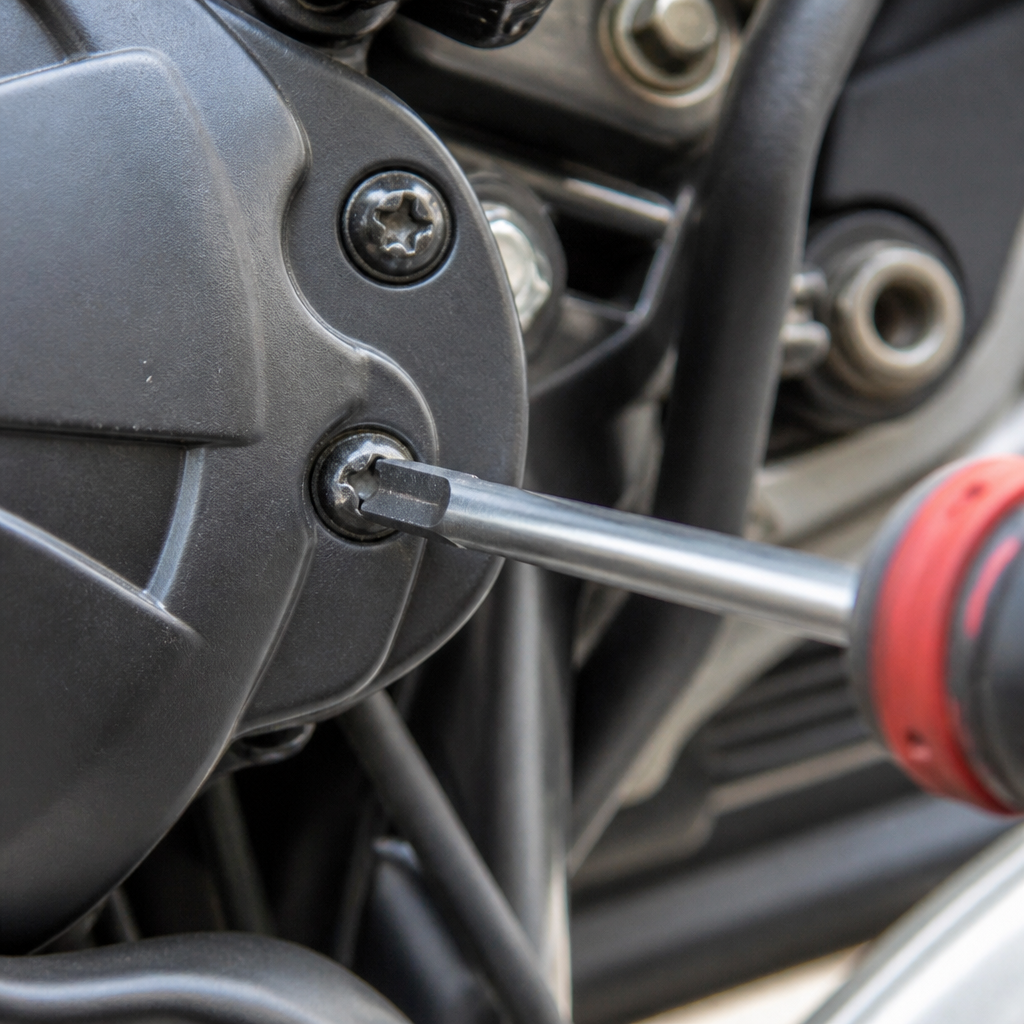
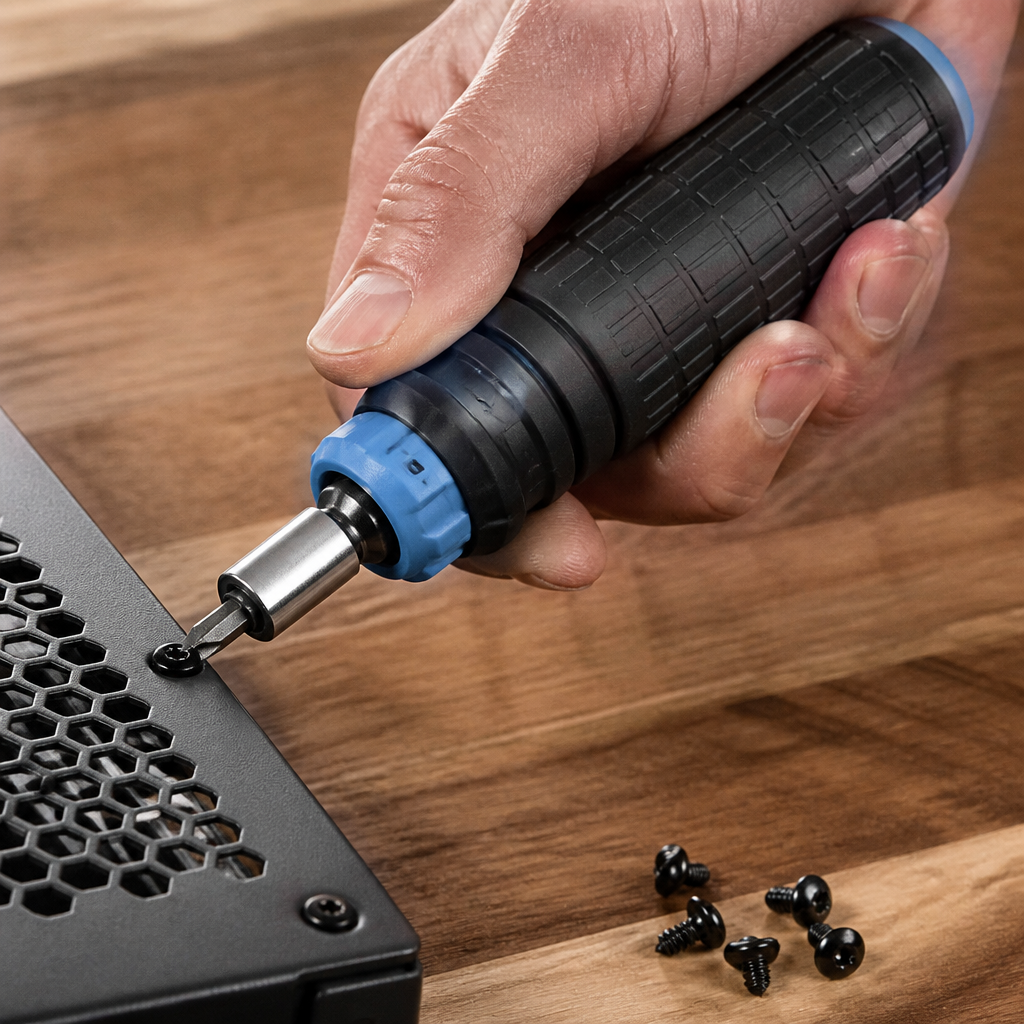
Always inspect the tank interior before installation. If varnish, sediment, or corrosion remains, a fresh pump inherits the same hostile environment. Replace sealing O-rings as required and torque fasteners evenly to avoid leaks or flange distortion. This is exactly where JIS awareness matters. Many Japanese motorcycles use cross-head screws and machine screws that look Phillips but are cut to JIS geometry. Using the wrong driver cams out the head, especially on older, tight, or thread-locked hardware. A true JIS screwdriver or JIS-compatible bit grips deeper and prevents stripped screws around pump access panels, switch housings, and intake components. That one tool choice can turn a two-hour repair into a smooth service instead of an extraction job.
The Broader Metric Maintenance Hub: JIS Standard, DCT Maintenance, and Common Quirks
This VMAX page also serves as a hub for the wider metric maintenance encyclopedia because the same habits that solve fuel-pump faults improve every repair on Japanese bikes. First, the JIS standard. On Yamaha, Honda, Suzuki, and Kawasaki models, technicians repeatedly encounter JIS-style fasteners on master cylinders, carb tops on older machines, switchgear, and bodywork brackets. The practical rule is simple: if a Japanese cross-head fastener feels oddly tight or starts to slip with a Phillips bit, stop and switch tools. Vessel, Hozan, and JIS-pattern impact bits are proven options. Clean the recess, apply downward pressure, and use hand impact when appropriate.
Second, DCT maintenance deserves attention even when discussing a non-DCT VMAX because it teaches system thinking. Dual-clutch motorcycles, most notably Honda designs, demand exact fluid specifications, adaptation procedures, temperature-aware service steps, and scan-tool verification. The lesson transfers directly: modern metric motorcycles are integrated electronic machines. You do not guess at clutch drag on a DCT bike, and you should not guess at pump failure on a VMAX. Verify inputs, outputs, and operating conditions. Third, metric quirks are the small but important details: 8mm and 10mm flange bolts hiding under trim, connector locks that release sideways instead of upward, vacuum hoses that harden with age, and harness grounds mounted to painted frames where a small film of corrosion causes large diagnostic confusion. Riders who learn these patterns spend less, break fewer parts, and diagnose faster.
Prevention, Ownership Strategy, and When to Escalate
The best prevention plan is unglamorous but effective. Keep the battery on a quality maintainer when the bike sits. Avoid storing ethanol fuel for long periods; if storage is unavoidable, use fresh stabilized fuel and run the system long enough to circulate it. Do not habitually run the tank near empty, because the fuel around the pump helps control temperature. Replace old fuel at the start of a season if the bike sat for months. During service, inspect grounds, relay sockets, and harness routing near heat sources. If the bike develops a faint hesitation at high load, investigate early instead of waiting for a roadside no-start.
Escalate to a specialist when the fault is intermittent and expensive parts are only being guessed at. A shop familiar with Yamaha diagnostics should be able to test pressure, voltage drop, and current draw with repeatable methods. Ask for numbers, not impressions: what was pressure at key-on, at idle, and when hot; what voltage reached the pump during crank; what current did the pump draw; were venting and injector pulse confirmed? Those figures turn a frustrating stalling story into an objective repair plan. For owners building a long-term maintenance library, this is the main takeaway from the VMAX fuel pump issue and the larger metric encyclopedia. Use the right JIS tools, respect model-specific quirks, apply the disciplined logic seen in advanced systems such as DCT service, and diagnose before replacing parts. Do that, and the 2009-2020 Yamaha VMAX remains what it should be: a ferocious, reliable muscle bike that starts cleanly, pulls hard, and stays off the trailer. If your VMAX has begun to stumble or stall, schedule a pressure-and-voltage diagnostic before ordering parts.
Frequently Asked Questions
What are the most common symptoms of fuel pump stalling on a 2009-2020 Yamaha VMAX?
The classic pattern is an engine that suddenly cuts out when hot, then restarts only after sitting for a few minutes. Many owners first notice it as a random stall at idle, a stumble under throttle, or a brief hesitation that becomes more frequent over time. In more advanced cases, the bike may crank normally but refuse to start because the pump is not building enough pressure for the injectors. Another common clue is a weak or inconsistent fuel pump prime when the key is turned on. Instead of the normal, crisp priming sound, you may hear a faint, delayed, or completely absent pump cycle.
On the VMAX, symptoms can also mimic ignition or sensor issues because fuel delivery failures are not always total. A marginal pump may work fine when cold, then lose output as internal heat rises. That creates frustrating intermittent behavior: the bike runs hard one ride and stalls the next. Riders may also report surging at steady throttle, poor high-rpm pull, or a feeling that the engine is “running out of fuel” under acceleration. Because this model is a high-demand, high-output machine, even a modest drop in fuel pressure can show up dramatically when the engine is asked to deliver full performance.
Why does the fuel pump system on this VMAX generation tend to cause intermittent stalling instead of a constant no-start?
Intermittent stalling usually happens because the fault is not simply “pump works” or “pump does not work.” On the 2009-2020 VMAX, the problem is often related to heat, aging electrical connections, internal pump wear, or resistance changes in the circuit that only appear under certain conditions. A fuel pump can pass enough fuel when the bike is cold and demand is low, but once temperatures climb and the fuel system is heat-soaked, the pump may slow down, current draw may rise, or voltage at the pump may drop enough to reduce pressure below what the engine needs.
That is why the bike may restart after cooling off. The temporary recovery points technicians toward a component that is becoming unstable with temperature rather than failing outright all the time. Wiring, connectors, relays, grounds, and the pump motor itself can all behave this way. In some cases, debris in the pump strainer or wear inside the assembly allows the bike to idle yet causes starvation under load. The VMAX’s performance character makes these borderline faults easier to notice because the engine’s fuel demand is high, especially during strong acceleration. The result is a very recognizable pattern: hot cutout, weak prime, hard restart, and a problem that may disappear just long enough to complicate diagnosis.
How do you properly diagnose whether the fuel pump is really the cause of stalling on a Yamaha VMAX?
The right approach is to confirm fuel pressure and electrical supply before replacing parts. Start by listening for a consistent pump prime every time the key is switched on. If the sound is weak, delayed, or missing, that is an important clue, but not final proof. The next step is to test actual fuel pressure with the proper equipment and compare the readings during normal operation, at hot restart, and ideally while the failure is present. A pump can sound normal and still fail to maintain pressure under real operating conditions.
Voltage testing is just as important. Check battery condition first, then verify that the pump is receiving correct voltage and ground under load, not merely with the connector unplugged. A voltage drop test across connectors, grounds, relay contacts, and the harness can reveal hidden resistance that a simple continuity check may miss. Inspect the pump connector, relay area, and any signs of heat damage, corrosion, or looseness. If the bike stalls only when hot, repeat testing after a full heat soak because many faults will not show up on a cold machine.
It is also smart to rule out look-alike problems. A failing side stand switch, bank angle sensor issue, weak battery, poor charging output, or ECU-related interruption can cause shutdown symptoms that owners mistakenly blame on the fuel pump. Likewise, restricted fuel flow, clogged strainers, or contamination in the tank can create the same lean-stall behavior. The most reliable diagnosis comes from catching the motorcycle in the act: no-start or hot-stall condition present, fuel pressure measured, pump voltage verified, and the circuit checked for loss. That process separates a bad pump from a bad supply to the pump.
Can you keep riding a VMAX that has early fuel pump stalling symptoms, or should it be repaired immediately?
It should be repaired as soon as possible. Early symptoms often progress from an occasional annoyance into a real reliability and safety issue. A high-performance motorcycle that cuts out unexpectedly in traffic, during a turn, while passing, or on a hot ride is more than inconvenient. Even if the bike restarts after a few minutes, the unpredictability is the main risk. Intermittent failures are especially dangerous because they encourage riders to think the problem is “not that bad” right up until the motorcycle leaves them stranded or stalls in an unsafe situation.
There is also a mechanical reason not to ignore it. A fuel pump that is struggling can run hotter and degrade further. Low or unstable fuel pressure may cause lean running under load, poor combustion, hesitation, and in some cases added stress on the overall fuel delivery system. If the root issue is electrical resistance rather than the pump itself, continued operation can worsen connector heat damage or relay contact problems. On a VMAX, where the engine is built to deliver strong performance, any drop in proper fuel delivery should be treated seriously. The practical advice is simple: if the bike is showing weak prime, hot stalling, hard restarting, or random cutouts, diagnose it before continuing normal riding.
What is the typical repair for Yamaha VMAX fuel pump stalling, and how can owners prevent the problem from returning?
The repair depends on what testing proves. In some cases, the fuel pump assembly itself is the failure point and replacement is the correct fix, especially if pressure drops when hot or the pump current draw is abnormal. In other cases, the real problem is in the support system: a failing relay, poor ground, damaged connector, corroded terminals, restricted strainer, or wiring with excessive voltage drop. Replacing the pump without correcting those issues can lead to repeat failures or an expensive misdiagnosis. A thorough repair means addressing both the pump and the condition of the circuit that feeds it.
Prevention starts with fuel system cleanliness and electrical health. Keep the tank clean, avoid letting contaminated or stale fuel sit for long periods, and inspect the tank interior and strainers if fuel delivery issues are suspected. Make sure battery voltage and charging system performance are strong, because weak system voltage can aggravate pump problems. During service, technicians should inspect harness routing, connector fit, terminal condition, and ground quality, especially on an older machine where heat and vibration have had years to work on the electrical system. If a VMAX has a history of intermittent fuel-related stalling, documenting fuel pressure and voltage readings after repair is valuable because it establishes a baseline for future troubleshooting. In short, the best long-term fix is not just swapping parts, but restoring the entire fuel pump circuit to stable, full-performance condition.