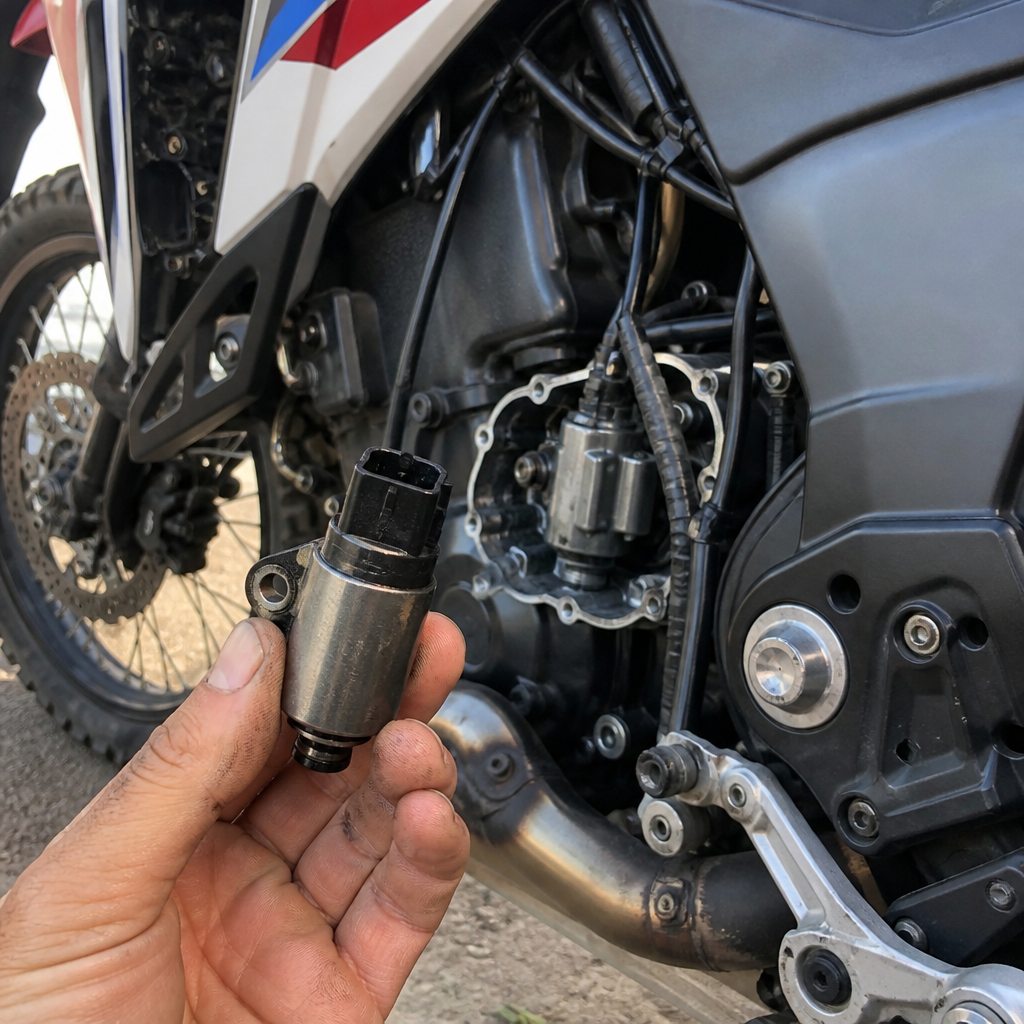
The Honda Africa Twin’s Dual Clutch Transmission is remarkably durable, but when a DCT solenoid failure occurs, the symptoms can feel dramatic: missed shifts, refusal to engage a gear, harsh transitions, warning lights, or a bike that seems stuck between commands. In workshop practice, I have found that riders often blame the transmission itself when the real problem sits in the hydraulic and electrical control layer that tells the gearbox what to do. Understanding how the DCT system works, how solenoids fail, and how the Africa Twin’s metric and JIS-specific service details affect diagnosis is the fastest way to avoid wasted parts, repeat failures, and unnecessary downtime.
DCT stands for Dual Clutch Transmission, a computer-controlled gearbox that uses two clutches and a set of shift actuators to preselect gears and deliver fast, consistent changes. A solenoid is an electrically controlled valve; on the Africa Twin, DCT solenoids help route hydraulic pressure to clutch and shift control circuits. JIS refers to Japanese Industrial Standards, especially important here because many fasteners on Honda motorcycles are designed around JIS screw and driver geometry rather than standard Phillips profiles. Metric quirks include torque values in newton-meters, thread pitches common to Japanese motorcycles, and service procedures built around metric measuring tools, from feeler gauges to multimeters that report resistance precisely enough to compare against Honda specifications.
This matters because DCT diagnosis is not a guessing game. The Africa Twin’s transmission logic depends on battery voltage, oil condition, sensor inputs, harness integrity, actuator operation, and correct mechanical assembly. A weak battery can mimic a failing solenoid. Contaminated oil can slow hydraulic response. A rounded JIS cover screw can turn a simple inspection into a broken case bolt extraction job. If you maintain, troubleshoot, or buy a used Africa Twin with DCT, this hub article gives you the framework: what fails, what to inspect first, what tools matter, and where the metric and Japanese-standard details make the difference between a clean repair and an expensive mistake.
At a practical level, the Africa Twin DCT is less mysterious than many riders assume. The gearbox itself is a conventional constant-mesh design. The complexity lives in control: the Transmission Control Module works with the Engine Control Module, reads speed and position sensors, then commands solenoids and motors to manage clutch engagement and gear selection. When the bike will not shift, you need to separate mechanical failure from control failure. Most no-shift complaints begin with a fault in electrical supply, fluid quality, actuator response, or a stored diagnostic trouble code, not a destroyed gearset.
How the Africa Twin DCT solenoid system works
On the Africa Twin, the DCT uses electro-hydraulic control to engage odd and even gear clutches separately, allowing one gear to drive while the next gear is prepared in advance. Solenoids open and close hydraulic pathways with precise timing. That timing matters because the system must coordinate clutch pressure, shift drum movement, throttle reduction, and engine speed to make shifts smooth and fast. If one solenoid sticks, leaks internally, opens electrically, or receives unstable voltage, the transmission may hesitate, flare, lurch, or enter a failsafe mode.
In plain terms, think of the solenoid as a traffic officer for pressurized oil. The control module sends an electrical command, the solenoid moves, and oil pressure gets directed where it needs to go. If the oil is dirty, varnish can make the valve sluggish. If the coil is damaged, the valve may never respond. If the wiring has high resistance, the signal arrives weakly. I have seen bikes produce intermittent shifting faults only when hot because coil resistance rose with temperature enough to push a marginal component outside normal operating range.
The most useful mindset is to treat the DCT as a system, not a single part. Solenoids do fail, but they are only one link in the chain. Before ordering components, verify battery health, charging output, oil grade, oil level, connector condition, grounds, and any published Honda service bulletins relevant to your model year. Africa Twin generations share core design logic, but connector layouts, software calibrations, and fault code procedures can differ.
Symptoms of DCT solenoid failure and what they usually mean
The classic complaint is simple: the Africa Twin will not shift. That can mean several different things, and the distinction is important. If the bike starts but will not move into drive, suspect an interlock, actuator command problem, or low system voltage. If it rides but refuses to upshift or downshift under certain conditions, look harder at sensor correlation, hydraulic response, and solenoid performance. If the transmission works cold and fails hot, electrical resistance, thermal expansion, and oil viscosity behavior move higher on the list.
Riders commonly report a flashing gear indicator, a check engine light, a wrench icon, a harsh clunk when selecting first, unexpected neutral behavior, or the bike dropping into a limp mode. Some describe a delayed engagement after pressing D or S. Others feel a surge between gears as if the clutch cannot decide whether to grab or release. None of these symptoms proves a bad solenoid by itself, but together they point you toward the electro-hydraulic control side instead of internal gear damage.
Watch for pattern clues. A fault that appears after washing the bike often suggests moisture in a connector. A fault that began right after an oil change raises questions about oil specification, level, or debris introduced during service. A fault that started after crash-bar installation may be harness pinching near the frame. A fault on a high-mileage adventure bike used in mud and heat can be contamination-related. The best diagnoses come from pattern recognition supported by measurements, not from assumptions.
Step-by-step diagnosis: start with power, codes, and fluid
When an Africa Twin DCT will not shift, begin with the basics because the basics solve a surprising number of cases. Check resting battery voltage and cranking voltage drop with a quality multimeter. Modern Honda control systems do not tolerate weak voltage well; a battery that still starts the engine can be too weak for stable actuator control. Confirm charging output at idle and raised rpm. Inspect battery terminals, ground points, and the main fuse area for heat discoloration or looseness.
Next, pull diagnostic trouble codes using the Honda procedure in the factory service manual or a compatible scan tool. Stored and pending codes matter even if the fault seems gone during your inspection. Codes related to shift actuators, clutch pressure control, gear position, wheel speed correlation, or solenoid circuits narrow the search quickly. Freeze-frame style context, where available, is especially valuable because intermittent electrical faults may not show up while the bike sits on the stand.
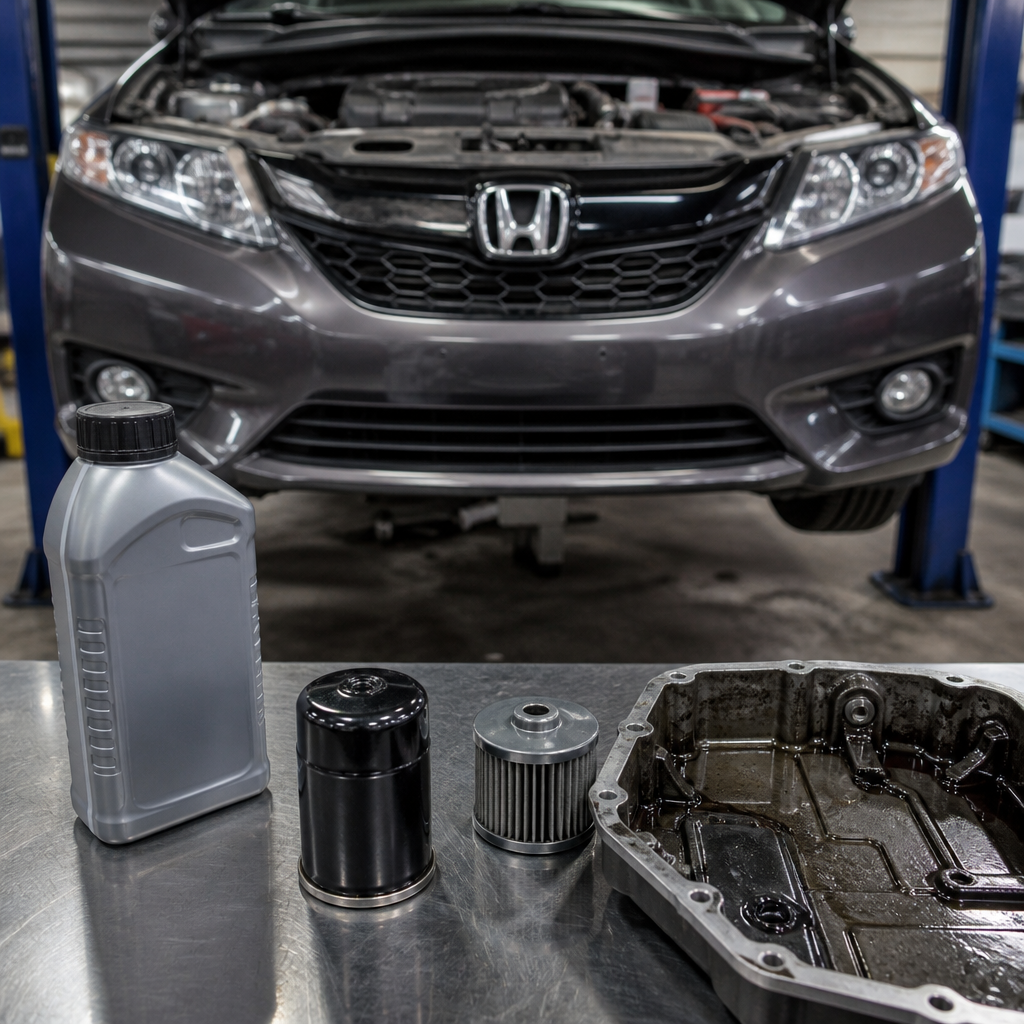
Then assess oil. Honda specifies wet-clutch-compatible motorcycle oil because friction behavior and hydraulic response both matter in a DCT. Verify the correct viscosity for ambient conditions and model requirements, and confirm the level exactly as the service procedure states. Overfilled oil can aerate, underfilled oil can starve circuits, and the wrong additive package can alter clutch engagement. If the oil is old, burnt-smelling, metallic, or visibly contaminated, change it and inspect the filter and screens before condemning hard parts.
| Check | Why it matters | What a bad result suggests |
|---|---|---|
| Battery voltage and load behavior | DCT control depends on stable electrical supply | Weak battery, poor terminals, charging fault |
| Stored fault codes | Points to affected circuit or logic pathway | Solenoid circuit issue, sensor fault, actuator problem |
| Engine oil condition and level | DCT uses oil pressure and clutch friction characteristics | Contamination, wrong oil, overdue service |
| Connector and ground inspection | Adventure bikes see vibration, water, and dust | Corrosion, pin fit loss, harness damage |
| Solenoid resistance and command test | Confirms coil health and mechanical response | Open coil, short, sticking valve, heat-related failure |
Only after these checks should you move deeper into component testing. That order saves time. In my experience, many supposed DCT solenoid failures are actually battery, oil, or connector problems that produce identical rider-facing symptoms.
Testing the solenoid properly
A proper solenoid test has two halves: electrical and hydraulic-mechanical. Electrically, disconnect the component only after following the manual’s safety steps, then measure coil resistance with a calibrated multimeter. Compare the reading against Honda’s specified range at the specified temperature. If resistance is outside spec, the solenoid is defective. If it is barely inside spec cold but drifts badly when heated, treat that as a strong warning sign. Heat-soak testing matters because many failures appear only after the engine and transmission reach operating temperature.
Next, verify the harness side. Check for supply voltage, ground integrity, continuity, and excessive resistance under load. A continuity check alone is not enough; damaged conductors can pass a simple beep test yet fail when current demand rises. Back-probing with care, voltage drop testing, and wiggle testing while monitoring the meter reveal faults hidden inside insulation or near strain points. Honda wiring is generally reliable, but adventure use exposes harnesses to repeated flexing around steering heads, tank mounts, and frame brackets.
Mechanically, a solenoid can click yet still fail to meter oil correctly. If the service manual allows bench activation, listen for a crisp, repeatable action and inspect the valve body area for contamination. Varnish, fine debris, and clutch material can all affect movement. Never scrape precision surfaces aggressively; use approved cleaning methods and lint-free practice. If contamination is present, ask why. Replacing a solenoid without addressing the source of debris can turn a successful repair into a comeback.
The JIS standard and why it matters on Africa Twin service
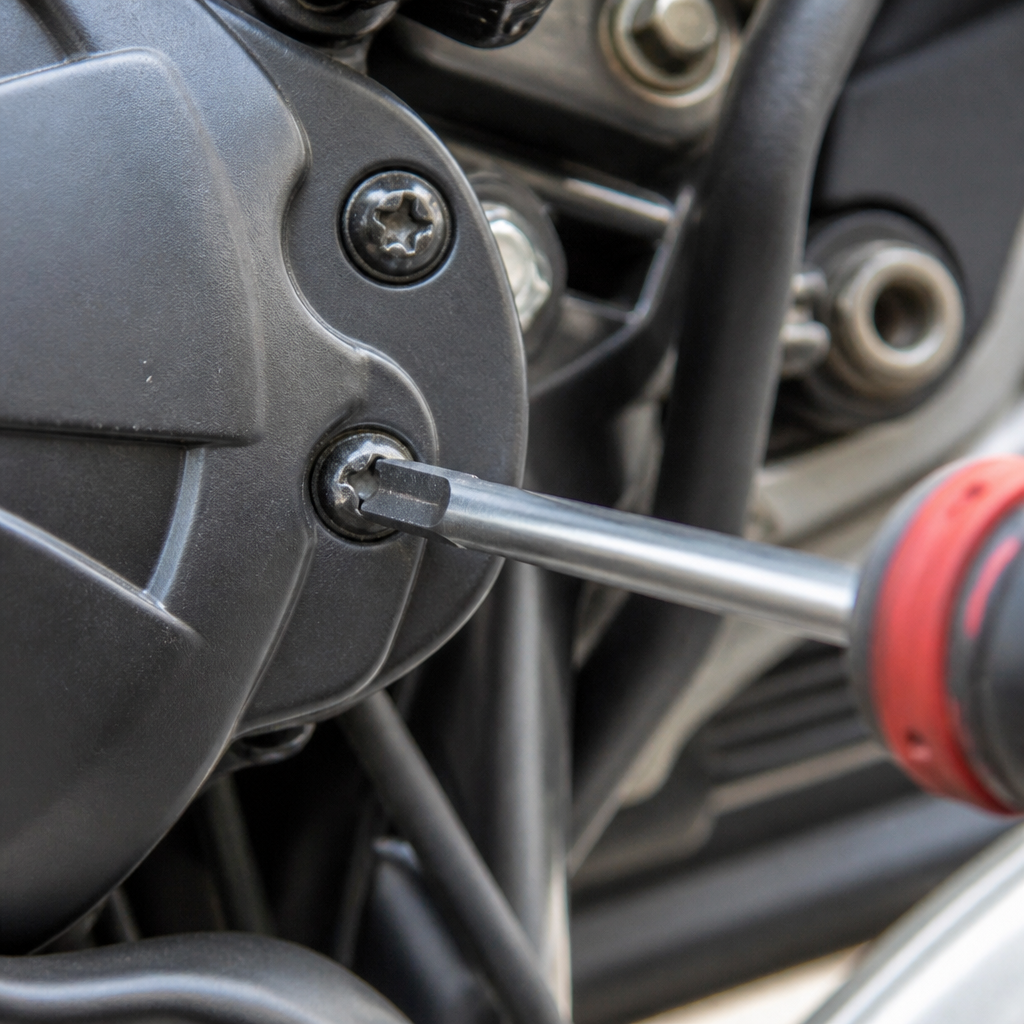
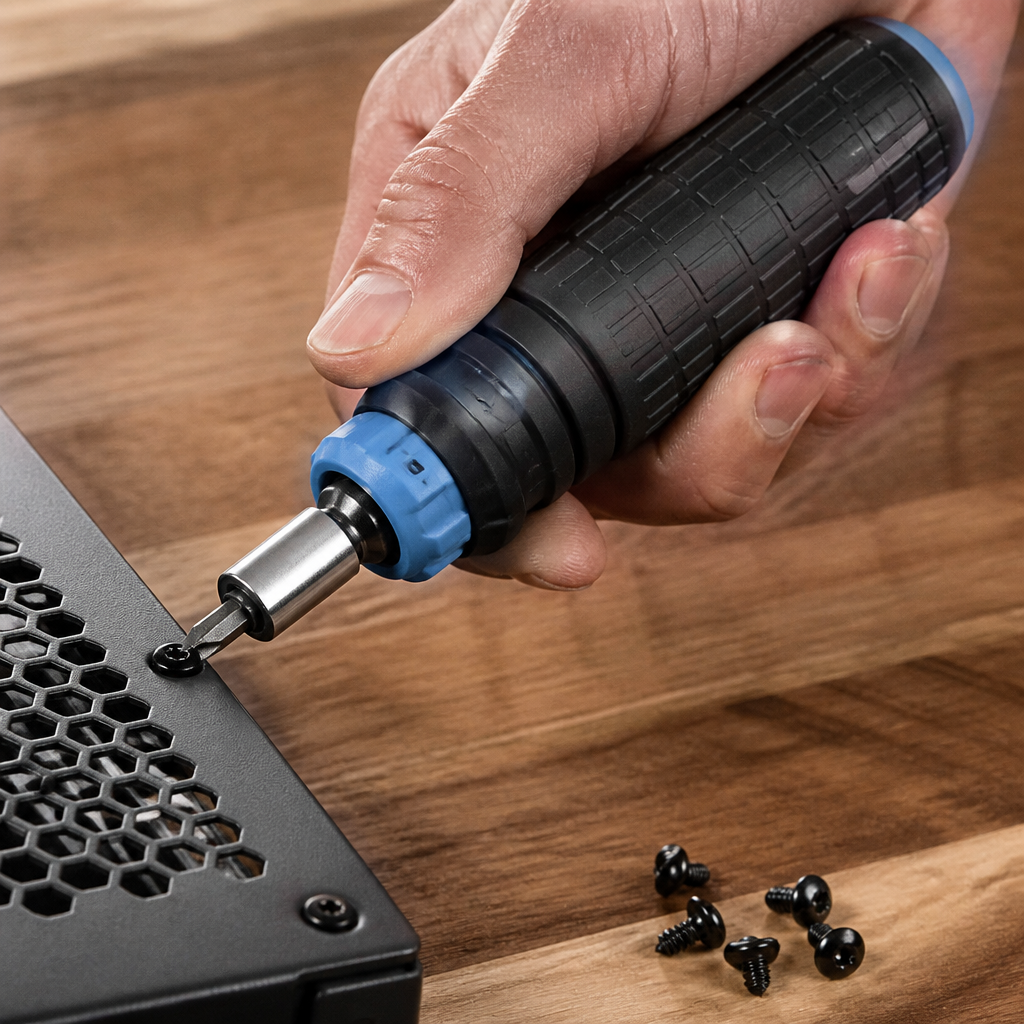
One of the most overlooked reasons Africa Twin owners damage their bikes during diagnosis has nothing to do with electronics: they use the wrong screwdriver. Japanese motorcycles commonly use JIS crosshead fasteners, which differ from Phillips in flank angle and cam-out behavior. A Phillips driver tends to ride upward and strip the recess when higher torque is needed. On DCT cover work, sensor removal, switch housing access, or bodywork disassembly, that matters immediately.
Using proper JIS drivers from brands such as Vessel or Hozan reduces fastener damage dramatically. I keep impact-rated JIS bits on the bench because Honda case screws can be thread-locked, heat-cycled, and tight after years of service. When riders say a screw was “soft,” the problem is often tool mismatch, not inferior hardware. Once the recess rounds, access time multiplies and the risk of collateral damage rises.
The JIS issue also connects to trust in your diagnosis. If a cover gets pried off after stripped screws, sealing surfaces can be nicked. If an electrical connector tab is forced with the wrong pick, pin tension can be altered. Good DCT maintenance depends on preserving the original fit of fasteners, connectors, and sealing components. Correct tools are not a luxury on these bikes; they are part of accurate troubleshooting.
Metric quirks that affect diagnosis and repair
The Africa Twin rewards technicians who think in metric terms all the way through the job. Torque values are specified in newton-meters, clearances and runout in millimeters, and electrical specs often depend on decimal precision that cheap tools miss. Thread pitch on Japanese motorcycles is predictable once you know the pattern, but assuming an SAE substitute will fit is how covers crack and aluminum threads get pulled. Keep a metric thread gauge, a torque wrench scaled appropriately for low and medium ranges, and feeler gauges marked clearly in metric increments.
There are also model-specific metric habits worth respecting. Aluminum case threads on Hondas do not forgive overtorque. Oil drain plugs, filter cover bolts, and small sensor fasteners are regularly damaged by technicians using large wrenches without feel or without calibrated torque tools. On DCT-related service, even slight distortion at a sealing face or mounting point can affect oil control, alignment, or connector routing.
Another quirk is the tendency for owners to convert every value mentally into imperial approximations. That is where mistakes happen. A clearance rounded casually from millimeters to thousandths, or a torque value estimated from foot-pounds without precision, can move a component outside spec. If this article is your hub for metric maintenance, the key principle is simple: stay in the units Honda wrote, use the right tools, and avoid informal conversions unless absolutely necessary.
DCT maintenance practices that prevent solenoid-related problems
Preventive maintenance reduces DCT complaints more effectively than most riders expect. First, keep to conservative oil and filter intervals if you ride dust, heat, deep traffic, or heavy off-road miles. The DCT is robust, but clean oil is its working fluid and clutch environment. Second, maintain battery health proactively. Smart chargers, seasonal battery testing, and prompt replacement of marginal batteries prevent a long list of “mystery” shift issues.
Third, inspect connectors and harness routing whenever bodywork is off. Apply only appropriate connector care methods; avoid smearing general grease everywhere, because excess product can attract dirt or interfere with proper seating depending on connector design. Fourth, update software or calibration procedures through a Honda dealer when applicable. Some drivability complaints attributed to hardware have been improved by updates or relearn procedures.
Finally, document your baseline. Record oil brand and viscosity, battery age, charging voltage, and any stored codes before and after service. On a used Africa Twin, that history helps separate chronic faults from one-time issues. If the bike has been accessorized with lights, heated gear leads, GPS harnesses, or crash protection, inspect every added component for chafing and grounding errors. Accessory wiring is a frequent hidden cause of intermittent DCT electrical faults.
When the problem is not the solenoid
Not every Africa Twin that will not shift has a failed DCT solenoid. Wheel speed sensor discrepancies, side stand switch faults, gear position sensor issues, clutch actuator problems, low charging voltage from a failing regulator-rectifier, and internal mechanical wear can all create similar symptoms. In some cases, the transmission is protecting itself because another subsystem has delivered implausible data. That is why code reading and live data review are so valuable.
Real-world example: a bike came in with intermittent refusal to upshift after a muddy trip. The owner had already priced solenoids. The actual issue was corrosion and pin drag at a connector exposed after repeated pressure washing. Cleaning, terminal repair, and harness sealing solved the fault permanently. Another case involved repeated harsh engagements traced not to the DCT hardware but to incorrect oil installed by a general service shop. Once the oil and filter were corrected and adaptation completed, shifting returned to normal.
The takeaway is straightforward: diagnose the circuit and system behavior before replacing parts. Solenoids fail, but shotgun repairs are expensive on modern motorcycles and often miss the root cause.
Conclusion
DCT solenoid failure on an Africa Twin is a real and important fault, but it is only one piece of a larger electro-hydraulic system. The bike may not shift because of a bad solenoid coil, a sticking valve, contaminated oil, unstable battery voltage, connector corrosion, sensor disagreement, or mechanical problems elsewhere in the control chain. The reliable path is always the same: start with battery and charging checks, retrieve fault codes, verify oil condition and level, inspect connectors and grounds, then test the solenoid and harness against Honda specifications.
For this sub-pillar topic, three ideas matter most. First, respect the JIS standard when removing and reinstalling fasteners, because correct tools preserve the motorcycle and speed the work. Second, treat DCT maintenance as preventive system care, not just reactive repair; clean oil, healthy voltage, and intact wiring prevent many shift complaints. Third, embrace the metric nature of the machine completely. Use metric tools, torque values, specifications, and measurement habits exactly as Honda intended.
If your Africa Twin will not shift, avoid guessing. Work methodically, use the factory manual, and inspect the simple causes before replacing major components. That disciplined approach saves money, prevents repeat failures, and keeps Honda’s DCT performing the way it was designed to perform. If you are building out your own maintenance reference, use this page as your hub, then continue with detailed guides on JIS fasteners, DCT service procedures, fault code interpretation, and metric workshop best practices for the Africa Twin.
Frequently Asked Questions
What are the most common signs of a DCT solenoid failure on a Honda Africa Twin?
The most common signs usually show up as shift behavior that suddenly feels confused, delayed, or inconsistent. A healthy Africa Twin DCT should make clean, deliberate gear changes based on throttle input, road speed, engine load, and the selected ride mode. When a solenoid begins to fail, that smooth logic breaks down because the transmission control system can no longer manage hydraulic pressure and clutch engagement the way it was designed to. Riders often report missed shifts, a refusal to upshift or downshift, harsh engagement into gear, unexpected neutral-like behavior, or a motorcycle that seems stuck and unwilling to follow paddle commands or automatic shift requests.
In many cases, warning lights on the dash are part of the story. A flashing gear indicator, check engine light, or transmission-related fault code can appear when the control unit sees a mismatch between commanded gear changes and actual transmission response. The bike may also enter a protective or limp-style mode to prevent further damage. It is important to understand that these symptoms do not automatically mean the mechanical gearbox itself is broken. On the Africa Twin, the DCT relies on an electro-hydraulic control layer, and if a solenoid is sticking, electrically open, shorted, slow to respond, or operating with contaminated fluid, the transmission may behave as though it has a major internal problem when the root cause is actually upstream in the control system.
Another useful clue is whether the problem is repeatable under certain conditions. Some solenoid-related issues appear more often when the bike is hot, after long rides, during stop-and-go traffic, or when fluid contamination causes valves to react sluggishly. Intermittent behavior is especially common early in the failure process. That is one reason accurate diagnosis matters so much. Symptoms alone can point you toward a DCT solenoid problem, but they need to be confirmed with fault-code retrieval, electrical testing, fluid inspection, and a structured diagnostic process.
How does the Africa Twin DCT solenoid system actually affect shifting?
The solenoids are a critical part of the DCT’s command structure. Honda’s Dual Clutch Transmission is not shifting gears purely by mechanical linkage the way a conventional manual transmission does. Instead, the system uses sensors, control modules, hydraulic circuits, and clutch actuators to decide when and how to engage gears. The solenoids function like electrically controlled hydraulic switches. When the transmission control system sends a command, a solenoid opens, closes, or modulates fluid flow to direct pressure where it needs to go for clutch application or gear selection.
That matters because the DCT depends on precise timing. One clutch controls one set of gears while the other clutch manages the alternate set, allowing the next gear to be prepared in advance. When everything is working properly, this is why shifts can feel very quick and smooth. But if a solenoid is slow to respond, sticking internally, suffering from weak coil performance, or not receiving proper voltage or ground, the hydraulic pressure may not arrive at the right moment or in the right amount. The result can be a delayed shift, an incomplete shift, a harsh transition, or a system that aborts the shift altogether because the expected feedback never matches the command.
From a diagnostic standpoint, this is why a solenoid issue can imitate clutch, valve body, sensor, or control module trouble. The rider experiences the symptom at the gearbox, but the cause may be a failure in the component that controls hydraulic flow. In workshop conditions, this is one of the most important concepts to explain to owners: the DCT is extremely capable, but it is only as accurate as the electrical and hydraulic control system behind it. A transmission that “won’t shift” may actually be receiving bad instructions, weak actuation, or no actuation at all from the solenoid circuit.
Can low, dirty, or incorrect transmission fluid cause symptoms that look like DCT solenoid failure?
Yes, absolutely. In real-world service work, fluid condition is one of the first things worth checking because contaminated, degraded, low, or incorrect fluid can create symptoms that are almost indistinguishable from a failing solenoid. The DCT system relies on hydraulic pressure that must be stable, clean, and within design limits. If the fluid is dirty, varnished, aerated, or simply not the correct specification, the solenoids and internal control passages may not operate cleanly. A good solenoid can become sluggish if the fluid feeding it is compromised.
This is especially important on a motorcycle like the Africa Twin, where riders may see a shift problem and immediately assume an electronic failure. In practice, poor fluid can cause delayed engagement, rough shifting, gear hunting, intermittent refusal to shift, and over-temperature-related transmission complaints. Debris in the fluid can affect small passages and valves. Old fluid can lose the characteristics needed for consistent hydraulic response. Low fluid level can reduce pressure stability and create erratic clutch behavior. In those cases, the symptom is real, but the solenoid may only be reacting poorly because its operating environment is no longer correct.
That said, fluid problems and solenoid problems can also coexist. A bike that has gone too long between services may have both contaminated fluid and a solenoid that has already been damaged or restricted by that contamination. This is why proper diagnosis should include fluid level verification, fluid condition assessment, service history review, and fault-code analysis before replacing parts. Swapping solenoids without addressing fluid quality can lead to repeat failures or an incomplete repair. If the article’s goal is to help riders understand why their Africa Twin will not shift, this point is central: never separate the electrical control side from the hydraulic side, because on a DCT they are deeply connected.
How do you properly diagnose a suspected DCT solenoid failure instead of guessing?
Proper diagnosis starts with confirming the complaint and building a sequence, not jumping straight to replacement. First, document exactly what the bike is doing. Does it fail to upshift, downshift, engage first gear, or respond in both automatic and manual modes? Is the issue constant or intermittent? Does it happen cold, hot, under load, or only after extended riding? Those details help narrow the fault pattern before tools even come out. Next, scan the motorcycle for stored diagnostic trouble codes. On modern DCT systems, fault codes provide a major advantage because they can point toward solenoid circuits, shift actuator problems, pressure issues, sensor mismatches, or control logic faults.
After code retrieval, electrical checks are essential. That includes verifying power supply, grounds, connector condition, wiring integrity, and solenoid resistance or activation behavior according to service information. Corrosion, pin drag, moisture intrusion, and harness damage can all mimic a failed solenoid. Then move to the hydraulic side: confirm fluid level, inspect fluid quality, and consider whether contamination could be affecting valve movement. In some cases, a technician may use active tests or command tests to monitor whether the control unit is requesting solenoid operation and whether the transmission responds correctly. Comparing commanded action to actual behavior is often what separates a true solenoid failure from a sensor or pressure-management issue.
The final step is interpretation. A fault code alone does not always condemn the solenoid itself. For example, a circuit code could be caused by wiring, connector issues, poor voltage, or internal control module faults. Likewise, a performance complaint with no direct solenoid code might still trace back to sticking hydraulic control caused by fluid contamination. The best diagnosis combines rider symptom history, scan data, live data if available, electrical testing, and service inspection. That disciplined approach prevents expensive misdiagnosis and avoids the all-too-common mistake of blaming the entire transmission when the real problem is in the DCT’s control layer.
Is it safe to keep riding an Africa Twin with suspected DCT solenoid failure, and what is the likely repair?
In most cases, continuing to ride with a suspected DCT solenoid issue is not a good idea, especially once the bike is showing clear shift refusal, harsh engagement, warning lights, or unpredictable gear behavior. The immediate concern is safety. If the motorcycle hesitates to engage a gear, unexpectedly refuses a shift, or behaves inconsistently at low speed or in traffic, rider control can be affected. A second concern is mechanical stress. Even if the root problem starts in the electrical or hydraulic control system, repeated harsh or incomplete shifts can increase wear on clutches and related transmission components.
The likely repair depends entirely on the cause found during diagnosis. If the issue is external, the solution may be as straightforward as correcting fluid level, replacing degraded fluid, repairing wiring, cleaning or replacing a connector, or addressing a weak power or ground supply. If testing confirms that a DCT solenoid has failed electrically or is sticking mechanically, the repair may involve replacing the affected solenoid and verifying proper operation afterward. In some cases, additional cleaning or service of the hydraulic control assembly may be needed if contamination is present. If the bike has stored codes related to pressure control or actuator response, the repair may involve related components rather than the solenoid alone.
The good news is that the Africa Twin DCT itself has a strong reputation for durability. That is why accurate diagnosis is so important. Many riders fear a total transmission failure when they first experience a no-shift condition, but the actual fix is often far more targeted. The smartest move is to stop riding once symptoms