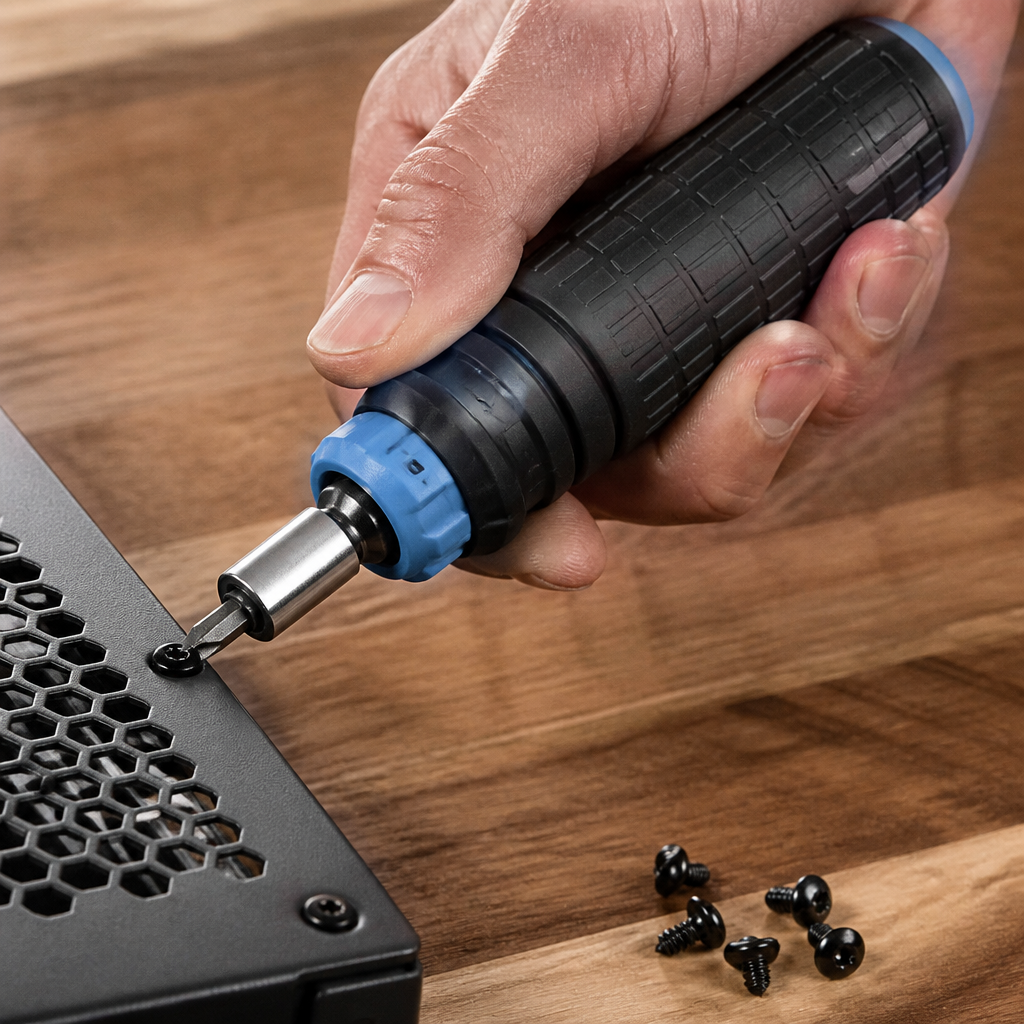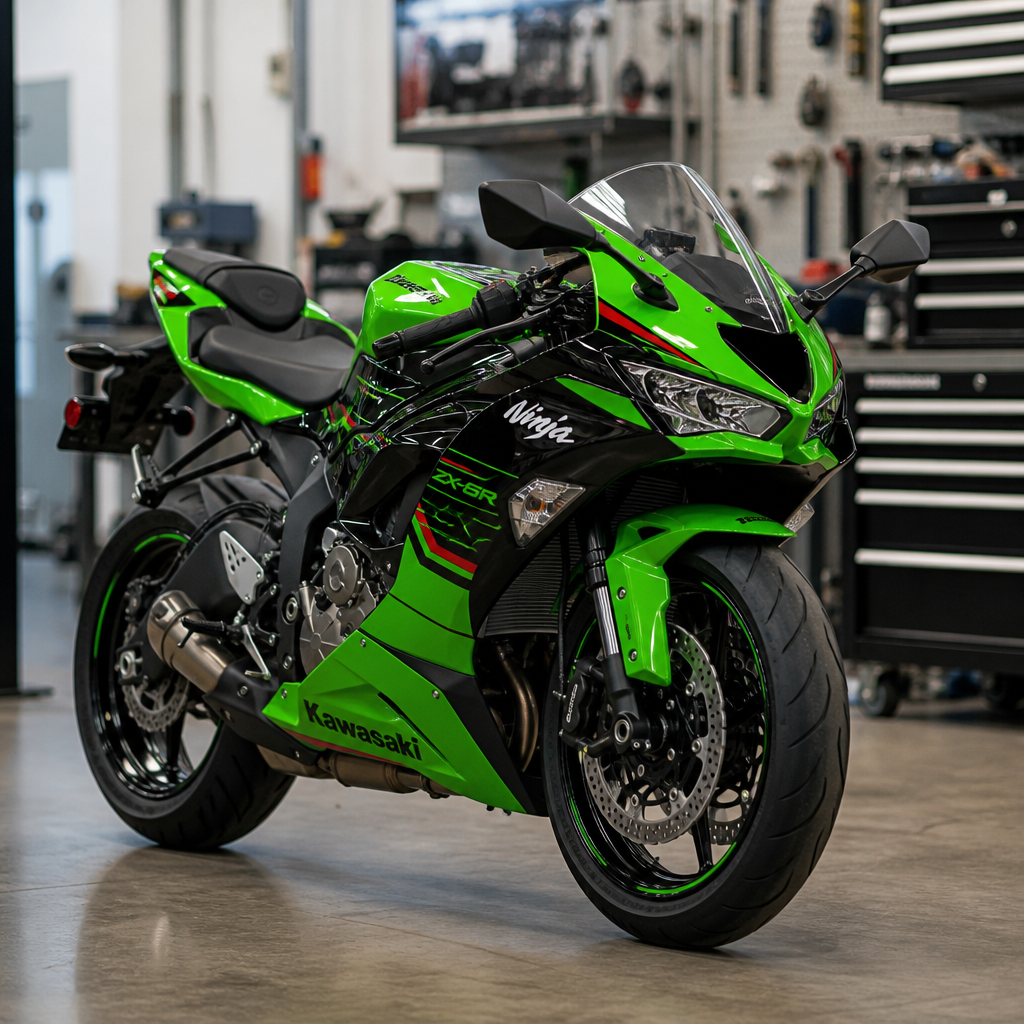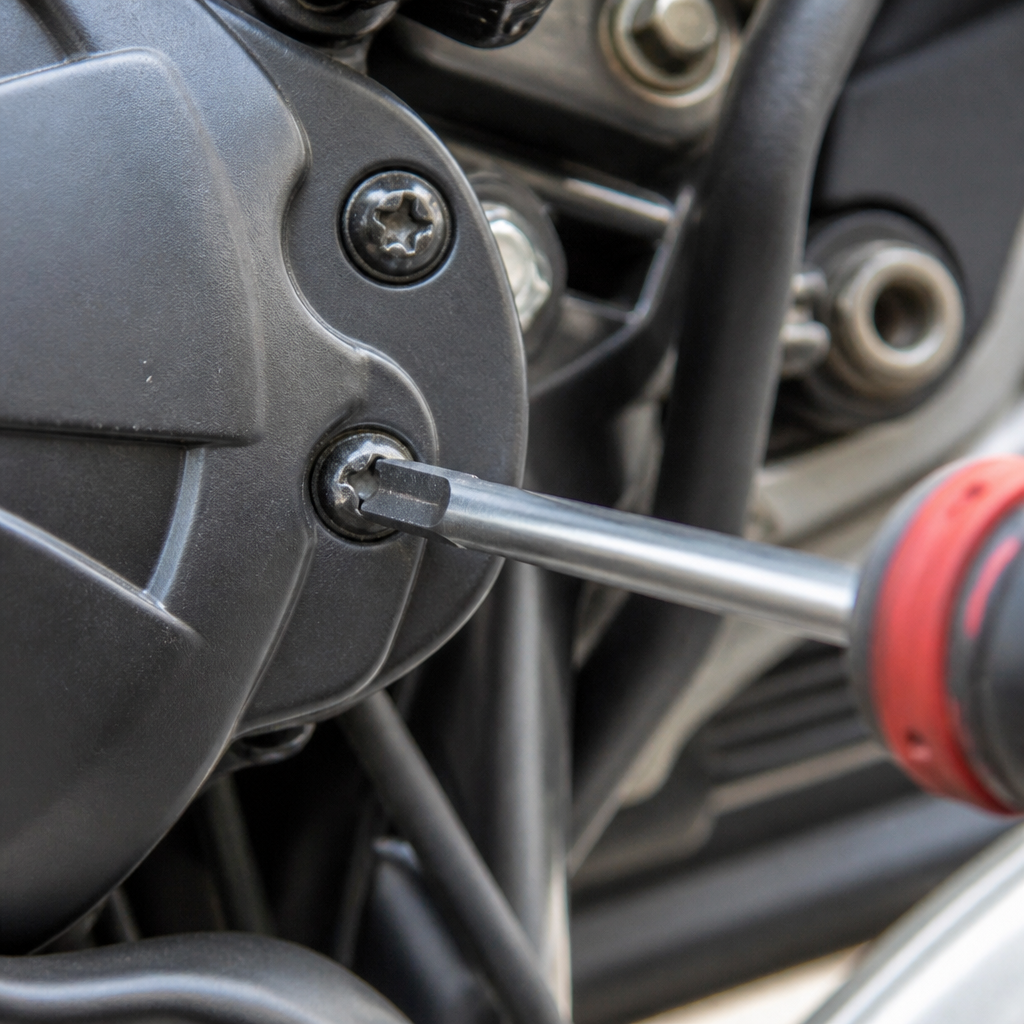
JIS screwdrivers matter because a surprising number of stripped fasteners on Japanese motorcycles, scooters, and bicycles are not caused by rust, abuse, or bad luck, but by using the wrong driver profile on the right screw. If you work on a Honda, Yamaha, Suzuki, Kawasaki, or many Japanese-made components on bicycles and power equipment, you have almost certainly encountered crosshead screws that look like Phillips but are built to a different industrial standard. That standard is JIS, short for Japanese Industrial Standards, and understanding it will save carburetor bowls, brake master cylinder caps, switchgear housings, fairing screws, and many hours of frustration.
In workshop terms, the difference is simple: a Phillips driver is intentionally designed to cam out under high torque, while a JIS driver fits deeper and transmits torque with less tendency to climb out of the recess. On older Japanese bikes in particular, that distinction is critical. I have seen pristine carburetors ruined by one hurried attempt with a hardware-store Phillips #2, and I have also seen “seized” screws come out easily the moment a proper JIS bit, hand impact driver, and firm downward pressure were used together. The standard affects tool choice, fastener preservation, and maintenance quality.
This hub article explains the JIS standard, where you will find JIS-style crosshead screws, how they differ from Phillips and Pozidriv, why metric service work brings its own quirks, and how all of that connects to modern DCT maintenance on Japanese motorcycles. It also serves as a practical map for deeper work across this maintenance and technical encyclopedia, so you can move from fastener identification to transmission service, torque practice, and model-specific procedures without guessing. If you maintain Japanese machines, this is foundational knowledge.
The JIS Standard: What It Is and Why It Exists
JIS refers to a broad family of industrial standards used in Japan across materials, dimensions, manufacturing, and testing. In the context most mechanics care about, JIS crosshead screwdrivers and screws were specified to deliver secure engagement and repeatable torque transfer on Japanese-made assemblies. The key point is that JIS crosshead fasteners were not meant to be serviced with ordinary Phillips drivers, even though the two can appear interchangeable at a glance.
Phillips was developed in the United States with intentional cam-out characteristics that helped prevent over-tightening in early powered assembly lines. JIS crosshead designs prioritize fit and torque transmission more directly. The result is a recess geometry with less taper and a driver tip that seats more positively. On the bench, that means a correct JIS #2 often feels as if it clicks into place, while a Phillips #2 feels vaguely loose even before torque is applied. That looseness is what rounds the recess, especially on soft OEM screws used in float bowls, throttle bodies, and reservoir lids.
Many mechanics now use high-quality bits labeled JIS, JIS-compatible, or DIN/ISO cross-point alternatives that fit older Japanese screws correctly. Vessel, Hozan, Engineer, and Moody are common names in motorcycle and electronics toolkits. Some modern Japanese manufacturers have shifted toward Torx, hex socket, or revised crosshead specifications, but huge numbers of service items on older and middle-aged bikes still punish incorrect tool selection. If your machine was built in Japan or follows Japanese hardware conventions, assume crosshead screws deserve closer inspection.
How to Identify JIS Screws on a Japanese Bike
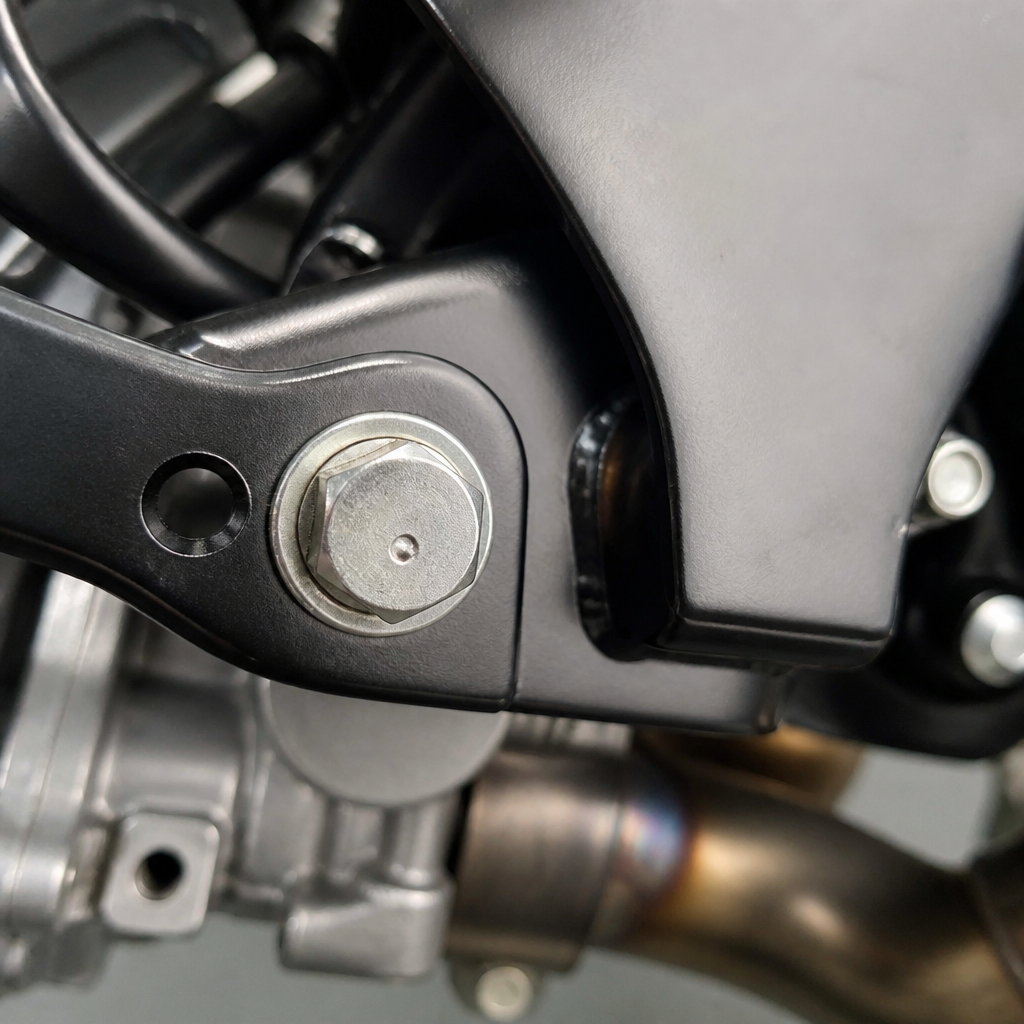
The fastest answer is that many true JIS screws look almost identical to Phillips, but several clues help. Older Japanese motorcycle screws often have a small dot or dimple stamped near one arm of the cross recess, indicating JIS-style geometry. You may see this on master cylinder caps, carburetor tops, airbox screws, switch housings, and engine covers. However, not every screw is marked, and absence of a dot does not prove it is Phillips. Manufacturing era, supplier, and replacement history all matter.
Fit is the most reliable diagnostic. A proper JIS driver seats deeper, wiggles less, and can accept higher turning force before wanting to climb out. A Phillips driver may enter the recess, but the contact feels shallower, especially under load. On a stubborn screw, that difference becomes obvious immediately. If the driver wants to rise out while the screw stays put, stop before damage occurs. Clean the recess with a pick, select the exact size, apply strong axial pressure, and reassess the fit.
Context also helps. Carbureted Hondas from the 1970s through early 2000s, for example, are full of JIS-style bowl screws and top-cap screws. Japanese bicycles may use JIS crossheads on derailleurs, shifters, and brake components, though bicycle standards are more mixed because of globalized supply chains. Japanese electronics and powersports hardware often share the same profile logic. When in doubt, treat any Japanese crosshead screw as JIS until proven otherwise. That assumption prevents more damage than it causes.
JIS vs Phillips vs Pozidriv: The Practical Differences
These three standards are commonly confused, and the confusion destroys hardware. Phillips has a pointed, tapered geometry designed to cam out. Pozidriv adds secondary ribs between the main slots and is common in European wood screws and construction fasteners. JIS resembles Phillips visually but uses a less tapered recess and driver profile for fuller engagement. A Pozidriv driver in a JIS screw is wrong, and a Phillips driver in a JIS screw is usually only acceptable for light-duty, low-torque work when nothing else is available.
| Type | Typical Visual Clue | How It Behaves | Common Use Case |
|---|---|---|---|
| JIS | May have a small dot near recess | Seats deep, resists cam-out | Japanese motorcycles, electronics |
| Phillips | No extra ribs, familiar cross shape | Cams out under higher torque | General hardware, legacy US fasteners |
| Pozidriv | Secondary lines between main slots | Higher torque capacity than Phillips | European screws, construction |
In real workshop use, the distinction shows up at the worst moments: a stuck front brake reservoir screw before a fluid change, a carburetor bowl screw swollen with threadlocker and age, or an ignition cover fastener that has not moved in twenty years. With the correct JIS bit, downward force, and a vessel-style impact driver, the screw often breaks free cleanly. With a Phillips driver, the recess rounds, then the job escalates to locking pliers, left-hand drill bits, heat, extraction, and replacement parts.
There is nuance. Some modern “Phillips” bits from premium brands fit older JIS screws reasonably well because the geometry is closer than cheap hardware-store drivers. Likewise, many mechanics use Japanese-made cross-point bits that are marketed broadly rather than under strict legacy terminology. The practical rule remains unchanged: buy quality Japanese cross-point drivers for Japanese bike service and keep them separate from carpentry or household drivers.
Where JIS Knowledge Fits Into Metric Maintenance
This encyclopedia section is built around metric maintenance because Japanese bikes combine metric fasteners, Japanese crosshead standards, and service procedures that reward precision. Metric work is not just using millimeter sockets instead of inch sizes. It means recognizing flange bolt head dimensions, thread pitches such as M6 x 1.0 and M8 x 1.25, torque values in newton-meters, and the specific fastener logic manufacturers use in engine cases, bodywork, brake systems, and electrical assemblies. JIS awareness belongs in that same skill set.
A common mistake is assuming all M6 crosshead screws are equal. They are not. Head style, material hardness, plating, thread engagement depth, and recess standard all affect serviceability. Japanese OEM screws are often softer than aftermarket socket-head replacements, which is one reason many owners convert frequently removed crosshead screws to stainless or zinc-plated Allen bolts after the first service. That can be sensible on side covers and fairings, but it is not always wise on brake or carburetor components where head height, corrosion behavior, and thread galling matter.
Metric quirks also include mixed standards on the same machine. A Japanese bike may have JIS crosshead body screws, 8 mm hex-head hose-clamp screws, 5 mm Allen body fasteners, and Torx on accessories added later. Service manuals usually specify torque, sequence, sealant, and wear limits, but they assume the technician can identify the hardware correctly. Good maintenance starts with that literacy. It prevents stripped heads, broken tabs, over-torqued case bolts, and the false belief that Japanese machines use delicate hardware when the real issue is mismatched tools.
DCT Maintenance: What Owners Need to Know
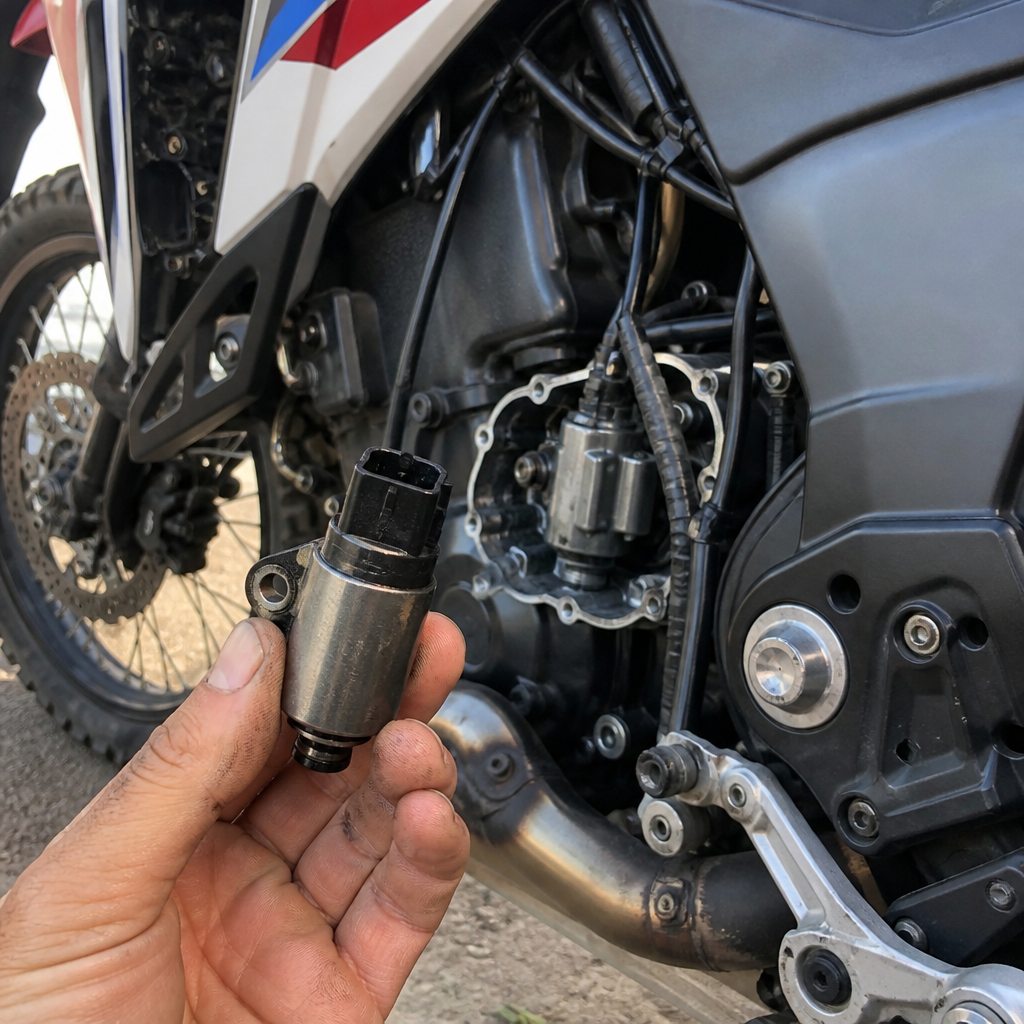
DCT, or Dual Clutch Transmission, is most closely associated in the motorcycle world with Honda systems used on models such as the Africa Twin, Gold Wing, Rebel 1100, NC750X, and previous VFR1200 variants. A DCT uses two clutches and electronically controlled shift actuation to preselect gears and deliver automatic or paddle-shifted operation without a conventional manual clutch lever. For maintenance, the important truth is that a DCT is not a sealed, zero-attention unit. It depends on correct fluid, clean filtration, software-aware diagnostics, and disciplined service intervals.
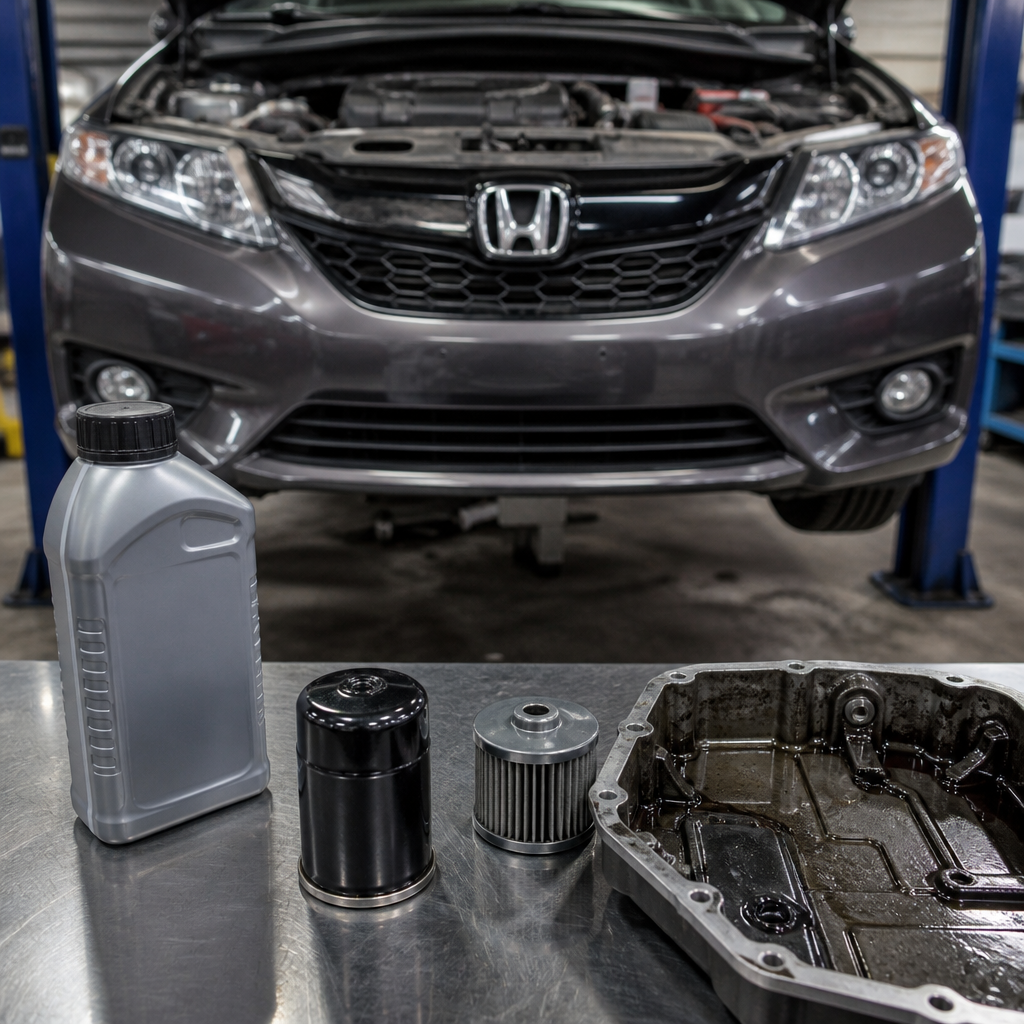
Routine DCT maintenance usually centers on engine oil and filter changes performed exactly to specification, because the transmission and clutch operation depend on oil characteristics. Honda service literature specifies approved viscosity grades and standards, typically motorcycle-specific oils meeting JASO MA or MA2 where applicable, not generic friction-modified automotive oils that may alter clutch behavior. Some models also include additional filters or screens related to clutch or hydraulic control circuits. Ignoring these details can lead to poor shift quality, fault codes, delayed engagement, or accelerated wear.
Battery condition also matters more than many owners expect. DCT control systems rely on stable voltage for actuators, sensors, and control logic. I have diagnosed rough shifting complaints that were ultimately linked to weak batteries or charging issues rather than internal transmission problems. Manufacturers also provide initialization or learning procedures after certain repairs. Those procedures are not optional rituals; they calibrate clutch engagement points and shift behavior. If you service a DCT-equipped bike, the workshop manual and a model-appropriate scan tool or diagnostic process are as important as wrenches.
Best Practices, Tooling, and Smart Next Steps
If you want one immediate upgrade to your maintenance routine, buy a dedicated set of JIS or Japanese cross-point screwdrivers and bits in the sizes you actually use: usually #1, #2, and #3. Pair them with a hand impact driver, quality picks for cleaning recesses, penetrating oil, and a small torque wrench calibrated in newton-meters. For DCT-equipped motorcycles, add a factory service manual, a careful oil-measurement routine, and the habit of checking for technical service bulletins. These basics solve more real-world problems than flashy specialty tools.
Technique matters as much as tools. Before turning any suspect screw, clean the recess fully, confirm the exact driver size, push straight down, and break the fastener loose with controlled force. If it resists, use heat where safe, shock it with an impact driver, or remove the component for bench work rather than escalating damage in place. For metric fasteners, chase dirty threads, verify thread pitch before substitution, and never guess torque on small engine-case or cover bolts. On DCT service, record fluid type, quantity, interval, and any relearn procedures performed so future diagnosis stays grounded in facts.
The main takeaway is straightforward: Japanese bikes are easier to maintain when you respect the standards they were built around. JIS screws are not defective Phillips screws, DCT systems are not mysterious black boxes, and metric hardware is not interchangeable just because the bolt fits the hole. Learn the fastener profiles, use the proper drivers, follow the manual, and treat oil, torque, and calibration details seriously. From there, explore the related articles in this encyclopedia on JIS driver selection, stripped screw recovery, metric fastener charts, Honda DCT service intervals, and model-specific maintenance procedures, then apply what you learn in your own workshop.
Frequently Asked Questions
What is a JIS screwdriver, and how is it different from a Phillips screwdriver?
A JIS screwdriver is a driver made to fit Japanese Industrial Standard crosshead screws, which are extremely common on Japanese motorcycles, scooters, carburetors, switchgear, engine covers, brake master cylinders, and many Japanese-made bicycle and small-engine components. At a glance, a JIS screw and a Phillips screw can look nearly identical, which is exactly why so many people assume they are interchangeable. They are not. The difference is in the geometry of the recess and the driver tip. A Phillips driver was intentionally designed to cam out, or rise out of the screw head, when torque increases. That made sense in mass production environments where over-tightening was a concern, but it is a terrible feature when you are trying to remove a stuck fastener on a 20-year-old Honda or Yamaha.
JIS screws use a profile that allows the driver to seat more fully and transfer torque more positively, with much less tendency to slip out under load. When you put a Phillips screwdriver into a JIS screw, it often feels like it fits well enough at first. The problem shows up when real torque is required. Instead of staying planted, the Phillips tip starts to climb and chew up the recess, rounding the wings of the cross and leaving you with a stripped screw head that is suddenly much harder to remove. That is why so many “mystery stripped screws” on Japanese bikes are actually the result of using the wrong tool rather than using too much force. In practical terms, a proper JIS screwdriver gives better engagement, better control, and far less damage to the fastener.
Why do so many screws on Japanese motorcycles and bicycles get stripped so easily?
The short answer is that they often are not weak screws at all; they are simply being driven with the wrong profile. On Japanese machines, many crosshead fasteners are JIS, but generations of mechanics and owners have reached for Phillips tools because that is what is most common in household toolboxes. Since the two standards look similar, people assume any crosshead driver will work. The mismatch is subtle enough to fool beginners and experienced mechanics alike, especially when the screw is clean and not especially tight. Once corrosion, threadlocker, age, heat cycles, or factory torque enter the picture, the illusion disappears and the screw head starts to deform.
There are a few additional reasons this happens so often. First, many of these screws are installed in places where they see moisture, fuel vapor, road grime, and repeated heating and cooling, so even a correctly fitting tool may need firm pressure and technique. Second, some Japanese motorcycles use relatively soft fastener heads in cosmetic and cover applications, which makes correct tool fit even more important. Third, awkward access angles on fairings, carburetors, controls, and engine covers encourage users to approach the screw slightly off-center, increasing the chance of cam-out. Finally, once a screw head has been partially damaged by a Phillips driver, every future removal attempt becomes more difficult. That is why the problem seems to snowball over a bike’s life. What looks like fragile hardware is often just a long history of incorrect tool use.
How can I tell whether a screw on my Japanese bike is JIS or Phillips?
On many Japanese motorcycles, scooters, and related components, the safest assumption is that original-equipment crosshead screws are JIS unless you know they have been replaced. Historically, manufacturers such as Honda, Yamaha, Suzuki, and Kawasaki used JIS-style screws extensively, especially on older machines and on parts like carburetor bowls, side covers, switch housings, and master cylinder lids. Some JIS screws are marked with a small dot or dimple near the cross recess, and that can be a useful visual clue. However, not every JIS screw is clearly marked, and dirt, paint, wear, or previous damage can hide the indicator.
A more reliable method is to judge fit. A proper JIS driver will sit deeper and feel more secure in a JIS screw, with less wobble and more wall-to-wall contact. A Phillips driver may appear to fit, but it often feels slightly vague or shallow, especially when you apply turning pressure. If the tool wants to lift out or twist in the recess before the screw turns, that is a major warning sign. In restoration and routine service work, many mechanics simply keep JIS drivers on hand and use them by default on Japanese equipment because the cost of guessing wrong is a damaged screw head. If you are unsure, test fit gently, keep the driver perfectly aligned, and never force a screw with a driver that does not seat decisively.
Do I really need a dedicated JIS screwdriver set, or can I get by with good Phillips drivers?
If you work on Japanese motorcycles, scooters, or older Japanese bicycle components with any regularity, a dedicated JIS screwdriver set is absolutely worth owning. This is one of those tools that seems optional until the first time it saves a carburetor screw, switch housing fastener, or engine cover screw that a Phillips bit would have destroyed. Even excellent, premium Phillips drivers still have Phillips geometry. Better manufacturing quality improves grip and durability, but it does not change the fact that the profile is wrong for a JIS recess. In other words, a very nice incorrect tool is still incorrect.
That said, not every job requires a huge specialty kit. For many owners, a few commonly used JIS sizes will cover most maintenance tasks. A set of JIS screwdrivers or bits, plus a bit driver or hand impact driver, is often enough to transform your experience with stubborn factory fasteners. This is especially important if you service carburetors, remove side cases, open electrical controls, or work on brake reservoir lids. In those areas, preserving the original screw heads can save significant time and frustration. If you only ever plan to tighten an occasional body panel screw, you may survive with care and selective tool choices, but if you actually wrench on Japanese equipment, JIS drivers are not a luxury item. They are the correct tool for the job.
What is the best way to remove a stubborn JIS screw without stripping it?
Start with the correct JIS driver or bit in the exact size that fills the recess properly. Clean the screw head first so the tool can seat completely; packed dirt, paint, oxidation, or old gasket material can keep the driver from reaching full depth. Apply firm downward pressure and keep the driver perfectly inline with the screw. This matters more than many people realize. Even the correct driver will try to slip if you are off-angle, especially in tight spaces. For screws that have not moved in years, a light tap on the driver handle can help seat the tip and shock the threads slightly before you turn.
If the screw still resists, step up your approach before you damage the head. Penetrating oil, gentle heat where appropriate, and most importantly a hand impact driver can make a huge difference. A hand impact driver converts a hammer strike into downward force and a small turning action at the same time, which is ideal for stubborn JIS screws on engine covers, brake components, and carburetor hardware. Replace worn bits immediately, because even a JIS bit loses effectiveness if its edges are rounded. If a screw has already begun to deform, stop and reassess rather than continuing to chew it up. Locking pliers, extractor methods, or replacing the fastener entirely may be smarter than forcing one more attempt. The key idea is simple: the correct JIS tool, full engagement, straight alignment, and controlled technique will prevent the vast majority of stripped screws before they become a repair problem.