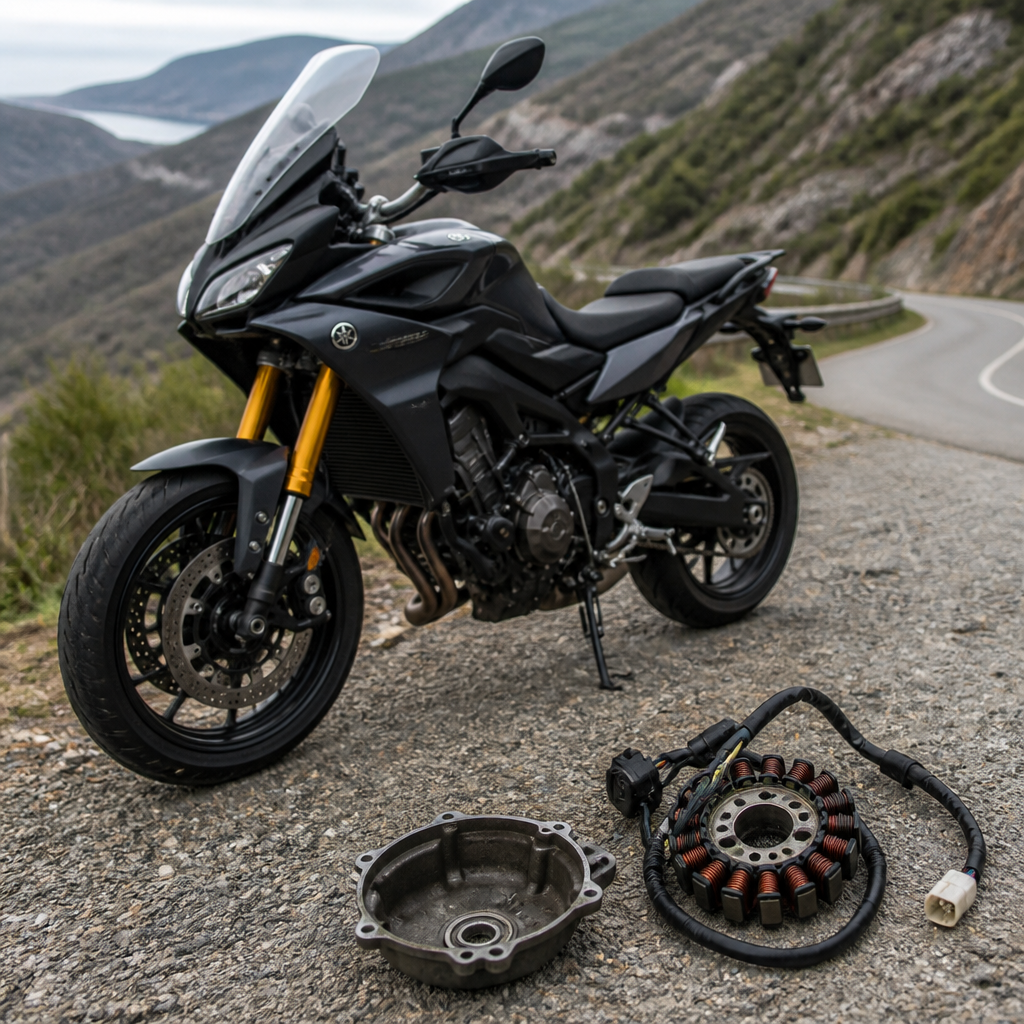
The Yamaha FJ-09 and Tracer 900 have earned a loyal following because they blend upright comfort, triple-cylinder character, and real-world touring ability. When owners search for 2026 stator failure symptoms, they usually want a direct answer: yes, charging-system trouble on these bikes can show up first as hard starting, dim or flickering lights, low battery voltage, intermittent dash resets, random fault codes, or a bike that dies after warming up. The stator is the stationary part of the alternator that generates alternating current, the regulator/rectifier converts and controls that output, and the battery stabilizes the system. If one part weakens, symptoms often overlap. I have diagnosed this pattern on Yamaha charging systems enough times to know that replacing the battery first is the most common wrong turn.
This topic matters because stator failure is rarely an isolated roadside inconvenience. A weak charging system can strand a rider, overheat connectors, damage the regulator/rectifier, and mask other electrical faults. On the FJ-09 and Tracer 900, owners also run into practical service issues that broader maintenance guides miss: Japanese Industrial Standards screw heads that are often mistaken for Phillips, metric fastener conventions that matter when torque values are tight, and confusion created by advice copied from motorcycles with dual-clutch transmissions even though these Yamahas do not use DCT. As a hub article in a metric maintenance encyclopedia, this guide ties those threads together. It explains what failing stators look like, how to test correctly, why JIS tools prevent avoidable damage, where metric quirks slow repairs, and how to separate useful maintenance practices from model-mismatched internet folklore.
Recognizing Yamaha FJ-09 and Tracer 900 stator failure symptoms
The most reliable early warning sign is falling system voltage. On a healthy FJ-09 or Tracer 900, a fully charged battery should read around 12.6 to 12.8 volts with the engine off, then rise into roughly the mid-13s to low-14s once the engine is running above idle with the regulator/rectifier doing its job. If voltage stays near battery level or drops as rpm increases, the charging system is not carrying the load. Riders usually notice this before they ever test it. The starter begins cranking more slowly after a normal ride. Heated grips become erratic. The TFT or LCD display may reset during starting. Headlights can dim at idle more than expected, and the bike may suddenly act normal again after charging the battery overnight, only to repeat the problem a few rides later.
Heat-related failure is especially important. A stator winding can test acceptably when cold but break down as varnish insulation degrades under operating temperature. In real use, that creates the classic pattern of a motorcycle that starts and runs fine for twenty to thirty minutes, then begins misfiring, stumbling, or shutting off because battery voltage is being consumed faster than the stator replenishes it. Owners sometimes chase fuel-pump, ECU, or sidestand-switch theories because the symptom appears after warmup. On these Yamahas, especially bikes used for commuting, touring with accessories, or repeated stop-and-go riding, heat soak at the left engine cover and resistance growth in aging connectors can push a marginal stator over the edge.
Physical clues also matter. Burnt smell near the left engine cover, darkened three-phase stator connector pins, brittle wiring insulation, or oil contaminated with metallic debris after unrelated engine work can all support the diagnosis. None of these signs alone proves the stator is bad, but together they narrow the field quickly. If the battery repeatedly tests low after full charging, the fuse block is intact, and there is no obvious parasitic draw, the charging circuit moves to the top of the list.
How to test the charging system correctly before replacing parts
Accurate diagnosis follows a sequence. Start with the battery because every other test depends on stable reference voltage. Load-test the battery or use a conductance tester; a surface-charged battery can mislead a basic multimeter reading. Next inspect battery terminals, ground points, and the main charging connectors. Loose grounds and overheated plugs can mimic stator failure. Then move to charging-voltage testing at idle and around 4,000 to 5,000 rpm with major accessories off. If voltage does not climb into the normal charging range, unplug the stator from the regulator/rectifier and perform three checks: AC output between each pair of stator leads, resistance between phases, and continuity to ground.
On a three-phase motorcycle stator, each leg should produce balanced AC voltage relative to the others when the engine is running. Exact numbers vary by meter, rpm, and service manual specification, but balance matters as much as headline output. If one leg is significantly lower, the winding is likely damaged. Resistance between phases should be very low and nearly equal; continuity from any stator lead to chassis ground usually indicates a shorted winding on systems where the stator should be isolated. Yamaha service literature is the final authority for the exact acceptable range, and that matters because trying to diagnose from generic internet values causes false positives. I have seen owners condemn a good stator because they used automotive expectations instead of motorcycle-specific specs.
Do not skip the regulator/rectifier. A failed regulator can undercharge, overcharge, or cook a replacement stator if the root cause is not corrected. If stator AC output is strong and balanced but battery charging voltage remains poor, the regulator/rectifier or wiring path becomes the likely fault. Conversely, if the stator fails resistance, isolation, or balanced-output checks, replacement is justified. After repair, retest the complete system hot, not just cold, because many charging problems return only after the engine reaches full operating temperature.
| Checkpoint | Healthy indication | Problem indication | Why it matters |
|---|---|---|---|
| Battery at rest | About 12.6 to 12.8 volts after charging and resting | Low standing voltage or rapid drop under load | A weak battery can imitate charging failure |
| Charging voltage at 4,000 to 5,000 rpm | Typically mid-13s to low-14s volts | No rise from battery voltage or unstable reading | Confirms whether the bike is actually replenishing power |
| Stator AC output phase-to-phase | Balanced output on all three legs | One leg low or dead | Points to a damaged winding |
| Stator resistance and ground isolation | Very low, even resistance between phases; no short to ground | Uneven resistance or continuity to ground | Reveals internal winding breakdown |
| Connector and terminal condition | Clean pins, tight fit, no discoloration | Melted plug, green corrosion, loose terminals | High resistance creates heat and voltage loss |
The JIS standard: the small detail that prevents big damage
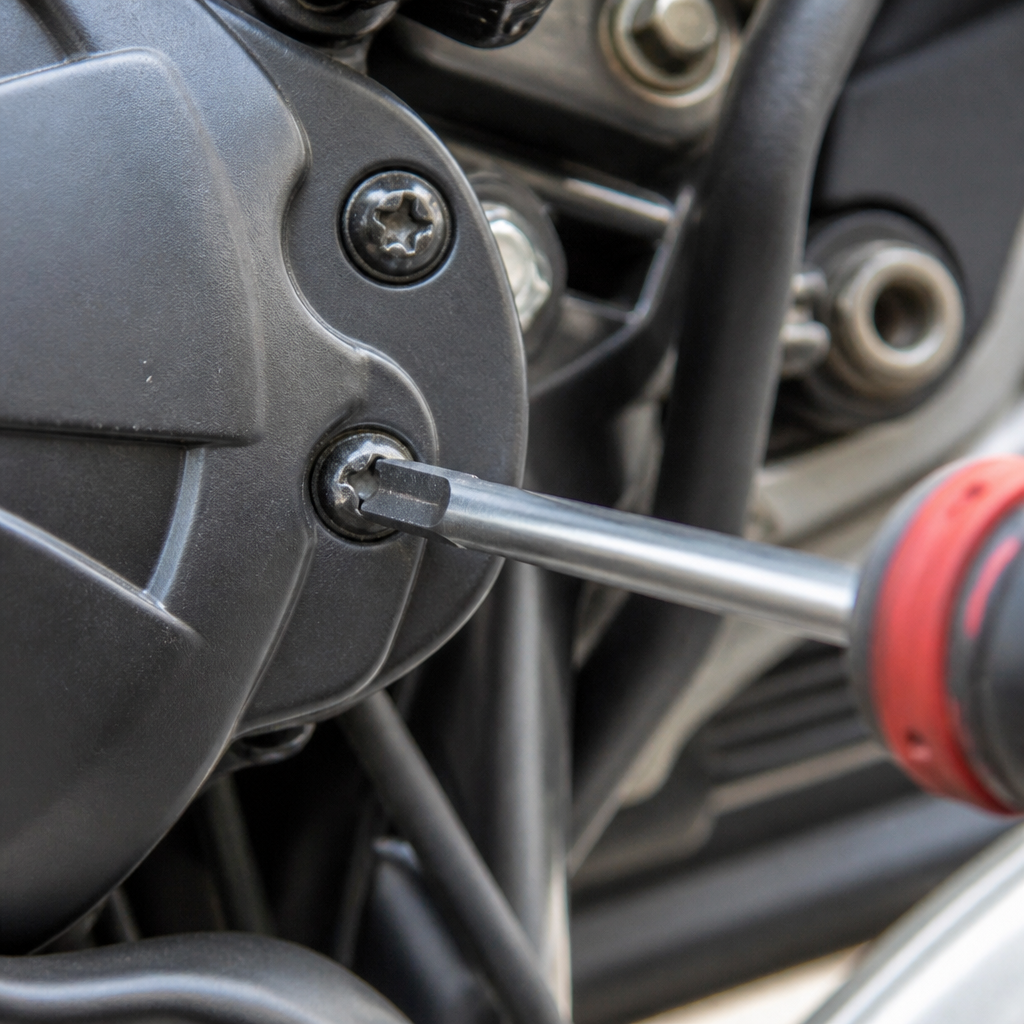
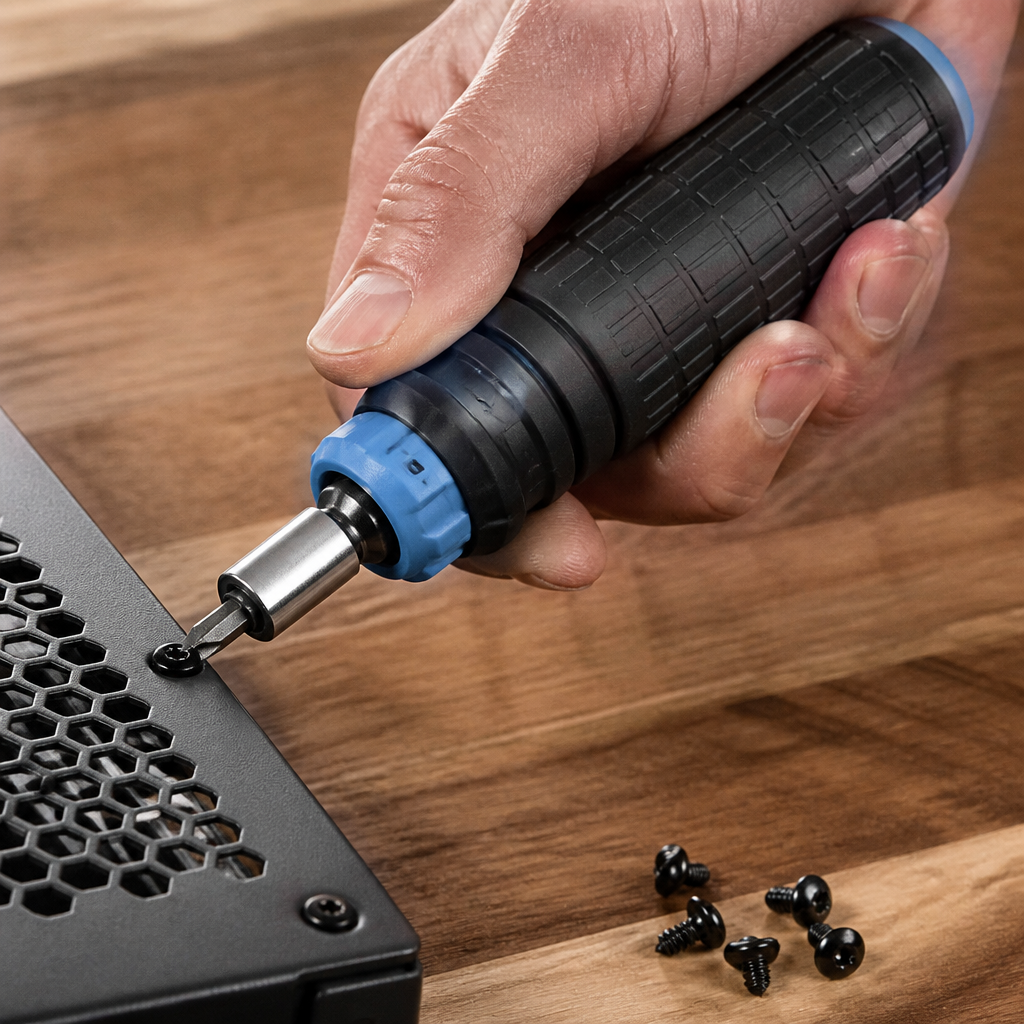
One of the most overlooked parts of Yamaha electrical service is the fastener standard. Many screws on Japanese motorcycles are JIS, not conventional Phillips. The recess looks similar, so owners reach for the nearest Phillips driver, feel cam-out, apply more force, and round the head. That turns a simple stator-cover or switchgear job into extraction work. Proper JIS drivers from brands such as Vessel or Hozan seat deeper and transmit torque cleanly. On older Japanese motorcycles this difference is dramatic, but even on modern bikes where hex fasteners are more common, JIS still appears often enough that every serious metric workshop should have the right tools.
Why does this matter in a stator article? Because charging-system repairs frequently involve side covers, clamp screws, bodywork fasteners, and electrical retainers in tight areas where damaged heads multiply labor. If you strip a cover screw, you may distort the removal process, scar the sealing surface, or create debris near the alternator cavity. I have watched otherwise capable mechanics lose an hour because a Phillips bit was “close enough.” It was not. The practical takeaway is simple: identify the screw standard before you begin, use an impact driver only where appropriate, and replace already-damaged crosshead screws with quality OEM or equivalent hardware. This single habit reduces risk across the entire maintenance stack.
JIS awareness also improves diagnosis discipline. Motorcycle maintenance rewards specificity. If a tool or standard is only approximately correct, the result is often approximately wrong. The same mindset applies to electrical testing, torque values, and gasket selection. Precision is not perfectionism here; it is efficiency.
Metric quirks that affect real maintenance on the FJ-09 and Tracer 900
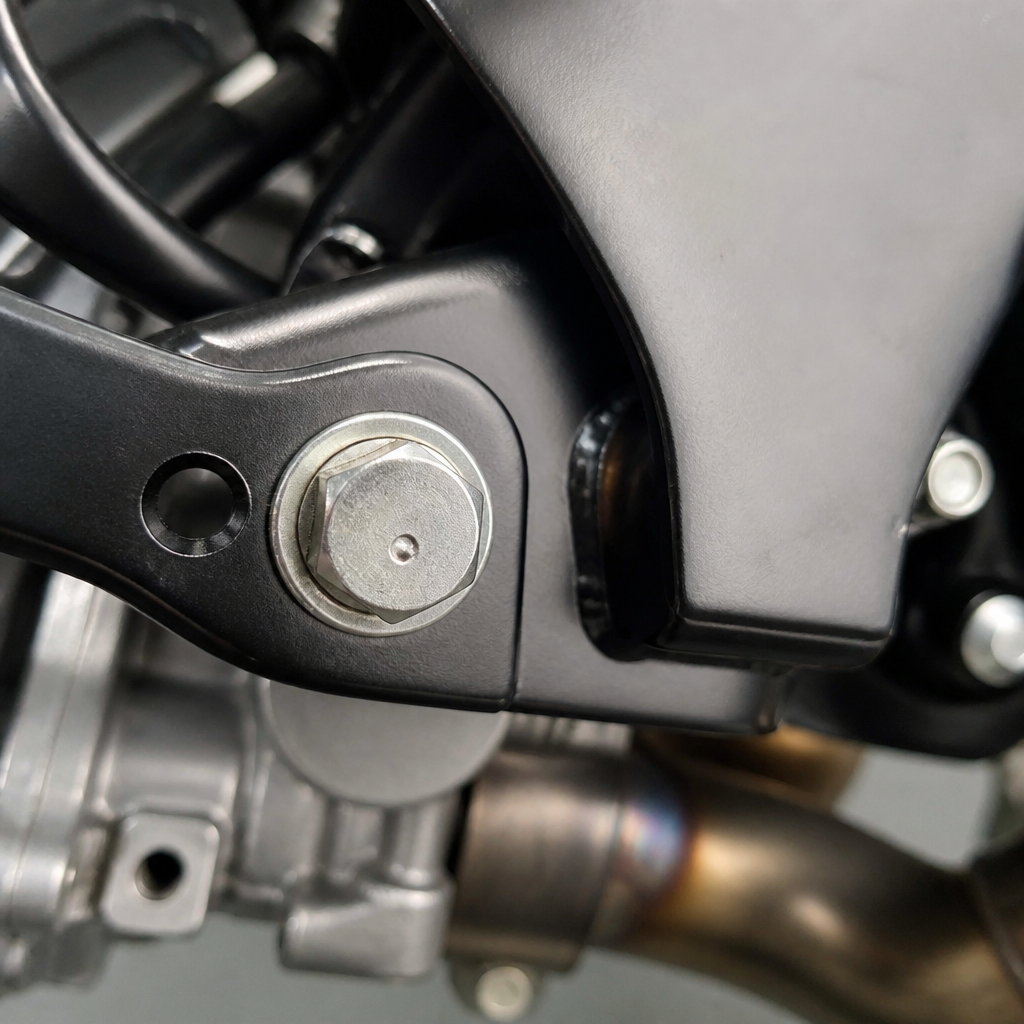
Metric motorcycles bring their own logic, and understanding it prevents avoidable mistakes. First, thread pitch and head size are not interchangeable assumptions. A Yamaha 6 mm fastener may use a JIS flange bolt with a 10 mm head, while nearby aftermarket hardware may not match the shank length, shoulder, or flange diameter. Substituting random hardware around the stator cover or grounding points can create sealing issues, poor clamp load, or inconsistent torque readings. Second, torque values on aluminum engine cases are unforgiving. Over-tightening small fasteners into the alternator cover or cover-adjacent brackets can pull threads or warp sealing surfaces.
Third, connector design on metric bikes often prioritizes compact packaging, which means hidden locks, secondary retainers, and routing clips that should be released in sequence rather than yanked apart. I routinely recommend photographing connector paths before removal. Reassembly errors can place wires against hot engine surfaces or sharp brackets, creating future charging faults that look like component failure. Fourth, many owners mix decimal metric feel with inch-based habits when buying tools. Use the correct metric hex, socket, and torque wrench ranges. Rounding a 5 mm or 6 mm internal hex because the tool fit felt “close” is a common and needless setback.
Fluid and sealing practices are another quirk. If the stator cover comes off, expect oil spillage unless the bike is positioned thoughtfully. Gasket surfaces should be cleaned carefully without gouging aluminum, and liquid sealant should only be used where the service manual specifies it. Excess sealant squeezed inward can detach and circulate through the engine. Good metric maintenance is less about mystery and more about respecting the exactness built into the machine.
DCT maintenance: what belongs here, and what does not
DCT maintenance appears in this hub because readers researching metric motorcycle service often encounter overlapping advice from Honda-oriented guides. Dual-clutch transmission service typically includes clutch adaptation procedures, specific filter and fluid schedules, and software-aware diagnostics. None of that applies directly to the Yamaha FJ-09 or Tracer 900, which use a conventional manual transmission and wet clutch. That distinction matters because cross-platform maintenance advice spreads quickly online. I have seen owners ask whether low charging voltage can interfere with “DCT shifting” on bikes that do not have DCT at all. The answer is no, but low voltage can still affect ECU behavior, quickshifter performance on equipped models, instrument operation, and starting reliability.
What belongs in this conversation is the maintenance principle behind DCT discussions: electronically managed systems are voltage-sensitive. Even without DCT, modern Yamahas depend on stable electrical supply for sensors, fuel injection, ABS logic, and display modules. So while there is no DCT service to perform on an FJ-09 or Tracer 900, the broader lesson transfers cleanly: battery condition, charging output, connector health, and correct fluid maintenance all support transmission feel and overall ride quality indirectly. If a rider complains of vague shifting during a charging failure episode, start with electrical stability before assuming internal gearbox trouble.
For readers managing mixed-brand garages, keep service information separated by model and VIN family. Shared metric habits are useful; copied subsystem procedures are not. That is the cleanest way to avoid expensive confusion.
Prevention, repair choices, and when to escalate beyond DIY
Preventing repeat stator failure starts with heat, load, and connection quality. Keep the battery healthy with a smart maintainer during storage. Inspect charging connectors for discoloration during routine service. Be realistic about accessory load; heated gear, auxiliary lights, GPS units, and USB chargers all add demand, especially in low-rpm urban riding where alternator output is lower. If a stator has failed, inspect the regulator/rectifier, connector terminals, battery, and grounds before installing replacement parts. Upgrading only one weak link can lead to another failure cycle.
OEM stators usually offer the best fit and predictable insulation quality, while reputable aftermarket units can work well if sourced carefully. The cheapest no-name options are false economy. Ask whether the winding insulation class, wire gauge, and epoxy impregnation are documented. Also replace gaskets and any heat-damaged connectors rather than reusing compromised parts. After installation, verify charging voltage cold and hot, then road-test with normal electrical loads. If the bike still undercharges, or if AC output is correct but battery voltage remains unstable, move toward harness continuity checks and regulator diagnosis instead of guessing.
Escalate to a professional when tests conflict, when repeated failures suggest a deeper harness or grounding issue, or when you lack the tools to load-test batteries and measure AC output safely. The biggest benefit of a systematic approach is confidence. You stop swapping parts, protect the engine cases from tool damage, and return the motorcycle to reliable service faster. For the Yamaha FJ-09 and Tracer 900, understanding stator failure symptoms is only the start. The real win comes from pairing accurate charging-system diagnosis with JIS-aware tool choice, disciplined metric maintenance, and model-specific judgment. Use this hub as your reference point, then follow through with bike-specific service manual values and careful testing before the next ride.
Frequently Asked Questions
What are the most common 2026 stator failure symptoms on a Yamaha FJ-09 or Tracer 900?
The most common stator failure symptoms on a Yamaha FJ-09 or Tracer 900 usually show up as charging-system problems rather than a dramatic mechanical breakdown. Many riders first notice hard starting, especially after the bike has been sitting overnight, because the battery is no longer being properly replenished while riding. Dim headlights, flickering auxiliary lights, a weak horn, or a dash that resets itself are also classic clues that system voltage is dropping below normal operating range.
As the issue gets worse, you may see intermittent warning lights, random fault codes, or odd electronic behavior that seems unrelated at first. On these Yamaha triples, low system voltage can confuse multiple components at once, so the bike may appear to have a battery problem, ECU issue, or wiring fault when the real cause is a charging shortfall. Some owners also report stalling after the engine warms up, rough idling, or a bike that starts fine on a charger but dies during a ride because the electrical system is running mainly off the battery.
In short, if your FJ-09 or Tracer 900 is showing multiple electrical symptoms at once, especially low battery voltage and unstable lighting, a failing stator should be high on the suspect list. The charging system on these bikes depends on the stator, regulator/rectifier, wiring, and battery all working together, so early symptoms can seem scattered. That is exactly why recognizing the pattern matters.
How can I tell whether the stator is failing instead of just the battery going bad?
This is one of the most important questions, because a weak battery and a failing stator can look very similar at first. A bad battery may crank slowly, struggle to hold a charge, or test low after sitting. A failing stator, however, often allows the bike to start when the battery is freshly charged, but the battery voltage gradually drops during use because the bike is not generating enough current to keep up with ignition, fuel injection, lights, fans, and accessories.
A practical first check is to measure battery voltage with a multimeter. With the engine off, a healthy fully charged battery will generally read around 12.6 to 12.8 volts. With the engine running at idle and then again at a few thousand RPM, you would normally expect charging voltage to rise into roughly the mid-13 to mid-14 volt range. If voltage does not increase properly, or actually falls while the bike is running, the charging system needs attention. That still does not automatically confirm the stator itself, but it tells you the battery is likely not the whole story.
To narrow it down further, stator testing usually includes measuring AC output from the stator phases, checking resistance between the stator wires, and checking for continuity to ground where there should be none. Burnt connectors, heat-damaged wiring, or a failed regulator/rectifier can mimic stator problems, so a complete diagnosis matters. The key difference is this: a battery stores power, but the stator helps create it. If the battery repeatedly goes flat despite being known good or recently replaced, the stator and the rest of the charging system deserve a closer look.
Why can a failing stator cause dash resets, fault codes, and other strange electronic problems?
Modern motorcycles like the Yamaha FJ-09 and Tracer 900 rely on steady voltage for nearly every major function. The instrument cluster, ECU, fuel pump, ignition system, ABS, ride-by-wire related electronics, and sensors all depend on electrical consistency. When a stator starts failing, voltage can become too low, unstable, or inconsistent under load. That instability can cause the dash to reboot, clocks to reset, warning lights to flash unexpectedly, or stored fault codes to appear even when the underlying sensor is not actually defective.
This is why charging-system faults are so often misdiagnosed. A rider may think there is an ECU problem, a loose battery terminal, or a sensor failure because the symptoms seem random. In reality, the electronics are simply reacting to a voltage supply that is falling outside the range they need. Cooling fan activation, heated gear, phone chargers, or additional lighting can make the problem much more obvious because they increase demand at the exact moment the charging system is already struggling.
On these bikes, strange electrical behavior should always be interpreted in context. If the dash resets at startup, lights dim at idle, or warning indicators appear after the bike gets hot, it makes sense to step back and evaluate the charging system before replacing individual electronic parts. A failing stator can create a domino effect across the bike, and low voltage is often the hidden cause behind what appears to be several unrelated problems.
Can a Yamaha FJ-09 or Tracer 900 with a bad stator still run, and why do some bikes die only after warming up?
Yes, a bike with a failing stator can still run for a while, which is part of what makes the problem deceptive. If the battery is fully charged, it can temporarily supply enough power for the engine management system, ignition, fuel pump, and lights. That can create the impression that the motorcycle is fundamentally fine. But once the battery’s reserve starts dropping, the bike may become harder to restart, idle poorly, misfire, or shut off unexpectedly because the charging system is not replacing what is being consumed.
Heat-related failure is also common in charging components. As the engine reaches operating temperature, resistance can change and weak insulation inside the stator windings may break down further. That can reduce output once the bike is hot, even if cold-start behavior seemed mostly normal. Riders often describe this as a motorcycle that starts fine, rides for a while, and then begins acting erratically or dies at a stop after warming up. After cooling down or after being put on a charger, it may start again, which can make the issue feel inconsistent.
This hot-versus-cold pattern is a major diagnostic clue. If your FJ-09 or Tracer 900 develops repeatable symptoms only once fully warmed, the stator, regulator/rectifier, and charging connectors should all be inspected. The bike is not necessarily suffering from a fuel or ignition problem just because it stalls hot. In many cases, the real issue is that heat is exposing a charging-system weakness that was already there.
What should I check first if I suspect stator trouble on a 2026 Yamaha FJ-09 or Tracer 900?
Start with the basics and work methodically. First, inspect the battery terminals to make sure they are clean and tight, because loose or corroded connections can create symptoms that look almost identical to stator failure. Next, check battery condition with a meter, both at rest and with the engine running. If the battery is weak, old, or sulfated, note that a bad battery can stress the charging system and distort your test results, so battery health matters from the beginning.
After that, inspect the charging-system wiring and connectors, especially between the stator and regulator/rectifier. Look for melted plugs, browned insulation, corrosion, or signs of overheating. Then move on to electrical testing: charging voltage at the battery, AC output from the stator, resistance across stator phases, and a ground-leak check from stator windings to chassis ground. Those tests will help separate stator failure from regulator/rectifier issues or harness faults. If one phase is weak, resistance is out of spec, or continuity to ground appears where it should not, the stator becomes a very strong suspect.
Finally, do not ignore the broader picture. Consider whether symptoms worsen with RPM, electrical load, or engine temperature. If the bike has aftermarket lights, heated grips, charging ports, or other accessories, keep those in mind as added demand on the system. The smartest approach is a full charging-system diagnosis rather than replacing parts based on guesswork. On the Yamaha FJ-09 and Tracer 900, that disciplined process is the best way to confirm whether 2026 stator failure symptoms are truly coming from the stator itself or from another component in the charging chain.