The Suzuki DR-Z4S+ dual-sport maintenance story starts with a practical question every rider asks sooner or later: what gets easier, what gets harder, and what changes in the workshop when fuel injection replaces the old carburetor? On a modern dual-sport, that answer reaches far beyond starting behavior. It touches electrical diagnostics, fastener standards, transmission service, torque habits, and the small metric-specific details that decide whether a routine job stays clean or turns into a stripped screw, damaged connector, or misdiagnosed fault. For riders using the DR-Z4S+ as a travel bike, commuter, trail machine, or all three, understanding these systems is not optional; it directly affects reliability, repair cost, and time off the bike.
By “fuel injection,” this article means an electronically controlled system using sensors, an ECU, a high-pressure pump, and an injector to meter fuel precisely. By “the old carb,” it means the mechanically metered slide or butterfly carburetor many dual-sport owners know from earlier DR-Z generations and comparable Japanese singles. The comparison matters because maintenance philosophy changes with the hardware. Carbs reward cleaning, adjustment, and a feel for jets and floats. Injection rewards methodical testing, stable voltage, clean fuel, and respect for connectors, grounds, and diagnostic procedures. Neither system is magic. Each has failure points, and each can leave a rider stranded for different reasons.
This hub also needs to cover the technical culture around modern metric motorcycles. Japanese bikes use Japanese Industrial Standards fasteners in many locations, not generic Phillips hardware, and that distinction matters every time a side cover, master-cylinder cap, or body panel comes off. Riders who use the wrong driver often blame “soft screws” when the real issue is tool mismatch. Then there is DCT maintenance, included here because many readers shopping, servicing, or cross-comparing modern Japanese dual-sports and adventure models encounter Honda’s Dual Clutch Transmission service intervals, fluid sensitivity, and adaptation procedures alongside conventional gearboxes. Finally, metric quirks deserve their own attention: thread pitch assumptions, torque values in N·m, hose sizes in millimeters, bearing codes, and electrical testing expectations all shape competent maintenance.
I have worked on carbureted trail bikes, injected singles, and several Japanese street and adventure models, and the pattern is consistent. Owners get into trouble not because the machines are unusually fragile, but because they apply automotive habits, inch-based assumptions, or universal tools to systems that are designed around specific standards. The benefit of getting it right is substantial. A rider who understands the DR-Z4S+ maintenance landscape can diagnose poor running faster, prevent common damage, stock the right tools, and make smarter decisions about when to service at home and when to escalate to a scan tool, service manual, or dealer support.
Fuel Injection vs. the Old Carb on a Dual-Sport
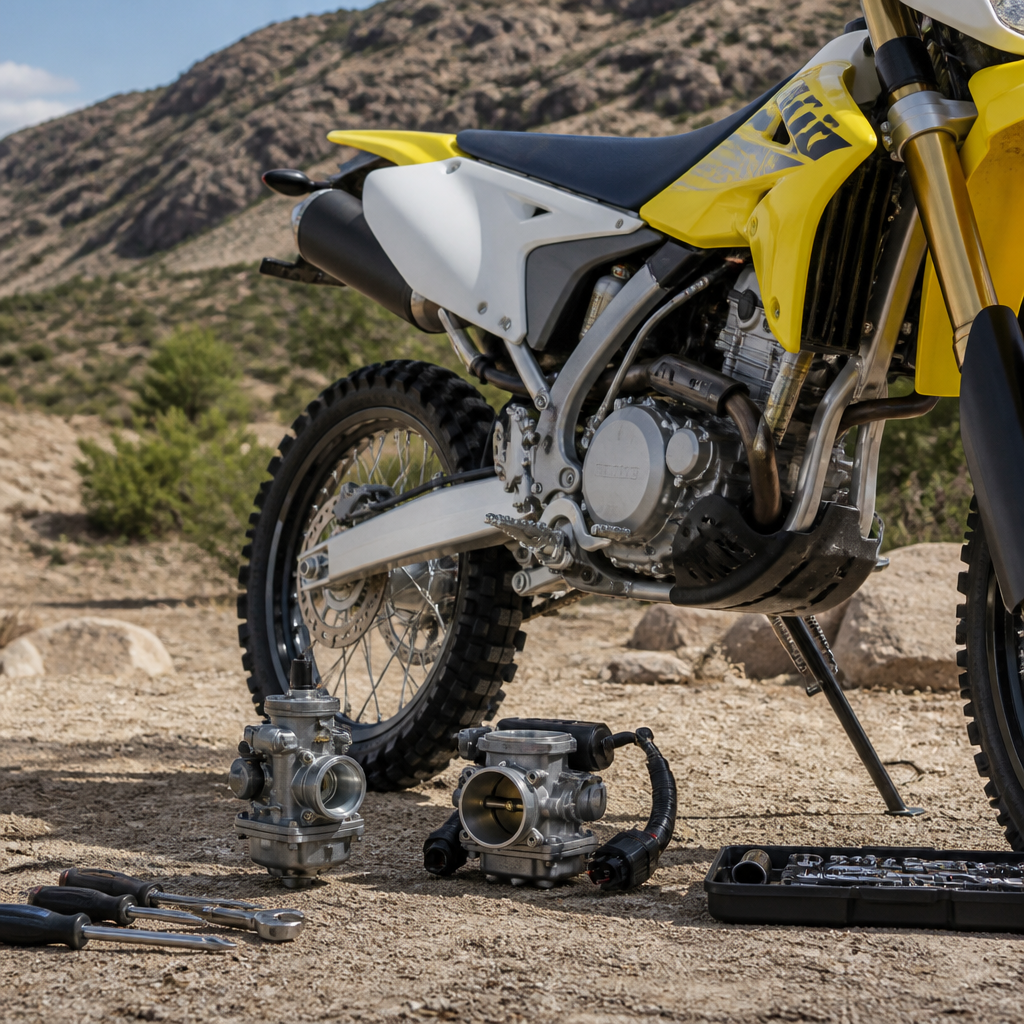
Fuel injection on a modern dual-sport is better at cold starts, altitude compensation, emissions control, and fuel metering under changing load. A carburetor is simpler, more transparent, and often easier to revive with hand tools in a remote setting. That is the essential comparison. In day-to-day use, an injected DR-Z4S+ should start more consistently after weather swings, recover better from elevation changes, and hold cleaner throttle response during commuting and technical trail transitions. The ECU reads inputs from sensors such as throttle position, intake air temperature, engine temperature, manifold pressure, and crank position, then commands injector pulse width accordingly. Maintenance therefore shifts away from jetting and toward verification of pressure, voltage, grounds, and sensor plausibility.
Carburetors fail in familiar ways: clogged pilot jets, varnish from stale fuel, leaking float needles, torn diaphragms, worn slide guides, air leaks at boots, and choke circuit issues. Most of these faults announce themselves through hard starting, hanging idle, bogging off idle, fuel smell, or overflow. Injection faults can look similar from the saddle, but the root causes differ: weak battery voltage during cranking, restricted in-tank pump strainers, failing fuel pumps, dirty injectors, corroded connectors, sensor drift, poor engine grounds, and damaged wiring near the steering head. On modern bikes, a battery that still lights the dash may still be too weak to sustain proper ECU and pump operation during cranking. That single fact explains many “mystery” no-start complaints.
For maintenance intervals, fuel injection reduces routine adjustment but raises the importance of prevention. Keep fuel fresh, protect the tank from contamination, inspect harness routing, charge-test the battery, and address fault codes promptly. A carbureted bike often tolerates a marginal battery because the ignition and starting demands are lower. An injected single is less forgiving. Ethanol-blended fuel complicates both systems, but in different ways. In a carb, evaporation leaves deposits that block small passages. In injection, long storage can still create deposits, but the bigger concern is water absorption, tank corrosion on some platforms, degraded pump components, and reduced fuel quality under load. Stabilizer and regular operation help both, though neither replaces draining or cycling stale fuel before a season begins.
Real-world example: at altitude, a carbureted dual-sport jetted for sea level often runs rich, softens throttle response, and may foul plugs in sustained low-speed work. An injected bike corrects much of that automatically. In exchange, if the bike develops an intermittent crank sensor or fuel-pressure problem, roadside diagnosis is harder without a meter and service data. The practical lesson is not that one system is superior in every context. It is that riders should match their maintenance habits to the system actually on the bike. Carbs favor mechanical cleaning and adjustment. Injection favors electrical discipline and process.
Service Strategy: What Actually Changes in the Garage
The garage workflow for an injected DR-Z4S+ should begin with three baseline checks before any deeper disassembly: battery state of charge, charging-system health, and fuel quality. Use a digital multimeter, not guesswork. A fully charged 12-volt motorcycle battery at rest generally reads around 12.6 to 12.8 volts. During cranking, excessive voltage drop can disrupt injector and ECU performance even if the starter still turns. Charging output must also be verified within the manufacturer’s specified range. If those basics are wrong, sensor testing and throttle-body inspection can send you in circles.
By contrast, on an older carbureted bike, the first triage items are usually fuel flow, bowl contamination, vacuum leaks, and pilot circuit cleanliness. I still check battery health on carb bikes, but I do not prioritize it the same way unless the ignition system clearly depends on strong cranking voltage. This is a key maintenance mindset change. Fuel injection compresses tuning variability but expands the number of faults that can masquerade as fuel problems. A dirty injector, a weak pump, and a poor ground can all feel like the same lean hesitation from the seat.
Tooling changes too. For carb work, precision screwdrivers, jet drivers, ultrasonic cleaning, float gauges, and clear fuel line matter. For injection, add back-probe pins, contact cleaner safe for plastics, a quality multimeter, torque wrenches that read accurately in low metric ranges, and ideally access to model-specific diagnostic procedures. If the bike supports dealer mode or onboard code retrieval, learn it early. Waiting until a no-start occurs in the middle of a trip is too late. I also recommend labeling connector routes during tank and airbox removal. Modern dual-sports pack emissions plumbing, vent lines, and electrical connectors tightly; careless reassembly creates intermittent faults that are far harder to chase than the original maintenance task.
The JIS Standard: Why Japanese Screws Get Ruined
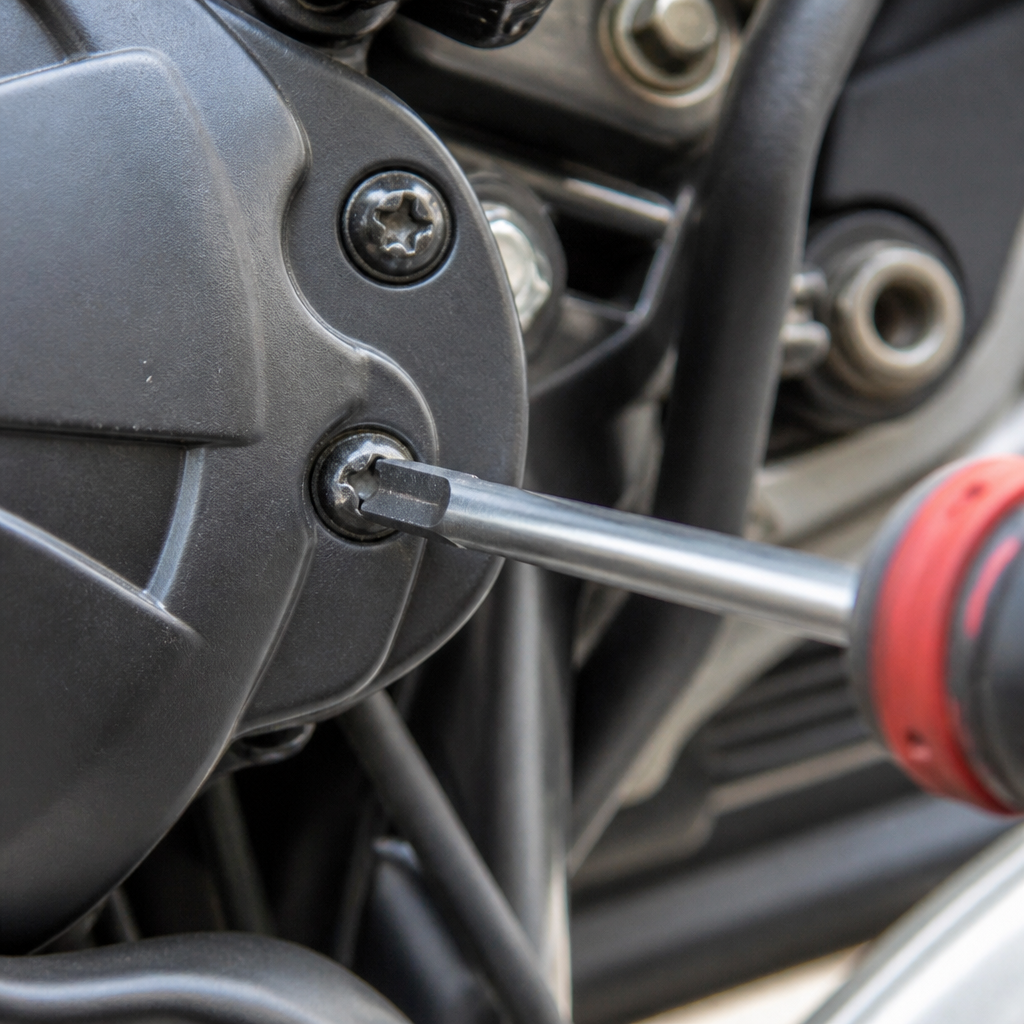
The JIS standard matters because many Japanese motorcycles use cross-head screws designed differently from Phillips screws. A Phillips driver is intentionally cam-out prone; under torque, it tends to ride upward. A proper JIS driver seats deeper and transmits force with less tendency to slip. On motorcycles, that difference is obvious on float bowl screws, switchgear, brake reservoir caps, side covers, and bodywork hardware. Riders often say Japanese screws are made of butter. In most cases, the screw was damaged by the wrong driver.
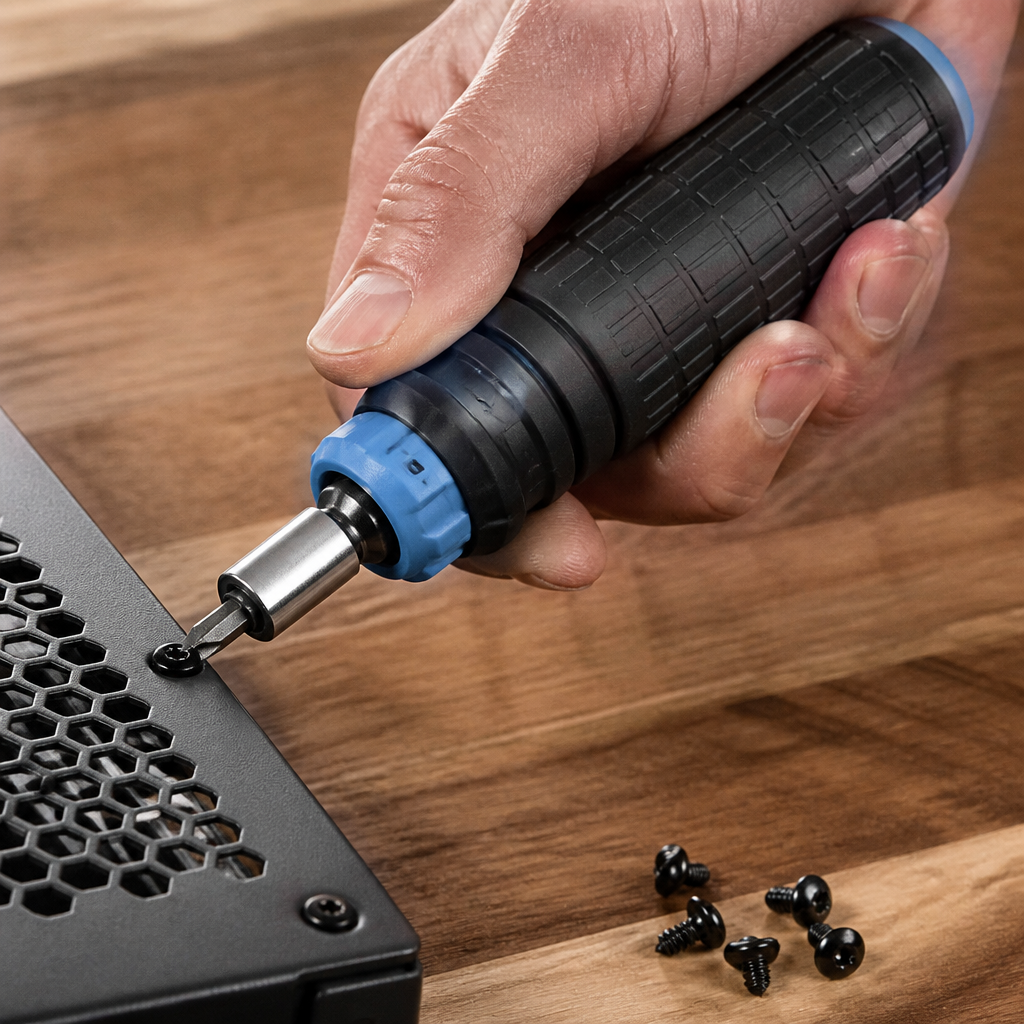
If you maintain a DR-Z4S+ or any Japanese bike, own Vessel or Hozan JIS drivers, or use high-quality bits specifically marked for Japanese cross-head fasteners. An impact driver is also worth having for older, thread-locked, or corroded screws. The cost is small compared with the time lost drilling out a mangled bowl screw or master-cylinder cap. I routinely replace frequently serviced cross-head screws with stainless or zinc-plated socket-head hardware where appropriate, but only after confirming length, shoulder design, corrosion environment, and torque requirement. Cosmetic substitution without checking fit can crack covers or bottom out in blind holes.
The JIS topic connects directly to the fuel injection versus carb discussion. Carbureted bikes often expose more service screws because bowls, diaphragms, choke linkages, and top covers come apart regularly. Injected bikes reduce some of that, but Japanese-standard fasteners remain everywhere else. This hub point is simple: use the right driver, apply downward pressure, break screws loose cleanly, and do not confuse a standards mismatch with poor manufacturing.
DCT Maintenance: Why It Belongs in This Metric Hub
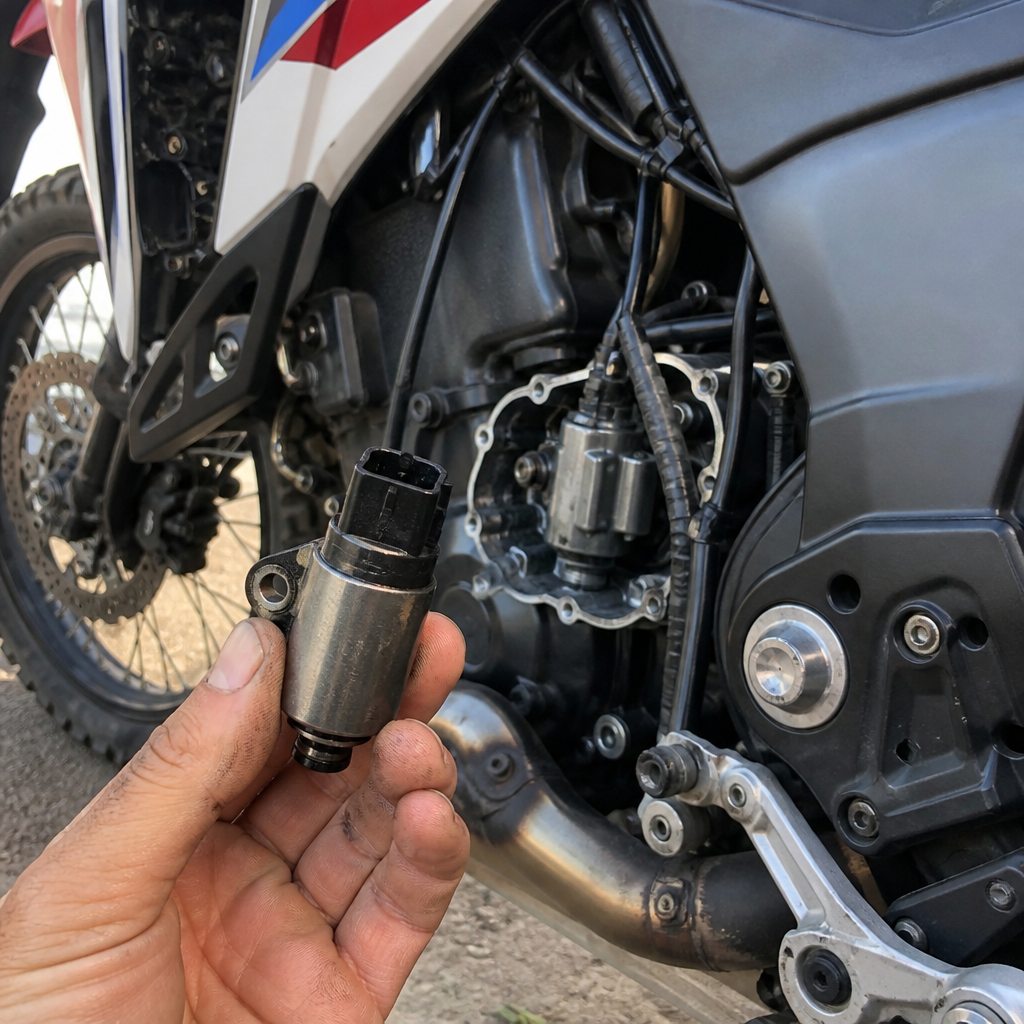
The DR-Z4S+ itself is not defined by a dual-clutch transmission, yet DCT maintenance belongs in this subtopic because riders researching modern Japanese motorcycle maintenance often compare platforms across the same garage. Honda’s DCT system appears on models such as the Africa Twin, NC750X, Rebel 1100, and Gold Wing, and its service logic illustrates how modern metric motorcycles increasingly blend mechanical and electronic maintenance. Understanding DCT helps riders separate conventional clutch-and-gearbox service from electronically actuated shift systems that demand stricter fluid discipline and procedure.
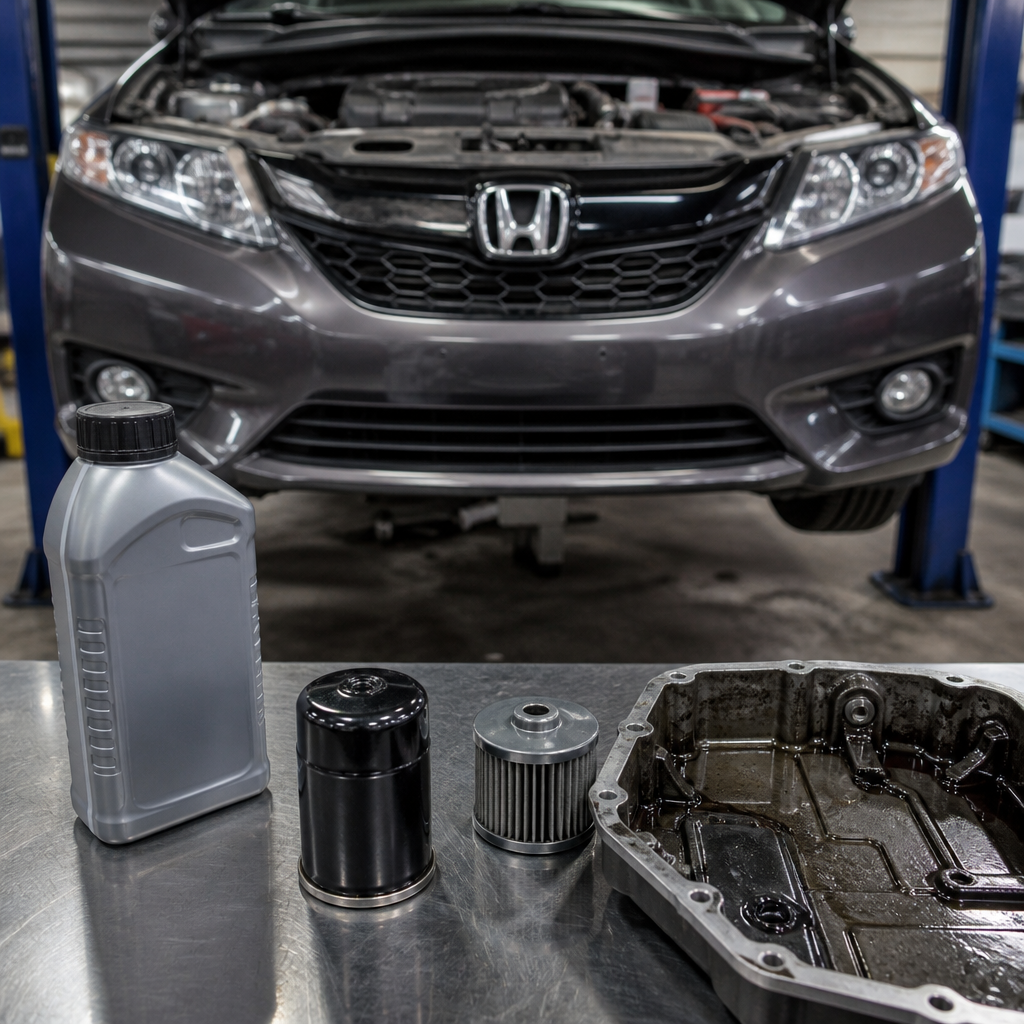
DCT maintenance starts with the correct oil and filter strategy. Honda specifies motorcycle oils meeting JASO requirements because clutch behavior, hydraulic control, and shift quality depend on fluid characteristics. Wrong oil viscosity or automotive friction modifiers can degrade shift feel and clutch engagement. Filter quality matters too; flow and bypass behavior affect hydraulic stability. Scheduled oil changes are therefore not routine housekeeping but core transmission maintenance. When I inspect neglected DCT bikes, delayed engagement and harsh low-speed transitions often trace back first to poor oil condition or incorrect service parts, not catastrophic mechanical failure.
There is also a procedural difference. Conventional gearboxes tolerate straightforward fluid service and periodic clutch adjustment or replacement. DCT systems may require adaptation, code reading, and attention to battery voltage and software logic. If a DCT bike shows warning indicators, lurching, or gear selection errors, the correct workflow resembles fuel injection diagnosis more than old-school clutch work: verify voltage, scan for faults, confirm service history, inspect connectors, and only then move toward mechanical disassembly. That is why this topic belongs in a metric maintenance encyclopedia hub. The modern Japanese motorcycle ecosystem rewards technicians who are equally comfortable with torque specs, fluids, sensors, and control logic.
Metric Quirks Every DR-Z4S+ Owner Should Know
Metric quirks are not oddities for specialists; they are daily realities. Japanese motorcycles use metric fastener sizes, metric thread pitches, metric bearing references, and torque values in newton-meters. Confusion starts when riders assume all M6 or M8 hardware shares the same pitch or that “close enough” inch tools will fit. They often do, until they round a flange bolt, cross-thread an aluminum case, or misread a torque chart. A 10 mm hex head does not tell you the thread pitch. Service manual confirmation does.
| Maintenance area | Common mistake | Correct metric habit |
|---|---|---|
| Fasteners | Using inch sockets or generic Phillips drivers | Use true metric sockets and JIS drivers |
| Torque | Guessing by feel on small aluminum threads | Torque in N·m with a calibrated low-range wrench |
| Fluids | Substituting by brand reputation alone | Match viscosity and JASO/API specification exactly |
| Electrical | Assuming cranking equals battery health | Load-test voltage and verify charging output |
| Hoses and seals | Forcing inch-sized replacements | Measure in millimeters and match material type |
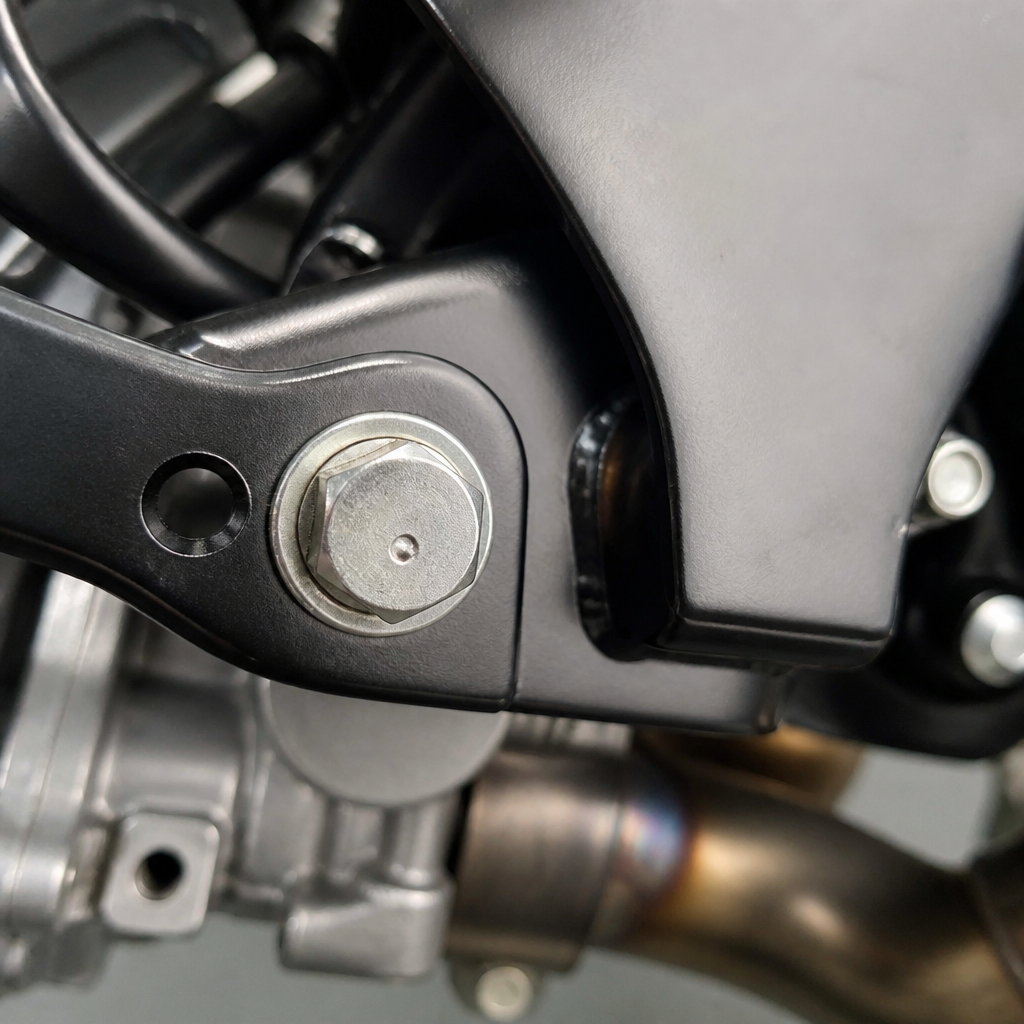
Another recurring quirk is low torque. Many body, intake, and cover fasteners on metric motorcycles tighten to values that feel surprisingly light, especially in aluminum. Over-torquing causes more damage than under-torquing in routine service. Small quarter-inch-drive torque wrenches are not luxury tools here; they prevent stripped case threads and warped covers. I also recommend thread chasers, not cutting taps, for cleaning dirty threads. Cutting taps remove material and can make already-soft aluminum less secure. On electrical work, use dielectric grease sparingly where appropriate and never pack sealed connectors indiscriminately. Excess grease can interfere with terminal seating if misapplied.
Finally, metric maintenance means reading the manual literally. Clearances, resistances, and wear limits are given for a reason. Valve checks, chain slack, spoke tension habits, and wheel-bearing replacement all benefit from exact numbers, not folklore. The bikes reward precision.
Building a Reliable Maintenance Plan
For the DR-Z4S+ owner, the best maintenance plan combines old dual-sport common sense with modern diagnostic discipline. Start with a model-specific service manual, a JIS-capable tool kit, a multimeter, accurate metric torque wrenches, and a battery tender compatible with your battery type. Track oil changes, air-filter service, valve inspections, brake fluid age, chain wear, and battery test results in a simple log. If the bike sits, manage fuel deliberately rather than assuming occasional idling preserves it. If the bike is ridden hard off-road, inspect harness rub points, wheel bearings, fastener torque, and connectors after muddy or high-vibration use.
The main benefit of understanding fuel injection versus the old carb is not choosing sides. It is choosing the correct maintenance method. Use electrical testing for injected symptoms, mechanical cleaning for carb symptoms, proper JIS tools for Japanese fasteners, exact metric specs for every critical fastener and fluid, and DCT-style procedural thinking whenever a motorcycle system combines hydraulics, electronics, and software logic. That approach prevents expensive mistakes and keeps troubleshooting efficient.
In summary, the DR-Z4S+ sits at the intersection of classic dual-sport durability and modern service expectations. Riders who respect that balance get a machine that starts cleaner, runs more consistently, and holds up better over time. Build your toolkit around JIS and metric standards, follow the manual, and diagnose systematically. If you maintain more than one Japanese bike, apply the same principles across the garage. Then use this hub as your starting point for deeper articles on fasteners, fuel systems, transmissions, and model-specific service procedures.
Frequently Asked Questions
1. Does fuel injection actually make the Suzuki DR-Z4S+ easier to maintain than an older carbureted dual-sport?
In day-to-day ownership, yes, fuel injection usually makes the DR-Z4S+ easier to live with, but it changes the kind of maintenance you do rather than eliminating it. A carbureted dual-sport asks for periodic cleaning, float-bowl attention, jet inspection, choke and idle adjustments, and extra patience after storage or weather changes. Fuel injection removes much of that routine fiddling. You are no longer chasing clogged pilot jets after old fuel sits too long, and you generally get more consistent cold starts, steadier idle behavior, and cleaner fueling across elevation and temperature changes.
The tradeoff is that fuel injection shifts the workshop mindset from mechanical tuning to system diagnosis. Instead of removing a carb to inspect passages and jets, you may be checking electrical connectors, sensor values, injector spray issues, fuel pressure, battery condition, and charging-system performance. That means maintenance becomes more predictable but also more dependent on good diagnostic habits. A weak battery, corroded ground, or poor connector can create symptoms that would never exist on a simple carbureted machine.
For most riders, the practical result is fewer seasonal headaches and less regular adjustment. However, when a problem does appear, solving it can require a meter, a service manual, and a more methodical approach. So the DR-Z4S+ is often easier to maintain in the sense that it needs less frequent fuel-system attention, but it can be harder to troubleshoot casually if you are used to fixing everything with a screwdriver and a jet-cleaning wire.
2. What workshop habits change most when working on a fuel-injected dual-sport instead of an old carb bike?
The biggest change is that precision matters more in the preparation stage. On an older carbureted dual-sport, a lot of riders got used to “close enough” mechanical habits: loosening clamps, pulling a carb, cleaning it, reinstalling it, and making small adjustments by feel. With a modern fuel-injected machine like the DR-Z4S+, you still need solid mechanical skills, but you also need cleaner electrical and diagnostic discipline. Before assuming a major fault, you check battery voltage, connector condition, sensor plugs, fuse integrity, and fuel line routing. You inspect before you disassemble.
Fastener habits also matter more than many riders expect. Modern motorcycles often use compact metric hardware, aluminum cases, and specific torque values that do not tolerate over-tightening. If you are servicing body panels, airbox components, throttle-body boots, ignition parts, or transmission covers, a torque wrench and an organized fastener layout can save stripped threads and broken tabs. Metric-specific details such as thread pitch, flange-bolt length, sealing washers, and O-ring placement become especially important when reassembling parts around the intake and fuel system.
Another major change is the need to think in systems. A rough-running carb bike often points you directly toward fuel delivery and mixture circuits. On a fuel-injected dual-sport, a similar symptom might involve air leaks, a throttle-position issue, injector contamination, fuel pump performance, charging voltage, or a sensor reading outside normal range. Good workshop practice therefore includes documenting symptoms clearly, checking the simplest inputs first, and avoiding unnecessary parts swapping. The better your habits around cleanliness, torque, battery health, and connector care, the easier fuel-injected maintenance becomes.
3. Is fuel injection harder to diagnose on the trail or in a home garage than a carburetor?
It can be, but “harder” depends on what failed. In the home garage, fuel injection is often easier to diagnose systematically because the symptoms can be approached with clear steps: verify spark, verify battery voltage, verify fuel pressure or pump operation, inspect connectors, and check for intake leaks or sensor problems. A carburetor, by contrast, can demand partial disassembly before you know whether varnish, dirt, float height, or jet blockage is causing the issue. So in a controlled workshop, fuel injection can actually reduce guesswork.
On the trail, however, a carbureted bike sometimes has the advantage of field serviceability. If a carb floods, clogs, or sticks, an experienced rider may be able to drain it, clean a jet, free a float, or limp home with improvised adjustment. Electronic fuel injection is less forgiving when the root cause is electrical. A failed pump, damaged sensor circuit, weak stator output, or poor battery connection may not be trail-fixable unless you carry tools, test equipment, and specific spares. The same reliability that makes EFI so convenient in daily use can make sudden failures feel more opaque when you are far from the garage.
That said, many “EFI problems” are really basic maintenance problems: low battery voltage, dirty grounds, water in connectors, pinched wiring, or stale fuel. Riders who keep the DR-Z4S+ battery healthy, secure harness routing, protect connectors, and follow routine inspection intervals usually find EFI very dependable. The lesson is not that fuel injection is fragile, but that troubleshooting success depends on preparation. A compact multimeter, a wiring diagram, and familiarity with the bike’s normal starting and charging behavior are the modern equivalents of carrying spare jets and carb tools.
4. How do transmission service, oil changes, and torque practices fit into the fuel injection versus carburetor discussion?
This is where the conversation gets more practical than many riders expect. Fuel injection does not directly change how the DR-Z4S+ transmission is serviced, but it does reflect a broader move toward tighter tolerances and more exact maintenance habits across the whole bike. Whether you are changing oil, inspecting a drain plug, removing a clutch cover, or checking shift linkage hardware, proper torque matters. Older dual-sport culture often normalized “tight enough” by feel, but modern machines reward a more careful approach, especially around aluminum threads, sealing surfaces, and compact metric fasteners.
Oil and transmission service should be treated as precision jobs, not just routine chores. Use the correct oil specification, replace sealing washers when needed, clean mating surfaces carefully, and torque drain bolts and case fasteners to spec. Over-tightening is one of the most common causes of preventable damage in home garages, particularly on side covers, oil screens, and smaller fasteners near the engine and intake. The same rider who appreciates EFI’s set-and-forget fueling should also appreciate that consistent service records, measured torque, and clean reassembly are what keep the rest of the drivetrain equally trouble-free.
In other words, the fuel injection versus carb debate is partly about workshop culture. Carbureted bikes encouraged more frequent hands-on tuning, but not always more careful assembly. A fuel-injected dual-sport reduces mixture fiddling and puts more emphasis on doing every service correctly the first time. That includes transmission-related maintenance, clutch-side work, chain and sprocket alignment checks, and fastener discipline throughout the bike. If you adopt that mindset, the DR-Z4S+ becomes easier to maintain overall because fewer small mistakes snowball into larger repairs.
5. What are the most important maintenance priorities for keeping a fuel-injected Suzuki DR-Z4S+ reliable long term?
Start with fuel quality, battery health, and connector care. Those three items do more to support EFI reliability than most riders realize. Use fresh fuel, avoid letting ethanol-blended fuel sit too long without attention, and follow storage practices that reduce varnish and moisture issues. Even though fuel injection is less vulnerable than a carb to stale fuel, injectors and pumps still benefit from clean fuel and regular use. At the same time, maintain a strong battery and charging system, because EFI depends on stable voltage for consistent starting and operation. A battery that is merely “kind of okay” can create erratic behavior on a modern bike.
Next, be meticulous with air filtration and intake sealing. A dual-sport sees dust, vibration, water, and repeated heat cycles, and those conditions punish any weakness in the intake system. Keep the air filter serviced correctly, inspect airbox sealing surfaces, confirm boot clamps are properly tightened, and look for cracks or hardening in rubber parts over time. A carb bike might tolerate some minor intake imperfection in a way that is easier to tune around manually; an EFI bike still compensates within limits, but it works best when the intake tract is sealed and healthy.
Finally, treat every routine service as a chance to inspect the entire machine. Look at wiring routing, frame contact points, hose condition, chain adjustment, fastener security, and signs of fluid seepage. Use correct metric tools, observe torque specs, and do not rush reassembly. The long-term advantage of the DR-Z4S+ is that it can deliver cleaner running and less frequent fuel-system intervention than an old carbureted dual-sport, but only if the owner respects the details. Reliable modern maintenance is less about constant adjustment and more about consistency, cleanliness, and catching small issues before they turn into a stranded-bike problem.