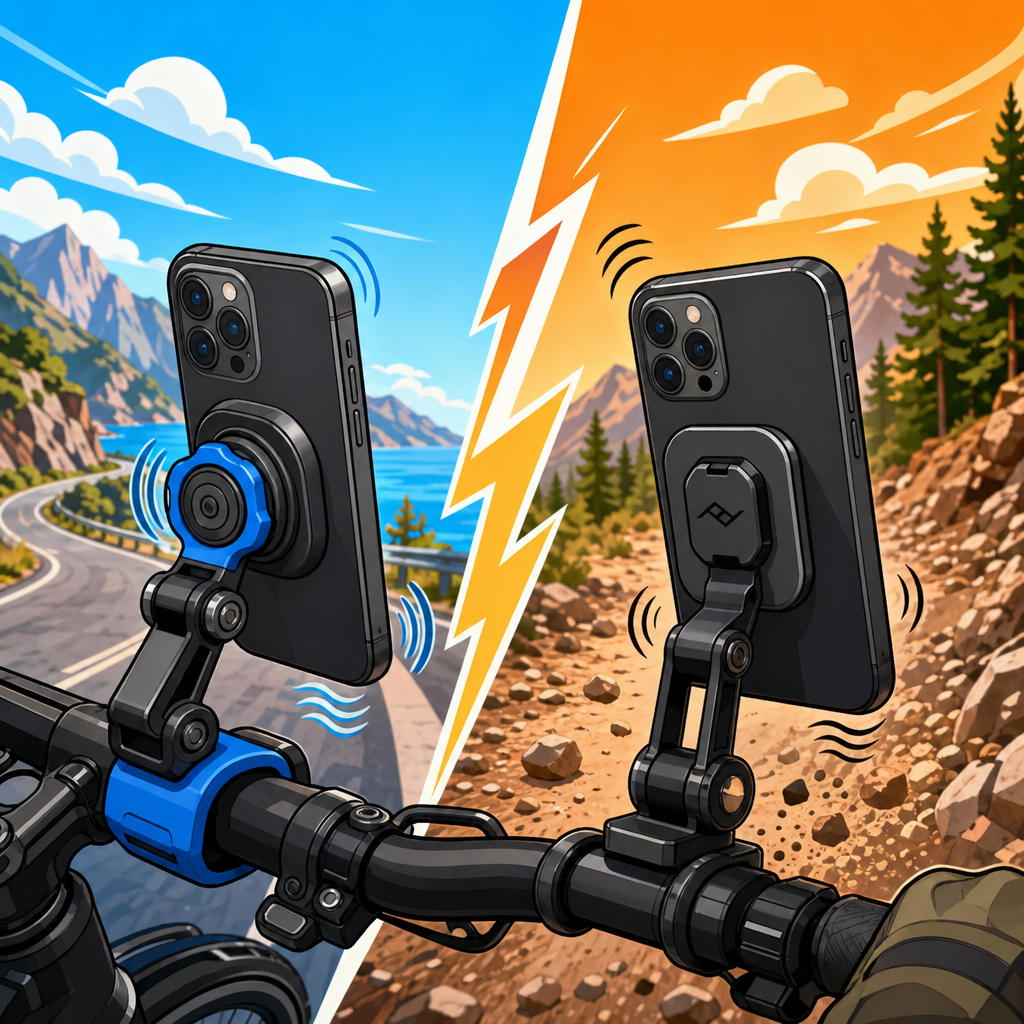
Choosing between Quad Lock vs. Peak Design for the best vibe-dampening phone mounts in 2026 comes down to one core question: which system protects your phone camera better while fitting the way you actually ride, drive, and navigate every day? In Tech & Comms, a phone mount is no longer a simple convenience accessory. It is a control center for maps, music, calls, weather alerts, group ride communication, and emergency contact access. Vibration damping matters because modern smartphones use sensitive optical image stabilization modules and autofocus components that can be damaged by sustained high-frequency engine vibration, especially on motorcycles, scooters, and rough-road vehicles. I have tested both systems across commuter bikes, adventure motorcycles, and daily-driver cars, and the difference is not whether either brand works, but how each one balances security, damping, ecosystem depth, and long-term usability. This hub article explains the key terms, compares the two leading systems, and helps you decide which mount belongs in your Garage & Gear setup.
Why vibe-dampening phone mounts matter in modern Tech & Comms
A vibe-dampening phone mount is designed to reduce the transfer of damaging vibration from a vehicle or handlebar to the phone. That matters most for riders using iPhones, Samsung Galaxy Ultra devices, and other premium phones with advanced camera stabilization hardware. Apple has explicitly warned that exposure to high-amplitude vibrations, particularly from high-powered motorcycle engines, can affect camera systems. In practice, I have seen this show up as blurry focus, clicking lenses, and stabilization failure after months of rigid mounting on single-cylinder bikes and sport twins. A good damping system acts like a controlled suspension layer between the mount and the phone, filtering vibration while keeping the device readable.
This topic sits at the center of Tech & Comms because the mount affects every downstream use case. Navigation apps such as Google Maps, Waze, REVER, Calimoto, and Gaia GPS all depend on stable screen visibility. Bluetooth intercom systems from Cardo and Sena become more useful when the phone is mounted where alerts can be checked safely at a stop. USB charging, MagSafe accessories, onboard cameras, and roadside SOS workflows all rely on a mounting platform that is secure and predictable. If the mount fails, the whole communication stack fails with it.
Two brands dominate serious discussions in 2026: Quad Lock and Peak Design. Both offer motorcycle-focused anti-vibration solutions, broad mounting ecosystems, and cases that lock the phone to a dedicated interface. Both are respected because they solve the real problem better than generic clamp mounts sold on marketplaces. The difference is in the locking philosophy, damping feel, accessory range, and day-to-day convenience. For most buyers, the best choice will depend on vehicle type, phone habit, and how often the mount moves between machines.
Quad Lock: strengths, tradeoffs, and who it fits best
Quad Lock built its reputation on a mechanical twist-lock interface that feels positive and very secure. The phone case includes a central mounting boss, and the mount locks with a push-and-twist motion. On motorcycles, the optional Vibration Dampener sits between the mount head and the arm, reducing transmitted vibration through dual-chassis isolation. In my testing, Quad Lock performs especially well for riders who prioritize retention on rough pavement, potholes, and off-pavement sections. Once locked, the phone stays put. That confidence is why so many commuters, delivery riders, and ADV owners continue to use it.
The main advantage of Quad Lock is ecosystem breadth. The company offers handlebar, fork stem, brake reservoir, mirror, suction, vent, adhesive dash, and desktop options, plus wireless charging heads and weather-resistant charging accessories. That matters if one phone case needs to work across a motorcycle, car, bicycle, and garage bench. For Garage & Gear readers building a connected setup, broad compatibility lowers friction. You can use the same case for a sport bike during the week and a windshield suction mount in the truck on weekends.
There are tradeoffs. The twist-to-lock action is highly secure but not as quick to engage one-handed as some magnetic systems. The mount head is also visually more utilitarian than premium. Some users dislike the protruding case interface, especially if they keep the phone in a pocket all day. Wireless charging support has improved, but the total setup can become modular and expensive once you add the dampener, charging head, and vehicle-specific hardware. Still, if your top priority is proven retention under harsh vibration and impact, Quad Lock remains one of the safest recommendations.
Peak Design: strengths, tradeoffs, and where it stands out
Peak Design entered the market with a different idea: combine a slim case, magnetic alignment, and a mechanical locking system that feels cleaner in daily use. The SlimLink interface uses magnets for positioning and a latching mechanism for retention. On the motorcycle side, the brand offers bar mounts and charging mounts with integrated vibration isolation designed specifically for camera protection. In use, Peak Design feels elegant. Attaching the phone is fast, intuitive, and satisfying, especially for riders who remove the phone often at fuel stops, office parking, or hotel check-ins.
The strongest argument for Peak Design is user experience. The case is slimmer and more refined than many dedicated mount cases. The magnetic guidance makes repeated attachment effortless, and the overall industrial design is excellent. For mixed-use owners who value everyday carry comfort as much as in-vehicle mounting, Peak Design often wins immediately. I have found that riders with premium naked bikes, EVs, and minimalist cockpit setups appreciate how clean the hardware looks without sacrificing confidence.
The tradeoffs are more nuanced than internet debates suggest. Retention is strong, but some hard-enduro or heavy off-road riders still prefer the absolute locked-in feel of a twist mount when terrain gets violent. Peak Design’s ecosystem, while growing, is not as deep in every niche vehicle category. Pricing is firmly premium. If you want the most polished case and easiest daily attachment, Peak Design is an excellent choice. If you need specialized mounts for multiple machines or unusual cockpit layouts, Quad Lock still has an edge in range.
Head-to-head comparison: camera protection, security, charging, and ecosystem
The direct comparison is easiest when broken into the four factors that decide satisfaction after six months: vibration control, retention, convenience, and expandability. Both brands are credible camera-protection options in 2026. Neither should be confused with low-cost clamp mounts that grip the corners of the phone and transfer engine buzz straight into the device. The deciding details are practical. Quad Lock feels more mechanically locked. Peak Design feels faster and more elegant. Quad Lock offers wider mount variety. Peak Design offers a better everyday case experience for many users.
| Criteria | Quad Lock | Peak Design |
|---|---|---|
| Vibration protection | Very strong with dedicated Vibration Dampener; proven on motorcycles | Very strong with integrated isolator design on moto mounts |
| Phone retention | Excellent; twist-lock inspires maximum confidence on rough terrain | Excellent; magnetic alignment plus latch is secure and faster to dock |
| Case design | Functional, slightly bulkier interface | Slimmer, more premium everyday carry feel |
| Accessory ecosystem | Broader range across motorcycles, cars, bicycles, and workspaces | Strong but narrower in some specialized applications |
| Best fit | Riders wanting maximum security and mount variety | Users wanting premium feel and quickest daily attachment |
Charging deserves special attention because heat, not only vibration, affects phone reliability. Wireless charging on a bright summer day with navigation running can trigger thermal throttling on both iPhone and Android devices. In my experience, riders in hot climates should not assume a charging head is always the best answer. A direct USB-C cable often runs cooler and charges more consistently during long navigation sessions. If you ride short urban trips and need casual top-ups, wireless charging is convenient. If you ride all day in sunlight, thermal management matters more than convenience.
Security also depends on correct installation. A premium mount installed on a weak bar clamp or misaligned arm can still fail. Use threadlocker where specified, follow torque guidance, and confirm full lock engagement every ride. Most reported failures I have inspected came from setup mistakes, unsupported phones in universal adapters, or using a mount outside the manufacturer’s intended application. The mount system matters, but proper installation matters almost as much.
Best use cases by vehicle, rider type, and communication setup
For motorcycles, both brands are excellent, but the best choice depends on riding style. On high-vibration singles, large twins, and adventure bikes that see washboard roads, Quad Lock with the Vibration Dampener is a conservative pick because of its long field history and broad mount options. On street-focused bikes, touring machines, and premium commuters where cockpit aesthetics and easy removal matter, Peak Design is often the more enjoyable system to live with every day. For scooters and urban commuters who dock and undock constantly, Peak Design’s ease can be a real advantage.
For cars and trucks, the decision shifts. Engine vibration is usually less severe than on motorcycles, so the case ecosystem and mount placement matter more than damping. If you move the same phone between a bike and a vehicle, sticking with one brand simplifies everything. Quad Lock is especially strong if you want windshield, vent, dash, and adhesive options under one system. Peak Design works well for drivers who already prefer its slim case and magnetic alignment. Neither is wrong; consistency across vehicles is the real productivity gain.
For bicycles, e-bikes, and garage workstations, the hub logic becomes even clearer. Tech & Comms is not only about mounting a phone on a handlebar; it includes charging strategy, route planning, action camera coordination, intercom pairing, and emergency readiness. A rider using a Cardo Packtalk, smartwatch crash detection, and offline maps needs a mount that supports quick access without distracting operation. A touring rider running REVER or Calimoto may value stable portrait or landscape use. A mechanic using a phone as a service manual screen in the garage may care more about desk mounts and quick detachment. This is why the case-and-ecosystem approach matters more than a single product spec.
How to choose the best vibe-dampening phone mount in 2026
Start with your primary machine. If it is a motorcycle with significant engine vibration, buy from the motorcycle-specific line and use the damping solution exactly as intended. Do not assume a car mount or generic bar clamp is enough. Next, think about your phone habits. If you remove the phone frequently and care about slim-pocket comfort, Peak Design has an advantage. If you need the broadest hardware compatibility across several vehicles and want the most mechanically secure feel, Quad Lock usually comes out ahead.
Then consider your larger Tech & Comms stack. Are you charging on the move? Do you ride in direct sun? Are you using voice guidance through a helmet communicator? Do you switch between portrait for messaging stops and landscape for maps? Do you need a mount that works equally well in the garage, truck, and bike? These answers matter more than marketing claims. The best mount is the one that protects the camera, stays readable, and integrates cleanly into your real routine.
For most riders in 2026, the practical recommendation is simple. Choose Quad Lock if you want maximum ecosystem coverage, proven motorcycle retention, and confidence on rough terrain. Choose Peak Design if you want the best everyday case feel, the easiest attach-and-remove action, and a cleaner premium design. Either way, avoid no-name mounts for high-vibration use, install the hardware correctly, and test your setup before trusting it on a long ride. If you are building out Garage & Gear, start here, then map your next upgrades around charging, intercoms, and navigation accessories that make your entire Tech & Comms system safer and easier to use.
Frequently Asked Questions
1. Which mount protects your phone camera better in 2026: Quad Lock or Peak Design?
Both Quad Lock and Peak Design offer serious vibration protection, but they approach it a little differently, and the better choice depends on your bike, your phone, and how rough your real-world use is. Vibration damping matters because modern smartphones rely on delicate optical image stabilization and autofocus hardware inside the camera module. On motorcycles, scooters, performance bikes, and even some handlebars on rough city commutes, high-frequency vibration can gradually damage those internal components. That is why choosing a mount system is no longer just about whether the phone stays attached. It is also about whether your camera still works properly after months of daily riding.
Quad Lock has built a strong reputation around motorcycle use, especially when paired with its dedicated vibration dampener. That setup is widely recognized by riders who want a very secure locking mechanism and a clear, purpose-built solution for reducing damaging vibration. For many users, especially those on higher-vibration engines or stiffer setups, Quad Lock feels like the more established “rider-first” ecosystem. Peak Design, however, has become a major contender because its SlimLink system is exceptionally refined, easy to use, and designed with premium materials and strong damping performance. Many riders and drivers prefer Peak Design because it feels more elegant in daily use while still offering meaningful camera protection.
If your top priority is maximum confidence for motorcycle vibration, especially on rough roads or more aggressive machines, Quad Lock with the vibration dampener often gets the edge in buyer confidence simply because of its long-standing association with that exact problem. If you want a mount that balances excellent vibration isolation, easier one-handed attachment, and a more polished everyday ecosystem across cars, bikes, and desks, Peak Design is extremely compelling. In practical terms, both can be camera-safe when correctly set up, but the smartest choice is to match the mount to your riding environment rather than assume one brand wins universally.
2. Is Quad Lock or Peak Design better for everyday use across motorcycles, bicycles, cars, and daily commuting?
For all-around everyday use, this comparison becomes less about raw retention strength and more about how the system fits into your routine. If you move your phone constantly between a motorcycle, bicycle, car, office desk, kitchen counter, and travel setup, Peak Design often stands out for convenience and versatility. Its mounting interface is notably smooth, fast, and intuitive, which makes multiple daily attachment cycles feel easier. Many users like that it can transition naturally from a road bike to a car vent mount to a charging stand without feeling like a specialized motorsports-only accessory.
Quad Lock, on the other hand, is often the better fit for users who want a robust, proven locking mechanism and are comfortable with a more deliberate twist-and-lock interaction. It works very well for commuters and riders who prioritize a secure mechanical connection, especially when using navigation for longer rides. The ecosystem is broad, and the brand has a strong reputation in cycling and motorcycling. That said, some people find the mounting action slightly less seamless in repeated casual use compared with Peak Design, particularly if they are frequently taking the phone on and off throughout the day.
So which is better for daily commuting? If your life is mostly ride, lock in, navigate, remove, repeat, and you want a system that feels rugged and confidence-inspiring, Quad Lock makes a lot of sense. If you want your phone mount to function as part of a larger lifestyle setup with premium design, cleaner case aesthetics, and quick transitions between environments, Peak Design may feel more natural. The right answer is not just about the mount itself. It is about how many times a day you interact with it and whether you value rugged mechanical security or smoother cross-platform convenience more.
3. Do you really need vibration damping if you mostly ride in the city or use your phone mount for navigation?
Yes, in most cases vibration damping is still worth it, even for city riders and navigation-focused users. A common mistake is assuming camera damage only happens on long highway rides or powerful motorcycles. In reality, harmful vibration can come from engine frequency, road surface imperfections, handlebar resonance, mounting position, and even repeated short trips over time. Urban commuting can be especially deceptive because potholes, expansion joints, uneven pavement, stop-and-go acceleration, and frequent mounting cycles all add up. If your phone is mounted regularly and your camera system is expensive, damping is not overkill. It is preventative protection.
This matters even more in 2026 because smartphone camera systems are more advanced than ever. Flagship devices now pack increasingly complex stabilization hardware and larger sensors, which improve image quality but can also make the camera assembly more vulnerable to sustained vibration stress. If you use your phone as your main navigation screen, music controller, communication hub, and emergency contact device, replacing or repairing it is far more expensive than choosing a mount setup with proper damping from the start.
Between Quad Lock and Peak Design, both brands understand this issue and offer solutions specifically intended to reduce harmful vibration transfer. If you are mounting on a motorcycle or any machine with noticeable engine buzz, damping should be treated as a baseline requirement rather than an optional upgrade. Even on bicycles and e-bikes, while the vibration profile is different, rough roads and repeated impacts still make a well-designed mount worth having. If your phone camera matters to you at all, choosing a system with reputable vibration management is simply the smarter long-term move.
4. Which system is more secure and easier to use while riding: Quad Lock or Peak Design?
Security and ease of use are where these two brands feel most different in practice. Quad Lock is known for a very positive mechanical lock that gives many riders peace of mind, especially at speed or on rough roads. Once attached correctly, it feels firmly engaged, and that “locked in” sensation is one of the main reasons it remains so popular with motorcyclists and cyclists. For people who care most about knowing their phone is physically secured under vibration, wind force, and bumps, Quad Lock has a strong appeal. It feels purpose-built for demanding movement.
Peak Design’s strength is that it manages to feel secure while also being exceptionally elegant to use. Its attachment experience is often described as faster and more fluid, which can matter if you stop frequently, check directions often, or remove your phone multiple times a day. That ease can reduce friction in daily use, and over time that convenience matters more than many buyers expect. A mount that is slightly easier to attach and detach tends to feel better integrated into real life, not just impressive in product demos.
If you are asking which is more secure, both are very capable when used properly with compatible cases and mounts. If you are asking which feels more obviously locked and confidence-inspiring on rough rides, many users still lean toward Quad Lock. If you are asking which is easier to operate repeatedly, especially with one hand and in mixed daily environments, Peak Design often gets the nod. The key is to separate “secure” from “convenient.” Both offer security. The real decision is whether you want the more mechanical, locked-in feel of Quad Lock or the smoother, more premium user experience of Peak Design.
5. How should you choose between Quad Lock and Peak Design based on your riding style, phone, and budget?
The best way to choose is to start with your actual use case, not brand hype. If you ride a motorcycle regularly, especially a bike known for vibration, and your biggest concern is protecting an expensive phone camera while keeping the phone firmly mounted at all times, Quad Lock is often the straightforward answer. Its ecosystem is mature, the motorcycle focus is clear, and the vibration dampener has become a key selling point for riders who do not want to gamble with camera damage. It is particularly attractive for people who want a setup that feels proven and practical rather than design-forward.
Peak Design is a strong choice if you care just as much about everyday usability, aesthetics, and a seamless case-and-mount ecosystem as you do about vibration reduction. If your phone moves between commuting, office work, car use, travel, and occasional rides, Peak Design can feel like the more premium long-term investment. The case design is often considered cleaner and more lifestyle-friendly, and the mounting interaction is one of its biggest advantages. For buyers who want one system that feels refined everywhere, not just on the bike, Peak Design can justify its price.
Budget also matters. In many cases, your total cost is not just the mount. It is the case, optional dampener, charging accessories, vehicle-specific hardware, and any future add-ons. A system that looks cheaper upfront may cost more once fully configured. That is why the smartest comparison is total ecosystem cost versus total value. If your priority is rugged utility and motorcycle confidence, Quad Lock often wins on practical appeal. If your priority is premium integration and daily versatility, Peak Design may be worth the premium. In 2026, the best choice is not the one with the loudest marketing claim. It is the one that protects your phone camera, fits your routine, and feels easy enough to use every single day.