The best home mechanic’s tool kit is not a random pile of wrenches. It is a compact, deliberate system that lets a rider handle routine motorcycle maintenance safely, accurately, and without damaging expensive parts. After years of setting up garage benches for daily service, I have found that most riders do not need a professional shop inventory to keep a bike reliable. They need the right ten tools, a clear understanding of what each tool does, and the discipline to use them correctly.
In motorcycle maintenance, “essential” means a tool earns its place across many jobs: inspections, adjustments, fastener removal, wheel service, chain care, electrical checks, and basic repairs. A home mechanic’s tool kit should cover the most common service tasks on modern street bikes, adventure bikes, commuters, and many older machines. It should also reflect current hardware trends. Most Japanese, European, and many American motorcycles rely heavily on metric fasteners, torque-sensitive aluminum components, and sealed electrical systems. That changes what belongs in the drawer.
This matters because good maintenance directly affects safety, cost, and ride quality. A stripped drain bolt, over-tightened axle pinch bolt, neglected chain, or weak battery connection can turn a simple service item into a breakdown or crash risk. The right tools lower that risk. They also make routine work faster, which means maintenance gets done on schedule instead of postponed. As a hub page for motorcycle maintenance, this guide covers the ten foundational tools every rider should own, why each one matters, and how they fit into a practical garage workflow.
1. Metric socket set and ratchet: the foundation of motorcycle maintenance
If you buy one tool first, buy a quality metric socket set with 1/4-inch and 3/8-inch drive ratchets. For most motorcycles, the core sizes are 8, 10, 12, 13, 14, and 17 mm, with larger sizes sometimes needed for axle hardware depending on the model. A useful set includes six-point sockets, extensions, and a compact ratchet head that fits around frames, radiators, and engine covers. Six-point sockets matter because they grip flats better and reduce fastener rounding compared with twelve-point designs.
This tool handles bodywork removal, battery terminals, hose clamps, brake component fasteners, chain adjusters, and many engine-side bolts. On a typical oil change, I may use the ratchet for the belly pan, drain plug access hardware, and filter cover bolts before switching to other specialty tools. Brands such as Tekton, GearWrench, and Snap-on offer reliable options at different budgets, but the nonnegotiable feature is accurate fit. Loose sockets damage hardware quickly, especially on older bikes exposed to corrosion.
For riders building a maintenance hub kit, start with sockets before specialty pieces. Nearly every service article in this topic branches from this tool.
2. Combination wrenches: control where sockets cannot reach
Combination wrenches are essential because many motorcycle fasteners sit in tight spaces where a socket and ratchet will not fit. A practical set should cover 8 mm through 19 mm, with the most-used sizes again clustering around 10, 12, 13, 14, and 17 mm. The open end helps you start or hold a fastener; the box end provides stronger contact and lowers slip risk.
Real-world examples are everywhere. Rear chain adjustment often requires holding one nut while turning another. Brake line fittings, clutch cable locknuts, mirror stems, and accessory mounting points frequently demand wrench access. On older air-cooled bikes, carburetor and intake hardware can be impossible to reach with a ratchet. A slim wrench profile makes the difference between a ten-minute adjustment and a frustrating teardown.
Choose wrenches with clean machining and clearly stamped sizes. Flank-drive style box ends are helpful because they spread load away from fragile fastener corners. Riders often underestimate how much damage a cheap, poorly sized wrench can do. Good combination wrenches protect hardware and improve feel, which is critical when working around aluminum brackets and smaller bolts.
3. Torque wrench: the tool that prevents expensive mistakes
A torque wrench belongs in every serious home mechanic’s tool kit because motorcycles contain many fasteners that must be tightened to precise specifications. Engine covers, brake caliper bolts, axle pinch bolts, spark plugs, drain plugs, and handlebar clamps all have defined torque values in the service manual. Guessing is how riders strip threads, warp covers, crush gaskets, or leave critical fasteners dangerously loose.
In practice, the best setup is a 3/8-inch drive click-type torque wrench covering the middle range used most often on motorcycles, plus a smaller inch-pound wrench if you service many low-torque fasteners. Use it only for final tightening, always in the specified unit, and always according to the service manual. ISO standards and manufacturer service data exist for a reason: clamping force matters more than feel.
I have seen more damage from overtightening than from wear. A rider trying to “make sure” an oil drain plug was secure can destroy soft aluminum sump threads in seconds. A torque wrench prevents that. It is also one of the strongest confidence-building tools for new mechanics because it replaces uncertainty with a repeatable process.
4. Allen and Torx key set: required for modern motorcycle hardware
Many motorcycles use internal-hex and Torx fasteners for fairings, controls, engine covers, brake components, and bodywork. A complete Allen and Torx key set is therefore essential, especially on European bikes and newer models with mixed fastener types. Ball-end hex keys can speed access at slight angles, but for final loosening and tightening, straight ends are safer because they deliver full engagement.
These tools are common during windscreen changes, lever replacement, seat and tank trim removal, and side-cover service. Torx bits are especially important on some BMW, KTM, and Harley-Davidson applications, while Japanese bikes often use more hex hardware. Fastener engagement is everything here. If the tool does not seat fully, stop and clean the recess before applying force.
The smartest approach is to keep both L-keys and bit sockets. L-keys reach awkward areas; bit sockets work better with torque wrenches and ratchets. That combination supports everything from quick roadside adjustments to controlled workshop assembly. Riders who skip Torx tools usually discover the need mid-job, which is when fasteners get improvised on and damaged.
5. Screwdrivers and JIS drivers: small tools, major difference
Standard screwdrivers still matter, but motorcycle owners should pay special attention to Japanese Industrial Standard drivers. Many Japanese motorcycles use crosshead screws that look like Phillips but are designed differently. A Phillips driver can cam out under load, damaging the screw head. A proper JIS driver or JIS-compatible bit seats more fully and removes stubborn carburetor screws, switchgear screws, and reservoir covers with far less drama.
Every kit should include flathead and crosshead drivers in several sizes, plus a bit driver with interchangeable tips. This matters during battery work, control housing service, airbox access, and electrical troubleshooting. On older bikes, using the right crosshead driver can be the difference between preserving original hardware and drilling out a ruined screw.
Vessel is a recognized source for JIS tools, and many experienced motorcycle technicians keep them close even in shops full of premium brands. Precision fit creates control. That control protects painted surfaces, plastic tabs, and small brass components that are expensive or impossible to replace quickly.
6. Pliers set: gripping, cutting, and clamping across countless jobs
No home motorcycle maintenance kit is complete without several types of pliers. At minimum, own needle-nose pliers, slip-joint pliers, side cutters, and locking pliers. Each serves a different purpose. Needle-nose pliers retrieve clips and route cotter pins. Side cutters trim zip ties and cut wire. Slip-joint pliers handle hoses and general gripping. Locking pliers can hold damaged hardware in emergency situations, although they should be used carefully to avoid marring parts.
These tools appear constantly in maintenance. You may use needle-nose pliers to install a master-link clip, side cutters to clean up accessory wiring, or locking pliers to hold a rounded fastener while planning proper replacement. Knipex pliers have become a benchmark because of their precise jaws and strong leverage, and for good reason: better pliers require less force and slip less often.
What matters most is using the right pliers for the job. Pliers are not substitutes for sockets or wrenches on standard hex hardware. They are support tools, not universal answers.
7. Chain maintenance tools: because the final drive needs constant attention
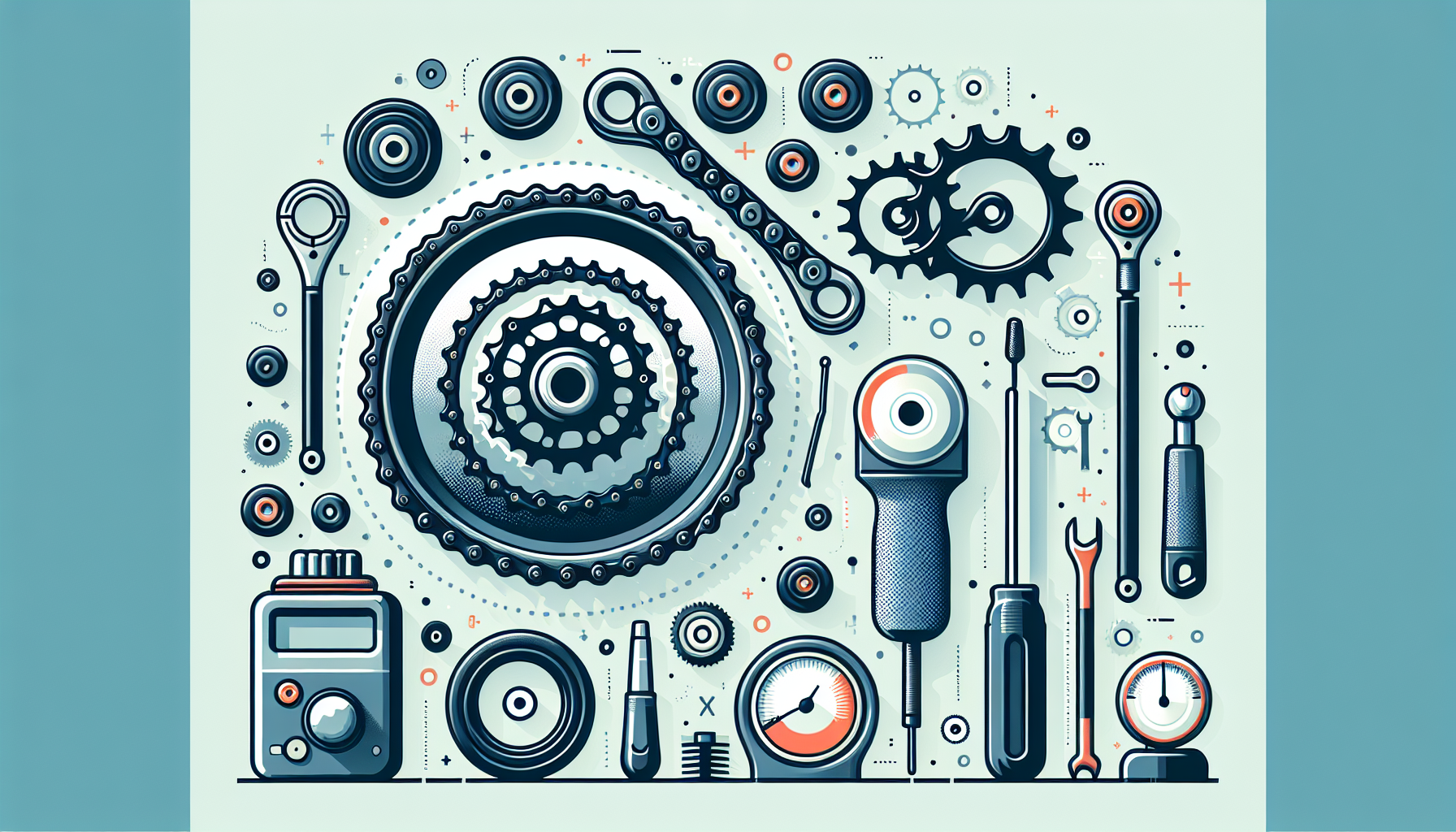
For riders with chain-driven motorcycles, chain maintenance tools are not optional. At minimum, that means a chain brush and a reliable chain alignment and adjustment workflow. For riders doing deeper service, a chain breaker and rivet tool deserves a place in the kit. Chain condition directly affects power delivery, sprocket wear, noise, and safety. A neglected chain can develop tight spots, uneven stretch, and poor lubrication that accelerates wear on both chain and sprockets.
Regular cleaning and lubrication intervals vary by riding conditions, but wet weather, dust, and commuting shorten service windows. Most manufacturers specify slack ranges in the owner’s manual, and those measurements must be taken with the bike in the correct position. Too tight is often worse than slightly loose because suspension movement changes chain tension through the swingarm arc.
| Task | Tool | Why it matters |
|---|---|---|
| Measure slack | Steel ruler or alignment marks | Prevents overtightening and drivetrain stress |
| Clean chain | Chain brush | Removes grit that accelerates wear |
| Lubricate links | Chain lube applicator | Reduces friction and corrosion |
| Replace chain | Breaker/rivet tool | Ensures secure master-link installation |
In my experience, many riders replace chains too early because they adjust them inconsistently or run them dirty. The right tools extend service life and improve feel at the rear wheel.
8. Tire pressure gauge and inflator: the most overlooked performance tools
A tire pressure gauge is one of the cheapest and most important tools a rider can own. Tire pressure affects grip, braking distance, steering response, tire wear, and fuel economy. Even a high-quality motorcycle feels wrong when pressures drift outside specification. A compact digital gauge or a robust analog gauge with clear increments works well; accuracy matters more than style. Pair it with a small inflator or compressor so you can correct pressures immediately.
This is maintenance, not just convenience. Underinflation causes heat buildup and vague handling. Overinflation reduces contact patch compliance and can make the ride harsh. Manufacturers publish recommended cold pressures for solo riding, passenger loads, and luggage. I recommend checking pressure weekly and before long rides, because seasonal temperature swings can change readings noticeably. Roughly, pressure changes about 1 psi for every 10 degrees Fahrenheit in ambient temperature, which is enough to alter feel.
Many riders chase suspension problems that are really tire-pressure problems. This tool prevents that confusion and supports every other handling-related maintenance decision.
9. Multimeter: essential for battery, charging, and electrical diagnosis
Electrical issues intimidate many riders, but a basic digital multimeter turns guesswork into evidence. It is essential for checking battery voltage, verifying charging-system output, testing continuity, and diagnosing parasitic drains or failed switches. On modern motorcycles packed with electronics, this tool saves time and prevents unnecessary parts replacement.
A healthy fully charged 12-volt lead-acid battery generally reads around 12.6 to 12.8 volts at rest, while charging voltage with the engine running often falls roughly in the 13.5 to 14.5 volt range depending on the system and manufacturer specification. Those are not universal pass-fail numbers, but they are useful baselines. If a bike repeatedly struggles to start, the multimeter helps separate a weak battery from a charging problem or bad connection.
Use it during battery maintenance, accessory installation, fuse checks, and no-start diagnosis. Fluke is a trusted benchmark, but many midrange meters are more than adequate for garage use if they are fused properly and easy to read. For any rider who plans to maintain a bike beyond oil and chain care, a multimeter quickly pays for itself.
10. Motorcycle stand: access, stability, and safer service
The tenth essential tool is not handheld, but it transforms home maintenance: a motorcycle stand. Depending on the bike, that may be a rear paddock stand, front stand, center stand, or lift stand designed for adventure and dirt models. Stable elevation improves access for chain cleaning, wheel inspection, brake work, fork service, and storage. It also makes basic tasks safer because the motorcycle is upright and less likely to shift unexpectedly.
For chain-driven street bikes, a rear paddock stand is usually the first purchase. It lets the rear wheel spin freely for cleaning and lubrication, and it makes chain slack checks easier. Riders with bikes lacking spool mounts can use swingarm-lift stands if the design allows safe contact points. Front stands add capability for wheel and fork service, but they should be chosen carefully around fender clearance, brake lines, and fork-bottom style.
Do not underestimate setup technique. A great stand used poorly is still risky. Work on level ground, confirm engagement points, and stabilize the bike before applying force to any fastener. In my garage, the stand is what turns occasional tinkering into consistent, organized motorcycle maintenance.
A well-chosen home mechanic’s tool kit does more than fill a toolbox. It gives riders the ability to perform motorcycle maintenance accurately, spot problems early, and build confidence with every service interval. The ten essentials in this guide cover the jobs that matter most: removing and tightening fasteners correctly, servicing chains, checking tires, diagnosing electrical faults, and stabilizing the bike for safer work. They also form the foundation for every deeper maintenance topic under Garage & Gear, from oil changes and brake service to battery care, wheel checks, and seasonal storage prep.
The main benefit is control. When you own the right tools, routine maintenance becomes practical instead of intimidating. You spend less time improvising, less money correcting avoidable damage, and more time riding a machine that feels sorted and dependable. Start with quality metric hand tools, add torque control and diagnostic capability, then build around your motorcycle’s specific needs. Use the owner’s manual and service manual as your reference, and let this hub guide the next articles you tackle in your garage.
If your current kit is incomplete, pick one missing essential today and put it to work on your next inspection.
Frequently Asked Questions
What tools should be in a basic home motorcycle mechanic’s tool kit?
A practical home motorcycle mechanic’s tool kit should cover the jobs most riders actually perform: inspections, adjustments, fluid service, battery work, wheel-related tasks, and basic fastener removal and installation. In most cases, that means a quality socket set, combination wrenches, Allen and Torx keys where required by the bike, a calibrated torque wrench, screwdrivers, pliers, a tire pressure gauge, a chain maintenance setup, a multimeter, and a few workshop essentials like a drain pan, funnels, rags, and a good light. The goal is not to fill a drawer with cheap duplicates. The goal is to build a compact, dependable system that matches the fasteners and service points on your specific motorcycle.
If you are choosing only ten essentials, prioritize tools that protect the bike from damage and help you work accurately. A torque wrench matters more than a pile of random spanners because modern motorcycles use aluminum cases, delicate threads, and components that can be expensive to replace if overtightened. A correct-fitting socket or hex bit matters more than sheer quantity because rounded fasteners usually come from sloppy fit, not lack of force. The best starter kit is one that lets you do oil changes, chain adjustment and lubrication, battery checks, bodywork removal, brake and clutch lever adjustments, and routine bolt checks with confidence.
Why is a torque wrench considered one of the most important tools for motorcycle maintenance?
A torque wrench is one of the most important tools in any home kit because motorcycles are full of fasteners that must be tightened precisely, not approximately. Unlike heavier automotive hardware that may tolerate a little guesswork, motorcycle fasteners are often threaded into aluminum engine covers, fork clamps, brake components, and axle hardware where too little torque can be unsafe and too much torque can strip threads, distort parts, or crack castings. Using a torque wrench takes the uncertainty out of the job and replaces “that feels tight enough” with a measurable, repeatable standard.
It is especially important during oil changes, brake work, chain adjustments, handlebar installation, pinch bolt tightening, and reassembly of bodywork or covers. Even experienced mechanics rely on torque specifications because different bolts require very different clamping loads based on diameter, thread pitch, material, and the part being secured. A drain plug, axle nut, caliper bolt, and side cover bolt should not be treated the same way. A good torque wrench, used with manufacturer specs and proper technique, helps prevent leaks, loose hardware, warped components, and expensive repairs. For a home rider, it is one of the clearest examples of a tool that pays for itself by preventing mistakes.
Do I really need motorcycle-specific tools, or can I use standard hand tools?
Most routine motorcycle maintenance can be done with standard hand tools, as long as they are high quality and correctly sized. A good metric socket set, combination wrenches, hex keys, screwdrivers, pliers, and a torque wrench will handle the vast majority of jobs on most street motorcycles. Since many motorcycles use metric hardware throughout, metric tools should be your default unless you know your machine includes something different. Good fit is critical. On a motorcycle, where access can be tight and fasteners may be shallow or soft, a precise tool fit reduces the risk of rounding heads and damaging surrounding parts.
That said, some motorcycles benefit from a few model-specific or motorcycle-specific tools. Examples include axle tools, chain alignment tools, spark plug sockets with thin walls, steering stem tools, suspension adjustment tools, and specialty bits for certain European fasteners. These are not where most riders should start. Build your core kit first, then add specialty tools only when the maintenance schedule or a particular repair justifies them. This approach keeps the tool kit efficient and affordable. The smartest home mechanic does not buy everything at once. They buy strong fundamentals, learn the bike, and add specialized tools only when they solve a real problem.
How can a rider avoid damaging parts while doing maintenance at home?
The biggest factor is discipline. Damage usually comes from rushing, using the wrong tool, forcing stuck parts, or skipping the service manual. Start with clean, organized work habits. Use the exact size socket, wrench, or bit the fastener requires. Clean dirt from bolt heads before inserting tools. Break fasteners loose carefully and keep the tool square to the fastener. Follow torque specifications during reassembly. If something feels wrong, stop and verify the procedure rather than pushing harder. On motorcycles, brute force is rarely the correct answer.
It also helps to think beyond the tool itself and focus on the full maintenance process. Support the bike securely before working. Protect painted surfaces and fuel tanks with towels or covers. Keep removed fasteners grouped by component so they return to the right location. Use a good work light so you can actually see engagement and alignment. When dealing with threaded holes in aluminum, start bolts by hand first and never use a ratchet to force initial thread engagement. For electrical diagnosis, use a multimeter rather than guessing and replacing parts blindly. For chain service, use the proper cleaners and adjustment method instead of over-tightening or misaligning the rear wheel. Good tools matter, but careful technique is what keeps expensive parts intact.
What is the best way to build a home mechanic’s tool kit without overspending?
The best approach is to build the kit around the maintenance tasks your motorcycle actually needs, not around a generic idea of what a shop should look like. Start with the tools that will immediately be used for routine service: a metric socket set, combination wrenches, Allen keys, screwdrivers, a torque wrench, pliers, a tire pressure gauge, and basic chain care tools. Add a multimeter early as well, because electrical troubleshooting becomes necessary sooner than many riders expect. Once those fundamentals are in place, buy specialty items one at a time as specific jobs come up. This prevents wasted money on tools that sit untouched for years.
Quality matters most on the tools that directly affect fastener grip, torque accuracy, and repeat use. That means it is usually worth spending more on sockets, hex bits, torque wrenches, and ratchets than on novelty storage or oversized sets filled with rarely used sizes. A smaller, better kit almost always beats a larger, lower-grade one. It also helps to buy with your motorcycle in hand. Check what fastener types and sizes your bike actually uses. If the machine is heavily faired, compact drivers and bodywork-friendly tools may matter more. If it is chain-driven, chain adjustment and cleaning tools should be high on the list. A smart kit grows with your experience, stays organized, and earns its place on the bench by making regular maintenance easier, safer, and more accurate.