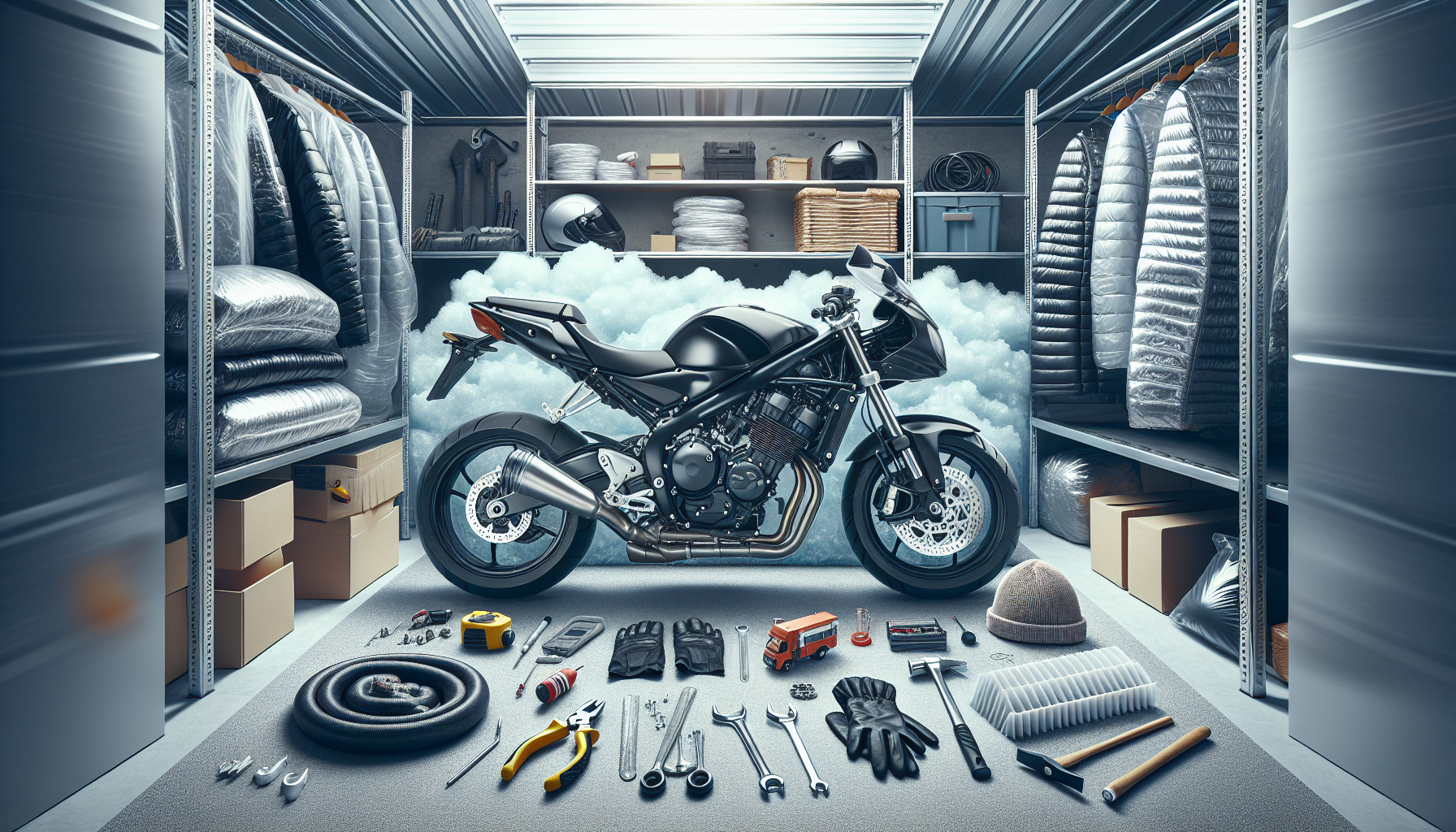
Winterizing a motorcycle is the process of preparing it for weeks or months of inactivity so cold weather, moisture, and stale fuel do not damage critical systems. If you ride seasonally, proper motorcycle storage is not optional maintenance; it is preventive care that protects the battery, fuel system, tires, brakes, seals, and finish while making spring startup faster and safer.
I have winterized carbureted standards, fuel-injected touring bikes, dual-sports, and track-prepped sportbikes, and the patterns are always the same. The motorcycles that wake up clean, charged, and ready to ride were stored methodically. The ones that come back with gummed injectors, flat-spotted tires, sulfated batteries, rust on rotors, or rodent-chewed wiring were usually parked with good intentions and no checklist.
For 2026, the best storage approach combines old-school mechanical discipline with modern products and battery technology. Ethanol-blended pump gas absorbs moisture and degrades faster than many riders expect. Smart battery maintainers are better than the trickle chargers many garages still use. Tire compounds and pressure monitoring are more sophisticated, but tires still lose pressure while parked. Even a premium indoor cover can trap condensation if used incorrectly. Winter motorcycle maintenance matters because neglect shows up later as expensive repairs, weak starting, poor idle quality, or hidden corrosion.
This guide is the hub for motorcycle maintenance storage prep within a broader Garage and Gear strategy. It covers the complete winter motorcycle storage checklist: when to start, what to clean, what to stabilize, what to lubricate, what to disconnect, and what to inspect before the bike goes back on the road. If you have ever asked whether you should drain fuel, change oil before storage, remove the battery, overinflate the tires, plug the exhaust, or start the bike occasionally during winter, you will find direct answers here.
Start With Fuel, Oil, and Temperature Timing
The right time to winterize your motorcycle is before temperatures stay consistently low and before your final ride turns into a rushed parking job. Storage prep works best when the bike is fully warmed through, because hot oil drains more completely, stabilized fuel circulates better, and moisture in the crankcase is reduced after a proper ride. I usually plan one last thirty-minute ride specifically for storage preparation, not for fun, because it lets me return with a warm engine and handle every next step in sequence.
Fuel is the first system to address because modern gasoline changes quickly. In most regions, pump fuel contains ethanol, typically E10, and ethanol attracts water. Over time that can contribute to phase separation, varnish formation, corrosion in tanks and injectors, and clogged pilot jets in carburetors. For most street motorcycles stored under about six months, the safest approach is to fill the tank nearly full with fresh fuel and add a quality stabilizer such as STA-BIL Storage or Star Tron, following the bottle dosage exactly. A full tank reduces the air space where condensation forms. Then run the engine for several minutes so treated fuel reaches injectors, rails, pumps, or carburetor bowls.
Oil should also be changed before storage if it is near the end of its service interval or visibly contaminated. Used oil contains combustion byproducts, acids, and moisture that should not sit against internal engine surfaces for months. This is one area where owners often wait until spring, but from a wear standpoint, fresh oil before storage is better. Use the viscosity and specification listed in your service manual, whether that means JASO MA2-certified 10W-40 for a wet-clutch street bike or a manufacturer-specific synthetic for a high-performance engine. If your coolant is due by age, replace it as well. Modern aluminum engines and water pumps depend on corrosion inhibitors that weaken over time.
Clean the Motorcycle Before You Cover It
Never store a dirty motorcycle for winter. Road grime, bug residue, chain fling, brake dust, and road salt hold moisture against metal and painted surfaces. Salt contamination is especially destructive on fasteners, spoke nipples, exposed aluminum, and lower exhaust sections. A careful wash is not cosmetic; it is corrosion control. Use a pH-balanced motorcycle wash, soft brushes, and low-pressure water around bearings, switchgear, and dash seals. If you rode in salted conditions, flush the underside, center stand, swingarm, brake calipers, and radiator thoroughly.
Drying matters as much as washing. Compressed air or a filtered blower helps clear water from mirror stalks, control housings, radiator fins, chain links, and around spark plug wells. Once dry, apply protection selectively. Painted panels benefit from wax or a ceramic spray sealant. Bare metal and fasteners can be misted lightly with a corrosion inhibitor such as ACF-50 or Boeshield T-9, avoiding brake discs, pads, and tire tread. Vinyl and rubber trim can be treated with a non-silicone protectant if the product is compatible with motorcycle materials.
The chain deserves separate attention. Clean it with a motorcycle-safe chain cleaner or kerosene if your chain manufacturer allows it, then inspect for tight spots, hooked sprocket teeth, and excessive slack. Lubricate after cleaning so the lube can penetrate while the chain is warm and dry. Shaft-drive and belt-drive motorcycles are simpler here, but still inspect the final drive housing, belt condition, and pulley alignment. Winter storage is also the best time to note any service due in spring, from brake fluid replacement to valve checks, because a clean bike makes leaks and wear easier to spot.
Battery Care, Tire Protection, and Pest Prevention
Battery failure is one of the most common spring surprises, and almost all of it is preventable. Lead-acid batteries self-discharge, and repeated low-voltage storage causes sulfation that permanently reduces capacity. Lithium motorcycle batteries hold charge better, but they have their own cold-weather considerations and should only be maintained with chargers approved by the battery manufacturer. The correct tool for most riders is a smart maintainer, not an old constant-output trickle charger. A smart unit monitors voltage and adjusts automatically.
If your motorcycle is stored in an attached garage with power, connect the battery to a maintainer through a fused quick-disconnect lead. If the space is unheated or drops below freezing regularly, remove the battery, clean the terminals, and store it in a dry place above freezing on a shelf or bench. Contrary to old garage advice, modern battery cases do not need a wooden board underneath, but they do need stable temperature and periodic voltage checks. Before storage, confirm electrolyte level on serviceable batteries and top up only with distilled water.
Tires also need attention because months of underinflation can create flat spotting and sidewall stress. Inflate to the motorcycle manufacturer’s recommended cold pressure, not an arbitrary maximum on the tire sidewall. If possible, store the bike on paddock stands or a center stand with weight reduced on at least one wheel. If stands are not available, roll the bike slightly every few weeks. Avoid parking directly on bare concrete if the floor gets damp; a rubber mat or plywood square is a simple buffer against moisture.
Rodents are an underestimated threat in winter storage. Mice nest in airboxes, chew seat foam, and damage wiring insulation. I have seen a no-start diagnosis turn into a complete harness repair because a bike sat for one season near birdseed. Block the exhaust outlet and air intake openings with a visible reminder tag attached to the handlebar so you remove the plugs before startup. Use deterrents appropriate to your space, keep food sources out of the garage, and avoid relying only on scented sachets that lose effectiveness quickly.
| Storage Task | Best Practice | Why It Matters |
|---|---|---|
| Fuel prep | Fill with fresh fuel, add stabilizer, run engine | Prevents varnish, moisture issues, and injector or jet clogging |
| Oil service | Change oil and filter before storage if due | Removes acids and contaminants from internal surfaces |
| Battery care | Use a smart maintainer or store battery indoors | Reduces sulfation and preserves starting power |
| Tire protection | Set correct pressure and use stands if possible | Limits flat spotting and casing stress |
| Corrosion control | Wash, dry, and apply a protectant to exposed metal | Stops moisture and salt from attacking finishes and hardware |
| Pest prevention | Seal openings and remove attractants nearby | Avoids wiring, intake, and upholstery damage |
Fluids, Controls, and Long-Storage Details
Brake fluid, clutch fluid, and coolant are often ignored during winter prep because they are not directly related to startup, but they affect reliability and component life. Brake fluid is hygroscopic, meaning it absorbs moisture from the air. As water content rises, boiling point falls and internal corrosion risk increases in calipers, master cylinders, and ABS modules. If your fluid is dark or at its service interval, replacing it before storage is smart maintenance. Use the exact DOT rating specified in the manual and keep the reservoir area clean to prevent contamination.
Lubricate control points before the bike sits. That includes clutch and throttle cables on motorcycles that still use them, lever pivots, side-stand pivots, center stands, footpeg hinges, and lock cylinders. On ride-by-wire motorcycles there are fewer cable tasks, but pivots and latches still benefit from a proper lubricant. Windscreen tracks, pannier latches, and seat locks often become sticky after months without movement. A few minutes now prevents forcing mechanisms later.
For carbureted bikes, storage strategy depends on duration and design. Many mechanics prefer stabilized fuel in the tank paired with drained carburetor bowls if storage exceeds a few months, because tiny idle circuits clog easily. On fuel-injected bikes, keeping stabilized fuel in a full tank is usually ideal. If the motorcycle will be stored exceptionally long, six to twelve months or more, consult the factory service manual for model-specific procedures, especially for anti-theft systems, alarm parasitic draw, and fuel pump priming behavior. Premium touring bikes and adventure models with multiple control modules may have different battery-disconnect consequences than simple naked bikes.
Cover selection matters too. Indoors, use a breathable motorcycle cover that keeps dust off without trapping moisture. Outdoors, the challenge is harder: you need water resistance, UV protection, ventilation, and secure tie-down points. Even then, outdoor winter storage is a compromise. Temperature swings create condensation, wind abrades paint where the cover moves, and theft risk rises. If outdoor storage is your only option, place the bike on a firm surface, use a weatherproof cover with vents, secure it low and snug, and inspect it after storms instead of assuming it is protected.
What Not to Do During Winter Storage
Some common winter storage habits cause more harm than good. The biggest mistake is starting the motorcycle “once in a while” without riding it long enough to reach full operating temperature. A brief idle session does not fully charge the battery, evaporate condensation from the crankcase and exhaust, or circulate enough heat through the whole drivetrain. It can actually add moisture and fuel dilution. If you cannot ride the bike for at least twenty to thirty minutes under load, it is usually better not to start it at all.
Another mistake is overapplying chemicals. Heavy grease on visible metal attracts dust. Silicone overspray on seats, grips, foot controls, or brake components creates safety hazards. Fuel stabilizer overdose is not better than correct dosage. Battery chargers that are not compatible with lithium chemistry can damage expensive batteries. Tire pressure should not be inflated far beyond specification in the hope of avoiding flat spots. Excess pressure changes carcass stress and is not the right solution compared with stands or periodic repositioning.
Do not seal a damp motorcycle under a non-breathable tarp. That is an efficient way to create corrosion on fasteners, clouding on finishes, and mildew on seats. Do not skip note-taking. I recommend attaching a tag to the handlebar listing what you did: battery removed, exhaust plugged, tank stabilized, oil changed, spring service due. This simple practice prevents the classic spring errors of trying to start a bike with intake plugs installed or forgetting that the battery tender lead was never reconnected.
The Spring Wake-Up Checklist
Good winter motorcycle storage includes a reactivation plan. When riding season returns, remove any intake or exhaust plugs first. Reinstall the charged battery if it was removed and verify terminal tightness. Check tire pressures cold, inspect tread and sidewalls, and examine the floor under the bike for leaks. Test lights, horn, brake switches, and dash warnings before startup. On chain-drive bikes, verify chain slack and lube condition. Squeeze brake and clutch levers, confirm normal feel, and look through calipers for pad thickness.
Start the engine and let it settle briefly, then watch for warning lights, fluid leaks, and unusual smoke. Fuel-injected bikes may need a moment for systems to initialize; carbureted bikes may need choke or enrichment depending on temperature. Once warm, confirm charging voltage if you have had battery issues. A healthy charging system on many motorcycles will show roughly 13.5 to 14.5 volts at raised rpm, though exact values vary by model. Before your first full ride, perform a short, cautious test loop to scrub light surface rust from the brake rotors, assess tire feel, and verify normal throttle response.
Winterizing your motorcycle is ultimately about preserving reliability, safety, and value with a repeatable process. Fresh fuel, clean oil, a maintained battery, protected tires, corrosion control, and pest prevention cover the essentials for nearly every modern motorcycle. The exact details vary by storage length, climate, and machine type, but the principle never changes: store the bike in the condition you want to find it. Use this checklist as your maintenance hub, apply it before the first freeze, and your motorcycle will be ready when the season opens again.
Frequently Asked Questions
What is the correct order for winterizing a motorcycle so I do not miss anything important?
The safest approach is to winterize in a deliberate sequence so each step supports the next one. Start by washing and fully drying the bike, including hard-to-reach areas around the engine, swingarm, calipers, and under the fenders. Dirt, bug residue, chain fling, and road salt hold moisture against metal and painted surfaces, so storing a dirty motorcycle almost guarantees avoidable corrosion. Once clean, inspect the bike for anything that should be fixed before storage, such as fluid leaks, cracked hoses, worn brake pads, damaged cables, or a chain that needs attention.
Next, handle the fuel system. Fill the tank with fresh fuel if the bike will be stored for more than a few weeks, then add the correct amount of fuel stabilizer and run the engine long enough for treated fuel to circulate through the system. On fuel-injected motorcycles, this helps protect injectors and fuel pump components. On carbureted bikes, it is especially important to avoid varnish buildup in jets and passages. Many riders also shut off the fuel petcock and drain carburetor float bowls if the bike will sit for an extended period, because carburetors are more vulnerable to stale fuel problems.
After that, change the oil and filter if service is due or if the oil is contaminated from short rides, moisture, or combustion byproducts. Used oil can hold acids and contaminants that are better removed before long-term storage. Then check coolant on liquid-cooled bikes to confirm freeze protection is adequate and the mixture is in good condition. Brake fluid should also be inspected; while it is not always replaced specifically for storage, old moisture-laden fluid is not something you want to ignore heading into cold weather.
Battery care comes next. Either remove the battery and keep it on a smart maintainer in a dry area, or connect an onboard tender if the bike is stored where power is safely available. Then address tires and suspension by inflating tires to the recommended pressure and, if possible, reducing long-term load with front and rear stands. If stands are not available, rolling the bike slightly every few weeks can help reduce the chance of flat spotting. Finish by lubricating the chain, cables, pivot points, and exposed metal where appropriate, plugging exhaust and intake openings if rodents are a concern, covering the bike with a breathable cover, and storing it in a dry, stable environment. That order keeps the process organized and minimizes the risk of overlooking a system that can cause springtime headaches.
Should I store my motorcycle with a full tank of gas, and is fuel stabilizer really necessary?
In most cases, yes, a full tank plus fuel stabilizer is the best practice for winter motorcycle storage. A full tank leaves less air space inside, which reduces internal condensation and lowers the chance of rust forming in steel tanks. Even on motorcycles with plastic or coated tanks, stale fuel is still a problem because gasoline degrades over time. As it ages, it loses volatility and can leave gum and varnish deposits that interfere with injectors, fuel pumps, carburetor circuits, and small passages. Stabilizer slows that degradation and gives you a much better chance of an easy spring startup.
The key is to use fresh fuel, not fuel that has already been sitting. Add the stabilizer according to the product instructions, then fill the tank and run the engine for several minutes so the treated fuel reaches the entire system. On fuel-injected bikes, that means treated fuel is circulating through the rail and injectors. On carbureted motorcycles, it gets stabilized fuel into the bowls and passages, although many experienced owners still prefer to drain the carb bowls afterward for extra protection during longer storage periods. That is because carburetors are particularly sensitive to evaporated fuel residue.
There are a few exceptions. If the motorcycle will be stored only briefly in a climate-controlled garage, the urgency is lower, but stabilizer is still cheap insurance. If you are using ethanol-blended fuel, proper stabilization becomes even more important because ethanol can attract moisture and contribute to corrosion or phase separation over time. Some riders seek out ethanol-free fuel before storage for this reason. Whether you ride a standard, touring bike, dual-sport, or sportbike, neglecting the fuel system is one of the most common causes of rough running, hard starts, clogged jets, and expensive cleanup work in spring. A full tank of fresh stabilized fuel is one of the simplest and highest-value steps in the entire winterizing process.
What should I do with the battery during winter storage?
Battery care is critical because cold weather and inactivity are a bad combination for motorcycle batteries. If a battery sits discharged or partially discharged for weeks or months, sulfation can build on the plates and permanently reduce capacity. That is why many motorcycles come out of winter with a battery that cranks slowly or fails completely. The best solution is to keep the battery fully charged with a quality smart charger or battery maintainer designed for motorcycle batteries. A smart unit monitors charge state and maintains the battery without constantly overcharging it.
If your motorcycle is stored in a secure garage with access to electricity, connecting the battery to a tender through a fused quick-connect lead is usually the easiest option. If the storage area is unheated or you do not have reliable power, remove the battery and store it in a cool, dry place away from extreme cold and dampness, then connect it to a smart maintainer there. Before storage, inspect the terminals for corrosion, make sure connections are clean and tight, and on conventional lead-acid batteries, verify electrolyte levels if the design allows service. Sealed AGM and lithium batteries have different maintenance needs, so it is important to follow the battery manufacturer’s guidance.
Lithium motorcycle batteries deserve special attention. They are lightweight and popular, but many require chargers that are specifically compatible with lithium chemistry. Using the wrong tender can shorten battery life or cause charging issues. Also, lithium batteries can behave differently in cold temperatures, often needing a brief wake-up period under a light electrical load before they crank strongly. Regardless of battery type, do not assume a modern bike’s electronics draw nothing while parked. Clocks, alarms, immobilizers, ECUs, and accessories can create parasitic drain over time. Proper battery maintenance is one of the biggest factors separating a motorcycle that fires up cleanly in spring from one that needs troubleshooting before the season even begins.
Do I need to put my motorcycle on stands for winter, or is that optional?
Using stands is helpful, but it is not mandatory in every storage situation. The goal is to protect the tires, suspension, and overall stability of the motorcycle while it sits. Front and rear stands, or a center stand where applicable, reduce continuous load on the tires and can help prevent flat spots during long storage periods. They also make it easier to clean the bike thoroughly beforehand, lubricate the chain, and keep the motorcycle upright and secure. For bikes that will sit several months, stands are an excellent upgrade to your storage routine.
That said, plenty of motorcycles are stored successfully on their tires every winter. If you are not using stands, inflate the tires to the manufacturer’s recommended pressure and check that pressure periodically if the storage area is accessible. Modern tires are more resistant to severe flat spotting than many riders think, especially if the bike is not sitting on very cold concrete for an entire season without movement. Placing a barrier such as rubber mats, carpet squares, or plywood under the tires can help insulate them from cold floors and reduce moisture contact. If practical, roll the motorcycle a small distance every few weeks to change the contact patch.
Stands become more important for high-performance bikes with sticky compounds, motorcycles stored for very long periods, or situations where suspension unloading is beneficial. However, stability matters more than theory. A bike stored insecurely on a stand is worse than one stored safely on the ground with properly inflated tires. If you use stands, make sure they fit your motorcycle correctly and that the bike is on a level, solid surface. Whether it is a carbureted standard, a touring bike with significant weight, a dual-sport, or a track-focused sportbike, the best setup is the one that keeps the machine stable, dry, and protected without introducing the risk of tipping over.
What should I check before riding again in spring after winter storage?
Spring startup should be treated like a recommissioning process, not just a key-turn-and-go moment. Begin with a visual inspection. Look for fluid leaks under the bike, signs of rodent activity, chewed wiring, nesting material near the airbox or exhaust, and any corrosion that may have developed despite your storage prep. Remove any intake or exhaust plugs you installed. Check tire pressures carefully, because even well-stored tires can lose air over time. Inspect sidewalls and tread, and confirm there are no cracks, punctures, or unusual flat spots. Then check chain condition and tension, brake pad thickness, rotor condition, and control operation at the clutch, throttle, and levers.
Next, verify battery health and electrical function. Make sure the battery is fully charged, terminals are tight, and the bike powers up normally. Test the lights, horn, brake light switches, indicators, and instrument functions. Before starting, confirm fluid levels, including engine oil, coolant if applicable, and brake fluid. On carbureted bikes,