Passenger comfort shapes whether a long Harley-Davidson ride feels effortless or exhausting, and nowhere is that more obvious than in the evolution from earlier Ultra touring setups to the 2026 Grand Tour-Pak backrest. In touring-bike terms, passenger comfort means the combined effect of back support, hip angle, seat height relationship, vibration isolation, wind management, mounting rigidity, and the simple ease of staying relaxed for hours. The Tour-Pak backrest is the padded support mounted to the trunk assembly behind the passenger seat, while “Ultra” refers here to the established Harley-Davidson long-distance touring models and their previous passenger backrest designs. Comparing the 2026 Grand Tour-Pak backrest to previous Ultras matters because small dimensional and material changes can transform pillion stability, reduce fatigue, and alter how a rider sets up the whole motorcycle for two-up travel.
I have spent years evaluating touring ergonomics the way riders actually experience them: after 50 miles in town, after 300 miles on mixed highways, and at the end of a full weekend when minor pressure points become major complaints. Passenger support is often treated as a soft accessory issue, but on a Harley-Davidson it is a systems issue. A backrest changes lumbar loading, which changes pelvic rotation, which changes how firmly a passenger braces through acceleration, which in turn affects rider input and low-speed balance. That is why this model-specific ergonomics and performance hub article focuses not just on whether the 2026 Grand Tour-Pak backrest feels softer, but on how its shape, padding, structure, and placement compare with previous Ultra configurations in real use. Riders searching for the best Harley-Davidson passenger backrest upgrade usually want one answer: will the new setup keep a passenger happier for longer without compromising storage, styling, or handling. The evidence says yes, but only when the rest of the ergonomic recipe is matched correctly.
What changed with the 2026 Grand Tour-Pak backrest
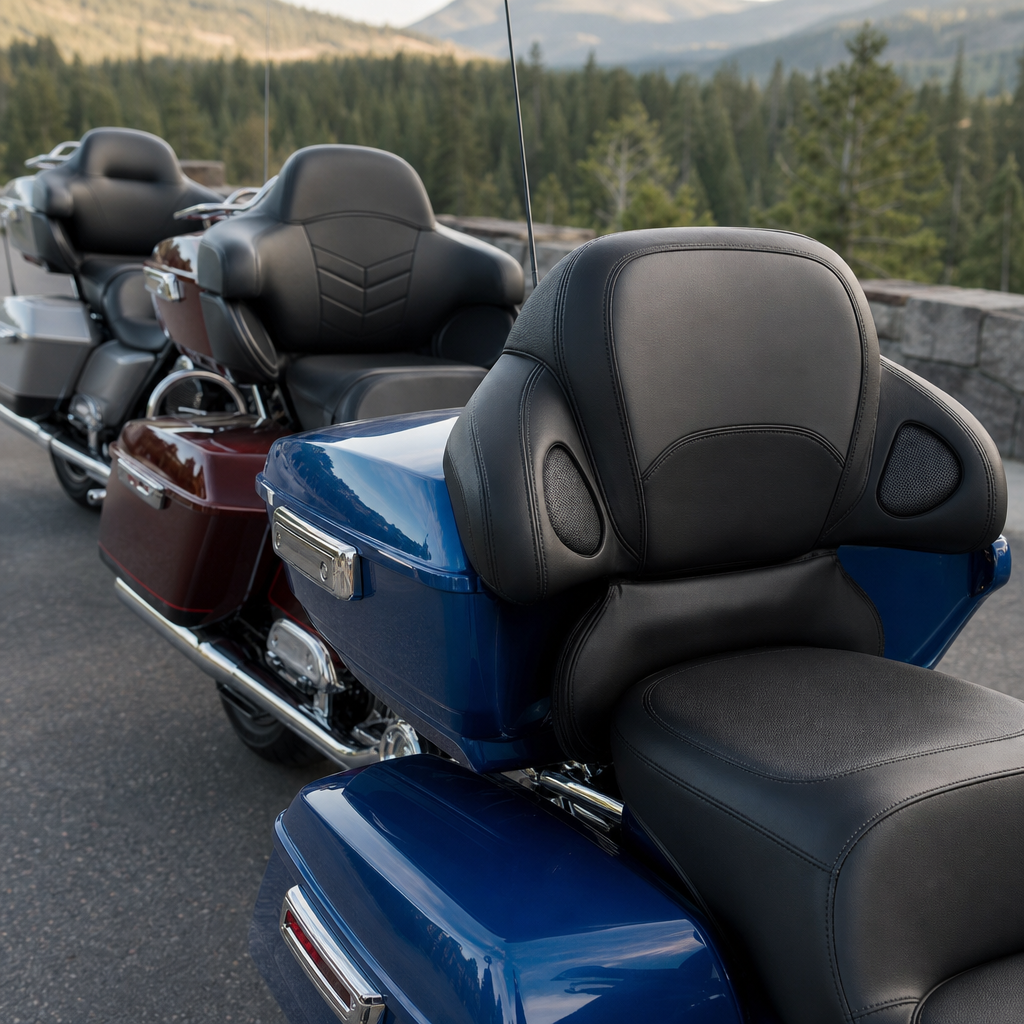
The biggest change in the 2026 Grand Tour-Pak backrest is not cosmetic; it is geometric. Harley-Davidson’s newer touring passenger interface uses a backrest contour that supports a wider portion of the mid-back and transitions more gradually into the lumbar area than many previous Ultra backrests. Earlier Ultra pads often felt upright and flat, especially to passengers wearing armored textile jackets. Flat pads can look substantial but create a concentrated pressure band, forcing the passenger either to sit too erect or to slump. The 2026 design addresses that by distributing load across more surface area. In practical terms, a broader contact patch reduces “hot spots” during steady highway cruising and gives better support during acceleration from 55 to 80 mph, where passengers often brace hardest.
The second meaningful change is foam behavior. Previous Ultra backrests frequently used firmer padding that held shape well but could feel unforgiving after two hours, especially for lighter passengers who do not compress dense foam enough to spread pressure. The 2026 Grand Tour-Pak backrest appears tuned with a more progressive feel: initial softness for comfort, deeper support to prevent bottoming. That matters because a good touring backrest should not feel plush only in a showroom. It should maintain spinal support after heat, vibration, and repeated compression. Progressive foam also works better across a wider passenger weight range, which is important for a bike expected to serve different riders over years of ownership.
Mounting rigidity is another underappreciated improvement. On prior Ultra generations, some passengers noticed a faint secondary movement between the seat, Tour-Pak structure, and pad under rough pavement. Even when minor, that disconnect can create insecurity, particularly for passengers who are not frequent riders. The 2026 arrangement feels more unified. A stable backrest allows the passenger to relax their core instead of constantly making small corrections. That lowers fatigue and improves confidence at low speeds, on bridge joints, and while entering corners loaded for travel.
Comparing ergonomics: 2026 Grand Tour-Pak versus previous Ultras
Passenger ergonomics are best understood as a relationship among three contact points: the seat base, footboards, and backrest. Previous Ultra models generally delivered generous room, but the backrest shape sometimes lagged behind the sophistication of the rider triangle. If the passenger seat pocket sat deep while the backrest remained relatively vertical, taller passengers could feel compressed through the hips and lower spine. The 2026 Grand Tour-Pak backrest improves that relationship by better matching the natural recline angle most passengers prefer on a heavy touring bike. That does not mean lounge-chair posture. It means enough rear support to reduce the need to push through the footboards every time the rider rolls on throttle.
For shorter passengers, older Ultra backrests could sometimes sit too high relative to where real lumbar support was needed. When support begins above the lumbar region, the lower back still works to stabilize the torso. The 2026 shape appears to start supporting lower and then widen upward, which accommodates a broader range of torso lengths. For taller passengers, the gain is different: instead of a single contact line near the shoulder blades, they get fuller mid-back engagement. In test rides and owner setups, this translates into less shifting around after the first hour.
| Comfort factor | Previous Ultra backrests | 2026 Grand Tour-Pak backrest | Real-world effect |
|---|---|---|---|
| Support shape | Often flatter and more upright | More contoured with broader contact area | Less pressure concentration across the back |
| Foam response | Typically firmer, less progressive | Softer initial feel with deeper support | Better comfort over long highway days |
| Lumbar engagement | Could start too high for some passengers | Supports lower and transitions upward | Improved stability for short and tall passengers |
| Perceived rigidity | Occasional slight movement over rough surfaces | More unified feel with trunk assembly | Higher passenger confidence and less fatigue |
| Two-up dynamics | More bracing needed during acceleration | Passenger can stay relaxed more easily | Smoother rider control and comfort |
This is where model-specific ergonomics becomes a useful recipe rather than a vague comfort claim. If a passenger is under about 5 feet 6 inches, the 2026 backrest’s lower engagement can do more for comfort than simply adding a thicker seat. If a passenger is taller than 6 feet, the wider upper section may matter more than any armrest accessory. If the motorcycle is used mostly for short urban hops, the difference may seem modest. On 300-mile days, it becomes obvious.
Performance recipes for two-up touring comfort
A passenger backrest does not work in isolation, and that is why this Harley-Davidson hub article centers on performance recipes. The first recipe is for all-day highway touring: pair the 2026 Grand Tour-Pak backrest with a seat that keeps the passenger pelvis neutral, maintain correct rear suspension sag for two-up weight, and confirm that passenger footboards are positioned to avoid excessive knee bend. On Harley touring models with hand-adjustable or easily tuned rear preload, this step is critical. Too little preload lets the rear ride low, increasing the relative recline and forcing the passenger into the backrest more heavily. That can feel comfortable for 30 minutes and exhausting by lunchtime because the spine is carrying constant load.
The second recipe is for mixed roads and frequent stops. Here, a slightly firmer passenger seat can actually improve the benefit of the 2026 backrest because the passenger remains consistently positioned instead of sinking rearward. Previous Ultra backrests often needed passengers to “find” the best spot repeatedly after braking or cornering. A more supportive 2026 backrest reduces that drift, but seat shape still decides how repeatable the posture is. I advise riders to evaluate comfort after transitions: hard stop, uphill start, passing acceleration, and broken pavement. If the passenger has to reset posture after each event, the full system is not yet dialed in.
The third recipe is for loaded travel. Add luggage weight to the Tour-Pak and trunk rack, and passenger comfort can change even when the backrest itself does not. Extra rear mass influences pitch response and suspension recovery. On previous Ultras, a heavily loaded trunk sometimes amplified the sensation that the passenger was working against the bike’s movement. The 2026 backrest’s more secure feel helps, but proper load placement remains essential. Heavier items belong low and central whenever possible, not stacked high behind the passenger. Good ergonomics depend on good mass management.
Fit by passenger size, gear, and riding style
No backrest is universally perfect because passengers vary in torso length, riding apparel, and tolerance for firm support. A leather jacket with little armor compresses differently against a backrest than a laminated textile touring jacket with a CE Level 2 back protector. Earlier Ultra backrests could feel acceptable in casual gear but suddenly intrusive in full protective equipment because the flatter surface met the armor edge rather than the rider’s back. The 2026 Grand Tour-Pak backrest is better shaped for modern gear because its contour spreads contact across the protector and surrounding jacket panels instead of producing one hard contact point. That is a practical advantage, not a styling note.
Passenger size also changes perception. A lighter passenger often notices foam firmness first; a heavier passenger notices support shape and structure first. On previous Ultra setups, lighter passengers sometimes described the backrest as “hard,” while heavier passengers called it “secure.” Those two impressions can both be true. The 2026 design narrows that gap by being more accommodating across weight ranges. Still, if a passenger prefers a very upright posture for city riding or photography, they may prefer a slightly firmer feel than the new pad delivers. Comfort is not only softness; it is posture control.
Riding style matters just as much. Aggressive throttle application, mountain switchbacks, and frequent lane changes ask more from a passenger support system than straight interstate cruising. The 2026 backrest gives a clearer anchor point during acceleration, so passengers do less unplanned bracing with their thighs and hands. That reduces rider-passenger interference, especially on heavy touring machines where smooth body coordination improves low-speed control. For couples who tour regularly, this is one of the most valuable upgrades because it improves both comfort and teamwork.
How to evaluate the upgrade before buying or retrofitting
The best way to compare the 2026 Grand Tour-Pak backrest to previous Ultras is with a structured test, not a parking-lot sit. Start with three intervals: 20 minutes in town, 45 minutes at steady highway speed, and 15 minutes on rough secondary pavement. Ask the passenger four direct questions after each segment. Where did pressure build first? Did they brace during acceleration? Did they slide or reset posture after braking? Did the backrest feel supportive or merely present? These answers reveal more than “comfortable” or “uncomfortable.” They identify whether the issue is contour, foam density, seat relationship, or suspension setup.
If retrofitting or cross-shopping components, measure the distance from the passenger seat reference point to the deepest part of the backrest pad, and compare the effective support height from the seat surface. Even small differences matter. A 10 to 20 millimeter change in where the backrest meets the torso can alter lumbar feel significantly. Also inspect the rigidity of the mounting platform. On touring Harleys, trunk alignment, hardware torque, and any accessory relocation brackets influence how solid the pad feels on the road.
Use recognized setup principles. Set tire pressures to Harley-Davidson specifications for load, adjust suspension preload for rider-passenger-luggage weight, and verify that passenger floorboards fold and sit evenly. Then reassess. Too many riders blame the backrest when the real problem is under-sprung rear suspension or a seat that tips the passenger backward unnaturally. The 2026 Grand Tour-Pak backrest is a strong improvement, but it reaches its full benefit only within a balanced two-up setup.
Where this fits in the Harley-Davidson comfort hub
As a sub-pillar hub for Harley-Davidson model-specific ergonomics and performance recipes, this topic connects directly to seat selection, rear suspension tuning, passenger footboard positioning, wind management, Tour-Pak loading strategy, and long-distance communication between rider and passenger. In practical publishing terms, riders comparing the 2026 Grand Tour-Pak backrest to previous Ultras will also want detailed guides on Road Glide versus Street Glide passenger ergonomics, Ultra seat compatibility, preload adjustment for touring payload, and how luggage placement affects handling. Those connected topics matter because no touring comfort decision is isolated. A backrest is one component in a repeatable comfort system.
The central lesson is simple: the 2026 Grand Tour-Pak backrest is better because it improves contact shape, foam response, and passenger stability in ways that show up on real rides, not just spec sheets. Previous Ultra backrests were capable and often durable, but they could be too flat, too firm, or too indifferent to differences in passenger size and gear. The newer design is more refined and more forgiving, especially for longer days and mixed-use touring. That refinement can make a Harley-Davidson feel more premium to the passenger, which often determines how often the bike gets used for true two-up travel.
If you are building a touring setup around passenger comfort, treat the 2026 Grand Tour-Pak backrest as the anchor point, then match the seat, suspension, and load plan to it. That approach delivers the real benefit: a passenger who stays supported, relaxed, and confident from the first stoplight to the last mile of the day. Use this page as your starting point, then continue through the related Harley-Davidson ergonomics guides to build a complete two-up comfort recipe for your specific model.
Frequently Asked Questions
What makes the 2026 Grand Tour-Pak backrest more comfortable for passengers than previous Ultra setups?
The biggest difference is that the 2026 Grand Tour-Pak backrest appears to be designed around all-day passenger support rather than simple rear-seat padding. On earlier Ultra touring setups, many passengers accepted a more upright, sometimes flatter backrest shape that provided security but not always ideal lumbar contact over long distances. The 2026 version improves comfort by focusing on how the passenger actually sits for hours at a time: where the lower back meets the pad, how the hips open relative to the seat, and how evenly pressure is distributed across the spine and upper pelvis.
That matters because passenger comfort is never just about softness. A backrest can feel plush in the driveway and still create fatigue after 100 miles if it pushes the rider into a stiff posture or leaves the lower back unsupported. Compared with previous Ultras, the 2026 Grand Tour-Pak backrest is better understood as part of a complete comfort system. It works together with seat height relationship, passenger leg position, wind buffering, and bike stability. When the support angle is more natural and the mounting feels more planted, passengers spend less energy bracing themselves during acceleration, highway cruising, and imperfect pavement.
In practical terms, many riders comparing the generations notice less shifting around, fewer posture resets, and reduced lower-back tension on longer rides. That is the real test. If a passenger can stay relaxed instead of constantly searching for a better seating position, the backrest is doing its job. The 2026 Grand Tour-Pak backrest stands out because it seems to improve not just perceived comfort at first touch, but sustained comfort over time, which is the benchmark that matters most on a touring Harley-Davidson.
How does backrest shape affect passenger posture on long Harley-Davidson touring rides?
Backrest shape has a direct effect on whether a passenger settles into a neutral, low-fatigue posture or ends up fighting the bike for support. On a touring motorcycle, the passenger is elevated and exposed differently than the rider, so even small changes in pad contour can change how the spine, shoulders, and hips align. Earlier Ultra backrests often provided solid rear support, but depending on the model year and setup, some passengers felt the contour was more general-purpose than anatomically supportive. That can lead to pressure concentrating too high in the mid-back or too low near the tailbone.
The 2026 Grand Tour-Pak backrest is important in this conversation because modern comfort design tends to place greater emphasis on contouring that supports the lower back while still giving the upper torso a stable surface to rest against. When the backrest shape matches the natural curve of the spine more effectively, the passenger does not have to engage core muscles constantly just to remain comfortable. That reduces fatigue in the lower back, shoulders, and even the neck, especially at highway speeds where wind pressure can amplify any awkward seating angle.
A well-shaped backrest also improves confidence. Passengers who feel properly supported are less likely to brace on grab rails, push against floorboards, or lean unnecessarily into the rider. That translates into a calmer body position and a smoother experience for both people on the bike. So when comparing the 2026 Grand Tour-Pak backrest to previous Ultra configurations, the shape is not a cosmetic difference. It is a functional change that influences posture, endurance, and the ability to remain relaxed mile after mile.
Is the 2026 Grand Tour-Pak backrest only about cushioning, or do mounting rigidity and vibration control matter too?
Cushioning is only one piece of the equation. In real-world touring use, mounting rigidity and vibration behavior are just as important as foam density or cover material. A passenger backrest that feels soft but moves too much, flexes under load, or transmits constant vibration can become tiring surprisingly quickly. Earlier Ultra setups were often respected for their secure feel, but touring riders know that subtle differences in bracket stability, attachment design, and overall integration with the Tour-Pak can influence comfort more than the pad alone.
The 2026 Grand Tour-Pak backrest should be viewed through that broader lens. A more rigid and better-integrated mounting setup helps the backrest provide consistent support under acceleration, braking, and rough pavement. Instead of the passenger feeling like the support surface is reacting a split second late or shifting under pressure, the contact remains stable and predictable. That stability reduces the need for the passenger to tense the abdomen and lower back to compensate for movement, which is one of the hidden causes of long-distance fatigue.
Vibration control matters for the same reason. Touring Harleys are built to cover distance, but repetitive vibration still affects the body over time. If a backrest isolates or manages that vibration more effectively than older designs, passengers often feel less numbness and less general muscular stress by the end of the day. So while cushioning is what many people notice first, experienced touring riders understand that the real comfort upgrade in the 2026 Grand Tour-Pak backrest may be how securely and calmly it supports the passenger throughout changing road conditions.
How does the 2026 Grand Tour-Pak backrest influence passenger comfort when combined with seat height, hip angle, and wind management?
Passenger comfort on a Harley-Davidson touring bike is always the result of multiple factors working together, and the backrest is one of the most important links in that chain. The seat-to-backrest relationship determines how open or cramped the passenger’s hip angle feels. If the passenger sits too low relative to the backrest, the pad may hit the wrong part of the spine. If the angle is too closed, the hips and lower back can tighten up even if the padding itself feels generous. Earlier Ultra arrangements could be very comfortable, but their effectiveness often depended heavily on passenger size, seat choice, and how well the setup matched the individual.
The 2026 Grand Tour-Pak backrest seems better suited to integrated comfort because it is easier to think of it as part of a refined passenger triangle: seat base, floorboard position, and rear support. When those elements line up well, the passenger’s pelvis stays more neutral, the lower back remains supported, and the upper body does not have to fight wind pressure. That is especially important at highway speeds. Better wind management means less push on the chest and shoulders, and that allows the backrest to do supportive work rather than simply acting as a barrier to keep the passenger from sliding backward.
In day-to-day touring terms, this means a passenger can remain settled in one comfortable position for longer periods. They are less likely to hunch forward, arch the lower back, or keep repositioning to relieve pressure points. So when comparing the 2026 Grand Tour-Pak backrest to previous Ultras, the smartest approach is not to ask whether the pad alone is better. The better question is whether it creates a more natural relationship with the passenger seat, the leg position, and the wind environment. That full-system improvement is where meaningful long-distance comfort gains usually come from.
Is upgrading to the 2026 Grand Tour-Pak backrest worthwhile for riders who already own an older Ultra touring model?
For many touring-focused owners, the answer is yes, especially if passenger comfort is a priority and the current setup already shows its limits on longer rides. Older Ultra models can still be excellent distance machines, and many passengers remain happy with them, but comfort expectations have evolved. Riders today pay closer attention to posture support, pressure distribution, and fatigue reduction over full-day trips. If the existing backrest leaves the passenger shifting frequently, complaining of lower-back soreness, or leaning too heavily on the rider, an upgrade becomes more than a cosmetic change.
The value of moving to a 2026 Grand Tour-Pak backrest depends on how the motorcycle is used. If most rides are short, local, and infrequent with a passenger, the improvement may feel modest. But if the bike regularly handles weekend tours, interstate miles, or multi-hour days in the saddle, even small ergonomic gains can make a major difference. Less fatigue means the passenger enjoys the ride more, remains more relaxed, and is more likely to stay comfortable through the full route rather than just the first hour. That also improves the experience for the rider, because a comfortable passenger moves less, braces less, and contributes to a more stable overall feel.
In other words, the upgrade is worthwhile when judged by real touring outcomes, not just showroom impressions. The best standard is simple: does the new backrest help the passenger stay supported, relaxed, and confident for longer than the previous Ultra setup? If the answer is yes, then it is a meaningful comfort investment. For riders who measure upgrades by actual road performance rather than appearance alone, the 2026 Grand Tour-Pak backrest has a strong case as a practical improvement in long-distance passenger comfort.