The Harley-Davidson Pan America 1250 is already one of the most technically ambitious motorcycles the company has built, but battery performance remains one of the easiest places to improve cold starts, accessory support, and long-term reliability. In this Pan America 1250 battery upgrade recipe, moving to 2027 lithium tech means replacing the stock starter battery with a modern lithium iron phosphate unit, matching it to the bike’s charging system, and tuning the installation for real adventure use. I have done this kind of upgrade on CAN-bus-equipped touring and ADV platforms, and the details matter more on the Pan America because its electronics, compression, and accessory loads are less forgiving than older Harley models.
For this sub-pillar hub on model-specific ergonomics and performance recipes, the battery topic matters because it connects directly to starting confidence, weight distribution, rider convenience, and how the bike supports heated gear, GPS units, auxiliary lighting, and camping power needs. A battery upgrade sounds simple, yet owners routinely run into avoidable issues: choosing a chemistry the regulator does not support, buying by advertised “equivalent cranking amps” instead of actual capacity, or ignoring fitment and terminal orientation. A good recipe solves all of that with a repeatable method.
Key terms are worth defining up front. Lithium, in this context, usually means LiFePO4, not lithium-ion pouch cells like consumer electronics use. LiFePO4 batteries offer low self-discharge, high cranking output, and meaningful weight savings, while maintaining better thermal stability than cobalt-based lithium chemistries. Battery management system, or BMS, refers to internal electronics that handle cell balancing and protection against overcharge, over-discharge, short circuit, and sometimes low-temperature charging. Amp-hours describe stored energy; cold cranking ability describes how forcefully the battery can spin the starter; reserve capacity determines how well the bike tolerates repeated starts, accessories, or parasitic draws when parked.
The phrase 2027 lithium tech is useful because current premium batteries are no longer just lighter replacements for lead-acid units. The newest generation adds smarter BMS logic, improved low-temperature wake-up behavior, Bluetooth diagnostics on some models, stronger vibration resistance, and more accurate state-of-charge reporting. For Pan America riders, that translates into a battery that can support the bike’s electronics architecture more predictably. This hub article explains how to select the right battery, verify charging compatibility, install it correctly, and decide when this upgrade makes sense as part of a wider ergonomics and performance plan.
Why the Pan America 1250 responds well to a lithium battery upgrade
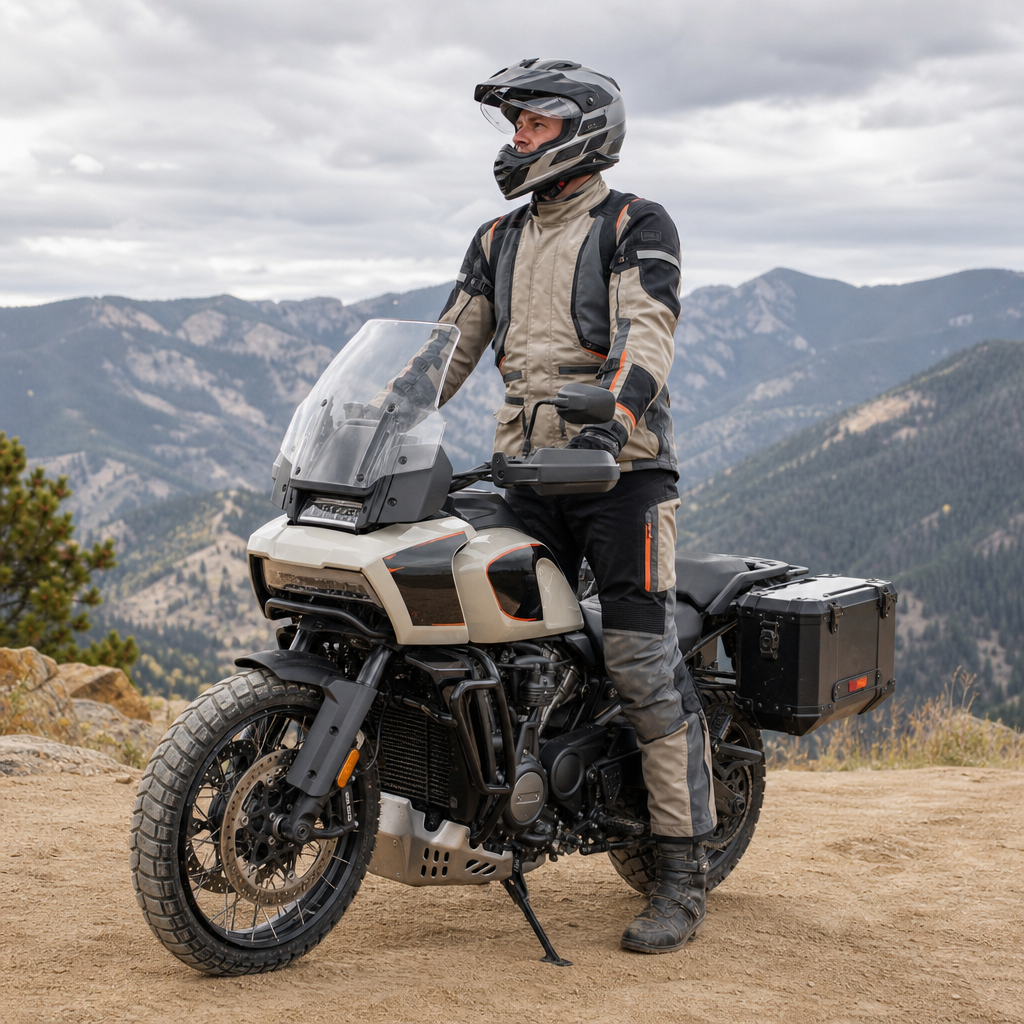
The Pan America 1250 uses the liquid-cooled Revolution Max engine, a high-compression V-twin with substantial starting demands compared with older air-cooled Harley platforms. It also carries an electronics package that can include adaptive ride height, multiple ride modes, cornering ABS, traction control, a TFT display, and common owner-added accessories. On bikes like this, voltage stability during start-up and while idling with accessories matters. A healthy lithium battery helps because LiFePO4 chemistry typically holds voltage higher under cranking load than aging AGM batteries do.
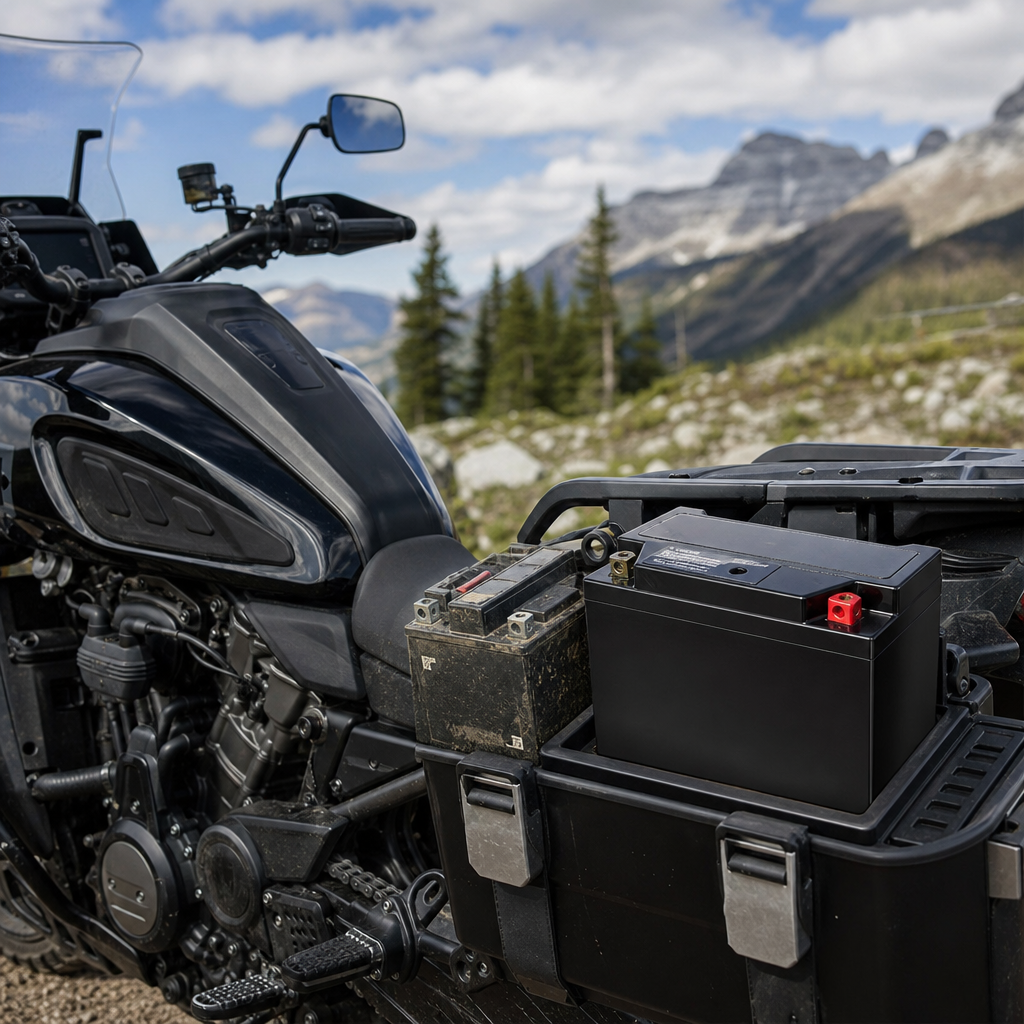
Weight reduction is another practical benefit. Most AGM batteries in this class weigh roughly 8 to 14 pounds, while a premium LiFePO4 replacement can cut that nearly in half or better depending on case size and internal capacity. On a 500-plus-pound adventure motorcycle, that alone will not transform handling, but battery weight sits high enough in the chassis that riders can notice slightly easier low-speed corrections, especially when the bike is loaded with luggage. More importantly, lower weight comes without compromising durability when the battery is properly secured against shock and vibration.
From experience, the real gain is consistency after the bike sits for days or weeks. Adventure motorcycles are often used seasonally, and many owners stack on parasitic draw from alarm systems, GPS mounts, USB chargers, and communicators. Lithium batteries self-discharge more slowly than lead-acid batteries, so stored bikes retain usable charge longer. That does not make them immune to drain, but it does reduce the pattern where a Pan America starts strongly on Friday, sits two weeks, and suddenly cranks sluggishly on the next ride.
How to choose the right 2027 lithium battery
The correct battery is the one that fits the Pan America tray, delivers enough real capacity, and works with the bike’s charging voltage range. Start with dimensions and terminal layout, then evaluate amp-hour rating, continuous discharge capability, peak cranking output, integrated BMS protections, and manufacturer support. Trusted brands in this segment include Antigravity, Shorai, NOCO, and Fire Power, though exact fitment should always be confirmed against current model-year data rather than generic “fits Harley ADV” marketing copy.
A common buying mistake is focusing on lead-acid equivalent claims. A battery marketed as “18Ah equivalent” may not have 18 actual amp-hours of storage. For bikes with modest accessory loads and frequent riding, that can still work. For Pan America owners running heated gear, auxiliary lights, and navigation equipment, actual capacity matters more than headline cranking numbers. If the bike is used in cold climates, choose a battery with a robust BMS and enough capacity headroom to handle repeated starts after the cells warm internally.
| Selection factor | What to look for | Why it matters on Pan America 1250 |
|---|---|---|
| Case size and terminal orientation | Exact tray fit, secure padding, correct polarity | Prevents cable strain, vibration damage, and installation errors |
| Actual capacity | Sufficient real amp-hours, not only “PbEq” claims | Supports repeated starts and accessory loads on travel days |
| Cranking output | Strong burst current with stable voltage | Helps spin the high-compression Revolution Max confidently |
| BMS protection | Overcharge, over-discharge, balance, short-circuit, low-temp safeguards | Reduces failure risk in variable weather and storage conditions |
| Charging compatibility | Accepts the bike’s regulator output range | Avoids chronic overvoltage or undercharging problems |
In plain terms, buy the largest high-quality lithium battery that fits cleanly without forcing the cables, and prioritize real technical data over flashy equivalent ratings. If a manufacturer cannot clearly state charging range, capacity, protection functions, and fitment dimensions, that is a warning sign.
Charging system compatibility and installation details
Before installing any lithium battery, verify charging behavior at the terminals with a calibrated multimeter. Measure resting voltage, starting voltage drop, idle charging voltage, and charging voltage around 3,000 to 4,000 rpm with lights and common accessories on. Most LiFePO4 motorcycle batteries want a charging system that stays within a controlled range, commonly around the mid-14-volt area. If the regulator overshoots, the battery may rely on BMS cutoff for survival, which is not a healthy long-term strategy.
The Pan America’s modern electrical system is generally better suited to lithium than older motorcycles with erratic regulators, but you should still confirm your individual bike. Inspect terminals for corrosion, ensure clean ground connections, and check that the battery tray isolates the case from chafing. I strongly recommend dielectric protection on exposed terminal hardware and proper torque on fasteners because loose battery connections on electronically dense motorcycles produce strange symptoms, from dash resets to intermittent no-start conditions that mimic sensor faults.
Use a lithium-compatible charger, not an old desulfating lead-acid tender. Many premium maintainers from CTEK, OptiMate, and NOCO now have dedicated LiFePO4 modes. The reason is simple: charging profiles differ, and some lead-acid recovery modes can damage lithium packs or confuse the BMS. If the bike will sit for long periods, disconnect accessory drains or use a smart maintainer approved by the battery manufacturer. Also note a cold-weather trait: some lithium batteries need a brief warm-up load before delivering full output. Turning the key on for a short period can help wake the cells in near-freezing conditions.
Performance, ergonomics, and travel use in the real world
As a performance recipe, the battery upgrade is not about horsepower. It is about reducing friction in ownership. A Pan America that starts instantly, supports accessories without voltage sag, and sheds several pounds in an upper chassis location feels easier to live with on every ride. That matters for ergonomics because rider confidence is affected by far more than seat shape or bar position. When the bike fires immediately at a remote fuel stop, when heated gear stays stable in bad weather, and when electronics remain predictable during low-speed maneuvering, fatigue drops.
This is why the page sits naturally inside model-specific ergonomics and performance recipes. On the Pan America, practical performance includes rider workload, not just acceleration or suspension travel. A stronger battery can make stop-and-go touring less stressful when fans, lights, and charging ports are all active. It can also support add-ons that change comfort directly, such as heated seats, inflators, communication hubs, and luggage power modules. These are not theoretical gains; they shape how long a rider can stay focused and comfortable on a thousand-mile weekend.
There are limits, and they should be stated clearly. Lithium batteries generally cost more upfront than AGM options. They can be less forgiving if deeply discharged, and charging below freezing is a known concern unless the battery has built-in low-temperature protection or self-heating features. For riders in extremely cold regions who commute year-round, a high-quality AGM may still be the practical choice. But for most Pan America owners, especially those riding mixed pavement and dirt in three-season conditions, current lithium technology is now mature enough to be the better upgrade.
How this battery recipe connects to the wider Harley-Davidson hub
A sub-pillar hub should do more than answer one question; it should help riders see how one modification affects the rest of the motorcycle. On the Pan America 1250, battery choice intersects with accessory planning, rider comfort, luggage systems, suspension setup, and even recovery strategy in remote travel. If you are building a complete ergonomics and performance package, the battery upgrade belongs near the beginning because it supports so many downstream changes. Extra lighting, navigation towers, heated apparel controllers, tire inflators, and camp charging setups all depend on a stable electrical foundation.
It also complements other Harley-Davidson model-specific recipes. Riders comparing seat upgrades, handlebar positioning, footpeg changes, wind management, and touring luggage should consider electrical headroom at the same time. In workshop practice, I have seen owners solve comfort problems with heated gear and navigation improvements faster than with mechanical changes alone, but those solutions only work when the charging system and battery are matched properly. That is why this article functions as a hub: it frames the battery not as an isolated part swap, but as a core enabler for adventure-focused customization.
The key takeaway is straightforward. A Pan America 1250 battery upgrade to 2027 lithium tech is worth doing when you choose a LiFePO4 unit with real capacity, a quality BMS, confirmed fitment, and proven charging compatibility. Install it carefully, charge it correctly, and evaluate it as part of the bike’s broader ergonomics and performance strategy. Done right, the result is easier starting, less weight, better accessory support, and a more dependable travel motorcycle. Use this article as your starting point, then map your next Pan America upgrades around the electrical demands of how you actually ride.
Frequently Asked Questions
Is a lithium battery really a worthwhile upgrade for the Harley-Davidson Pan America 1250?
Yes, for many riders it is one of the most practical upgrades you can make. The Pan America 1250 already carries a heavy electrical and electronic workload, from ride modes and sensors to ABS, TFT display functions, and adventure-touring accessories like heated gear, auxiliary lights, GPS units, and charging ports. A modern lithium iron phosphate, or LiFePO4, battery can improve starting performance, reduce overall weight, and hold voltage more consistently during high-demand situations. That matters on a bike like the Pan America because strong, stable cranking voltage helps the electronics and starter system work together more confidently, especially in cold weather or after the bike has been sitting.
The other major benefit is power delivery. Compared with many conventional lead-acid batteries, a quality lithium unit tends to maintain a higher usable voltage under load. That often translates to faster starter motor engagement and less sluggishness during cold starts. Riders who use their Pan America for travel, off-pavement exploration, or seasonal riding also appreciate the lower self-discharge rate, which means the battery can sit longer without losing as much charge. The key is choosing a battery designed specifically for powersports use, with a built-in battery management system where appropriate, proper terminal hardware, and a capacity rating that matches real-world adventure use rather than just marketing claims. When selected and installed correctly, the upgrade can deliver noticeable gains in starting confidence, accessory support, and long-term convenience.
What should I look for when choosing a 2027-era lithium battery for the Pan America 1250?
The most important factors are chemistry, fitment, true starting performance, and charging compatibility. For this application, lithium iron phosphate is the preferred chemistry because it is much more thermally stable and better suited to motorcycle starting duty than other lithium formulations. You want a battery with dimensions that properly fit the Pan America 1250 battery box, secure terminal placement that works with the stock cables, and enough cold cranking output to handle the demands of a large-displacement V-twin. It is also wise to prioritize brands that publish honest specifications, including actual amp-hour or equivalent capacity, cranking amps, operating temperature range, and whether the battery includes internal protection electronics.
Do not shop by weight savings alone. A battery that is impressively light but undersized can create hard starting, voltage dips, and poor accessory performance. For an adventure bike, reserve capacity matters. If you run heated grips, heated apparel, fog lights, USB charging, or communications gear, choose a lithium battery that offers a strong balance of cranking power and usable capacity. Many newer lithium designs marketed toward 2027 technology standards also include improved balancing circuits, stronger case construction, and more resilient low-temperature behavior. Those are meaningful improvements for riders who expose the bike to vibration, moisture, altitude changes, and overnight temperature swings. In short, pick a LiFePO4 unit from a reputable manufacturer that matches the Pan America’s physical space, electrical requirements, and real riding mission, not just a generic “fits many bikes” listing.
Will the Pan America 1250 charging system work properly with a lithium battery?
In most cases, yes, but this is the part of the upgrade that deserves the most attention. The Pan America 1250’s charging system was engineered around a modern motorcycle electrical architecture, and many lithium iron phosphate batteries are perfectly happy in systems that charge within an appropriate voltage range. The crucial step is verifying that the bike’s regulator-rectifier output falls within the battery manufacturer’s recommended charging window. Most powersports LiFePO4 batteries expect a charging range that typically lands in the mid-14-volt area, and sustained overcharging is what you want to avoid. Before installing the new battery, it is smart to check charging voltage at idle and at elevated rpm with a reliable multimeter.
You should also think about how the bike is used. If the motorcycle has added electrical accessories, a history of charging irregularities, or signs of parasitic draw, solve those issues before blaming or stressing a new lithium battery. A lithium battery is not a bandage for a weak charging system, corroded ground path, or a failing regulator. It is also important to use an appropriate battery charger or maintainer. Many old-school lead-acid trickle chargers use charging profiles that are not ideal for lithium chemistry. A charger specifically designed for LiFePO4 batteries is the safer choice, especially for storage or recovery charging. As long as the Pan America’s charging system is healthy and the battery is chosen with correct voltage requirements in mind, the combination is usually very successful.
How does a lithium battery affect cold-weather starting and adventure travel reliability?
This is where expectations need to be realistic and informed. A good lithium battery can provide excellent cranking performance, but lithium iron phosphate behaves differently than lead-acid in cold conditions. In very low temperatures, the battery may initially seem weaker because internal resistance is temporarily higher. The common technique is to “wake” the battery by applying a small load for a short time, such as turning the ignition on or briefly using the lights, before cranking the engine. As the cells warm internally, available power improves quickly. Once riders understand this behavior, many find cold starts entirely manageable, and in moderate conditions lithium can feel stronger and more immediate than stock.
For adventure travel, reliability depends less on the battery being lithium and more on the system being well planned. Secure mounting is essential because off-road vibration can punish a poorly fitted battery. Use the correct spacers so the case does not shift in the tray, make sure terminals are tight and properly supported, and inspect cable routing so nothing is pulling on the posts. If your travel includes remote regions, it is smart to carry a compact jump starter approved for motorcycle use and to understand your battery’s minimum charging thresholds. Also remember that while lithium batteries generally resist self-discharge well, they do not like being deeply over-discharged. Leaving accessories on overnight can be more damaging than with some lead-acid setups. For riders who prepare carefully, lithium works very well on the Pan America 1250 and can be a strong upgrade for real-world adventure use.
What is the best installation process for upgrading the Pan America 1250 to lithium technology?
The best installation is methodical rather than rushed. Start by confirming the replacement battery’s dimensions, terminal orientation, and spacer requirements before removing the old unit. Turn the motorcycle fully off, remove access panels as needed, disconnect the negative terminal first, then the positive, and lift the old battery out carefully. Before fitting the new one, clean the battery tray, inspect for moisture or abrasion points, and check the cable ends for corrosion or looseness. This is the ideal moment to evaluate the condition of the main ground connection and make sure the charging leads and accessory connections are tidy. A premium battery upgrade cannot compensate for neglected terminals or poor grounding.
When installing the lithium battery, ensure it is firmly supported in the tray with the supplied foam or fitment blocks so it cannot move during aggressive riding or off-road impacts. Connect the positive lead first, then the negative, and torque terminal hardware to the battery maker’s recommendation without overtightening. If you have multiple accessory leads, stack them carefully so the terminal bolts seat flat and secure. After installation, verify static battery voltage, start the motorcycle, and then measure charging voltage to confirm the system is behaving correctly. Finally, take the bike on a short test ride and recheck terminal tightness afterward. This upgrade is most successful when treated as a complete electrical tune-up: correct battery selection, clean connections, secure mounting, verified charging output, and proper charger support for long-term maintenance. Done that way, moving the Pan America 1250 to modern lithium tech is not just a parts swap, but a meaningful reliability upgrade.