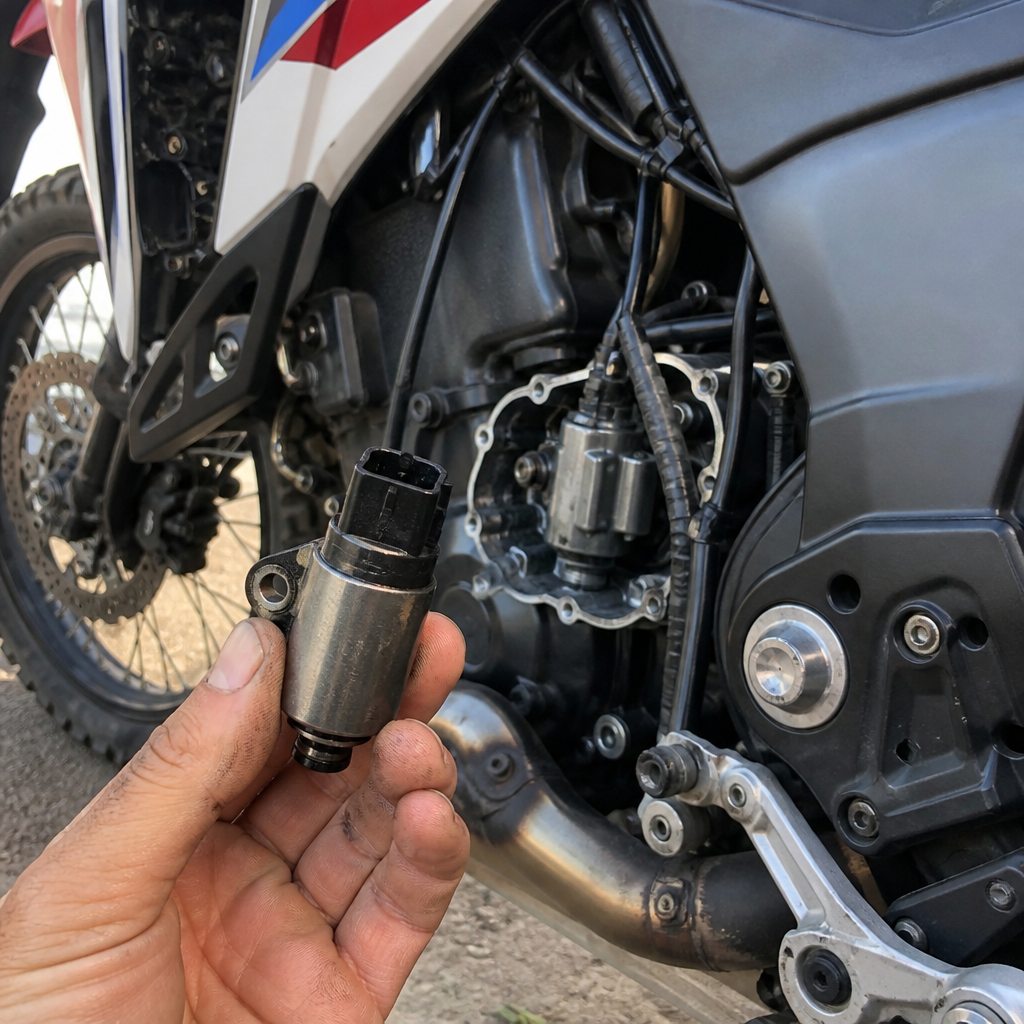
The Honda NT1100 is built for long-distance composure, but any rider needs a clear plan for the rare moment when the DCT throttle appears to stick and the bike keeps driving when it should be settling. In practical terms, a stuck throttle on the NT1100 can mean the twist grip does not return cleanly, the ride-by-wire system continues to command opening, or the transmission remains engaged while engine speed stays higher than expected. Because this model combines Honda’s 1084 cc parallel twin with Dual Clutch Transmission, electronic throttle control, selectable riding modes, and safety systems such as HSTC and ABS, emergency shutdown procedure is not just about turning a key. It is about reducing torque, preserving stability, and stopping without creating a second problem. I have worked through DCT service procedures, cable and switch diagnostics on Honda road bikes, and workshop inspections after contamination, handguard interference, and incorrect fastener replacement caused control issues. The lesson is consistent: rider response matters more than theory in the first three seconds, and preventive maintenance matters more than luck afterward. This guide explains what to do immediately, why the NT1100 behaves the way it does, and how the JIS fastener standard, DCT maintenance routines, and metric-specific service quirks fit together into one disciplined approach to safety and ownership.
Immediate emergency shutdown steps on a Honda NT1100 DCT
If your Honda NT1100 DCT throttle sticks, the priority is to remove drive force while keeping the motorcycle balanced and predictable. Roll the throttle fully closed first, even if it feels ineffective, because a partially returning grip can still reduce torque. At the same time, apply both brakes progressively and firmly, keeping the bike upright. Do not grab a handful of front brake mid-corner; stand the bike up if possible and brake in a straight line. Use the engine stop switch immediately if acceleration continues. On modern Honda controls, the red stop switch is designed for exactly this situation and will cut the engine faster than reaching for the ignition key. If traffic and lane position allow, steer toward a safe shoulder or escape path while braking.
On a DCT model, riders often ask whether shifting will help. The direct answer is yes, sometimes, but it is secondary to braking and using the stop switch. Tap neutral if conditions allow and the transmission accepts the command, but do not waste time staring at the dash waiting for confirmation. If the bike is still driving forward, maintain braking pressure. Pulling in a clutch lever is not an option on DCT, which is why muscle memory from manual bikes can delay the right response. Practice locating the stop switch without looking. In rider training sessions and post-incident reviews, that one habit consistently shortens response time.
Once stopped, switch the ignition off, set the side stand only when stable, and move clear of traffic. Do not restart until you identify a likely cause. A sticky throttle can be intermittent, and intermittent faults are the ones that trap riders into “it seems fine now” decisions. If the bike has contacted a curb, dropped onto a handguard, or fallen on the right side, assume the control assembly needs inspection before further riding.
Why a throttle can stick on the NT1100 even with modern electronics
Many riders hear “ride by wire” and assume a stuck throttle is impossible. It is not. The Honda NT1100 uses an electronic throttle control system, but the rider still operates a mechanical twist grip and return mechanism. Friction at the grip tube, interference from aftermarket bar ends or handguards, contamination under the throttle housing, crash damage, and misrouted wiring can all make the grip fail to snap shut normally. In workshop checks, I have seen heated grip installations pinch wiring at the switch housing just enough to drag on the tube. I have also seen over-tightened bar-end weights compress the throttle sleeve and create a slow return after a cold morning wash left residue between parts.
Electronic causes exist too. A faulty throttle position sensor, corrupted switch signal, or actuator problem can create abnormal response, although these failures often trigger warning lights or limp-home behavior rather than wide-open acceleration. The crucial distinction is between a physical throttle grip that does not return and an engine that remains at elevated rpm because the DCT is managing engagement differently than the rider expects. On the NT1100, drive modes, idle control strategy, and low-speed clutch behavior can make the bike feel “busy” at parking-lot speed. That does not excuse a true sticking condition, but it does mean diagnosis should be precise.
A useful test after the motorcycle is safe and off is simple: with the bars centered and then turned fully left and right, the throttle should rotate smoothly and snap back decisively. Any hesitation is a defect until proven otherwise. Honda service standards are unambiguous here. Controls must move freely through the full steering range with no cable, housing, or accessory interference.
How DCT behavior changes your emergency response and diagnosis
Honda’s Dual Clutch Transmission changes both rider workload and fault interpretation. In normal operation, DCT preselects gears using two clutches, allowing smooth automatic shifts or manual paddle inputs. During a throttle anomaly, that means the engine can continue transmitting torque without the rider having a clutch lever to disengage it instantly. The NT1100’s system is refined, but refinement creates false confidence if a rider has never rehearsed an emergency shutdown. The correct sequence is brake, stop switch, steer to safety. Neutral selection is helpful when available, but it is not the primary control.
Diagnosis also differs from a conventional motorcycle. A rider may describe “the throttle stuck,” when the underlying issue is abrupt clutch engagement at low speed, an idle learn problem after battery work, or jerky response in a mode with sharper throttle mapping. Check for stored fault codes first, then verify throttle tube movement, switchgear operation, battery voltage, and software-related relearn procedures specified by Honda. Low system voltage can produce strange electronic behavior across modern motorcycles, and DCT models are especially sensitive to battery health because the transmission control logic, actuators, and sensors all rely on stable voltage during startup and operation.
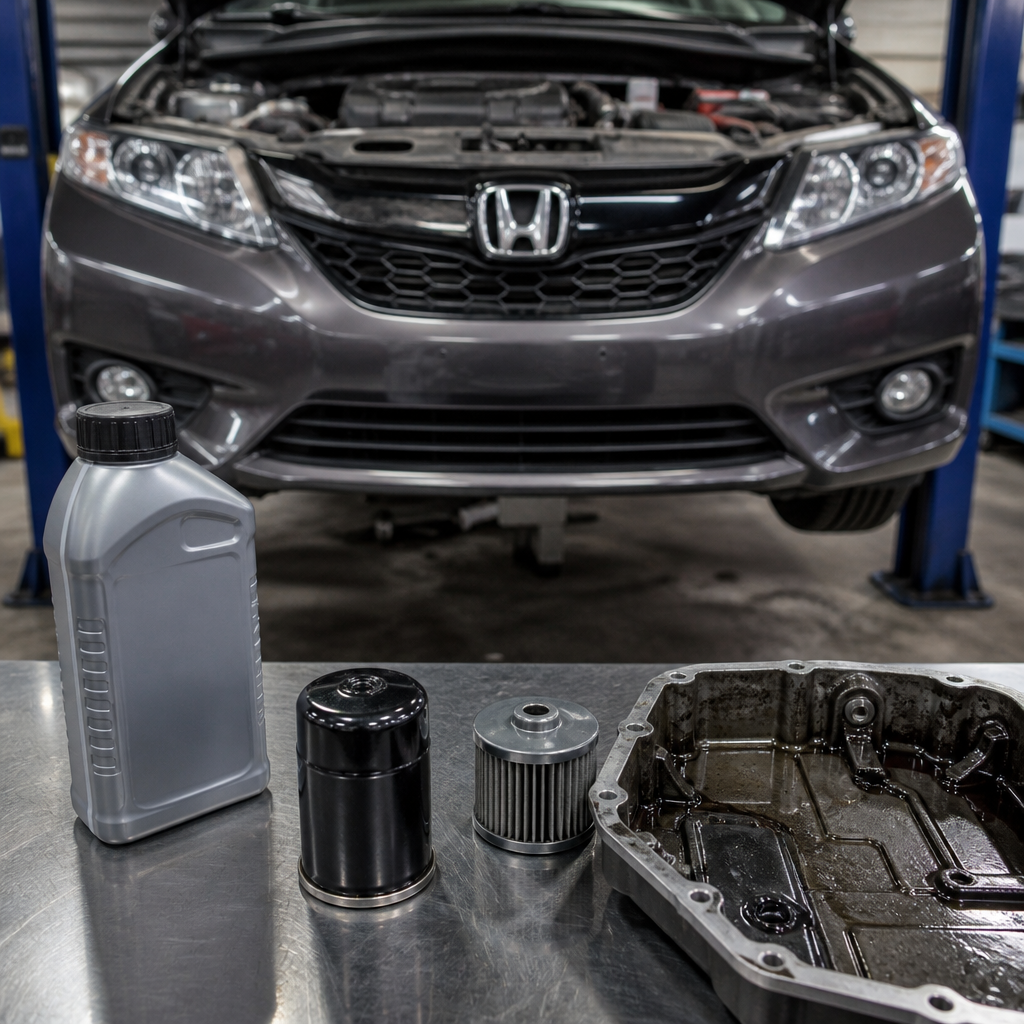
Owners should also understand the role of maintenance intervals. DCT on Honda’s 1100 platform is durable, but fluid condition matters. Correct oil grade, proper fill level, and filter service support hydraulic control quality and clutch performance. Poor maintenance will not usually cause a literal stuck throttle, yet it can worsen drivability symptoms and muddy the diagnosis after an incident.
The JIS standard and why it matters on Honda controls
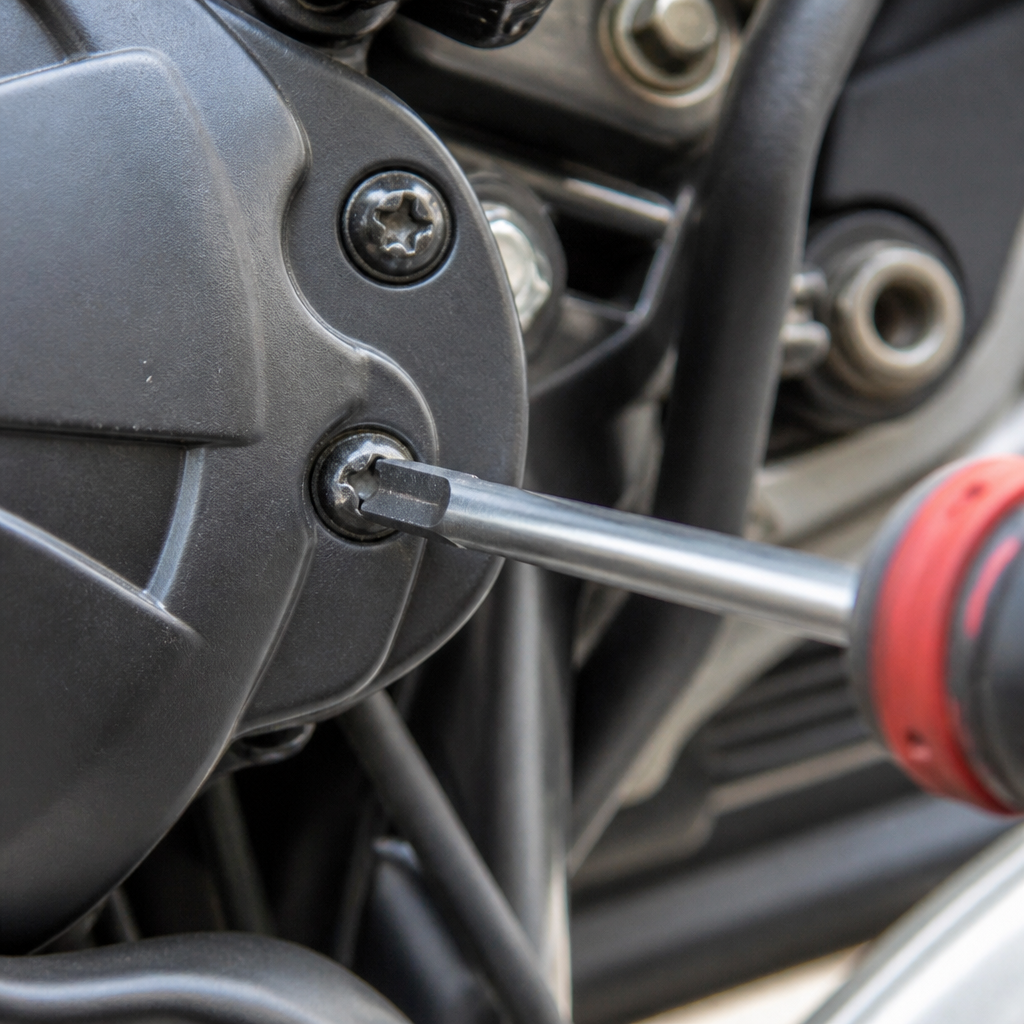
One of the most common self-inflicted maintenance errors on Japanese motorcycles starts with assuming every cross-head screw is Phillips. Honda uses Japanese Industrial Standard fasteners extensively on switchgear, reservoir covers, body panels, and intake-related hardware. A JIS driver has different flank geometry and seats more positively in these screws than a Phillips bit, which is intentionally designed to cam out under higher torque. Use the wrong driver on a throttle housing screw and you can strip the head, slip into the plastic, or fail to tighten the housing evenly during reassembly.
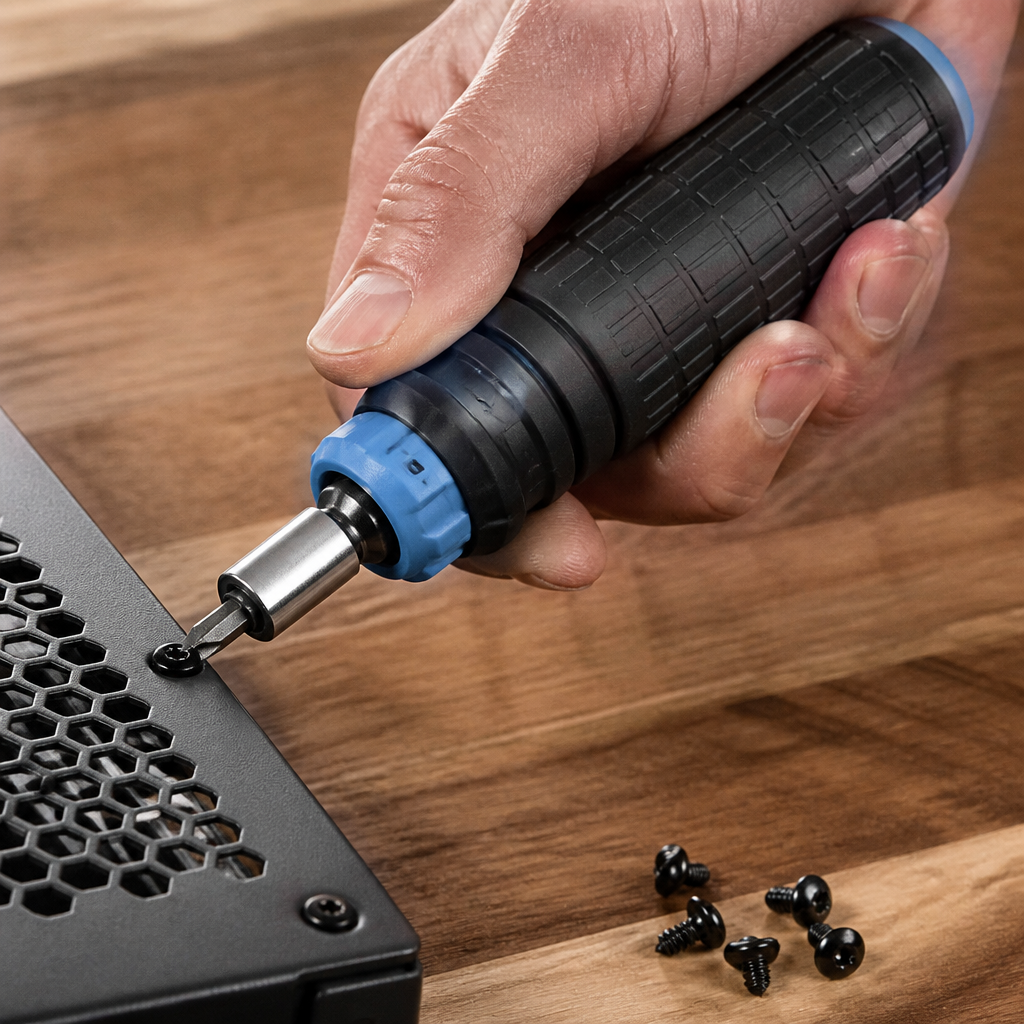
That matters directly on the NT1100 because switch housing alignment, throttle tube clearance, and bar-end installation all affect return action. I have repaired bikes where a damaged cross-head screw prevented proper housing clamping, letting the assembly shift and rub the rotating tube. Vessel, Hozan, and JIS-compatible bits from Wiha or Moody are worth owning if you service Japanese motorcycles. The goal is not collector trivia. It is preserving fastener integrity so critical controls can be disassembled, cleaned, torqued, and verified correctly.
JIS awareness also extends to expectations about torque. Small metric fasteners threading into switch housings and body clips do not need brute force. Honda workshop procedures prioritize correct seating, routing, and witness checks more than raw tightness. Over-tightening often creates the exact binding riders later blame on electronics.
Metric quirks every NT1100 owner should know
Metric service culture is more than using millimeters instead of inches. On the Honda NT1100, “metric quirks” means understanding ISO metric bolt sizing, Japanese fastener head dimensions, torque values in N·m, and clearance checks that are small enough to be distorted by the wrong tool. A 10 mm wrench may fit, but side-loading a cheap open-end on a control fastener can round it when a six-point socket would not. Thread pitch matters too. Replacing a lost flange bolt with a similar-looking hardware store screw can bottom out early, distort a bracket, or interfere with steering lock and cable sweep.
Owners should keep a metric-first toolkit: 8, 10, 12, 14, and 17 mm sockets; 3, 4, 5, 6, and 8 mm hex keys; a low-range torque wrench; JIS drivers; feeler gauges; and a vernier caliper. Use threadlocker only where Honda specifies it. Grease should be chosen by function, not habit: silicone-safe products around some plastics and electrical boots, appropriate waterproof grease at pivots, and no random aerosol overspray near throttle components. When riders mix inch tools, generic screwdrivers, and guesswork torque, small control problems become safety issues quickly.
| Area | Common mistake | Correct metric/JIS practice | Why it matters |
|---|---|---|---|
| Throttle housing | Using Phillips bits | Use JIS driver, tighten evenly | Prevents stripped screws and tube drag |
| Bar-end weights | Over-tightening by feel | Torque to spec in N·m | Avoids compressing throttle sleeve |
| Accessory wiring | Routing by shortest path | Check full lock-to-lock clearance | Stops binding and switch interference |
| Fastener replacement | Substituting similar inch hardware | Match metric diameter, pitch, and length | Maintains alignment and steering clearance |
DCT maintenance practices that reduce risk
Preventive maintenance for the NT1100 should focus on controls, power supply, software state, and transmission support systems. Start with the throttle assembly at every service. Inspect for smooth action, free return, grip-to-bar-end clearance, and any witness marks showing rub. Turn the bars lock to lock while opening and releasing the throttle. Next, inspect handguards, heated grips, phone mount brackets, and auxiliary switchgear. Aftermarket accessories are involved in a disproportionate number of sticking-throttle complaints because they alter spacing Honda validated at the factory.
Battery condition deserves equal attention. Before chasing exotic causes, confirm the battery passes a load test and charging voltage is within spec. Weak batteries can disrupt startup calibration and produce inconsistent electronic behavior. Follow Honda’s service schedule for oil and filter changes using the specified viscosity and quality standard. DCT clutch control depends on clean, stable lubrication. If shifting quality deteriorates, do not ignore it. Address it before adding another variable to any throttle concern.
Software and adaptation procedures matter after battery replacement, ECU updates, or extended storage. Use a recognized scan tool or dealer diagnostic system when required. Generic OBD readers can miss manufacturer-specific data. I recommend documenting symptoms precisely: ambient temperature, ride mode, engine temperature, steering position, accessory status, and whether the problem happened during acceleration, deceleration, or a tight turn. That information shortens diagnosis dramatically and prevents unnecessary parts swapping.
Inspection points after a throttle-stick incident
After any emergency shutdown event, inspect the motorcycle systematically before riding again. Begin at the right handlebar: check the throttle tube, grip alignment, bar-end clearance, switch housing screws, and front brake lever guard if fitted. Remove accessories one by one if there is any doubt. Then inspect harness routing around the steering head. Look for stretched wires, tight zip ties, or added USB and heated gear leads crossing the OEM path. Turn the bars slowly while feeling for rising friction.
Next, scan for crash or tip-over evidence. A minor garage drop can tweak a handguard bracket just enough to contact the grip under full right lock. Check return operation with the engine off and again with the bike powered on, watching for warning lights. If the NT1100 logged a fault, retrieve it instead of guessing. Confirm idle behavior once warm. An engine hanging slightly above normal idle can indicate air leaks, contamination, or electronic control issues even if the grip itself returns freely.
Finally, decide conservatively. If you cannot reproduce smooth, repeatable, snap-back action every time, the motorcycle is not road ready. Towing to a qualified Honda technician is cheaper than testing an uncertain fix in traffic.
Building this sub-pillar: what related topics owners should study next
This hub sits within a broader maintenance and technical encyclopedia because stuck-throttle response is only one piece of competent NT1100 ownership. The related subjects that deserve deeper reading are JIS screwdriver selection and identification, DCT oil and filter service intervals, battery testing for electronically managed motorcycles, torque wrench use in low-range metric fasteners, accessory fitment checks after installing heated grips or handguards, and steering-head wiring routing standards. Each of those topics connects directly to the same outcome: preserving reliable control feel and avoiding preventable faults.
The practical takeaway is simple. Know the shutdown sequence before you need it, maintain the DCT and electrical system on schedule, and treat JIS and metric details as safety-critical rather than fussy workshop trivia. The Honda NT1100 is a stable, sophisticated tourer when serviced correctly. Review your controls this week, verify your toolkit, and correct any accessory interference before your next ride.
Frequently Asked Questions
What should I do first if my Honda NT1100 DCT seems to keep accelerating or the throttle does not settle?
The first priority is to stay calm and stop the motorcycle from driving the rear wheel. On the Honda NT1100 with DCT, do not waste precious seconds repeatedly rolling the grip shut if the bike is still pulling. Instead, keep the motorcycle upright, look ahead, and immediately apply firm, progressive braking with both brakes while you move to cut drive. If you can, use the engine stop switch right away. On a ride-by-wire motorcycle, shutting the engine down is often the fastest way to stop unwanted drive. If conditions are stable and you have enough control to do it smoothly, select neutral if the system allows it, because that can separate engine power from the rear wheel. Keep in mind that the DCT may behave differently depending on speed and load, so the kill switch remains the most direct response when the motorcycle continues to propel itself unexpectedly.
Once the engine is stopped, maintain braking pressure and steer to a safe place off the road. Do not release the brakes just because the engine has quit; the bike may still have momentum, and if the transmission remains engaged briefly, control still matters. After you are safely stopped, switch the ignition fully off, assess traffic around you, and do not restart the motorcycle until you understand what happened. A true emergency response on the NT1100 is simple: brake, kill the engine, steer safely, and stop. Practicing that order mentally before you ever need it can make a major difference in a real event.
How do I safely shut down a Honda NT1100 with DCT during a throttle-sticking emergency?
The safest shutdown method is usually the engine stop switch, because it is fast, intuitive, and does not require you to remove a hand from the bars for long. If the engine continues revving or the bike keeps driving when it should not, roll off the throttle, apply both brakes firmly, and press the kill switch without delay. Riders sometimes hesitate because they worry about losing power assistance or upsetting the chassis, but in a runaway-drive situation, stopping engine output is the correct priority. The NT1100 is a heavy sport-tourer, and the DCT can keep the machine feeling committed to motion if torque is still being delivered. Eliminating that torque quickly is the safest move.
Avoid overcomplicating the process by hunting through menus or trying multiple fixes while moving at speed. If you have enough control and road space, you may also try selecting neutral, but that should never replace immediate shutdown if the bike is clearly continuing to accelerate or resist deceleration. After the bike is stopped, leave the ignition off and inspect only when you are in a safe location. Check whether the throttle grip physically returns normally, whether handguards or accessories are interfering with movement, and whether anything around the right bar end is binding. If the problem is not obvious and minor, the bike should be transported for professional diagnosis rather than ridden further.
Can I use neutral on the NT1100 DCT if the throttle sticks, or should I rely only on the kill switch?
Neutral can help, but it should be treated as a secondary option rather than your primary emergency plan. On a conventional manual motorcycle, pulling the clutch is the standard way to disconnect engine power instantly. On the Honda NT1100 DCT, there is no manual clutch lever to grab in a panic, so riders need a different reflex. That reflex should be the engine stop switch. Selecting neutral may work depending on speed, throttle state, and what the DCT logic is doing at that moment, but it is not always the quickest or most dependable first action in a high-stress event.
If you are still in control and conditions allow, attempting to select neutral while braking can reduce drive to the rear wheel. However, if the bike is surging, traffic is close, or you are already using most of your attention to maintain control, go straight to braking and engine shutdown. The reason is simple: a successful kill switch input stops combustion immediately, while a neutral request still depends on system response. Afterward, a technician can determine whether the issue involved the twist grip, throttle tube interference, electronic throttle control, switchgear, software logic, or a DCT-related engagement problem. In an actual emergency, do not debate which option is theoretically cleaner. Use the one that removes power most reliably and immediately.
What can cause a Honda NT1100 throttle to feel stuck or make the bike keep driving when it should slow down?
Several different faults or conditions can create the impression of a stuck throttle on the NT1100, and it is important to understand that not all of them involve the grip itself. A mechanical issue at the throttle tube is one possibility, such as friction from a bar-end weight, handguard contact, a mispositioned heated-grip component, contamination, damage after a tip-over, or overly tight accessory installation. In those cases, the twist grip may physically fail to snap back cleanly. But because the NT1100 uses ride-by-wire, the motorcycle can also feel as though the throttle is stuck even when the grip rotates normally. An electronic throttle control fault, a sensor disagreement, wiring damage, or abnormal ECU behavior could command or maintain opening differently than the rider expects.
The DCT adds another layer to the rider’s perception because continued engine braking, delayed disengagement, or persistent transmission engagement can make the motorcycle feel as though it is still “driving” even if the throttle opening is not actually increasing. High idle behavior, certain riding modes, or a mismatch between expected and actual deceleration can also confuse the moment. That is why diagnosis should include both the mechanical throttle return and the electronic control system. A proper inspection should cover throttle grip movement, cable-free twist sensor function, bar-end clearance, switchgear operation, fault codes, ECU data, and DCT behavior. If the motorcycle has shown any genuine unwanted-drive symptom, it deserves careful professional evaluation before returning to service.
Should I keep riding after a brief throttle or DCT runaway symptom if the bike seems normal again?
No, not if the motorcycle truly continued to drive, failed to decelerate as expected, or gave you reason to believe the throttle command did not reduce when requested. Even if the symptom clears within seconds, that does not mean the underlying cause has resolved. Intermittent faults are often the most dangerous because they create uncertainty and may not repeat when you are trying to demonstrate the problem. On a touring motorcycle like the Honda NT1100, which is often used far from home and at motorway speeds, a recurring throttle or drive-control fault can quickly become serious. If you have experienced a credible runaway-drive event, the smart move is to stop riding and arrange inspection or recovery.
Before anyone works on the bike, make a careful note of what happened. Record your speed, whether you were accelerating or decelerating, the riding mode, whether cruise control was active if applicable, whether you touched the neutral control, whether the engine stop switch solved the issue immediately, and whether the throttle grip physically felt sticky or returned normally. Also note any warning lights, messages, or unusual transmission behavior. That information can be extremely useful for a dealer or technician trying to isolate an intermittent problem. The bottom line is straightforward: if the NT1100 gave you a real reason to think the throttle or DCT did not obey your input, do not dismiss it as a one-off. Have it inspected professionally before you trust it again on the road.