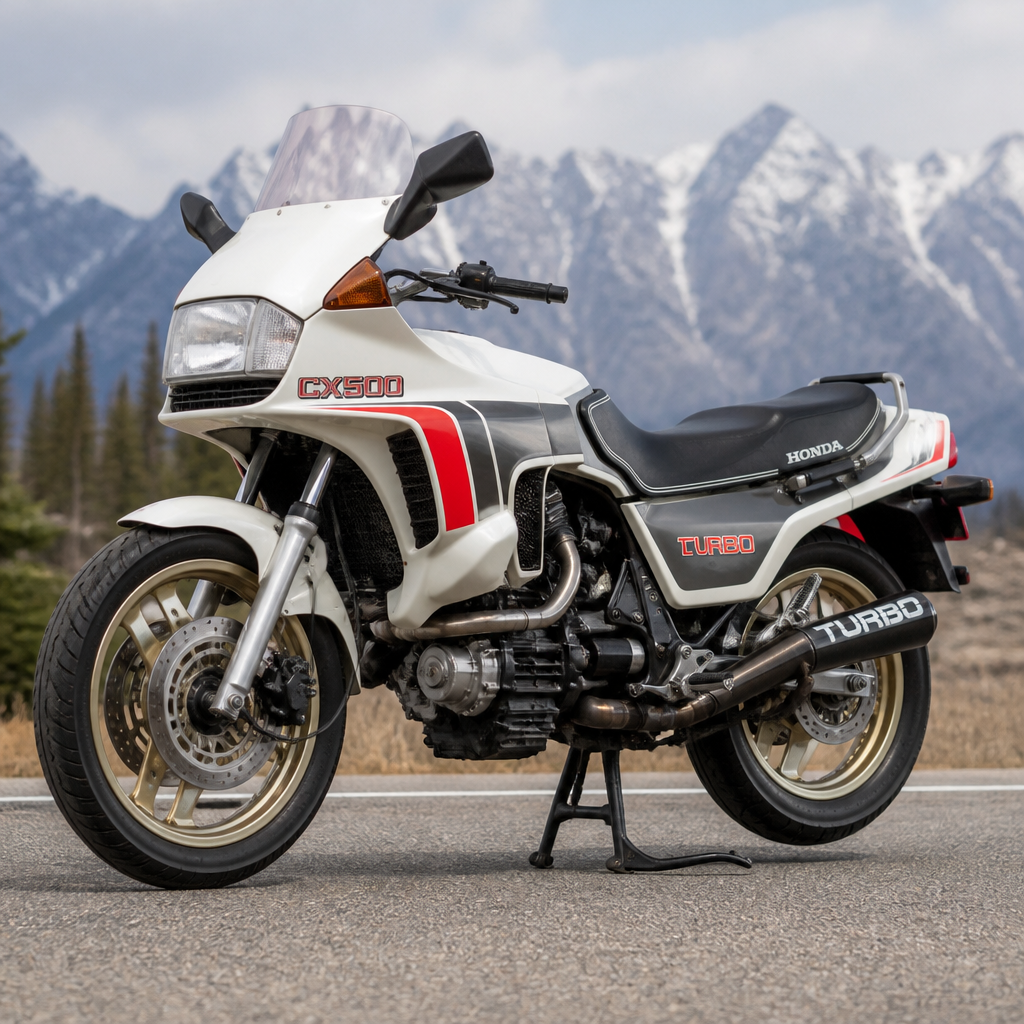
The Honda CX500 Turbo occupies a rare place in motorcycle history because it combines the broad usability of a transverse V-twin touring platform with the engineering ambition of early forced induction, electronic fuel injection, and extensive model-specific control hardware. For restorers working within metric classics built from 1970 to 1994, it is more than a collectible oddity. It is a masterclass in how Japanese manufacturers pursued performance, emissions compliance, and drivability before modern engine management made turbocharging routine. Reviving one correctly demands far more than cleaning carburetors and replacing tires. It requires understanding the machine as a system: lubrication, boost control, fuel delivery, ignition strategy, cooling, chassis aging, and parts interchange all affect whether a CX500 Turbo becomes a dependable road bike or an expensive garage ornament.
In practical terms, a restoration guide for metric classics is a structured process for returning a motorcycle to safe, reliable, and historically appropriate condition while respecting original engineering and known failure points. On the CX500 Turbo, that means assessing originality, verifying engine health before disassembly, tracing vacuum and pressure circuits exactly, inspecting the turbocharger for shaft play and oil contamination, and treating the electrical harness as a restoration priority rather than an afterthought. This article serves as the hub for restoration guides covering metric classics from 1970 through 1994 by using the CX500 Turbo as the anchor example. It explains the methods, decisions, and standards that apply across fuel-injected turbos, carbureted superbikes, shaft-drive tourers, and homologation specials from Japan’s most inventive era.
Why the CX500 Turbo matters within metric classic restoration
Honda introduced the CX500 Turbo for 1982 after years of experimenting with turbocharging in automobiles and motorcycles. The base CX platform already differed from the mainstream UJM formula, using a liquid-cooled 80-degree V-twin mounted across the frame with shaft final drive. The Turbo version added a small IHI turbocharger, programmed fuel injection, bespoke pistons, revised intake routing, strengthened internals, and aerodynamic bodywork built around the new technology. In period, it was expensive, complicated, and misunderstood. Today, those same traits make it historically important. It marks the point where Japanese motorcycle engineering moved beyond mechanical simplicity and into integrated electronic control.
That matters to anyone restoring metric classics because the CX500 Turbo teaches the disciplines required for the entire 1970–1994 category. A 1970s SOHC four may reward conventional mechanical refurbishment, but later classics increasingly rely on sensors, regulator-rectifier health, model-specific connectors, and emissions-era fuel systems. I have found that owners who succeed with a turbo Honda usually approach every classic more methodically afterward. They document connector pinouts, pressure-test cooling systems, measure charging output under load, and compare replacement parts against factory specifications instead of assuming anything round and threaded will fit. The CX500 Turbo rewards that level of rigor and punishes shortcuts immediately.
As a hub topic, “Restoration Guides for Metric Classics: 1970–1994” should be organized around systems rather than brands alone. The main categories are acquisition inspection, engine and induction, fuel and ignition, cooling and lubrication, electrical rehabilitation, chassis and suspension, braking systems, cosmetic preservation, sourcing parts, and post-restoration commissioning. The CX500 Turbo touches every one of them. It also raises questions owners search for directly: Is the turbo reliable? Can modern seals and hoses solve most issues? What parts are unique to the model? How do you restore originality without making the bike too fragile to ride? Clear answers to those questions form the backbone of a useful restoration encyclopedia.
Assessment first: what to inspect before buying or tearing down
The smartest restoration starts with evidence gathering. Before removing a single fairing fastener, confirm frame and engine numbers, inspect for crash damage around the steering head and turbo bodywork mounts, and determine whether the machine is complete. On a CX500 Turbo, missing trim can be more serious than cosmetic neglect because model-specific ducting, heat shielding, plenum parts, and pressure-related hoses are difficult to replace. A bike with poor paint but complete induction hardware is usually a better candidate than a shiny example assembled from mixed CX500, CX650, and aftermarket parts.
Compression testing alone is not enough. Use a leak-down test to identify ring, valve, or head-gasket issues before assuming the turbo is the source of low performance. Check cooling system integrity because overheating on neglected liquid-cooled metric bikes often warps related components and hardens seals. Drain the oil and inspect for fuel dilution or metallic debris. Pull the intake plumbing to look for pooled oil, damaged compressor blades, or signs that a foreign object entered the turbo. Rotate the shaft gently; slight movement can be normal, but contact marks on the housing are not. Examine the exhaust manifolds and collector for cracks because boost leaks and exhaust leaks alter spool characteristics and fueling behavior.
| Inspection Area | What to Check | Why It Matters |
|---|---|---|
| Turbocharger | Shaft play, blade damage, oil residue, housing contact marks | Determines rebuild viability and protects rare intake parts |
| Fuel injection | Injector condition, pump operation, pressure regulator, connectors | Poor fueling can mimic engine failure and damage pistons under boost |
| Cooling system | Radiator corrosion, hoses, water pump seals, thermostat | Heat control is essential on liquid-cooled forced-induction engines |
| Electrical harness | Grounds, charging output, brittle insulation, spliced wires | Electronic control depends on stable voltage and clean signals |
| Chassis completeness | Fairings, ducts, brackets, heat shields, airbox pieces | Unique body and intake parts are costly and hard to source |
This same inspection logic applies across the wider 1970–1994 metric category. On a GSX-R, completeness of bodywork and airbox matters. On a Yamaha FJ or Kawasaki GPz, charging system health and unobtainable trim matter. On early EFI machines, hacked wiring often creates more labor than engine wear. The hub principle is simple: buy the most complete, least modified example you can afford, then verify system health before making a restoration plan.
Engine, turbo, and fuel system restoration without guesswork
Once the project is documented, the engine and induction system should be restored as a matched set. The CX500 Turbo’s engine cannot be evaluated properly if the turbocharger, intake plenum, injectors, sensors, and exhaust plumbing are treated as separate jobs. Start with service literature and factory torque values. Bag and label every pressure hose, banjo fitting, bracket, and clamp orientation. On this model, routing errors can produce boost leaks, false sensor readings, or heat exposure that shortens hose life. Replace old rubber with fuel- and heat-rated material that meets modern standards, but keep internal diameters and wall stiffness close to original specifications. A hose that collapses under vacuum or swells with oil mist will create drivability problems that look electronic.
Turbocharger restoration deserves specialist evaluation. If the shaft shows excessive radial or axial play, if seals leak heavily, or if the wheels show damage, send the unit to a rebuilder experienced with vintage IHI motorcycle turbos. Generic automotive assumptions do not always transfer because packaging, heat exposure, and oil supply characteristics differ. Clean the oil feed and return passages thoroughly and verify unrestricted drainage; many smoking complaints on vintage turbos begin with coked oil lines or poor return flow rather than failed seals alone. Prime the oil system on first startup to avoid dry bearing damage. These are non-negotiable steps.
The fuel system on the CX500 Turbo is where many restorations stall. Stale fuel corrodes pumps, gums injectors, and contaminates pressure regulators. Remove and clean the tank properly, inspect for internal rust, and renew filters before bench-testing components. Injectors should be ultrasonically cleaned and flow-tested by a shop that provides before-and-after data. Fuel pressure must be confirmed with an accurate gauge, not guessed from pump sound. Electronic fuel injection from the early 1980s is robust when supplied with correct voltage, pressure, and sensor inputs, but it becomes erratic when owners substitute universal pumps, bypass relays, or ignore weak grounds.
Across metric classics from 1970 to 1994, this section connects directly to other sub-guides. Carbureted models need careful synchronization and float-height control. Early EFI models need connector rehabilitation and sensor verification. Turbocharged machines add pressure integrity and thermal management. The shared rule is to restore the induction system to measured specifications instead of chasing symptoms after assembly.
Electrical, cooling, chassis, and preservation decisions that determine success
The electrical system is the hidden foundation of any serious metric classic restoration. On the CX500 Turbo, aged connectors, oxidized grounds, weak charging output, and heat-damaged insulation can create intermittent faults that masquerade as injector, ignition, or boost-control problems. Begin by testing stator output, regulator-rectifier performance, battery condition, and voltage drop across major circuits. Clean grounds down to bare metal and protect them with appropriate dielectric treatment where specified. If the harness has been previously modified, compare each branch against the factory wiring diagram and repair with correct terminals and open-barrel crimping tools rather than household connectors. A reliable classic motorcycle depends on stable voltage more than most owners realize.
Cooling and lubrication deserve equal attention because the CX500 Turbo runs hotter than naturally aspirated contemporaries. Replace all coolant hoses if their age is unknown, inspect the radiator core for blockage, and test the thermostat and fan switch rather than replacing parts blindly. Water pump seals on older metric Hondas merit close inspection for leakage and shaft wear. Use the specified coolant chemistry and bleed the system correctly. On the lubrication side, choose an oil appropriate for wet clutches and turbocharged service, then shorten initial change intervals after recommissioning to remove contaminants loosened during the first hours of operation. I have seen freshly restored classics saved by a second oil change at 100 miles.
Chassis restoration should be approached as safety engineering, not cosmetic improvement. Rebuild forks with correct bushings and seals, inspect fork tubes for pitting in the travel zone, and evaluate rear shock performance honestly; original dampers are often finished even when they still hold air. Steering-head bearings, swingarm bearings, and wheel bearings should be cleaned, measured, and replaced if roughness appears. Brake systems from this era nearly always need full hydraulic service: master cylinder kits, caliper seals, stainless pistons if corrosion is present, fresh hoses where legal and appropriate, and careful rotor measurement against service limits. Tires must match intended use and rim specification, not period appearance alone.
Preservation choices separate a museum restoration from a rider restoration, and neither is automatically superior. Original paint, factory fastener finishes, warning labels, and date-coded components add historical value when they can be retained safely. At the same time, hidden upgrades such as modern brake hose materials, improved charging components from reputable suppliers, or ethanol-resistant fuel lines can make a machine usable without compromising its character. The best practice across 1970–1994 metric classics is reversible improvement. Save removed original parts, document every change, and avoid cutting frames or bodywork unless structural repair absolutely requires it.
Parts sourcing is often the deciding factor. Use factory fiches, marque forums, model registries, specialist breakers, and cross-reference databases to identify what is genuinely unique and what can be sourced through bearings, seals, and standard industrial sizes. For Hondas, CMSNL, David Silver Spares, and vintage-focused owner groups are common starting points; for broader metric classics, specialists in Mikuni, Keihin, Nippon Denso, Showa, and Tokico components can solve problems that generic sellers cannot. The restorer’s advantage in this era is that many service items remain available if you know the original manufacturer, specification, and supersession path.
Building a restoration roadmap for the entire 1970–1994 metric classics category
The CX500 Turbo shows why a strong hub page matters. Every restoration in the 1970–1994 metric classic range benefits from the same roadmap: verify completeness, establish mechanical baseline, restore fuel and ignition to specification, rebuild cooling and lubrication systems, rehabilitate the harness, overhaul brakes and suspension, then commission the motorcycle with measured tests instead of hope. The details change between a turbo Honda, an oil-cooled Suzuki, an air-cooled Kawasaki, or a V-four Yamaha, but the sequence should stay disciplined because errors compound quickly on aging machines.
The key takeaway is that complexity is not the enemy. Unknown modifications, poor documentation, and rushed assembly are the real threats. The Honda CX500 Turbo rewards restorers who treat it as a fully integrated engineered system, and that mindset transfers to every metric classic worth saving. If you are building a restoration plan for any Japanese motorcycle from 1970 to 1994, start with documentation, inspect methodically, prioritize safety and electrical integrity, and preserve originality wherever practical. Use this hub as your starting framework, then move into model-specific guides for engine types, fuel systems, suspension families, and parts sourcing. Done properly, these machines do not just survive restoration; they return to the road with the character, reliability, and technical meaning that made them significant in the first place.
Frequently Asked Questions
Why is the Honda CX500 Turbo considered such an important motorcycle in restoration and collector circles?
The Honda CX500 Turbo matters because it was not simply a standard motorcycle with a turbocharger bolted on as a marketing exercise. It represented a serious factory attempt to solve a difficult engineering problem: how to deliver forced-induction performance in a street motorcycle while preserving reliability, emissions compliance, and day-to-day usability. Honda started with the CX platform’s longitudinally mounted, liquid-cooled V-twin and then built an unusually sophisticated system around it, including electronic fuel injection, dedicated intake and exhaust hardware, boost control strategies, and numerous model-specific components. That combination makes the CX500 Turbo a landmark machine in the evolution of production motorcycle technology.
For restorers, its importance goes beyond rarity. The bike captures a transitional period when Japanese manufacturers were experimenting with electronics, advanced fueling, and integrated powertrain management long before such systems became routine. It is a rolling case study in early engine control logic, packaging compromises, thermal management, and turbocharger durability. In practical terms, that means restoring one teaches lessons that apply to many metric classics from the 1970 to 1994 period, especially those with early electronic ignition, fuel delivery controls, and increasingly specialized emissions-era hardware.
Collectors also value the CX500 Turbo because it occupies a very specific niche in motorcycle history. It is both an ambitious technical statement and a machine shaped by the real-world limitations of its era. The result is a motorcycle with a distinctive riding experience, recognizable styling, and a level of mechanical complexity that separates it from more conventional contemporaries. Its significance lies in being one of the clearest examples of how a major manufacturer tried to engineer around the traditional drawbacks of turbocharged motorcycles rather than simply chasing peak power figures.
What makes the CX500 Turbo more complex than a typical early-1980s motorcycle?
The CX500 Turbo is more complex because nearly every major system had to be adapted to work with pressurized induction. On a conventional naturally aspirated motorcycle of the same era, intake, fueling, ignition, and exhaust systems could be comparatively simple and tolerant of minor wear or imperfect tuning. On the CX500 Turbo, those systems had to operate as a coordinated package. The turbocharger changed airflow behavior, heat load, combustion pressures, and throttle response, so Honda used electronic fuel injection and dedicated control components to maintain rideability and engine safety across varying operating conditions.
That complexity extends to the hardware itself. The engine, plenum, throttle body arrangement, sensors, fuel system, turbo plumbing, and exhaust were designed with the forced-induction application in mind. There are also control elements specific to the model that restorers must understand as a system rather than as isolated parts. A fault that appears to be a fueling issue may actually stem from intake leakage, sensor drift, degraded wiring, poor grounding, weak charging output, or a boost-related mechanical problem. In other words, diagnosis requires a systems approach, not just parts swapping.
Another factor is age-related deterioration. Early electronic systems can be surprisingly robust, but they are also vulnerable to corrosion, hardened seals, brittle connectors, old vacuum lines, contaminated fuel circuits, and modifications made by previous owners who may not have understood the original design. Because the CX500 Turbo was never as common as standard Hondas of the era, replacement parts and donor bikes are less abundant, and model-specific expertise is narrower. That means restorers must combine electrical troubleshooting, mechanical inspection, and historical accuracy in a way that is more demanding than with many simpler vintage motorcycles.
What are the most common restoration challenges with a Honda CX500 Turbo?
One of the biggest challenges is dealing with machine-specific parts that are either scarce, expensive, or no longer readily available. Turbocharger components, intake plumbing, bodywork, fuel injection hardware, sensors, control modules, and certain trim items can be difficult to source in correct and serviceable condition. Unlike more common vintage motorcycles where a wide aftermarket exists, the CX500 Turbo often requires patient searching, networking with marque specialists, and careful assessment of used parts. In some cases, restorers must rebuild, refurbish, or sympathetically repair original components because direct replacements are not practical.
Fuel system rehabilitation is another major hurdle. Any motorcycle that has sat for years can suffer from varnish, corrosion, clogged passages, and degraded rubber parts, but the stakes are higher on a fuel-injected turbo bike. The pump, injectors, pressure regulation, tank condition, hoses, and electrical supply all need to be verified. A seemingly minor issue, such as a partially restricted injector or an unstable connection, can produce lean running or poor boost behavior that affects performance and engine longevity. Thorough cleaning, pressure testing, and inspection of every connection are essential rather than optional.
Electrical reliability also deserves close attention. The CX500 Turbo’s wiring, grounds, connectors, charging system, and control interfaces must all be in healthy condition for the motorcycle to run as intended. Heat, age, moisture, and previous repairs can create intermittent problems that are frustrating to trace. Many successful restorations begin with a methodical baseline: inspect the harness, clean and secure grounds, confirm charging output, test continuity where needed, and evaluate connectors for corrosion or looseness. Restorers who skip this stage often end up chasing symptoms instead of causes.
Finally, turbo-related mechanical health should never be assumed. The turbocharger, associated oil supply paths, seals, exhaust integrity, and intake tract must be evaluated carefully. Shaft play, leakage, cracked pipes, boost leaks, or poor lubrication can undermine the entire project. Because the motorcycle’s character depends on smooth and controlled boost delivery, any weakness in these areas will be very noticeable on the road. A proper restoration therefore involves more than making the bike run; it means ensuring that it runs in the controlled, balanced manner Honda originally engineered.
How should a restorer approach bringing a CX500 Turbo back to life without creating new problems?
The best approach is to resist the temptation to do a quick start-up and instead establish a complete mechanical and electrical baseline first. Begin by confirming the bike’s identity, originality, and completeness, because missing model-specific parts can alter the economics and difficulty of the project dramatically. From there, inspect the engine’s condition, cooling system, lubrication system, fuel tank, fuel delivery components, intake tract, turbocharger assembly, and wiring harness before introducing fresh fuel or attempting extended operation. This slow, disciplined process protects expensive components and helps separate pre-existing issues from problems created during recommissioning.
Documentation is extremely important. Factory service information, correct wiring diagrams, parts references, and photographs taken during disassembly can save enormous time later. On a machine like the CX500 Turbo, routing, connector placement, hose orientation, and bracket details are often more important than they first appear. Keeping detailed notes about test results, replacement parts, and changes made during restoration can also prevent confusion once the project reaches the tuning and road-test stages.
It is also wise to preserve as much original engineering as possible before considering modifications. The CX500 Turbo was designed as an integrated package, and changes to exhaust, intake, fuel pressure, or boost-related hardware can create drivability and reliability issues if they are not thoroughly understood. Restorers often achieve the best results by first returning the machine to stock operating condition. Once the bike starts, idles, charges, cools, and rides correctly in original form, any further decisions can be made from a position of knowledge rather than guesswork.
Perhaps most importantly, bring systems online in stages. Verify lubrication and cooling integrity, clean and test the fuel system, assess ignition and charging function, and confirm there are no obvious intake or exhaust leaks before road use. After initial running, monitor for heat-related electrical faults, fluid leaks, unstable idle behavior, and signs of poor fueling under load. Gradual recommissioning allows the restorer to catch problems early and avoid the kind of cascading failures that can turn a promising project into a costly setback.
Is the Honda CX500 Turbo practical to own and ride today, or is it mainly a display piece?
A properly restored CX500 Turbo can absolutely be ridden and enjoyed, but practical ownership depends on expectations. It is not the simplest vintage Honda to maintain, and it rewards owners who are comfortable with preventive maintenance, careful inspection, and occasional troubleshooting. If someone wants a low-effort classic for casual use with easy parts availability, there are more straightforward options. However, for enthusiasts who appreciate period technology and are willing to understand the machine on its own terms, the CX500 Turbo can be a very satisfying rider.
Its appeal on the road comes from the unusual combination of traits it offers. The underlying CX platform brings real-world usability, while the turbo system gives the bike a character unlike naturally aspirated middleweights of the same era. The riding experience is historically interesting as much as dynamically enjoyable, because you can feel Honda’s effort to make forced induction civilized rather than crude. That engineering intent is a large part of the bike’s charm today.
Ownership is most practical when the motorcycle is treated as a well-sorted specialty machine rather than as disposable transportation. That means staying ahead of fuel quality issues, maintaining the charging and cooling systems, preserving electrical connections, and paying attention to any changes in boost behavior, idle quality, or throttle response. It also means sourcing spares when opportunities arise, especially for hard-to-find model-specific items. Owners