The Honda CBR500R remains one of the most approachable fully faired sport twins on the market, and in 2026 its slip and assist clutch deserves careful attention because it shapes launch feel, lever effort, back-torque control, and long-term drivetrain durability. A slip and assist clutch uses angled cam ramps inside the clutch hub and pressure plate to do two jobs at once: the assist function pulls clutch plates together under engine torque for stronger engagement with lighter springs, while the slip function lets the clutch separate slightly during aggressive deceleration to reduce rear-wheel hop. On the CBR500R, that means smoother downshifts, a lighter lever in traffic, and more forgiving behavior for newer riders without sacrificing predictable drive out of corners.
Maintaining that system correctly matters more than many owners assume. I have seen otherwise healthy 471cc Honda twins develop notchy shifting, clutch drag, and inconsistent engagement simply because the wrong screwdriver chewed up a JIS screw, the wrong oil altered friction behavior, or basic metric measurements were skipped during inspection. This hub article explains the practical maintenance picture around the CBR500R clutch while connecting three related subjects that repeatedly trip up riders and home mechanics: the JIS standard used on many Japanese fasteners, the distinct service demands of Honda dual-clutch transmissions, and the metric conventions that govern torque values, wear limits, and thread sizing. Understanding those areas together prevents stripped hardware, incorrect parts choices, and expensive rework.
For 2026 owners, the context is straightforward. The CBR500R’s clutch design is robust, but motorcycles now live in mixed use: daily commuting, beginner training, delivery work, and occasional track days. That mix creates repeated heat cycles and varied riding styles, which can glaze friction plates, groove basket fingers, and accelerate cable wear if free play is ignored. At the same time, online advice often blends models and markets, so a rider reading about a DCT Africa Twin or a cross-plane Yamaha may apply bad assumptions to a conventional cable-actuated Honda clutch. This guide separates what is universal from what is model-specific, then shows where the CBR500R sits inside Honda’s broader maintenance ecosystem.
How the Honda CBR500R Slip and Assist Clutch Works
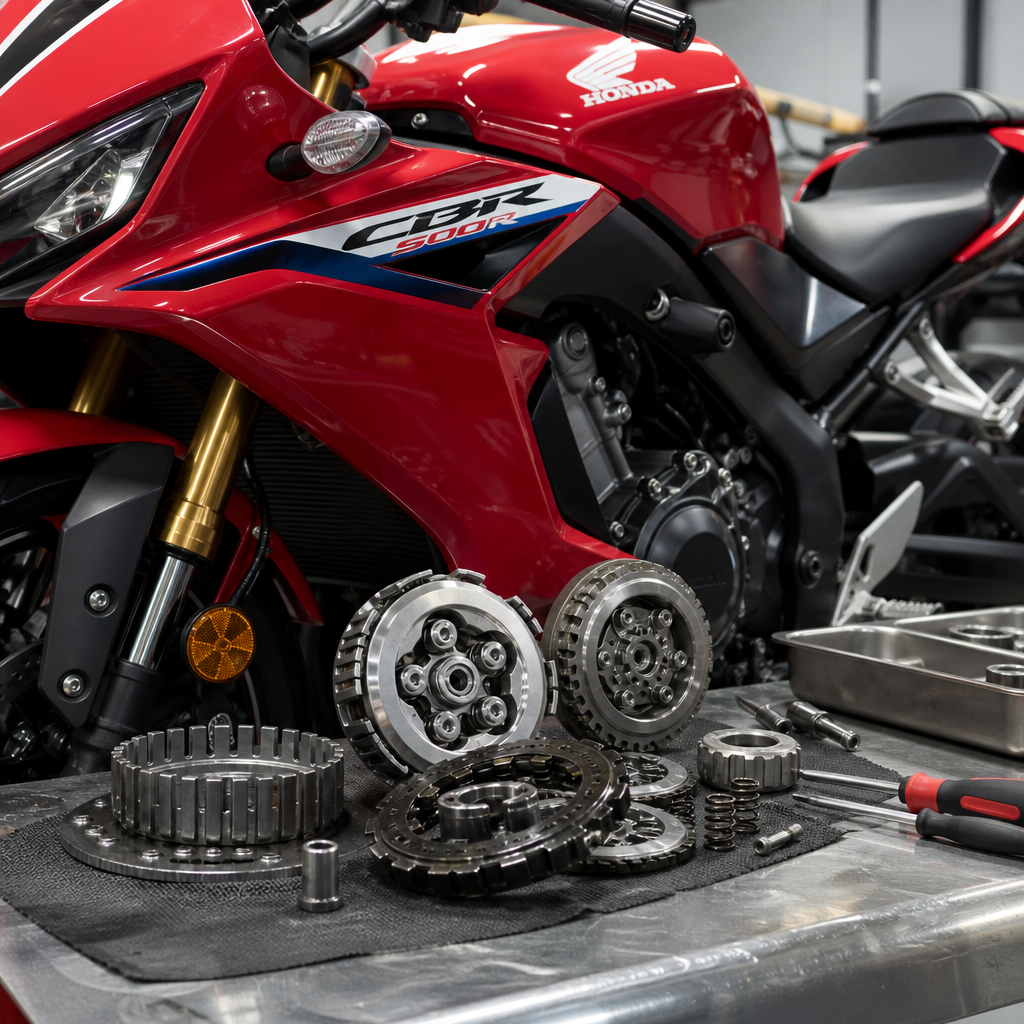
The CBR500R uses a wet multiplate clutch bathed in engine oil, with alternating friction plates and steel plates compressed by springs. In an assist-and-slipper arrangement, matching ramp profiles on clutch center components convert engine torque into extra clamping force during acceleration. Honda can therefore use lighter clutch springs, reducing lever effort. During abrupt deceleration or overly aggressive downshifts, reverse torque moves those ramps the opposite way, reducing plate pressure enough to let the clutch slip in a controlled manner. The practical result is stability. The rear tire is less likely to chatter, and the transmission sees less shock loading.
From a service standpoint, three symptoms deserve immediate attention: clutch slip under load, clutch drag at a stop, and inconsistent engagement point at the lever. Slip usually shows up in higher gears when revs rise faster than road speed under hard throttle. Drag appears when the bike creeps forward with the lever pulled in, often accompanied by a clunk selecting first. An engagement point that changes ride to ride may indicate cable stretch, contaminated oil, warped plates, or heat-related glazing. Start diagnosis with the simple items: lever free play, cable routing, oil grade, and external actuation smoothness. Internal disassembly should follow only after those checks.
Routine maintenance intervals depend on use, but inspection logic does not. At every oil change, verify lever free play, feel for rough cable operation, and pay attention to downshift smoothness. During major service, inspect cable strands, lubricate or replace the cable as needed, check release arm travel, and confirm the clutch cover area is dry. If you ride in stop-and-go traffic daily, practice launches repeatedly, or carry a passenger often, shorten your inspection cycle. Heat and repeated partial engagement wear clutches faster than steady highway miles do.
Core Maintenance Procedure and Wear Checks
When clutch inspection becomes necessary, work methodically. Drain the oil if required by your approach, remove obstructing bodywork, and loosen clutch cover fasteners in sequence. Use the correct gasket strategy: replace formed gaskets rather than relying on sealant unless the service procedure specifically permits it. Once the pressure plate is exposed, loosen spring bolts evenly in a crisscross pattern. Uneven release can distort parts or create misleading wear patterns. Keep friction and steel plates in exact order during removal because discoloration or abnormal wear on one plate can tell you where heat concentrated.
Measure everything in metric and compare findings to the official service limits for the exact model year. Friction plate thickness, steel plate warpage, clutch spring free length, and basket finger condition matter more than visual impressions alone. A plate can look usable yet measure below minimum thickness; a steel can look fine but fail a flatness check on a surface plate with a feeler gauge. Inspect the clutch boss and outer basket for notches where plate tabs contact the fingers. Light ridging can sometimes be dressed carefully, but deep grooving changes engagement and usually warrants replacement. Also inspect the judder components, if fitted in the stack, because incorrect reassembly can alter takeoff smoothness.
Oil choice is critical. The CBR500R wet clutch should use motorcycle-specific oil meeting the manufacturer’s viscosity guidance and a wet-clutch-compatible standard such as JASO MA or MA2. Automotive oils with friction modifiers can contribute to slip. I have corrected more than one “failing clutch” that only needed the right oil and a proper cable adjustment. After reassembly, torque bolts to specification using a calibrated wrench, refill with the correct oil volume, and recheck free play after a short warm-up ride because cables and covers settle slightly after service.
| Maintenance item | What to check | Common mistake | Best practice |
|---|---|---|---|
| Lever free play | Smooth movement and specified slack at the lever | Running zero free play | Adjust at lever and lower adjuster, then verify hot |
| Engine oil | Correct viscosity and wet-clutch compatibility | Using friction-modified automotive oil | Use motorcycle oil meeting Honda guidance and JASO MA/MA2 |
| Friction plates | Thickness, glazing, burning, uneven wear | Reusing plates by appearance alone | Measure each plate in millimeters and replace as a set when needed |
| Steel plates | Blueing, warpage, surface damage | Ignoring flatness checks | Inspect on a flat surface with feeler gauges |
| Basket and hub | Notching on fingers and spline wear | Filing deep grooves aggressively | Replace badly worn components to preserve smooth engagement |
| Fasteners and cover | Thread condition, gasket surfaces, torque | Overtightening small bolts | Use metric torque specs and tighten in sequence |
The JIS Standard and Why It Matters on Honda Motorcycles
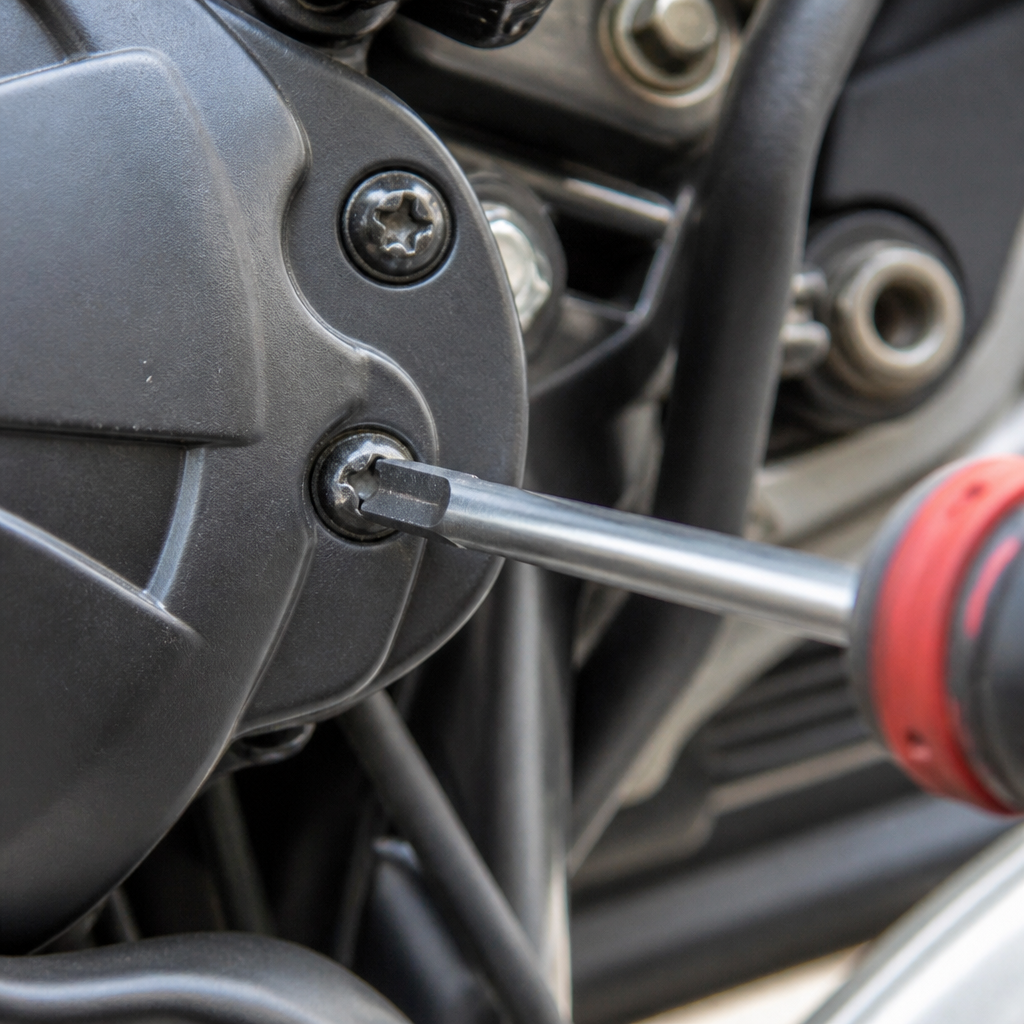
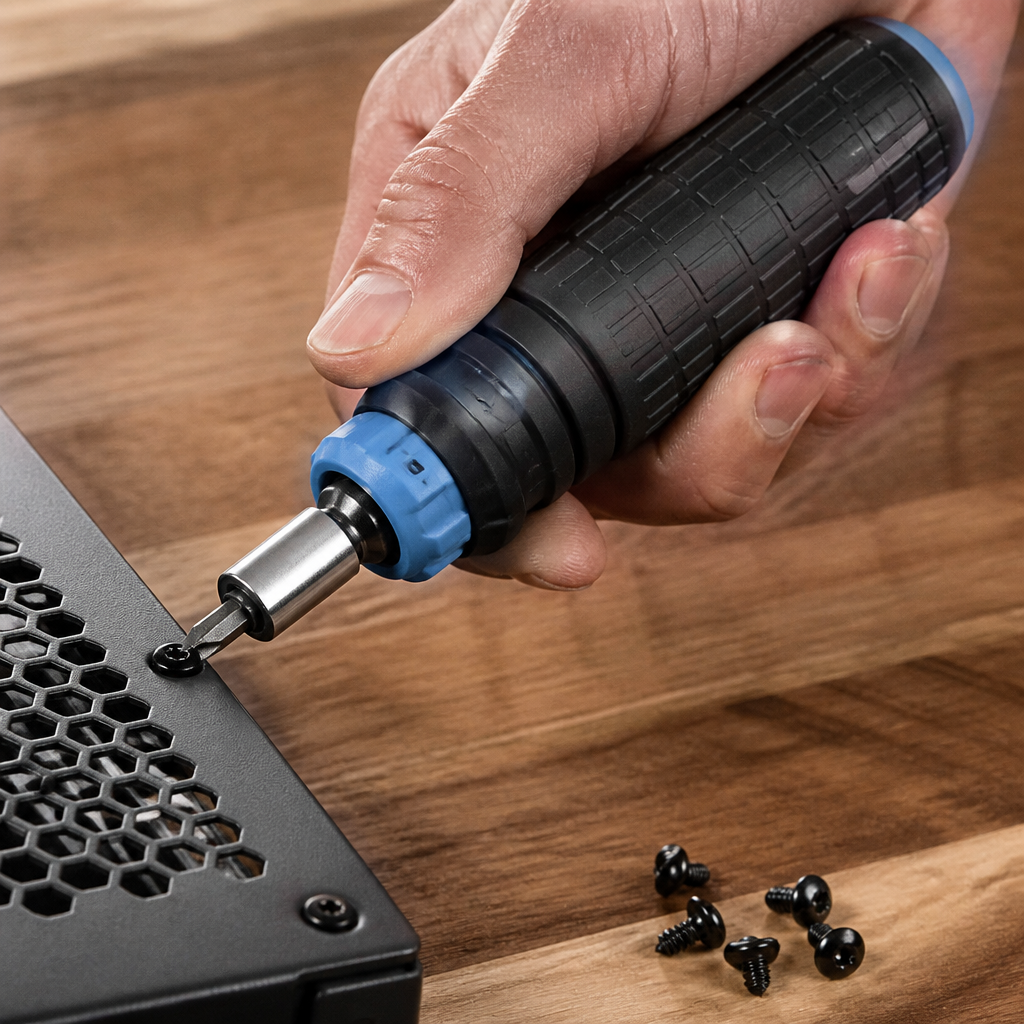
One of the most expensive “small” mistakes on Japanese motorcycles is assuming every cross-head screw is Phillips. Many Honda fasteners historically follow JIS, the Japanese Industrial Standard, with a driver geometry designed to resist cam-out differently from Phillips. On clutch covers, switchgear, carburetor-era hardware, and body fittings, the wrong driver rounds recesses quickly. Even on newer bikes with more hex fasteners, JIS knowledge still matters because owners often encounter legacy screws during accessory installation or when servicing adjacent components. Vessel, Hozan, and similar tool brands make proper JIS drivers and impact bits that fit far better than common hardware-store screwdrivers.
Why does that affect clutch maintenance specifically? Because damaged screw heads slow every job around the left side of the engine and tempt people into poor recovery methods such as locking pliers, chisels, or excess heat near seals and painted surfaces. If you remove a stubborn clamp screw or cover screw with the correct JIS bit in a hand-impact driver, the job stays controlled. If you strip it, a thirty-second task becomes drilling, extracting, retapping, and sourcing replacement hardware. On a precision assembly like a clutch cover, that risk is unnecessary. Use downward pressure, seat the bit fully, and break initial torque cleanly.
JIS awareness also extends to replacement choices. Many owners swap soft cross-head screws for stainless socket-head cap screws, which can be sensible if the grade and dimensions match the application. However, stainless is not automatically stronger, and galling can be a problem. Match thread pitch correctly, apply the specified lubricant or thread treatment only where appropriate, and respect torque values for aluminum cases. The point is not to replace every original fastener blindly; it is to understand why Honda used specific hardware and to preserve serviceability over the life of the motorcycle.
DCT Maintenance: What Applies, What Does Not, and Why It Still Belongs Here
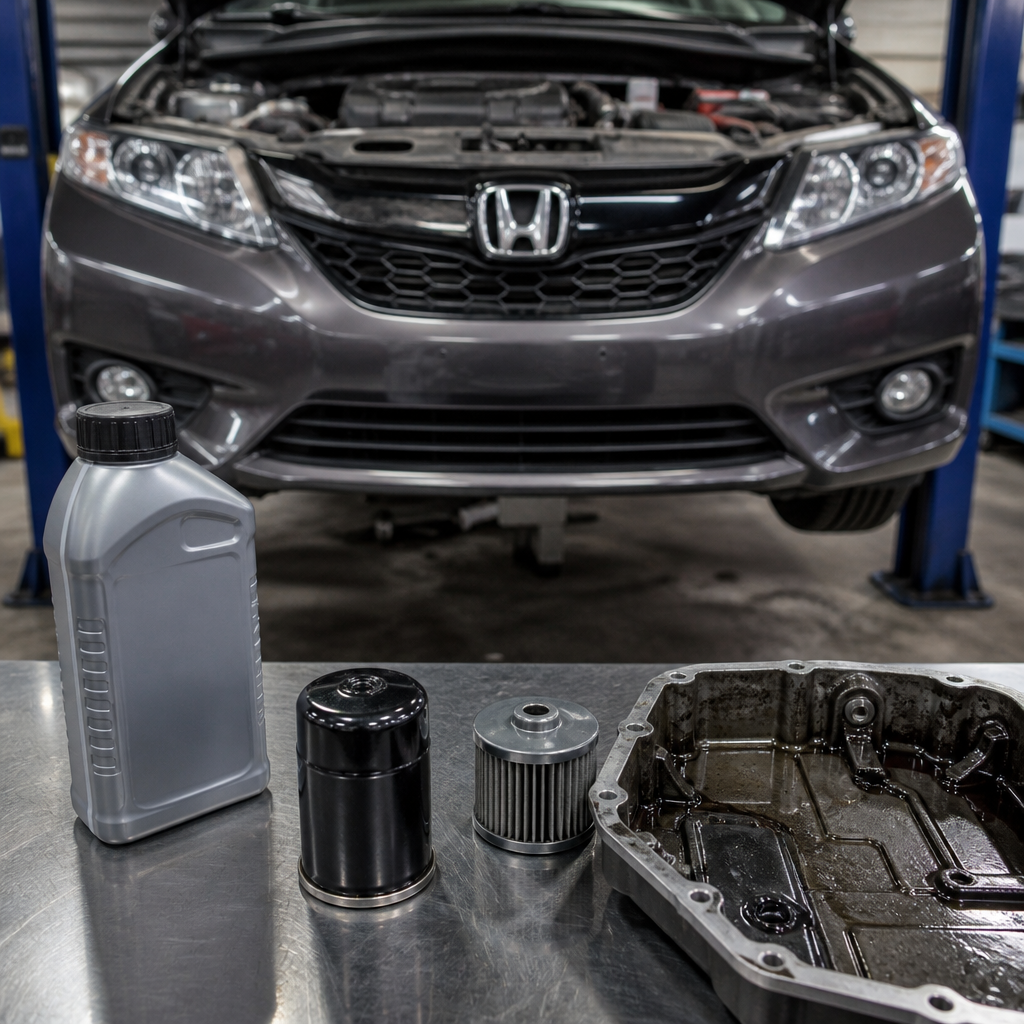
The Honda CBR500R does not use Honda’s Dual Clutch Transmission, yet DCT maintenance belongs in this hub because riders comparing Honda models often confuse DCT service concepts with conventional clutch care. A DCT system uses electronically controlled clutch packs, hydraulic circuits, sensors, and shift actuators to automate clutch engagement and gear changes. Maintenance priorities therefore shift toward fluid condition, filter changes where specified, software behavior, adaptation logic, and fault-code diagnosis. You do not adjust a hand lever on a DCT model because there is no rider-operated clutch lever to adjust. That distinction sounds obvious, but mixed forum advice causes real errors.
Here is the practical overlap. Both DCT units and the CBR500R’s manual wet clutch depend heavily on correct oil and clean, undamaged friction surfaces. Both punish neglect through heat, contamination, and poor shifting behavior. But diagnosis diverges quickly. On a DCT Africa Twin, harsh engagement might lead you toward hydraulic pressure checks, scan-tool work, or clutch initialization procedures. On a CBR500R, the same rider complaint usually starts with cable free play, plate condition, basket wear, and oil selection. Keeping those pathways separate saves time and prevents unnecessary parts replacement.
DCT maintenance also highlights Honda’s broader engineering philosophy: low lever effort, smooth engagement, and rider confidence are designed outcomes, not luxuries. The assist-and-slipper clutch on the CBR500R pursues those goals mechanically rather than electronically. For riders moving between Honda platforms, that perspective helps. You maintain the CBR500R clutch not merely to avoid failure, but to preserve the refinement Honda built into the bike in the first place.
Metric Quirks That Influence Accurate Service
This subtopic lives inside a metric technical encyclopedia for good reason. On the CBR500R, every meaningful clutch service value is metric: torque in newton-meters, thickness in millimeters, warpage in fractions of a millimeter, spring length in millimeters, and thread pitch in metric sizes. Converting casually to foot-pounds or inches can introduce errors, especially on small fasteners where a few newton-meters matter. I recommend reading the specification in metric, setting the torque wrench in metric, and measuring with metric calipers and feeler gauges. That eliminates conversion drift and aligns with how the machine was engineered.
Metric quirks also show up in fastener identification. An M6 bolt can have different head markings, flange styles, and lengths that look interchangeable until one bottoms out or clamps the wrong area. A cover bolt that is only a few millimeters too long can crack a case boss; one too short reduces thread engagement in aluminum. Thread pitch is equally important. Forcing the wrong pitch into a soft aluminum engine case is a fast route to helicoil repair. During disassembly, lay out bolts in order or use a cardboard template mirroring the cover pattern. That simple habit prevents many reassembly mistakes.
Another overlooked detail is tool sizing. A slightly loose 8 mm or 10 mm socket, worn hex key, or off-size aftermarket bit rounds metric hardware faster than people expect. Use quality six-point sockets on tight external fasteners and a torque wrench calibrated within its effective range. On small clutch spring bolts, for example, a large wrench used at the bottom of its scale is less accurate than a smaller inch-pound or low-range metric wrench. Precision matters because the engine cases, threads, and cover sealing surfaces are less forgiving than the steel hardware suggests.
Common Mistakes, Preventive Habits, and When to Escalate
The most common CBR500R clutch mistakes are straightforward: ignoring free play, using unsuitable oil, launching repeatedly with excessive slip, overtightening small cover bolts, and reusing borderline plates because they “still look okay.” Add in poor fastener handling and many clutch jobs become more expensive than necessary. Prevention is simpler than repair. Check lever feel weekly, especially during seasonal temperature changes. Replace a fraying cable before it binds. Warm the engine before judging clutch behavior. If shifting degrades suddenly after an oil change, verify the oil specification first.
Escalate the job when symptoms persist after basic adjustment, or when you find measurable wear, blueing, warped steels, damaged basket fingers, or contaminated friction material. Also escalate if you lack the correct JIS drivers, metric measuring tools, torque wrenches, or service data. A competent shop will measure, not guess. That matters because modern clutches often fail progressively, not catastrophically, and accurate inspection prevents replacing the wrong component. If the motorcycle is used for licensing courses, courier work, or track instruction, document service intervals more aggressively because duty cycle drives wear more than odometer reading alone.
The main benefit of understanding this hub topic is simple: you preserve the light, predictable clutch action that makes the Honda CBR500R such an effective real-world motorcycle. Maintain the slip and assist clutch with correct oil, measured inspections, proper metric tools, and respect for JIS fasteners. Keep DCT advice in its proper lane, use model-specific service information, and treat small hardware decisions as part of overall reliability. If you want the bike to shift cleanly and last, start with a careful clutch inspection plan, then follow through with disciplined metric maintenance every season.
Frequently Asked Questions
What does the slip and assist clutch on the 2026 Honda CBR500R actually do?
The slip and assist clutch on the 2026 Honda CBR500R is designed to improve both everyday rideability and drivetrain control under spirited riding. It performs two separate but related functions inside the clutch assembly. First, the assist function uses cam-shaped ramps between the clutch hub and pressure plate to increase clamping force when engine torque is applied. In simple terms, when you accelerate, the clutch helps hold itself together more firmly, which allows Honda to use lighter clutch springs and reduce lever effort at the handlebar. That is why the clutch pull feels lighter and less tiring in city traffic or during repeated stop-and-go riding.
The second function is the slip feature. During aggressive downshifts or abrupt engine braking, the same ramp system allows a controlled amount of clutch separation. This helps limit back-torque from the rear wheel into the engine and transmission. The result is smoother deceleration, reduced rear-wheel hop, and better chassis stability when entering corners or shedding speed quickly. On a motorcycle like the CBR500R, which is aimed at riders who value predictability and confidence, this system makes the bike easier to manage without removing rider involvement.
From a maintenance perspective, understanding these two functions matters because the clutch is not just a stack of friction plates and steel plates. The ramp surfaces, clutch basket condition, spring tension, oil quality, and plate wear all affect how well the system engages under power and how smoothly it slips under deceleration. If any of those parts become worn, contaminated, or out of tolerance, the clutch can begin to feel grabby, inconsistent, or less effective at controlling engine braking. That is why regular inspection and proper service intervals are especially important on a slip and assist design.
What are the most common signs that the CBR500R slip and assist clutch needs maintenance?
There are several warning signs that suggest the clutch should be inspected before a minor issue becomes an expensive repair. One of the most common is a change in lever feel. If the clutch lever becomes noticeably heavier, develops inconsistent engagement, or starts feeling notchy or rough during operation, that can indicate cable issues, plate wear, contamination, or internal clutch component wear. On a system designed to feel light and predictable, even modest changes are worth paying attention to.
Another important symptom is clutch slip under acceleration. If engine rpm rises faster than road speed, especially in higher gears or during hard throttle application, the clutch may not be holding properly. This can be caused by worn friction plates, weak springs, glazing, or oil that is incorrect for wet-clutch use. Since the assist mechanism is supposed to increase clamping under load, loss of positive engagement often signals that the clutch pack or supporting components need direct inspection.
You should also watch for harsh or unstable downshifts. If the rear wheel feels more unsettled than usual during aggressive engine braking, or if the bike suddenly seems less smooth when dropping gears, the slip function may not be working as intended. That does not always mean a major failure, but it can indicate warped plates, worn ramp surfaces, contamination, or assembly issues from a previous service. Some riders first notice this as extra driveline chatter or a less polished feel entering corners.
Other clues include difficulty finding neutral, a dragging clutch when stopped with the lever pulled in, unusual noises from the clutch side cover, or visible debris in drained oil. Burnt-smelling oil or darkened clutch material can also suggest overheating or abuse. The key is to treat small behavior changes seriously. The CBR500R clutch is durable, but because it directly influences launch smoothness, shifting refinement, and back-torque control, early diagnosis is always better than waiting for full clutch failure.
How should you maintain the slip and assist clutch to keep it working properly in 2026?
Good clutch maintenance starts with the basics, especially regular oil changes using the correct motorcycle-specific oil that meets Honda’s requirements. Because the CBR500R uses a wet clutch, the oil lubricates not only the engine but also the clutch pack itself. Using an automotive oil with friction modifiers can lead to clutch slip, poor engagement, and inconsistent feel. Even if the oil technically matches a viscosity grade, it still needs to be suitable for wet-clutch motorcycle applications. Clean, fresh oil is one of the simplest ways to protect clutch performance.
The next priority is keeping the clutch actuation system properly adjusted. If the bike uses a cable-operated clutch, free play at the lever must remain within specification. Too little free play can prevent full engagement and accelerate clutch wear. Too much free play can make disengagement incomplete, leading to drag, hard shifting, and difficulty finding neutral. Regular lubrication of the clutch cable, if applicable, also helps preserve that light pull the assist design is known for. If the system has any stiffness, fraying, or corrosion, address it early rather than trying to ride around it.
Periodic inspection of the clutch pack is equally important, especially if the bike sees track days, frequent urban commuting, repeated hard launches, or aggressive downshifting. During service, friction plates should be measured for thickness, checked for glazing or burning, and compared against service limits. Steel plates should be inspected for discoloration, warping, or scoring. The clutch basket fingers and inner hub should also be examined for notching, since grooves can interfere with smooth plate movement and make engagement feel abrupt. On a slip and assist clutch, the ramp surfaces and associated components deserve careful attention as well, because wear there can reduce the system’s effectiveness.
Finally, rider technique plays a role in maintenance. Excessive clutch slipping from repeated high-rpm launches, poor shift timing, or constant partial engagement at low speed can shorten clutch life. The CBR500R is forgiving, but mechanical sympathy still matters. Smooth launches, proper rev matching on downshifts, and prompt correction of any unusual symptoms all help preserve the clutch’s assist and slip characteristics over time. In 2026, with parts costs and labor rates continuing to matter, preventative maintenance is the smart approach.
Can the wrong oil or poor riding habits damage the Honda CBR500R slip and assist clutch?
Yes, both incorrect oil and poor riding habits can significantly shorten the life of the CBR500R’s slip and assist clutch. Oil is a major factor because the clutch runs immersed in engine oil. If the wrong oil is used, especially one with friction modifiers intended for some passenger cars, the clutch plates may not grip correctly. That can create slippage under load, excess heat, accelerated wear, and a vague or inconsistent engagement point. Over time, the friction material can glaze, the steel plates can discolor, and overall clutch performance can degrade enough to require a full rebuild sooner than expected.
Poor riding habits can be just as harmful. Repeated high-rpm launches, prolonged slipping at low speeds, and using the clutch as a substitute for proper throttle control all generate unnecessary heat. Heat is the enemy of clutch material because it changes the surface characteristics of the friction plates and can distort steel plates. On a slip and assist clutch, overheating can also affect how smoothly the pack transitions between full engagement and controlled slip during downshifts. What starts as mild abuse can become a noticeable reduction in smoothness and control.
Bad downshifting technique is another common issue. Although the slip function helps manage back-torque, it is not a license for careless gear changes. Dumping the clutch during abrupt downshifts over and over can overload the system, increase wear on the ramps and plates, and create stress throughout the drivetrain. The clutch is designed to assist the rider, not replace proper coordination. Rev matching and progressive lever release still matter if you want long service life and consistent behavior.
The good news is that the clutch is generally robust when treated properly. If you use the manufacturer-recommended oil, change it on schedule, maintain correct lever free play, and avoid unnecessarily abusive launches and shifts, the system should provide excellent service. Riders often underestimate how much clutch longevity depends on daily habits. On the CBR500R, smooth inputs are not just about comfort; they directly support component life and preserve the refined feel Honda engineered into the bike.
When should the clutch be inspected or rebuilt, and should owners do the work themselves?
The clutch should be inspected anytime you notice symptoms such as slipping under acceleration, dragging at a stop, difficulty selecting neutral, a major change in engagement point, abnormal noises from the right side of the engine, or reduced smoothness during downshifts. Even if no symptoms are present, riders who use the CBR500R heavily for commuting, training, canyon riding, or occasional track use should consider periodic clutch inspection as part of long-term preventative maintenance. The exact interval depends on riding style, mileage, and service history, but waiting until the bike becomes difficult to ride is not a good strategy.
A rebuild is usually necessary when friction plates are worn beyond specification, steel plates are warped or heat-damaged, springs have weakened, or the basket, hub, or ramp components show enough wear to affect operation. In some cases, only a clutch pack refresh is needed. In others, especially on a higher-mileage bike or one that has seen poor maintenance, a more comprehensive parts replacement is the better choice. The right decision comes from measurement and inspection, not guesswork. Replacing plates without