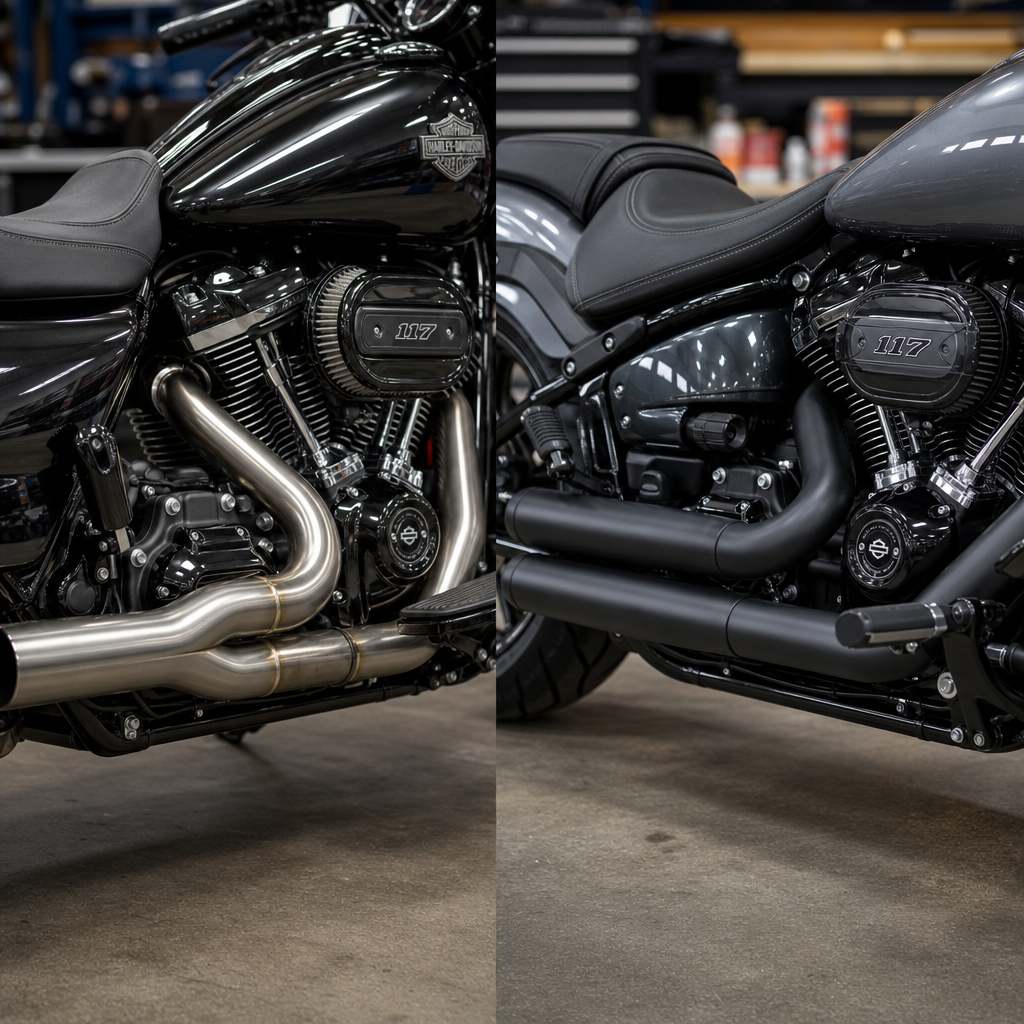
The CVO 121 VVT stage III performance recipe sits at the center of a question I hear constantly from Milwaukee-Eight riders: should you keep the 121 cubic inch foundation and build a high-output torque package, or step up to a 131 cubic inch top-end and chase bigger peak numbers? On current Harley-Davidson CVO touring models, that choice affects more than dyno charts. It changes heat management, gearing feel, roll-on response, passenger comfort, service intervals, budget, and even the ergonomics that make a motorcycle easy to ride hard all day.
In practical terms, a performance recipe is a matched set of parts, calibration choices, and setup decisions tuned toward a defined riding goal. For the CVO 121 VVT platform, that means understanding the variable valve timing system, the stock compression and cam timing constraints, intake and exhaust flow limits, clutch and drivetrain capacity, and the rider triangle created by bars, seat, floorboards, and wind protection. I have built and test-ridden touring Harleys where a lower peak horsepower setup produced a faster, calmer real-world motorcycle because the torque arrived earlier, the rider stayed planted, and the bike held usable temperatures in traffic.
This hub article covers the full landscape of model-specific ergonomics and performance recipes for Harley-Davidson CVO touring bikes, using the 121 VVT Stage III debate as the anchor topic. The goal is straightforward: help you decide whether a 121ci high-output torque build or a 131ci conversion better matches your road speed, load, climate, riding posture, and ownership style. If you want a single answer up front, here it is: riders prioritizing broad midrange, cooler daily use, and less invasive modification often prefer a 121ci high-output torque recipe, while riders chasing maximum acceleration and top-end authority usually get more from a carefully tuned 131ci package.
What the CVO 121 VVT platform changes
The current CVO 121 VVT engine is not just a larger Milwaukee-Eight with cosmetic upgrades. Variable valve timing broadens the effective powerband by changing valve events across rpm and load, which means cam choice, intake velocity, and exhaust scavenging behave differently than on earlier fixed-timing combinations. In plain language, the engine can deliver stronger low-speed manners without giving up higher-rpm breathing, but only if the entire package works together. That is why “just add displacement” is too simple for this platform.
From a builder’s perspective, the 121 VVT gives you a strong starting point: high baseline cylinder head flow, modern calibration capability, and factory drivability that is already better than many older stage kits. The tradeoff is complexity. The best results come from using components validated for the VVT operating window and from tuning with repeatable data logging, not seat-of-the-pants guesses. Dyno numbers still matter, but throttle angle, spark control, air-fuel stability, oil temperature, and knock activity matter just as much on a heavy touring chassis.
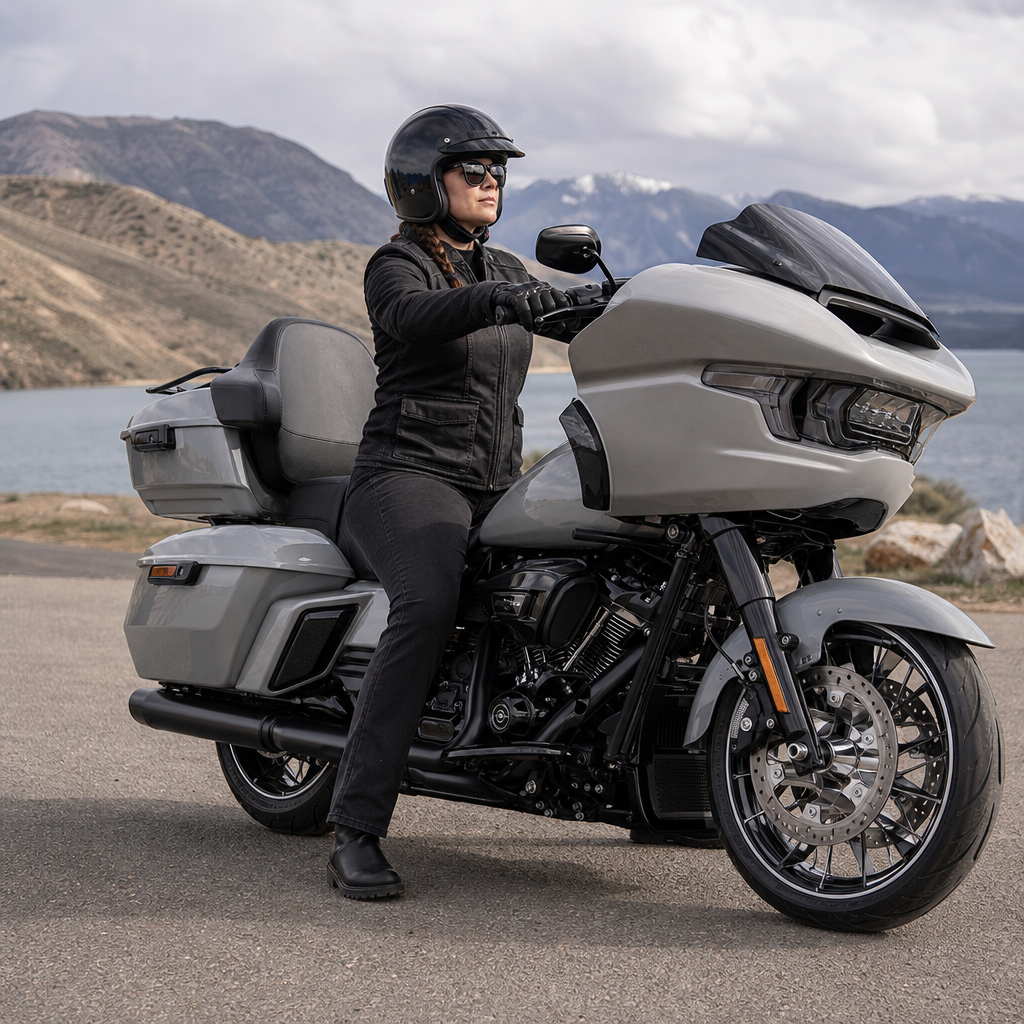
Ergonomically, CVO touring models magnify engine-character differences. A Road Glide CVO ridden with a fixed fairing, taller screen, and a supportive two-up seat will mask some vibration and make a broad torque curve feel luxurious. A Street Glide CVO with different wind management and more rider movement may make the same engine feel more urgent. Floorboard position, handlebar sweep, and seat pocket depth influence how well the rider can brace during hard roll-ons, which affects perceived acceleration and fatigue.
121ci HO torque recipe: why many riders stop here
A 121ci high-output torque recipe usually aims to maximize cylinder pressure and airflow efficiency without changing the basic displacement. In most builds, that means a matched intake, high-flow exhaust, a camshaft chosen for strong midrange under VVT control, quality tuning, and supporting changes where needed for clutch holding and thermal stability. The point is not modesty. It is efficiency. You are trying to produce more area under the torque curve, especially from about 2,200 to 4,500 rpm, where a loaded touring Harley spends much of its life.
On the road, this kind of build feels immediate. Sixth-gear roll-ons improve, passing from 50 to 80 mph requires less downshifting, and the bike pulls cleanly when carrying luggage and a passenger. Riders who spend time in mountain roads or mixed urban-highway use often prefer this recipe because the engine responds right where they ask for it. It also tends to preserve a factory-like balance. When the tune is conservative and the exhaust is not excessively open, idle quality, cold start behavior, and part-throttle civility remain strong.
The strongest argument for staying 121 is that a touring motorcycle is judged by average power, not only peak power. A dyno sheet may show a 131 making a larger top number, but a well-built 121 HO setup can deliver a more useful shape if your riding rarely exceeds the midrange. That matters when heat, noise, fuel range, and mechanical stress enter the conversation. Less invasive combinations often keep maintenance simpler and total cost lower, while still producing a dramatic improvement over stock behavior.
131ci conversion: when bigger displacement wins decisively
A 131ci recipe shifts the ceiling upward. More displacement increases the amount of air-fuel mixture the engine can process each cycle, which generally raises torque everywhere if the heads, cam timing, exhaust, and tune support it. On a heavy CVO bagger, that can translate into effortless acceleration, stronger two-up performance at highway speeds, and the kind of authority riders notice immediately on entrance ramps or long grades. When the package is sorted, a 131 does not just make more power; it makes the motorcycle feel less burdened by its own mass.
However, bigger displacement is never free. Cylinder and piston changes increase cost and usually raise the importance of careful break-in, piston-to-wall considerations, ring seal quality, and thermal management. The 131 path also exposes weak links faster. Clutch capacity, exhaust design, intake sealing, and tune quality become less forgiving. A sloppy calibration that a milder 121 might tolerate can turn a 131 into a hot-running, ping-prone machine with inconsistent drivability.
For riders who genuinely use the top half of the tachometer, or who want the highest possible output from a streetable touring build, the 131 route is compelling. It can deliver the broad midrange people want plus the peak horsepower they miss on a 121-only package. The key is honesty about use case. If your real habit is loaded interstate travel, high ambient temperatures, and frequent stop-and-go traffic, the best 131 is the one built with restraint, not the one chasing a social-media dyno graph.
131ci vs 121ci HO torque: direct comparison
The simplest way to compare these recipes is by riding scenario. For low- and mid-rpm response, many 121 HO builds feel sharper because they are optimized for exactly that zone and may carry less thermal burden. For peak acceleration and sustained pull beyond midrange, a sorted 131 generally wins. Fuel consumption usually favors the smaller displacement in everyday conditions, though a poorly tuned 121 can be less efficient than a well-tuned 131. Engine heat depends on tune, compression, exhaust, and climate, but all else equal, the larger engine tends to require more attention here.
| Factor | 121ci HO Torque Recipe | 131ci Recipe |
|---|---|---|
| Best use case | Daily touring, frequent passing, mixed traffic | Maximum acceleration, two-up highway authority, aggressive riding |
| Power character | Early, broad midrange emphasis | Stronger everywhere with higher peak potential |
| Heat and complexity | Usually easier to manage | Requires stricter parts matching and tuning discipline |
| Budget | Lower overall investment | Higher parts and labor cost |
| Rider fit match | Excellent for comfort-first touring setups | Best when ergonomics support hard acceleration control |
If you want a single sentence verdict, it is this: choose the 121 HO torque recipe if you value accessible real-world thrust and lower complication, and choose the 131 recipe if you want the biggest performance envelope and are prepared to support it with tuning, cooling awareness, and drivetrain planning.
How ergonomics change performance on CVO touring models
Engine output is only half the recipe. On Harley-Davidson touring motorcycles, ergonomics determine how much of that output a rider can actually use. I routinely see owners add power before fixing the seat shape that slides them backward under throttle or the bar position that puts weight on the wrists. A fast touring bike needs a stable rider. If the pelvis is unsupported, the knees cannot brace, and the reach to the bars is long, the rider rolls off sooner and tires earlier.
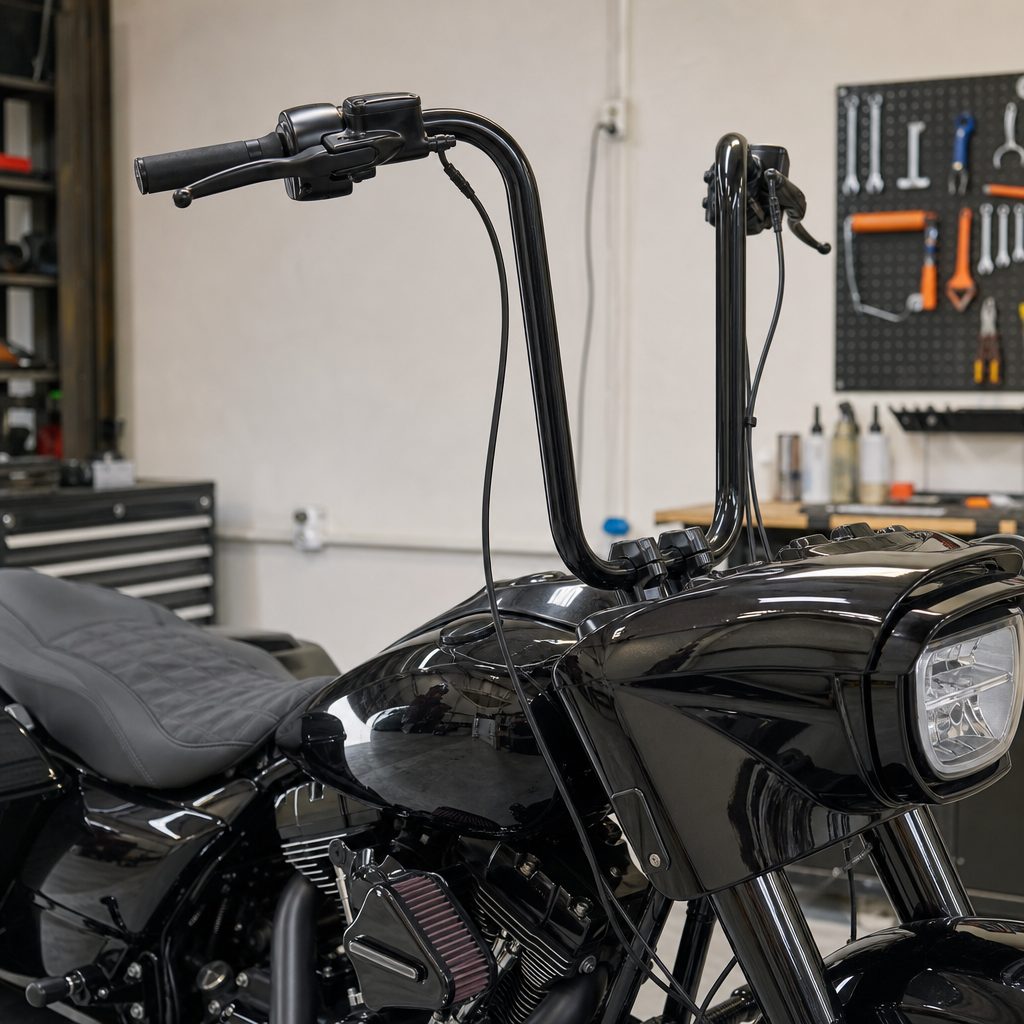
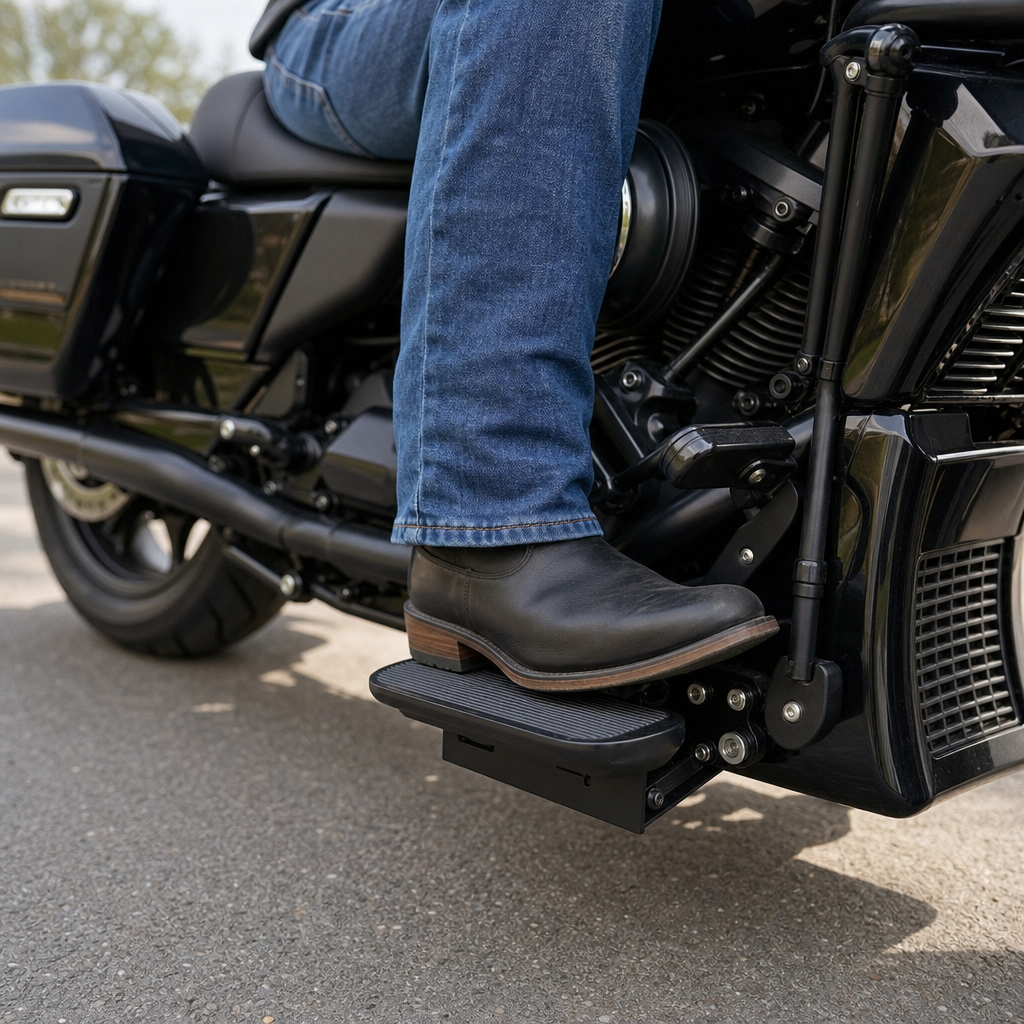
Start with the seat pocket and lumbar support. A deeper, firmer touring saddle can make a 121 HO bike feel stronger because the rider stays in position during roll-ons and corner exits. Floorboard placement matters next. Riders with limited knee bend often prefer lower or rearward control solutions to improve leverage and reduce hip strain. Then address the bars. Excessive pullback can close the chest and reduce steering precision, while too much reach loads the shoulders. On a Road Glide, windshield height and pressure management also shape perceived acceleration because a calm cockpit lets the rider relax their grip.
Model-specific details matter. The Road Glide CVO typically favors high-mile, high-speed stability, so it often pairs beautifully with a torque-biased 121 recipe and ergonomic upgrades focused on long-range support. The Street Glide CVO can feel livelier in rider inputs, which some owners complement with a 131 package if they want a more aggressive character. In both cases, suspension setup, especially rear spring rate and sag with luggage, is inseparable from engine modifications because chassis attitude changes how quickly power can be applied.
Building a balanced recipe: intake, exhaust, tune, clutch, and cooling
The best performance recipe is balanced. Intake flow without adequate exhaust scavenging rarely delivers its promise. Exhaust volume without calibration discipline often creates heat and noise without proportional gains. On the CVO 121 VVT platform, I treat the tune as the foundation, not the finishing touch. Closed-loop behavior, spark tables, throttle mapping, decel fuel strategy, and temperature compensation determine whether the bike feels premium or crude. Tools and processes matter here; a reputable Harley-focused dyno tuner using repeatable load control and data review is worth more than a long list of random parts.
Clutch capacity deserves early attention, especially on 131 builds and on 121 HO setups tuned for strong torque down low. If the clutch starts to slip under roll-on load, the dyno graph may still look acceptable while the rider feels vague acceleration and rising heat. Cooling strategy matters too. Oil selection, cooler efficiency, exhaust routing, and realistic spark advance all affect summer ride quality. There is no magic bolt-on that solves excessive heat created by an overly aggressive tune. The cure is calibration discipline and a package designed for the fuel available in your region.
This is also where internal linking topics naturally branch into their own articles within a Harley-Davidson hub: cam selection for VVT engines, touring-bike clutch upgrades, dyno tuning methodology, seat and handlebar fitment guides, suspension setup for loaded baggers, and heat-management strategies for Milwaukee-Eight touring builds. A good hub should point riders from the broad decision to the exact subtopic they need next.
Choosing the right recipe for your riding style
Choose the 121ci HO torque recipe if your riding is mostly real-world touring: rolling on from 60 mph, carrying a passenger, dealing with summer traffic, and wanting strong response without adding unnecessary complexity. It is especially smart for riders who value smoothness, manageable cost, and daily reliability. Choose the 131ci recipe if you consistently want stronger acceleration everywhere, ride in open conditions that let you use it, and are willing to support the build with clutch, tuning, and heat-management decisions.
The best Harley-Davidson performance recipe is not the largest number on paper. It is the combination that suits your body, your roads, your climate, and your expectations. For many CVO owners, that means a carefully tuned 121 high-output torque build paired with ergonomic upgrades that make the motorcycle easier to control and more comfortable for distance. For others, the right answer is a 131 that transforms the bike into a genuinely forceful touring machine without sacrificing refinement.
Use this hub as your starting point for model-specific ergonomics and performance recipes across the Harley-Davidson lineup. Define your use case, fit the motorcycle to your body, then build the engine around how you actually ride. That order saves money, reduces disappointment, and delivers a faster motorcycle where it counts: on the road.
Frequently Asked Questions
What is the real difference between a 121ci HO torque build and a 131ci Stage III setup on a CVO 121 VVT?
The biggest difference is not simply displacement. It is how the motorcycle delivers power across the rpm range and how that power feels in normal street and touring use. A 121ci high-output torque build keeps the stock cubic-inch foundation and focuses on improving cylinder fill, cam timing, exhaust flow, intake efficiency, and calibration so the engine makes stronger, earlier torque without needing as much rpm. In practical terms, that usually means a bike that feels immediate, muscular, and responsive in the lower and middle part of the rev range, which is where most riders spend their time on the road.
A 131ci Stage III combination adds displacement, which generally raises the engine’s total torque potential and often increases peak horsepower as well. On a dyno sheet, that can produce the bigger headline number many riders want. On the road, a 131 can feel more effortless under load, especially with a passenger, luggage, taller gearing, or long uphill highway pulls. It often has a broader torque curve simply because there is more engine to work with. That said, the final character depends heavily on the cam profile, compression, head flow, throttle body, exhaust, and tune. A well-planned 121 HO torque package can feel stronger and more usable in everyday riding than a poorly matched 131 build.
So the real choice is between optimizing the existing 121 for strong, immediate rideability or moving to a larger-displacement package that usually offers more ceiling for overall output. Riders who prioritize roll-on punch, smoothness, manageable heat, and a balanced touring personality often lean toward the 121 HO torque recipe. Riders who want the biggest shove possible and like seeing higher peak numbers tend to gravitate toward the 131 route.
Which option is better for real-world touring, two-up riding, and roll-on acceleration?
For real-world touring, the answer depends on how you define “better.” If your priority is effortless low-rpm pull, smoother passing power, and strong response without needing to downshift often, both combinations can work extremely well, but they achieve that result differently. A 121ci HO torque setup is often tuned to hit hard and clean in the rpm range used for highway cruising and back-road roll-ons. That makes it a very satisfying touring package because the bike feels alert and responsive without becoming overly aggressive or peaky.
A 131ci setup can be especially appealing for heavier riders, frequent two-up use, fully loaded touring, and riding in hilly terrain. More displacement generally means the engine can make the same type of work feel easier. That matters when you are accelerating from 60 to 85 mph with a passenger and luggage, climbing grades in hot weather, or carrying accessory weight. In those conditions, the 131 often feels less stressed and more authoritative. The power does not just show up at the top of the chart; it can also show up as less effort required from the engine to move the bike.
That said, a lot comes down to setup philosophy. If the 131 is built around peak horsepower with a cam that wants more rpm, it may not feel as naturally “touring friendly” as a 121 build tuned specifically for early torque and smooth drivability. The most satisfying touring bike is usually not the one with the highest dyno number. It is the one with the cleanest throttle response, broadest usable powerband, stable operating temperatures, and a calibration that behaves well in traffic, on hot days, and during long highway runs. For many riders, that makes the 121 HO torque recipe the smarter real-world choice. For others, especially those carrying extra weight or wanting the strongest roll-on authority available, the 131 is hard to ignore.
How do heat management and engine stress compare between the 121ci HO torque package and a 131ci build?
Heat management is one of the most important and least appreciated parts of this decision. More power always creates more thermal load, but the way that heat is generated and managed depends on the total combination, not just cubic inches alone. A 121ci HO torque build often has an advantage here because it can deliver meaningful performance gains while staying closer to the original engine architecture. With the right cam, efficient exhaust, proper fueling, and a conservative but optimized tune, it can feel strong without pushing every system to a more extreme level.
A 131ci build, by contrast, tends to create more combustion heat simply because it is moving more air and fuel and making more total output. That does not automatically mean it will run badly or be unreliable, but it does mean supporting components and calibration matter even more. Airflow, ignition timing, fuel quality, oil temperature control, riding environment, and traffic conditions all play a larger role. On a heavy touring chassis, particularly in stop-and-go summer riding, the difference in heat felt by the rider and passenger can become noticeable.
Engine stress should also be viewed realistically. A carefully assembled and properly tuned 131 can be very streetable and dependable, but it generally narrows the margin for error. Tuning quality becomes more critical. Fueling mistakes, poor component matching, and excessive heat soak can have bigger consequences than they might on a milder 121-based package. The 121 HO torque route often preserves a wider comfort zone for riders who want repeatable performance and less drama over thousands of miles. If reliability, operating temperature, and long-distance comfort rank near the top of your priorities, the 121 combination frequently offers the easier path. If you want maximum output and are willing to invest in the supporting parts and tuning discipline that go with it, the 131 can absolutely be worth it.
How do budget, maintenance, and service expectations differ between these two performance paths?
Budget is usually where this decision becomes very clear. A 121ci HO torque package often costs less because you are building around the existing displacement rather than stepping up to a larger top-end conversion. While pricing varies based on parts selection and labor rates, the 121 route can deliver excellent real-world gains without requiring as many major changes. That makes it attractive for riders who want a substantial improvement in acceleration and rideability while keeping the project more financially disciplined.
The 131ci route generally requires a bigger initial investment, and riders should be honest about the fact that the total cost often extends beyond the basic displacement upgrade itself. Once you start chasing the larger number, it is common to justify additional supporting parts such as intake upgrades, exhaust changes, clutch improvements, calibration work, and sometimes cooling or driveline considerations. In other words, the price difference is not always just the cost of the cylinders and pistons. It is often the cost of building the whole system correctly.
Maintenance and service expectations also shift with the level of build. A 121 HO torque package usually preserves a more OEM-like ownership experience, especially when the tune is clean and the parts are selected with street use in mind. Service intervals may remain familiar, drivability may stay closer to stock in traffic and cold starts, and long-term wear expectations can be easier to manage. A 131 can still be perfectly streetable, but owners should expect less tolerance for neglect. It becomes more important to pay attention to oil quality, operating temperatures, fuel consistency, tune health, and how the bike is ridden. If you are the kind of rider who wants strong performance with minimal extra attention, the 121 is often the practical winner. If you enjoy building, monitoring, and optimizing a higher-output package, the 131 may justify the added cost and involvement.
How should a rider choose between the 131ci option and a 121ci HO torque recipe for their specific goals?
The best way to choose is to stop thinking in terms of peak dyno numbers first and start by identifying how the motorcycle is actually used. If the bike spends most of its life on public roads, with highway cruising, back-road passing, occasional spirited riding, city traffic, and touring miles, then the right answer is usually the build that delivers the broadest, cleanest torque where you live on the tachometer. For many riders, that points directly to the 121ci HO torque recipe. It tends to offer a very satisfying blend of responsiveness, lower-rpm strength, manageable heat, comfort, and value.
If, however, your definition of satisfaction includes the strongest possible acceleration, a bigger power ceiling, and the confidence that comes from extra displacement when the bike is loaded or ridden aggressively, the 131 becomes compelling. Riders who frequently travel two-up, carry a lot of gear, ride in mountainous areas, or simply want the most forceful version of the Milwaukee-Eight touring experience often end up happiest with the larger engine. The key is building it as a complete package rather than as a number-chasing exercise.
It also helps to think about your tolerance for tradeoffs. Do you want a bike that feels upgraded but still easy to live with every day, including in hot weather and traffic? The 121 is usually the safer answer. Do you want the stronger bragging-rights setup and are you willing to spend more money and attention to get it right? The 131 may be the better fit. The smartest move is to work backward from your riding style, climate, passenger habits, budget, and expectations for comfort and longevity. When those factors are clear, the