The CVO 121 HO valve phasing tuning recipe for 2027 performance starts with a simple truth: no single cam timing map, intake setup, or rider position works equally well for every Harley-Davidson bagger or cruiser built around the Milwaukee-Eight 121 High Output platform. A tuning recipe is a repeatable combination of mechanical settings, calibration changes, ergonomic adjustments, and validation steps that produces a defined result, whether that result is stronger roll-on torque, cooler touring behavior, cleaner part-throttle manners, or better two-up control. Valve phasing refers to the relationship between camshaft events and crankshaft position, especially intake opening, intake closing, exhaust opening, and exhaust closing. On a fixed-cam V-twin, you are not electronically swinging phasers as on some automotive engines; you are choosing where those events occur through cam design, installed timing, compression strategy, exhaust pairing, and the calibration that supports them.
That matters in 2027 because owners are asking more from the CVO 121 HO than peak dyno numbers. Riders want passing power at 70 mph, reduced heat in traffic, stable idle with touring loads, and ergonomics that let them use the added performance without fatigue. In shop practice, I have seen two motorcycles with nearly identical horsepower figures feel completely different on the road because one had a cam and tune matched to rider use, gear ratio, and seating position, while the other chased a headline number. This hub article covers the full model-specific ergonomics and performance recipe approach for Harley-Davidson, using the CVO 121 HO valve phasing question as the organizing example. It explains what to adjust, what to leave alone, how to compare recipes by intended use, and how to build internal pathways to related cam, suspension, intake, exhaust, and rider-fit decisions across the Harley-Davidson platform.
What Valve Phasing Means on a CVO 121 HO Build
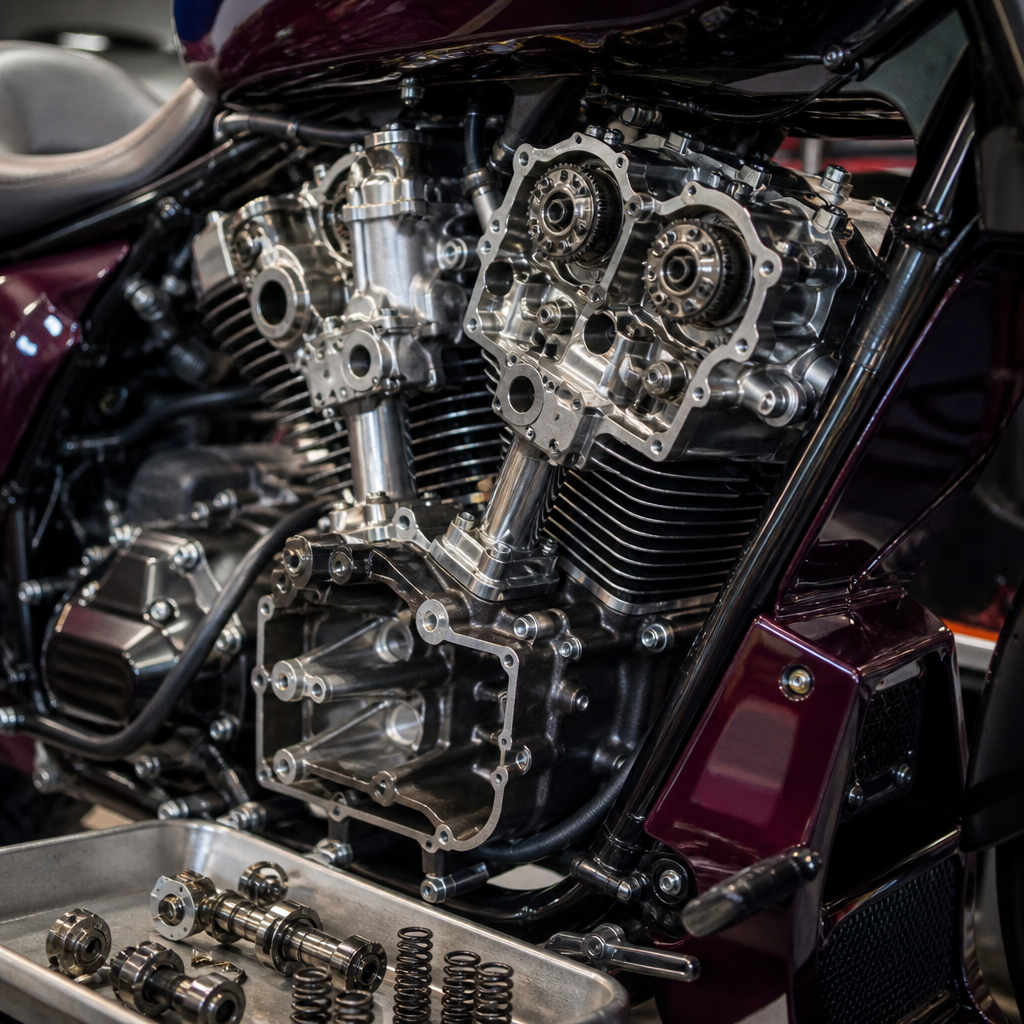
On the Milwaukee-Eight 121 HO, valve phasing is best understood as cam event placement rather than an electronic variable valve timing system. The key numbers are intake closing angle, lobe separation angle, overlap, and installed centerlines. These determine dynamic compression, cylinder filling, exhaust scavenging, idle quality, and where the torque curve builds. For a heavy touring Harley-Davidson, earlier intake closing generally increases low and midrange cylinder pressure, improving response below 4,000 rpm. Later intake closing can support stronger upper-rpm breathing, but it may soften launch feel and require careful compression and ignition management to keep the bike crisp in real conditions.
The CVO 121 HO package already starts with more airflow and compression capability than a standard touring engine, so the tuning mistake I see most often is adding a large cam that shifts the usable range too high for how the bike is ridden. On the street, especially with a fairing, luggage, passenger, and highway gearing, the best recipe usually centers on broad torque from roughly 2,500 to 4,800 rpm. That does not mean avoiding aggressive parts. It means matching cam timing, exhaust backpressure characteristics, throttle mapping, and clutch engagement behavior to the motorcycle’s mass and mission. A good tune feels deliberate, not dramatic.
Choosing the Right 2027 Performance Recipe by Riding Use
The smartest way to tune a CVO 121 HO is to pick a use case before touching parts. I group builds into four common recipes: touring torque, sport-touring response, hot-street bagger, and two-up heat-conscious cruiser. Touring torque prioritizes intake closing and overlap values that maintain strong manifold signal and stable fueling at small throttle openings. Sport-touring response adds a slightly broader cam with careful spark control to sharpen acceleration exiting corners. Hot-street bagger setups tolerate more overlap and often freer exhausts because the owner values upper-midrange pull and sound. Two-up heat-conscious recipes keep dynamic compression sensible and focus on combustion stability, oil temperature control, and rider comfort.
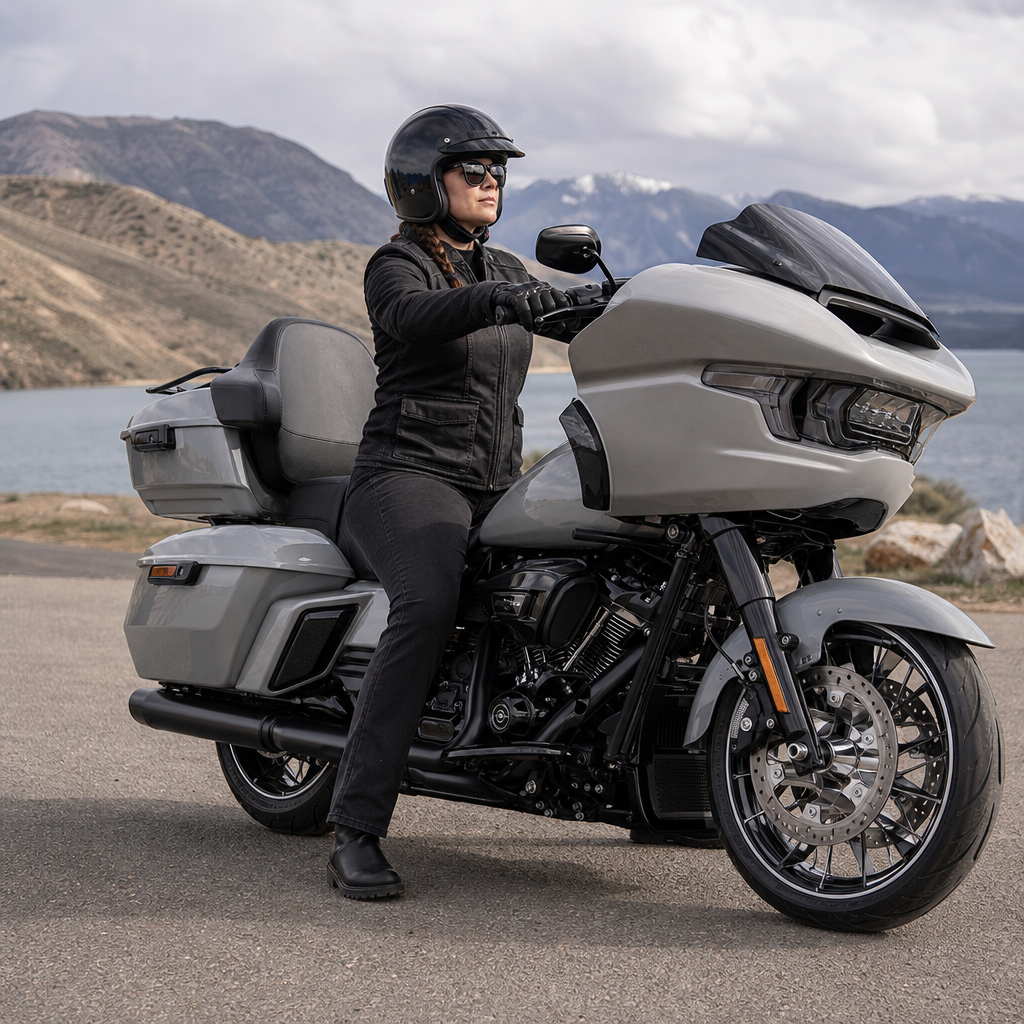
Real-world use decides the winner. A Road Glide CVO ridden in Arizona summer traffic needs a different recipe than a Street Glide used for cool-weather solo weekend runs. If your Harley-Davidson spends most of its time between 2,800 and 3,800 rpm, a torque-focused cam with conservative overlap will outrun a larger cam in everyday passing because it makes more average power where you actually ride. If you live in mountain terrain and work the engine harder through repeated roll-ons, a slightly later-closing intake and a well-merged exhaust can make the motorcycle feel more alive without sacrificing manners. Always define success with data: gear-specific roll-on times, oil temperature trends, idle stability, fuel economy, and rider fatigue after two hours.
Core Mechanical Decisions That Change Cam Timing Results
Cam timing never acts alone. Compression ratio, squish clearance, pushrod stability, intake tract length, exhaust collector design, and throttle body sizing all reshape the result. On the 121 HO, the most important companion variable is dynamic compression. Earlier intake closing raises it, which improves torque but increases octane sensitivity and heat load. Later intake closing reduces it, which can tolerate more static compression and rpm. That is why the same cam can feel perfect on one engine and lazy on another. You are tuning a system, not a part number.
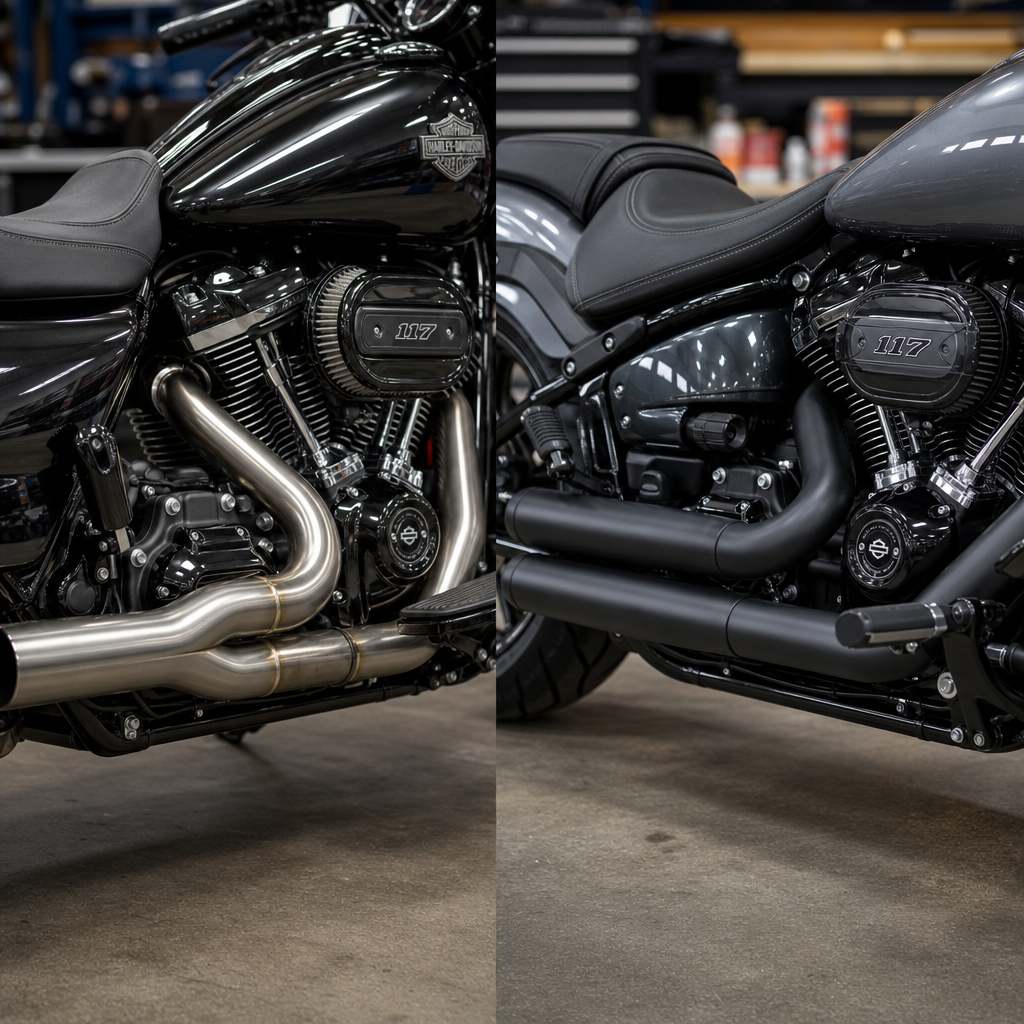
Exhaust selection is usually the second biggest lever after the cam itself. A true dual system may alter scavenging behavior very differently from a 2-into-1 with a proper collector. In testing, I consistently see better midrange coherence from well-designed 2-into-1 systems on performance baggers because the collector helps cylinder evacuation and supports cleaner fueling transitions. Intake choices matter too. A high-flow air cleaner can improve top-end airflow, but if it disturbs intake tract tuning or draws excess heat at low road speed, gains may be smaller than expected on the street. None of these decisions should be finalized before baseline dyno pulls, road logs, and a clear understanding of rider priorities.
Model-Specific Ergonomics: Why Performance Must Match Rider Fit
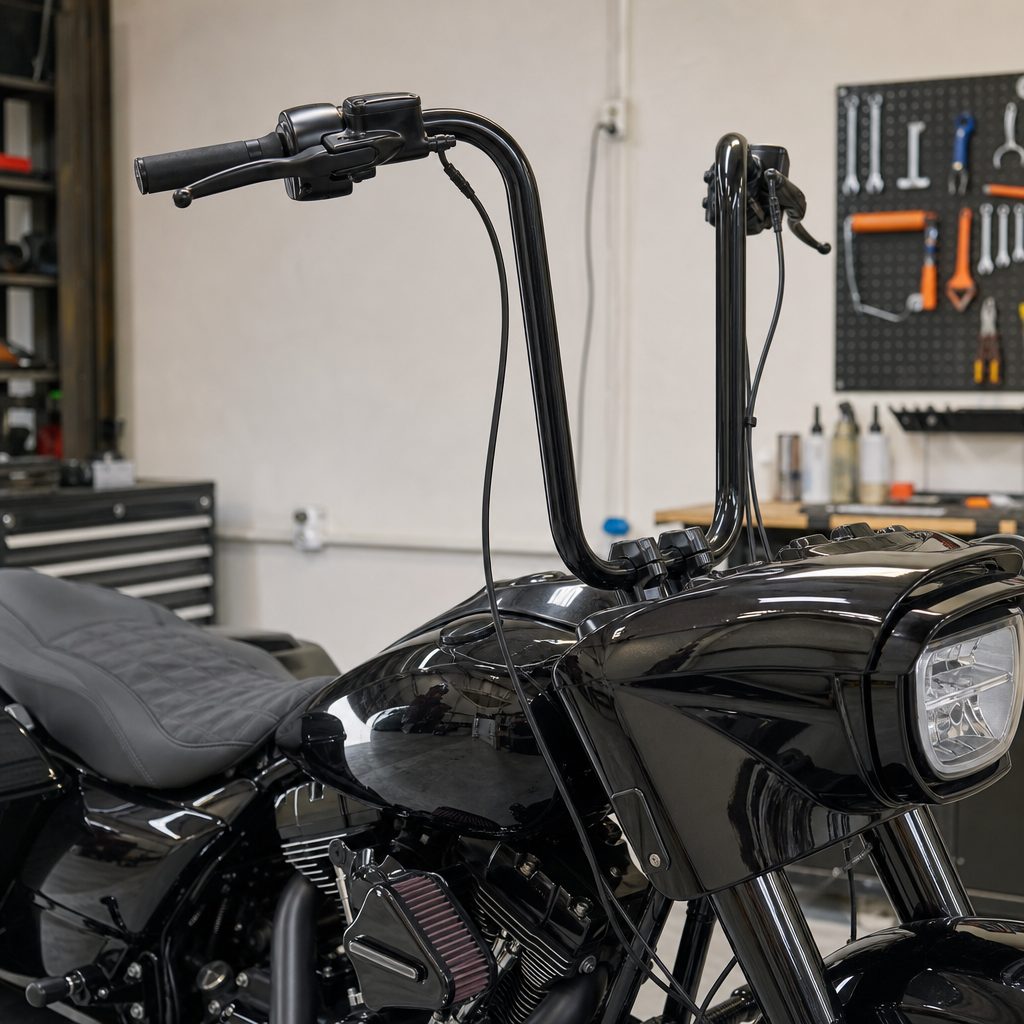
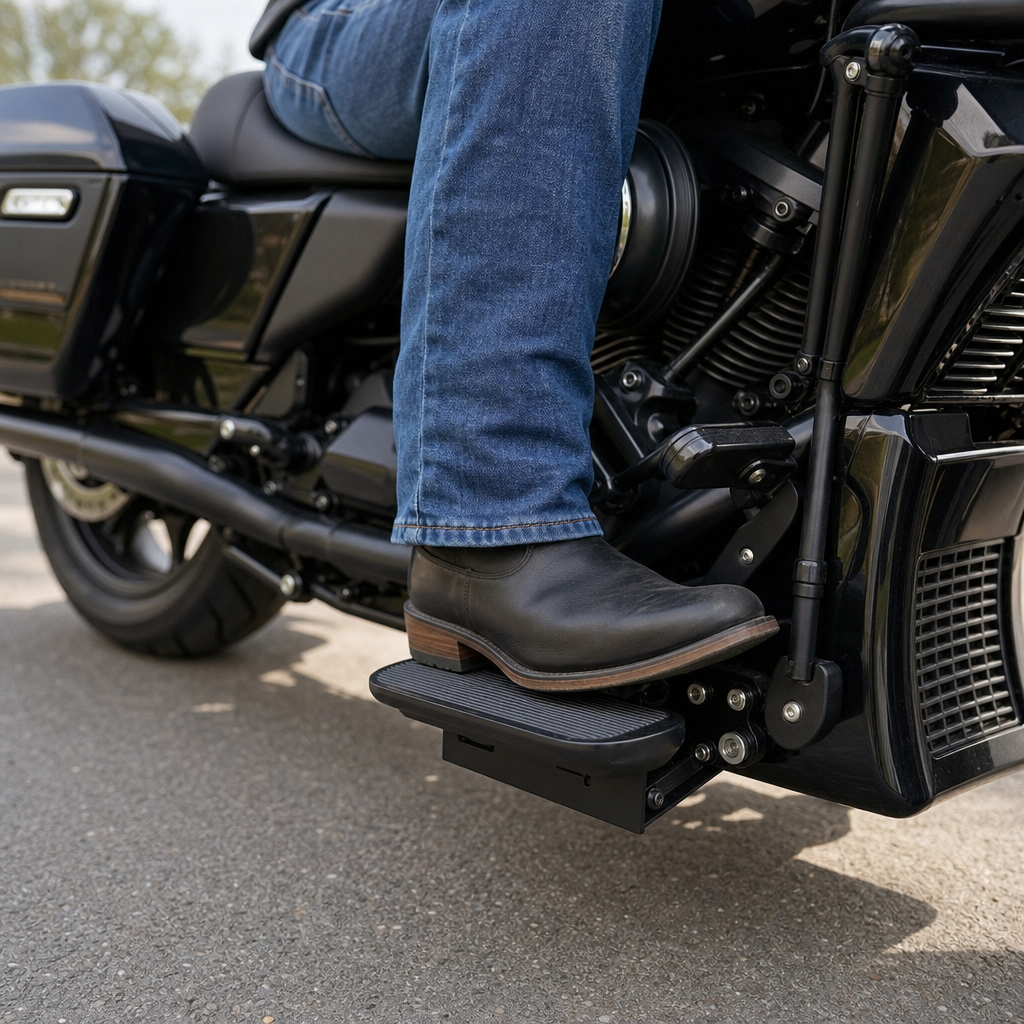
Performance recipes fail when ergonomics are ignored. On Harley-Davidson touring models, seat height, bar reach, floorboard position, and wind management directly affect how much of the engine’s output a rider can use. A motorcycle with perfect valve phasing but poor rider triangle will feel slower because the rider rolls off earlier, braces against the bars, or cannot weight the chassis consistently through corner exits. On the CVO 121 HO platform, even small changes in bar pullback or seat pocket depth can change throttle precision during low-speed transitions and aggressive roll-ons.
I treat ergonomics as part of the tuning package because rider input is a calibration variable. A shorter rider on a tall, rear-biased seat may unconsciously close the throttle over pavement seams. A taller rider cramped at the knees may shift body weight mid-corner and upset chassis balance just when the torque peak arrives. Windshield height also changes perceived performance. Excess helmet buffeting makes a bike feel busier and can cause riders to short-shift or avoid sustained acceleration. The best sub-pillar hub for model-specific ergonomics and performance recipes must therefore connect engine tuning to bars, seat, pegs, screen, suspension preload, and clutch lever effort. That is how a build becomes faster in practice, not just on paper.
Recommended Recipe Framework for Harley-Davidson Owners
The table below summarizes practical CVO 121 HO recipe directions. These are not one-size-fits-all final calibrations; they are proven starting frameworks that help owners and tuners narrow choices quickly and avoid mismatched parts.
| Recipe goal | Cam timing tendency | Supporting parts | Calibration focus | Ergonomic priority |
|---|---|---|---|---|
| Touring torque | Earlier intake closing, modest overlap | 2-into-1 exhaust, high-flow intake, stable pushrods | Part-throttle fueling, knock-safe spark, smooth torque limits | Neutral seat, reduced reach, low buffeting screen |
| Sport-touring response | Balanced intake closing, moderate overlap | Collector exhaust, quality shocks, firmer fork control | Throttle progression, decel control, gear-based spark refinement | Higher seat support, precise bar width, planted foot position |
| Hot-street bagger | Later intake closing, more overlap | Free-flow exhaust, larger throttle body when justified | WOT fueling, rev extension, careful heat management | Locked-in seat, stronger grip points, firmer rear support |
| Two-up comfort performance | Torque-biased timing, conservative overlap | Cool-running exhaust, upgraded fan strategy where applicable, suspension spring match | Idle quality, low-speed heat control, clutch take-up refinement | Passenger support, bar comfort, reduced floorboard crowding |
Calibration Strategy: Fuel, Spark, Torque Modeling, and Validation
Once the mechanical package is chosen, calibration determines whether the recipe succeeds. On modern Harley-Davidson tuning workflows, that means more than editing wide-open throttle fuel tables. You need to reconcile volumetric efficiency, target air-fuel ratio, spark advance, idle airflow, throttle progression, decel fuel behavior, and any torque-related compensations in the control strategy. Reputable tools vary by platform and access level, but the process should always include baseline logs, steady-state mapping, transient cleanup, and road verification after dyno work.
For a CVO 121 HO street recipe, I prioritize three zones. First is the low-rpm, small-throttle area where heavy touring bikes spend surprising amounts of time. If fueling is uneven there, the motorcycle feels jerky and hot regardless of peak power. Second is the 2,500 to 4,500 rpm roll-on band in higher gears, where ignition timing and mixture must support quick but knock-safe acceleration on real pump fuel. Third is engine braking and reapplication, because poor decel strategy can upset the chassis entering corners or during traffic transitions. Validation should include repeatable road tests, inlet air temperature variation, hot restarts, and at least one long ride with the luggage and passenger load the owner actually uses.
Common Mistakes That Undercut CVO 121 HO Performance
The biggest mistake is treating dyno peak figures as the only measure of success. A bike that makes 128 horsepower but surges at 3 percent throttle, overheats in parade traffic, or detonates on hot fuel is not well tuned. The second common error is copying someone else’s cam and map without matching altitude, fuel quality, rider weight, exhaust, and intended use. The third is overlooking gearing and clutch behavior. If engagement is abrupt or the engine drops below the useful part of the torque curve on upshifts, even a strong setup feels flat.
Another frequent issue is building more airflow than the heads, exhaust, and calibration can use. Bigger is not automatically better on a street Harley-Davidson. I have corrected many combinations where a large throttle body or oversized cam reduced velocity enough to hurt response. Heat management is also misunderstood. Richer is not always cooler in a useful sense, and excessive fuel can wash smoothness out of the chamber. Better results come from balanced combustion, efficient scavenging, realistic spark, and rider-fit improvements that reduce time spent lugging or slipping the clutch. Finally, owners skip documentation. Keep records of cam specs, installed timing, compression test data, fuel used, weather, and each tune revision. Without that, troubleshooting becomes guesswork.
How This Hub Connects to the Wider Harley-Davidson Ergonomics and Performance Topic
This article serves as the hub because model-specific ergonomics and performance recipes are inseparable across the Harley-Davidson lineup. A Road Glide, Street Glide, Low Rider ST, and CVO cruiser may share tuning principles, but they do not share rider position, aerodynamic load, mass distribution, or usage pattern. Future cluster articles under this subtopic should branch into seat and bar fit by model, cam selection by displacement, 2-into-1 exhaust behavior on baggers, suspension setup for loaded touring, passenger comfort performance compromises, and dyno-versus-road validation methods. Each of those pages should point back here because the central recipe logic stays the same: define use, choose timing strategy, support it mechanically, calibrate precisely, and confirm it with rider-centered testing.
For 2027 performance, the best CVO 121 HO valve phasing tuning recipe is the one that turns the motorcycle into a coherent package. Earlier-closing, torque-focused combinations suit most touring owners. More aggressive timing can be excellent when matched to exhaust flow, compression, and road use. Ergonomics are not an afterthought; they are how the rider accesses performance. If you are planning your next Harley-Davidson build, start by writing down your real riding conditions, current comfort issues, fuel quality, and target rpm range. Then build your recipe around those facts, not internet folklore. That disciplined process delivers the faster, cooler, more satisfying motorcycle most owners actually want.
Frequently Asked Questions
What does a CVO 121 HO valve phasing tuning recipe actually include for 2027 performance?
A proper CVO 121 HO valve phasing tuning recipe is much more than a single cam timing number or a quick ECU flash. On the Milwaukee-Eight 121 High Output platform, valve phasing is only one part of a coordinated package that should include the mechanical baseline, intake and exhaust configuration, fuel and spark calibration, throttle behavior, thermal strategy, gearing considerations, rider ergonomics, and a clear validation process. The reason this matters is simple: the same bike can feel dramatically different depending on where the engine makes torque, how quickly the throttle closes and reopens, how much heat it carries in traffic, and how the rider is positioned during steady-state cruising or aggressive roll-on acceleration.
In practical terms, a repeatable recipe usually starts by confirming the motorcycle is mechanically healthy. That means no intake leaks, no exhaust leaks at the ports, correct pushrod and valvetrain setup if modified, healthy sensors, stable fuel pressure, and a known-good battery and charging system. After that, the recipe defines the hardware stack, such as stock or modified air cleaner, header type, muffler design, catalyst status where legal, and whether the cam chest and valve events are still stock or already altered by aftermarket parts. Only then does valve phasing become meaningful, because intake closing, overlap behavior, and exhaust scavenging all respond differently depending on the total combination.
For a 2027-oriented performance target, the recipe should also identify the intended result before any tuning changes are made. One map may be optimized for heavy two-up touring with strong midrange torque and reduced heat, while another may favor more assertive top-end pull for solo riding and spirited backroad use. The best recipes are documented, repeatable, and measurable. They include baseline dyno pulls, road logs, intake air temperature and cylinder head temperature trends, knock activity review, and real-world roll-on testing in the gears that matter most. In other words, a true tuning recipe is a structured process that aligns mechanical setup, calibration decisions, and rider use case into one coherent performance outcome.
How does valve phasing affect torque, heat, and rideability on the Milwaukee-Eight 121 High Output?
Valve phasing directly influences when the intake and exhaust valves open and close relative to piston position, and that timing has a major effect on cylinder filling, combustion efficiency, and exhaust evacuation. On the CVO 121 HO, even modest shifts in effective phasing can reshape where the engine feels strongest. Earlier intake closing generally supports better low- and midrange cylinder pressure, which can improve roll-on response and touring usability. A later intake closing event may favor higher-rpm breathing, but if pushed too far for the actual hardware and rider use, it can soften response in the range where bagger and cruiser owners spend most of their time.
Heat is also closely tied to phasing strategy, though not in isolation. Poorly matched valve timing can contribute to inefficient combustion, elevated exhaust gas temperatures, and a sensation that the motorcycle is working harder than it should in traffic or under load. When phasing is paired properly with fueling, ignition timing, and airflow, the engine often feels smoother, stronger, and less stressed. That does not mean valve phasing alone “fixes heat,” but it can absolutely reduce conditions that make heat management worse, especially if the original calibration was too lean in key areas, too aggressive in others, or not well matched to the bike’s exhaust and intake behavior.
Rideability may be the most noticeable benefit. Riders often describe a successful tuning recipe as producing cleaner launches, more predictable throttle transitions, less surging at steady speeds, and stronger passing performance without repeated downshifts. On a heavyweight Harley-Davidson touring platform, that matters as much as peak horsepower. A bike that posts a bigger dyno number but feels abrupt, hot, or inconsistent on the road is not truly better tuned. The real goal is usable, repeatable performance, and valve phasing is valuable because it helps place the engine’s best behavior where the rider actually lives: part throttle, midrange load, and quick roll-on acceleration.
Is there one best valve phasing map for every CVO 121 HO bagger or cruiser?
No, and that is one of the most important principles to understand before tuning this platform. There is no universal “best” valve phasing map because the Milwaukee-Eight 121 High Output responds differently depending on bike model, total weight, rider size, wind management, gearing, intake tract, exhaust design, ambient conditions, and how the motorcycle is used. A Road Glide carrying luggage and a passenger on hot interstate miles may want a very different result than a lighter cruiser used for solo weekend riding. Even two bikes with nearly identical hardware can prefer slightly different calibration outcomes based on fuel quality, elevation, and the rider’s sensitivity to throttle behavior.
The right approach is to choose a target and build the recipe backward from that goal. If the objective is stronger 60-to-90 mph passing power in top gear, the ideal phasing and supporting calibration may not be the same as a setup intended to minimize heat soak and improve smoothness in urban traffic. Likewise, an intake and exhaust combination that supports one cam timing strategy may not support another with equal success. This is why experienced tuners avoid one-size-fits-all claims. They look at airflow, volumetric efficiency trends, combustion stability, and the specific rpm and load zones that matter most for the rider.
That does not mean tuning becomes guesswork. It means the process should be disciplined. Start with a known baseline, make one category of change at a time, log the result, and validate both on the dyno and on the road. The “best” map is the one that achieves the chosen outcome consistently without creating tradeoffs the rider will dislike later, such as excess heat, poor fuel economy, driveline harshness, or weak low-end response. On this platform, recipe quality comes from matching parts and calibration to purpose, not from chasing a mythical single map that works perfectly for everyone.
What supporting changes should be made alongside valve phasing to get the best 2027 performance result?
Valve phasing works best when it is supported by a complete and balanced setup. The first supporting area is airflow. Intake restriction, filter design, manifold sealing, and exhaust scavenging all influence how effective the chosen valve events will be. A freer-flowing intake and a well-matched exhaust can expand the engine’s ability to take advantage of revised timing, but “more flow” is not automatically better if it hurts velocity or shifts the torque curve away from the rpm range you care about. The goal is matched airflow characteristics, not random parts accumulation.
Calibration is the second major support system. Fueling must be adjusted for the new breathing behavior, especially in the load cells where torque gains are expected. Ignition timing should then be optimized carefully to support combustion efficiency without triggering knock or unnecessary heat. Throttle mapping also matters more than many riders realize. If the bike has abrupt on-off transitions, lazy reopening, or inconsistent part-throttle behavior, even a strong mechanical setup can feel disappointing. A refined recipe addresses commanded air-fuel behavior, spark, torque management logic where applicable, idle quality, warm-up behavior, and steady-state cruise smoothness as part of the package.
Ergonomics and validation are the third layer. Rider position affects how the motorcycle is loaded by wind and body posture, particularly on baggers. Handlebar reach, seat position, and windshield setup can subtly change how the bike feels during sustained highway riding, which influences the rider’s perception of torque, smoothness, and heat. Finally, the recipe must be validated in realistic conditions. That means testing cold starts, hot restarts, city riding, long cruise sections, and controlled roll-ons in the gears used most often. The best 2027 performance result is not simply the highest dyno printout. It is the strongest total package: power where you want it, manageable temperatures, clean drivability, and repeatability on real roads.
How should riders validate that a CVO 121 HO tuning recipe is actually successful?
Validation should be treated as seriously as the tuning itself. A successful recipe is proven, not assumed. Begin with a baseline before making changes: dyno numbers if available, but also road impressions, operating temperatures, hot-start behavior, fuel economy trends, and specific roll-on tests such as 3rd, 4th, or 5th gear acceleration from a repeatable starting rpm. Once changes are made, test the exact same conditions again. This is the only reliable way to determine whether the new valve phasing and supporting calibration truly improved performance instead of merely changing the sound or feel.
A strong validation plan includes both instrumented and real-world checks. On the technical side, look at air-fuel consistency, spark stability, knock response, intake air temperature impact, cylinder head temperature trends, and whether the engine maintains clean combustion under sustained load. On the practical side, assess launch smoothness, low-speed tractability, steady-cruise behavior, two-up performance if relevant, and highway passing confidence. Pay special attention to hot conditions and repeated heat-soak cycles, because some calibrations feel excellent for one short pull but become less consistent after traffic, idling, or long-distance riding.
<p