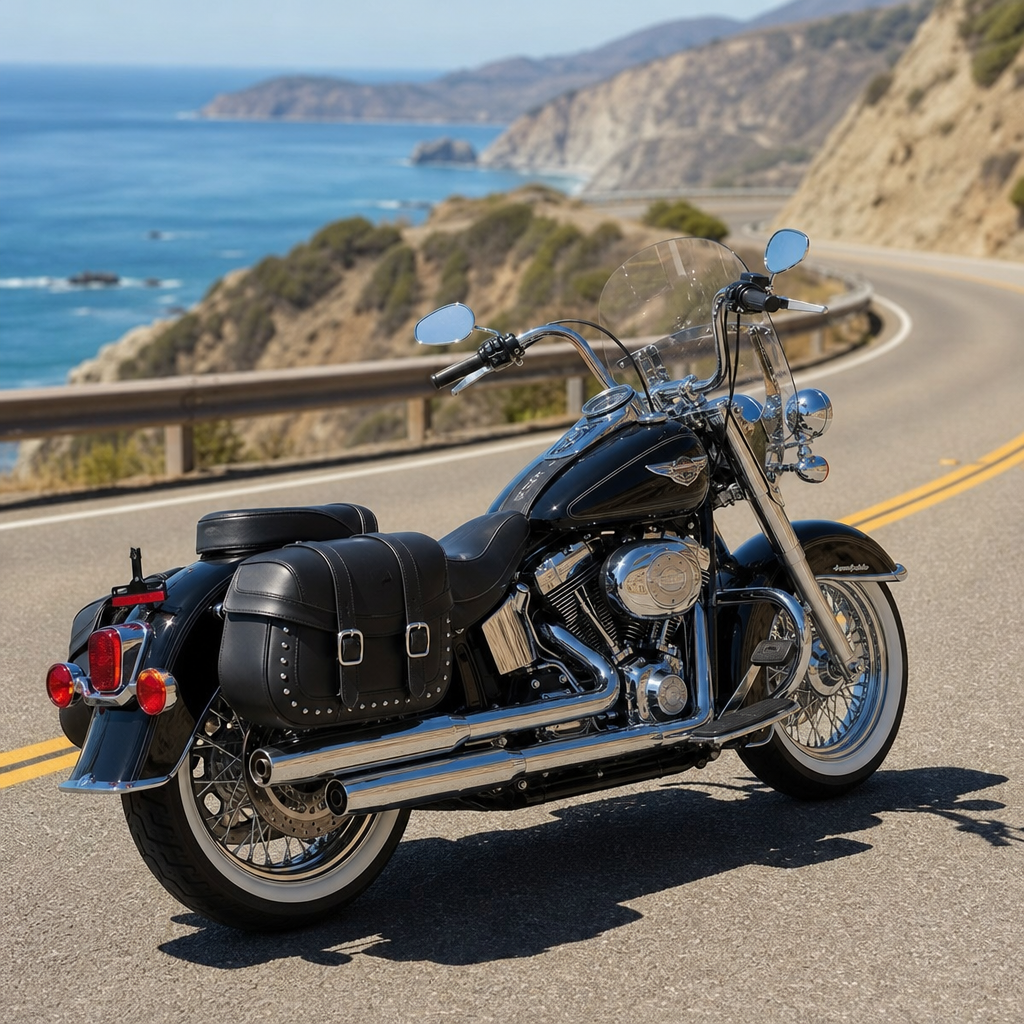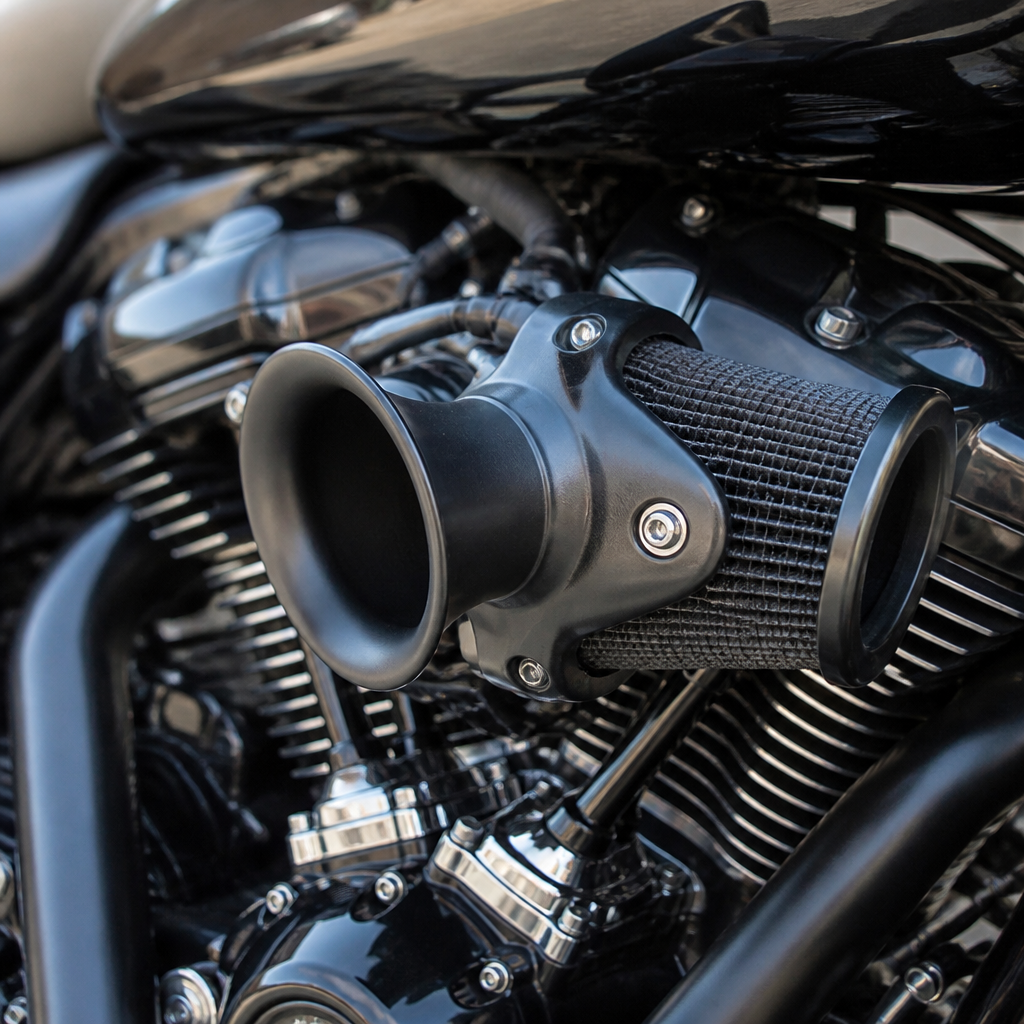
The CVO 121 HO intake velocity stack recipe for a 2027 performance mod starts with a simple idea: improve the shape and stability of incoming air so the Milwaukee-Eight 121 High Output engine fills its cylinders more completely across the rev range riders actually use. In Harley-Davidson terms, a velocity stack is the radiused inlet leading into the throttle body or air cleaner backing plate, designed to reduce turbulence, preserve air speed, and improve pressure recovery. A recipe, in this context, is a model-specific combination of parts, calibration, fitment checks, and riding-position choices that work together rather than as isolated upgrades. That matters because modern CVO touring motorcycles are tightly integrated systems. Intake flow, throttle mapping, exhaust scavenging, seat-to-bar reach, floorboard position, and wind management all influence how a rider experiences acceleration, heat, control, and comfort on real roads.
I have built intake packages for large-displacement V-twins where the advertised peak horsepower gain looked impressive on a dyno sheet, yet the bike felt worse leaving corners because the torque curve, fueling, or rider posture no longer matched the chassis. The 2027 CVO 121 HO performance mod discussion should avoid that mistake. This engine responds strongly to inlet quality, but the best outcome comes from treating the intake stack as part of a broader model-specific ergonomics and performance recipe. Riders searching this topic usually want direct answers: what a velocity stack does, whether it adds power, how to choose the right shape, what supporting mods are needed, and how touring ergonomics affect results. This hub addresses those questions clearly and sets up deeper article paths for individual CVO, Street Glide, and Road Glide configurations under the Harley-Davidson category.
What a CVO 121 HO intake velocity stack actually changes
A velocity stack changes the entrance conditions of the intake tract. On the CVO 121 HO, the throttle body and manifold must feed a high-demand engine that makes strong torque at low and middle rpm while still carrying power higher than traditional touring calibrations. A blunt or poorly shaped inlet causes boundary-layer separation and turbulence at the entry point. A properly radiused stack reduces that disruption, helping air enter with less loss. The practical result is usually better cylinder filling, cleaner throttle response, and a smoother torque curve, especially when paired with an air cleaner assembly that does not shroud the bellmouth.
The key point is that not every stack increases peak horsepower in the same way. Length, inlet radius, taper, and the space available under the cover all matter. Longer stacks tend to support lower and midrange torque by tuning intake resonance toward usable street rpm. Shorter stacks can favor higher-rpm flow if the rest of the system, including cam timing and exhaust, supports it. On a heavy CVO bagger ridden two-up with luggage, the best recipe usually prioritizes broad torque from 2,500 to 4,500 rpm rather than chasing the highest number at the top of the chart. That is where the motorcycle spends most of its life when merging, passing, or climbing grades.
Air cleaner design also changes the outcome. A high-flow element with a large effective surface area matters because the stack can only improve what reaches it. If the filter is restrictive, or if the outer cover disrupts the inlet path, the stack’s gains shrink. This is why proven systems from specialist Harley intake manufacturers often outperform generic assemblies that look similar. Good designs maintain stack clearance, distribute air evenly around the filter, and seal tightly against the backing plate to avoid unmetered leaks or distorted fueling corrections.
Building the right 2027 performance recipe for a Harley-Davidson CVO
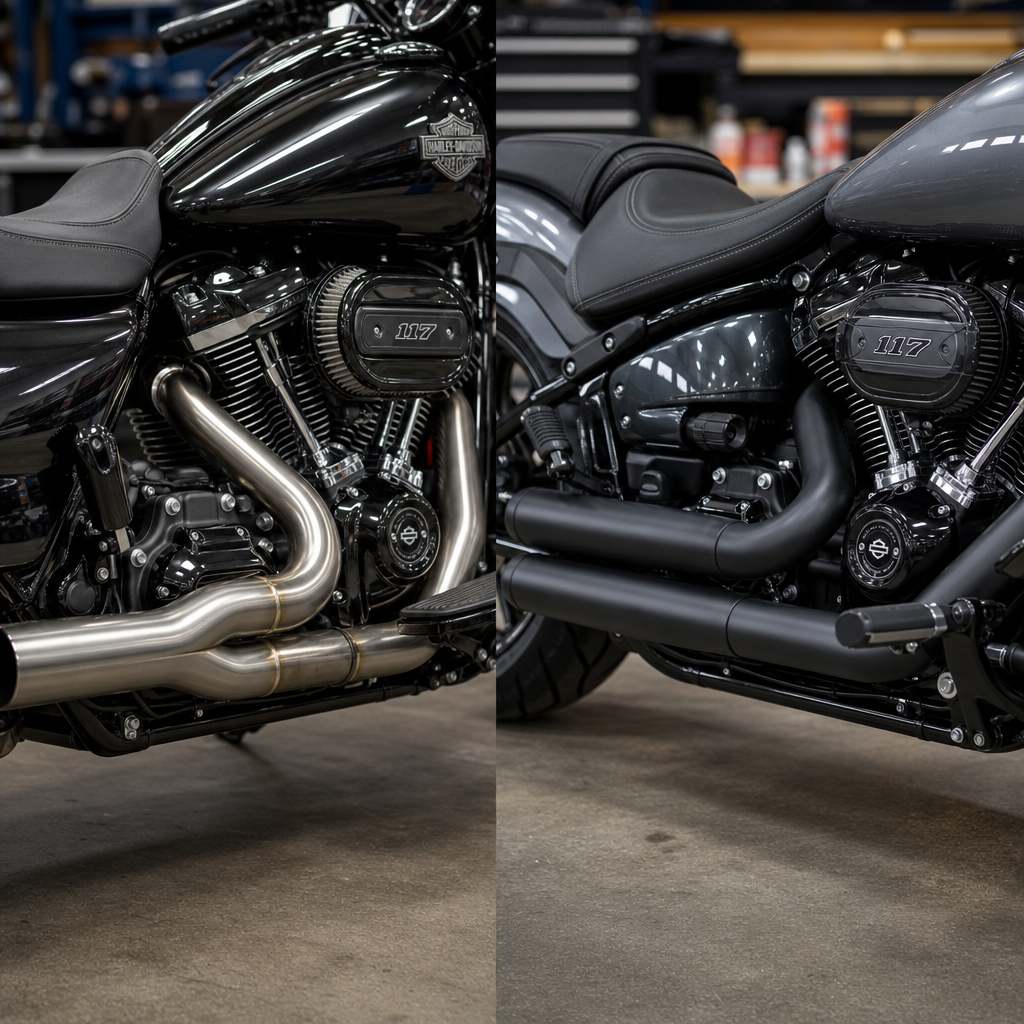
The best 2027 performance mod recipe balances four elements: airflow, fuel calibration, exhaust behavior, and rider ergonomics. Airflow begins with the velocity stack, backing plate, filter, and throttle body compatibility. Fuel calibration means a tune that accounts for increased volumetric efficiency, target air-fuel ratios under load, spark timing sensitivity, and ride-by-wire behavior. Exhaust behavior includes header diameter, collector design, and muffler backpressure, all of which alter scavenging and wave timing. Ergonomics determines whether the rider can actually use the new power with precision and comfort over distance.
For the CVO 121 HO, a practical stage recipe often includes a high-quality internal velocity stack, a freer-flowing air cleaner, a matched exhaust, and a dyno-verified tune using established platforms such as Screamin’ Eagle Pro Street Tuner where compliant, or aftermarket systems used within local regulations. I strongly prefer builds with before-and-after logging. Wideband data, manifold pressure trends, intake air temperature behavior, and throttle position correlation tell you whether the bike improved everywhere or only at one headline rpm point. On touring Harleys, the broadness of the curve matters more than bragging rights.
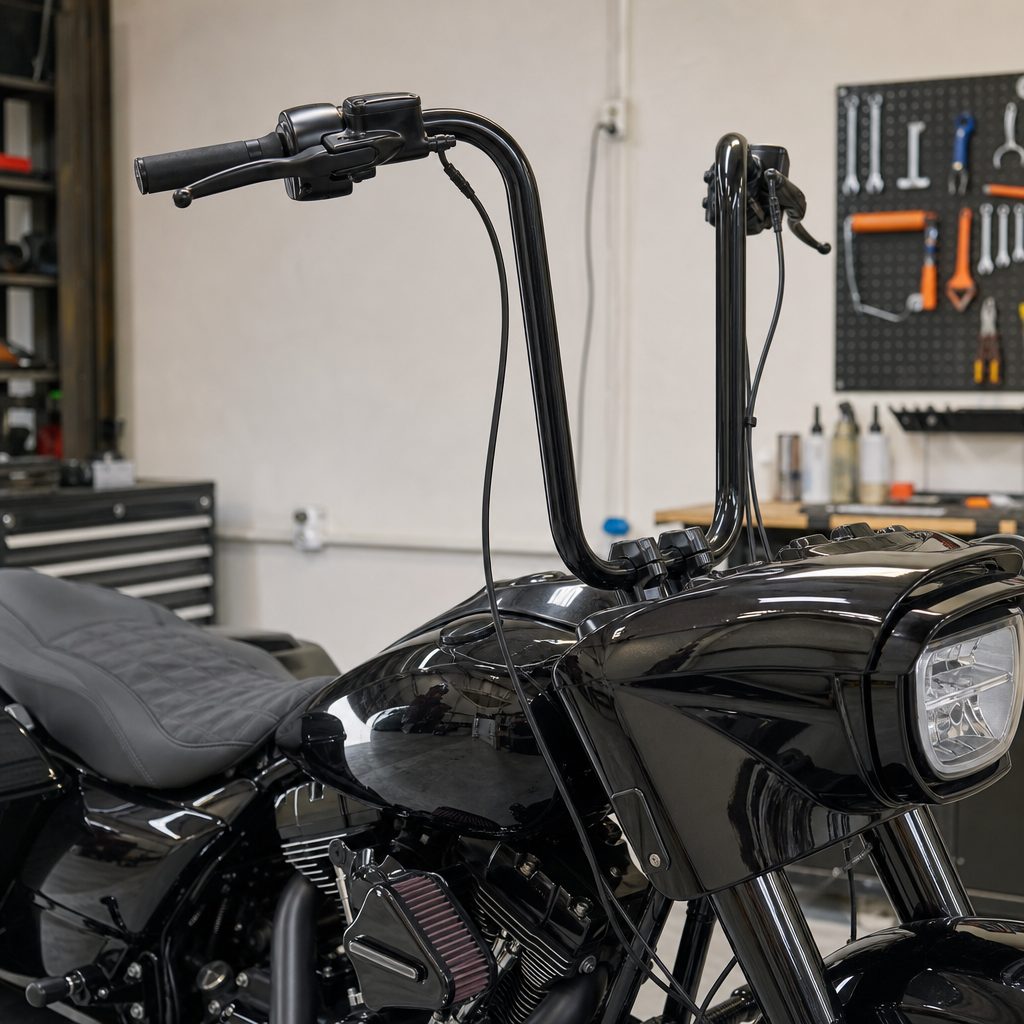
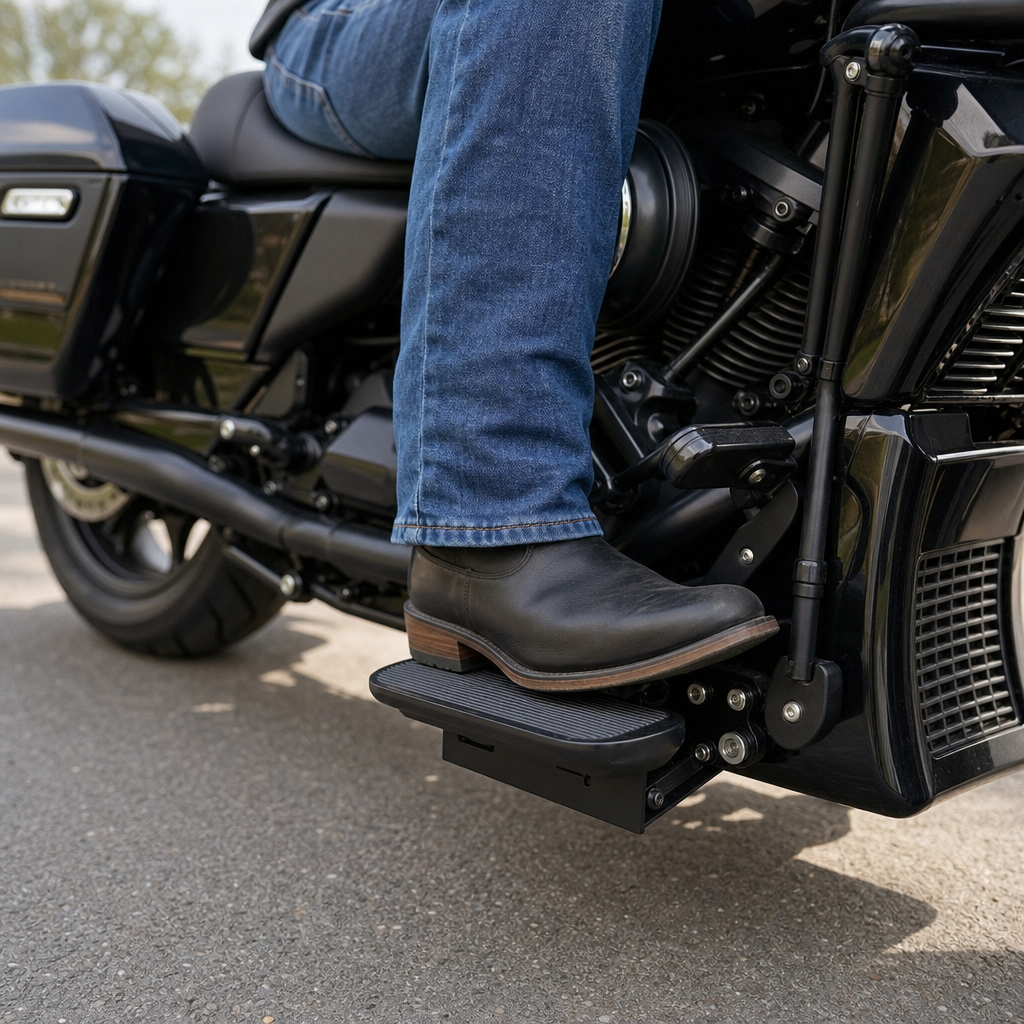
Model-specific ergonomics belong in the recipe because a power gain you cannot control is not a real-world improvement. A rider stretched too far to the bars tends to roll the throttle abruptly and brace against the grips under acceleration, making a sharp tune feel harsher than it is. A seat that locks the pelvis in one position can also change how cleanly the rider modulates power mid-corner. On CVO touring models, the right seat height, bar reach, lever angle, and floorboard position let the rider hold a neutral spine and relaxed shoulders, which improves throttle precision and reduces fatigue. In practice, that can make a modestly tuned bike feel faster and safer than a more aggressive build with poor fit.
| Recipe element | What to evaluate | Why it matters on a CVO 121 HO |
|---|---|---|
| Velocity stack geometry | Bellmouth radius, length, taper, cover clearance | Shapes torque delivery and reduces inlet turbulence |
| Air cleaner system | Filter area, sealing, backing plate rigidity | Determines whether the stack can access stable airflow |
| Tuning method | Wideband verification, spark control, throttle mapping | Protects drivability, heat management, and engine safety |
| Exhaust pairing | Header design, collector behavior, muffler restriction | Completes the airflow package and affects torque shape |
| Ergonomic fit | Seat reach, bar position, floorboard relation | Improves throttle control and long-distance usability |
How ergonomics and intake performance connect on touring Harley-Davidson models
Many riders treat ergonomics and horsepower as separate categories, but on heavy Harley-Davidson touring motorcycles they are tightly linked. When I evaluate a customer bike after an intake and tune, I always ask where the rider feels the improvement: highway roll-ons, two-lane passing, mountain switchbacks, urban stop-and-go, or fully loaded travel. The answer depends as much on posture and control points as on dyno output. If the rider’s knees are cramped, hips are rotated backward, or bars are too high, the body becomes unstable during acceleration and braking. That instability makes throttle transitions feel less refined, even when the map is excellent.
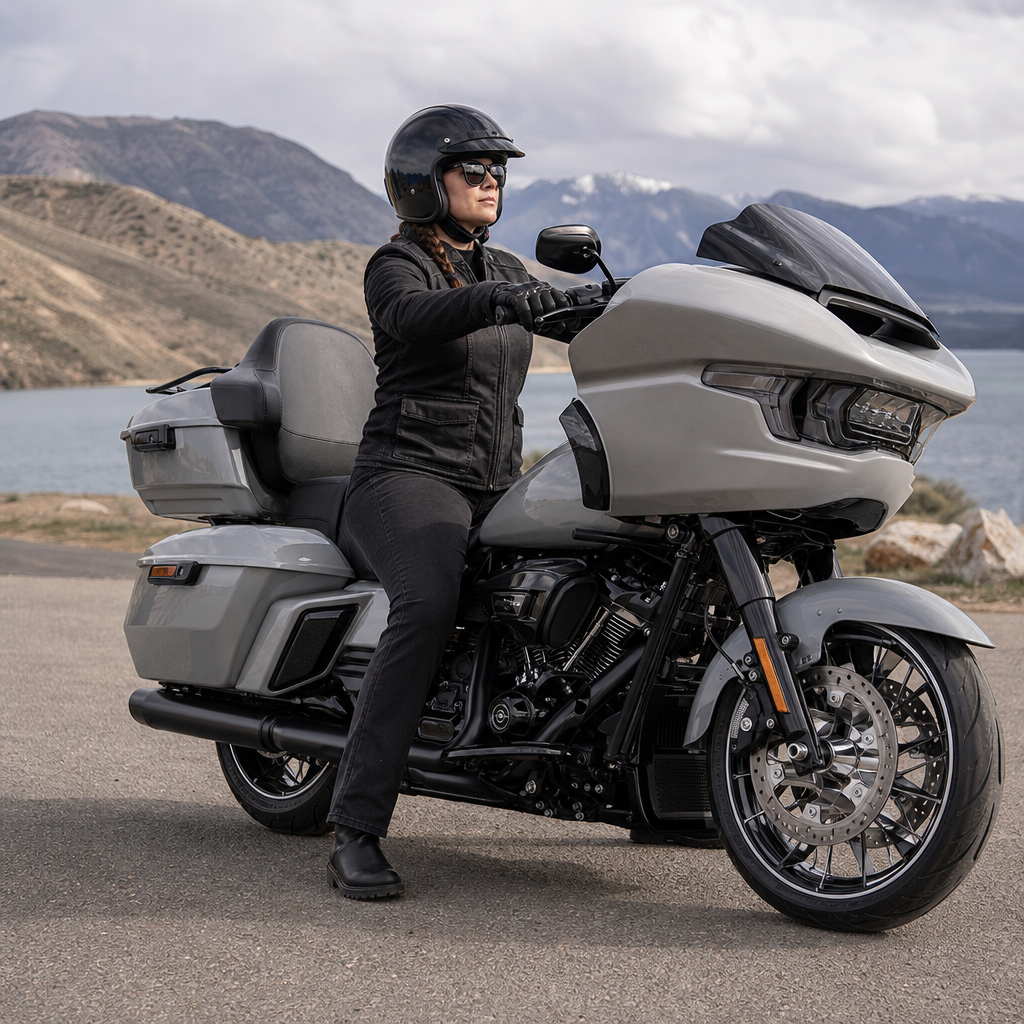
For a CVO with the 121 HO, the common ergonomic goals are neutral wrist angle, easy reach to the grips without shoulder elevation, and enough room to shift body position on long rides. Those goals help the rider apply the engine’s torque smoothly, especially in the 60-to-90-mph roll-on zone where intake and exhaust mods are most noticeable. Windshield height matters too. Excessive buffeting forces the rider to cling to the bars, which can disguise improved fueling and increase the sense of vibration. The better the rider is supported by the seat, controls, and wind management, the more clearly the velocity stack recipe translates into usable performance.
This is why this page serves as a hub for model-specific ergonomics and performance recipes rather than a narrow parts list. A Road Glide CVO with a sharknose fairing presents different wind and reach dynamics than a Street Glide CVO with a batwing. Tall riders may want a seat that moves them back, which changes elbow bend and can alter perceived throttle effort. Shorter riders may prioritize confidence at stops and choose a lower saddle, then correct the resulting hip angle with floorboard strategy. In each case, the intake recipe remains technical, but the final build must match the rider’s body and use case.
Choosing parts, validating gains, and avoiding common mistakes
The most reliable way to choose a CVO 121 HO intake velocity stack setup is to buy from manufacturers that publish fitment, show the internal geometry, and support tuning guidance with actual data. Look for a smooth bellmouth entry, a rigid backing plate, adequate injector and throttle body clearance, and a filter element sized for the engine’s airflow demand. Reputable Harley specialists often provide dyno charts, but read them critically. Compare correction methods, note whether torque was smoothed, and see if gains appear only at one rpm point. A useful touring recipe shows improvements across the middle of the curve, not just at the top.
Tuning quality decides whether the mod feels premium or problematic. After any intake change that materially alters flow, confirm air-fuel ratio under load, check for knock sensitivity, and review cold-start and hot-restart behavior. The Milwaukee-Eight platform can respond differently to heat soak, fuel quality, and regional elevation. A map that seems sharp on one cool morning can surge or soften in summer traffic if it was rushed. I trust data logging over assumptions every time. Stable idle, clean decel, and repeatable roll-on response are signs the recipe is finished rather than merely installed.
Avoid three common mistakes. First, do not combine an aggressive short stack with a restrictive cover and expect consistent results. Second, do not skip the tune because the bike appears rideable after bolt-on parts; lean spots and poor throttle translation are easy to miss until conditions change. Third, do not ignore fit. Riders often spend heavily on intake and exhaust components while keeping a seat and bar setup that limits control. On a touring Harley-Davidson, comfort is a performance part because it determines how confidently the rider uses torque over hours, not just seconds.
As this sub-pillar hub expands, each supporting article should drill into a specific recipe: rider height ranges, solo versus two-up touring, cam compatibility, exhaust pairings, and fairing-specific ergonomic adjustments. That structure helps readers move from general strategy to exact combinations without losing the systems view. The CVO 121 HO intake velocity stack recipe is a strong anchor topic because it sits at the intersection of airflow science, calibration discipline, and rider fit. Get those three right and the 2027 performance mod becomes more than a louder intake or a bigger dyno number. It becomes a Harley-Davidson that accelerates harder, responds cleaner, runs more coherently in real conditions, and fits the rider well enough to enjoy every mile. If you are planning your build, start with your riding style, confirm fit before buying parts, and choose a complete recipe rather than chasing isolated upgrades.
Frequently Asked Questions
What does a velocity stack actually do on a CVO 121 HO intake, and why does it matter for a 2027 performance mod?
A velocity stack improves the way air enters the intake tract by giving the incoming charge a smoother, radiused path into the throttle body or backing plate opening. On a Milwaukee-Eight 121 High Output engine, that matters because airflow quality is just as important as airflow quantity. A sharp-edged or poorly shaped entry can create turbulence, separation, and uneven velocity, all of which reduce the engine’s ability to fill the cylinders efficiently. A properly designed stack helps preserve air speed, improve pressure recovery, and reduce the disruption that happens when air transitions from the air cleaner area into the intake throat.
For a 2027 performance mod, the value is practical rather than theoretical. Most riders want stronger response in the rpm range they actually use on the street and during aggressive roll-ons, not just a peak number at the top of the dyno sheet. A good velocity stack recipe supports broader torque, cleaner throttle response, and more consistent airflow behavior across the rev band. On the CVO 121 HO, which already has strong displacement and output, small improvements in inlet stability can complement tuning, exhaust flow, and cam timing in a way that makes the motorcycle feel sharper and more immediate. In other words, the stack is not just a cosmetic funnel. It is a tuning component that can influence how effectively the entire intake system works.
What makes a good CVO 121 HO intake velocity stack recipe instead of just installing any aftermarket part?
A good recipe is about system matching, not random parts swapping. The best results come when the velocity stack shape, entry radius, internal taper, overall length, throttle body size, air cleaner volume, filter design, and engine calibration all work together. On the CVO 121 HO, the stack cannot be judged in isolation because the engine’s airflow demand, the dimensions of the backing plate, and the available space inside the air cleaner assembly all affect how well a given design performs. A stack that looks aggressive may actually lose effectiveness if its bellmouth is cramped by the cover, if the taper disrupts flow, or if the filter placement interferes with clean entry from multiple angles.
A solid recipe usually starts with the intended use of the motorcycle. If the goal is street torque and fast transient response, the preferred stack may differ from one intended for high-rpm dyno competition. Material quality, manufacturing accuracy, sealing to the backing plate, and compatibility with the throttle body also matter. The best setups avoid steps, ridges, or abrupt transitions that can upset airflow. Just as important, the tuning must be updated after installation so the fuel and spark strategy match the improved airflow behavior. That is why a real recipe includes component selection, installation fitment, and calibration strategy rather than treating the velocity stack as a standalone bolt-on miracle.
Will adding a velocity stack to the Milwaukee-Eight 121 High Output automatically increase horsepower and torque?
Not automatically, and that is the right expectation to have. A velocity stack can improve airflow efficiency, but the final result depends on the total combination. If the stock or current intake entry is a restriction, a well-designed stack may produce measurable gains in torque, horsepower, and throttle crispness. If the air cleaner housing is still restrictive, the filter is undersized, the exhaust is mismatched, or the tune is not corrected, the gains may be smaller than expected. On some combinations, the biggest improvement is not peak output but a smoother torque curve, stronger midrange pull, and cleaner response when opening the throttle from part load.
That said, on an engine like the CVO 121 HO, intake entry quality is important enough that the right stack can absolutely be a worthwhile part of a broader performance package. Riders often notice better urgency during roll-on acceleration and a more willing feel through the middle of the rpm band. Dyno results vary, but the best outcomes happen when the stack is paired with a high-flow backing plate, an appropriate filter, a free-breathing exhaust, and professional tuning. Think of the velocity stack as an airflow optimizer. It can unlock part of the engine’s potential, but it delivers the best value when the rest of the induction and calibration package is ready to support it.
Do you need tuning after installing a CVO 121 HO intake velocity stack, or can you run it as-is?
In most serious performance applications, tuning is strongly recommended. Even if the motorcycle starts and runs after the velocity stack installation, that does not mean the air-fuel ratio, throttle response strategy, and spark timing are optimized. By improving inlet efficiency, a stack can change how quickly and how consistently air enters the engine, especially in transient conditions and in the midrange where street riders spend a lot of time. On a modern Harley-Davidson performance setup, small airflow changes can alter fueling needs enough that leaving the calibration untouched means you are not getting the full benefit of the hardware.
Tuning becomes even more important if the velocity stack is part of a larger intake upgrade or if it is paired with an exhaust, camshaft, larger throttle body, or other airflow-related modifications. A proper tune helps the engine take advantage of the increased cylinder filling while maintaining safe combustion, good rideability, and clean power delivery. It also allows the tuner to identify whether the stack is actually helping in the targeted rpm range. For a 2027 performance mod built around real-world rideability, that calibration step is what turns a promising parts list into a refined package. Running as-is may be possible in some mild cases, but tuned is how you get consistent, repeatable, and trustworthy results.
How do you choose the right velocity stack design for street riding versus maximum high-rpm performance on a CVO 121 HO?
The choice comes down to where you want the engine to work best. For street riding, most owners benefit from a design that emphasizes smooth entry, stable air speed, and a length profile that supports strong midrange cylinder filling. That usually means prioritizing broad torque and fast throttle recovery over chasing the last bit of top-end airflow. A street-focused CVO 121 HO recipe should also consider packaging inside the air cleaner assembly, because a beautifully shaped bellmouth loses effectiveness if it sits too close to the cover or filter element. Consistent airflow from real riding conditions, including part-throttle transitions and varying engine loads, matters more than a single wide-open pull.
For maximum high-rpm performance, the design may shift toward dimensions that favor greater airflow capacity near the top of the rev range, but that choice can involve tradeoffs in response or torque lower down. The key is not assuming bigger or shorter is always better. The best stack for one build may be wrong for another if cam timing, exhaust scavenging, throttle body size, and target rpm are different. On the Milwaukee-Eight 121 High Output platform, successful selection usually comes from balancing bellmouth radius, taper, length, and available plenum space with the engine’s actual demand. If the bike is primarily street ridden, most experienced builders will favor a recipe that improves usable acceleration and rideability first, then preserves as much top-end power as the package allows.