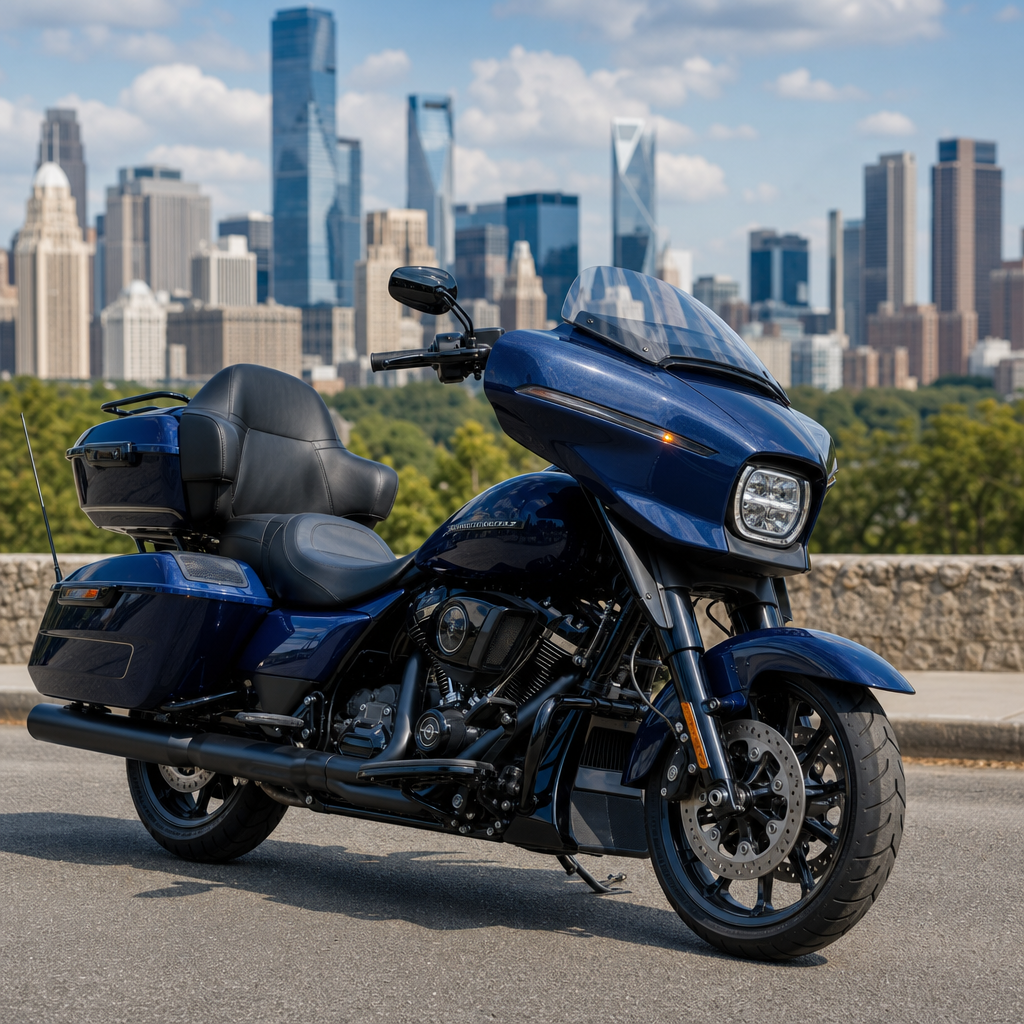
The 2026 Street Glide Limited Skyline OS firmware recipe for updating to 2027 starts with a practical truth: software changes on a touring Harley affect far more than the infotainment screen. On this model, Skyline OS influences navigation behavior, Bluetooth stability, ride information displays, voice prompts, headset pairing, and the everyday rhythm of how a rider interacts with the motorcycle on long days. When owners search for a model-specific update guide, they are usually not asking only how to install a file. They want to know whether the update is compatible, what preparation matters, how ergonomics and performance settings are affected, and which procedures reduce the risk of failed installs, battery drain, or feature regressions.
That is why this Street Glide Limited firmware article is structured as a hub for model-specific ergonomics and performance recipes. In this context, a recipe means a repeatable setup process that combines mechanical baseline checks, software steps, rider-fit adjustments, and post-update validation into one dependable workflow. The 2026 Street Glide Limited deserves that approach because it is a heavyweight touring platform where cockpit reach, seat-to-bar relationship, wind management, suspension load, audio controls, and navigation usability all interact. A clean firmware update that ignores those interactions is incomplete.
Skyline OS is Harley-Davidson’s current infotainment and connected interface environment used on recent touring machines with the large color touchscreen and integrated ride features. Firmware is the packaged software layer that updates system logic, device compatibility, bug fixes, and feature behavior. Updating for 2027 means preparing a 2026 Street Glide Limited to run the latest stable release branch intended for that hardware generation, while preserving rider preferences and confirming that key systems still perform correctly afterward. It does not mean transforming the motorcycle into a different platform or bypassing factory constraints. Compatibility remains model and hardware specific.
This matters because touring riders depend on consistency. I have seen owners lose half a day on a trip because headset audio would not reconnect after a rushed software update, or because a USB drive was formatted incorrectly and the install stalled. I have also seen a proper update solve recurring map freezes, improve phone pairing, and make glove-friendly controls feel more predictable simply because the interface latency was reduced. For a Street Glide Limited rider, the best update process protects reliability first, then restores ergonomics and performance settings so the bike feels familiar when it leaves the garage.
What to check before updating Skyline OS on a 2026 Street Glide Limited
Before installing any firmware, confirm the exact motorcycle, head unit version, regional configuration, and current software build. The 2026 Street Glide Limited may share broad architecture with other Grand American Touring models, but update packages can still differ by hardware identifier, market, and feature set. Use the system information screen to record the software version, map version, Bluetooth firmware details if shown, and VIN-linked dealership records if available. Taking photos of every version screen is faster than writing everything down and gives you a recovery reference if settings reset later.
Battery condition is the first mechanical gate. A touring Harley with a weak AGM battery can appear normal at startup yet still sag during an extended ignition-on update session. Put the battery on a smart charger approved for motorcycle use, verify terminal tightness, and inspect grounds. If the bike has sat for weeks, do not assume a short idle will prepare it. Updates should be performed with stable voltage support, ideally after a full charge and with accessories such as heated gear controllers, aftermarket LED loads, or nonessential USB devices disconnected.
Next, protect your data. Export favorites, paired devices, saved routes, and custom audio settings if the system allows it. At minimum, write down headset names, phone pair order, equalizer values, navigation preferences, and home address entries. Riders often overlook ergonomic presets hidden inside software behavior. For example, if you rely on a specific split-screen layout to reduce glance time, losing that setup after an update is not merely inconvenient; it changes cockpit workload until restored. The Street Glide Limited is built for distance, so reducing distraction matters as much as installing the latest code.
Finally, verify the update source. The safe path is Harley-Davidson’s official owner resources or a dealer-supplied package matched to the bike. Avoid reposted files from forums unless they are being used only to confirm version notes. Check release documentation for prerequisites, known bugs, required map updates, and whether the install must be staged in sequence. Some firmware branches expect an intermediate build first. Skipping that detail is one of the most common causes of failed update attempts on connected motorcycle systems.
The model-specific firmware recipe: installation, validation, and rider setup
The most reliable Street Glide Limited update recipe combines software discipline with a touring-bike setup routine. Follow these stages in order, because each one reduces avoidable variables that can mask whether a problem comes from the new firmware or from the motorcycle’s baseline condition.
| Stage | Action | Why it matters on a Street Glide Limited |
|---|---|---|
| 1. Baseline capture | Photograph software versions, settings screens, route preferences, and paired devices | Speeds recovery if profiles, audio settings, or navigation data reset after installation |
| 2. Power stabilization | Fully charge battery, connect approved maintainer, switch off nonessential accessories | Prevents voltage drop during long ignition-on sessions on a fully dressed touring bike |
| 3. File preparation | Download exact firmware package, verify release notes, use properly formatted USB storage | Reduces install failures caused by wrong package selection or media formatting errors |
| 4. Controlled install | Run update with bike stationary in ventilated area, follow prompts without interruption | Avoids corrupted writes caused by key cycling, screen tapping, or premature shutdown |
| 5. Core validation | Test boot speed, touch response, GPS lock, headset pairing, phone calls, and media playback | Confirms daily-use touring functions before you trust the system on the road |
| 6. Ergonomic restore | Reapply screen layout, audio balance, voice guidance, and glove-friendly shortcuts | Returns the cockpit to a low-distraction setup tailored to your reach and riding habits |
| 7. Road confirmation | Ride a short mixed route and check navigation, prompts, and bar-switch behavior | Finds issues that do not appear when the bike is static in the garage |
In practice, the installation itself is usually the easy part. The mistakes happen around it. Use a quality USB drive from a known brand, formatted exactly as required in the release notes, and load only the update files needed for that session. During the install, leave the motorcycle stationary, maintain power, and do not interact with the display beyond required prompts. If the system reboots more than once, that can be normal; interrupting it is not. Allow the process to finish fully before removing media or cycling ignition.
Once updated, validate in layers. First, confirm the new version number. Second, test boot behavior and screen responsiveness. Third, reconnect your primary phone and headset, then place a test call and start music playback. Fourth, enter a destination and confirm GPS lock, route calculation speed, and voice prompt clarity. Fifth, use handlebar controls with gloves on. The Street Glide Limited’s large fairing and touring intent mean rider input should remain simple and repeatable, especially at fuel stops, in traffic, and during weather changes. If menu flow feels slower or button mapping changed, correct it before any long ride.
Ergonomics recipes after a Skyline OS update
Firmware updates can change the way a rider experiences reach, attention, and fatigue even when no physical part moves. That may sound odd until you ride six hours with a menu layout that forces two extra taps at every navigation adjustment. On the Street Glide Limited, ergonomics are not limited to seat height, floorboards, or bar sweep. Digital ergonomics matter because the touchscreen, switchgear logic, and audio prompts sit directly inside the rider’s task flow.
Start with glance management. Set the home screen to show only the information you use most often, usually navigation, media, and a minimal ride data panel. Remove clutter that competes for attention. Riders with shorter arm reach often angle the bars or adjust seating position to improve touchscreen access at a stop, but on the move the better solution is minimizing touch dependence. If the 2027 Skyline OS build offers customizable shortcuts, assign them to the tasks you perform with gloves, such as muting prompts, changing audio source, or jumping between map and trip data.
Audio is the next ergonomic layer. Touring owners commonly run a phone, a rider headset, and sometimes a passenger headset. After updates, pairing order can change, causing priority conflicts where navigation interrupts music poorly or calls route to the wrong device. Rebuild pairings from scratch if performance is inconsistent. In my experience, deleting all devices and pairing rider headset first, phone second, and passenger accessories last produces the fewest odd behaviors. Then set voice guidance volume while wearing your actual helmet at idle and again during a short ride, because wind noise through the batwing fairing changes perception more than most owners expect.
Finally, restore posture-related preferences that software influences indirectly. Brightness settings affect squinting and head angle in full sun. Auto-day-night transitions affect readability at dusk. Map orientation, zoom behavior, and prompt timing influence how long your eyes leave the road. A good ergonomics recipe ends when the digital cockpit supports natural riding posture instead of pulling your focus forward and down.
Performance recipes, troubleshooting, and hub-level guidance for related Harley-Davidson articles
On a 2026 Street Glide Limited, performance recipes tied to Skyline OS are mainly about responsiveness and ride support, not horsepower gains. Firmware can improve boot time, touch latency, Bluetooth reconnection, route calculation speed, and system stability. Those improvements matter because they reduce friction during real touring use. If your maps open faster, headset reconnects cleanly at fuel stops, and voice prompts arrive on time, the motorcycle feels better sorted. That is meaningful performance in the context of a modern bagger.
Troubleshooting should be methodical. If the update fails to start, suspect file structure, USB formatting, or package mismatch before blaming the motorcycle. If the update completes but the system behaves erratically, perform a controlled reboot, then check for a settings reset or a secondary component update that did not finish. If Bluetooth is unstable, remove all pairings on both bike and devices, restart them, and rebuild the connection chain in a consistent order. If navigation lags, verify map data version and available storage. Dealers can also check for technical service communications that may not be obvious in owner-facing notes.
As the hub page for model-specific ergonomics and performance recipes under Harley-Davidson, this article should guide readers toward adjacent topics they will likely need next: bar reach tuning for touring models, seat and backrest fit for long-distance comfort, suspension preload recipes for rider-passenger-luggage loads, headset pairing sequences, navigation workflow optimization, and battery maintenance before software service. The Street Glide Limited rewards an integrated approach. Software, fit, and touring reliability are connected systems, and owners get the best results when they treat them that way.
The key takeaway is simple: the 2026 Street Glide Limited Skyline OS firmware recipe for updating to 2027 is not just an install checklist. It is a complete process for preserving compatibility, protecting electrical stability, restoring rider-specific ergonomics, and validating performance before a real trip. When done correctly, the update can improve navigation reliability, device pairing, interface smoothness, and overall ease of use without changing what owners already love about the motorcycle.
Approach the job in three phases. First, verify compatibility, battery health, and official files. Second, install in a controlled environment with stable power and no interruptions. Third, rebuild your personalized cockpit by restoring layouts, pairings, prompt levels, and route preferences, then confirm everything on a short ride. That sequence prevents most problems and makes post-update troubleshooting much easier if something does go wrong.
For touring riders, the main benefit is confidence. A properly updated Street Glide Limited should start the day with a responsive display, connect cleanly to the devices you actually use, and support low-distraction riding mile after mile. Use this article as your hub, then move to the related Harley-Davidson fit, suspension, audio, and navigation recipes that match your exact setup. Build the bike around your body, your routes, and your real-world touring habits, and the software will serve the ride instead of interrupting it.
Frequently Asked Questions
What does the 2026 Street Glide Limited Skyline OS update to 2027 actually change?
The 2027 Skyline OS firmware package for a 2026 Street Glide Limited typically affects much more than the main touchscreen appearance. On this motorcycle, the operating system acts as the control layer for several rider-facing functions, so an update can influence navigation routing behavior, Bluetooth connection consistency, headset pairing reliability, voice prompt timing, ride data presentation, menu responsiveness, and general infotainment stability. That is why owners often notice improvements that have nothing to do with graphics alone. A firmware revision may reduce random disconnects between the bike and a phone, improve the way map tiles load during longer rides, refine audio source switching, and make system prompts feel more predictable in real-world touring use.
Just as important, the update can include behind-the-scenes fixes that are easy to overlook but valuable over time. These may involve compatibility updates for newer mobile operating systems, bug fixes for freezing or delayed boot behavior, improved communication between the display and other onboard modules, and refinements to how settings are retained after power cycles. For riders who use navigation, communication headsets, music streaming, and ride information every day, those changes can significantly improve the overall ownership experience. In practical terms, a successful Skyline OS update is less about “new software” in the abstract and more about making the motorcycle’s daily digital functions feel smoother, more dependable, and better prepared for the next riding season.
Why do riders say this update affects the whole touring experience, not just the infotainment screen?
Riders describe the Skyline OS update this way because the infotainment system on a 2026 Street Glide Limited is deeply tied to how the motorcycle is used on the road. During a long day of touring, the screen is not simply displaying entertainment options. It is often handling navigation guidance, turn-by-turn prompts, headset communication, paired device management, audio routing, and at-a-glance ride information. If any of those systems lag, disconnect, freeze, or behave inconsistently, the rider feels it immediately. A navigation glitch can interrupt route confidence, a Bluetooth issue can affect communication and music, and delayed voice prompts can become distracting when traffic or weather conditions demand focus.
That is why a model-specific firmware recipe matters. Touring riders depend on repeatable behavior. They want the bike to boot properly, remember paired devices, reconnect cleanly, keep maps usable, and provide stable prompts mile after mile. When the software works well, the interaction between rider and motorcycle becomes almost invisible, which is exactly what most owners want. When it works poorly, every touch, prompt, and reconnect becomes noticeable. So while the update is technically a software revision, the real-world result is often a broader improvement in comfort, confidence, and routine. For a touring Harley, software quality is part of ride quality.
What should I do before updating the Skyline OS firmware on a 2026 Street Glide Limited?
Preparation is one of the most important parts of a successful update. Before installing any 2027 firmware on a 2026 Street Glide Limited, start by confirming that the update is intended for the exact model, year, and hardware configuration you have. Using the wrong file, an incomplete package, or instructions that apply to a different touring model can create unnecessary problems. It is also smart to review any official release notes or service guidance so you understand what the firmware is designed to change and whether there are any special requirements. If the system allows you to document current software versions, paired devices, and user preferences, do that first. It gives you a reference point if you need to troubleshoot after installation.
Next, make sure the motorcycle has stable electrical support for the entire update process. Firmware installation should never be rushed or attempted with a weak battery. If the procedure recommends a battery tender or stable charging support, use it. Also remove avoidable variables: unpair devices if instructed, close unnecessary apps on the connected phone, verify that your update media or connection method is clean and reliable, and allow enough uninterrupted time to complete the process. Riders should also expect that some settings may need to be re-entered afterward, including Bluetooth pairings, audio preferences, and navigation-related options. Taking a few minutes to prepare carefully is often the difference between a smooth update and a frustrating one.
How can I tell whether the 2027 firmware update installed correctly?
The first sign of a successful installation is that the system completes its reboot cycle normally and becomes responsive without getting stuck on a startup screen, repeating a boot loop, or showing obvious warning messages. After that, verify the software version directly in the system information or settings area to confirm that the reported firmware matches the intended 2027 release. Do not rely only on the fact that the screen turned back on. A proper verification includes checking that menus load correctly, touch response feels normal, and core functions behave the way they should.
It is also wise to test the features that matter most in actual use. Pair your phone again if needed, reconnect your headset, confirm that music playback works, and open navigation to see whether maps, route prompts, and voice guidance function normally. Check ride information pages, source switching, and any common controls you use on a regular ride. If your previous complaints involved intermittent Bluetooth drops, lag, or prompt timing, spend a few rides evaluating whether those issues improved. The update is not truly “done” just because it installed; it is only complete when the motorcycle consistently performs as expected across the functions Skyline OS controls. A short verification routine right away can catch minor issues before they become bigger annoyances on the road.
What if the Street Glide Limited has problems after the Skyline OS update?
If the motorcycle shows odd behavior after the update, start with the simplest possibilities first. Many post-update issues are not full failures but temporary inconsistencies caused by incomplete pairing data, retained cached settings, or a device compatibility mismatch. If Bluetooth is unstable, remove and re-pair the phone and headset from scratch rather than assuming the new firmware is defective. If menus seem slow or certain settings do not stick, perform any recommended restart or reset procedure for the infotainment system and then test again. Also check whether the connected phone’s operating system and app permissions are current, because some issues that appear to be motorcycle-related are actually caused by the mobile device side of the connection.
If the problem is more serious, such as persistent boot issues, repeated crashes, missing functions, or update verification failures, stop experimenting and move to a more controlled troubleshooting process. Reconfirm that the installed firmware matches the bike, review the update steps for anything missed, and consult official dealership or manufacturer guidance. For a modern touring motorcycle, software symptoms can overlap with power, module communication, or accessory compatibility issues, so a professional diagnostic approach may be the fastest path to resolution. The best rule is simple: minor quirks can often be corrected through re-pairing and settings checks, but repeatable faults after a firmware update deserve formal support. Protecting system stability is more important than forcing the bike through repeated unofficial fixes.