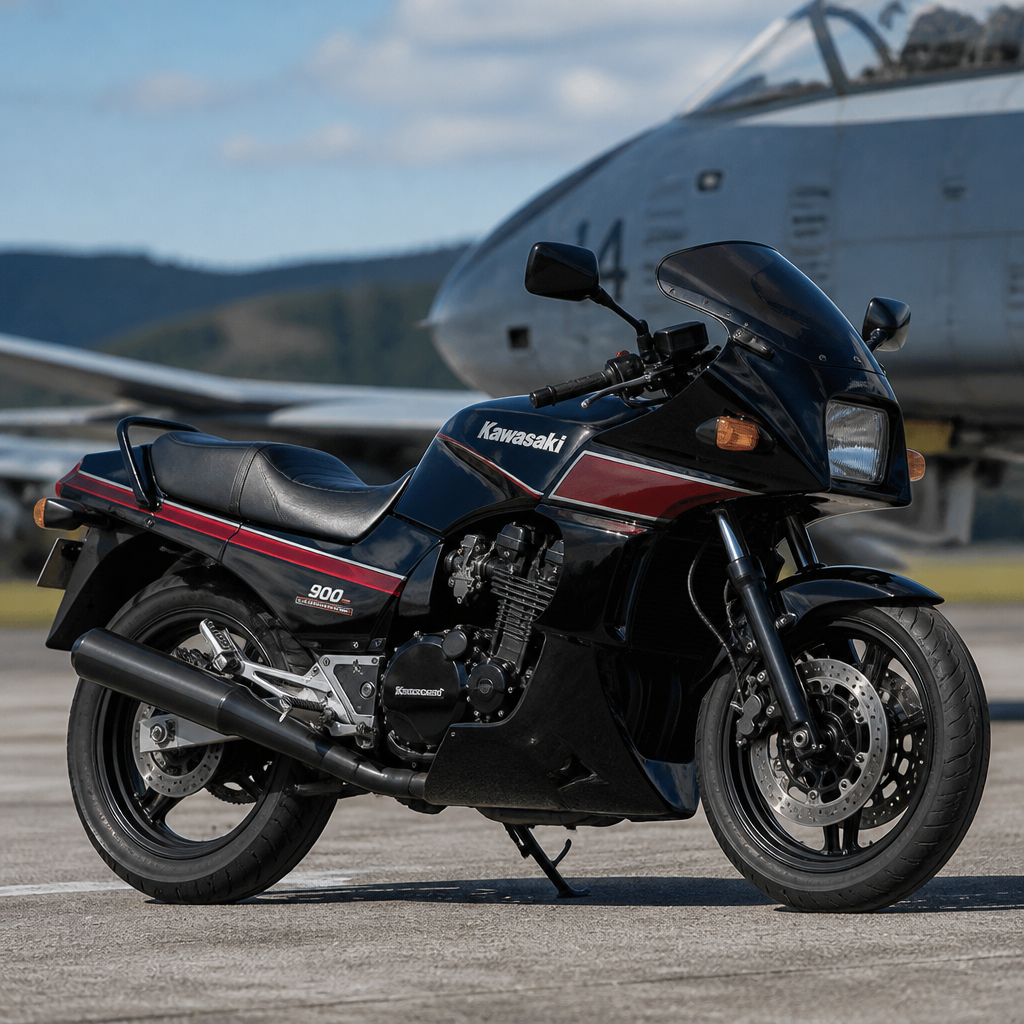
The 1980s Kawasaki Ninja 900 occupies a unique place in motorcycle history because it was not simply a fast bike, but the machine that turned the fully faired, mass-produced sportbike into a mainstream obsession. Launched as the GPz900R in 1984 and immortalized on screen soon after, it combined liquid cooling, a 16-valve inline-four, and packaging that made earlier superbikes feel dated overnight. When enthusiasts refer to the original Top Gun legend, they mean this motorcycle: the first Ninja sold in many markets, the model that linked engineering credibility with pop-culture permanence, and a benchmark for anyone restoring metric classics from the 1970–1993 era.
Restoring a 1980s Kawasaki Ninja 900 requires more than cosmetic refurbishment. It means understanding period-correct finishes, model-year differences, known mechanical weak points, and the standards collectors use to judge originality. In practical terms, restoration is the process of returning a motorcycle to a defined condition, whether factory stock, factory-plus with safety upgrades, or sympathetic preservation that retains age while correcting failures. Metric classics, a term commonly used for Japanese motorcycles built in large numbers from the 1970s through the early 1990s, demand a different approach from British or American restorations because parts interchangeability, plastics, emissions-era carburetion, and electrical aging create their own technical challenges.
This hub article is designed to anchor a broader restoration library for metric classics built from 1970 to 1993, using the Ninja 900 as the lead example because it sits at the intersection of collectibility, usability, and parts complexity. I have worked through enough Japanese restorations to know that owners usually ask the same questions first: Is the bike complete, is it worth restoring, what must stay original, and what can be upgraded without hurting value? Answering those questions early prevents expensive mistakes. The Ninja 900 rewards disciplined planning, and the lessons from this model apply directly to UJM fours, early GSX-Rs, Interceptors, turbo bikes, and liquid-cooled standards from the same period.
Why does this matter now? Values for unmodified 1980s performance motorcycles have climbed steadily, while untouched donor bikes have become scarcer. At the same time, reproduction bodywork, digital ignition options, modern brake components, and online parts networks make serious restorations more achievable than they were fifteen years ago. A well-restored Ninja 900 can be ridden reliably, shown credibly, and documented as a historically important machine. More broadly, learning to restore this Kawasaki teaches the core methods every metric-classic owner needs: verification before spending, systems-based mechanical work, careful sourcing, and recordkeeping that supports future maintenance and resale.
What Makes the Kawasaki Ninja 900 a True Metric Classic
The GPz900R mattered because Kawasaki engineered it as a clean-sheet performance motorcycle rather than an evolution of an air-cooled platform. Its 908cc liquid-cooled DOHC engine used 16 valves and a compact layout with the alternator placed behind the cylinders, helping shorten wheelbase while keeping high-speed stability. Contemporary tests regularly praised the bike for crossing 150 mph while remaining more composed than many rivals. The steel perimeter-style frame, anti-dive forks on early versions, 16-inch front wheel, and full fairing made it unmistakably modern in 1984. For restorers, those defining features establish the baseline. If a project bike has lost its original wheels, fairing brackets, airbox, or exhaust layout, restoration becomes more difficult and expensive immediately.
Collectors also value the Ninja 900 because it bridges two eras. It still carries some early-1980s traits, including carburetors, conventional forks, and analog instrumentation, yet it introduced the integrated sportbike formula that shaped the next decade. That transitional status is important in a hub covering 1970–1993 metric classics. Earlier restorations often focus on rust, points ignitions, and chrome. Later restorations deal more with fragile plastics, aluminum frames, and model-specific electronics. The Ninja 900 sits in the middle, forcing owners to handle both mechanical tradition and emerging complexity. That is exactly why it serves so well as a guidepost for the entire category.
How to Evaluate a Ninja 900 Before Starting Restoration
The first rule is simple: buy the most complete motorcycle you can afford. Cosmetics are expensive, but missing model-specific pieces are worse. On a GPz900R, inspect the upper fairing stay, side panels, chin spoiler, grab rail, instrument cluster, airbox, stock CV carburetors, and original wheels before getting excited about compression numbers. Fairing tabs, mirror mounts, and inner panels often tell a more honest story than fresh paint. Crash damage frequently hides at the steering stops, frame neck, front substructure, and lower engine mounts. Use a flashlight and straightedge, not assumptions.
Then verify identity. Check frame and engine numbers against the title and production range for the market where the bike was sold. A genuine early machine with matching major components will always be easier to document and usually stronger in value than a bitsa assembled from several donors. I also recommend checking for period modifications that were once common: Kerker exhausts, jet kits, fork braces, cut rear fenders, braided lines, aftermarket indicators, and swapped handlebars. None automatically kills a project, but every deviation adds decisions. If your goal is a factory-correct restoration, returning a heavily modified bike to stock may cost more than buying a better candidate.
| Inspection Area | What to Check | Why It Matters |
|---|---|---|
| Frame and VIN | Neck welds, steering stops, title match, straightness | Confirms identity and reveals crash damage |
| Bodywork | Original panels, tab condition, correct mounting hardware | Plastic replacement is costly and fit varies widely |
| Engine | Compression, cam-chain noise, oil leaks, coolant contamination | Determines rebuild scope and parts budget |
| Fuel System | Tank rust, petcock function, carb completeness, airbox presence | Fuel issues are universal on stored metric classics |
| Chassis | Wheel condition, fork pitting, shock wear, swingarm play | Safety and ride quality depend on hidden wear points |
| Electrical | Charging output, harness splices, connector corrosion | Japanese bikes from this era often fail here first |
A complete evaluation should produce a written scope of work. Divide the project into safety, mechanical integrity, appearance, and originality. This is how professional restorations stay on budget. It also creates internal linking opportunities within a larger encyclopedia: carburetor rebuilding, charging-system diagnosis, paint-code references, fastener plating, fork restoration, and period tire fitment should all connect back to this hub because owners rarely need only one procedure. The value of a hub article is not just overview, but decision-making structure.
Mechanical Restoration Priorities: Engine, Cooling, Fuel, and Brakes
On any long-stored Ninja 900, start with the systems that can destroy expensive components if ignored. Drain the fuel tank, inspect for internal rust, rebuild or replace the petcock, and ultrasonically clean the carburetors. The Keihin constant-velocity carbs depend on clean passages, intact diaphragms, correct float height, and a sealed airbox to meter properly. Owners often chase poor running with jets when the real issue is hardened intake boots, blocked pilot circuits, or vacuum leaks. Bench synchronization gets the bike started; vacuum synchronization finishes the job. Replace fuel lines with ethanol-safe hose and verify the tank cap vent is functioning, because a blocked vent can mimic carburetion faults.
The cooling system deserves equal attention. The GPz900R’s radiator, thermostat, hoses, water pump seals, and fan switch should all be checked before sustained running. Old coolant turns acidic and attacks aluminum. I have opened survivor bikes that looked decent externally but carried heavy internal deposits because they sat with depleted coolant for years. Flush the system thoroughly, pressure-test if possible, and inspect for seepage around the pump and head gasket area. Overheating on a restored classic is rarely mysterious; it is usually the predictable result of skipped basics.
Engine condition varies, but the Ninja 900 bottom end is generally durable if it received regular oil changes. Focus on cam-chain tension, valve-clearance inspection, oil leaks from gaskets and seals, and evidence of clutch abuse. Use the factory service manual, not forum folklore, for torque values and adjustment procedures. Compression and leak-down testing should guide your decisions. A motor with even numbers, acceptable leakage, and clean oil may need little more than seals, valve service, and carb work. A bike with poor leak-down, smoking on deceleration, and metallic debris in the oil filter needs a different budget conversation entirely.
Brakes are non-negotiable. Rebuild calipers and master cylinders with quality kits, inspect disc thickness and runout, replace aged rubber lines if the bike will be ridden regularly, and confirm wheel bearings turn smoothly without play. Purists may keep the stock hose appearance, but from a safety standpoint, fresh lines and modern pads are sensible. Similar logic applies across the 1970–1993 metric-classic world. Whether you are restoring a CB750F, FJ1200, GSX-R750, or ZX-10, hydraulic neglect is both common and dangerous. Restorations gain credibility when the bike stops as confidently as it looks.
Electrical, Suspension, and Cosmetic Restoration Standards
Electrical work separates dependable restorations from trailer queens. The Ninja 900, like many Japanese motorcycles of its era, can suffer from weak charging output, tired regulator-rectifiers, corroded grounds, and hacked accessory wiring. Test battery voltage at rest and while charging, inspect stator resistance and AC output, and clean every major connector with contact cleaner before applying dielectric protection where appropriate. Pay attention to the ignition switch, fuse box, starter relay, and handlebar switchgear. Small voltage drops create outsized problems on carbureted classics because weak spark and low cranking speed compound starting issues.
Suspension should be restored with realistic expectations. A rebuilt fork with correct bushings, seals, straight tubes, and fresh oil transforms the bike, and most original rear shocks are beyond their best by now. If the bike is being judged for originality, rebuild the original components when feasible. If it is intended for road use, a period-respectful aftermarket shock from Hagon, YSS, or a specialist rebuilder is often the better choice. The key is documentation. Keep the removed parts, record spring rates and settings, and be transparent about upgrades. In the collector market, honesty preserves value better than claiming originality where none exists.
Cosmetic restoration is where costs escalate fastest. Properly repairing ABS bodywork, aligning tabs, sourcing decals, and matching factory colors takes patience. Use paint codes and reference photography from original brochures, service literature, and survivor bikes, not memory. Fastener finishes matter more than many owners expect. Zinc plating, black-oxide hardware, warning labels, windscreen profile, seat cover grain, and exhaust heat-shield details all contribute to whether the finished motorcycle feels authentic. This principle applies throughout restoration guides for metric classics from 1970–1993: originality is cumulative. A dozen small inaccuracies can undermine an otherwise impressive build.
Parts Sourcing, Originality, and Building a Restoration Hub for 1970–1993 Metric Classics
Finding the right parts is now equal parts archaeology and network-building. Start with OEM part numbers using factory fiches from Kawasaki and established suppliers such as CMSNL, Partzilla, Webike Japan, or specialist breakers. Cross-reference superseded numbers because Japanese manufacturers often changed suffixes over time. For discontinued pieces, owner clubs, marque forums, auction sites, and regional salvage businesses remain essential. On a Ninja 900, the hardest items are often undamaged original plastics, correct exhaust components, clean instrument assemblies, and market-specific trim. The lesson for the broader hub is clear: every model in the 1970–1993 metric-classic range has its own scarcity map, and restoration planning should be built around those bottlenecks first.
Originality needs a defined standard. Concours restoration aims for factory appearance and configuration as delivered in a specific market and year. Rider restoration prioritizes safety and function while keeping the visual character intact. Preservation retains as much original material as possible, cleaning and stabilizing rather than refinishing everything. None is automatically right or wrong. What matters is consistency. A GPz900R with accurate bodywork, correct wheels, and sympathetic mechanical upgrades can be more valuable to a rider than a cosmetically perfect bike with hidden electrical shortcuts. For a technical encyclopedia, that distinction should guide article clusters, from model identification and date-coded components to coating specifications and period-correct consumables.
A strong restoration hub for metric classics should therefore organize content by system and by model family. Readers restoring a Ninja 900 often also need information on carburetor synchronization, charging-system testing, fuel-tank de-rusting, fork rebuild procedures, decal placement, and classic Japanese paint correction. Owners of VF Interceptors, Yamaha FJ and XJ models, Suzuki GS and early GSX-R machines, and Kawasaki KZ or GPz variants face the same categories in different forms. Building those links around one flagship article helps users move from broad strategy to exact procedure without losing context or making avoidable mistakes.
The 1980s Kawasaki Ninja 900 remains the ideal gateway into restoring metric classics because it combines historical importance, technical sophistication, and real-world rideability in one unmistakable package. Restore one properly and you learn the discipline that every 1970–1993 Japanese project demands: verify completeness, define originality, rebuild systems in the right order, and document every choice. That process protects money, improves safety, and produces a motorcycle that starts, runs, cools, charges, and stops the way a serious restoration should.
For owners and researchers, the deeper benefit is transferable knowledge. The same methods used on a GPz900R apply across the broader encyclopedia of metric classics, from air-cooled fours to early liquid-cooled superbikes. If you are planning a project, begin with the service manual, a parts fiche, a condition audit, and a sourcing list before buying shiny parts. Then use this hub as your map for the specialized guides that follow. Start with an honest assessment of your bike, and build the restoration one verified system at a time.
Frequently Asked Questions
Why is the 1980s Kawasaki Ninja 900 considered such an important motorcycle?
The 1980s Kawasaki Ninja 900, officially introduced as the GPz900R, is widely regarded as one of the most important motorcycles ever built because it redefined what a high-performance streetbike could be. Before its arrival in 1984, many superbikes were extremely fast in a straight line but still felt rooted in older design thinking, with air-cooled engines, bulky proportions, and chassis layouts that struggled to keep up with rising power levels. The Ninja 900 changed that formula overnight. It brought together liquid cooling, a compact 16-valve inline-four engine, aerodynamic full fairing bodywork, and a modern chassis package in a way that felt cohesive rather than experimental.
Its historical importance also comes from how complete the motorcycle was. It was not just a one-dimensional speed machine. It offered serious top-end performance, strong real-world rideability, relatively civilized ergonomics, and stable handling that made it practical for everyday riders as well as enthusiasts chasing the latest technology. That combination helped push the fully faired sportbike into the mainstream and established the “Ninja” identity as something aspirational. Add in its pop culture visibility as the original Top Gun bike, and the Ninja 900 became more than a successful model—it became the motorcycle that introduced a generation of riders to the idea of the modern superbike.
What makes restoring an original Kawasaki Ninja 900 different from restoring other 1980s sportbikes?
Restoring a Kawasaki Ninja 900 is different because the bike sits at the crossroads of historical significance, evolving technology, and collector expectation. Unlike many earlier machines that can be approached as relatively simple mechanical restorations, the Ninja 900 demands attention to both performance engineering and model-specific originality. Its liquid-cooled engine, integrated fairing design, anti-dive era front suspension components, and distinctive instrumentation all require a restorer to think carefully about authenticity, parts compatibility, and long-term usability. On a bike like this, the details matter enormously because enthusiasts know what makes a correct GPz900R stand out.
Another major difference is that many surviving examples have been modified over the years. Owners often changed exhaust systems, turn signals, windshields, carburetion, handlebars, mirrors, paint, and tail sections to reflect 1980s or 1990s trends. Returning one to original or near-original condition can take much more research than people expect. Factory color schemes, decals, fasteners, finishes, and even hose routing become part of the restoration story. The challenge is balancing accuracy with practicality. Some restorers pursue concours-level originality, while others favor subtle upgrades for reliability and safety. Because the Ninja 900 is both historically important and very rideable, restoration decisions tend to be more nuanced than with bikes that are restored only for display.
What should you inspect first before starting a Ninja 900 restoration project?
The first step is to evaluate completeness, structural integrity, and engine health. On a fully faired motorcycle like the Ninja 900, cosmetics can distract from more serious issues, so it is important to begin with the frame, engine cases, cooling system, and title status. Check for crash damage around the steering head, frame rails, fairing mounts, swingarm, and fork legs. Fairing brackets and tabs are especially important because broken or repaired mounting points can indicate previous impact damage and can be expensive and time-consuming to correct properly. You should also inspect the fuel tank for internal rust, dents, and petcock condition, because fuel system contamination can affect nearly every stage of the mechanical restoration.
Mechanically, pay close attention to compression, oil condition, signs of coolant leaks, carburetor deterioration, and the condition of the wiring harness. Age-related issues such as brittle connectors, hardened intake boots, seized brake components, cracked coolant hoses, and neglected valve clearances are common on 1980s machines. The Ninja 900’s cooling system deserves special scrutiny because radiators, water pumps, hoses, and thermostat-related issues can all become hidden costs. If the motorcycle runs, listen for top-end noise, cam chain concerns, clutch issues, and transmission behavior under load. If it does not run, avoid assuming it only needs “a carb clean.” A careful baseline inspection saves money, sets realistic expectations, and helps determine whether the bike is best treated as a preservation project, a rider-quality restoration, or a full ground-up rebuild.
How hard is it to find original parts for a 1984–1980s Kawasaki Ninja 900, and what parts are usually the toughest to source?
Finding original parts for a Kawasaki Ninja 900 is possible, but it requires patience, strong model knowledge, and a willingness to verify details before buying. Mechanical service items are generally easier to source than cosmetic or model-specific trim pieces. Consumables such as seals, bearings, chains, brake components, tires, and many engine service parts can often be found through aftermarket suppliers or vintage motorcycle specialists. The greater challenge comes with bodywork, factory exhaust systems, original mirrors, correct turn signals, instrument components, airbox assemblies, and model-year-specific paint and decal sets. Because so many bikes were customized, crashed, or parted out over the decades, genuinely correct original pieces can be scarce.
The hardest parts to source are usually those that owners discarded first: uncut rear fenders, stock exhausts, intact side panels, proper fairing lowers, clean fuel tanks in original paint, and complete OEM intake systems. Even when parts appear online, condition can vary dramatically, and reproduction parts may not match factory fit, finish, or dimensions. That is why serious restorers rely on factory parts diagrams, period brochures, owner forums, specialist breakers, and high-resolution reference photos. In many cases, success comes from buying the best, most complete project you can afford rather than chasing a cheaper bike that is missing major components. With the Ninja 900, completeness often matters more than a low entry price, because replacing rare original parts later can be the most expensive stage of the entire restoration.
Should you keep a restored Ninja 900 completely stock, or are sensible upgrades acceptable?
That depends on your goal, but for most owners the smartest approach is a respectful restoration with carefully chosen upgrades that improve safety and reliability without permanently altering the motorcycle. If you are restoring a Ninja 900 for collection, historical accuracy, or maximum resale appeal among purists, staying as close to stock as possible is usually the best path. That means factory-style finishes, original bodywork and graphics, stock airbox configuration, period-correct controls, and minimal visible modifications. The bike’s significance comes in part from how advanced it already was for its time, so preserving that character has real value.
That said, sensible upgrades are widely accepted when they are discreet and reversible. Modern tires in the correct sizes, stainless brake lines, upgraded brake pads, refreshed suspension internals, improved charging system components, and modern fuel-resistant hoses can make the bike more enjoyable and safer to ride without compromising its identity. Some owners also choose improved fasteners, hidden electrical upgrades, or careful carburetor tuning for today’s fuel. The key is to avoid changes that erase what makes the original Top Gun legend special. Oversized body modifications, non-period paint, hacked wiring, pod filters in place of the stock airbox, and irreversible frame or tail alterations usually hurt authenticity and can create running problems. In practice, the best restored Ninja 900s honor the original engineering while quietly addressing the weaknesses that come with age.