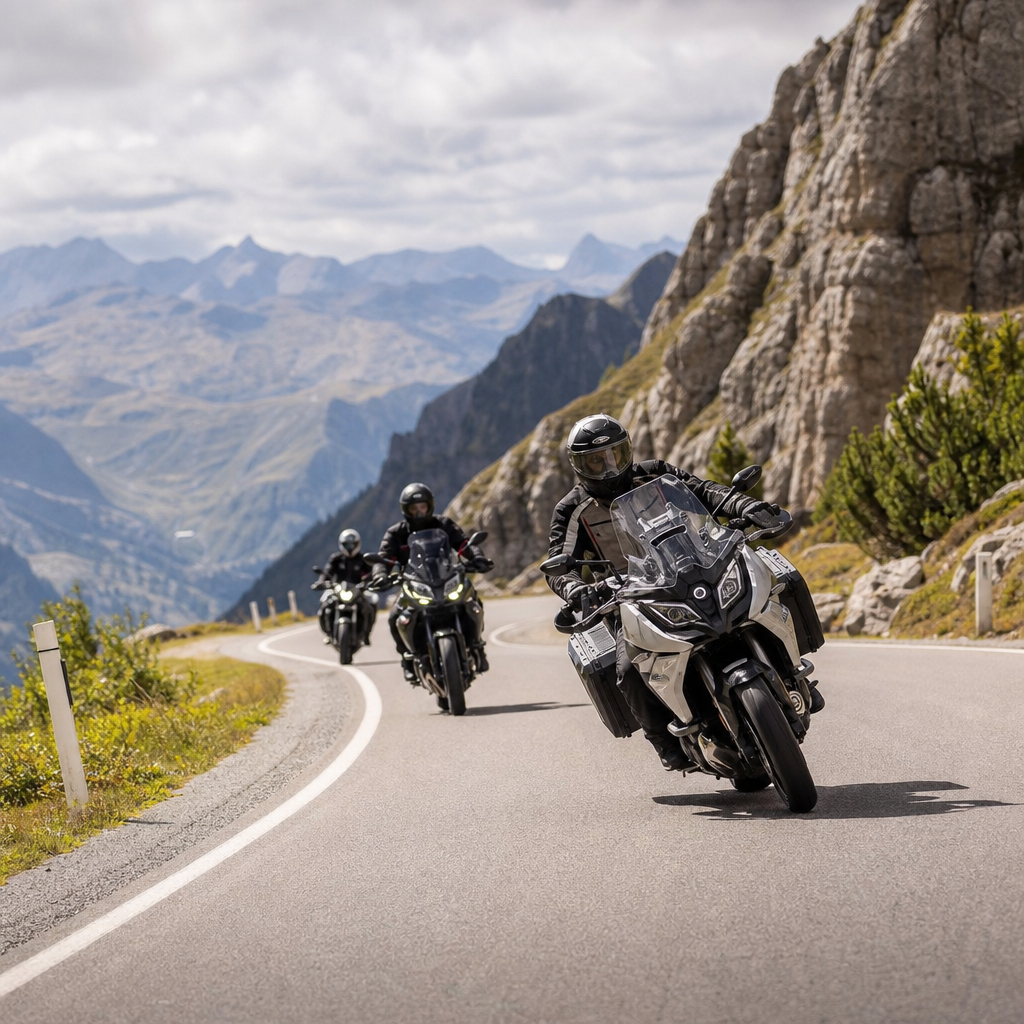
Adventure riders planning 2026 trips need luggage that survives rain, dust, crashes, and overloaded days without turning a bike into a top-heavy liability. The best waterproof soft luggage for 2026 adventure bikes combines welded dry-bag construction, abrasion-resistant outer shells, stable mounting systems, and repairable hardware, all while fitting the realities of touring and camping. In plain terms, waterproof soft luggage is a set of panniers, duffels, tank bags, and accessory pouches built from materials such as TPU, PVC-free laminated nylon, Hypalon, and ballistic textiles, then sealed with roll-top closures or RF-welded seams so gear stays dry through sustained weather and river crossings. That matters because adventure touring rarely fails in dramatic ways first; it fails when a sleeping bag gets soaked on day two, a loose strap contacts an exhaust, or a bag shifts enough to unsettle handling on rough tracks.
I have packed and repacked these systems on midweight and liter-class bikes, and the pattern is consistent: riders buy capacity first, then spend a season learning that mounting discipline, shape, and access matter more than raw liters. A strong touring and camping setup has to support week-long pavement mileage, remote camp stops, quick fuel access, and repeated loading in bad weather. It should also scale. The same hub of gear choices needs to work whether you ride a Yamaha Ténéré 700 with minimalist camping kit, a BMW R 1300 GS for two-up mixed-surface touring, or a KTM 890 Adventure R carrying tools, tubes, layers, food, and electronics. This guide covers the best waterproof soft luggage for 2026 adventure bikes as a complete touring and camping hub, so you can choose the right luggage architecture, understand key features, compare leading systems, and build a setup that stays reliable over thousands of miles.
What defines the best waterproof soft luggage for adventure touring and camping
The best systems do four things exceptionally well: keep contents dry, stay attached under vibration and impact, protect the rider and bike in a fall better than hard cases, and organize camping gear without wasting space. Waterproofing is the first filter. Look for roll-top inner liners or fully waterproof bag bodies with welded seams. Water-resistant zippers alone are not enough for prolonged rain. Brands that consistently build true-weatherproof systems include Mosko Moto, Enduristan, Kriega, Giant Loop, Ortlieb, Givi, and Nelson-Rigg, though each takes a different approach to modularity and mounting.
Material choice tells you a lot about service life. TPU-laminated fabrics generally remain flexible in cold weather and are easier to patch than brittle coated materials. Heavy denier nylon shells with replaceable wear panels handle abrasion better when a bag repeatedly rubs racks or bodywork. Mounting hardware matters just as much. The strongest systems use cam buckles, compression straps, and semi-rigid backing plates that spread load across a rack or harness. Weak luggage usually fails at plastic tabs, stitched strap junctions, or poorly protected heat exposure points. For camping, shape also matters: a long rear duffel accepts tents and sleep systems, while panniers are better for dense items such as tools, food, water filtration kits, and cooking equipment. Good luggage should support a balanced packing strategy instead of forcing everything into one giant sack.
Choosing the right luggage architecture for your bike and trip style
There is no universal best layout, because bike size, subframe strength, passenger needs, and route surface all change the answer. Rackless systems suit lighter bikes and riders who prioritize low weight and simpler installation. They hug the bike closely, reduce total width, and often survive drops well because there is less leverage on metal racks. They are ideal on bikes like the Honda CRF300L Rally, Aprilia Tuareg 660, and KTM 690 Enduro R. The tradeoff is limited flexibility for carrying odd-shaped camping gear and less convenience when you want to remove luggage quickly at a motel or ferry crossing.
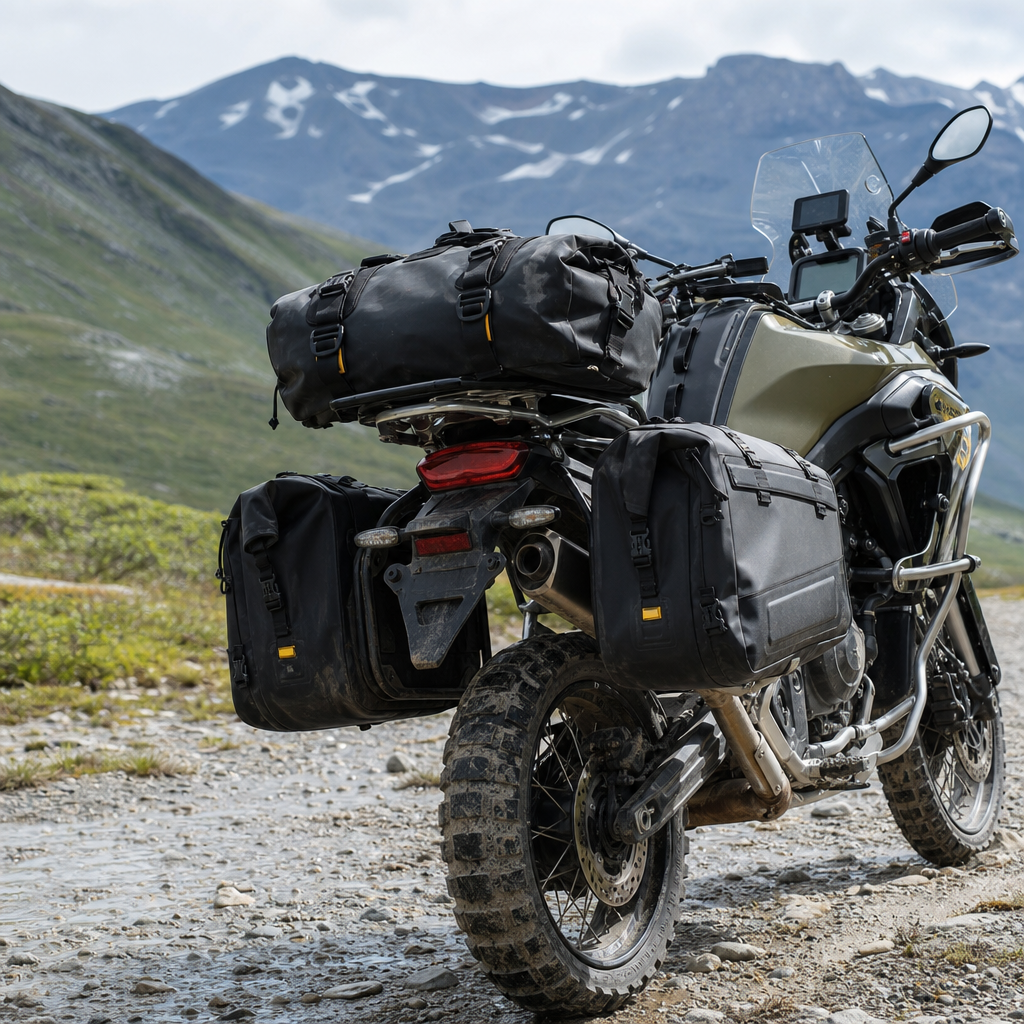
Rack-based soft panniers work better for heavier adventure bikes and longer touring. A proper pannier rack creates a stable platform, keeps bags away from exhaust heat, and improves side-to-side load distribution. On bikes such as the BMW F 900 GS Adventure, Suzuki V-Strom 800DE, or Triumph Tiger 900 Rally Pro, rack-mounted systems usually feel more secure at highway speeds and are easier to pack consistently every morning. The downside is extra cost, more weight, and another layer of hardware that can bend in a crash. Most experienced riders pair side luggage with a waterproof rear duffel and a small tank bag. That combination separates quick-access items from camp items and keeps the heaviest gear low. As a touring and camping hub, that is the core setup worth understanding before adding bottle holsters, tool rolls, fender bags, and auxiliary pouches.
Top waterproof soft luggage systems worth considering in 2026
Several product families stand out because they have proven mounting logic, parts support, and field serviceability. Mosko Moto’s Backcountry and Reckless lines remain category leaders for modular adventure use. The Backcountry 35 panniers combine a tough outer shell, removable dry bags, and a wedge mounting plate that speeds on-off use; they are especially strong for riders who mix road miles with technical tracks and want structured packing. The Reckless 80 and Reckless 40 are rackless benchmarks, particularly on midweight bikes, because the harness stabilizes load well and accepts accessory pockets without creating a loose, strap-heavy mess.
Enduristan’s Monsoon Evo and Blizzard families are excellent for riders who want absolute weather resistance and straightforward construction. Enduristan’s three-layer fabric and proven seam sealing have an outstanding reputation in prolonged rain, and details like glove-friendly buckles and bright inner liners improve daily usability. Kriega’s OS platform is one of the smartest modular systems available. OS-22 and OS-32 bags can be mixed across side racks or mounted to rackless frames, making them ideal for riders whose touring and camping needs vary trip to trip. Giant Loop’s Siskiyou and Coyote remain practical for narrow bikes and rough terrain, especially where reduced width and impact resilience matter more than suitcase-like packing. Ortlieb and Givi deserve attention for waterproof heritage and broad fitment, while Nelson-Rigg’s Hurricane line often delivers very good value for riders building a capable setup without premium-brand pricing.
| System | Best Use | Main Strength | Main Tradeoff |
|---|---|---|---|
| Mosko Moto Backcountry | Rack-based long-distance travel | Excellent structure and modularity | Heavy and expensive |
| Mosko Moto Reckless 80 | Rackless multi-day camping | Stable harness on midweight bikes | Bulkier than minimalist rackless setups |
| Enduristan Monsoon Evo | Extended wet-weather touring | Reliable waterproof construction | Less quick-detach convenience |
| Kriega OS Platform | Modular mixed-use travel | Flexible sizing and mounting options | Configuration can become costly |
| Giant Loop Siskiyou | Narrow off-road focused travel | Reduced width and crash friendliness | Less box-like organization |
How to match luggage size, weight distribution, and camping gear
Capacity numbers can be misleading because usable volume depends on shape, closure style, and how often you need access during the day. For most solo riders, 70 to 100 liters total is enough for full camping if gear is modern and compact. A common sweet spot is 25 to 35 liters per side plus a 30 to 40 liter rear duffel. That gives enough room for shelter, sleep system, layers, stove, food, tools, spares, and electronics without encouraging overpacking. Once total luggage exceeds roughly 110 liters on a single bike, handling penalties usually become obvious, especially in sand, mud, and steep rocky climbs.
Pack heaviest items low and centered. Tools, tubes, pumps, water, and cooking fuel belong in lower pannier zones. Light but bulky items like a down sleeping bag, insulated pad, and spare camp clothes belong in the duffel. Frequently used items such as documents, snacks, sunscreen, charging cables, and a headlamp should go in a tank bag or top-access pocket. Keep left-right balance within a couple of pounds whenever possible. I have seen riders chase suspension problems that were really luggage problems caused by six extra pounds hanging on the exhaust side. Also account for consumables. Food and water loads change daily, so leave margin in your layout rather than packing every compartment to absolute capacity. Compression straps are not decoration; they are what keep partially full bags from moving and stressing attachment points on rough roads.
Features that matter most in real weather, crashes, and daily camp use
The features worth paying for are not always the ones highlighted in marketing photos. First, inspect closure design. Roll-tops need enough stiffener to seal cleanly and enough space to complete at least three rolls without straining the bag. Second, check heat management. Any bag placed near a high-mounted exhaust needs a dedicated heat shield or a rack position that guarantees clearance under full suspension compression. Melt damage is still one of the most common preventable failures in soft luggage setups.
Third, prioritize replaceable parts. Buckles break, straps fray, and backing plates wear. Brands that sell individual hardware, wedges, straps, and dry bags save trips. Fourth, think about visibility and campsite usability. Light-colored interiors, external lash points, drain ports on outer shells, and glove-operable buckles make a difference after dark in rain. Lockability matters too, but it should be viewed realistically. Soft luggage can be deterred with locking straps, cable locks, and quick-removal convenience for carrying valuables inside, yet it will never match hard aluminum boxes for theft resistance. On the other hand, soft luggage is generally safer for legs in a fall and more forgiving when a loaded bike lands on uneven ground. For most mixed-surface touring and camping, that tradeoff is worthwhile.
Bike-specific fitment, rack compatibility, and setup mistakes to avoid
Fitment is where good bags become great or frustrating. Start with the bike’s rear profile, passenger peg mounts, exhaust placement, and subframe capacity. Rackless systems depend on side panel shape and seat width. A system that locks onto a Yamaha Ténéré 700 neatly may sag on a Ducati DesertX without the right support or heat protection. Rack-based bags require compatible hoop dimensions and secure anchor geometry. Check whether your rack uses 18-millimeter tubing, offset mounting points, or asymmetrical spacing around the muffler, because not every backing plate fits every rack equally well.
The most common setup mistakes are simple: straps routed near the chain, excess webbing left to flap at highway speed, bags mounted too far rearward, and no test ride with full camping weight before departure. Another mistake is ignoring suspension adjustment. Add 30 pounds of luggage and your bike likely needs preload changes, maybe damping changes too. If the bike wallows or bottoms, do not blame the bags first. Finally, do not mix waterproof confidence with careless packing. Electronics, documents, and medical items still deserve inner protection such as lightweight dry pouches. Even excellent luggage can be compromised by a poorly closed roll-top, crash damage, or user error.
Building a complete touring and camping luggage system for 2026
The smartest way to shop is to build a system, not buy isolated bags. Start with side luggage as the foundation, then add a rear duffel sized for your sleep kit and camp shelter. Add a compact tank bag for in-motion essentials, preferably one that does not interfere with standing position on technical terrain. Include a dedicated tool storage solution, because metal tools destroy soft goods when left loose. Many riders also benefit from one external fuel or bottle pocket, but only if it does not widen the profile excessively or place liquid weight high on the bike.
For 2026 touring and camping, expect more riders to favor modular, lighter systems over giant permanent luggage. Midweight adventure bikes continue to dominate real mixed-surface travel, and luggage choices are following that trend. If you want one dependable answer, choose a waterproof rack-based pannier system for larger bikes and a premium rackless harness for lighter bikes, then keep total packed volume disciplined. The best waterproof soft luggage for 2026 adventure bikes is the setup that stays dry, carries camp efficiently, protects handling, and can be repaired on the road. Use this hub as your starting point, then compare bike-specific fitment, packing methods, and accessory options before your next trip. A well-chosen luggage system turns touring and camping from a packing problem into a travel advantage, so audit your current setup and upgrade the weak points before the season starts.
Frequently Asked Questions
What makes waterproof soft luggage better than hard panniers for 2026 adventure bike travel?
For many adventure riders, waterproof soft luggage offers a better balance of durability, safety, and practicality than hard panniers, especially once a trip moves beyond smooth pavement. A good soft luggage setup is lighter, less likely to injure your legs in a tip-over, and more forgiving when the bike gets dropped on uneven ground. That matters on fully loaded adventure bikes, where every pound mounted high or wide affects handling. In real-world travel, reducing top-heaviness and keeping weight tighter to the bike can make technical sections, sand, mud, and low-speed maneuvering much less stressful.
The best waterproof soft luggage for 2026 adventure bikes also closes the traditional performance gap between soft bags and hard cases. Modern systems use welded dry-bag liners or fully welded outer bodies, abrasion-resistant shells, reinforced impact zones, heat shields, compression straps, and secure rack-based or rackless mounting platforms. That means riders no longer have to choose between weather protection and off-road resilience. A quality waterproof soft system can survive rain, dust, vibration, and repeated drops while still keeping gear dry and easier to organize than many riders expect.
Another major advantage is crash behavior. Hard panniers can bend racks, dent permanently, or become difficult to open after an impact. Soft luggage usually absorbs impact better and is often easier to field-repair with straps, buckles, patches, or replacement hardware. For long-distance travel in remote areas, that repairability is a real strength. Soft systems also tend to be more modular, letting riders add duffels, tail packs, tool rolls, bottle holsters, and accessory pouches without turning the bike into a bulky, top-heavy machine. For riders prioritizing off-pavement confidence, waterproofing, and adaptable packing for camping-heavy travel, soft luggage is often the smarter choice.
How can you tell if soft luggage is truly waterproof and not just water-resistant?
Truly waterproof soft luggage is designed to prevent water entry even during sustained rain, road spray, and repeated wet-dry cycles, while water-resistant luggage simply slows down moisture intrusion. The biggest signs of real waterproof performance are welded construction, dry-bag style closures, and non-stitched waterproof compartments. If the bag relies heavily on standard stitched seams with a rain cover, zipper flap, or marketing language that avoids the word “waterproof,” it is usually not in the same category as a dedicated waterproof system.
Look closely at how the bag is built. Welded seams are one of the strongest indicators because they eliminate needle holes that can eventually leak. Roll-top closures are still the benchmark for waterproof reliability because they create a mechanical seal when rolled properly and clipped down with tension. Waterproof zippers can work well on some tank bags and small-accessory bags, but they are usually more expensive, can become stiff with dirt, and may not match the long-term reliability of a simple roll-top pannier opening. Material choice matters too: TPU, PVC-free laminated fabrics, and coated ballistic textiles are common in premium luggage because they resist water penetration while standing up to abrasion.
It is also important to separate “bag body waterproofing” from “system waterproofing.” A bag may have a waterproof inner liner but still expose straps, hardware, mounting panels, or outer pockets to water. That is not automatically a problem, but you want your critical storage compartment to remain sealed and your exterior materials to dry reasonably well. The best brands are transparent about testing, closure design, and care requirements. If you are shopping for 2026 travel, prioritize luggage that states it uses welded dry-bag construction, proven roll-top or waterproof closure systems, and replaceable hardware, because waterproofing only matters if it still works after months of dust, vibration, sun, and crashes.
What size and type of waterproof soft luggage is best for camping, touring, and mixed on-road/off-road trips?
The best size depends on your bike, trip length, climate, and packing discipline, but most riders are happiest with a modular system rather than simply buying the largest panniers available. For multi-day camping and touring, a common sweet spot is a pair of side bags or panniers combined with a rear duffel. That setup gives you room for shelter, clothing, tools, layers, food, and electronics while letting you organize heavy gear low and lighter items higher up. On a mid-size or full-size adventure bike, that often means moderate-capacity panniers paired with a waterproof duffel instead of oversized side bags that make the bike feel wide and cumbersome.
For mixed on-road and off-road riding, keeping bulk under control is usually more important than chasing maximum volume. Overloading is one of the fastest ways to ruin handling, stress mounting points, and make a bike feel unstable in rough terrain. The most effective setups place dense items such as tools, spares, and cooking gear as low and central as possible, while reserving the tail duffel for compressible gear like sleeping bags, tents, or clothing. Tank bags are useful for quick-access essentials such as documents, chargers, snacks, and navigation items, but they should not interfere with standing posture or steering input.
Riders planning longer 2026 trips should also think in categories: side luggage for core equipment, tail luggage for camp items, and small accessory pouches for tools, water, fuel bottles, or wet gear separation. Rackless systems are excellent for lighter, more minimalist travel and are especially attractive for riders who want to save weight and avoid bulky pannier frames. Rack-mounted soft panniers can make more sense for larger bikes, heavier payloads, and repeated long-distance use because they often offer simpler loading and very stable support. The right answer is not the biggest system; it is the one that carries what you need without making the bike top-heavy, overly wide, or exhausting to manage when the route gets rough.
Are rackless waterproof soft luggage systems reliable enough for serious adventure riding?
Yes, high-quality rackless systems are absolutely reliable enough for serious adventure use, provided they are matched to the right motorcycle, load, and riding style. In recent years, rackless luggage has become one of the most popular choices for riders who want a lighter, narrower, and simpler setup. By eliminating pannier racks, these systems reduce overall weight and keep the bike cleaner and more compact. That can be a major advantage on technical trails, in deep ruts, and during repeated drops, where extra width and rigid side structures quickly become liabilities.
The key is understanding their strengths and limits. A well-designed rackless system uses a harness or yoke that spreads weight across the rear of the bike, secures tightly to passenger peg mounts or frame points, and includes anti-slip panels, heat protection, and multiple compression straps. When packed correctly, these systems are impressively stable. However, they are usually less tolerant of careless loading than rack-mounted panniers. If one side is much heavier than the other, or if the bags are stuffed too high and too far back, handling suffers and movement increases. Serious off-road riders often love rackless systems because they encourage disciplined packing and reduce the bike’s tendency to feel bulky.
That said, rack-mounted soft luggage still has advantages for heavy touring loads, two-up travel, and riders who want quick daily access with less attention to packing balance. Rackless systems also require more attention to exhaust clearance, bodywork protection, and seat compatibility. The best choice depends on your bike and how you travel. For many solo adventure riders planning 2026 routes with a mix of pavement, gravel, and backcountry sections, a premium rackless waterproof system is not a compromise at all. It is often the most efficient way to carry gear securely while preserving the bike’s agility and reducing the risk of turning the machine into a top-heavy pack mule.
Which features matter most when choosing waterproof soft luggage that will last for years?
If long-term durability is the goal, focus first on construction quality rather than branding or raw storage capacity. The most important features are welded waterproof compartments, abrasion-resistant outer materials, reinforced impact panels, high-quality buckles and straps, and a mounting system that stays tight under vibration. Adventure luggage lives a hard life: UV exposure, repeated crashes, mud, washboard roads, fuel splashes, overpacking, and constant opening and closing. A bag that looks impressive in photos but uses weak hardware or poorly supported anchor points will not age well. The best systems are designed with the assumption that riders will drag them through bad weather, overload them occasionally, and still expect them to function.
Repairability is another feature serious riders should prioritize. Replaceable straps, bolt-on buckles, patchable dry bags, removable liners, and separately available mounting components can extend a luggage system’s useful life by years. This matters more than many first-time buyers realize. On a long trip, the ability to replace a damaged cam buckle or swap out a worn strap can save a ride. It also helps justify the higher price of premium luggage, because you are buying a system you can maintain rather than a disposable travel accessory. Brands that provide spare parts and clear fitment guidance generally inspire more confidence than those focused only on appearance.
You should also pay attention to real-world usability. Strong grab handles, glove-friendly closures, useful external lash points, stable compression straps, and smart organization make a major difference over weeks of