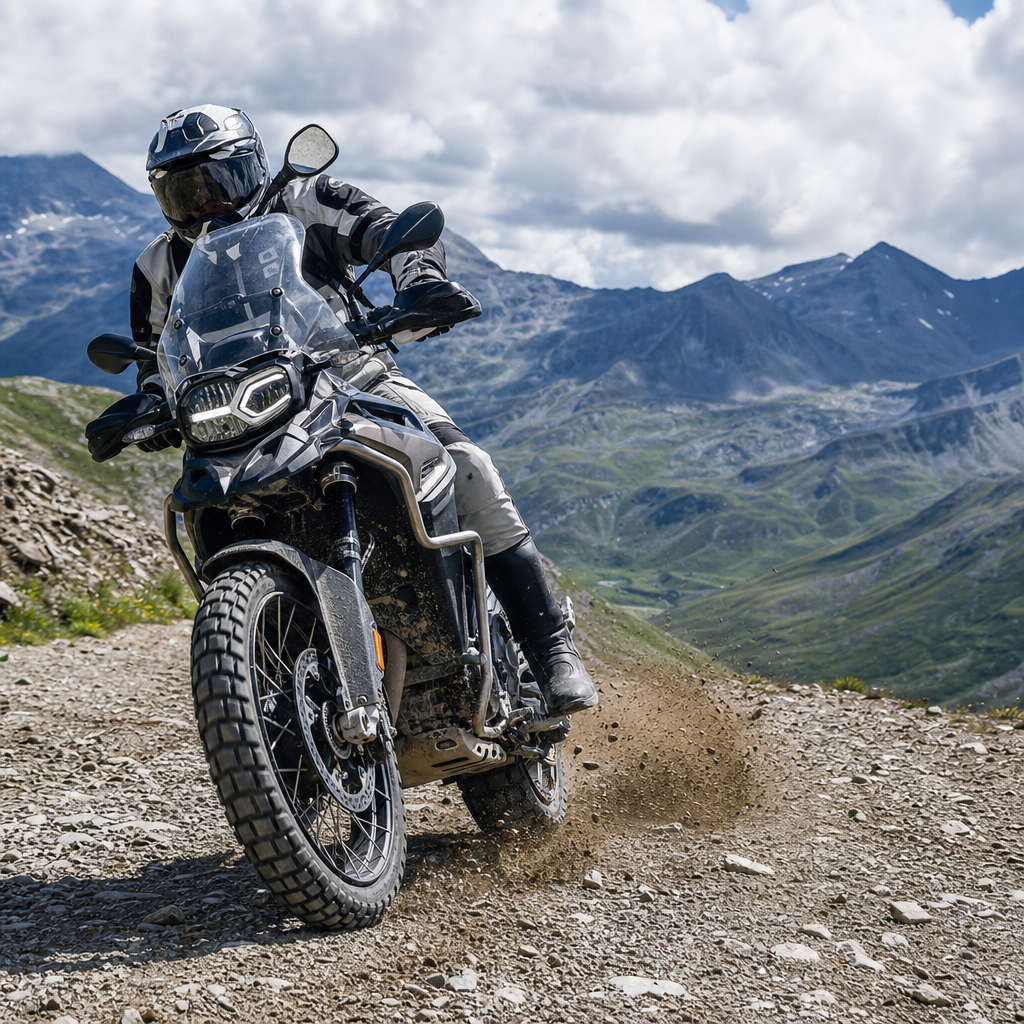
The New Continental TKC 80² sits at the center of a major shift in adventure motorcycle tire design, promising genuine 50/50 performance for riders who split time between pavement and dirt. In practical terms, a 50/50 tire is expected to do two hard jobs at once: track predictably on wet highway surfaces at speed, then find bite in gravel, sand, rock, and loose soil without feeling vague or fragile. That balancing act has always defined the adventure segment, and it is why the launch of an updated version of one of the most recognizable dual-sport tread patterns matters far beyond a single product release. For riders building a reliable setup under the broader Garage & Gear umbrella, Tires & Parts is the category where comfort, safety, durability, and off-road capability meet.
I have tested adventure tires across loaded travel bikes, middleweight twins, and lighter dual-sports, and the same truth keeps coming up: tires change a motorcycle more than almost any bolt-on part. A skid plate protects; bars reposition; suspension refines. Tires decide how soon ABS intervenes on broken asphalt, how stable the chassis feels in rain grooves, and whether a climb on fist-sized gravel becomes manageable or exhausting. The Continental TKC 80 line earned its reputation because it gave large adventure bikes a usable off-road edge without making road miles unbearable. The new TKC 80² enters a market where riders expect more mileage, lower noise, better wet braking, and stronger carcass control than older knobby designs delivered.
This hub article covers that bigger picture. It explains what the TKC 80² changes, where it fits against other adventure tire categories, and how to think about tread, compounds, construction, pressure, fitment, wear, and supporting parts. If you are choosing tires for a BMW R 1300 GS, Yamaha Ténéré 700, Honda Africa Twin, KTM 890 Adventure, Suzuki V-Strom, or a smaller dual-sport, the goal is the same: match the bike, the load, and the terrain. A smart tire decision also includes tubes or tubeless repair strategy, valve hardware, balancing, rim protection, and routine inspection. Done well, tire selection stops being guesswork and becomes a repeatable setup process.
What the Continental TKC 80² Changes
The original TKC 80 became a benchmark because its large, blocky tread delivered real off-road drive while maintaining acceptable manners on the road. The TKC 80² is important because it aims to keep that recognizable all-terrain character while improving weaknesses riders have complained about for years. In testing and early fitment analysis, the meaningful upgrades are not cosmetic. They center on tread block stability, compound behavior, wet-surface confidence, and wear consistency. Continental has been explicit that the new tire was engineered to modern requirements, especially for heavier and more powerful adventure motorcycles that expose instability and rapid edge rounding much faster than older bikes did.
In plain terms, the “squared” naming signals evolution rather than reinvention. Riders familiar with the old tire should still recognize the intended use case immediately: this is not a street-biased crossover tire dressed up with aggressive grooves. It remains a genuine adventure knob pattern. The difference is that the updated design seeks better composure in exactly the situations where traditional 50/50 tires often feel compromised, such as high-speed lane changes with luggage, wet roundabouts, and repeated heat cycles on long highway transfers. On dirt, the goal is controlled flex. A tread block that moves too much can feel greasy on asphalt and tear on rocks; a block that is too rigid may skate on uneven terrain. The TKC 80² is designed to land in the productive middle.
How a True 50/50 Adventure Tire Works
A true 50/50 adventure tire is defined less by marketing language than by engineering compromises. Road tires use continuous contact patches and closely spaced tread elements to maximize grip, water evacuation, and stability at lean. Off-road tires rely on void ratio, edge geometry, and self-cleaning tread spacing so the tire can dig through loose material and release mud or gravel instead of packing solid. A 50/50 tire must preserve enough void to generate off-road traction while keeping enough block support to survive braking, cornering, and heat on pavement. That is harder on a 240-kilogram travel bike than on a 140-kilogram dual-sport, which is why carcass construction matters as much as tread layout.
Load index, speed rating, sidewall stiffness, and rubber compound all affect whether a tire succeeds. A heavy adventure bike with panniers and a passenger can overwhelm a soft carcass, causing wallow or cupping. Conversely, a carcass built too stiffly can deflect less and reduce conformity over washboard or rocks, hurting traction and rider confidence. Compound selection is equally complex. Softer compounds generally improve cold and wet grip but may wear fast under throttle-heavy road riding. Harder compounds extend mileage but can feel nervous in rain or polished stone. The TKC 80² matters because its design brief addresses this full matrix rather than only one metric like dirt traction or life span.
Where the TKC 80² Fits in the Tires & Parts Hub
As a sub-pillar hub for Tires & Parts, this article should help riders navigate the full decision tree around adventure rubber. The TKC 80² is a focal product because it sits at the intersection of multiple choices riders repeatedly face: tubeless versus tube-type wheel systems, cast versus spoked rims, 21/18 setups versus 19/17 combinations, aggressive tread versus mixed-surface touring tires, and OEM replacement versus trip-specific fitment. In a well-structured garage workflow, tires are not isolated consumables. They connect directly to wheel bearings, rim strips, TPMS sensors, valve stems, tire irons, bead breakers, balancing stands, plugs, patches, sealants, torque specs, and suspension settings.
For that reason, any thorough Tires & Parts hub should branch into supporting articles on how to read tire sidewall markings, when to replace aging rubber, how to inspect for scalloping and puncture damage, and which repair kits are worth carrying. Riders preparing for BDR routes need different guidance than commuters riding fire roads on weekends. Those planning long transcontinental travel should also think about regional tire availability. A niche rear size with limited stock can dictate route planning. The TKC 80² belongs in this hub because it raises all of those practical questions, not because it exists in isolation as a stand-alone product review.
Real-World Performance: Pavement, Gravel, Sand, and Rock
On pavement, the most useful test is not a hero-level lean angle; it is whether the tire communicates clearly under normal and emergency inputs. On recent generations of large ADV bikes, tires like the TKC 80 can feel surprisingly secure upright and under initial turn-in, then begin to squirm when hard braking loads the front blocks. A better modern 50/50 tire should reduce that vague transition. The TKC 80² appears aimed squarely at this need. Riders should expect some tread noise and slower steering than from a road-biased option such as a Continental TrailAttack or Michelin Anakee Adventure, but a quality 50/50 tire must still hold a line on rain-slick secondary roads without demanding constant corrections.
Off pavement, the value of a tire like the TKC 80² shows up first in gravel braking and front-end confidence. Many adventure riders can manage rear-wheel spin; what unnerves them is a front tire that pushes unexpectedly on marbles or embedded rock. Open shoulder spacing and effective block edges help the front track across changing surfaces, while the rear needs enough void to drive forward instead of polishing the top layer. In sand, no large adventure bike tire performs miracles, but the right tread can keep the bike from immediately trenching. On rocky terrain, casing resilience becomes critical. Sharp-edged impacts can damage both tire and rim, especially at reduced pressure, so off-road grip must always be balanced against puncture resistance and wheel protection.
| Tire type | Best use | Main advantage | Main drawback |
|---|---|---|---|
| Street-biased ADV | Touring with occasional gravel | Wet grip and long mileage | Limited bite in loose terrain |
| True 50/50 | Mixed road and meaningful dirt | Balanced versatility | More noise and faster wear |
| Off-road focused ADV | Deep gravel, mud, sand, rocky climbs | Maximum off-road traction | Reduced road stability and life |
Comparison With Other Popular Adventure Tires
No tire exists in a vacuum, so the TKC 80² should be compared to the categories riders already know. Against the Mitas E-07+ or Heidenau K60 Scout, the Continental is likely to remain more off-road oriented, particularly at the front, with stronger bite in loose conditions but less ultimate mileage. Against options such as the Dunlop Trailmax Raid, Pirelli Scorpion Rally STR, Bridgestone Battlax Adventurecross AX41, Motoz Tractionator Adventure, and Michelin Anakee Wild, the Continental occupies a familiar middle zone: more road-friendly than extreme rally-style choices, more dirt-capable than stylish crossover treads. That middle zone is exactly where many travel riders live.
For example, a rider on a Ténéré 700 doing 300-mile pavement approaches to reach forest-service routes may prefer the TKC 80² over a more aggressive rear that drones loudly and squares off quickly. A BMW GS owner heading for the Trans Euro Trail might choose it because the front offers better dirt confidence than a street-biased alternative without making autobahn transfers punishing. On the other hand, a rider crossing wet clay and deep mud for several consecutive days may still want a more off-road-specific pattern. The honest conclusion is simple: the TKC 80² is not meant to beat every tire in every category. It is meant to be one of the most complete answers for riders who truly split their riding between road and trail.
Setup, Pressures, Wear, and Supporting Parts
Proper setup determines whether any adventure tire performs as designed. The first checkpoint is fitment: correct size, correct load and speed rating, and compatibility with rim width. Mounting a tire outside its intended rim range changes profile shape, contact patch behavior, and sidewall stress. Pressure is the second checkpoint, and it is where many riders either sacrifice traction or destroy tires. For highway use with luggage, follow the motorcycle manufacturer and tire maker guidance. For dirt, moderate pressure reductions can improve compliance and grip, but the safe amount depends on bike weight, speed, terrain, carcass strength, and whether the wheel is tubed or tubeless. There is no universal “magic PSI.”
Wear patterns tell the truth. Front cupping often points to prolonged road braking, insufficient pressure, imbalance, or suspension issues. Rear center flattening is normal on long highway runs, while torn leading edges can indicate aggressive throttle on abrasive surfaces or low pressure under load. Supporting parts matter here more than many riders realize. Fresh valve stems, quality wheel weights, accurate torque on pinch bolts and axles, healthy wheel bearings, and properly set suspension sag all influence tire life and feel. For garage planning, stock a solid plug kit for tubeless wheels, patches and spare tubes for tube-type setups, a compact inflator, bead lubricant, a pressure gauge you trust, and if you travel remotely, a spare valve core tool. Tires are consumables, but the parts around them decide whether a small issue stays small.
Who Should Choose the TKC 80²
The best candidate for the Continental TKC 80² is a rider who genuinely uses an adventure motorcycle as an all-surface machine rather than a touring bike with occasional gravel photos. If your routes include regular dirt roads, rocky connectors, loose climbs, construction detours, and weather that turns easy surfaces sketchy, a serious 50/50 tire makes sense. The tire also suits riders who want one set for a trip instead of swapping between road and dirt options. On middleweight machines like the KTM 890 Adventure R, Aprilia Tuareg 660, or Ténéré 700, that can be the sweet spot. On heavyweight ADV bikes, the value is confidence and controllability, especially at the front.
It may be less ideal for riders whose miles are overwhelmingly motorway commuting or two-up touring on wet pavement, where a road-oriented ADV tire will usually brake better, run quieter, and last longer. It is also not the automatic answer for highly technical off-road riders, especially in mud-heavy terrain where a more aggressive pattern can outperform it decisively. The practical takeaway is to be honest about use. Estimate your next 5,000 miles, not your most ambitious weekend fantasy. If that realistic usage splits meaningfully between tarmac and dirt, the TKC 80² deserves a place near the top of your shortlist. From there, build the rest of your Tires & Parts plan around correct fitment, reliable repair tools, and disciplined inspection. Start with the tire, then optimize the whole system.
Frequently Asked Questions
What makes the new Continental TKC 80² different from the original TKC 80?
The new Continental TKC 80² builds on one of the most recognizable adventure tire names in the market, but it does so with a much more modern 50/50 brief. Where the original TKC 80 earned its reputation as a highly capable off-road-biased dual-sport tire that riders were still willing to use on pavement, the TKC 80² arrives in a segment that now demands far more refinement on both surfaces. Riders today expect better wet-road confidence, more stability at highway speeds, stronger braking feel on asphalt, and longer-lasting tread without giving away the loose-surface traction that made the original so popular.
That is where the TKC 80² matters. It represents a shift from the old compromise mindset to a more balanced design philosophy. In practical riding terms, that means the tire is intended to feel more composed when leaned over on paved roads, less nervous during fast transit sections, and more predictable when conditions turn wet or cold. At the same time, it still needs to deliver the open tread pattern, self-cleaning behavior, and mechanical bite adventure riders want when the route changes from tarmac to gravel, dirt, rocks, or sand.
So the difference is not just cosmetic or generational branding. The TKC 80² is important because it is designed for how modern adventure bikes are actually used: long pavement miles, changing weather, luggage, passengers, and then serious detours onto unsealed roads. In that sense, it is less about replacing a legend with something softer and more about updating the formula so a true 50/50 tire feels more complete in the real world.
What does “50/50 performance” really mean for a tire like the Continental TKC 80²?
In the adventure category, “50/50” is one of the most commonly used descriptions and one of the most misunderstood. It does not mean the tire performs exactly like a dedicated street tire on pavement and exactly like a full knobby in technical off-road terrain. No tire can fully max out both ends of that spectrum at the same time. Instead, 50/50 performance means the tire is engineered to be genuinely trustworthy in both environments, without becoming a major liability in either one.
On pavement, that means a tire like the TKC 80² should track straight and predictably at speed, maintain stable manners during corner entry and braking, and inspire confidence when the road is wet, grooved, patched, or imperfect. Riders also expect reasonable noise levels, manageable vibration, and a contact feel that does not constantly remind them they are riding on aggressive tread blocks. For touring-capable adventure bikes, highway composure is not optional; it is a core part of the mission.
Off road, 50/50 means the tire must do more than survive dirt use. It needs to actively produce grip in the kinds of terrain adventure riders actually encounter: washboard gravel, embedded rock, loose climbs, shallow sand, rutted tracks, and mixed hardpack. That requires tread block spacing, edge definition, carcass behavior, and rubber compound choices that let the tire dig, conform, and clear debris effectively. A vague front end or a rear tire that spins too easily on loose surfaces quickly exposes a tire that is more 70/30 than 50/50.
For the TKC 80² specifically, the phrase matters because it sets a high bar. The tire is being judged not simply on whether it can touch dirt and still pass as adventure-ready, but on whether it can handle genuine dual use with fewer trade-offs than earlier generations. In other words, true 50/50 performance means a rider should not feel the need to apologize for the tire on the road or make excuses for it off road.
How well should the Continental TKC 80² perform on wet pavement and highway rides?
Wet pavement and high-speed highway use are exactly where many aggressive adventure tires reveal their weaknesses, so this is one of the most important questions riders can ask. For the TKC 80² to deserve its place in the current market, it needs to offer much stronger road manners than old-school big-block tires were once expected to provide. That begins with a planted, predictable feel when upright at speed and continues through braking, lane changes, and moderate-to-spirited cornering in changing conditions.
On wet pavement, riders want progressive grip rather than sudden surprises. A good 50/50 tire should communicate available traction clearly through the bars and seat, especially during braking and corner entry. It should resist that uneasy floating sensation that some open-pattern tires develop on smooth, rain-soaked asphalt. Just as importantly, it should maintain composure over painted lines, tar strips, expansion joints, and standing water, because adventure riders often encounter all of those on long mixed-surface trips.
On the highway, the expectation is stability without excessive wander, manageable tread noise, and predictable response when the bike is loaded with luggage or dealing with crosswinds. Large adventure motorcycles put serious demands on tires at speed, and that means carcass support and tread block stability matter almost as much as pure compound grip. If the TKC 80² is successful, riders should notice that it feels less tiring over long paved stretches and less compromised when the route includes hours of interstate before the fun begins.
It is still important to stay realistic. Even an excellent 50/50 tire will not match a road-focused ADV tire in wet corner speed, braking sharpness, or smoothness. But the goal is not to beat a sport-touring tire at its own game. The goal is to narrow the gap enough that wet-weather pavement no longer feels like the unavoidable price of having proper off-road capability. That is the standard the TKC 80² is aiming at, and it is the reason its on-road behavior matters so much.
Is the Continental TKC 80² actually capable off road in gravel, sand, rocks, and loose terrain?
That is the real test for any tire claiming serious 50/50 credentials. A tire can look aggressive in photos and still disappoint once the surface gets loose, deep, or irregular. For the TKC 80² to stand out, it needs to deliver traction that feels useful and repeatable across the broad range of terrain adventure riders encounter, rather than only working well on one ideal surface. Gravel, sand, rocks, and loose soil each ask for slightly different behavior from a tire, which is why true dual-purpose performance is so difficult to achieve.
In gravel, a capable front tire should steer with authority instead of skating across the top layer, while the rear should drive forward without excessive spin. On rocky terrain, the tire needs to maintain edge grip and resist feeling harsh or deflective when it hits embedded obstacles. In loose dirt and mixed trail conditions, riders want a tire that tracks naturally, recovers predictably from small slides, and does not suddenly pack up when traction gets inconsistent. Sand is often the hardest ask for a 50/50 tire, but even there, a well-designed tread can improve directional control and forward drive enough to make the bike feel less overwhelmed.
The challenge is that large ADV bikes are heavy, powerful, and often ridden with gear. That means off-road performance is not just about tread pattern; it is also about how the tire supports load, flexes under impact, and maintains usable traction as speed and terrain change. If the TKC 80² succeeds, riders should notice that it does not merely tolerate dirt roads but encourages them to keep going when the route deteriorates into something rougher, looser, and more technical.
Of course, there are limits. A 50/50 tire is not a replacement for a full enduro or rally-focused knobby in mud, deep sand, or highly technical terrain. But that is not the point. The value of the TKC 80² lies in offering enough real off-road bite that riders can confidently choose ambitious routes without feeling stranded by a tire that was optimized primarily for asphalt. That is what separates a marketing-driven adventure tire from one that is genuinely useful beyond the pavement.
Who is the Continental TKC 80² best suited for, and is it the right choice for your adventure bike?
The Continental TKC 80² is best suited for riders who truly split their time between pavement and unpaved riding and want one tire that can cover both jobs credibly. That includes adventure riders who commute during the week but spend weekends exploring forest roads, backcountry discovery routes, desert tracks, mountain passes, and remote travel routes that mix fast tarmac with unpredictable dirt. It is especially appealing to riders who are tired of choosing between a road-biased ADV tire that runs out of talent off pavement and a more aggressive knobby that becomes noisy, vague, or fatiguing on long highway sections.
It is also a strong fit for riders of modern middleweight and heavyweight adventure motorcycles who need versatility more than specialization. If your trips typically include significant road mileage before the dirt starts, if weather conditions are variable, and if you carry luggage or ride loaded for travel, a well-executed 50/50 tire can make far more sense than either extreme. The TKC 80² is aimed at that rider: someone who values balanced capability, predictable behavior,