The Suzuki RM-Z450 fitted with the RM Army Edition Pro Circuit exhaust is a serious motocross machine, but keeping it fast and reliable requires more than routine oil changes. Owners also need to understand the Japanese Industrial Standards hardware used throughout the bike, the details of dual-clutch transmission maintenance as it applies to modern metric service workflows, and the small metric quirks that repeatedly trip up riders and mechanics. This hub article brings those topics together. The goal is practical: help you maintain the exhaust correctly, avoid stripped fasteners, choose the right tools, and build service habits that protect performance on the track and durability in the workshop.
When riders talk about maintaining an aftermarket exhaust, they usually mean checking bolts, replacing packing, and looking for cracks. Those tasks matter, but on the RM-Z450 they connect to a wider system. The Pro Circuit exhaust changes heat, vibration, and flow characteristics, which affects mounting hardware, sealing surfaces, and nearby components. Metric motorcycles also demand precision in tool fit, torque values, and thread handling. A mechanic who treats a Japanese bike like a generic powersports project often rounds crosshead screws, over-torques flange bolts, or confuses pitch differences between visually similar metric fasteners. I have seen all three happen in race paddocks, and each one costs time, money, and confidence.
Key terms are worth defining at the start. JIS refers to Japanese Industrial Standards, including the specification historically used for many crosshead screws on Japanese motorcycles. These screws resemble Phillips heads, but the geometry is different enough that using the wrong driver increases cam-out and damages the recess. DCT commonly means dual-clutch transmission, a design more common on certain street and adventure motorcycles than on the RM-Z450 itself, which uses a conventional manual gearbox. In this subtopic, DCT maintenance still matters because many metric service principles overlap: correct fluid specification, clutch adaptation awareness, heat management, and diagnostic discipline. “Metric quirks” covers the recurring details that separate clean service from sloppy service: thread pitch mismatches, torque in newton-meters, Japanese fastener conventions, crush washer sizing, and sealing methods.
This matters because exhaust maintenance is not an isolated chore. The RM Army Edition Pro Circuit exhaust lives in a high-heat, high-vibration environment. If a fastener backs out, a spring loses tension, or a mounting tab develops a crack, the problem can escalate quickly into exhaust leaks, power loss, noise increase, melted plastics, or damaged cylinder head threads. Understanding standards and procedures lets you prevent those failures systematically rather than react to them after a moto.
Maintaining the RM Army Edition Pro Circuit Exhaust on the Suzuki RM-Z450
The first priority is understanding what the Pro Circuit system adds to the RM-Z450. Depending on the exact configuration, you may have a slip-on silencer, a full system with header, or a Ti-6 style race-oriented assembly built for reduced weight and improved throttle response. These systems typically run lighter than stock and can produce stronger top-end pull, but they also transfer vibration differently through the subframe mounts and mid-pipe joints. That means inspection intervals should be shorter than what a casual trail rider might expect. On a motocross bike, I recommend a visual and tactile inspection before every ride and a fastener torque check after the first heat cycle following installation or repacking.
Start at the cylinder head. Inspect the header flange nuts, studs, and sealing area for soot trails. Black residue at the port usually indicates leakage. If the system has been removed multiple times, replace the exhaust gasket rather than trying to reuse a crushed one. Follow the pipe rearward and check for rubbing marks on the frame, radiator hose routing, and clearance near the side panel. Then inspect the silencer mounts, grommets, spacers, and any anti-vibration hardware. With aftermarket systems, missing spacers are common because they stick inside old silencers during swaps. That tiny omission can load the mount unevenly and crack the canister bracket.
Silencer packing is another major item. As packing degrades, sound rises, throttle feel can become harsher, and internal heat concentration increases. On a race bike, packing intervals depend on hours, fuel mapping, and riding style, but frequent high-rpm use shortens service life. Repack before the silencer gets excessively loud, not after. The cost of fresh packing is low compared with the cost of a damaged core or failed rivet band. Use quality rivets of the specified diameter and grip range, and inspect the end cap for ovalized holes during reassembly.
Cleaning also matters. Avoid aggressive polishing compounds on coated titanium or anodized parts unless the manufacturer specifically allows them. On stainless headers, discoloration is normal; chasing a mirror finish with abrasives can thin protective surfaces and create a maintenance cycle you do not want. Wash the bike cool, not hot, and avoid spraying cold water directly onto a glowing exhaust after a moto. Rapid thermal shock does not help weld longevity.
The JIS Standard: Why It Matters on a Metric Motorcycle
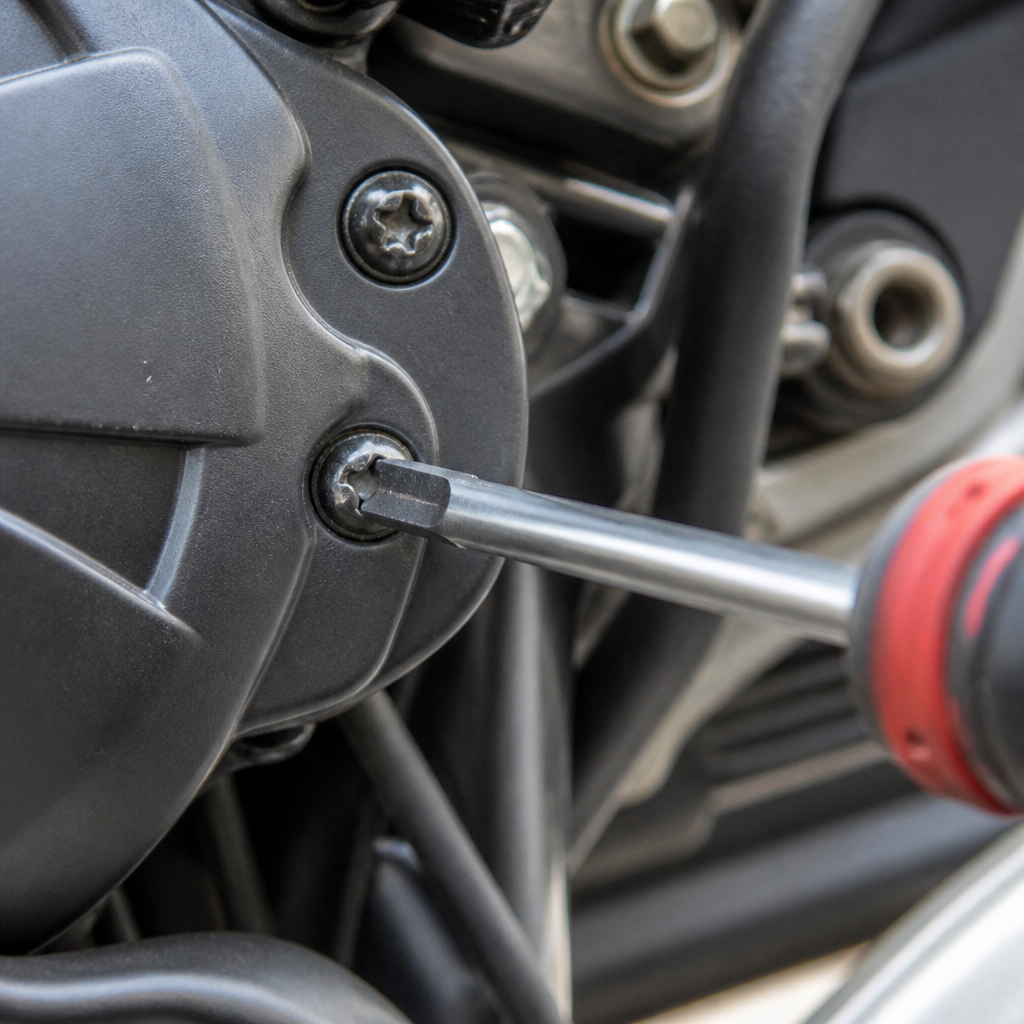
JIS hardware is one of the most misunderstood aspects of Japanese motorcycle maintenance. Many mechanics first encounter it when a supposedly simple carburetor bowl screw or bodywork fastener refuses to move without damage. The reason is geometry. A Phillips driver is designed to cam out under high torque. A JIS crosshead driver fits deeper and transfers torque more positively. On older and many current Japanese components, especially on ancillary parts, switchgear, clamps, and certain OEM screws, that difference is critical.
Although the RM-Z450 uses plenty of hex and socket hardware, you will still encounter Japanese crosshead screws in the broader maintenance environment, including controls, hose clamps, brake reservoir covers, electrical hardware, and some aftermarket accessories. If you use a generic Phillips bit because “it’s close enough,” you raise the odds of stripping the recess. Once the head rounds, extraction becomes a drilling job, and what should have been a two-minute service becomes an hour of controlled damage limitation.
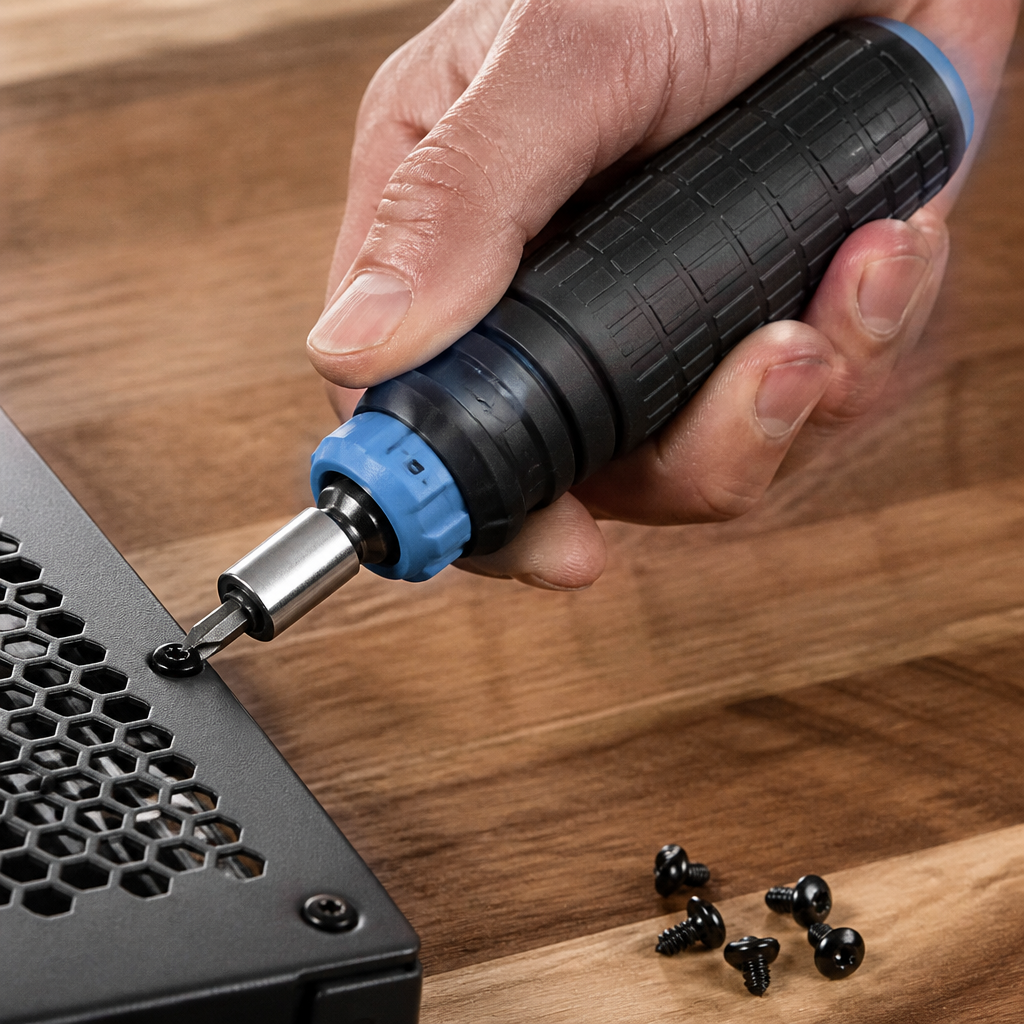
Use proper JIS drivers or modern bits specifically labeled for Japanese motorcycle service. Vessel is a respected name, and Hozan and Engineer also make excellent tools. An impact driver with the correct JIS bit is often the safest method for stubborn factory screws because it combines downward force with rotational shock, reducing cam-out. I keep one on the bench for every Japanese bike that comes through. The cost is trivial compared with the labor saved.
Another JIS-related habit is reading service data carefully. Japanese manufacturers publish torque values in newton-meters, thread sizes in metric terms, and clearances in millimeters. That sounds obvious, but errors happen when someone mentally converts or reaches for an imperial equivalent that “feels right.” On an exhaust flange, feeling right is not good enough. Aluminum threads in the head do not forgive guesswork.
DCT Maintenance Lessons That Still Apply in a Metric Service Hub
The RM-Z450 does not use a dual-clutch transmission, so it would be misleading to suggest it needs DCT service in the literal sense. However, this hub covers maintenance and technical encyclopedia topics across metric machines, and DCT maintenance teaches useful habits that apply directly to high-performance motorcycle service. Those habits include strict fluid selection, thermal awareness, adaptation to manufacturer procedures, and disciplined diagnostics instead of assumptions.
On motorcycles that do use DCT, fluid quality is not optional because the clutches, hydraulic circuits, and shift control strategies depend on predictable viscosity and friction behavior. The lesson for the RM-Z450 is similar: use the exact oil grade and specification recommended for the engine and clutch environment, and respect shorter intervals when the bike is raced in sand, heat, or heavy clutch conditions. Exhaust upgrades can subtly influence operating temperatures and rider behavior, which can alter service demands even if the transmission design itself is conventional.
DCT systems also teach the importance of calibration and sequence. On a modern street bike with DCT, skipping adaptation steps after service can produce poor shift quality or fault codes. On the RM-Z450, the parallel is fuel and exhaust setup discipline. After installing a Pro Circuit system, verify mapping, spark arrestor or insert configuration if applicable, and intake condition before judging performance. Riders sometimes blame the exhaust for flat response when the real issue is an over-oiled filter, stale fuel, or an ECU map not matched to the new flow characteristics.
Heat management is another crossover lesson. DCT units generate and manage clutch heat through fluid and control logic; race exhausts concentrate and radiate heat through the header, mid-pipe, and silencer. In both cases, maintenance means watching thermal side effects. On the RM-Z450, inspect nearby plastics, brake line routing, and boot contact areas. If you repeatedly see discoloration or softening, review fitment and consider heat shielding where appropriate. Good maintenance is not only preserving the part itself; it is protecting the surrounding systems affected by it.
Metric Quirks That Commonly Affect RM-Z450 Exhaust Service
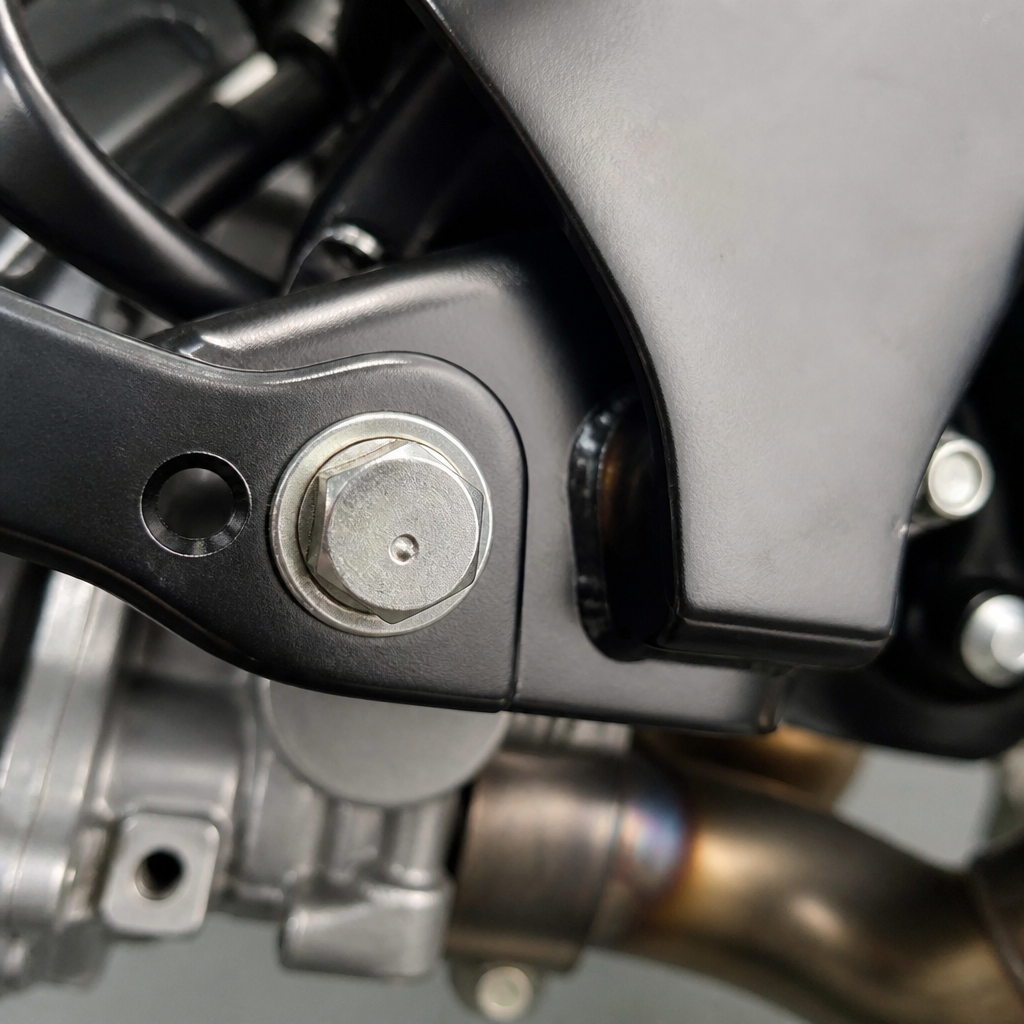
Metric motorcycles reward exactness. One common quirk is thread pitch confusion. An M8 fastener may be 1.25 mm pitch or 1.0 mm pitch depending on application. If a bolt starts poorly, stop immediately. Forcing a near-match into an aluminum mount can ruin the threads long before the wrench feels excessively tight. Another issue is flange hardware substitution. Riders lose special nuts, springs, and collars, then replace them with hardware-store pieces that lack the correct shoulder, heat resistance, or locking feature. The exhaust may bolt up, but vibration soon exposes the compromise.
Torque values also deserve attention. Many aftermarket exhaust instructions provide broad guidance, while the motorcycle service manual gives fastener-specific values. Use both intelligently. The bike manufacturer’s thread and material context usually wins unless the exhaust maker specifies a unique arrangement such as a clamp style or mounting sequence. A calibrated torque wrench matters more than brand prestige. For smaller hardware, a 1/4-inch drive torque wrench covering low newton-meter values is far more appropriate than trying to estimate with a larger wrench.
Sealing methods create another metric quirk. Japanese motorcycles often use specific crush gaskets, seal rings, and flange alignments rather than generous sealant use. Do not smear high-temp silicone around every joint unless the manufacturer explicitly calls for it. Excess sealant can squeeze inward, contaminate sensors on other platforms, and make future service harder. On the RM-Z450 exhaust, clean mating surfaces, correct gasket replacement, and proper joint alignment solve most leak issues without improvisation.
| Service area | Common mistake | Best practice | Why it matters |
|---|---|---|---|
| Crosshead screws | Using Phillips drivers | Use JIS-specific bits or drivers | Prevents cam-out and stripped heads |
| Exhaust mounting bolts | Substituting generic hardware | Match OEM or exhaust-maker spec exactly | Maintains alignment and vibration control |
| Thread engagement | Forcing near-matching metric pitch | Confirm diameter and pitch before install | Protects aluminum threads from damage |
| Silencer service | Waiting until packing fully fails | Repack early based on hours and noise | Reduces heat stress and preserves the core |
| Torque application | Guessing by feel | Use the service manual and a calibrated wrench | Avoids leaks, broken bolts, and warped joints |
Workshop Process, Inspection Intervals, and Tools That Make the Difference
A reliable process beats mechanical talent alone. After washing and drying the RM-Z450, inspect the exhaust with the bike on a stand and the engine cold. Check fastener witness marks to see whether anything has moved since the last service. Look closely at weld toes, hanger brackets, and spring tabs under bright light. Tiny cracks usually appear first as a faint dark line surrounded by dust or soot. If you catch them early, a skilled welder can often repair the part before a tab tears completely away.
Keep a simple maintenance log with engine hours, repack intervals, and any hardware replaced. This sounds mundane, but it helps identify patterns. If one silencer bolt loosens every three rides, the answer is not endless retightening; the answer is finding the root cause, such as a missing spacer, distorted mount, or worn grommet. Data turns guesswork into diagnosis.
The right tools are straightforward: JIS drivers, quality metric sockets, a small torque wrench, spring puller, thread pitch gauge, vernier caliper, soft-jaw vise, rivet gun, and penetrating oil. Add medium-strength threadlocker only where specified and only on clean, degreased threads. On high-heat joints, use the anti-seize compound recommended for the material pairing, especially where stainless fasteners thread into stainless inserts and galling is possible. Anti-seize changes torque friction, so apply it sparingly and follow manufacturer guidance rather than improvising.
Finally, know when to replace rather than repair. A dented header can sometimes be restored, but a crushed section near a critical bend may alter flow and stress distribution. Ovalized silencer mounts, split rivet bands, and repeatedly cracking tabs often indicate cumulative fatigue. At that point, replacement is not wasteful; it is preventive maintenance that protects the bike and keeps performance consistent.
Maintaining the RM Army Edition Pro Circuit exhaust on a Suzuki RM-Z450 is ultimately about system thinking. The exhaust itself needs regular inspection, clean installation, fresh packing, and careful heat management. The surrounding service culture matters just as much. Understanding JIS hardware prevents stripped screws and wasted labor. Applying DCT-style maintenance discipline, even on a conventional gearbox motorcycle, reinforces correct fluid use, diagnostic logic, and respect for procedure. Mastering metric quirks protects threads, improves fitment, and reduces repeat failures.
If you remember one principle, make it this: precision is the real performance upgrade. A race exhaust can only deliver what the installation and maintenance support. Use the right drivers, the correct metric hardware, the proper torque values, and a documented inspection schedule. That approach keeps the RM-Z450 reliable, quieter when it should be, and sharper when it matters. Use this hub as your foundation, then apply the same standards across every metric maintenance task on the bike.
Frequently Asked Questions
How often should I inspect and service the RM Army Edition Pro Circuit exhaust on a Suzuki RM-Z450?
The exhaust should be visually checked after every ride and more closely inspected at regular service intervals, especially if the bike is raced, ridden in deep ruts, or exposed to frequent vibration and impacts. On an RM-Z450, the RM Army Edition Pro Circuit exhaust is not just a bolt-on styling piece; it directly affects throttle response, power delivery, sound output, and overall engine efficiency. A quick post-ride inspection should include looking for loose mounting hardware, fresh soot marks around joints, small dents in the header, cracked welds, worn springs, and any movement at the muffler mount. Those signs usually appear before a larger problem develops.
A deeper inspection should be done whenever you are already performing major maintenance such as valve checks, subframe work, or airbox service. Remove the system as needed, clean it carefully, and check the sealing surfaces and joints. If the muffler uses packing material, repacking at sensible intervals is critical. Riders who race regularly or spend long periods at high rpm may need to repack much more often than casual practice riders. When packing breaks down, the bike often becomes louder, throttle feel may get harsher, and internal heat can increase. Ignoring that condition can shorten muffler life.
It is also smart to retorque the exhaust hardware after the first heat cycle following installation or any disassembly. Exhaust systems expand and contract significantly, and on a high-vibration motocross platform that matters. A maintenance routine that combines frequent visual checks, scheduled hardware verification, and periodic repacking will do far more to preserve performance and reliability than waiting for obvious noise or damage to appear.
What is the best way to prevent loose bolts, leaks, and mounting damage on the Pro Circuit exhaust?
The best approach is disciplined installation and repeatable metric service habits. Start by cleaning all fastener threads, mounting tabs, and sealing surfaces before reassembly. Dirt, carbon residue, and old threadlocker can create false torque readings and lead to under-clamped joints. Install the header, mid-pipe, and muffler loosely at first so the entire system can settle into its natural alignment. Once everything is seated correctly, tighten the hardware in stages rather than fully securing one point at a time. That reduces stress on the tabs and helps prevent cracks at the muffler bracket or header flange.
Use the correct metric tools and torque values for the specific fasteners involved. Many owners cause problems by overtightening small mounting bolts, especially where aluminum brackets, threaded inserts, or frame tabs are involved. If the service procedure calls for threadlocker, use the proper type and amount. Too much can contaminate threads or distort torque feel, while too little can allow bolts to back out under vibration. Exhaust springs should also be checked for tension and wear, because a weak spring can contribute to joint movement and leakage even when the bolts seem tight.
Pay close attention to the exhaust gasket and slip-joint sealing condition. If you see black carbon tracking at a joint, that is usually evidence of a leak. A leak not only affects performance, but can also change sound, increase heat around nearby components, and accelerate wear at the connection point. Finally, never ignore small fitment changes after a crash or tip-over. A slightly twisted subframe, bent mount, or shifted silencer can put the system under preload, which is one of the fastest ways to crack an otherwise healthy exhaust.
Why do Japanese Industrial Standards fasteners matter when working on a Suzuki RM-Z450?
They matter because using the wrong driver profile on Japanese motorcycle hardware is one of the easiest ways to damage fasteners and turn simple maintenance into a repair job. Many riders casually refer to every cross-head screw as a Phillips screw, but Japanese Industrial Standards, or JIS, hardware is different in subtle but important ways. On a Suzuki RM-Z450, and on many Japanese motorcycles in general, those differences affect how securely a tool engages the screw head. A standard Phillips driver tends to cam out more easily, especially on screws that have seen heat, vibration, corrosion, or repeated service.
When a JIS screw is approached with the proper JIS driver or bit, the fit is more positive and the risk of stripping the head is much lower. That matters on clamps, bodywork, intake components, carbureted-era hardware on older machines, and various ancillary motorcycle fasteners mechanics still encounter in mixed shop environments. Even if your particular RM-Z450 uses relatively few traditional cross-head screws in high-priority service points, understanding JIS remains important because many riders use general-purpose tool kits that are not optimized for Japanese bikes. One slipped tool can round a fastener head, scar a component, or force extraction work that was completely avoidable.
For practical maintenance, the takeaway is simple: use quality metric sockets, hex keys, and driver bits, and keep JIS-specific bits in your tool kit. If a screw feels unusually tight, apply controlled pressure, support the tool straight-on, and avoid brute force. Impact tools, hand impact drivers, and heat can all help in the right context, but the first step is always proper engagement. Respecting JIS hardware is part of treating the RM-Z450 like the precision-built race machine it is rather than just another dirt bike with interchangeable fasteners.
How does dual-clutch transmission maintenance fit into service planning for an RM-Z450 and similar modern metric workflows?
Strictly speaking, the Suzuki RM-Z450 is not a dual-clutch transmission motocross bike, so owners should not apply automotive-style DCT service procedures directly to this model. However, the broader point is still relevant: modern metric maintenance workflows often bring together tools, torque practices, inspection habits, and fluid-management discipline that riders may also encounter when servicing other machines in a garage or professional shop. Understanding those workflows helps mechanics stay organized, accurate, and less likely to mix procedures across platforms.
On the RM-Z450, the correct focus remains conventional drivetrain and engine maintenance: engine oil condition, clutch feel and wear, shift performance, chain alignment, sprocket condition, and proper fastener control around covers and cases. Where the dual-clutch discussion becomes useful is in mindset. DCT-equipped machines demand careful fluid specification, strict cleanliness, precise torque application, and step-by-step adherence to service documentation. Those same habits benefit RM-Z450 maintenance, especially when working around the clutch side, side covers, oil passages, or any component where contamination or improper torque can create expensive problems.
For riders managing several modern metric vehicles, the key is procedure separation. Label fluids clearly, track service intervals by machine, use the exact specification called for in the manual, and never assume that because a maintenance concept exists on one vehicle it applies unchanged to another. In other words, DCT knowledge can improve your overall service discipline, but the RM-Z450 should always be maintained according to its actual design. That includes motocross-specific inspection frequency, race-oriented wear monitoring, and a stronger emphasis on vibration-related hardware checks than many street-oriented systems require.
What metric service mistakes most often trip up RM-Z450 owners when maintaining the exhaust and surrounding components?
The most common mistakes are surprisingly small, but they create outsized problems. One of the biggest is confusing similar metric fastener sizes and using a tool that is just slightly loose. A worn 12 mm socket, a sloppy hex key, or an incorrectly sized bit can round hardware quickly, particularly on bolts exposed to heat and mud. Another frequent issue is mixing fasteners during reassembly. On a motocross bike, bolt length, shoulder design, flange diameter, and thread engagement all matter. Installing the wrong bolt in an exhaust mount or nearby bracket can bottom out early, give a false sense of tightness, or place stress on the component.
Another common problem is ignoring washer orientation, spacers, collars, and heat shielding details. Riders sometimes reinstall the exhaust without every original isolation piece in place, and that can transfer more vibration into the muffler body or mounting tab. Similarly, failing to clean the mating surfaces before assembly can create a minor leak that steadily worsens. People also tend to underestimate how much repeated heat cycling affects torque retention. A bolt that felt correct in the garage may loosen after a moto if it was not seated properly or if the joint stack was dirty or misaligned.
There is also a broader workflow mistake: working too quickly without documenting what was removed, what was inspected, and what needs replacement. A smart metric service routine includes laying out parts in order, measuring wear where applicable, comparing hardware condition side to side, and confirming final torque with the proper tool rather than by feel alone. On a performance bike like the RM-Z450, those habits protect both power and reliability. The riders who have the fewest exhaust-related failures are usually not the ones doing dramatic repairs; they are the ones consistently getting the small metric details right.