Changing the oil on a 2026 Harley-Davidson Milwaukee-Eight engine is one of the most important maintenance jobs an owner can perform, and it is also the maintenance task that teaches you the most about how your motorcycle is wearing, sealing, and cooling over time. On Harley-Davidson touring, cruiser, and trike models powered by the M8, fresh oil protects the crankshaft, cam chest, piston cooling jets, hydraulic lifters, and top end from heat, contamination, and viscosity breakdown. If you ride in stop-and-go traffic, high summer temperatures, mountain terrain, or on long highway trips with luggage and passengers, oil condition matters even more because heat and load accelerate degradation.
The 2026 M8 platform continues Harley-Davidson’s modern V-twin architecture, but the basic service principles remain familiar: use the correct oil specification, change it at the proper interval, replace the oil filter, inspect the drain plug and sealing surface, refill carefully, then verify level and leaks with the motorcycle upright and at operating temperature. When riders say “oil change,” they often mean a complete engine-oil service. On many Harley models, that should also prompt a broader maintenance review that includes checking derby cover seepage, looking at primary and transmission service history, inspecting O-rings, and verifying there are no stored maintenance reminders. This is why an oil service makes an ideal maintenance hub topic.
I have done this job on multiple Milwaukee-Eight bikes in home garages and dealership service bays, and the same pattern always separates a clean, reliable service from a messy one: preparation, the right tools, and strict attention to torque, temperature, and oil level. The benefit goes beyond saving labor cost. A careful oil change lets you catch early warning signs such as metal debris on the magnetic drain plug, fuel dilution smell, coolant contamination on liquid-cooled variants, or an over-tightened filter from the last service. For owners building a long-term maintenance routine, this guide serves as the foundation for the entire Garage & Gear maintenance section, because once you can confidently service oil, you can better plan inspections, fluid schedules, and seasonal upkeep.
For a 2026 Harley-Davidson M8 engine, always confirm the exact procedure in the factory service manual for your model code, because drain hose location, oil tank routing, and access around the filter vary between Touring, Softail, CVO, and Trike applications. The core method is consistent, but details matter. Harley-Davidson specifies approved oil grades and service intervals for a reason, and using the wrong viscosity, the wrong filter dimensions, or the wrong tightening method can cause leaks, pressure issues, or inaccurate dipstick readings. In short, changing the oil correctly is basic maintenance, but not casual maintenance.
What You Need Before Starting
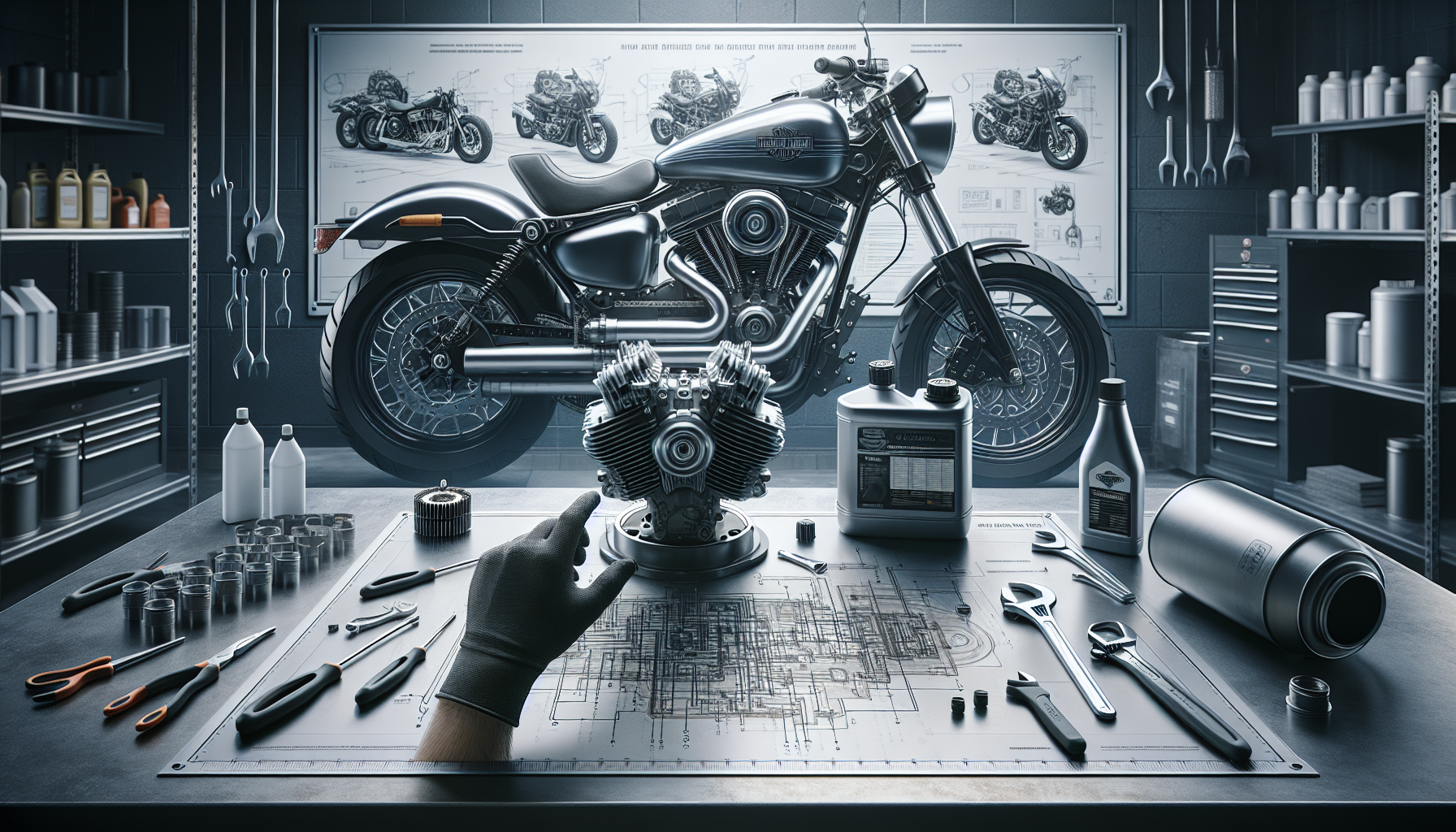
Before touching the drain plug, assemble everything and stage the workspace. At minimum, you need the correct engine oil, a compatible oil filter, nitrile gloves, shop rags, a drain pan with enough capacity, a funnel, and the sockets or hex tools required for your specific 2026 Harley-Davidson M8 model. A torque wrench is not optional if you want repeatable, damage-free maintenance. I also strongly recommend a filter wrench sized for Harley filters, a flashlight for leak inspection, cardboard or a drip mat under the bike, and a service stand or wheel chock so the motorcycle stays upright when you verify level.
Harley-Davidson commonly recommends its own H-D 360 motorcycle oil or Screamin’ Eagle Syn3 where applicable, but many experienced owners use other premium V-twin motorcycle oils that meet the necessary specifications. The critical rule is to use oil intended for air-cooled or partially liquid-cooled V-twin motorcycle engines and to confirm compatibility with wet-clutch applications if the product is marketed as multi-use across engine, primary, and transmission service. For the engine oil filter, use a quality filter from Harley-Davidson, K&N, Twin Power, Wix, or another established motorcycle brand with correct bypass and filtration characteristics. Avoid generic automotive filters that merely thread on.
The table below summarizes the practical setup I use before every Milwaukee-Eight oil service.
| Item | Why It Matters | Best Practice |
|---|---|---|
| Factory service manual | Confirms model-specific drain location, oil capacity, and torque specs | Use the manual for your exact 2026 model, not a forum guess |
| Correct engine oil | Maintains lubrication, cooling, and pressure | Choose motorcycle-specific oil in the specified viscosity |
| Oil filter | Captures wear particles and contamination | Replace at every oil service |
| Torque wrench | Prevents stripped threads and leaks | Tighten drain plug to spec, not “good and tight” |
| Drain pan and funnel | Keeps service clean and accurate | Use a pan wide enough for hose-directed flow |
| Gloves and rags | Improve grip and reduce contamination | Wipe sealing surfaces before reassembly |
How to Change the Oil on a 2026 Harley-Davidson M8 Engine
Start by warming the motorcycle fully. Ride it for at least ten to fifteen minutes so the oil reaches operating temperature and suspends contaminants. Warm oil drains faster and carries out more sediment than cold oil left sitting overnight. Park the bike on a level surface, shut it down, and secure it upright if possible. Remove the dipstick or fill cap to vent the system. Then locate the engine oil drain. On many Harley-Davidson M8 models, the drain is routed through a hose and secured by a clamp or plug in an accessible area under the frame, though exact placement differs by model family.
Position the drain pan carefully before loosening anything. Once the plug is removed, oil can travel farther than expected, especially from hose-style drains. Let the oil drain completely. I usually leave it alone for several minutes, then gently straighten the bike again and wait for the final stream to become a slow drip. During that time, inspect the drain plug. If it is magnetic, check for a light paste of fine metallic material, which can be normal, versus chips or slivers, which warrant closer investigation. Clean the plug thoroughly and inspect the O-ring or sealing washer. If the seal is flattened, torn, or hardened, replace it.
Next, remove the old oil filter. On some M8 motorcycles the filter is exposed enough for a strap wrench or cup wrench; on others, exhaust routing makes access tighter. Place rags under the filter because oil will spill as the seal breaks. Before installing the new filter, compare it to the old one to confirm gasket diameter, height, and thread pattern. Pre-lube the new gasket with fresh oil. If the filter mounts vertically or near-vertically, add a small amount of oil into the filter before installation to reduce dry start time, but do not overfill it where access angle will spill. Spin it on until the gasket contacts the base, then tighten to the filter manufacturer’s instruction or the service manual’s specification.
Reinstall the drain plug and torque it correctly. This is where many home services go wrong. Over-tightening can damage threads in the fitting or deform the seal, and under-tightening can cause a slow leak that only shows up after a ride. Add the correct amount of fresh oil using a funnel, but do not assume the full stated capacity belongs in immediately. Start slightly below full capacity, reinstall the cap, and start the engine for thirty to sixty seconds. Shut it off, wait a few minutes, then inspect the drain area and filter for leaks. Only after that should you check the level according to the model-specific procedure, usually with the motorcycle upright and the oil warm. Top off gradually. An overfilled M8 can push excess oil into the breather system and create mess, smoke, or false concern.
Common Mistakes and How to Avoid Them
The most common mistake is using the wrong level-check procedure. Harley-Davidson dipstick readings are highly sensitive to oil temperature and bike position. Checking a cold engine on the jiffy stand often leads owners to add oil they do not need. I have seen bikes come in overfilled by half a quart simply because the owner read the stick after the machine sat overnight leaning left. The correct reading method in the service manual is the standard you should trust. If the level is between marks after proper warm-up and settling time, leave it alone.
Another frequent error is forgetting the old oil filter gasket. A stuck gasket on the mounting surface can create a double-gasket condition, which often leaks dramatically once oil pressure rises. Always wipe the filter pad with a clean rag and visually confirm bare metal before threading on the new filter. Also avoid using pliers, channel locks, or a screwdriver through the old filter unless removal is impossible and the filter is being discarded anyway. Those methods distort the canister, make a bigger mess, and can damage nearby components.
Disposal is another part of maintenance that deserves attention. Used motorcycle oil and filters must go to a recycling center, auto parts store, municipal hazardous waste program, or dealership that accepts waste oil. Do not pour oil into household trash, drains, soil, or storm systems. If you service your own bike regularly, keep a sealed waste-oil container in the garage and label it clearly. This simple system keeps your workspace cleaner and makes routine maintenance easier to repeat.
Building a Complete Harley Maintenance Routine
An engine oil change should anchor a wider maintenance schedule, especially for a Harley-Davidson M8 used for touring or year-round riding. At every oil service, inspect visible oil lines, cooler connections where fitted, rocker box areas, and the underside of the engine for seepage. Check air cleaner condition, because excessive blow-by residue or oil mist in the intake can indicate overfilling or breather behavior worth monitoring. Review tire pressure, brake pad thickness, belt condition, battery terminals, and lighting while the bike is already in the garage. This turns a single fluid change into a meaningful condition assessment.
For this Garage & Gear maintenance hub, think of engine oil service as the starting point for related jobs owners should schedule or research next: primary fluid change, transmission fluid change, brake fluid replacement, clutch adjustment where applicable, battery care, spark plug inspection, air filter service, winter storage prep, fastener checks, and wash-and-protect routines for painted and blacked-out finishes. Keeping these tasks organized by mileage, time, and season prevents the common problem of remembering only the high-visibility services while neglecting hidden but critical ones.
If you keep records, be specific. Log the date, odometer reading, oil brand, viscosity, filter part number, and any observations such as metallic fuzz on the magnet or a damp filter seal. Over several service intervals, patterns emerge. A bike that consistently consumes a small amount of oil during extreme summer touring may be normal; a sudden change in usage is not. Records also help resale value because buyers trust documented maintenance more than verbal assurances. For riders who do some work themselves and outsource other jobs, a clean maintenance log bridges that gap and shows the motorcycle has been cared for methodically.
When to Do It Yourself and When to Use a Shop
Changing the oil on a 2026 Harley-Davidson M8 engine is absolutely realistic for most owners with basic tools, patience, and a clean place to work. If you can safely warm the bike, identify the correct drain, use a torque wrench, and verify the proper oil level, you can handle this service. Doing it yourself builds familiarity with your motorcycle and makes you more likely to notice small issues before they become expensive repairs. It also gives you control over the exact oil and filter used.
Use a professional shop when access is difficult, when the drain fitting appears damaged, when you see unusual debris, when a leak persists after proper torque, or when your motorcycle is due for a broader scheduled service that includes software checks, chassis inspections, or warranty-related documentation. There is no shame in combining DIY maintenance with dealership or independent-shop expertise. The smartest maintenance strategy is the one performed correctly every time.
Changing the oil on a 2026 Harley-Davidson M8 engine is the cornerstone of responsible motorcycle maintenance because it protects internal components, reveals early warning signs, and creates the habit of inspecting the bike on a regular schedule. Warm the engine, drain it completely, replace the filter, inspect the plug and seal, refill with the correct oil, and verify level only by the proper model-specific method. Those steps are simple, but precision is what makes the job professional.
As the maintenance hub within Garage & Gear, this guide should point you toward a broader routine rather than a one-time task. Engine oil service connects directly to primary and transmission fluids, filter care, brake inspections, storage prep, and recordkeeping. When these jobs are handled systematically, your Harley-Davidson runs better, stays cleaner, and is easier to trust on daily rides and long trips alike. Start with your next oil change, document it carefully, and build the rest of your maintenance plan from there.
Frequently Asked Questions
How often should you change the oil on a 2026 Harley-Davidson Milwaukee-Eight engine?
The safest answer is to follow the factory maintenance schedule in your owner’s manual, because exact intervals can vary slightly by model and usage. That said, oil change timing should never be treated as a one-size-fits-all number. A 2026 Harley-Davidson M8 engine in a touring bike that sees long highway rides at stable temperatures will generally stress its oil differently than an M8 in a cruiser or trike that spends its life in stop-and-go traffic, high ambient heat, short trips, heavy two-up riding, or frequent idling. Fresh oil is critical because it lubricates the crankshaft and valvetrain, helps the piston cooling jets manage heat, supports proper hydraulic lifter operation, and carries away contaminants that build up during normal combustion.
If you ride hard, ride in very hot weather, spend a lot of time in traffic, tow additional weight with a trike setup, or make repeated short trips where the engine rarely reaches full operating temperature, shorter oil service intervals are smart preventive maintenance. Those conditions accelerate viscosity breakdown and contamination from fuel dilution, moisture, and combustion byproducts. On the other hand, even bikes that are ridden lightly should not have oil left in place indefinitely, because oil ages over time as additives deplete and condensation accumulates. A good habit is to monitor mileage, calendar time, and riding conditions together. Checking oil condition during each service also gives you insight into engine health, because unusually dark, thin, metallic, or fuel-smelling oil can tell you something about wear patterns, sealing, or operating temperature before a bigger issue develops.
What type of oil and filter should be used for a 2026 Harley-Davidson M8 oil change?
Use an oil viscosity and specification approved for your specific 2026 Milwaukee-Eight model, and always confirm the recommendation in the owner’s manual or current Harley-Davidson service literature. The correct oil is not just about basic lubrication; it also needs to maintain film strength under the M8’s operating temperatures, protect the cam chest and top end, and resist breakdown in real-world riding conditions. Choosing an oil that is designed for V-twin motorcycles matters because these engines generate significant heat and place unique demands on lubrication compared with many automotive engines. Riders often choose a premium motorcycle-specific synthetic or synthetic-blend oil because of its ability to maintain viscosity and resist thermal breakdown, especially on touring and trike models that may see heavy loads and long-distance use.
The filter matters just as much as the oil itself. A quality filter with the proper bypass characteristics, sealing gasket, and filtration efficiency helps trap fine contaminants without restricting flow. Cheap filters can create problems if they do not seal correctly, if the media quality is poor, or if they are not built for the engine’s pressure and heat environment. It is also important to replace the oil filter every time you change the oil, not every other service. Before installation, lightly oil the new filter gasket, verify the old gasket did not stick to the engine, and tighten the new filter to the manufacturer’s specification or installation guidance. Using the correct oil and filter combination helps preserve the M8’s lifters, rocker components, bearings, and piston cooling system, and it gives you a more reliable baseline when you inspect drained oil for signs of wear.
What are the most important steps in changing the oil on a 2026 Harley-Davidson M8 engine correctly?
The key steps are simple, but the details are what separate a clean, professional oil change from one that causes leaks, mess, or inaccurate oil levels. Start by warming the engine briefly so the oil flows out more completely, but do not make it so hot that you risk burns. Park the motorcycle on a stable, level surface and secure it properly. Gather everything before you begin: the correct oil, a new filter, the proper tools, drain pan, clean rags, gloves, and a torque wrench if specified for the drain plug or related fasteners. Remove the drain plug and let the oil drain fully. This is a good time to inspect the drain plug, O-ring, or sealing washer if equipped, because reusing damaged sealing components is a common cause of seepage after service.
Next, remove the old oil filter carefully and make sure its gasket came off with it. Clean the sealing surface, pre-lube the new gasket with fresh oil, and install the new filter correctly. Reinstall the drain plug with the proper sealing hardware and tighten it to specification, not by guesswork. Then refill the engine with the recommended amount and type of oil, but do not assume the initial fill is automatically perfect without checking. Start the engine briefly to circulate oil through the filter and passages, shut it down, allow the oil to settle as directed in the service procedure, and recheck the level using the correct dipstick method for your model. Finally, inspect for leaks around the filter and drain area. The best oil changes end with a short test ride, a final level check, and a quick look underneath the bike to confirm everything is dry. Taking your time with these steps protects the M8 from overfilling, underfilling, stripped threads, and preventable leaks.
What should you look for in the old oil when servicing a Milwaukee-Eight engine?
Drained oil can tell you a surprising amount about engine condition. A normal oil change often reveals darkened oil, which is expected because the oil is suspending combustion byproducts and doing its job. What you want to watch for are changes in smell, texture, and visible debris. If the oil smells strongly like fuel, that may indicate fuel dilution from repeated short trips, extended idling, or another operating issue that prevents full warm-up. If the oil looks unusually thin, watery, or contaminated, it may point to heat stress, moisture accumulation, or a problem that deserves closer attention. A burnt smell can suggest the engine has been running especially hot or that the oil has been left in service too long.
Metal is the biggest warning sign, but context matters. A very small amount of fine metallic sheen may appear during normal wear, especially when a bike is relatively new or after certain internal parts are bedding in. However, visible flakes, sharp particles, coppery material, or an excessive glittery appearance should never be ignored. Inspect the drain plug if it is magnetic, and pay attention to what the filter and drained oil reveal. Also note whether the old oil volume seems low, because that may suggest consumption, leakage, or an inaccurate previous fill. Looking carefully at used oil during every change helps you build a maintenance history for your particular M8. Over time, you will learn what is normal for your engine, which makes it easier to catch early signs of abnormal wear, sealing issues, overheating, or service mistakes before they turn into expensive repairs.
Can you change the oil on a 2026 Harley-Davidson M8 at home, or is it better left to a dealer?
Yes, many owners can absolutely change the oil on a 2026 Harley-Davidson Milwaukee-Eight engine at home, provided they use the correct service information, tools, and parts. In fact, this is one of the most valuable maintenance tasks for owners because it teaches you how the bike is aging and gives you a direct look at oil condition, filter condition, and the cleanliness of the service points. Doing it yourself can save money, help you become more familiar with your motorcycle, and encourage better maintenance habits overall. It also allows you to work carefully, inspect for leaks, check the condition of sealing hardware, and ensure the oil level is set correctly rather than rushed through as part of a busy service schedule.
That said, home service is only a good idea if you are confident you can perform the job correctly. The most common DIY mistakes are using the wrong oil, over-tightening or under-tightening the drain plug, failing to remove the old filter gasket, overfilling the engine, or checking the oil level incorrectly. If your motorcycle is still under warranty, it is wise to keep detailed records of the date, mileage, oil brand and viscosity, filter part number, and receipts for all service materials. If you are uncomfortable with torque specifications, disposal of used oil, model-specific procedures, or identifying early warning signs in drained oil, a qualified Harley-Davidson dealer or experienced independent technician is the better choice. The goal is not simply to replace oil; it is to service the engine in a way that protects the Milwaukee-Eight’s longevity, cooling, sealing, and internal wear surfaces over the long term.