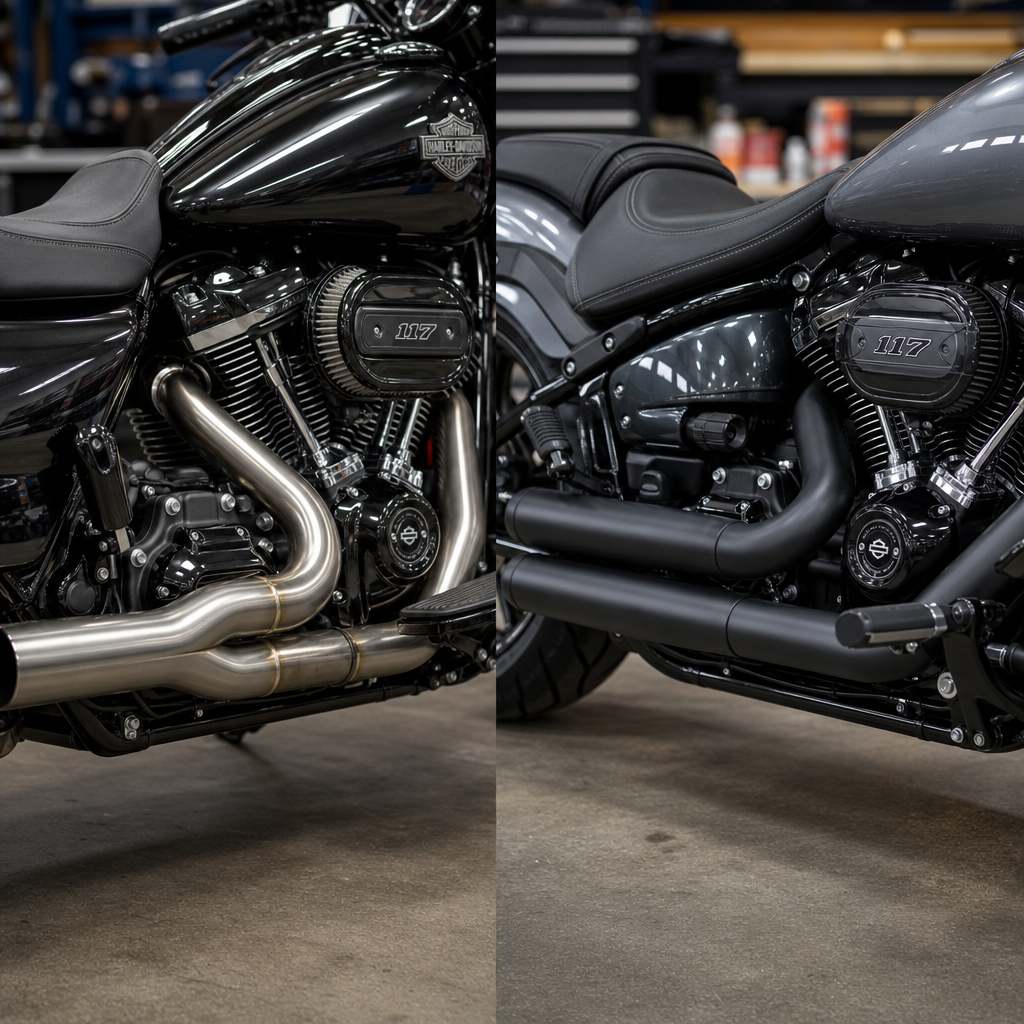
Stage I EFI tuning is the foundation of a Harley-Davidson performance recipe, and for 2026 riders comparing Screamin’ Eagle and Dynojet, the decision reaches beyond horsepower into ergonomics, ride quality, warranty risk, and how well a bike matches its rider. In shop terms, a Stage I setup usually means a freer-flowing air cleaner, less restrictive exhaust, and an electronic fuel injection calibration that supports those airflow changes without creating lean surging, excessive heat, or poor throttle response. I have tuned enough touring bikes, Softails, and Sportsters to know that riders often ask the wrong first question. They ask which tuner makes the most power. The better question is which tuner produces the best whole-bike recipe for your model, your posture, your load, and the roads you actually ride.
That recipe mindset matters because Harley performance is never only about the engine. A Road Glide carrying a passenger and luggage needs low-rpm torque and smooth part-throttle fueling. A Low Rider S ridden solo on back roads benefits from sharper transient response and stronger midrange. A Nightster owner may care as much about seat-to-peg relationship and heat management as peak output. Ergonomics determine how confidently a rider controls the machine, and calibration determines how predictably the bike responds to those controls. When those two systems work together, the motorcycle feels lighter, calmer, and faster even if the dyno chart only shows modest gains.
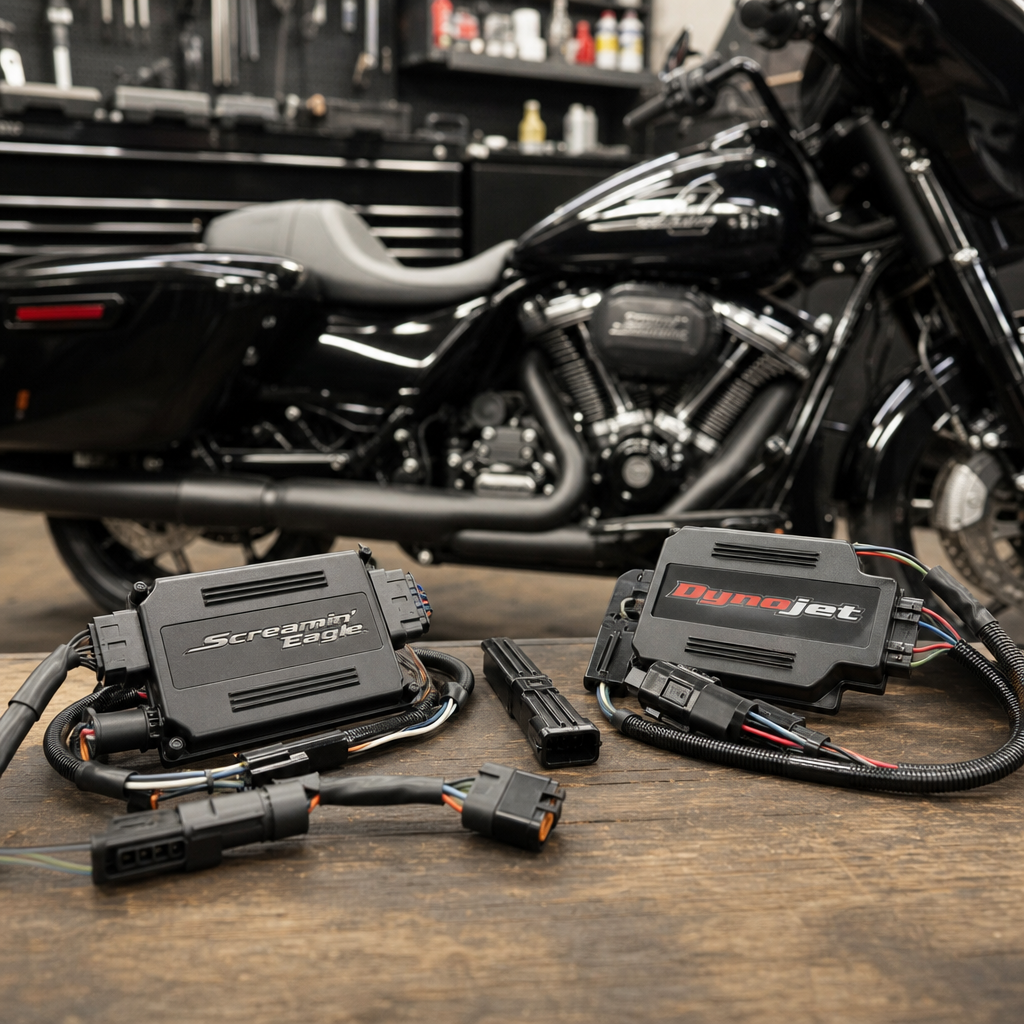
For 2026, the comparison between Screamin’ Eagle and Dynojet remains central because these are two of the most recognized paths for Stage I EFI tuning on Harley-Davidson models. Screamin’ Eagle is Harley-Davidson’s in-house performance brand, closely tied to dealer installation, emissions-certified combinations in some applications, and warranty-sensitive buyers. Dynojet, through devices such as the Power Vision platform, is the established aftermarket standard for data-driven tuning, custom calibration flexibility, and broad enthusiast support. Both can work extremely well. Neither is universally best. The right choice depends on model family, intended use, local emissions rules, and how much control the rider wants over the final result.
This hub article covers model-specific ergonomics and performance recipes so riders can understand not just tuner differences, but how to choose a complete package around them. It explains what each system does, how they compare on major Harley platforms, what hardware pairings make sense, and how to avoid common mistakes. If you are building a Stage I recipe for a bagger, cruiser, or performance-oriented Harley in 2026, this guide gives you the framework to choose confidently and link your tuning decisions to real riding outcomes.
What Screamin’ Eagle and Dynojet Actually Change
At a technical level, both systems alter the engine control strategy so the air-fuel ratio, ignition timing, throttle behavior, and in some cases rev limits or decel characteristics better match hardware changes. On modern Harley-Davidson motorcycles, especially Milwaukee-Eight and Revolution Max platforms, factory calibrations are designed around emissions compliance, heat control strategy, catalyst protection, and broad rideability. Once intake and exhaust flow change, the stock mapping may no longer deliver ideal volumetric efficiency across the rpm range. The result can be hesitation, hotter running, or soft torque where riders expect improvement.
Screamin’ Eagle tuning solutions are built around Harley-Davidson-approved combinations. In practical terms, that means the maps are generally conservative, the workflow is streamlined at the dealer level, and compatibility with factory diagnostics is straightforward. For riders who want a clean install, documented parts matching, and the least friction with dealership service departments, this matters. I have seen riders with new touring bikes accept slightly less customization because they wanted one service lane, one invoice trail, and fewer arguments if another issue appeared later.
Dynojet approaches the same problem from the opposite direction: maximum calibration access. The Power Vision line allows flash tuning, logging, tune revisions, and custom work based on real engine behavior. A competent dyno operator or remote tuner can adjust fuel tables, spark strategy, throttle mapping, target ratios, and compensations far more precisely than a canned file can. That does not guarantee a better tune by itself. It means the ceiling is higher if the person building the map understands the platform. In my experience, a strong custom Dynojet calibration can noticeably improve cruise smoothness, roll-on response, and heat perception compared with a generic Stage I flash.
Model-Specific Ergonomics and Why They Belong in a Tuning Recipe
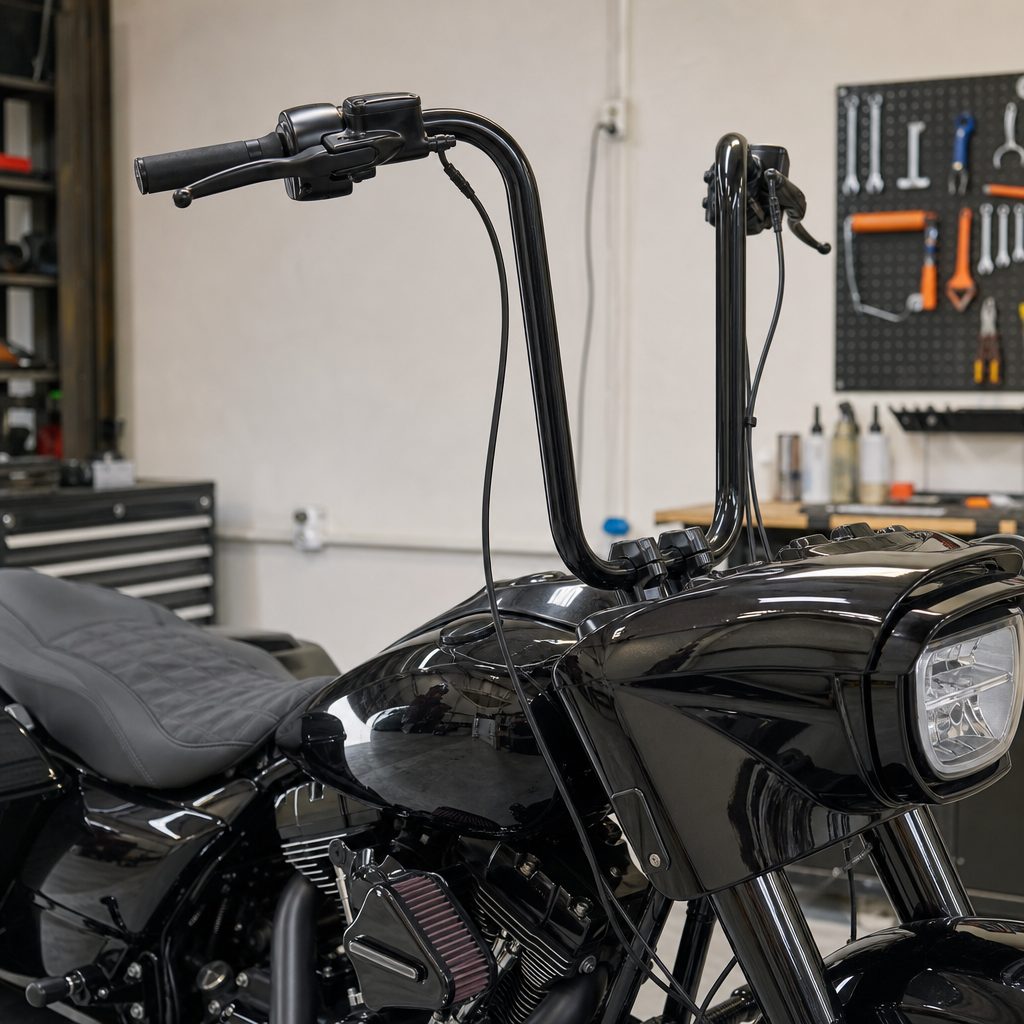
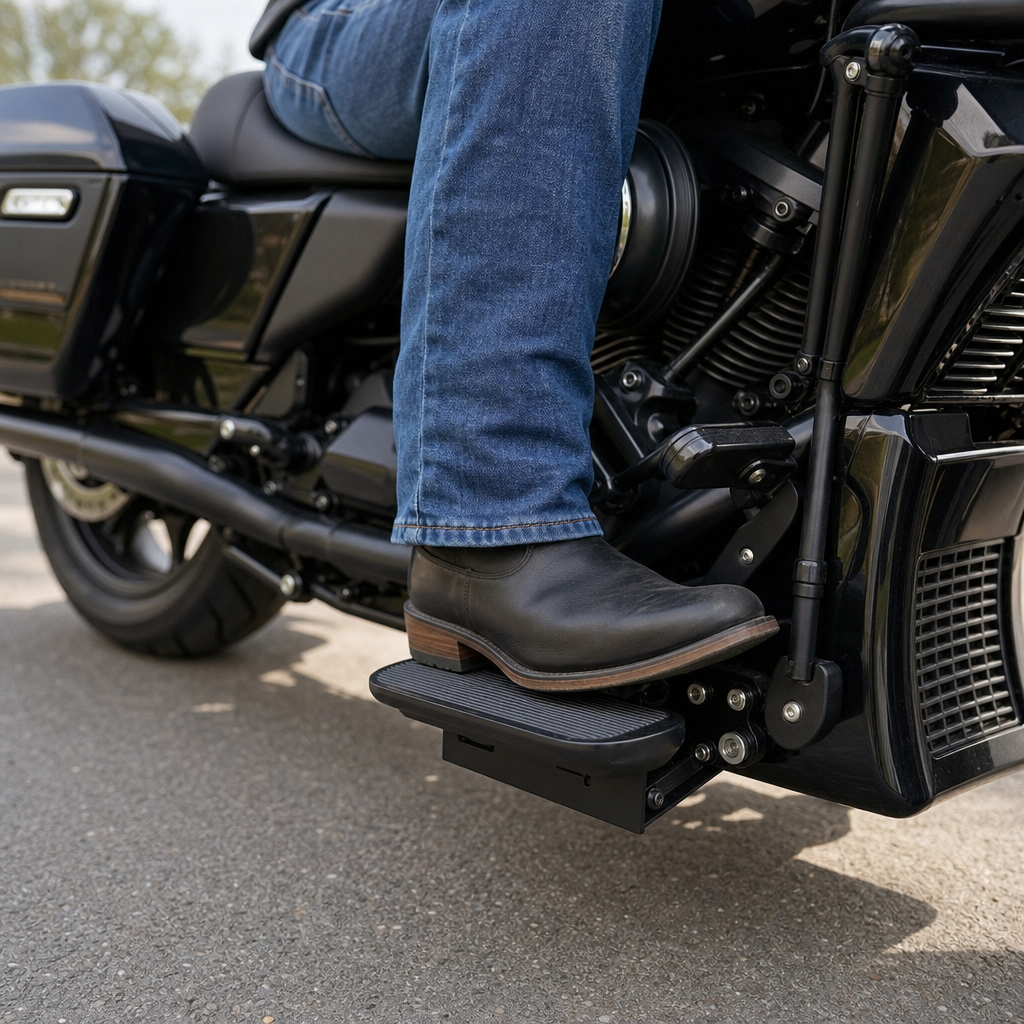
Ergonomics are part of performance because rider position determines throttle control, braking leverage, corner entry confidence, and how consistently a rider can use the torque a tune creates. On a Harley-Davidson, the same engine output feels very different depending on bar reach, seat support, floorboard or mid-control position, wind protection, and suspension attitude. That is why this sub-pillar topic groups ergonomics and performance recipes together rather than treating them as separate conversations.
Consider a Street Glide ridden by a taller owner with a compressed knee angle and a seat that pushes the pelvis forward. That rider often braces on the bars under acceleration, which makes abrupt throttle transitions feel worse than they actually are. A smoother calibration helps, but so does a seat with better pocket shape and bars that reduce wrist loading. On a Low Rider ST, the common complaint is not just fueling but the combination of a compact cockpit, mid-mount posture, and aggressive engine braking feel at corner entry. A tune that softens decel harshness can materially improve comfort and control. On Sportster S and Pan America-adjacent Revolution Max discussions, thermal comfort around the seat and inner thighs frequently enters the equation, making calibration strategy and exhaust choice inseparable from ergonomics.
The practical takeaway is simple: a Stage I EFI tuner should never be chosen in isolation. It belongs inside a recipe that includes intake, exhaust, rider triangle adjustments, and the bike’s primary mission. That is the organizing principle for every article linked from this hub.
Screamin’ Eagle vs Dynojet for 2026: Core Tradeoffs
The fastest way to compare Screamin’ Eagle and Dynojet is by decision criteria, not brand loyalty. Riders generally balance five factors: warranty posture, emissions compliance, tune flexibility, tuner support quality, and future upgrade path. If your bike is new, dealer-serviced, and likely to stay at a basic Stage I level, Screamin’ Eagle often makes sense. If your bike will evolve toward cams, headwork, or highly personalized rideability goals, Dynojet usually offers more room to optimize.
| Decision Factor | Screamin’ Eagle | Dynojet |
|---|---|---|
| Dealer integration | Excellent, especially for approved parts packages | Varies by dealer; stronger with independent tuners |
| Customization depth | Limited compared with custom aftermarket tuning | High, especially with logged data and dyno work |
| Warranty sensitivity | Often preferred by risk-averse owners | Can raise more questions depending on dealer and region |
| Best use case | Clean Stage I with straightforward ownership | Precision tuning and future performance expansion |
| Cost value | Predictable package pricing | Often better long-term value if retuning later |
For 2026 Harley owners, another tradeoff is data visibility. Dynojet users often value seeing logs, comparing revisions, and understanding exactly why the bike behaves differently after tuning. That feedback loop is powerful. Screamin’ Eagle users usually value simplicity and consistency instead. Neither approach is wrong. One is more interactive and tuner-dependent; the other is more standardized and dealership-friendly.
Real-world example: on a Milwaukee-Eight Road King with slip-ons and a ventilator-style intake, a conservative Screamin’ Eagle map may deliver respectable gains and stable manners with minimal owner effort. On a similarly equipped Low Rider S ridden aggressively at varied elevations, a Dynojet custom tune may deliver superior transient fueling and part-throttle crispness that the rider can immediately feel. The difference is not only power. It is calibration granularity.
Performance Recipes by Harley Model Family
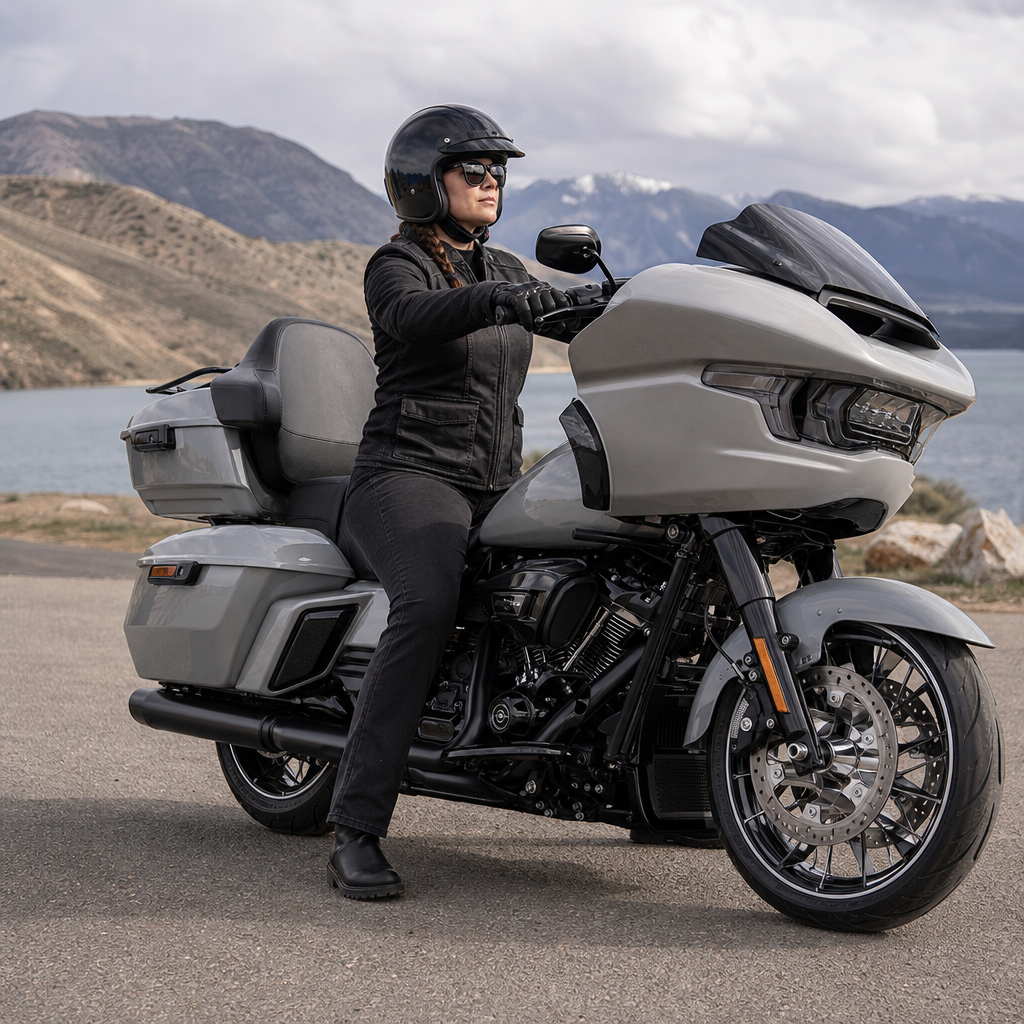
Touring models such as Road Glide, Street Glide, Road King, and Ultra Limited usually respond best to torque-focused Stage I recipes. These bikes are heavy, often loaded, and frequently ridden at highway speeds where smooth closed-loop behavior and roll-on acceleration matter more than top-end numbers. My baseline recipe here is a high-flow intake, quality slip-ons or a touring-appropriate exhaust that preserves drivability, and a tune prioritizing low- to midrange torque between roughly 2,500 and 4,000 rpm. Riders who want simplicity generally lean Screamin’ Eagle. Riders chasing the smoothest possible cruise and the best tune around added weight, cam timing changes later, or regional fuel quality often do better with Dynojet.
Softail performance models such as Low Rider S, Low Rider ST, Fat Bob, and Sport Glide benefit from sharper response and careful management of decel character. These bikes feel more sensitive to small calibration errors because the rider is more connected to the chassis and often rides with greater pace. A good Dynojet tune stands out here, especially when owners dislike jerky on-off throttle transitions. Screamin’ Eagle still fits riders who want a dependable Stage I package with less customization, but the dynamic advantage tends to favor more detailed custom mapping.
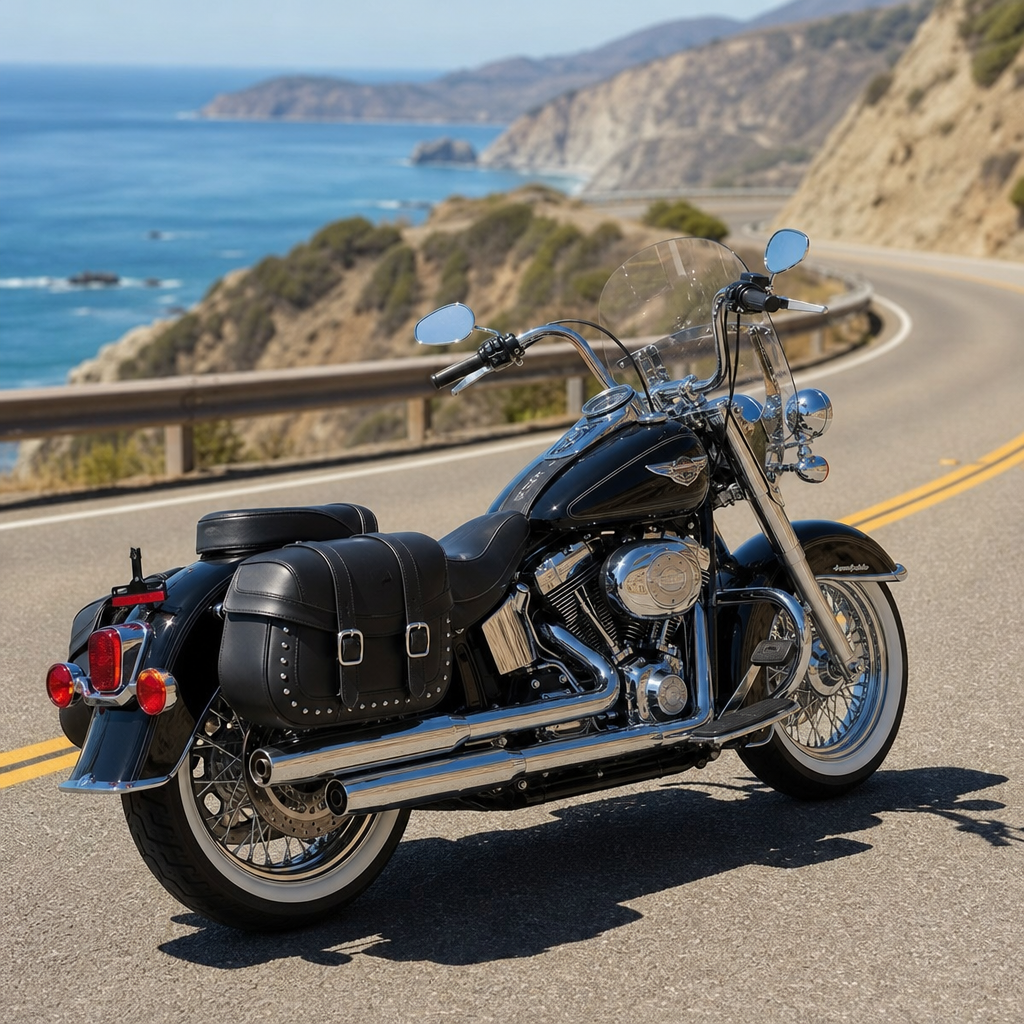
Cruiser-focused Softails such as Heritage Classic, Breakout, and Fat Boy often sit in the middle. Their owners may value heat reduction, smoother takeoff, and relaxed cruising more than aggressive throttle snap. In these cases, either brand can work well, and the deciding factor becomes ownership style. If the motorcycle will stay mostly stock-plus, Screamin’ Eagle is often enough. If the owner is already discussing cams, larger throttle bodies, or exact target air-fuel behavior in summer traffic, Dynojet is the better foundation.
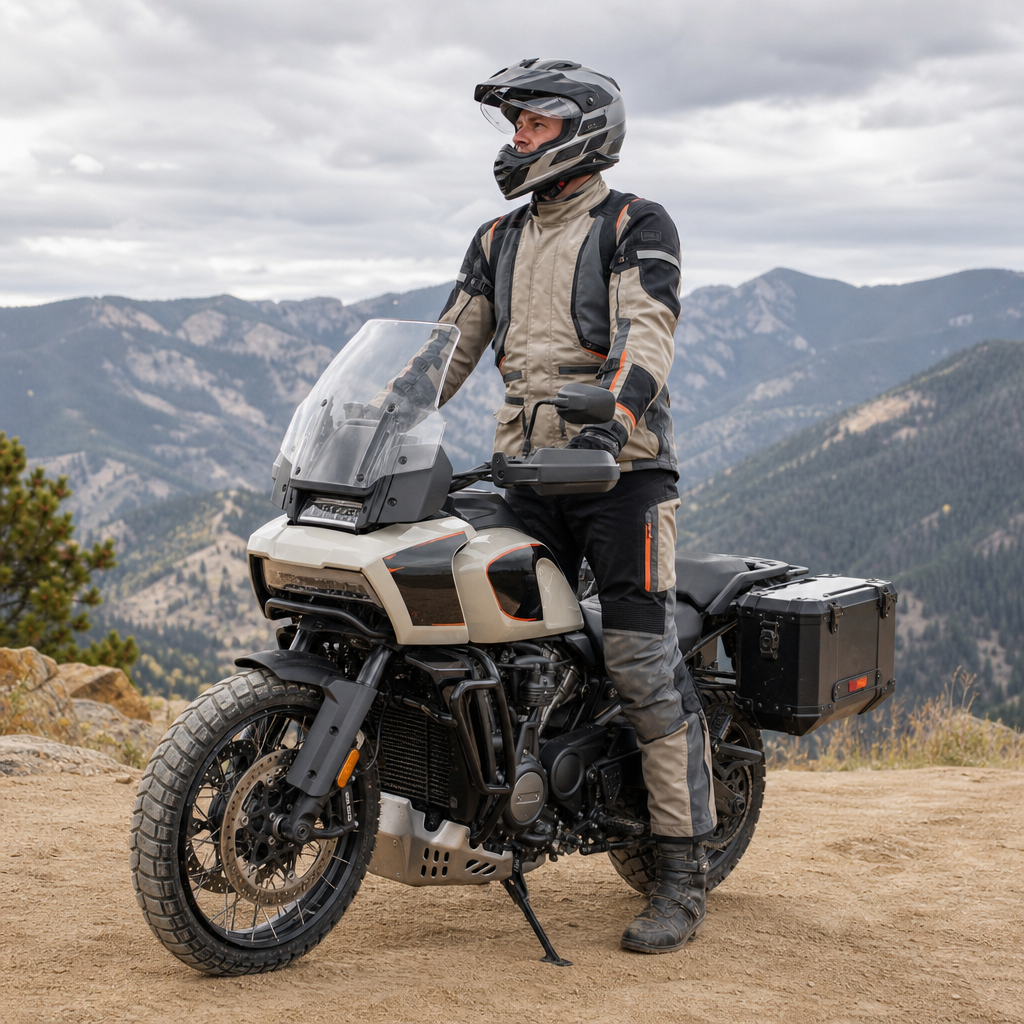
Sportster S and Nightster riders require extra attention because the Revolution Max platform behaves differently from traditional air-cooled big twins. Ride modes, electronic intervention strategies, and thermal management shape the experience as much as intake and exhaust parts. Here, model-specific compatibility and tuner support matter more than brand reputation alone. Riders should confirm current 2026 platform support, available calibration scope, and whether the intended modifications retain the bike’s best street manners.
How to Choose the Right Recipe for Comfort, Control, and Future Upgrades
The best Stage I recipe starts with an honest use case. Ask four direct questions. How do you ride most often: city commuting, weekend back roads, two-up touring, or long-distance interstate? What discomfort do you want to fix: heat, abrupt throttle, weak roll-on, cramped posture, or excessive vibration sensation? How likely are future upgrades such as cams? How important is dealer relationship preservation? Those answers narrow the tuner choice quickly.
Then build in the right order. First, correct the rider triangle with seat, bars, pegs, floorboards, or risers if needed. Second, choose intake and exhaust parts that match the mission of the bike rather than the loudest catalog description. Third, select the tuning path. Fourth, validate results with a test ride on the roads you actually use. I have watched riders spend heavily on engine parts while ignoring a seat that forced them into the tank and bars that made every throttle input choppy. Once the ergonomics were corrected, the same tune felt dramatically better.
Future upgrades matter because retuning costs money and time. If you are confident the bike will remain Stage I, the convenience of a dealership-centered package can outweigh the extra flexibility of Dynojet. If you know a cam chest upgrade is coming, starting with a platform designed for iterative revisions is usually smarter. The main benefit of getting the recipe right is not bragging rights. It is a Harley that feels tailored, predictable, and easier to ride well every day.
Comparing Screamin’ Eagle to Dynojet for a 2026 Stage I EFI tuner recipe comes down to matching the tool to the motorcycle, the rider, and the long-term plan. Screamin’ Eagle is the straightforward answer for owners who want approved combinations, dealer familiarity, and a low-drama path to better intake, exhaust, and calibration balance. Dynojet is the stronger answer for riders who want deeper tuning control, better support for custom refinements, and a platform that scales with future modifications. Both can improve power delivery, reduce annoying lean behavior, and make a Harley feel more complete when paired with the right hardware.
The bigger lesson from this hub is that model-specific ergonomics and performance recipes belong together. A tune affects how the bike responds, but ergonomics determine how well the rider can use that response. Touring bikes need torque and composure under load. Performance Softails need crisp but manageable throttle behavior. Cruiser setups need comfort and heat control as much as output. Revolution Max models need compatibility and careful calibration strategy. When you choose parts and tuning with those realities in mind, the result is not just a faster motorcycle. It is a better one.
Use this page as your starting point for every Harley-Davidson recipe in this subtopic. Identify your model family, define your riding priorities, and choose the tuner path that fits your ownership style. Then build the bike as a system, not a shopping list.
Frequently Asked Questions
What does a Stage I EFI tuner recipe typically include on a 2026 Harley-Davidson?
A Stage I EFI tuner recipe is the baseline performance package most Harley-Davidson riders start with because it addresses how the engine breathes and how the fuel system responds to those airflow changes. In practical terms, it usually includes three core parts: a freer-flowing air cleaner, a less restrictive exhaust, and an EFI calibration or tune that matches the new parts. The air cleaner helps the engine pull in more air with less effort, the exhaust helps spent gases exit more efficiently, and the tuning component adjusts fuel delivery, ignition strategy, and related parameters so the motorcycle can take advantage of the hardware without running poorly.
That last part is the most important. Bolting on intake and exhaust parts without proper calibration can create drivability problems such as lean surging, increased engine temperature, erratic throttle response, decel popping, and weak torque in the rpm range most riders actually use. A good Stage I tune is not just about chasing peak horsepower. It is about making the bike start cleanly, idle consistently, pull smoothly off the bottom, transition predictably in part-throttle riding, and feel more refined in real-world use. For many riders, the biggest improvement is not the dyno number but the way the bike behaves in traffic, on back roads, and during long highway days.
For 2026 riders comparing Screamin’ Eagle and Dynojet, the recipe may look similar on paper, but the ownership experience can differ. Screamin’ Eagle often appeals to riders who want an OEM-aligned path with dealership familiarity and a factory-oriented approach. Dynojet often attracts riders who want broader tuning flexibility, deeper access to map refinement, and the ability to tailor the calibration more precisely to a specific combination of parts and riding style. So while Stage I sounds simple, the tuner choice influences how customizable the package is, how the bike rides afterward, and how comfortable the owner feels with long-term support and risk.
How do Screamin’ Eagle and Dynojet differ for a Stage I tune in terms of performance and ride quality?
The short answer is that both can support a strong Stage I setup, but they often differ more in tuning philosophy and ride character than in headline power figures. On a typical Stage I Harley-Davidson, the difference in peak horsepower between two competent calibrations may be modest. Where riders tend to notice the gap is in throttle feel, low-rpm smoothness, heat management, torque delivery, and how well the bike responds during the kind of riding they actually do every week.
Screamin’ Eagle is generally associated with a more factory-structured tuning path. For many riders, that can translate into a tune that feels well-mannered, predictable, and aligned with a dealer-installed package. It is often the choice for someone who wants an integrated solution and values simplicity over deep customization. If the bike uses a straightforward combination of approved intake and exhaust components, that approach can be very appealing because it reduces guesswork and keeps the process familiar to many Harley-Davidson service departments.
Dynojet, by contrast, is widely known for offering more granular tuning control and a larger universe of map options, revisions, and custom calibration possibilities. That flexibility can matter if the rider is especially sensitive to throttle transitions, wants stronger optimization for a specific exhaust system, or plans to continue modifying the bike later. A well-executed Dynojet tune can deliver excellent ride quality, especially in the lower and middle rpm ranges where touring, cruising, and roll-on passing happen. It may also offer more opportunity to fine-tune the bike for local fuel quality, climate, elevation, and rider preference.
In real shop terms, performance should be judged by how the bike behaves at part throttle, how cleanly it accelerates from lower rpm, whether it runs hot in traffic, and whether it feels smooth and natural in the rider’s hands. Peak dyno numbers are easy to advertise, but a quality Stage I tune earns its value in the seat, not just on a chart. That is why many experienced riders compare tuners based on refinement, consistency, and the confidence the bike gives them mile after mile.
Which is better for warranty peace of mind in 2026: Screamin’ Eagle or Dynojet?
This is one of the most important questions in the entire Stage I conversation, because the tuner decision is not only mechanical but also legal, financial, and practical. In general, riders often view Screamin’ Eagle as the lower-friction option when warranty comfort is a top priority, mainly because it is tied closely to the Harley-Davidson ecosystem. That does not mean every modification is automatically consequence-free, but it often means the path is more familiar within dealership operations and easier for some owners to justify when they want a cleaner paper trail and an OEM-branded parts strategy.
Dynojet, on the other hand, is frequently chosen by riders who prioritize tuning freedom and optimization over staying as close as possible to the factory umbrella. That flexibility can be a major advantage from a performance standpoint, but it can also introduce more concern for owners who are highly focused on warranty outcomes. Warranty questions are rarely as simple as “this tuner voids everything” or “that tuner is always safe.” In reality, outcomes often depend on the dealership, the nature of the failure, the supporting documentation, local policy interpretation, and whether the modification can reasonably be linked to the issue being claimed.
The smartest approach is to talk with the servicing dealer before buying parts, not after. Ask direct questions about how they handle Stage I builds, whether they install and support both systems, what they document, and how they advise customers who are still within factory warranty periods. A rider who wants maximum peace of mind may lean toward a dealer-installed Screamin’ Eagle package. A rider who accepts some additional perceived risk in exchange for more tuning control may feel Dynojet is worth it. The key is not assuming the answer is universal. It is matching the tuner choice to your tolerance for risk, your relationship with your dealer, and how important future warranty simplicity is to you.
Is Dynojet only for riders chasing maximum horsepower, or does it also make sense for comfort and everyday rideability?
Dynojet is often discussed in performance terms, but that can undersell what many riders actually use it for. Yes, it can be an excellent tool for extracting stronger performance from a Stage I setup, but just as importantly, it can be used to improve comfort, smoothness, and everyday rideability. For a lot of Harley-Davidson owners, the real benefit of a more flexible tuning solution is not bragging rights at peak rpm. It is reducing abruptness, cleaning up fueling in the lower rev range, improving roll-on response, and making the motorcycle feel more composed under normal riding conditions.
That matters because many Stage I bikes spend far more time at part throttle than at full throttle. Riders notice surging in steady-state cruising, excess heat while idling in traffic, choppy throttle pickup leaving corners, or an engine that feels hesitant when asked to accelerate from lower rpm. A carefully dialed Dynojet tune can address those traits in a way that makes the bike less tiring and more enjoyable to ride every day. In that sense, it can absolutely be a comfort upgrade, not just a performance upgrade.
It also makes sense for riders whose setups are not completely generic. If the bike has a specific exhaust design, a preferred air cleaner, or operating conditions that differ from the norm, the ability to tailor the calibration more closely can improve the match between machine and rider. That is especially valuable for riders who are very sensitive to how the bike behaves in real-world situations like stop-and-go traffic, two-up touring, mountain elevation changes, or long-distance highway riding. So no, Dynojet is not only for horsepower-focused owners. It is often chosen by riders who want the motorcycle to feel more natural, cooler-running, and more responsive where it counts most.
How should a rider choose between Screamin’ Eagle and Dynojet for a 2026 Stage I build?
The best choice comes down to rider priorities, not internet brand loyalty. If you start with the question, “What kind of ownership experience do I want?” the answer usually becomes clearer. A rider who values a straightforward, dealer-friendly, OEM-centered approach may be happiest with Screamin’ Eagle. That path often appeals to owners who want simplicity, recognizable compatibility, and a package that fits comfortably within the Harley-Davidson ecosystem. It is especially attractive for newer bikes, warranty-conscious owners, and riders who do not want to spend much time thinking about map strategy, calibration revisions, or future tuning complexity.
Dynojet tends to make the most sense for riders who want more authority over how the bike is tuned and how it can evolve over time. If the plan includes refining rideability, tailoring the bike to a specific exhaust note and airflow combination, or leaving room for future modifications beyond Stage I, Dynojet can offer meaningful advantages. It often suits riders who have a trusted tuner, know what they want from the motorcycle, and are willing to be more intentional about setup decisions in exchange for a more customized result.
A good buying framework is to compare four things: warranty comfort, tuning flexibility, dealership support, and desired ride character. Then consider who will actually tune and support the bike. The best