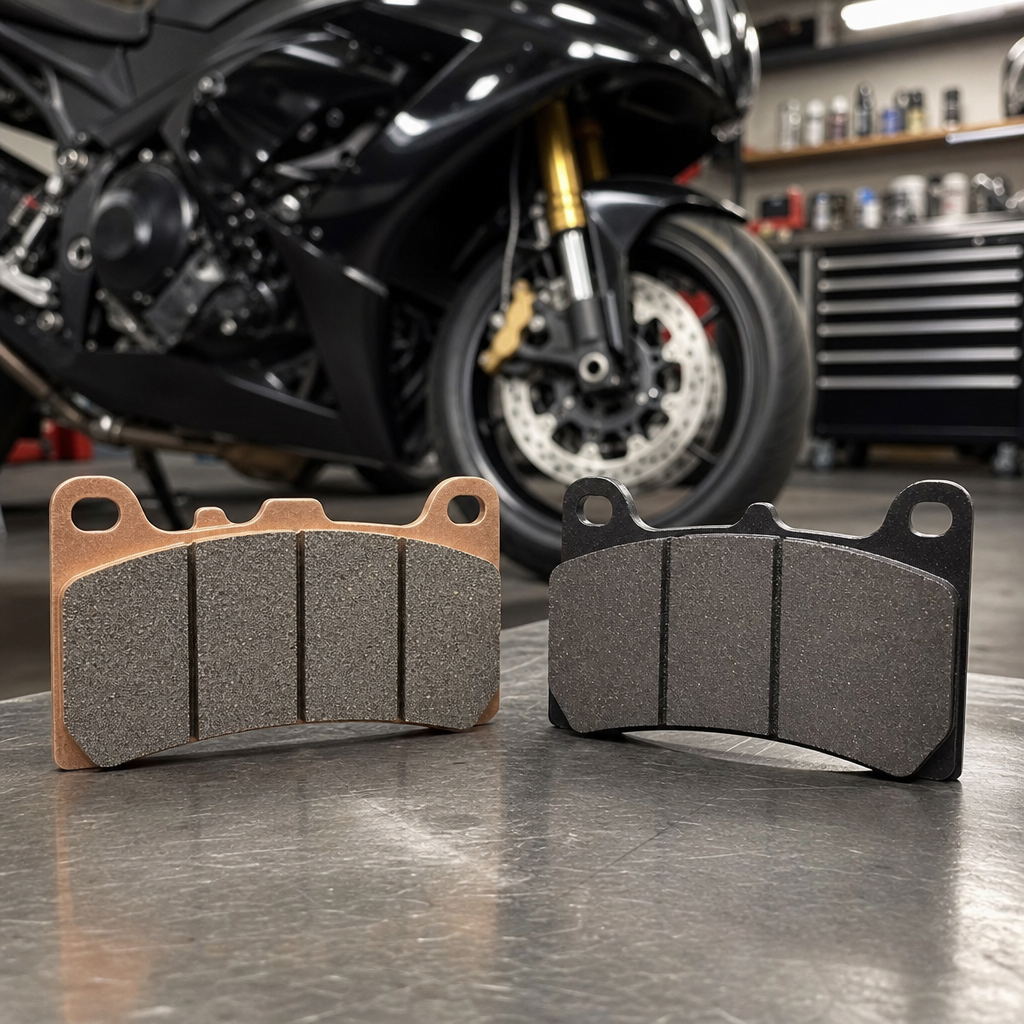
Choosing between sintered and organic brake pads on a 2026 sportbike is not a minor maintenance decision; it directly affects stopping power, lever feel, rotor wear, noise, heat management, and confidence on the road or track. Brake pads are the friction material clamped by the caliper against the brake rotor, and the two compounds most riders compare are sintered metal pads and organic pads, sometimes labeled resin or NAO. On modern sportbikes, where lighter chassis, cornering ABS, powerful radial calipers, and sticky tires raise the performance ceiling, pad choice matters even more because the brakes operate inside a tightly engineered system. I have swapped pads on current supersports, middleweight twins, and track-prepped bikes, and the difference is obvious within the first hard stop. A poor compound match can make a premium machine feel vague, harsh, or inconsistent.
This Tires & Parts hub article explains how each pad type works, where each excels, and how to choose for commuting, canyon riding, touring, wet weather, or occasional track use. It also connects brake pad selection to the broader maintenance picture riders in the Garage & Gear category should understand: tire grip, rotor condition, brake fluid quality, suspension setup, and electronic aids all influence real braking performance. If your front tire is cold, your forks are diving too quickly, or your fluid has absorbed moisture, the “best” pad on paper may still underperform. The goal is not simply to identify which compound is stronger, but which is right for your 2026 sportbike, your riding conditions, and your maintenance habits.
In simple terms, sintered pads are made by fusing metallic particles under heat and pressure, creating a dense friction material that handles high temperatures and repeated hard braking well. Organic pads use fibers, fillers, and resin binders, usually delivering a softer initial bite, less rotor abrasion, and quieter operation, but often with lower ultimate heat capacity. Most OEM sportbike pads today lean toward sintered or semi-metallic formulas because manufacturers must balance safety, durability, and broad-use performance. Still, aftermarket choices from Brembo, EBC, SBS, Galfer, Vesrah, and Ferodo vary significantly, and selecting by label alone is a mistake. You need to match compound, rotor material, climate, and riding intensity.
How sintered and organic brake pads differ in construction and feel
Sintered brake pads are produced by compressing metallic ingredients such as copper, bronze, iron, graphite, and friction modifiers, then bonding them through heat. The result is a hard, stable material with strong friction across a wide temperature range. On a 2026 sportbike, that usually translates into higher initial bite, stronger resistance to fade, and consistent performance after repeated high-speed stops. When I install quality sintered pads on bikes with aggressive radial master cylinders, riders typically notice a firmer, more immediate lever response. That can be an advantage on fast roads and trackdays, but it can also feel abrupt for riders who prefer a gentler first touch at low speed.
Organic brake pads, by contrast, use nonmetallic fibers such as aramid, glass, carbon, and rubber compounds mixed with resin. They are generally softer and more compressible, which changes feel at the lever. Many riders describe organic pads as easier to modulate in parking lots, city traffic, and wet commuting because the initial grab is smoother. They also tend to generate less noise and transfer less harshness through the chassis. On lighter bikes or older machines with less aggressive calipers, that softer feel can be welcome. On a modern sportbike capable of repeated triple-digit deceleration events, though, some organic compounds can begin to feel vague as heat builds.
The key takeaway is that “feel” is not just subjective preference. It is the result of friction coefficient, thermal stability, compressibility, and the way a specific pad interacts with your rotor and caliper. Two riders can try the same bike and disagree on pad quality because one values instant bite and one values progressive modulation. Understanding that distinction is the foundation for making the right choice.
Performance on a 2026 sportbike: stopping power, heat, and electronics
A 2026 sportbike is not just faster than older machines; it is also more electronically managed. Many models now combine cornering ABS, lean-sensitive traction strategies, IMU-based brake pressure modulation, and highly rigid monoblock calipers. These systems do not eliminate the importance of pad compound. In fact, they make consistency more important. Sintered pads usually perform better here because they maintain friction under higher temperatures, which helps the ABS and rider work with predictable brake torque. During back-to-back hard stops, they resist fade better than most organic options. That is why performance-oriented OEMs continue to spec sintered-style pads on supersports and liter bikes.
Heat is the biggest dividing line. Sportbikes generate serious braking loads, especially with modern high-grip tires and short gearing. On canyon descents or during a novice track session, front brake temperatures can rise quickly. Sintered pads are built for that environment. They continue to bite when rotors are hot, and they recover quickly after heavy use. Organic pads can feel excellent during the first few stops, especially from cold, but many compounds lose effectiveness sooner as temperatures rise. The rider experiences this as a longer lever pull, reduced bite, or a wooden sensation under repeated braking.
That said, not every 2026 sportbike owner rides like a trackday regular. If your machine spends most of its life commuting, weekend cruising, or doing moderate back-road miles, you may never push quality organic pads into their weak zone. In those conditions, their lower noise, gentler rotor interaction, and smoother response can make the bike easier to live with. The system matters too. Premium brake fluid, clean caliper pistons, correct pad bedding, and healthy tires often improve braking more than simply jumping to the most aggressive compound.
When sintered brake pads are the better choice
Sintered brake pads are the right choice for most riders who use a 2026 sportbike as a true performance machine. If you ride fast mountain roads, carry high corner-entry speed, do occasional trackdays, or regularly brake hard from highway pace, sintered pads offer the strongest safety margin. They provide stable friction under high thermal load, better wet-weather resilience than many organic formulas, and long service life. In my experience, they also suit heavier riders, bikes with luggage, and machines ridden two-up because all of those situations increase brake energy.
They are particularly valuable on bikes with premium brake hardware. A sportbike equipped with Brembo Stylema, M50, Nissin radial, or Tokico monoblock calipers can exploit the sharper response of a sintered pad. Pair that with modern hypersport tires and braided steel lines, and you get a clean, confidence-building lever. Riders who care about consistency lap after lap should look at sport-focused compounds from SBS Street Excel, EBC HH, Brembo SA or SC, Vesrah RJL, or Galfer HH, depending on exact street or track use. Not every sintered pad behaves the same, but the category as a whole is built for higher energy braking.
The tradeoff is that sintered pads can be noisier, create more rotor wear over time, and feel too grabby on some setups. On a wet, painted city intersection or in stop-and-go traffic, an aggressive front pad may demand a more delicate hand. That is not a reason to avoid sintered pads entirely; it is a reason to select the right friction level rather than the most race-oriented option available.
When organic brake pads make sense
Organic brake pads make sense when comfort, control at low speed, and rotor friendliness matter more than repeated high-heat performance. Riders who use a 2026 sportbike mainly for urban commuting, casual weekend rides, or all-weather transportation may prefer the smoother engagement. On cold mornings, some organic compounds feel more linear at the first lever pull, and the reduced tendency to squeal is a real quality-of-life benefit. If your riding style is measured rather than aggressive, the softer bite can actually help you brake more precisely.
Organic pads can also be a smart choice for rear brakes. Many sportbike riders want the rear brake to settle the chassis or assist slow-speed control, not deliver a sharp, lock-prone response. A quality organic rear pad can make that easier. They are also worth considering if you prioritize minimizing rotor wear, especially on a bike with expensive replacement discs. For riders returning to motorcycling or moving up from smaller machines, a less abrupt front brake can reduce fatigue and improve confidence while technique develops.
The limitation is straightforward: if you routinely ride hard enough to overheat them, they stop being a good choice. Brake pads should match actual use, not idealized use. If your “commuter” regularly sees canyon runs with friends, an organic compound may not be the balanced option you think it is.
How to choose the right pad for your bike, tires, and riding style
The best way to choose brake pads is to think of the motorcycle as one braking package. Start with your riding intensity. If more than a small share of your riding involves hard deceleration, repeated downhill braking, or track instruction days, choose sintered pads. If nearly all of your miles are urban or moderate-speed street riding, compare quality organic and mild sintered street compounds. Next, check rotor material and manufacturer guidance. Some aftermarket rotors are designed around specific friction ranges, and pad compatibility matters.
Tires belong in the same conversation. A 2026 sportbike on track-capable tires such as Michelin Power GP2, Pirelli Diablo Rosso IV Corsa, or Bridgestone Battlax S23 can use more braking force before intervention or slide than a bike on sport-touring rubber in winter temperatures. If your tires offer limited grip, an aggressive pad may simply activate ABS earlier. Suspension setup also matters. Excessive fork dive can overload the front tire and make any pad feel abrupt. Before blaming pad compound, verify sag, damping, rotor thickness, and fluid condition.
| Riding use | Best pad type | Main reason | Watch for |
|---|---|---|---|
| City commuting | Organic or mild sintered | Smooth low-speed control | Fade during repeated hard stops |
| Weekend sport riding | Sintered | Stronger bite and heat resistance | Possible extra noise |
| Wet-weather riding | Sintered | Better consistent friction in moisture | Sharper initial response |
| Trackdays | Performance sintered | High thermal stability | Rotor wear, proper bedding required |
| Rear brake emphasis | Organic | Gentler modulation | Shorter life under heavy use |
Finally, buy from a reputable brand and bed the pads correctly. Improper bedding leaves uneven transfer film on the rotor, causing vibration, noise, and poor bite. Several controlled stops from moderate speed, followed by cooling, are usually required, but always follow the pad maker’s procedure.
Tires and parts hub: what else affects braking beyond pad compound
As the hub page for Tires & Parts within Garage & Gear, this topic should point riders to the full maintenance chain. Brake pads do not work in isolation. Tire pressure changes contact patch behavior and warm-up speed. Worn or squared-off front tires reduce confidence under trail braking. Rotors with excessive runout can mimic pad problems. Brake fluid should typically be replaced every one to two years on street bikes because glycol-based DOT 4 absorbs moisture, lowering boiling resistance. Stainless braided lines improve lever consistency by reducing expansion under pressure, though they do not create grip that your tire does not have.
Caliper cleanliness is another overlooked factor. On bikes ridden through road grime, pistons can stick slightly, causing uneven pad wear and drag. I have seen riders blame a pad brand when the real issue was contaminated pistons and old fluid. Wheel bearings, head bearings, and fork alignment also influence how planted the front end feels during hard braking. If your goal is shorter stopping distances and better feel, treat brake pads as one part of a system that includes tires, suspension, hydraulic components, and rider technique.
For most 2026 sportbikes, the practical answer is clear. Use sintered brake pads if you ride the bike the way it was engineered to be ridden: briskly, repeatedly, and with meaningful brake load. Choose organic pads if your use is gentler, you value softer engagement, and you accept lower heat tolerance. Neither compound is universally “best.” The best pad is the one matched to your real conditions, installed correctly, bedded properly, and supported by healthy tires, fluid, rotors, and suspension.
If you are building out your Tires & Parts knowledge, make brake pad selection the starting point rather than the ending point. Review your tire type, check rotor thickness and condition, refresh fluid on schedule, and inspect calipers before your next season. Then choose the pad compound that fits your riding, not someone else’s forum signature. On a 2026 sportbike, that approach delivers the real benefit riders want: predictable braking you can trust every time you squeeze the lever. Start with an honest assessment of how you ride, and the right choice between sintered and organic pads becomes much easier.
Frequently Asked Questions
What is the main difference between sintered and organic brake pads on a 2026 sportbike?
The core difference is the friction material and how it behaves under heat, pressure, and repeated hard braking. Sintered brake pads are made by bonding metallic particles under high heat and pressure, which creates a dense, durable pad with strong bite and excellent resistance to fade. Organic pads, often called resin or NAO pads, use a blend of fibers, fillers, and friction modifiers held together with resin. On a 2026 sportbike, that material difference translates into a very noticeable change in braking personality. Sintered pads usually deliver more immediate stopping power, stronger performance in wet conditions, and better consistency when the brakes get extremely hot. Organic pads tend to feel smoother and more progressive at the lever, often with less noise and a slightly gentler initial engagement.
In practical riding terms, sintered pads are usually the performance-focused choice for heavier braking loads, aggressive canyon riding, high-speed street use, and track days. They cope better with modern sportbike demands, especially when the bike has powerful radial calipers, sticky tires, and advanced electronics that encourage harder braking deeper into corners. Organic pads, by contrast, can be appealing for riders who prioritize a softer feel, quieter operation, and reduced rotor wear in moderate street riding. Neither is automatically “better” in every situation. The right choice depends on how hard you brake, how often you ride in rain, how much heat you generate, and whether your bike spends most of its life commuting, carving backroads, or attacking apexes.
Which brake pad type is better for street riding versus track riding?
For most 2026 sportbike owners, sintered pads are the better all-around choice if the bike is ridden aggressively on the street or sees any meaningful track time. They provide stronger initial bite, higher heat tolerance, and more consistent braking under repeated hard use. That matters on modern sportbikes because braking systems are more capable than ever, and riders often take advantage of late braking, high corner entry speeds, and repeated deceleration from serious velocity. On the track, sintered pads are generally the safer and more confidence-inspiring option because they maintain performance as temperatures rise lap after lap. They are less likely to fade, less likely to feel vague once hot, and better suited to the thermal loads created by repeated heavy braking zones.
Organic pads can still work very well for everyday street use, especially if your riding style is smoother and less aggressive. They often offer a more linear, less abrupt lever response at low to moderate temperatures, which some riders prefer in traffic or casual weekend rides. They also tend to be quieter and may feel more forgiving during gentle braking. But if your “street riding” includes hard mountain-road runs, frequent two-up riding, loaded touring on a sportbike, or repeated high-speed stops, organic pads can reach their limits sooner. A good way to think about it is this: if you routinely push your 2026 sportbike anywhere near its braking potential, sintered pads usually make more sense. If you ride mostly in normal street conditions and value comfort and smoothness over maximum braking aggression, organic pads may be perfectly suitable.
Do sintered brake pads wear out rotors faster than organic pads?
In general, yes, sintered pads can contribute to faster rotor wear than organic pads because the compound is harder and contains metallic content. That said, the real-world impact depends heavily on pad quality, rotor material, riding style, and maintenance. On a 2026 sportbike with premium stainless steel rotors, a quality sintered pad from a reputable manufacturer is often perfectly compatible and commonly recommended. The extra rotor wear is usually a tradeoff for stronger braking, better wet performance, and much greater heat resistance. For many riders, especially those who brake hard or ride fast, that tradeoff is worth it.
Organic pads are generally gentler on rotors and can be a smart choice if minimizing wear, noise, and harshness matters more than ultimate performance. However, lower rotor wear does not automatically make organic pads the better long-term value. If they wear faster themselves, lose effectiveness when hot, or need replacement sooner because your riding style overwhelms them, the total ownership picture can change. The most important step is checking your motorcycle manufacturer’s recommendations and making sure the pad compound is approved for your specific rotor type. Also remember that dirty rotors, seized caliper pistons, improper bedding-in, and neglected fluid changes can all damage braking performance and component life regardless of whether you choose sintered or organic. Pad material matters, but maintenance matters just as much.
How do sintered and organic pads affect lever feel, noise, and braking in wet weather?
Sintered pads usually produce a sharper, more immediate lever response, especially at the beginning of the braking event. Riders often describe this as stronger initial bite. On a 2026 sportbike, where braking systems are highly responsive and chassis behavior under braking is finely tuned, that sharper response can boost confidence when riding quickly. Organic pads typically feel a bit softer and more progressive, which some riders prefer because it gives them a broader, more gradual ramp-up in braking force. This can feel easier to modulate in stop-and-go traffic or during casual riding, although rider preference plays a huge role here.
When it comes to noise, organic pads often have the advantage. They tend to run quieter and may produce less squeal under normal conditions. Sintered pads are more prone to noise, especially if the rotors are glazed, the pads are not properly bedded in, or the setup is performance-oriented. In wet weather, sintered pads usually perform better because they clear water from the rotor surface more effectively and maintain friction more consistently. That can be a major benefit for street riders who encounter rain, cold mornings, or variable road conditions. Organic pads can still work acceptably in the wet, but they generally do not offer the same level of wet-condition consistency. If all-weather confidence matters, sintered pads usually hold the edge.
How do you choose the right brake pads for your specific 2026 sportbike and riding style?
Start with the manufacturer’s recommendations for your exact bike, because modern sportbikes are engineered as complete systems. The calipers, rotors, ABS tuning, traction electronics, tire grip, and chassis geometry all influence how the bike responds under braking. Once you confirm compatibility, match the pad compound to the way you actually ride, not the way you imagine you ride. If your 2026 sportbike is used for spirited street riding, occasional aggressive braking, commuting in mixed weather, or any track-day use, sintered pads are typically the better fit. They offer stronger and more repeatable stopping performance, especially as heat builds. If your riding is mostly relaxed street use, short trips, urban traffic, and smooth backroad cruising, organic pads can deliver a quieter, gentler, more street-friendly feel.
Also consider your priorities beyond pure stopping power. If you want maximum bite, better wet braking, and high-temperature durability, choose sintered. If you care more about smoother engagement, lower noise, and reduced rotor wear under moderate use, organic may be the better option. Whichever compound you choose, buy from a trusted brand, install the pads correctly, inspect the rotors, and bed the pads in according to the manufacturer’s instructions. Bedding is especially important because it establishes the transfer layer on the rotor and helps the pads achieve stable friction and proper feel. A great pad installed poorly can feel worse than an average pad installed correctly. On a high-performance 2026 sportbike, the smartest choice is the one that matches both the machine’s capabilities and your real-world braking demands.