Choosing the right exhaust system for your 2026 American V-Twin affects far more than sound. It changes torque delivery, heat management, rider comfort, emissions compliance, service access, luggage fitment, and the long-term reliability of your engine. In the Garage & Gear world, exhaust sits at the center of Tires & Parts because it interacts with fuel mapping, wheel and tire clearance, suspension travel, floorboard position, saddlebags, and even how often you inspect clamps, mounts, and fasteners. I have installed stock replacements, tuned high-flow 2-into-1 systems on touring baggers, and corrected plenty of poor choices that looked good on a showroom floor but created vibration, reversion, or unbearable drone on the highway.
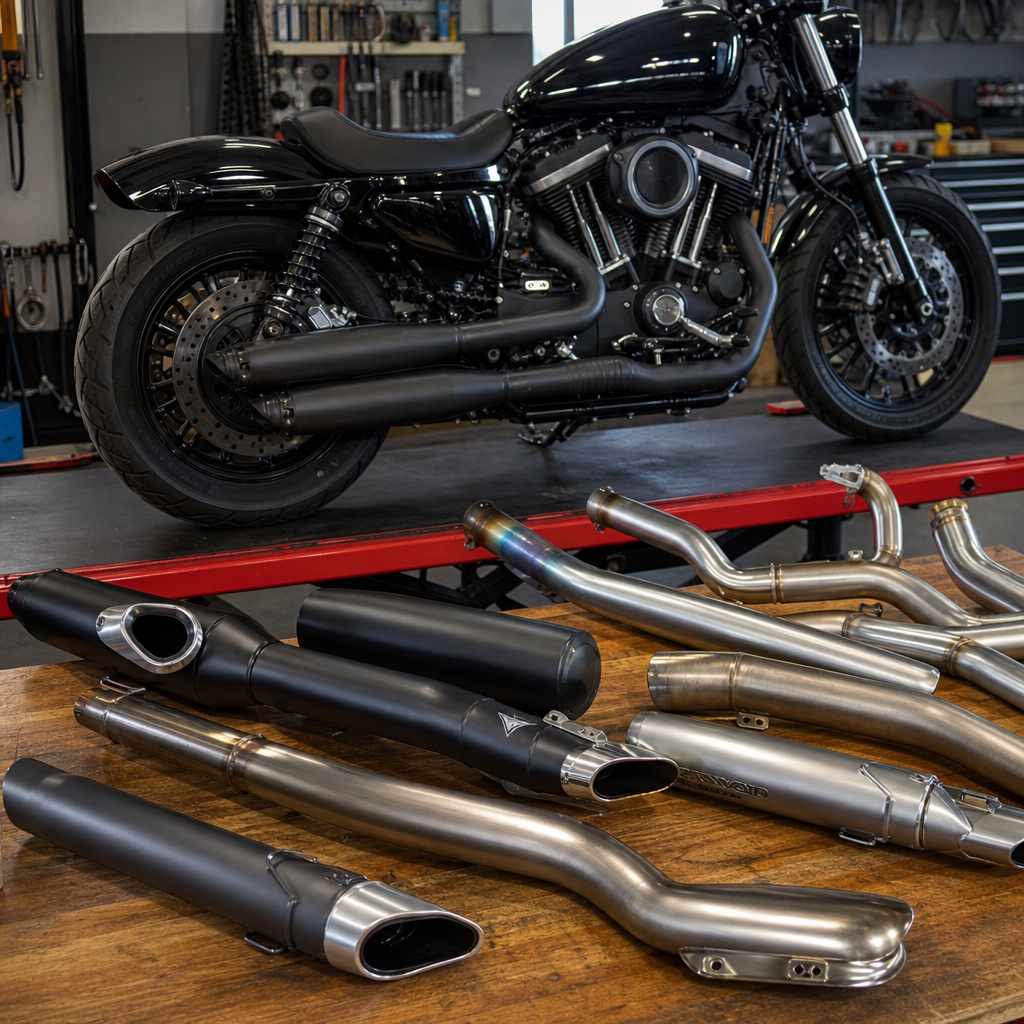
For 2026 American V-Twin owners, the decision is more nuanced than simply picking loud or quiet pipes. Modern bikes from Harley-Davidson, Indian, and other domestic-style V-Twin platforms often use ride-by-wire throttles, closed-loop fueling with oxygen sensors, catalytic converters, and electronic rider aids calibrated around stock backpressure and exhaust gas velocity. An exhaust system includes headers, collector design, crossover sections, mufflers, heat shields, baffles, mounting brackets, and sensor ports. When riders say slip-ons, they mean replacement mufflers that attach to factory head pipes. A full system replaces nearly everything from the exhaust ports back. Choosing correctly matters because the best setup matches how you ride, where you ride, and what supporting parts your motorcycle already has or will need next.
This hub article covers the Tires & Parts subtopic comprehensively by showing how exhaust choice connects to intake upgrades, tuning tools, tire load and clearance considerations, passenger use, emissions rules, and maintenance habits. If you are building a daily commuter, a two-up touring machine, or a performance-oriented club-style bagger, the right exhaust is the one that delivers the performance band, sound character, legality, and fitment your specific motorcycle demands.
Start with Your Bike, Engine, and Riding Goal
The first step is identifying your exact platform and your actual goal. A Milwaukee-Eight touring model, a Softail cruiser, and an Indian PowerPlus bagger do not respond the same way to the same exhaust layout. Displacement, cam timing, compression ratio, cylinder head flow, and stock catalyst placement all influence which design works best. In my experience, riders often skip this step and buy according to brand reputation alone. That is how a rider seeking relaxed two-lane cruising ends up with a race-oriented pipe that softens low-rpm response and produces constant helmet-level resonance at 70 mph.
Define the target clearly. If you want stronger roll-on power for passing in sixth gear, prioritize a system that supports midrange torque, usually with a properly sized 2-into-1 collector. If you want to preserve factory drivability, emissions equipment, and minimal tuning complexity, quality slip-ons are often the smartest answer. If your bike already has a high-flow air cleaner and a camshaft upgrade, the exhaust must complement that package. Exhaust systems are not isolated bolt-ons. They are airflow components inside a larger fuel, ignition, and thermal system.
Bike configuration matters too. Check whether you run hard bags, a passenger backrest, highway bars, floorboards, lowered suspension, or oversized rear tires. A pipe that works on a stripped cruiser may interfere with a stretched bagger setup or place heat directly against luggage. On some 2026 models, sensor placement and catalyst packaging can also restrict choices. Always confirm fitment by exact model year, not just family designation.
Understand the Main Exhaust Types and What They Do
Most American V-Twin riders will choose among slip-ons, true duals, 2-into-1 systems, or 2-into-2 performance systems. Each has a distinct purpose. Slip-ons keep the factory headers and usually retain the most straightforward installation path. They are popular because they improve tone, reduce some weight, and preserve many original engineering decisions. For riders who want a richer exhaust note without dramatically changing the power curve, slip-ons from brands such as S&S, Vance & Hines, Rinehart, Bassani, Khrome Werks, or TAB Performance can be a practical upgrade.
True duals separate each cylinder’s exhaust path. They can deliver the classic balanced look many touring riders want, especially on large baggers. The tradeoff is that some true dual setups sacrifice scavenging efficiency compared with a well-designed collector system, which can cost midrange torque. On a heavy touring bike ridden two-up with luggage, that difference can be noticeable when climbing grades or accelerating from 2,500 to 4,000 rpm.
A 2-into-1 system merges both cylinders into one collector before the muffler. This layout often produces the best combination of scavenging and broad torque on street-driven V-Twins. When tuned correctly, the negative pressure wave created by the collector helps evacuate the cylinder during overlap, improving cylinder filling on the next cycle. That is why performance shops frequently recommend a 2-into-1 for riders prioritizing usable power over symmetry.
Some modern 2-into-2 systems are engineered more carefully than old cosmetic duals and can perform very well, especially when crossover balance and muffler internals are designed correctly. The key point is simple: choose the architecture for your riding outcome, not just appearance.
Match Pipe Design to Torque, Sound, and Heat
Header diameter, primary length, collector angle, muffler core size, and baffle design all shape performance. Bigger is not always better. Oversized head pipes can slow exhaust gas velocity, which weakens scavenging at the lower engine speeds where many large V-Twins spend most of their time. A street motorcycle that carries passenger weight and touring gear usually benefits from maintaining gas speed and strengthening midrange torque rather than chasing a peak horsepower number seen near redline on a dyno chart.
Sound deserves a disciplined approach. Riders often ask which exhaust is best for deep tone. The right answer is that deep, controlled sound comes from overall design, not volume alone. Straight-through mufflers may sound aggressive at idle yet produce harsh crack on deceleration or a tiring drone on the highway. Well-engineered baffles can lower the sharp frequencies that make some systems exhausting over distance. If you ride 300-mile days, prioritize the note you can live with inside a helmet, not the one that impresses for thirty seconds in a parking lot.
Heat management matters more on 2026 bikes than many buyers expect. Catalyst location, lean cruise fueling, rear-cylinder heat, and reduced airflow in traffic can make an exhaust uncomfortable if shielding is poor. Good systems use quality heat shields, durable coatings, and mounting paths that keep hot sections away from legs, boots, rear brake lines, and bag mounts. Ceramic coating, stainless construction, and proper wrap-free heat control usually outperform improvised fixes. Exhaust wrap traps moisture and can accelerate corrosion on some mild-steel pipes.
| Exhaust Type | Best For | Main Advantage | Main Tradeoff |
|---|---|---|---|
| Slip-ons | Daily riders wanting better sound with minimal changes | Easy installation and stock-like drivability | Limited performance gain |
| True duals | Touring riders focused on classic style | Balanced appearance and distinct tone | Can reduce midrange compared with strong collectors |
| 2-into-1 | Performance street and club-style builds | Broad torque and efficient scavenging | Asymmetrical look may not suit every bike |
| Performance 2-into-2 | Riders wanting dual styling without old dual-system compromises | Blend of appearance and power when well engineered | Quality varies widely by manufacturer |
Do Not Ignore Tuning, Sensors, and Emissions Rules
Any meaningful exhaust change should be evaluated alongside tuning. On modern American V-Twins, the engine control module uses sensor feedback and base maps calibrated for stock flow. A freer-flowing exhaust can make the mixture leaner in areas the system cannot fully correct on its own. That can increase combustion temperature, cause surging, and reduce throttle smoothness. The solution is not guesswork. Use a proven calibration path through a reputable tuner or a recognized device such as Dynojet Power Vision, Screamin’ Eagle Pro Street Tuner where applicable, or a shop dyno session with wideband analysis and repeatable runs.
Understand the legal side before buying. In the United States, federal and state emissions requirements may prohibit tampering with catalytic converters or certified exhaust components on street-registered motorcycles. California riders must be especially careful because CARB compliance affects what can be legally sold and installed for road use. Noise ordinances also vary sharply by city and state. A system that is acceptable in one county may attract tickets in another. If you cross state lines often, a moderate, compliant system is usually the least stressful choice.
Sensor compatibility matters too. Verify oxygen sensor bung size, port placement, harness reach, and whether the system is designed for your bike’s closed-loop strategy. Poor sensor placement can complicate tuning or create misleading readings. If an exhaust requires adapters, confirm they are included and do not create leak points. Exhaust leaks upstream of the sensor can distort air-fuel data and cause unstable fueling behavior.
Check Fitment with Tires, Suspension, and Everyday Use
As the Tires & Parts hub, this topic has to connect exhaust selection to chassis realities. Rear tire size, wheel offset, axle travel, and shock length all affect clearance. A pipe routed too close to the sidewall, belt, or axle path can become a real safety issue under compression. This matters on lowered cruisers, performance baggers with upgraded suspension, and customs running non-stock wheel widths. Always inspect full suspension travel, not just static garage clearance.
Foot controls and ergonomics matter just as much. Mid-controls, floorboards, heel shifters, and passenger pegs can all change where your boot meets the bike. I have seen beautiful systems force riders into awkward foot positions because the rear header or muffler sat exactly where a touring boot naturally wants to rest at highway speed. On a short test ride, that may seem minor. Over a full day, it becomes a constant annoyance.
Maintenance access is another overlooked factor. Some systems complicate oil changes, filter access, transmission service, or rear axle work. If you do your own maintenance, look for installations that do not require repeated partial disassembly. Hardware quality also separates premium systems from cheap ones. Stainless fasteners, proper bracket thickness, strong weld penetration, and accurately machined flanges reduce leaks and cracks. If a manufacturer cannot provide torque specs, replacement part availability, and fitment notes, treat that as a warning sign.
For riders building out the whole Tires & Parts package, exhaust should be planned alongside tire choice, brake upgrades, suspension setup, and drivetrain service intervals. A bike with sticky performance tires and better shocks may encourage harder acceleration and corner exits, which makes broad, predictable torque more valuable than an exhaust that only sounds sharp at idle.
How to Choose the Best Exhaust for Your Riding Style
If you commute, choose durability, moderate volume, and low maintenance. Slip-ons or a restrained 2-into-1 usually make the most sense. If you tour two-up, prioritize midrange torque, passenger heat control, saddlebag compatibility, and a sound level you can tolerate for hours. If you ride aggressively or plan engine upgrades, buy the exhaust after defining the full build, including camshaft, intake, and tuning strategy. That approach prevents paying twice.
Brand reputation should be backed by support, not just marketing. Look for dyno charts with baseline context, clear fitment documentation, and replacement baffles, clamps, and heat shields available after purchase. Read owner reports carefully, focusing on long-term issues like discoloration, bracket fatigue, and packing breakdown, not just first impressions. A trustworthy review describes the exact bike, mileage, tune, and riding conditions.
Budget honestly. The cheapest system often becomes the expensive one after remaps, rework, rattles, and resale loss. A good exhaust is a matched component, not a cosmetic impulse buy. If you are unsure, talk to a tuner who works on your exact platform weekly and explain how you actually ride. Then compare that advice with fitment, legality, and comfort requirements before ordering.
The right exhaust system for your 2026 American V-Twin is the one that matches engine design, riding style, legal requirements, and the rest of your Tires & Parts plan. Start with your bike and your goal, not brand hype. Understand whether slip-ons, true duals, a 2-into-1, or a modern 2-into-2 best serves the way you use the motorcycle. Pay close attention to collector design, gas velocity, sound quality, heat control, tuning needs, and real-world fitment around tires, suspension, luggage, and foot controls.
If there is one lesson I have learned in the workshop, it is that a great exhaust feels better everywhere, not just at startup. The best systems improve response, preserve comfort, simplify ownership, and support future upgrades instead of creating new problems. As you continue exploring Garage & Gear, use this page as your hub for the broader Tires & Parts category, then narrow your next step into model-specific guides on fitment, tuning, tire clearance, and maintenance. Choose carefully, install correctly, and your V-Twin will reward you every mile.
Frequently Asked Questions
1. What should I consider first when choosing an exhaust system for my 2026 American V-Twin?
The smartest place to start is with how you actually use the bike. Many riders focus on sound first, but the right exhaust system should match your riding style, performance goals, and setup as a whole. If your 2026 American V-Twin is mainly used for touring, you will likely want an exhaust that keeps heat manageable, avoids excessive drone at highway speed, preserves saddlebag and passenger space, and does not interfere with service access. If you ride aggressively on back roads or want stronger roll-on power, the design of the headers, crossover, collector, and mufflers becomes more important because those parts directly influence torque delivery and throttle response.
You should also think about whether you want a full system or slip-ons. Slip-ons are usually easier to install and can improve tone and reduce weight, but they generally deliver smaller performance gains than a full exhaust. A full system can significantly change how the engine breathes, but that also means it may require updated fuel mapping or tuning to avoid lean running, excess heat, or poor drivability. On a modern American V-Twin, exhaust choice should never be separated from airflow, fueling, and engine calibration.
Fitment is another major factor. The exhaust has to work with floorboards, suspension travel, wheel and tire clearance, passenger pegs, saddlebags, crash bars, and any luggage system you plan to keep. A system that looks great in a product photo may create real-world compromises if it crowds the rear axle area, blocks oil filter access, or sits too close to a bag support. Before buying, confirm compatibility with your exact model, any aftermarket cams or intake components, and the way the bike is equipped for touring or two-up riding. The best exhaust is not just the loudest or most expensive one; it is the one that supports power, comfort, legality, reliability, and maintenance over the long term.
2. How does exhaust design affect torque, horsepower, and everyday rideability on an American V-Twin?
Exhaust design has a direct effect on how your V-Twin makes power, especially in the low- and mid-range where these bikes spend most of their time. Pipe diameter, header length, collector shape, crossover design, and muffler baffling all influence exhaust gas velocity and scavenging. In simple terms, a well-matched system helps the engine clear spent gases efficiently and pull in a fresh intake charge more effectively. When that happens, throttle response improves, torque delivery becomes stronger and smoother, and the bike feels more willing under normal riding conditions.
For most street-driven American V-Twins, usable torque matters more than peak horsepower. An oversized or overly open system can hurt exhaust gas speed at lower rpm, which may soften bottom-end response and make the bike feel less crisp leaving a stop or rolling on in top gear. That is why a system marketed as “high flow” is not automatically the best choice for real-world riding. Many riders are happiest with an exhaust tuned for broad mid-range performance instead of one designed only for maximum top-end output. On a heavy V-Twin, especially one used for touring, that kind of balanced power delivery is often far more satisfying.
Rideability also depends on tuning. Once you change the exhaust, especially if you also change the intake, the engine control system may need recalibration. Without proper mapping, you can end up with popping on deceleration, surging, excessive engine temperature, flat spots in the torque curve, or inconsistent throttle behavior. A strong exhaust setup is really part of a package: exhaust flow, air intake, fueling, and ignition strategy all need to work together. If your goal is a bike that sounds better and rides better every day, choose a system with proven dyno results, good tuning support, and a reputation for delivering performance where you actually use it.
3. Do I need to worry about heat, comfort, and long-distance usability when selecting an exhaust?
Absolutely. Heat management is one of the most overlooked parts of exhaust selection, and it has a huge impact on rider comfort and component longevity. On a 2026 American V-Twin, the exhaust route, catalyst placement, shielding, and muffler size can all change how much heat reaches your right leg, passenger foot area, lower bodywork, saddlebags, and rear suspension components. A system that runs noticeably hotter may be tolerable for short rides, but it can become exhausting in traffic, during summer riding, or on multi-day trips.
Comfort also includes sound character, not just volume. Some exhausts have a deep tone at idle but create tiring resonance at cruising speed. That low-frequency drone may not seem like a problem during a quick startup video, yet it can wear on you after a few hours on the highway. If you tour regularly, look for owner feedback specifically mentioning highway manners, passenger comfort, and helmet-level noise. A system that sounds great outside the bike but becomes intrusive in the saddle may not be the right long-term choice.
Long-distance usability goes beyond heat and noise. Consider whether the exhaust allows easy access for belt adjustment, wheel service, oil changes, and brake maintenance. Some designs complicate basic maintenance or require partial removal for routine work. Also check how close the pipes sit to saddlebags, luggage mounts, and passengers’ boots. On loaded touring bikes, suspension compression and cargo weight can change clearances more than expected. A well-designed exhaust should not force you to choose between better sound and practical touring capability. The ideal system keeps temperatures controlled, preserves comfort over long miles, and still leaves the bike easy to live with and service.
4. How important are emissions compliance, noise laws, and tuning requirements when buying an exhaust system?
They are extremely important, especially on a newer motorcycle. A 2026 American V-Twin is part of a tightly managed engine and emissions package, so changing the exhaust can have legal, mechanical, and warranty-related consequences. Depending on where you ride, emissions compliance may determine whether a system is road legal at all. Some exhausts are intended strictly for closed-course or competition use, and installing one on a street bike can create issues with inspections, registration requirements, and enforcement of local or state regulations. Noise limits can also vary, and a system that seems acceptable in one area may attract unwanted attention in another.
From a mechanical standpoint, emissions equipment and tuning strategy matter because modern bikes are designed around specific flow characteristics. Removing or replacing catalytic components, oxygen sensor locations, or internal muffler restriction changes how the engine management system interprets and responds to operating conditions. Even when a bike will physically run after an exhaust swap, that does not mean it is running optimally. The result can be more heat, less stable idle quality, poor fueling transitions, or increased stress on the engine over time if the calibration no longer matches the hardware.
The best approach is to choose an exhaust from a reputable manufacturer that clearly states whether the system is emissions compliant, what tuning changes are recommended, and how the system is intended to be used. If a tune is required, factor that into your budget from the start. It is better to spend more upfront on a complete, well-supported setup than to save money on the exhaust and pay for drivability problems later. For most riders, compliance and proper calibration are not boring details; they are what separate a satisfying upgrade from a frustrating one.
5. How can I make sure the exhaust I choose will fit with saddlebags, floorboards, suspension travel, and future upgrades?
This is where careful planning pays off. Exhaust fitment on an American V-Twin is rarely just about whether the pipes bolt to the cylinder heads. The system also has to coexist with the rest of the motorcycle as it moves and as you use it. Saddlebags, bag guards, passenger pegs, floorboards, heel shifters, rear axle access, and shock travel all affect whether an exhaust is truly practical. A pipe that clears everything with the bike on a lift may sit much closer to a bag bracket or suspension component once the bike is loaded with gear or carrying a passenger.
Start by reviewing the manufacturer’s fitment notes in detail, not just the basic model list. Look for information about bag compatibility, floorboard clearance, required relocation brackets, and whether the system is designed around stock suspension height. If you have aftermarket shocks, a lowering kit, different wheels, wider tires, or custom foot controls, those changes can alter clearances enough to matter. Because exhaust routing often passes near the rear wheel and swingarm area, even small geometry changes can make a difference under full suspension compression.
It is also wise to think ahead. If you may add performance cams, a high-flow intake, different saddlebags, or upgraded suspension later, choose an exhaust that will still make sense as the build evolves. Some systems are excellent for a mostly stock bike but become restrictive when engine modifications are added. Others may support future power upgrades but create compromises in luggage fitment or maintenance access. The strongest long-term choice is one that matches both your current configuration and your realistic next steps. Before buying, compare photos of installed systems, read owner reports, and verify how easy it is to inspect clamps, mounts, and fasteners over time. Good fitment is not just about installation day; it is about living with the exhaust for years without