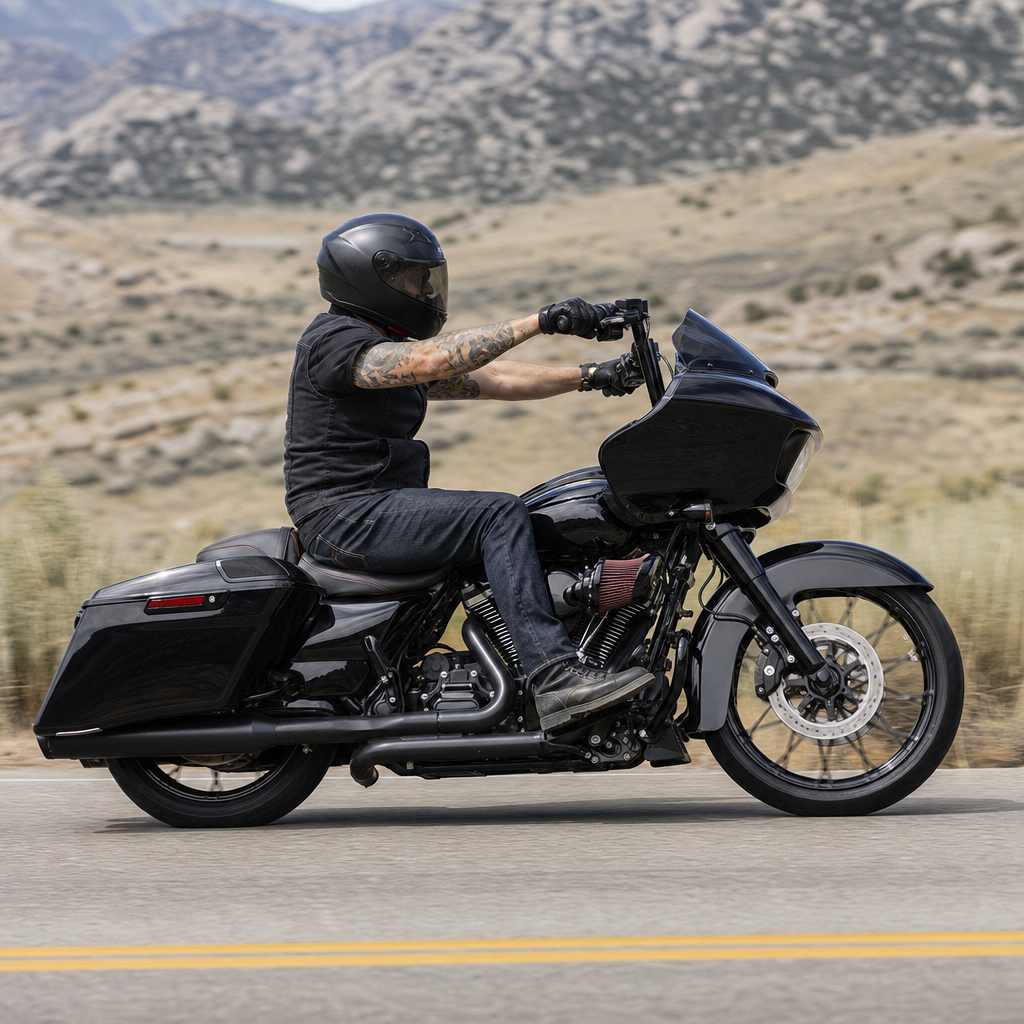
Prepping the 2026 Pan America 1250 Limited for the Wyoming BDR starts with a simple truth: the bike is capable, but capability alone does not finish a Backcountry Discovery Route. The Wyoming BDR demands a machine, rider, and luggage system that can handle altitude, long fuel gaps, abrupt weather shifts, embedded rock, gumbo mud, washboard, and repeated low-speed impacts without turning minor weaknesses into trip-ending failures. In this hub, I will cover the technical preparation required for the Pan America 1250 Limited, explain the 2026 and 2027 update landscape that matters to owners, and frame the decisions that separate a comfortable adventure tour from a stressful recovery exercise.
The Pan America 1250 Limited is Harley-Davidson’s electronically equipped adventure platform with semi-active suspension, rider modes, lean-sensitive safety systems, and on many examples Adaptive Ride Height. The Wyoming BDR is a multi-day off-pavement route linking remote sections of the state through forest roads, two-track, rocky climbs, and weather-sensitive surfaces. Technical prep means more than bolting on accessories. It includes tire selection, wheel protection, suspension setup, software familiarity, luggage strategy, crash survivability, maintenance baselining, navigation redundancy, and understanding how 2026 or carryover 2027 specification changes may affect compatibility. That matters because a heavy ADV bike exposes every weak choice quickly. A poor tire carcass pinches. A soft skid plate deforms into the exhaust crossover. An overloaded top case destabilizes sand and ruts. A rider who never tested traction-control settings burns energy fighting electronics instead of terrain.
I have prepped large ADV bikes for BDR travel and the pattern is consistent: the best outcomes come from disciplined systems thinking, not brand loyalty or accessory accumulation. On the Pan America specifically, the right build keeps the bike’s strengths intact. Its Revolution Max 1250 makes useful, tractable power at elevation, the chassis is stable at speed, and the electronics package can help in mixed-grip situations when configured correctly. The tradeoff is complexity. You are managing sensors, wheel diameters, ride modes, and load-sensitive geometry while asking a 500-plus-pound motorcycle to behave like a dirt bike on sections where line choice matters. Treat this article as the central planning page for ADV/BDR technical prep and 2026/2027 updates: a practical framework you can use before drilling down into tires, protection, luggage, suspension, navigation, and route logistics.
Start with known Wyoming BDR stresses, not accessories
The correct build begins with route stresses. Wyoming is not uniformly difficult, but it punishes complacency. Expect long stretches of washboard that shake fasteners loose, sharp-edged rock that threatens rims and sidewalls, high plains wind that increases rider fatigue, and clay-rich mud that can stop a heavy bike abruptly. Elevation also changes engine feel, cooling demands, and rider stamina. The Pan America’s liquid-cooled V-twin copes far better than older air-cooled adventure bikes in these conditions, but heat management still matters when climbing slowly in first gear with luggage. For that reason, prep priorities should rank in this order: tires and wheels, underbody protection, controls and ergonomics, luggage and weight distribution, maintenance condition, then convenience accessories.
If you ask what absolutely must be upgraded for a Wyoming BDR ride, the answer is direct. Fit true 50/50 or 60/40 adventure tires with a strong carcass, install a serious skid plate and hand protection, add robust engine and radiator guards if your chosen system does not compromise cooling, and verify every contact point for standing control. Then confirm recovery basics: tubeless puncture kit, mini compressor, tools that fit your bike, spare fuses, chain service supplies, and a method to lift the bike after a tip-over. Everything else is secondary. A GPS mount, auxiliary lights, and premium soft luggage are useful, but they should not come before impact protection and tire choice.
2026 and 2027 Pan America update considerations
For 2026 and possible 2027 carryover buyers, the important question is not marketing language but what changes affect BDR prep. Watch four areas closely: suspension calibration, software revisions for ride modes and fault handling, wheel and tire specification, and accessory compatibility. Manufacturers often retain core hardware while adjusting damping maps, ABS logic, dash interface behavior, and OE accessory fitment. Even small revisions can change how the bike behaves on washboard or in off-road ABS mode. Before buying aftermarket parts, verify whether lower crash bars, center stands, skid plates, and luggage racks are cross-compatible with 2024–2025 and 2026–2027 frames and exhaust routing. A one-bolt mismatch can become a field-service problem later if removal for oil changes or impact inspection is difficult.
Software matters more than many riders admit. If Harley-Davidson updates throttle mapping or traction-control intervention thresholds, your preferred off-road setup may no longer match previous owner reports. I always recommend spending a full day riding dirt locally after any dealer software update. Confirm whether Custom mode preserves your chosen settings after cycling the ignition, whether Adaptive Ride Height changes balance at awkward stops on loose surfaces, and whether hill hold or linked braking behaviors feel predictable on steep descents. None of these systems are inherently bad. They simply need validation before a remote trip where surprise is expensive.
| Prep area | What to verify on 2026/2027 bikes | Why it matters on the Wyoming BDR |
|---|---|---|
| Tire sizing and clearance | OE tire dimensions, fender clearance, mud buildup tolerance | Clay and gravel can pack tightly and damage fenders or slow the wheel |
| Suspension settings | Updated damping maps, preload behavior with luggage, ride-height logic | Incorrect setup increases bottoming, deflection, and rider fatigue |
| Electronics modes | ABS, traction control, throttle response, setting retention after restart | You need predictable intervention on descents, gravel, and ledges |
| Accessory fitment | Skid plate, crash bars, racks, center stand, radiator protection compatibility | Protection that interferes with service or cooling creates bigger risks |
| Service items | Battery access, diagnostic alerts, chain adjustment points, fastener updates | Field maintenance is easier when known weak points are handled early |
Tires, wheels, and pressures are the foundation
Nothing transforms the Pan America on a BDR like the right tire package. For Wyoming, prioritize puncture resistance, stable gravel manners, and acceptable longevity over pavement quietness. Strong choices in this category often include the Motoz Tractionator Adventure, Mitas E-07+, Dunlop Trailmax Raid, and Continental TKC 80 if conditions favor grip over lifespan. Each has tradeoffs. The TKC 80 offers reassuring bite but can wear quickly under a powerful bike and loaded highway transit. The E-07+ lasts well and tracks steadily, but some riders prefer a more aggressive front in deeper gravel. The key is matching front-end confidence to your pace. A vague front tire costs energy all day.
Pressures should be tuned conservatively because the Pan America is heavy and fast enough to bend rims when underinflated. For loaded travel, many riders settle near mid-30s psi on pavement, then drop moderately for rougher sections if impact risk is manageable. Exact numbers depend on tire carcass, rider weight, luggage mass, and speed, so test before departure. Because the bike runs tubeless, a plug kit and reliable compressor are mandatory. I also recommend carrying a valve core tool, spare cores, and a compact strap or bead-assist tool, because some stiff ADV tires are stubborn in the field. If your route timing suggests recent storms, remember that mud can matter more than tread depth. In Wyoming gumbo, momentum and tire clearing can become the only things keeping the bike upright.
Protection, controls, and load management
The Pan America’s lower engine area, radiator flanks, hand controls, and exposed luggage mounts all deserve attention. A skid plate for BDR use should mount securely, spread impact loads, and allow straightforward service access. Thin cosmetic plates are not enough when the bike drops onto embedded rock. Handguards need a true backbone, not wind deflectors alone, because a broken clutch or brake lever is a preventable problem. Crash bars are more nuanced. Well-designed bars can protect bodywork and keep the bike from pinning a leg, but poor designs add width, weight, and vibration or complicate maintenance. Choose systems with proven compatibility and inspect all mounting bolts after the first rough ride.
Ergonomics are equally important. Standing posture should let you hinge at the hips with relaxed elbows and neutral wrists. That often means adjusting bar rotation, considering modest risers, and fitting pegs with better grip and platform area. Short levers can help with control when wearing bulky gloves. Brake pedal and shift lever position must work both seated and standing; too many riders leave them set for street boots and struggle off road. Luggage should stay low and forward. Soft side bags generally beat a top-heavy hard case setup on technical routes because they reduce injury risk in a fall and keep mass closer to the bike’s center. Pack tools, water, and dense items low. Reserve the rear top area for light gear only.
Maintenance baseline, diagnostics, and field repair planning
Do not take a “new enough” motorcycle onto the Wyoming BDR without a complete baseline inspection. Fresh oil and filter, air filter check, brake pad measurement, chain and sprocket assessment, coolant level verification, wheel bearing inspection, spoke tension check if applicable, and a full fastener review are standard. On the Pan America, also inspect for any stored fault codes, confirm battery health, and verify that charging voltage is normal with heated gear or auxiliary loads active. Modern ADV bikes can hide electrical weakness until low-speed fans, GPS, phone charging, and repeated restarts stack the load. A marginal battery becomes obvious at the worst campsite.
Your tool kit should be bike-specific, not generic. Include the exact Torx, hex, axle, and adjustment tools your Pan America uses, plus a compact multimeter or test light if you are comfortable with it. Add zip ties, safety wire, threadlocker, spare hardware for common rack and guard bolts, chain lube, and a master link if your chain type supports one. For navigation, use redundant systems: dedicated GPS or rugged tablet, offline maps on a phone, and a paper overview for bailout routes. A satellite communicator is not optional in this terrain. Cell coverage is inconsistent, and a simple crash, mechanical failure, or storm closure can strand a solo rider beyond sight of traffic.
Suspension setup, electronics strategy, and shakedown testing
The Limited’s semi-active suspension is one of its biggest advantages if you set it intentionally. Start by entering realistic rider and luggage loads, then test on pavement, washboard, and slow rocky terrain. You want enough support to resist bottoming without creating excessive deflection. If the front skips on repeated corrugations, reassess damping mode and tire pressure before blaming the chassis. If the rear wallows with soft luggage and camping gear, redistribute weight first, then adjust preload or load mode. Semi-active systems can hide poor packing choices for a while, but they cannot repeal physics.
Electronics should be selected section by section. On easy gravel, moderate intervention can reduce mistakes. In sand, steep loose climbs, or ledgy turns, excessive traction control can cut momentum at the wrong moment. Likewise, off-road ABS settings need practice before the trip. Find a safe dirt area and rehearse panic stops, hill starts, and slow U-turns with your intended luggage load. I tell riders to complete at least one fully loaded shakedown weekend before attempting Wyoming. Ride consecutive long days, pick the bike up from both sides, repair a mock puncture, and make one change at a time. The point is to discover what rubs, loosens, overheats, interferes, or annoys while still close to home.
This hub article is the starting point for every related guide under The Open Road. From here, build your deeper plan around tire comparisons, luggage systems, Wyoming fuel and weather strategy, navigation workflows, and model-year-specific accessory compatibility. The best-prepped 2026 Pan America 1250 Limited is not the one with the most parts. It is the one with the fewest unresolved questions. For the Wyoming BDR, reliability, balance, and rider familiarity matter more than showroom spec sheets. Set the bike up around the route, test every critical choice under load, and update your kit with proven 2026 and 2027 information before departure. Do that, and the Pan America becomes what it should be on a backcountry trip: a stable, repairable, confidence-building platform that lets you focus on terrain, weather, and the miles ahead. Use this page as your checklist hub, then move methodically through each supporting article before you roll west.
Frequently Asked Questions
What are the most important upgrades to make to a 2026 Pan America 1250 Limited before riding the Wyoming BDR?
The most important upgrades are the ones that improve reliability, protection, and control under real backcountry conditions. On the Wyoming BDR, the Pan America 1250 Limited does not need random accessory overload; it needs thoughtful preparation focused on the bike’s weak points and the route’s actual demands. Start with protection. A strong skid plate is essential because Wyoming delivers embedded rock, ledges, and repeated bottom-out moments that can punish the underside of a heavy adventure bike. Pair that with upper and lower crash protection that can handle slow-speed drops without transferring impact into expensive bodywork, radiator components, or engine cases.
Next, address tires and wheels. A true off-pavement tire choice matters more on this route than cosmetic bolt-ons. Wyoming terrain can switch quickly from hardpack to loose rock, sand, slick mud, and deep washboard, so choose aggressive adventure tires with reinforced carcasses and predictable side bite. Inspect wheel condition carefully and make sure spoke tension, if applicable, and rim integrity are perfect before departure. The suspension setup is just as important. Even with an advanced factory system, the bike must be adjusted for the rider’s actual weight, packed luggage load, and target terrain. If preload, damping, and ride height are left in a street-biased setting, the bike will feel vague, wallowy, or harsh exactly where precise control is needed most.
Luggage setup should also be treated as an upgrade category, not an afterthought. Hard luggage may seem convenient, but many riders prefer a durable soft luggage system for BDR travel because it reduces injury risk in falls and often survives impacts better. Whatever system you choose, weight should stay low, tight, and centered. A poorly packed Pan America becomes much harder to manage in ruts, baby heads, and off-camber sections. Also consider practical reliability additions such as handguards with real backbone strength, radiator and headlight protection if available, robust footpegs for standing comfort, and a sidestand footprint solution for soft ground.
Finally, prioritize consumables over gadgets. Fresh brake pads, fresh fluids where required, a clean air filter strategy, chain or final drive inspection depending on the bike’s configuration, torque checks on critical fasteners, and a complete once-over of all wear items are more valuable than decorative upgrades. The Wyoming BDR rewards bikes that are mechanically sorted and punishes bikes that are accessorized but not properly prepared. If an upgrade does not make the machine tougher, easier to control, or easier to live with over several remote days, it is probably not high on the list.
How should tires, tire pressure, and suspension be set up for Wyoming BDR terrain on a heavy adventure bike like the Pan America 1250 Limited?
Tire and suspension setup can completely change how the Pan America feels on the Wyoming BDR. This route is not a one-surface ride. You may see long gravel roads, fast washboard, rocky climbs, square-edge hits, soft sections, and stretches of sticky mud that can turn a manageable day into a wrestling match. For that reason, choose tires based on traction and sidewall strength first, not highway manners alone. A 50/50 tire may be acceptable in ideal dry conditions for some riders, but if you want a safer margin for Wyoming’s unpredictability, a more dirt-oriented adventure tire is usually the smarter choice. The bike is heavy, often loaded, and likely to encounter repeated impact loads, so carcass stability matters as much as tread pattern.
Tire pressure should be adjusted with caution and purpose. Too much pressure can make the bike skittish on washboard and reduce compliance on rock. Too little pressure may improve grip temporarily but increases the risk of rim damage, vague steering, heat buildup, and tire failure, especially on a large-displacement machine carrying luggage. The right answer depends on rider weight, load, speed, terrain, and tire construction. A common best practice is to begin from a realistic loaded baseline, test the bike in dirt before the trip, and make only modest changes that preserve wheel and tire safety. If you plan to air down for rougher sections, bring a reliable way to air back up and do not guess. On a route with long transitions and changing surfaces, consistency matters.
Suspension should be tuned around the fully loaded bike, not the unloaded bike in the garage. Set sag and preload for the actual luggage and fuel weight you expect to carry, then evaluate damping behavior over rough surfaces. If the front deflects sharply off rocks, feels nervous under braking, or chatters excessively on washboard, your settings may be too firm or imbalanced. If the rear squats, wallows, or kicks on repeated bumps, preload and damping likely need attention. Riders often underestimate how much a full luggage kit changes chassis behavior. The Pan America’s electronics and adaptive systems can help, but electronic capability does not remove the need for proper setup.
The best approach is to test your exact setup before the Wyoming BDR on terrain that includes loose rock, washboard, and low-speed technical sections. Practice standing, braking, and turning with your full travel load. If the bike feels tiring in just an hour or two at home, it will feel much worse halfway through a remote Wyoming section. Good setup is not about comfort alone. It reduces rider fatigue, improves traction, limits damage from impacts, and helps keep small handling issues from becoming crash causes.
What maintenance should be completed right before the trip to reduce the chance of breakdowns on the Wyoming BDR?
Pre-trip maintenance should be approached like reliability insurance. The Wyoming BDR is exactly the kind of route where neglected small issues become major ones because help, parts, and shop access may be far away. Start with a full inspection of all wear items. Check brake pad thickness, rotor condition, wheel bearings, steering head feel, fastener security, clutch and throttle operation, battery health, charging behavior, and any signs of leaks or chafing in hoses and wiring. If any item is questionable, this is the wrong trip to “see if it lasts.” Replace it before leaving.
Fluids deserve close attention. If the oil service interval is anywhere near due during the ride, do it beforehand. Verify coolant condition, inspect for proper level, and make sure the cooling system is clean and free of debris since slow technical riding and high-altitude climbs can increase thermal stress. Brake fluid should be fresh if service timing suggests it, because long descents, loaded weight, and heat can expose neglected hydraulic maintenance. Air filtration is especially important in the West. Dust can be severe, and a compromised filter or poorly sealed airbox can create performance and wear issues quickly. Begin with a fresh filter or a fully cleaned and properly oiled serviceable one, and have a plan for mid-trip dust management if conditions are dry.
Pay special attention to tires, wheels, and puncture readiness. Install fresh or nearly fresh rubber if there is any doubt about tread life or casing condition. Inspect rims for dents, verify valve stem integrity, and confirm your puncture repair kit actually matches your wheel and tire setup. Many breakdown stories begin with riders carrying tools that do not fit their bike or repair materials they have never used. The same logic applies to chain care if relevant to the bike. Check adjustment, sprocket wear, lubrication strategy, and whether your setup can tolerate prolonged dust, water crossings, and repeated grime exposure.
Do a loaded shakedown ride after all maintenance is complete. That is where loose mounts, heat-related issues, luggage interference, odd warning lights, and poor packing decisions reveal themselves. Recheck torque on critical hardware after the test, especially crash bars, skid plate mounts, luggage racks, handguards, and anything recently installed. A bike that is freshly maintained but untested is still an unknown. A bike that is serviced, loaded, ridden, inspected again, and then finalized is much more likely to get through the Wyoming BDR without preventable drama.
How much fuel, water, tools, and spare gear should you carry on the Wyoming BDR with a Pan America 1250 Limited?
You should carry enough to cover the route’s longest realistic gaps with margin, not just enough to match ideal published numbers. Fuel range planning on the Wyoming BDR must account for headwinds, elevation, slower technical riding, detours, idling, and the simple fact that a loaded adventure bike rarely returns its best-case fuel economy off pavement. The Pan America 1250 Limited may have a workable stock range for many sections, but range confidence should come from your own measured consumption when loaded, not assumptions. If your tested range leaves little buffer, auxiliary fuel storage becomes a practical safety measure. The key is to carry fuel securely and legally in containers designed for the purpose, mounted where they will not shift, leak, or destabilize the bike.
Water matters just as much as fuel, and many riders underestimate how dehydrating Wyoming can be. Dry air, altitude, wind, and long hours standing on the pegs increase fluid demand even when temperatures do not seem extreme. Carry enough water not only for normal riding but for delays, mechanical problems, navigation errors, or weather slowdowns. A hydration pack combined with reserve water on the bike is a common and effective strategy. If you are riding remote sections without certainty of resupply, a more conservative water margin is