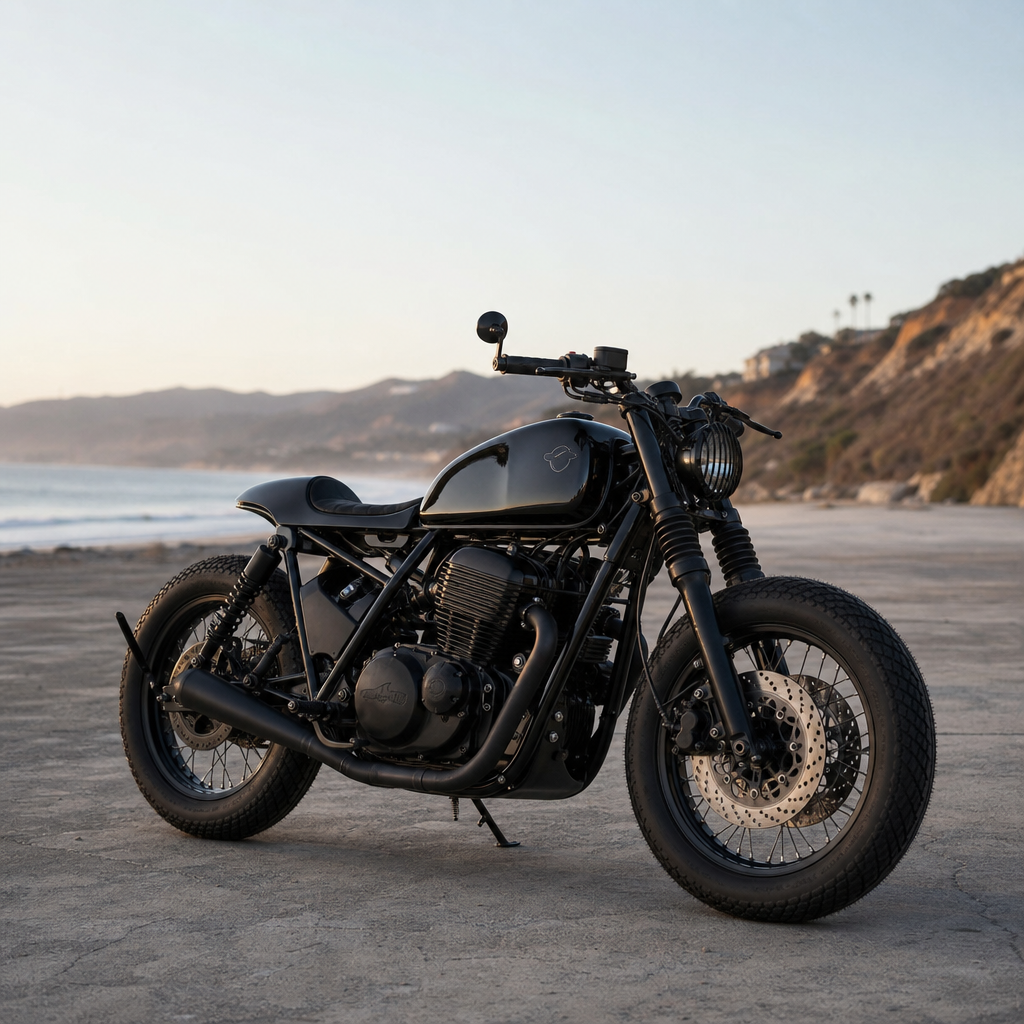
The “Dark Horse” aesthetic in 2026 is more than black paint and an aggressive stance; it is a design language that fuses restraint, cultural memory, fabrication precision, and mechanical theater into one of the most influential movements in custom motorcycle building. In shops, at shows, and on late-night city runs, I have watched this look evolve from a regional cue into a cross-scene standard shaped by Chicano style, performance bagger engineering, Frisco attitudes, and a broader minimalist instinct. Builders use the phrase differently, but the core idea stays consistent: reduce visual noise, emphasize silhouette, black out the powertrain, and let proportion, finish quality, and detail hierarchy do the talking.
For this hub, “Dark Horse” refers to a family of customs centered on monochrome or near-monochrome treatment, especially satin or gloss black engines, drivetrains, controls, and trim, paired with deliberate minimalism rather than empty simplification. Minimalism here does not mean lack of craft. It means removing anything that weakens the line of the motorcycle. Blacked-out engines are not merely cosmetic either. They change how the eye reads mass, making fins, covers, frame rails, and exhaust routing feel more unified. That matters because custom culture in 2026 is increasingly judged by coherence. A bike can still be loud, intricate, chromed, engraved, or muraled, but the most respected builds show a strong central idea and execute it consistently.
This topic matters because it sits at the intersection of heritage and new fabrication technology. Chicano builders continue to influence paint layout, stance, and visual storytelling. Performance bagger shops contribute suspension geometry, wheel-and-tire packaging, brake upgrades, and data-driven setup. Frisco-derived customs preserve a stripped, purposeful honesty. At the same time, CNC machining, CAD-based bracket design, compact wire management, ceramic coatings, scan-assisted fitment, and improved powder chemistry have made dark, minimal bikes cleaner and more durable than earlier generations. This article serves as the hub for that broader design theory, explaining the roots, current practice, and practical decisions behind the 2026 Dark Horse aesthetic.
What Defines the Dark Horse Aesthetic in 2026
The defining traits are silhouette control, tonal discipline, and selective contrast. A successful Dark Horse build reads clearly from twenty feet away. The tank-to-seat transition is intentional, the wheel diameter matches the body language, and the front and rear visual weight feel balanced. Builders often choose blacked-out Milwaukee-Eight, Twin Cam, or custom V-twin engines because dark cases visually compress the center mass and push attention toward shape rather than component clutter. On non-Harley platforms, the same principle applies: subdued engine finishes help unify the machine and highlight line, stance, and surfacing.
Minimalism in this context is technical. Wiring is hidden, fasteners are reduced or standardized, reservoirs are relocated, and brackets are either integrated or eliminated. I have seen excellent 2026 builds where the owner spent more on invisible cleanup than on visible bolt-ons. Internal throttle routing, low-profile switchgear, tucked harnesses, and compact CAN-compatible modules all support the look. The best examples also manage sheen carefully. A bike that is all one black can appear flat if the builder ignores texture. Strong builds layer gloss paint, satin powdercoat, vapor-blasted alloy accents, black ceramic exhaust, and subtle machined edges so the eye can still separate forms.
The aesthetic also depends on proportion. A blacked-out engine alone does not create Dark Horse presence if the wheels are undersized for the fenders, if the fork length breaks the backbone line, or if the saddle sits too high above the rear tire. In performance bagger circles, stance is tuned through fork cartridges, rear shock length, and careful fender spacing rather than simply lowering the bike into poor travel. In Chicano-influenced touring builds, the long visual line can remain elegant while still allowing practical ride height and cornering clearance. The principle is simple: the bike must look composed at rest and convincing in motion.
Chicano Design Theory: Line, Elegance, and Cultural Memory
Chicano motorcycle design is often reduced by outsiders to paint and whitewalls, but its deeper theory is about dignity, procession, and visual rhythm. The influence grew through lowrider culture, club tradition, urban cruising, and a careful appreciation of profile. On motorcycles, that translates into long, smooth lines, coordinated paint narratives, proud stance, and a sense that the machine should glide even when parked. In 2026, Dark Horse builders borrow from this approach by preserving elegance while reducing color. Black paint does not erase Chicano influence; it often makes the line work more legible.
The key lesson from Chicano style is that ornament must serve composition. Pinstriping, engraving, molded bodywork, and custom stitching all work when they reinforce the bike’s visual flow from fairing or nacelle to bags and rear fender. I have judged bikes where every individual part was high quality but the line was broken by a poorly chosen bar height or a bag lid angle that fought the tank. Chicano-informed builders rarely make that mistake because they think in continuous surfaces. Even on a monochrome build, the shape of the stretched tank, the crown of the front fender, and the lean of the bars create a recognizable emotional effect.
Cultural memory matters too. This style carries community identity, neighborhood cruising rituals, and a long history of making powerful visual statements with limited means. That is why imitation without understanding can feel hollow. The strongest 2026 hub builds acknowledge origins through proportion, finish choices, and respectful references rather than shallow borrowing. A blacked-out touring bike with a disciplined lace panel under clear, a hand-shaped seat, and proper stance can honor this lineage more effectively than a generic build overloaded with trend parts. The theory is not “add details.” It is “build meaning into the line.”
Performance Bagger Influence: Speed, Geometry, and Functional Minimalism
Performance baggers changed the Dark Horse aesthetic by proving that blacked-out touring motorcycles could be genuinely athletic. Over the last decade, shops pushed Harley-Davidson Road Glides, Street Glides, Indian baggers, and Challenger platforms far beyond cosmetic customization. In 2026, builders routinely fit Öhlins, Legend Suspensions, Fox, or WP components; radial Brembo or Performance Machine braking packages; forged wheels; and high-flow exhaust and cam combinations designed around usable torque. The visual result is leaner and more technical than classic dresser customs, but the deeper effect is philosophical: every design move must earn its place in performance.
That pressure toward function sharpened minimalism. Tall risers are chosen for control and rider triangle, not just image. Saddle shape, floorboard position, and bar bend are tuned for body stability under braking and corner entry. Engine black-out treatments often pair with ceramic-coated headers and heat management because riders actually put miles on these bikes. I have seen builds lose credibility fast when a stylish side cover blocks service access or when a slammed rear end destroys suspension stroke. The performance bagger world punished that kind of fake minimalism, and the broader Dark Horse scene learned from it.
There is also a packaging logic at work. Large front wheels, oversized rotors, and broad tires can easily create visual imbalance. Good builders solve this by coordinating fork leg mass, fender depth, fairing volume, and bag length. They also use the engine finish as a stabilizing center. Blacking out the powertrain visually lowers the bike and helps modern wheels and brake hardware stand out without making the whole build look busy. This is why many of the cleanest 2026 performance baggers feel both muscular and understated: they are designed around dynamic use, not just display.
Frisco and Beyond: Raw Honesty, Narrow Profiles, and Hybrid Customs
The Frisco influence enters the Dark Horse conversation through attitude and editing. Traditionally associated with narrow tanks, mid controls, tall bars, and a stripped urban posture, Frisco-style motorcycles value directness. They look ready to start, run, and disappear into traffic. In 2026, builders are not simply copying period choppers. Instead, they take the Frisco commitment to essentials and apply it across softails, dyna-inspired builds, club customs, and even some compact bagger projects. The result is a sharper, leaner branch of the Dark Horse aesthetic where blacked-out engines support a hard mechanical silhouette.
What Frisco contributes best is honesty in component selection. A narrow tank changes knee position and top line. Tall bars alter leverage and silhouette. Mid controls shift body posture and how the bike communicates motion. None of those decisions are superficial. Builders who understand this avoid mixing cues randomly. A Frisco-derived bike with oversized luxury bodywork usually looks conflicted because the visual grammar does not align. But when the recipe is coherent—a tight tank, visible engine, compact lighting, and disciplined black finish—the machine projects intent immediately.
“Beyond” matters because custom culture no longer lives in rigid categories. Builders now combine Chicano line discipline, performance bagger suspension logic, Frisco restraint, and pro-street wheel fitment in one package. Digital mockups help, but the best hybrids still rely on experienced eyes. I have watched fabricators move a seat pan by a quarter inch, shorten a strut cover slightly, or change a pipe angle just to preserve line tension. Those small edits separate a trend bike from a lasting one. Dark Horse design works when hybridization is controlled by theory, not by parts catalogs.
Materials, Finishes, and Fabrication Technology Shaping 2026 Builds
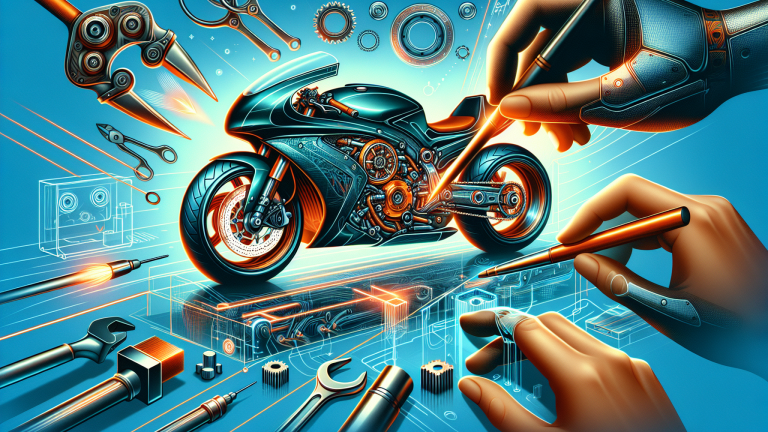
Modern fabrication tech is one reason the Dark Horse aesthetic feels mature in 2026 rather than temporary. Powdercoat systems now offer more consistent low-gloss blacks with better chip resistance, while ceramic coatings from companies such as Cerakote improve thermal durability on exhaust and engine-adjacent parts. Builders also use DLC-treated hardware, black zinc finishes, and anodized controls to avoid the patchwork look that plagued earlier blacked-out customs. Matching black is still difficult; gloss level, undertone, and texture can clash badly. Skilled shops create finish maps before assembly so satin, semi-gloss, and gloss surfaces read as deliberate layers instead of mistakes.
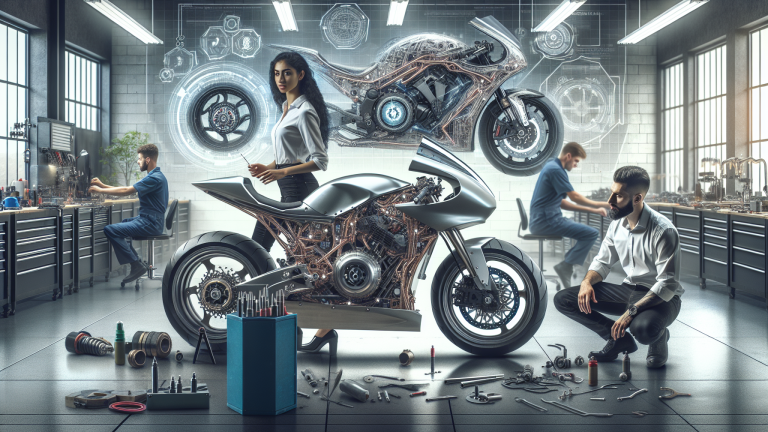
CAD and CNC processes have also cleaned up minimalism. Brackets for calipers, gauges, risers, and plate mounts can now be modeled for exact load paths and visual thickness before metal is cut. Wire channels are designed into bars or bodywork. 3D scanning improves fender and bag alignment, especially on bikes with aftermarket suspension changes. This matters because dark builds expose poor fitment. Chrome can distract the eye; black usually does not. Gaps, crooked panels, and uneven wheel centering become obvious immediately, which is why fabrication precision is now inseparable from the look.
| Build element | Common 2026 solution | Design benefit |
|---|---|---|
| Engine and covers | Satin black powder or ceramic finish | Reduces visual clutter and centers mass |
| Exhaust system | High-temp black ceramic coating | Controls heat while preserving tonal consistency |
| Fasteners | Black zinc or DLC hardware | Prevents random bright points across the bike |
| Body alignment | 3D scan-assisted fitment and CAD brackets | Tighter gaps and cleaner silhouette |
| Controls and wiring | Internal routing and compact modules | Supports true minimalism, not visual compromise |
There are tradeoffs. Black finishes show scratches, road film, and poor prep work quickly. Heat cycles can shift sheen on lower-quality coatings. Fully hidden wiring can complicate diagnosis if the builder does not document circuits. For that reason, the best shops keep serviceability in view. They build removable panels, label harness branches, and leave access where owners actually need it. Good Dark Horse fabrication is not only clean on reveal day; it stays workable after miles, weather, and maintenance.
How to Build a Cohesive Dark Horse Motorcycle
A cohesive Dark Horse build starts with one question: what should this bike feel like before it is ever ridden? If the answer is elegant and processional, Chicano-derived line choices should lead. If the answer is fast and planted, performance bagger geometry should drive the package. If the answer is lean and confrontational, Frisco cues may fit best. Once that emotional direction is set, every decision becomes easier. Choose wheel sizes around handling and visual mass. Decide where contrast will live—machined edges, brake hardware, painted panels, or tire sidewalls. Then black out the remaining elements with purpose.
From practical experience, I advise builders to prioritize stance, seat position, and engine finish before accessories. Those three choices establish the bike’s character. Next, resolve controls, exhaust line, and fender spacing. Only after that should lighting, trim, and decorative detail enter the conversation. This order prevents expensive rework and keeps the project from drifting. It also makes internal linking within a broader build plan easier: suspension informs wheel choice, wheel choice affects braking, braking influences bar ergonomics, and all of it shapes body design.
For readers using this page as a hub, the key benefit is clarity. The Dark Horse aesthetic is not a single style but a disciplined framework connecting Chicano elegance, performance bagger function, Frisco honesty, and modern fabrication precision. Study the line before the parts. Black out the engine to control visual mass, not to hide weak design. Use technology to improve fit, durability, and serviceability. Most of all, build with cultural awareness and a consistent idea from first sketch to final fastener. If you are planning your own 2026 custom, start by defining the silhouette and stance, then let every finish and fabrication choice reinforce that vision.
Frequently Asked Questions
What does the “Dark Horse” aesthetic actually mean in custom motorcycle culture in 2026?
In 2026, the “Dark Horse” aesthetic refers to a highly intentional design language built around visual restraint, blacked-out mechanical surfaces, reduced ornamentation, and a motorcycle’s ability to project presence without relying on loud graphics or excessive chrome. It is not just “paint everything black and lower the bike.” The modern version is far more disciplined. Builders use contrast, proportion, finish control, and silhouette to create a machine that feels clean, assertive, and almost architectural. Every component has to earn its place because the look depends on editing rather than excess.
What makes this aesthetic especially influential is the way it blends several custom traditions into one coherent visual identity. You can see the impact of Chicano styling in the low, long, composed stance and the emphasis on elegance rather than chaos. You can see performance bagger engineering in the aggressive fitment, wheel and suspension choices, and the expectation that the bike should handle as well as it looks. You can also see Frisco and club-style attitudes in the insistence that the motorcycle still feel raw, personal, and mechanically honest. The result is a bike that looks stealthy and refined but never sterile.
The phrase also points to mood. A true Dark Horse build carries a sense of controlled menace and confidence. It is minimal, but not empty. It is blacked-out, but not visually flat. It is polished, but not delicate. That balance is why the aesthetic has spread so widely. It speaks to riders who want something timeless, urban, and serious—something that honors custom history while still feeling current in 2026.
Why are blacked-out engines such a defining part of the Dark Horse look?
Blacked-out engines are central to the Dark Horse aesthetic because the engine is the visual and emotional core of the motorcycle. When builders black out cases, cylinders, covers, and surrounding hardware, they are not trying to hide the motor. They are actually reframing it. Instead of reflecting light in every direction like polished metal or chrome, the engine becomes a dense visual mass that anchors the entire bike. That darker center of gravity makes the silhouette stronger and gives the machine a more focused, muscular presence.
There is also a precision element to it. A blacked-out engine only looks good when the details are right. Surface preparation, coating quality, gasket lines, fastener selection, and finish consistency all become more important because there is less visual distraction. On a chrome-heavy build, reflective surfaces can overpower imperfections. On a minimalist blacked-out build, bad hardware choices, mismatched sheens, sloppy wiring, or poorly integrated accessories stand out immediately. That is one reason the look has become associated with fabrication discipline and higher build standards.
Mechanically, blacked-out engines also reinforce the idea of “mechanical theater.” The darkness of the engine allows selected elements—machined edges, cooling fins, bronze or stainless hardware, intake forms, exhaust routing, or a subtle contrasting logo—to read more dramatically. In other words, black creates a stage. The best builders know how to use that stage to highlight shape, function, and craftsmanship. In 2026, that is why blacked-out engines are more than a trend element; they are one of the clearest signals that a bike is speaking the Dark Horse design language fluently.
How is Dark Horse minimalism different from simply building a stripped-down black motorcycle?
That distinction matters. A stripped-down black motorcycle can be unfinished, generic, or assembled with no real visual strategy. Dark Horse minimalism is much more deliberate. The goal is not to remove parts randomly or reduce the bike until it loses personality. The goal is to refine the motorcycle until every line, finish, and component contributes to a unified visual statement. Minimalism here means disciplined selection, not absence for its own sake.
For example, a true Dark Horse build pays close attention to the relationship between bodywork, wheel size, tire profile, handlebar height, seat contour, and engine mass. It considers how black paint interacts with satin powder coat, textured finishes, raw metal accents, smoked lenses, and subtle machining. It often includes hidden wiring, cleaner bar controls, integrated lighting, and tighter tolerances between components. These choices produce a bike that feels calm and resolved rather than merely sparse.
Another key difference is cultural depth. The strongest Dark Horse builds carry references to earlier styles and scenes without becoming nostalgic copies. You may notice echoes of boulevard baggers, lowrider-influenced stance, performance-driven chassis updates, or traditional urban custom cues. But those references are filtered through modern fabrication and a restrained visual philosophy. So while a basic black bike may look simple, Dark Horse minimalism feels intentional, mature, and layered. It gives the impression that nothing is accidental, which is exactly why it has become so respected in custom motorcycle circles.
What design elements make a Dark Horse build feel premium rather than flat or one-dimensional?
The difference usually comes down to contrast, texture, and proportion. One of the biggest mistakes in blacked-out custom work is assuming that a single shade and finish can carry the entire build. Premium Dark Horse motorcycles use black in multiple ways: gloss on bodywork, satin on structural pieces, matte in selective recesses, wrinkle finishes on engine components, and occasional machined or metallic highlights where they matter most. This layered treatment prevents the bike from becoming visually dead. Instead, it creates depth that only reveals itself as light moves across the surfaces.
Proportion is equally important. A premium build has a coherent stance. The wheels fit the visual mass of the bike. The fairing, tank, side covers, and bags—if present—share the same visual rhythm. Handlebars do not fight the body lines. Exhaust routing supports the silhouette instead of interrupting it. Even the gap relationships between components affect whether the bike feels expensive and resolved. In a minimalist style, these decisions become more visible because there are fewer distractions competing for attention.
Finally, quality detailing separates elite builds from average ones. Fasteners should look chosen, not incidental. Wiring should disappear or be neatly managed. Brackets should feel integrated, not improvised. Seats, grips, pegs, controls, and instrument placement should all support the same visual language. On the best 2026 Dark Horse motorcycles, the premium feeling comes from control. Nothing shouts, but everything contributes. That sense of design confidence is what gives the aesthetic its authority.
Why has the Dark Horse aesthetic become so influential across different motorcycle scenes in 2026?
It has become influential because it solves several desires at once. Riders want motorcycles that look modern but not disposable, custom but not overworked, aggressive but still elegant. The Dark Horse aesthetic delivers that balance. It photographs well, looks powerful in motion, and adapts to multiple platforms—from performance baggers to club-influenced cruisers and high-end show builds. It also aligns with a broader cultural move toward understatement, where confidence is expressed through refinement and cohesion rather than obvious flash.
Another reason for its growth is that it translates across regions and subcultures without losing identity. Builders from different scenes can apply the language in distinct ways while still remaining recognizable within the same broader movement. A shop focused on long-distance performance may emphasize suspension, braking, and aerodynamic bodywork. A builder with stronger Chicano influences may prioritize stance, flow, and elegant visual composure. Another may lean into more mechanical exposure and harsher urban edge. The Dark Horse framework is flexible enough to hold all of that, which makes it durable rather than trend-fragile.
Most importantly, the aesthetic rewards craftsmanship. In 2026, enthusiasts are increasingly sensitive to the difference between surface-level styling and genuine build quality. Dark Horse bikes force that issue because the cleaner the design, the harder it is to fake excellence. Poor fabrication, bad fitment, and unresolved details become obvious fast. That has helped the movement gain credibility in shops, at shows, and on the street. It is not influential merely because it looks good in black. It is influential because it has become a proving ground for taste, technical execution, and cultural understanding in modern custom motorcycle building.