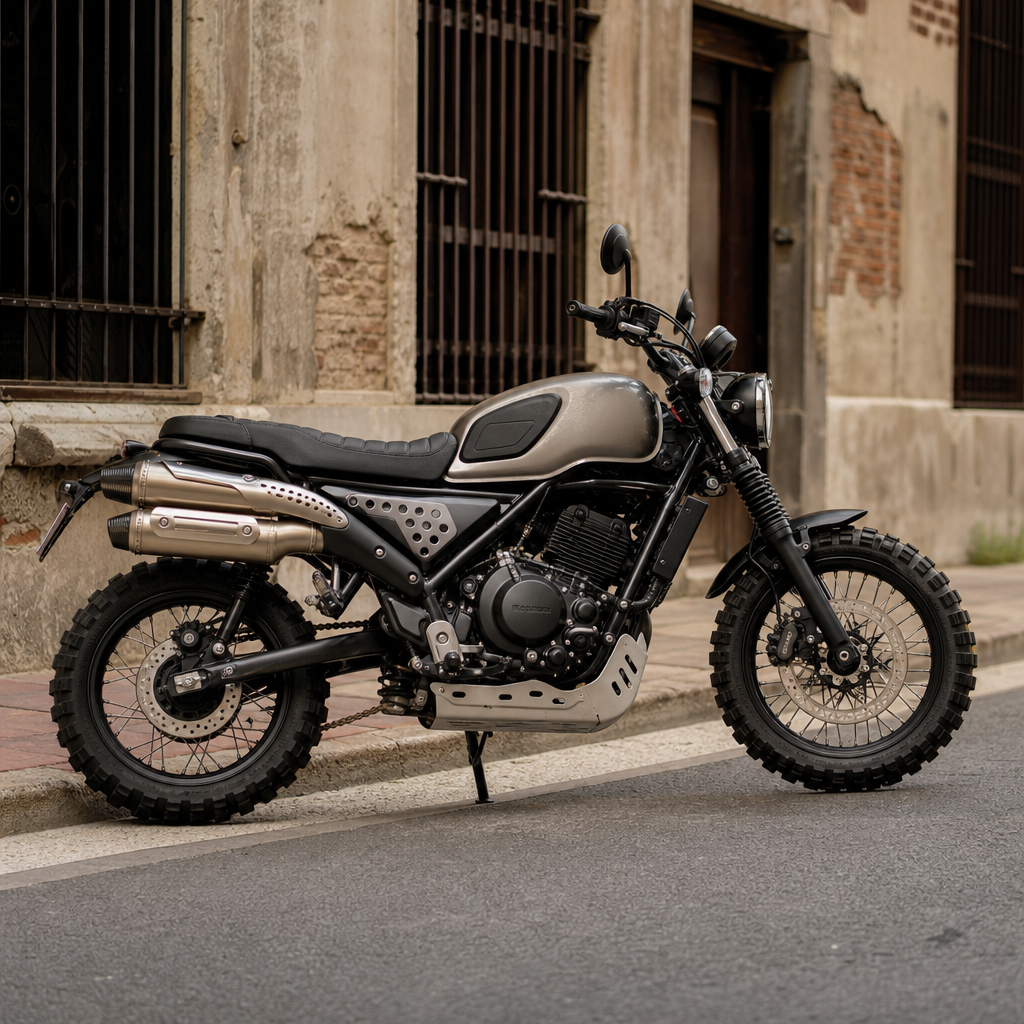
Scrambler aesthetics have moved from dirt-focused heritage to a dominant street style, and few visual cues define the look more clearly than high-mount exhausts and knobby tires. In workshops, at bike nights, and across custom show floors, I have watched builders use those two elements as shorthand for freedom, toughness, and mechanical honesty. The appeal is immediate: a tucked, elevated pipe suggests rally capability and hand-built intent, while aggressive tread blocks promise traction, stance, and rebellion even when the motorcycle never leaves pavement. That combination matters because modern custom culture increasingly values identity as much as outright performance, and scrambler design has become a language riders use to signal both.
To understand why the style resonates, it helps to define the terms. A high-mount exhaust routes the muffler or full system above the traditional low side position, often parallel to the seat line or angled toward the tail section. Knobby tires use large tread blocks and wide voids designed originally for dirt, gravel, and mixed terrain. On the street, those parts become more than functional hardware. They shape silhouette, rider ergonomics, heat management, unsprung weight, steering feel, and sound quality. They also connect directly to broader design theory across custom motorcycles, where form, cultural reference, and fabrication technique work together rather than separately.
This hub article sits within the wider conversation around Custom Culture and Builders, especially the New Guard’s blend of digital design, CNC precision, and old-school fabrication instincts. It also connects directly to design theory traditions such as Chicano styling, Performance Bagger development, Frisco proportions, and other regional or era-based visual systems. While those styles differ dramatically from the average scrambler build, they are linked by a shared principle: every visible component communicates purpose, taste, and tribe. A scrambler with a brushed stainless side pipe and block-pattern rubber tells a story just as clearly as a candy-painted Chicano bike with fishtails, a Performance Bagger with race-bred bodywork, or a Frisco chopper with a narrow tank and tall bars.
As a hub, this guide explains how scrambler aesthetics work on the street, where they succeed, where they compromise, and how they relate to the larger design families shaping modern custom motorcycles. If you are planning a build, evaluating parts, or trying to read the intent behind current trends, start with the fundamentals: silhouette, function, proportion, and cultural context. Get those right, and the style looks intentional rather than costume-like. Get them wrong, and the bike can feel confused, uncomfortable, or theatrically rugged without delivering the road manners riders actually need.
Why high-mount exhausts define the scrambler silhouette
The high-mount exhaust is one of the strongest visual anchors in scrambler design because it changes the entire side profile. A standard low system leaves open space beneath the seat and keeps visual weight near the ground. Raise that exhaust, and the motorcycle immediately appears more compact, more purposeful, and more terrain-ready. Builders often chase a rising line from engine to tail because the eye reads it as motion. On bikes like the Ducati Scrambler Desert Sled, Triumph Scrambler 1200 XE, and many customized BMW R nineT builds, the elevated pipe is central to that effect. Without it, the same motorcycle can look like a standard with dual-sport tires rather than a fully resolved scrambler.
Functionally, the design started with clearance. Off-road riding exposes low pipes to rocks, ruts, logs, and deep water crossings, so routing the exhaust upward protects vulnerable sections. On the street, that practical origin still matters, but the exhaust now carries symbolic weight too. In my experience fitting aftermarket systems, riders often choose high pipes even when they never intend to ride more than the occasional gravel shoulder. They want the protected, expedition-ready visual logic. The challenge is making sure the aesthetic upgrade does not create real drawbacks such as burned luggage, passenger discomfort, or excessive right-side heat around the thigh and calf in urban traffic.
Good execution depends on engineering details. Heat shielding must be substantial, not decorative. Mounting points need triangulated support because a poorly braced elevated muffler can crack tabs under vibration. Routing must preserve cornering clearance and avoid robbing suspension travel. Catalytic converter placement, oxygen sensor location, and muffler volume all affect compliance, fueling, and sound. Builders who understand these basics create systems that look clean and perform predictably. Those who treat the exhaust as a visual prop often end up with awkward bends, flat spots in the torque curve, and bikes that photograph better than they ride.
Knobby tires on pavement: style, grip, and compromise
Knobby tires are the second half of the scrambler equation, but their street behavior deserves honest assessment. The large tread blocks that bite into loose terrain also squirm under hard pavement loads. That can reduce ultimate grip, increase braking distances on clean asphalt, and create a vague steering sensation compared with a road-focused tire. Riders commonly notice more vibration through the bars, more noise at highway speed, and faster wear if they commute daily. Still, modern mixed-use patterns have improved dramatically. Tires such as the Pirelli Scorpion Rally STR, Continental TKC 70, Dunlop Trailmax Mission, and Michelin Anakee Wild each balance appearance and street usability differently.
The key is understanding that not all knobby-looking tires are true off-road knobs. Many current options are hybrid adventure or scrambler patterns designed specifically for riders who want the look without extreme pavement penalties. I often advise builders to choose tread based on real riding conditions rather than social media expectations. A city rider on a Triumph Street Twin conversion may be better served by a block-pattern 70/30 tire than a deep-lug 50/50 model. The bike will steer better, stop shorter, and still project the desired stance. On the other hand, someone regularly riding broken rural roads, fire trails, or wet gravel may accept extra noise and wear in exchange for genuine loose-surface confidence.
Fitment also changes the final impression. Wider is not always better. Oversized tires can slow turn-in, crowd swingarm clearance, and make a relatively light motorcycle feel heavy-footed. Correct sidewall height and wheel diameter preserve the intended geometry. Pressure management matters too, especially because underinflated block-pattern tires can overheat on pavement and accelerate shoulder wear. The best street scramblers use tires as part of a coherent dynamic setup, not as decorative aggression bolted onto an otherwise standard machine.
How scrambler design theory connects to Chicano, Performance Bagger, and Frisco styles
Design theory in custom motorcycles starts with a simple question: what visual message should the bike send before the engine even starts? Scramblers answer with mobility, utility, and understated toughness. Chicano builds communicate elegance, cultural pride, and long, low cruising drama through stretched lines, detailed paint, chrome, engraved parts, and carefully staged stance. Performance Baggers reverse expectations by giving heavyweight V-twins race-influenced suspension, braking, and bodywork, often paired with club-style ergonomics and real cornering capability. Frisco styling strips a bike to essentials, emphasizing narrow tanks, tall bars, slim fenders, and a direct, urban attitude rooted in old San Francisco street customs.
These styles may seem unrelated, yet they all rely on proportion, line, and functional storytelling. In a Chicano bike, long fishtail pipes and an extended front end create ceremonial flow. In a Performance Bagger, raised suspension and a supportive fairing telegraph speed and distance. In a Frisco machine, the compact peanut tank and minimal bodywork suggest immediacy and mechanical rawness. The scrambler uses elevated exhaust routing, bench or flat saddles, gaitered forks, and block-pattern tires to produce its own narrative of versatility. Each style becomes convincing only when every major component supports the same thesis.
That is why this subtopic hub matters. Builders increasingly cross-pollinate ideas. I have seen baggers borrow motocross-style bars for leverage, scramblers adopt candy paint influenced by lowrider traditions, and Frisco-inspired customs use modern CAD-cut brackets for cleaner execution. The New Guard is less interested in preserving categories than in understanding the grammar beneath them. Once you know how stance, material finish, color blocking, and component placement convey meaning, you can blend influences intelligently instead of randomly.
| Style | Core visual cues | Main design message | Typical tradeoff |
|---|---|---|---|
| Scrambler | High exhaust, knobby tires, upright stance | Versatility and rugged utility | Heat, noise, reduced road precision |
| Chicano | Long lines, rich paint, chrome, fishtails | Elegance, heritage, rolling presence | Weight and limited aggressive handling |
| Performance Bagger | Fairing, hard bags, big brakes, tall shocks | Speed, distance, real performance | Higher cost and setup complexity |
| Frisco | Narrow tank, tall bars, minimal bodywork | Raw urban simplicity | Reduced comfort and practicality |
Building a street scrambler that works, not just one that looks right
The best street scramblers are disciplined builds. They keep the visual cues riders want, but they respect ergonomics, safety, and maintenance access. Start with rider triangle. Wide bars, neutral pegs, and a flat seat can make city riding excellent, especially where visibility and leverage matter. But bar width must match lane-splitting needs, shoulder comfort, and cable routing. Seat foam density matters more than many first-time builders realize. Thin tracker-style padding may photograph well yet become punishing after forty minutes. Suspension should be tuned for actual load and speed, not simply lifted to create a tougher stance. A two-inch height increase can transform proportions, but without spring and damping changes it can also ruin balance.
Material selection is equally important. Stainless exhausts resist corrosion and discolor attractively, while mild steel offers easier fabrication but requires coating or regular care. Aluminum fenders save weight yet can crack if unsupported on rough roads. Modern builders frequently mix TIG welding, laser-cut tabs, water-jet brackets, and 3D-scanned mockups to speed development and improve fit. I have found that the most credible New Guard shops use technology to refine old ideas, not replace craftsmanship. They still test heat paths, check chain run, cycle suspension through full travel, and make sure a side panel can actually be removed without dismantling half the bike.
Legal compliance should never be an afterthought. Tire speed ratings, fender coverage, lighting position, and exhaust noise standards vary by market. In the United States, California emissions requirements can affect exhaust and fueling decisions. In Europe, homologation can be even stricter. A well-built street scrambler does not gamble on inspection luck. It integrates compliance early so the owner can ride regularly without constant hassle. That practical discipline is often what separates a respected custom from a temporary trend piece.
Common mistakes and smarter choices for modern builders
The most common mistake is chasing visual toughness while ignoring use case. Deep dirt knobs on a heavy road bike, short unsprung fenders in wet climates, and exposed high pipes with tiny shields all create avoidable downsides. Another frequent error is poor proportion. A high exhaust can look awkward if the subframe line droops, the seat is too bulky, or the rear wheel appears undersized. Likewise, fitting adventure-bike tires to cast wheels without considering bead design, rim width, or load rating can compromise safety. Builders should verify manufacturer specifications instead of assuming a tire that physically fits is appropriate.
Smarter choices begin with a clear brief. Decide whether the bike is a city commuter, weekend canyon machine, mixed-surface explorer, or show-focused custom. Then select parts accordingly. For many street riders, semi-block tires, a mid-height exhaust, quality rear shocks from Öhlins, K-Tech, or YSS, and strong front braking upgrades produce a better motorcycle than the most extreme visual package. ECU calibration from tools like Woolich Racing or manufacturer-approved maps can restore drivability after exhaust changes. Even simple details such as serrated footpegs with removable rubber inserts can preserve style while improving comfort and control.
Finally, remember that authenticity comes from coherence. The motorcycles that age best are not always the loudest or most radical. They are the ones where every part feels considered, where the bike’s story matches its real capabilities, and where influences from scrambler, Chicano, Performance Bagger, Frisco, or other traditions are applied with understanding rather than imitation. Use this hub as your starting point, then explore the linked subtopics in your build plan, compare examples critically, and choose components that make your motorcycle look right, ride right, and mean something every time you see it parked.
Frequently Asked Questions
Why are high-mount exhausts such an important part of scrambler aesthetics?
High-mount exhausts matter because they instantly communicate the scrambler idea, even before anyone looks at suspension, handlebars, or bodywork. Visually, a pipe that runs higher along the side of the bike changes the entire silhouette. It creates a leaner, more purposeful profile and recalls the original function of early scramblers, which were adapted from street machines for rougher terrain. On those bikes, elevating the exhaust helped improve ground and obstacle clearance. On today’s street-focused builds, that same design cue carries strong historical weight, so it reads as authentic even when the motorcycle is rarely ridden off pavement.
There is also a craftsmanship element that makes high-mount systems especially attractive in custom culture. Builders often treat the exhaust as a focal line, using bends, heat shields, welds, and mounting brackets to show off mechanical character rather than hide it. That visible hardware reinforces the raw, honest feel that scrambler styling depends on. A well-executed high pipe suggests intention, utility, and a bit of rebellion against fully faired, overly polished modern design. In practical terms, riders should still remember that heat management, passenger comfort, luggage compatibility, and local noise regulations all matter. But aesthetically, few modifications signal “scrambler” faster or more clearly than a properly integrated high-mount exhaust.
Do knobby tires actually make sense on the street, or are they mostly about looks?
For most modern scrambler-style street builds, knobby tires are as much about appearance as performance, and that is not necessarily a criticism. Large tread blocks, wider voids, and a more aggressive side profile give a bike visual toughness that smoother street tires simply cannot match. They add height, texture, and stance, which are essential parts of the scrambler image. When people talk about a motorcycle looking ready for anything, tires are often doing a lot of that work. Even parked, a bike with semi-knobby or knobby rubber projects capability and attitude.
That said, real-world street performance is a more nuanced subject. True off-road-biased knobbies can be noisier, wear faster on pavement, and feel less planted during hard cornering or heavy braking compared with dedicated street tires. They may also introduce vibration and a slightly vague feel at higher speeds, especially in wet or cold conditions. Many riders solve this by choosing 50/50 or 70/30 adventure-style tires that preserve much of the scrambler look without sacrificing as much road manners. So yes, knobby tires often serve the visual brief first, but smart tire selection can still provide everyday usability. The best street scrambler setups usually balance the iconic tread pattern with realistic riding needs rather than chasing the most aggressive off-road tire possible.
How do high-mount exhausts and knobby tires work together to define the scrambler look?
These two features work so well together because each communicates a different half of the same story. The high-mount exhaust suggests adapted utility, lightweight intent, and off-road heritage above the beltline of the motorcycle. The knobby tire finishes the message below, grounding the bike with visual traction and ruggedness. One shapes the upper silhouette, the other shapes the stance. Together, they create a coherent design language that says the motorcycle is stripped back, versatile, and unconcerned with conventional road-bike polish.
There is also a psychological element to the pairing. Scrambler aesthetics are built around the idea of possibility: leaving the city, taking the long way home, turning onto a dirt road just because it is there. A high pipe hints at clearance and durability, while blocky tires imply grip on imperfect surfaces. Whether or not the bike will ever see serious trail use, those details trigger an emotional response tied to freedom and exploration. That is why builders return to them so consistently in workshops and custom shows. They are shorthand, but effective shorthand. When done well, they do not look like random accessories; they make the entire motorcycle feel more intentional, more elemental, and more aligned with the scrambler tradition.
Are there any downsides to adding a high-mount exhaust and knobby tires to a street bike?
Yes, and the smartest builds acknowledge those trade-offs early. A high-mount exhaust can create packaging challenges around side panels, passenger footpegs, luggage, and rear brake components. It may increase heat exposure for the rider or passenger if shielding is not properly designed. Depending on the bike, it can also alter weight distribution and require careful tuning to maintain rideability and reliability. On the street, where low-speed comfort and daily usability often matter more than theoretical off-road clearance, a poorly executed high pipe can become more of a styling sacrifice than a practical upgrade.
Knobby tires bring their own compromises. More aggressive tread generally means faster wear on asphalt, more road noise, and less precise handling than a road-biased tire. Riders may notice a wandering sensation on grooved pavement, reduced confidence when leaned over, or weaker wet-weather performance if the tire compound is aimed more at loose surfaces than street grip. Fuel economy and braking feel can also be affected. None of this means the scrambler look is not worth pursuing, but it does mean every aesthetic choice should be made with use case in mind. The best street scramblers are not the ones with the most extreme components; they are the ones where style, comfort, safety, and function have been balanced carefully.
What should riders look for if they want authentic scrambler style without ruining everyday street performance?
The key is restraint and compatibility. For exhausts, look for a high-mount system designed specifically for your motorcycle or built with proper heat shielding, secure mounting points, and sensible routing. The goal is to capture the elevated, handmade scrambler profile without creating heat issues, rattles, or awkward ergonomics. A good system should complement the frame and tank lines rather than fighting them. It should also preserve practical details such as passenger accommodation, service access, and legal sound levels. Authenticity in scrambler design comes less from extremity and more from how naturally each part fits the bike.
For tires, many street riders are best served by a dual-sport or adventure-pattern tire that looks rugged but remains road competent. That usually means choosing a tread with visible block definition and strong sidewall character, but not one so aggressive that it compromises cornering confidence, wet grip, or longevity. It is also worth paying attention to wheel size, suspension setup, and overall stance, because scrambler style is holistic. A bike looks convincing when the exhaust, tires, bars, seat, and proportions all speak the same visual language. If one or two parts are overly theatrical while the rest of the machine remains unresolved, the build can feel forced. The most successful street scramblers capture the spirit of off-road heritage while remaining genuinely enjoyable to ride every day.