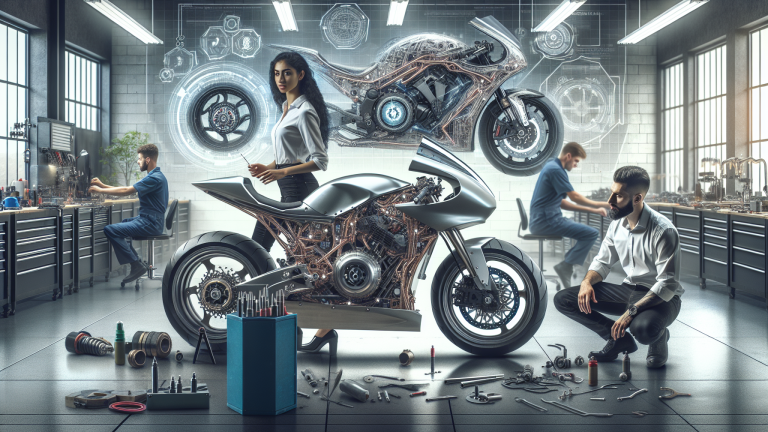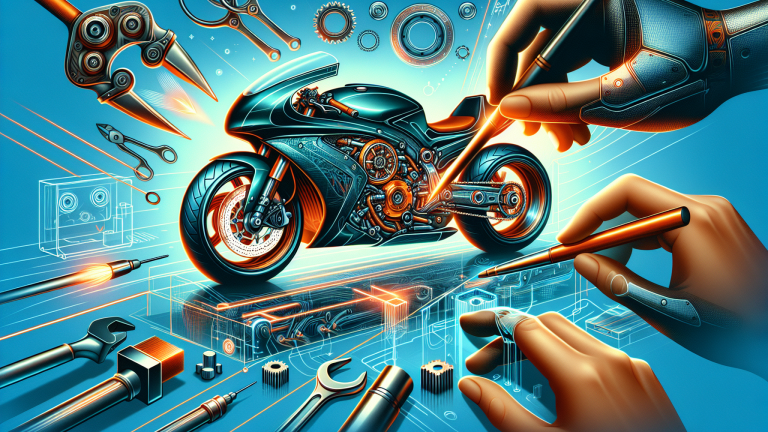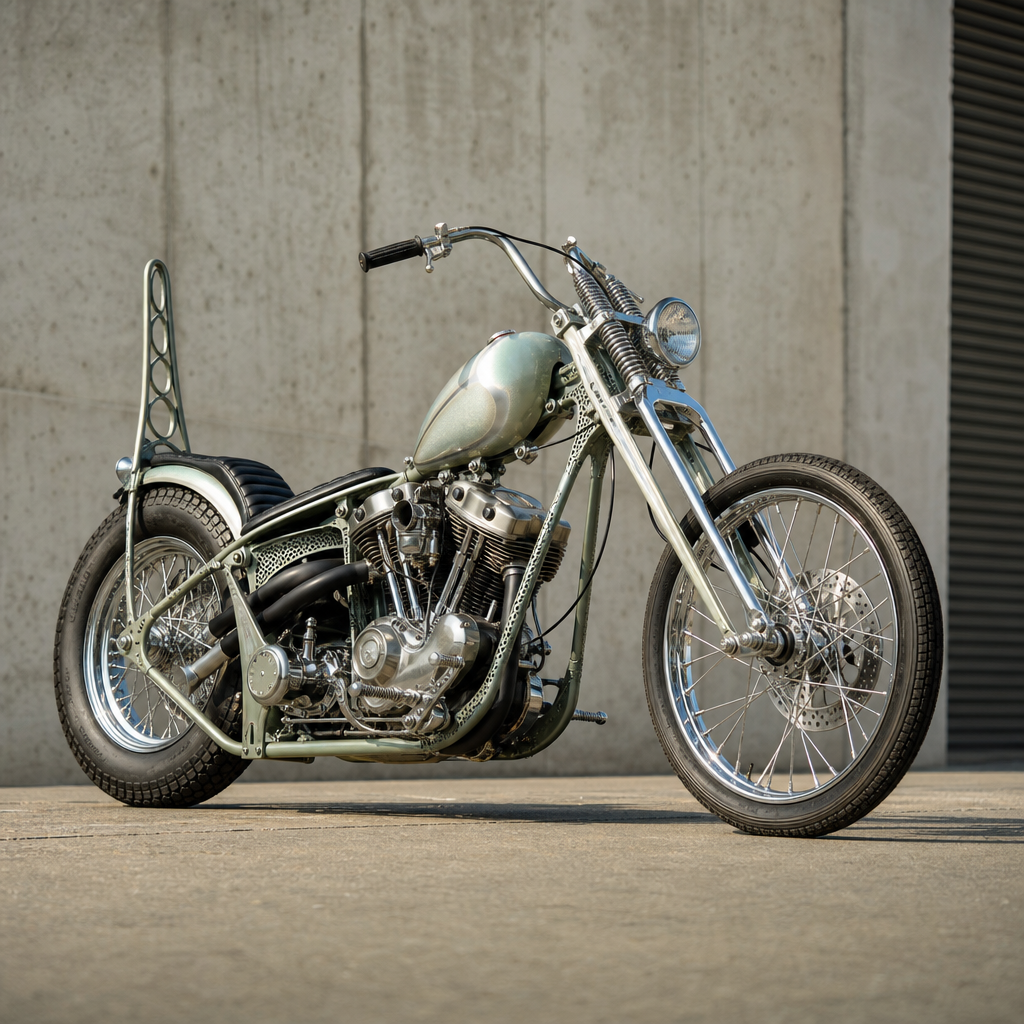
The modern chopper blends old-school silhouette with new-school fabrication, using 3D printing, digital modeling, and precise machining to reinterpret the long, lean geometry that defined custom motorcycles in the 1960s. In this context, a chopper is not simply any customized bike. It is a motorcycle whose frame stance, fork angle, wheel relationship, tank line, bar shape, and visual mass have been deliberately altered to create a distinct attitude on the road. Geometry refers to those structural relationships: rake, trail, wheelbase, backbone height, neck position, ground clearance, and rider triangle. When builders talk about a bike looking right, they are usually talking about geometry first and components second.
I have watched this shift happen in real shops. Ten years ago, many custom builders still mocked additive manufacturing as a toy for prototypes. Today, some of the smartest fabricators use it to mock up riser caps, gauge pods, oil tank internals, lighting housings, seat pans, and even casting patterns before cutting metal. That does not make the bike less authentic. It usually makes the final machine cleaner, safer, and more intentional. The best modern chopper builders are not replacing handwork. They are moving repetitive, highly accurate tasks into CAD and printing so they can spend more time refining line, proportion, and finish.
This matters because custom culture is changing. Riders now expect classic visual language with modern reliability, better fit, and purpose-built details. A show bike can no longer survive on paint and chrome alone. People want hidden wiring that can still be serviced, printed templates that shorten fabrication time, and geometry that looks dramatic without becoming unrideable. This hub covers the design theory behind that shift, especially where Chicano style, performance bagger influence, Frisco cues, and related regional traditions overlap. These are not interchangeable labels. Each has its own visual priorities, ride position, and cultural history, and understanding those distinctions helps builders create motorcycles that feel informed instead of derivative.
What defines the modern chopper
A modern chopper begins with a classic premise: reduce visual clutter and exaggerate stance. The difference is that contemporary builders can now test ideas digitally before committing to hard parts. In practical terms, that means scanning a frame, drawing a tank tunnel in Fusion 360 or SolidWorks, printing a full-scale mockup, and checking tank-to-backbone clearance before touching steel. It means using parametric modeling to compare fork lengths and neck cups, or printing a headlight bucket insert to hide LED hardware inside a period-correct shell. The result is not a sterile computer-designed bike when done well. It is a machine where every line has been evaluated from side profile, three-quarter view, and rider eye level.
1960s geometry still anchors the style. That era favored stretched front ends, slim tanks, narrow tires, kicked-up rear lines, and profiles that looked fast even when parked. But the original scene was full of variation. California long bikes, East Coast diggers, Frisco chops, and early show customs all interpreted the formula differently. The modern version borrows those proportions while correcting known compromises. Builders often target usable trail numbers, stronger neck gusseting, and tighter driveline alignment than many period machines had. For example, a vintage-inspired bike may run a 35- to 38-degree rake with carefully chosen trees and fork length to preserve predictable low-speed steering rather than chasing extreme angle for photos alone.
Materials and manufacturing have also changed the design process. PETG, nylon, ABS, and carbon-filled filaments are commonly used for prototype parts, fixture aids, and pattern work. Resin printing can create highly detailed masters for trim pieces or emblem work. None of those materials should be treated as universal final-use solutions near heat, fuel, and vibration, but they are excellent for validation. In my experience, a printed part on the bench often reveals flaws that looked invisible on a screen: a switch pod that blocks cable sweep, a dash panel that traps glare, a riser spacer that makes the bar angle feel awkward by five degrees. Solving those issues before machining saves money and keeps the build moving.
Design theory across Chicano, performance bagger, Frisco, and related styles
Design theory in custom motorcycles starts with intent. Chicano style emphasizes elegance, presence, and rolling visual drama. Performance bagger style prioritizes speed, lean angle, braking, and aggressive stance while keeping full-bodied mass. Frisco style strips the machine toward a high-mounted tank, compact rear treatment, and upright urban edge. Beyond those, modern builders pull from club style, lowrider influence, FXR handling culture, West Coast engraving traditions, and race-derived suspension tuning. A good hub article has to clarify where those languages meet and where they diverge, because the same part can communicate entirely different values depending on context.
Chicano design is often misunderstood as decoration first. In reality, its strongest builds are deeply controlled in profile. The bike usually sits low and long, with a level or gently rising line from the rear fender toward the tank, elongated fork presence, substantial front wheel visual weight, and carefully staged chrome, paint, engraving, or metalflake. Saddlebags and nacelles are not merely accessories; they broaden the body and create a boulevard silhouette. The influence of lowrider culture is obvious in finish quality and stance discipline, but the best examples are also rideable. Builders may use air ride, stretched tanks, molded side covers, and extended fenders, yet they still pay close attention to tire clearance, belt tracking, and brake line routing.
Performance bagger design comes from a different question: how do you make a heavyweight V-twin corner, stop, and accelerate like a much lighter motorcycle without losing its road presence? The answer has produced a recognizable formula: inverted forks, radial brakes, tall rear shocks, dual-disc setups, structured fairing lines, hard bags with tighter fit, and wheel-and-tire packages chosen for grip rather than pure nostalgia. Geometry here is assertive but not theatrical. The frame attitude often rises at the rear to sharpen steering, and bar position supports control under hard braking. What modern chopper builders borrow from this world is discipline. A chopper may not become a canyon bike, but it can adopt improved suspension, stiffer wheels, and more intentional rider ergonomics.
Frisco style remains one of the purest examples of function shaping form. Traditionally associated with lane-splitting practicality and stripped city use, it favors a narrow profile, peanut or high-mounted tank, mid controls, tall bars, and minimal bodywork. The visual center of gravity sits higher than on a boulevard cruiser, which gives the bike a taut, alert feeling. Oil tanks, batteries, and electrical components must be packaged intelligently because there is less room to hide mistakes. This is where 3D printing shines. Builders can print battery box mockups, regulator mounts, fuse trays, and under-seat electronics carriers to test assembly order and service access before committing to welded tabs and final coatings.
The most interesting modern builds live between categories. A bike may use Chicano paint discipline, Frisco tank placement, and performance bagger brake technology. Another may start as a touring platform, remove visual bulk, and adopt a chopped rear line while keeping premium suspension and data logging. Hybrids work when the geometry tells a consistent story. They fail when the builder stacks trendy parts without reconciling proportion. A 21-inch front wheel, very short shocks, high bars, and large saddlebags can fight each other unless the neck angle, fender depth, and tank mass are rebalanced. Good design theory is therefore less about labels and more about visual hierarchy.
How 3D printing changes custom fabrication
3D printing is most valuable in custom motorcycle work when it shortens decision cycles. I have seen builders print three versions of a gauge housing in one afternoon, tape them to a fairing, and immediately know which one matches the crown line and sightline. That kind of speed would take days in sheet metal or billet. The same applies to taillight bezels, ignition switch relocations, hidden USB charging pods, and seat base contours. Additive methods let a builder ask better questions early: does this part improve line, serviceability, and rider interaction, or is it just complex for its own sake?
There are limits, and serious builders respect them. Heat near cylinders or exhaust will destroy many printed plastics. Fuel vapor can attack unsuitable materials. Layer orientation affects strength, and vibration can loosen poorly designed inserts. For final-use parts, the safest path is usually one of three approaches: print for visualization only, print as a mold or pattern for metal casting or composite layup, or print non-structural components with known temperature and chemical resistance. Engineering judgment matters. If a part carries steering load, brake load, suspension load, or major rider weight, metal remains the standard unless there is rigorous design validation behind another choice.
| Use case | Best role for 3D printing | Why builders use it |
|---|---|---|
| Tank, fender, and fairing mockups | Prototype and fit-check | Confirms proportion, clearance, and mounting before metalwork |
| Electronics trays and battery boxes | Prototype or final low-heat component | Improves packaging, wire routing, and service access |
| Badge masters and trim details | Resin master for casting or molding | Captures fine detail faster than hand-carving |
| Lighting inserts and dash pods | Prototype or final housing with proper material choice | Integrates modern hardware into classic shapes |
| Jigs, drill guides, and spacer templates | Shop aid | Speeds fabrication and reduces repeat errors |
The strongest shops combine additive tools with traditional fabrication rather than treating them as separate worlds. A printed pattern may become a sand-cast aluminum piece. A CAD-modeled bracket may be cut in steel, bead blasted, and welded into a frame that still carries hand-filed transitions. This hybrid workflow preserves the soul of custom building while tightening execution. It also opens doors for one-off ergonomics. If a rider needs bars rotated for wrist comfort, a seat reshaped for shorter reach, or floorboards repositioned around a prosthetic or old injury, digital modeling can solve the problem quickly without compromising style.
Geometry, proportion, and rideability in the new guard era
The biggest mistake in custom motorcycle design is treating geometry as a cosmetic afterthought. Every style covered here depends on measurable relationships. Rake is the steering head angle relative to vertical. Trail is the distance the tire contact patch follows behind the steering axis at ground level. Wheelbase is axle-to-axle length. Those numbers govern stability, steering effort, and visual attitude. They also influence the emotional reading of the bike. Long trail and stretched wheelbase can look heroic, but too much creates heavy steering and awkward low-speed behavior. Very low rear ride height can look sleek, but it reduces travel and cornering clearance.
Modern builders have better tools to manage these tradeoffs. Simple trail calculators, digital angle finders, and suspension setup data make it easier to preserve rideability. On performance-influenced customs, quality shocks from Öhlins, Fox, Legend, or Bitubo can dramatically improve control. On long-bike projects, careful tree selection and front-end offset help keep trail in a usable range. On Chicano-inspired baggers, bag mount position and fender depth affect not just aesthetics but axle movement and passenger comfort. In every case, the best visual result usually comes from solving the mechanical package honestly rather than hiding it under bodywork.
Proportion may be the most under-discussed skill in custom culture. A motorcycle can have expensive parts and still feel wrong if the tank is too tall for the backbone, the wheel diameters fight the body volume, or the bars interrupt the frame arc. When I review build plans, I look first at silhouette. Can the eye move from front axle to neck, tank, seat, rear fender, and rear axle without hitting a visual dead spot? Does the bike have one primary idea, or five competing ones? The new guard builders who stand out understand that restraint is often more advanced than excess. They use technology to sharpen a concept, not to bury it.
Building a sub-pillar hub that connects the whole topic
As a hub within custom culture and builders coverage, this topic should guide readers into deeper articles on specific styles, fabrication methods, and bike platforms. The central benefit is clarity. Someone interested in a modern chopper may also want a breakdown of Chicano paint cues, a geometry explainer for Frisco tanks, a suspension guide for performance baggers, or a technical comparison of resin versus filament printing for prototype work. A strong hub page establishes the shared vocabulary, shows how the styles relate, and points readers toward the right next step based on their project.
The key takeaway is simple: the modern chopper is not a rejection of 1960s geometry but a more disciplined continuation of it. Builders are using digital tools, printed prototypes, and better engineering to honor classic lines while eliminating avoidable compromises. Chicano, performance bagger, Frisco, and adjacent styles each offer a different answer to the same challenge: how should a custom motorcycle feel, look, and function in the present day? Study the geometry, respect the cultural roots, and use new fabrication methods where they genuinely improve the machine. If you are planning a build, start with the silhouette, map the numbers, prototype the hard decisions early, and then dive into the detailed style guides linked from this hub.
Frequently Asked Questions
What makes a “modern chopper” different from a traditional custom motorcycle?
A modern chopper is defined less by decoration and more by intentional geometry. In the classic 1960s sense, a chopper was a motorcycle reshaped to project a specific stance: longer visual lines, altered rake, a changed wheel relationship, a distinct tank profile, and a carefully edited silhouette that looked lean, stretched, and unmistakably personal. That is very different from a generic custom bike, which might feature aftermarket parts, paint, or bolt-on accessories without fundamentally changing the machine’s proportions or road presence.
What makes the modern version especially interesting is that it preserves that old-school visual logic while using contemporary tools to achieve it more precisely. Builders now use CAD, digital scanning, 3D printing, CNC machining, and simulation to refine the relationship between neck angle, trail, wheelbase, seat height, tank line, bar position, and component fit before metal is cut. The result can still feel raw and rebellious, but beneath that attitude is often a highly controlled design process. In other words, the modern chopper is not a rejection of tradition. It is a reinterpretation of classic chopper geometry using modern fabrication methods to make the final machine more cohesive, repeatable, and mechanically resolved.
How does 3D printing actually contribute to building a chopper inspired by 1960s geometry?
3D printing plays a practical role in both design development and part creation. One of its biggest advantages is rapid prototyping. A builder can model a headlight mount, control housing, oil tank bracket, riser component, electronics tray, chain guard detail, or even an intake-related part digitally, print a test version, and physically evaluate how it interacts with the bike’s lines. On a machine where the visual flow from neck to backbone to tank to seat to rear axle matters enormously, being able to test proportion in the real world before committing to metal is a major advantage.
It also helps bridge aesthetics and engineering. A traditional chopper look depends on restraint and continuity. Parts that appear minor can disrupt the whole silhouette if they are oversized, poorly placed, or visually disconnected. With 3D printing, builders can create low-volume, tailored components that follow the bike’s specific geometry rather than forcing universal aftermarket parts into place. That means cleaner packaging, tighter tolerances, better integration of hidden wiring or electronics, and more deliberate control over visual mass.
In some cases, printed parts serve as patterns for casting or as templates for machining and fabrication rather than remaining on the final bike. In others, advanced materials may allow direct use for non-structural components. The key point is that 3D printing does not replace craftsmanship. It extends it. It gives builders a way to experiment faster, validate design choices earlier, and support a traditional chopper silhouette with modern precision.
Why is geometry so important in a chopper build, and which dimensions matter most?
Geometry is the foundation of a true chopper because it determines both the visual attitude of the motorcycle and the way it behaves on the road. When enthusiasts talk about the magic of a great chopper, they are often responding to proportion more than any single part. The relationship between the steering neck, the fork angle, the front axle location, the tank line, the seat position, the rear wheel, and the bars creates a coherent stance that instantly reads as either balanced and intentional or awkward and unresolved.
The most important dimensions typically include rake, trail, wheelbase, backbone line, ground clearance, fork length, rear ride height, and the vertical and horizontal relationship between the wheels. Rake affects the steering axis angle, while trail is critical to handling stability and steering feel. Wheelbase contributes to the stretched look associated with many classic choppers, but pushing that dimension too far without compensating elsewhere can create poor maneuverability. The tank line and seat placement shape the bike’s visual center, while handlebar height and pullback influence both rider posture and the motorcycle’s overall profile.
Good geometry is a balancing act. A bike can look dramatic in a side profile and still be frustrating to ride if the steering geometry is poorly resolved. That is where modern design tools become valuable. Digital modeling allows builders to compare multiple geometry setups before fabrication, reducing guesswork and helping ensure that the final motorcycle honors the 1960s long-and-lean aesthetic without becoming impractical. In short, geometry is not just style language. It is the structural and visual grammar of the chopper itself.
Can modern fabrication methods preserve the authentic spirit of a 1960s chopper, or do they make the bike feel too engineered?
Yes, modern fabrication methods can absolutely preserve the spirit of a 1960s chopper, and in many cases they help builders express that spirit more clearly. The authentic character of a chopper does not come from imprecision alone. It comes from purposeful alteration, personal vision, and a willingness to reshape a motorcycle’s stance until it carries a distinct identity. If 3D printing, scanning, and machining are used to support that goal rather than sterilize it, they can deepen authenticity rather than dilute it.
The concern about a build feeling “too engineered” usually arises when technology becomes the visual story instead of the geometry. A chopper rooted in 1960s influence should still read first as a machine of line, attitude, and proportion. The technology should work behind the scenes, helping the builder hide complexity, improve fit, refine transitions, and execute a cleaner version of the intended silhouette. For example, a digitally designed bracket that disappears into the composition is often more faithful to the spirit of a classic chopper than a clumsy off-the-shelf part that interrupts the bike’s visual flow.
The strongest modern choppers tend to combine old values with new capabilities. They respect simplicity, stance, and handcrafted identity, while also embracing tools that improve safety, consistency, and design accuracy. Seen that way, modern fabrication is not a betrayal of the chopper tradition. It is another chapter in the same tradition of reimagining what a motorcycle can look like when form, rebellion, and engineering are brought into alignment.
What should builders consider when combining digital design, 3D-printed parts, and precise machining in a functional chopper?
The first consideration is understanding which parts are visual, which are structural, and which must satisfy both roles. A chopper may look minimal, but every change to geometry affects loads, clearances, and rider ergonomics. Builders need to know where 3D printing makes sense for mockups, housings, covers, patterns, guides, and low-stress components, and where traditional metal fabrication or CNC-machined parts are the safer and smarter choice. Steering, suspension interfaces, frame-critical areas, braking mounts, and other high-load components demand serious engineering judgment, proper materials, and proven manufacturing methods.
The second consideration is workflow. The most successful projects usually move from measurement and concept sketches into digital modeling, then into printed prototypes, then into final fabrication and machining. That process allows the builder to validate fitment, surface transitions, cable routing, rider position, and visual proportion before expensive rework begins. It is particularly useful on a chopper, where a quarter inch in one location can noticeably affect the bike’s silhouette.
The third consideration is integration. Modern builds often incorporate electronics, hidden wiring, compact batteries, sensors, and tighter packaging than period-correct machines ever did. Digital design and printed mockups make it easier to package those systems cleanly without disturbing the classic long, lean look. At the same time, the builder has to preserve serviceability, heat management, vibration resistance, and durability in real riding conditions.
Finally, builders should remember that precision should serve character, not replace it. A modern chopper succeeds when the technical execution disappears into the finished bike and leaves behind a machine that feels inevitable, balanced, and unmistakably alive. The technology matters, but the end goal is still the same one that drove the original chopper movement: to create a motorcycle whose geometry and presence say something unique the moment it hits the road.