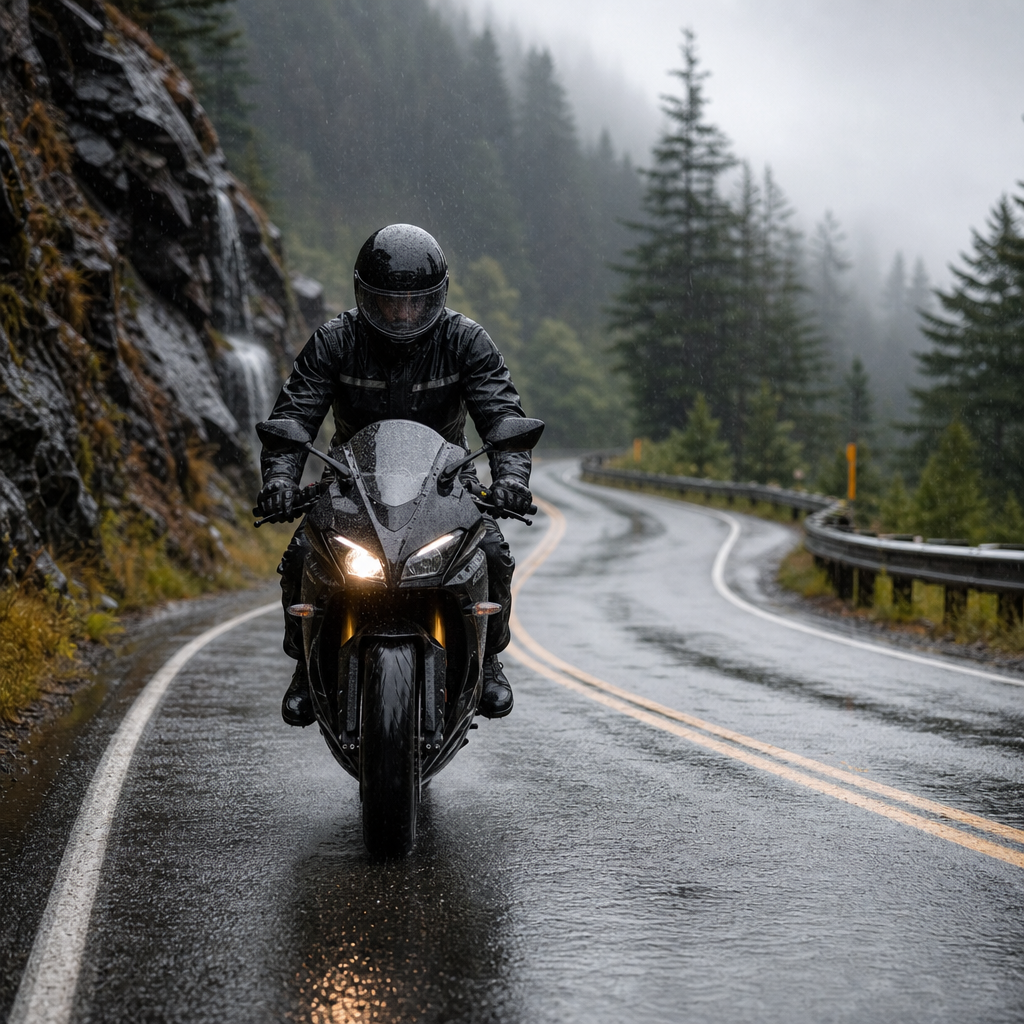
Riding a motorcycle in the rain is not just dry-weather riding with water added; it changes traction, visibility, braking distance, body position, route choice, and the gear you trust when conditions turn ugly. In 2026, the best rain riding strategy combines modern protective equipment with disciplined technique, because wet pavement exposes every weakness in skill and setup. I have ridden through summer cloudbursts, cold highway fronts, and city commutes where oil rose through the first minutes of drizzle, and the same lesson always holds: rain rewards preparation. This Safety & Skills hub for The Open Road explains what rain riding means, why it matters, and how to handle the key variables riders actually face. You will learn how tires behave on wet surfaces, which 2026 gear features improve comfort and control, how to corner and brake without upsetting the chassis, and how to manage hazards such as standing water, fogged visors, painted lines, metal plates, and distracted drivers. Whether you commute daily or tour long distance, the goal is simple: stay visible, stay smooth, and give yourself more traction margin than you think you need.
Why Rain Changes Motorcycle Safety So Much
Rain reduces available grip because a tire must clear water from the contact patch before rubber can fully interlock with the pavement surface. Modern motorcycle tires use silica-rich compounds and tread channels to improve wet performance, but no tire creates unlimited traction on a flooded road. The first 15 to 30 minutes of rain are often the slickest because dust, oil, coolant residue, and rubber particles mix into a greasy film before heavier water washes the surface cleaner. In urban intersections, crosswalk paint, manhole covers, tar snakes, and lane arrows become significantly more slippery than surrounding asphalt. On rural roads, moss near the shoulder and mud tracked from driveways can be just as dangerous.
Visibility also deteriorates in several layers at once. Your visor can bead, fog, or smear. Drivers in cars see less through wet glass and may miss a motorcycle hidden in spray. Headlight contrast drops in gray weather, and road texture becomes harder to read, making potholes and puddle depth difficult to judge. Wind compounds the problem by pushing rain sideways and making your inputs abrupt when the bike needs smoothness. That is why wet-weather riding is fundamentally a risk-management exercise. You are not trying to prove confidence. You are trying to preserve margin.
If you are deciding whether to ride at all, use a simple threshold question: can you maintain enough traction, vision, and body temperature to operate the bike calmly? If the answer is no, delaying the ride is the smart tactic. Skill includes knowing when conditions exceed your envelope.
2026 Rain Gear That Actually Improves Safety
The best motorcycle rain gear in 2026 does more than keep you dry. It prevents distraction, reduces fatigue, preserves dexterity, and improves conspicuity. Start with a laminated waterproof jacket and pants rather than a loose emergency shell if you ride often in bad weather. Three-layer laminated systems using membranes such as Gore-Tex Pro, D-Dry, Drystar, or Hydratex keep water out without soaking the outer fabric as heavily as drop-liner designs. That matters because a waterlogged shell gets cold, heavy, and slow to dry. Sealed zippers, storm flaps, adjustable cuffs, and high collars are not luxuries; they stop water from running down your neck and into gloves.
Gloves deserve special attention. A wet, numb hand cannot modulate the front brake precisely. Choose gauntlet gloves with hard knuckle protection, visor-wipe blades, and insulation appropriate to your climate. Heated grips help, but they mainly warm the palm side; in sustained rain, handguards and waterproof gloves still matter. Boots should be over-the-ankle, oil-resistant, and genuinely waterproof, not merely “water resistant.” Once your socks are soaked, concentration declines quickly. A thin merino base layer and a breathable mid-layer can stabilize body temperature far better than bulky casual clothing under riding gear.
Helmet technology has improved noticeably by 2026. Look for Pinlock-ready shields, quality vent controls, emergency-release cheek pads, and low-distortion optics. A Pinlock insert remains the most reliable anti-fog solution for many riders because it creates an insulating air gap. Some premium helmets now integrate better chin curtain designs and vent channeling that reduce misting at low speed. For visibility, bright colors and retroreflective panels still work. Riders sometimes overestimate the value of extra lights and underestimate the value of being visually distinct against a gray background. Fluorescent yellow, bright red, and clean reflective placement on moving body parts are easier for drivers to detect than black gear lost in spray.
| Gear item | What to look for in 2026 | Why it matters in rain |
|---|---|---|
| Helmet | Pinlock visor, effective vents, low-distortion shield | Reduces fogging and preserves clear vision |
| Jacket and pants | Laminated waterproof construction, sealed closures, reflective panels | Keeps insulation stable and improves visibility |
| Gloves | Waterproof gauntlet, visor wipe, tactile fingertips | Maintains brake and throttle control |
| Boots | Waterproof membrane, grippy sole, ankle support | Prevents slips at stops and keeps feet warm |
| Bike aids | ABS, traction control, heated grips, handguards | Adds margin, comfort, and consistency |
Pre-Ride Setup: Tires, Brakes, Lights, and Electronics
Before a wet ride, check tire pressure cold and inspect tread depth across the center and shoulders. In many regions, legal minimum tread is far lower than what I consider sensible for heavy rain. Replace tires before they are near the limit, especially if the center has flattened from highway miles. Good wet performance depends on compound, tread design, and enough depth to move water. Sport-touring tires from major brands such as Michelin Road, Metzeler Roadtec, Bridgestone T-series, Continental RoadAttack, and Pirelli Angel lines generally outperform worn hypersport tires in the wet because they are designed to warm quickly and maintain drainage.
Brakes should engage smoothly with no pulsing beyond normal ABS self-check behavior, and pads must have substantial material left. Wet weather magnifies maintenance neglect. A dragging brake, contaminated rotor, or sticky lever that felt merely annoying in the dry becomes a real hazard in rain. Test all lights, including brake light activation from both front lever and rear pedal. If your bike allows rider modes, rain mode usually softens throttle response, reduces peak power delivery, and calibrates traction control more conservatively. Use it. Electronics are not a substitute for skill, but current ABS and lean-sensitive systems from Bosch, Continental, and major OEM platforms have prevented countless crashes by managing wheel slip faster than human reflexes can.
Also think about your route. High-speed freeways can be safer than city streets in some storms because they have better drainage and fewer conflict points, but only if visibility remains acceptable and crosswinds are manageable. Avoid low-lying roads known for ponding. If your chain needs lubrication, apply it before the ride and wipe excess; a neglected chain in rain throws grime and increases driveline harshness. The smoother the machine feels, the easier it is to ride smoothly.
Core Wet-Weather Riding Technique
The foundation of motorcycle rain riding is smoothness. Every input—throttle, brake, steering, clutch—should be slower and more deliberate than in the dry. Increase following distance to at least four seconds, and more at highway speed or in spray. Roll on the throttle progressively when leaving stops and when exiting corners. If your bike has substantial torque, short-shift and ride the midrange instead of snapping into the power. Abrupt acceleration can spin the rear even with traction control, especially over paint or patchwork asphalt.
Braking in rain requires earlier setup and a straighter bike. Modern ABS lets you brake assertively, but the best practice is still to complete most deceleration before turn-in. Squeeze the front brake progressively to load the tire, then increase pressure as the fork settles. Use the rear brake lightly for stability, especially at low speed, but avoid stomping on it over slick surfaces. If ABS activates, stay relaxed and maintain pressure; do not release in panic unless you must change line around an obstacle. Many riders crash not because the bike exceeded grip first, but because they became startled by the system doing its job.
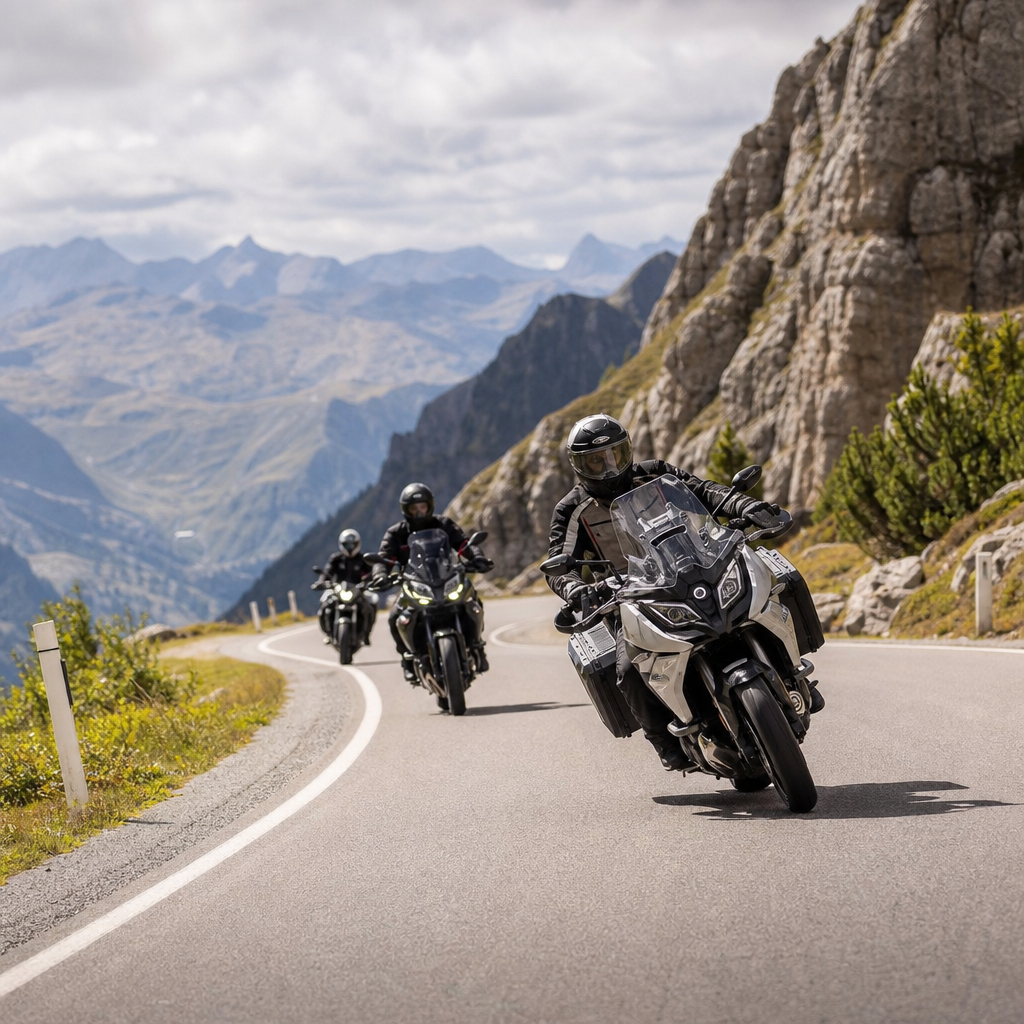
Cornering should emphasize line quality over speed. Reduce entry speed, widen your view, and avoid sudden mid-corner corrections. A slightly later apex can help you keep the bike more upright and preserve traction. I also recommend minimizing unnecessary lean angle by moving your upper body a little to the inside on faster bends, not in a dramatic race style, but enough to ask less of the tire. Keep your arms light, support yourself with your core and legs, and let the motorcycle move beneath you. If you hit a slick patch, the bike often recovers if you stay neutral and avoid stabbing the controls.
Road Hazards Unique to Rain
Some wet hazards are obvious, like standing water, but others are subtle and catch experienced riders. Painted markings are common crash triggers because they sit proud of the pavement and offer less texture. Railroad tracks and steel bridge grates can feel vague even when dry; in rain, cross them as upright as possible and without sudden throttle or brake input. Tar snakes may be only mildly slippery in hot weather, yet in cool rain they can act like strips of grease. Construction zones add milled surfaces, temporary lane shifts, and steel plates that demand early speed reduction.
Hydroplaning is less common on motorcycles than many riders fear, but water depth still matters. A motorcycle tire usually cuts through shallow water effectively at moderate speed, yet deep standing water can lift the contact patch, hide potholes, or shove the front wheel sideways. Never assume a puddle is harmless in a city. It may cover a broken edge, drain grate, or debris. If you cannot judge depth, slow dramatically or go around. In storms, watch the tire tracks of cars ahead; they often indicate the shallowest part of the lane.
Traffic behavior changes in rain too. Drivers brake unpredictably, follow too closely, and make rushed lane changes to escape spray from trucks. Position yourself where mirrors can catch you and where you have an escape route. Near large trucks, either pass decisively when visibility permits or drop back far enough to regain sight lines. Sitting in blind spray is one of the worst places a rider can choose.
Urban Commuting, Highway Touring, and Group Riding in Rain
City rain riding is defined by intersections. Approach every green light expecting reduced stopping ability from everyone around you. Cover the brakes, downshift early, and be ready for a car to turn across your path because the driver judged your speed poorly through rain-streaked glass. Lane positioning is critical. In many lanes, the left or right wheel track offers better traction than the oily center strip, but conditions vary. On multilane roads, I often favor the track that gives the best view past traffic and the cleanest pavement texture rather than following a rigid rule.
Highway touring in rain adds windchill, fatigue, and monotony. After forty minutes in cold rain, riders make poorer decisions simply because they are tired and mentally compressed by noise and spray. Schedule more stops than you would in dry weather. Clean the visor, stretch your neck and forearms, and assess whether your gloves or base layers are getting overwhelmed. If they are, fix the problem early. Rain rarely becomes easier after another hundred miles. Cruise control can reduce wrist strain on some touring bikes, but use it carefully where traction varies.
Group riding in rain demands wider spacing and simpler communication. Staggered formation often collapses under spray and inconsistent braking, so single file with large gaps is usually safer. The lead rider should moderate pace, signal hazards early, and remove any social pressure to “keep up.” I have seen competent riders make poor choices in rain because they did not want to lose sight of the group. A well-run wet ride prioritizes each rider’s line, not formation aesthetics.
When to Stop, What to Practice, and How to Build Rain Confidence
The smartest riders know the difference between discomfort and danger. Stop riding when visibility falls below your ability to identify hazards with time to react, when lightning is close enough to make exposure unreasonable, when flooding covers lane edges, or when you are shivering and losing dexterity. Hypothermia does not require freezing temperatures; wind and wet clothing can drain heat rapidly. Pull off somewhere visible and safe, not under an overpass shoulder that invites rear-end risk unless it is a designated refuge.
Confidence in the rain should be trained, not improvised in traffic. Practice in a controlled environment such as an empty parking lot after rainfall. Work on smooth starts, straight-line braking with ABS engagement, gentle swerves, and looking through turns at reduced speed. Advanced courses from organizations such as the Motorcycle Safety Foundation or accredited police-style civilian programs can help riders understand traction limits in a structured setting. If your motorcycle has selectable rider aids, test how each mode changes throttle response and intervention on safe pavement. Familiarity lowers panic.
This hub article is the starting point for Safety & Skills under The Open Road because rain riding touches every major riding discipline: hazard perception, protective equipment, machine setup, braking technique, cornering strategy, and judgment. The core takeaway is clear. To ride a motorcycle in the rain safely in 2026, combine high-quality waterproof gear, well-maintained tires and brakes, visible lane positioning, longer margins, and smooth control inputs. Respect the first minutes of rainfall, avoid low-traction surfaces, and let modern electronics support—not replace—good technique. If you want to become a better all-weather rider, review your gear, inspect your bike, and deliberately practice wet-weather skills before the next storm arrives.
Frequently Asked Questions
What changes the most when you ride a motorcycle in the rain compared with dry conditions?
The biggest change is traction, and that single difference affects almost everything else you do on the bike. Wet pavement reduces available grip for acceleration, braking, and cornering, which means your tire can reach its limit much sooner than it would on a dry road. In practical terms, you need smoother throttle inputs, earlier braking, more conservative lean angles, and gentler steering. Rain also reduces visibility in multiple ways: your visor may fog, road spray can blur your sightline, and drivers around you may see you later than usual. That means your following distance should increase, your lane positioning should become more deliberate, and your speed should match what you can actually see and react to.
Another major difference is that the road surface becomes less predictable. Painted lines, metal bridge decks, manhole covers, steel plates, tar snakes, leaves, and the first 15 to 30 minutes of rainfall can all be significantly slicker than plain asphalt. In those early minutes, oil and grime often rise to the surface before they wash away, creating especially dangerous traction conditions at intersections and in city traffic. Rain riding also changes your body position and mental approach. Instead of abrupt inputs and aggressive corner entries, you want a calm, neutral posture, light hands on the bars, and steady eyes looking well ahead. In short, rain turns every control input into something that matters more, so disciplined technique becomes just as important as having good gear.
What rain gear and protective equipment matter most for motorcycle riding in 2026?
In 2026, the best rain setup is built around three priorities: staying dry enough to stay focused, staying visible enough to be seen, and staying protected if conditions go bad quickly. A high-quality waterproof or laminated riding suit is still one of the most effective upgrades for regular wet-weather riding. Laminated outer shells generally outperform basic drop-liner systems in prolonged rain because they resist soaking through, reduce water weight, and dry faster once the ride is over. Sealed seams, storm flaps, waterproof zippers, adjustable cuffs, and a collar that genuinely closes against wind-driven rain make a bigger difference than marketing labels alone. If you do not use a dedicated waterproof suit, a well-fitted rain oversuit that goes on quickly at the roadside is still far better than waiting until you are already soaked.
Gloves and boots matter more than many riders expect. Cold, wet hands reduce feel at the controls, and wet boots can make every stop awkward and distracting. Look for fully waterproof gloves with enough dexterity to operate switches and levers smoothly, along with gauntlets that seal properly over or under the jacket depending on the design. For boots, waterproof membranes, good shin and ankle protection, and a sole with dependable grip on wet pavement are key. A fog-resistant visor, Pinlock-style anti-fog system, or similar solution is close to essential in rain, because compromised vision can end a ride faster than almost anything else. Bright accents and reflective material also matter in low light and spray-heavy traffic. If your motorcycle or gear supports modern 2026 features such as integrated airbag protection, adaptive heated gear, improved anti-fog face shields, and more efficient battery-powered glove liners, those can be excellent additions, especially for cold rain and long-distance travel. The best gear is the gear that keeps you dry, visible, mobile, and mentally sharp for the full ride.
How should you brake, corner, and use the throttle on a motorcycle in the rain?
The rule for wet-weather control is simple: do everything earlier, smoother, and with more margin. For braking, begin sooner than you would in the dry and build pressure progressively instead of grabbing the lever. Modern ABS is a major safety advantage in the rain, but it should not be treated as permission to brake aggressively everywhere. The goal is to keep the chassis settled and the tires within their reduced traction envelope. Use both brakes with care, keep the bike as upright as possible during heavier braking, and finish most of your speed reduction before turn-in. Sudden inputs can overwhelm available grip quickly on wet surfaces, especially if the pavement includes polished traffic zones, road markings, or contamination from oil and diesel.
For cornering, reduce entry speed, choose a smooth line, and avoid unnecessary lean. A slightly later, tidier corner approach can help you stay off the slickest areas and keep the bike more upright through the turn. Keep your upper body relaxed and your eyes far ahead, because target fixation gets worse when visibility drops and stress rises. Throttle application should be steady and patient. Roll on gently once you know the bike is settled and the exit surface looks clean. Abrupt acceleration can spin the rear tire or trigger electronic intervention, even on bikes with advanced traction control. Rider aids in 2026 are excellent, but they work best as a backup to sound technique, not a replacement for it. If your motorcycle offers rain mode, softer throttle mapping, cornering ABS, or lean-sensitive traction control, use them. Those systems can meaningfully improve safety in wet conditions, but your own smoothness is still the foundation.
What lane position and route choices are safest when roads are wet?
Smart lane positioning in the rain is about finding the best balance between traction, visibility, and escape options. On many roads, the center of the lane can collect oil drips from vehicles, especially near intersections and stoplights. In light rain or during the first phase of a storm, one of the tire tracks may offer better grip than the middle strip. However, that is not a rigid rule, because standing water, ruts, debris, and spray patterns can change what is safest from moment to moment. The real goal is to stay where the pavement looks cleanest, where drivers can see you best, and where you preserve room to maneuver if traffic does something unpredictable. Following distance should increase significantly, not only because stopping takes longer, but also because spray from larger vehicles can erase your vision in an instant.
Route choice matters too. In the rain, the fastest route is not always the safest one. Roads with better pavement, fewer painted markings, gentler curves, less standing water, and fewer surprise merges are usually worth the extra minutes. Be especially cautious on bridges, overpasses, shaded roads, and urban intersections where surface conditions can vary abruptly. Avoid puddles when possible because they can hide potholes, broken pavement, or metal covers. If heavy rain makes lane markings hard to read or creates hydroplaning risk for surrounding traffic, reducing speed and increasing space become top priorities. If you have navigation options, favor roads you know well over complex unfamiliar shortcuts. In bad weather, familiarity reduces workload, and lower workload helps you make cleaner decisions.
When is it better to stop riding in the rain, and how do you know conditions have become too dangerous?
There is no shame in pulling over when the conditions exceed what you can safely manage. The decision to stop should be based on objective warning signs, not pride. If rainfall is so heavy that you cannot clearly see lane markings, brake lights, or road texture at a useful distance, your safety margin is collapsing. The same is true if your visor will not stay clear, your gloves are too wet to maintain good control feel, your body is shivering, or water is pooling deeply enough that tire contact feels uncertain. Thunderstorms, gusting crosswinds, cold rain that rapidly drains concentration, and traffic conditions where drivers appear erratic or nearly invisible are all legitimate reasons to get off the road and wait it out.
A good rule is this: if you cannot maintain clear vision, smooth control, and a reliable buffer around you, conditions are no longer acceptable. Pull into a safe, visible location such as a service station, covered stop, or parking area away from fast traffic. Do not stop on the shoulder unless you have no better option. Once stopped, check your tires, lights, visor, gloves, and body temperature, and reassess whether the storm is passing or worsening. Many crashes in the rain happen because riders continue after fatigue, cold, and poor visibility have already eroded judgment. The smartest rain riding tactic is knowing when technique and equipment are no longer enough. Good riders do not just know how to ride in the rain; they know when not to.