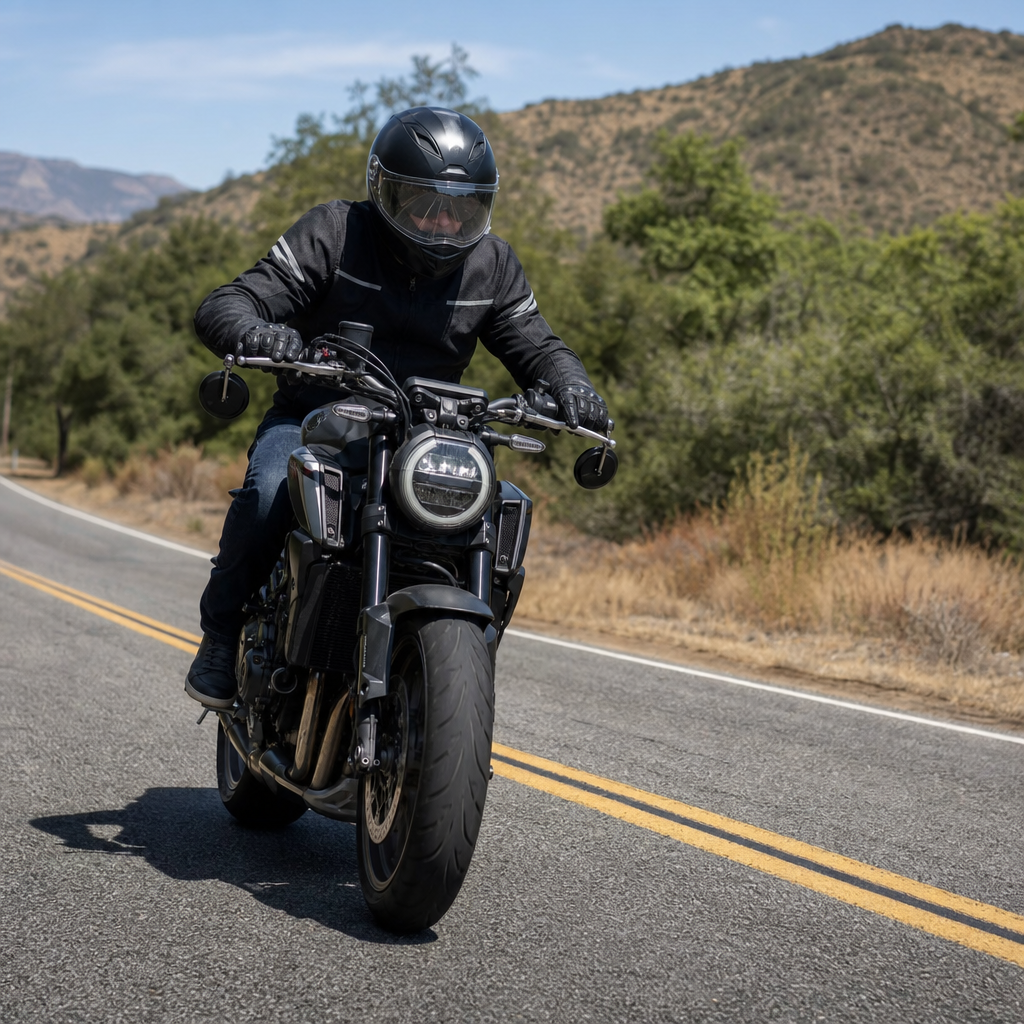
Emergency braking on a motorcycle is the skill that most directly separates a close call from a crash, and the difference between ABS and non-ABS braking changes how that skill must be applied in the real world. In motorcycle safety, emergency braking means reducing speed as fast as possible while staying upright, balanced, and able to steer if traction allows. ABS, or anti-lock braking system, uses wheel-speed sensors and a control unit to momentarily release and reapply brake pressure when a wheel is about to lock. A non-ABS motorcycle leaves that modulation entirely to the rider’s hands and feet. I have coached newer riders through parking-lot drills and watched experienced riders discover under pressure that they were using only a fraction of available braking force. That gap matters because most street crashes begin with a failure to manage speed, space, or traction in a sudden hazard.
This hub for motorcycle safety and skills focuses on the braking decisions riders actually face: a car turning left, diesel on a wet roundabout, decreasing-radius corners, gravel at an intersection, or a panic stop with a passenger aboard. The aim is not to glorify technology or dismiss older machines. It is to explain what works, what changes between ABS and non-ABS motorcycles, and how riders can build repeatable habits. Strong emergency braking is not a trick; it is a trainable process involving vision, body position, brake timing, tire grip, and judgment. Whether you ride a lightweight commuter, adventure bike, cruiser, scooter, or liter-class sport machine, the principles here form the foundation for every other safety topic under The Open Road.
What Emergency Braking Really Requires
Emergency braking is not just “grab the brakes hard.” Maximum safe deceleration on a motorcycle depends on weight transfer, traction, chassis stability, and rider input. As soon as you roll off the throttle and apply the brakes, weight shifts forward. That loads the front tire and increases its potential grip, which is why the front brake provides most stopping power on dry pavement. Training programs such as those aligned with Motorcycle Safety Foundation methods and police motor training consistently emphasize progressive front-brake application: squeeze, build pressure, then continue increasing as the fork compresses and the tire loads. On non-ABS bikes, this progression is essential to avoid an immediate front-wheel lock. On ABS bikes, it still matters because smoother input usually shortens stops and keeps the chassis calmer.
The rear brake plays a supporting role. Early in the stop, it adds useful deceleration and helps settle the motorcycle. As weight shifts forward, rear-tire load drops, so lockup risk rises, especially on non-ABS motorcycles. Riders who stomp the rear pedal in panic often create a skid that lengthens the stop or swings the bike sideways. Clutch use also matters. In most straight-line emergency stops, pull the clutch in once braking is underway so engine braking does not stall the bike and interfere with smooth control. Eyes should stay level and up, not fixed on the obstacle. If there is an escape path, you need visual bandwidth to see it. The best emergency stop is a coordinated sequence: roll off, straighten the bike, progressive front brake, measured rear brake, clutch, eyes up, and stop in balance.
ABS vs. Non-ABS: What Changes in a Panic Stop
ABS does one job extremely well: it reduces the chance of wheel lock during hard braking. Modern systems monitor wheel speed many times per second and intervene when deceleration indicates impending lock. On the street, that can be the difference between staying upright and sliding. Large studies in multiple markets have linked motorcycle ABS with substantial reductions in fatal crash involvement for street bikes, with figures often cited around one-third lower for certain categories. Those numbers do not mean ABS makes riders invincible. They mean that when humans make imperfect inputs on imperfect surfaces, ABS gives them a margin they otherwise would not have.
On an ABS motorcycle, the survival tip is simple but often underused: brake firmly and commit. Many riders feel the pulsing at the lever or pedal and instinctively release pressure because the feedback feels alarming. That is the wrong reaction. If the bike is upright and the surface is paved, maintain strong pressure and let the system work. On a non-ABS motorcycle, survival depends on threshold braking, the ability to approach maximum traction without crossing into a skid. That requires practice because tire grip changes with temperature, road texture, paint lines, rain, and lean angle. The non-ABS rider must sense the earliest signs of lockup: a chirp from the tire, a suddenly light steering feel, rear-wheel wag, or a bar that goes vague instead of planted.
Neither system changes physics. Stopping distance still depends on speed, grip, tire condition, suspension, and rider reaction time. From 60 mph, even a one-second delay before braking means roughly 88 feet traveled before deceleration begins. ABS cannot recover that lost distance. It also cannot fully overcome poor tires, overloaded luggage, or a bike leaned deeply into a corner. The real comparison is this: ABS improves consistency under stress, while non-ABS demands a higher skill ceiling from the rider. If you own the choice, ABS is a meaningful safety advantage for road use. If you ride non-ABS, disciplined training is not optional.
Technique for Maximum Braking on Dry, Wet, and Dirty Roads
For dry pavement, start with the bike as upright as possible. Straighten the bars, squeeze the tank with your knees, keep your elbows relaxed, and apply the front brake progressively but decisively. Add the rear brake with less pressure than the front, then increase only as the rear tire remains stable. On ABS bikes, most riders can brake harder than they think. On non-ABS bikes, focus on building pressure rather than spiking it. If the rear begins to skid in a straight line, many advanced instructors advise keeping it locked only if the bike remains aligned; releasing a badly out-of-line rear can trigger a violent highside. Preventing that skid in the first place is safer than making a heroic save.
Wet roads cut available grip, but not uniformly. Fresh rain after a dry spell can lift oil to the surface. Thermoplastic lane markings, steel plates, manhole covers, leaves, and bridge expansion joints become especially slick. The answer is not timid braking; it is earlier, smoother, more upright braking. Give the fork time to settle, avoid abrupt lever grabs, and increase following distance. ABS shines here because it can manage momentary grip changes faster than a rider can. On non-ABS bikes, your margin is thinner, so reduce speed earlier and treat every glossy patch as suspect.
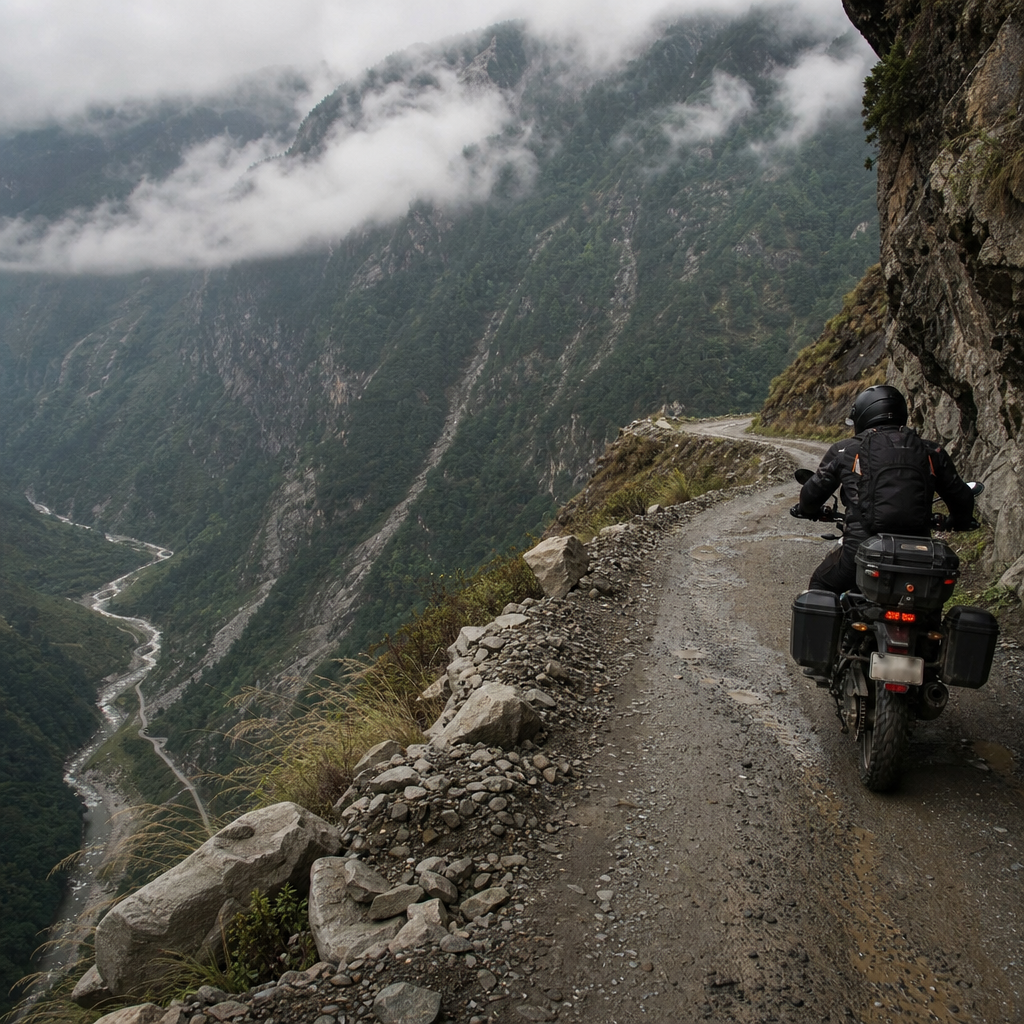
Dirty roads require pattern recognition. Gravel at an intersection usually collects where car tires rarely sweep. Farm mud appears near field entrances. Diesel spills are common around truck routes and roundabouts. In these conditions, reduce lean first, then brake in the cleanest visible strip. If you must cross debris, release some brake pressure as you pass over it, then reapply once on better pavement. Adventure riders often practice this on mixed surfaces, but the same principle helps any commuter crossing construction dust or sand near a coastal road.
| Scenario | Primary Risk | Best ABS Response | Best Non-ABS Response |
|---|---|---|---|
| Dry straight stop | Under-braking from fear | Firm, continuous pressure | Progressive squeeze to threshold |
| Wet intersection | Sudden front lock on paint or oil | Brake upright, trust modulation | Smooth build-up, avoid abrupt inputs |
| Loose gravel patch | Immediate tire slip | Reduce pressure briefly, reapply on clean surface | Feather brakes, prioritize balance |
| Downhill stop | Extra weight transfer and speed gain | Earlier strong front brake | Earlier braking, careful rear use |
Corner Entry Emergencies and Mid-Corner Survival
Many riders do not crash because they cannot brake; they crash because they realize too late that the corner tightens, the van is stopped, or the deer is crossing. The first rule is to reduce speed before the turn whenever possible. If a hazard appears while leaned over, stand the bike up only if you have room and the road is straightening. Modern motorcycles and modern tires can brake while leaned more than older advice suggested, but available traction must be shared between cornering and braking. That means every pound of brake force used mid-corner leaves less grip for turning. Riders who panic and abruptly stab the front brake at high lean overwhelm the front contact patch and lose the bike.
The survival technique is controlled trail-off and line management. Roll off the throttle, look through the turn, and apply smooth braking with the bike at the least lean angle available. If the corner opens, release the brakes and finish the turn. If the road is tightening, modest braking while adding lean can work if done progressively and if the surface is good. ABS helps if the bike approaches lockup, but it does not create extra cornering traction. This is why corner-entry speed management is central to every advanced riding program. If you ride quickly on public roads, you are borrowing from a traction budget you may need unexpectedly.
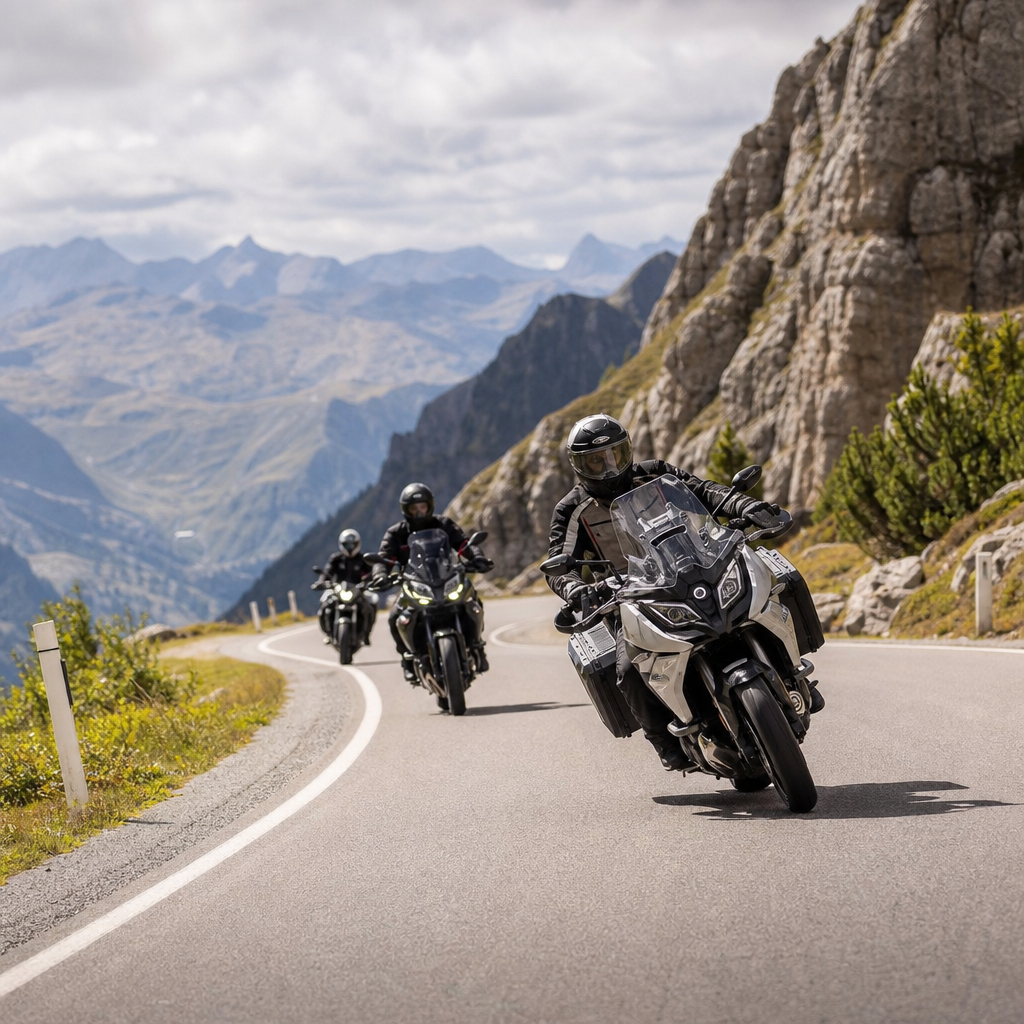
Real-world example: on a mountain road, a rider enters a right-hand bend a little hot and finds fallen rocks in the lane. The safest response is rarely “maximum brake now.” It is usually straighten the bike as much as possible, brake hard in the available upright moment, and choose the cleanest path around the debris. Riders with track experience often manage this better because they have practiced separating panic from process. Street riders can build the same calm through drills, not bravado.
Practice Drills, Bike Setup, and Common Rider Errors
You do not rise to the occasion in an emergency; you default to your level of training. Practice emergency braking in a clean parking lot, then on a closed training range if available. Mark a start point and braking marker with cones. Begin at 20 mph, then 30, then 40 if the space supports it safely. Measure your stopping distance. Riders are often surprised by how much it shrinks when they apply the front brake assertively. Practice on your actual motorcycle because a dual-sport with long suspension, a heavy touring bike with linked brakes, and a small scooter all communicate differently.
Bike setup directly affects emergency braking. Tires should be quality road tires with adequate tread depth and pressures set to the manufacturer’s recommendation for load and speed. Old, squared-off, or underinflated tires reduce stability and grip. Suspension sag matters too. An overloaded rear or worn fork oil can upset weight transfer and lengthen stops. Brake pads, fluid, rotor condition, and lever free play deserve routine inspection. If your ABS warning light stays on, the system may be disabled; do not assume protection you do not have. On non-ABS machines, stainless brake lines and fresh fluid can improve feel, but they do not substitute for skill.
The most common rider errors are predictable. First, many riders do not use enough front brake because they fear going over the bars, a scenario far less common on modern street motorcycles than simple under-braking. Second, some riders grab the clutch immediately and coast, delaying effective deceleration. Third, target fixation pulls the bike toward the threat. Fourth, riders practice only in perfect weather, then meet their first hard stop in the rain with no reference point. Finally, many people never test how their ABS feels, so the first pulse arrives in traffic and startles them into releasing the lever. Find out what your bike does before the emergency teaches you.
How This Safety and Skills Hub Connects to Every Ride
Emergency braking is the anchor skill for the broader Safety and Skills branch of The Open Road because it intersects with scanning, lane positioning, cornering, traction management, passenger control, and hazard prediction. A rider who understands braking also understands following distance, because stopping space begins before the lever moves. The same rider tends to enter corners at a pace that preserves options, choose lane positions that improve sightlines, and notice escape routes at intersections. In other words, braking technique is not a standalone tactic. It is the operational center of street survival.
This hub should point readers toward related topics every rider needs to develop next: countersteering and swerving, wet-weather riding, cornering lines for public roads, braking with a passenger, night-riding risk management, and pre-ride mechanical checks. Those subjects reinforce one another. For example, a rider who learns swerving without learning when braking must end before a quick direction change may still freeze in a real hazard. A rider who studies tire pressures but not weight transfer may miss why an overloaded bike feels vague under hard braking. Build the system, not isolated tricks.
The main takeaway is clear. If your motorcycle has ABS, learn to use it decisively and do not release the brakes when the system chatters. If your motorcycle does not have ABS, commit to regular threshold-braking practice until smooth, strong stops are automatic. In both cases, keep the bike upright, eyes up, tires maintained, and speed appropriate to sightline and surface. Emergency braking is a survival skill you can improve this week, not someday. Go to a safe practice area, run structured drills, and make your next ride safer before chance tests you on the road.
Frequently Asked Questions
What is the biggest difference between emergency braking on a motorcycle with ABS versus one without ABS?
The biggest difference is how much braking force you can safely apply before a wheel locks. On an ABS-equipped motorcycle, the system monitors wheel speed and rapidly reduces and reapplies brake pressure when it detects an impending lock-up. In a real emergency, that means you can usually squeeze the brakes hard and progressively, especially the front brake, with far less risk of skidding if traction is limited. The goal is still smooth, fast, increasing pressure rather than a panicked grab, but ABS gives you a larger safety margin when adrenaline spikes and the surface is less than perfect.
On a non-ABS motorcycle, the rider must do all of that modulation manually. If you apply too much front brake too quickly, the front tire can lock and fold the bike underneath you. If the rear locks, the bike can skid, fishtail, or become unstable. That means emergency braking without ABS demands more feel, more practice, and more restraint at the very first moment of brake application. You still want maximum braking, but you must build pressure right to the edge of traction and stay there without crossing it. In practical terms, ABS helps correct mistakes during a panic stop; non-ABS requires you to avoid those mistakes in the first place.
How should I perform an emergency stop on a motorcycle with ABS?
Start by getting the bike upright if at all possible, because maximum braking happens when the tires are not heavily leaned over. Keep your eyes up and look where you want to go, not at the hazard. Roll off the throttle, squeeze the clutch if needed to prevent stalling as speed drops, and apply both brakes quickly but progressively. Most stopping power comes from the front brake because weight transfers forward under deceleration, loading the front tire and increasing its available grip. The rear brake still matters because it adds stability and contributes to overall stopping force, especially in the initial phase.
With ABS, the key is firm, decisive input rather than timid braking. Many riders under-brake in emergencies because they are afraid of locking a wheel. ABS is designed to help with exactly that problem. If the system activates, you may feel pulsing at the lever or pedal. That sensation is normal. Do not release the brakes just because you feel the pulse. Keep applying strong pressure and let the system work. If there is room and traction, keep the motorcycle upright and straight. Some advanced systems allow better control while turning, but in most street situations you still want to reduce lean before asking for maximum braking. Practice this in a safe parking lot so the sensation of hard braking and ABS intervention feels familiar instead of alarming.
What is the safest way to emergency brake on a motorcycle without ABS?
On a non-ABS bike, the safest method is threshold braking: applying as much brake pressure as the tires can handle without locking. Begin with a quick but smooth squeeze on the front brake, not a grab. As the front suspension compresses and the front tire loads up, add more pressure. At the same time, use the rear brake with measured input. The rear becomes lighter as weight transfers forward, so it is easier to lock than many riders expect. If the rear does lock and the bike remains straight, some riders keep it locked until stopped; if it starts to step out significantly, releasing it abruptly can cause a violent snap back into line. This is one reason practice is so important.
Your body position also matters. Support yourself with your legs and core so you are not pushing your weight into the handlebars. Keep your arms relaxed enough to let the bike stay stable. Stay upright, keep your head level, and continue scanning for escape space. If the front tire chirps or begins to slide, immediately reduce front brake pressure slightly, then reapply progressively. That tiny release-and-reapply skill is what ABS automates. On a non-ABS bike, you must feel for traction and respond instantly. The technique is absolutely learnable, but it only becomes reliable through repetition on clean, controlled pavement before you ever need it in traffic.
Can I steer while emergency braking, and does ABS change that?
Yes, but with important limits. Tires have a finite amount of traction, and that traction must be shared between braking, cornering, and acceleration. In an ideal maximum-stop scenario, the bike is upright so nearly all available grip can be used for braking. If you are leaned over and then demand hard braking, you are asking the same tire to do two difficult jobs at once. That is when slides happen. So the first priority in most emergencies is to straighten the motorcycle as much as possible, then brake hard.
ABS can improve your chances of maintaining control because it helps prevent wheel lock, which is a major cause of loss of steering control during panic stops. But ABS does not create extra traction. If you are on gravel, paint lines, wet leaves, diesel residue, or cold pavement, you still have less grip available. And if you are cornering aggressively, even ABS may not save the situation if you exceed the traction limit. Think of ABS as a tool that helps preserve stability, not as permission to ignore physics. In a real-world emergency, the best response is often a combination of quick straightening, hard braking, and, if necessary, controlled swerving into a safe escape path. The right answer depends on distance, speed, and surface conditions, which is why riders should practice both straight-line braking and hazard-avoidance drills.
What survival tips matter most when panic braking in rain, gravel, or other low-traction conditions?
The most important survival tip is to assume you have less grip than you want and to act earlier than you would on dry pavement. In the wet, traction can drop dramatically, especially during the first minutes of rainfall when oil and dust rise to the surface. Painted lines, metal covers, tar snakes, leaves, and road markings can all become unexpectedly slick. On gravel or broken pavement, traction is even more inconsistent. That means your emergency braking inputs should still be decisive, but smoother and more disciplined. Sudden grabs, jerky downshifts, and abrupt body movements make a bad surface worse.
If you have ABS, use both brakes with strong, progressive pressure and let the system help you manage intermittent grip. If you do not have ABS, be even more careful with initial front brake application and be prepared to modulate constantly as the surface changes under you. In either case, give yourself the best chance by keeping the bike upright, looking ahead for the cleanest line, and avoiding contaminated parts of the lane when possible. Increase your following distance in bad conditions so you are not forced into a maximum-effort stop at the last second. Finally, practice emergency braking in a controlled environment on both ideal and less-than-ideal surfaces, if you can do so safely. Survival in a real panic stop is rarely about one heroic input. It is about habits: eyes up, smooth hands, balanced braking, and a motorcycle that is ready to stop as hard as conditions allow.