Heavy cruisers reward smooth, deliberate riding, yet many owners assume their weight makes sharp, confident cornering impossible. In practice, a well-set-up cruiser can arc through bends with surprising precision when the rider understands traction, geometry, vision, braking, and body position. In this guide to cornering like a pro, I will break down the advanced techniques that matter most for big V-twins, full-dress touring cruisers, and long-wheelbase customs, with a strong focus on safety and skills. A heavy cruiser, for our purposes, means a motorcycle typically weighing 650 pounds or more, often with relaxed steering geometry, lower ground clearance, and a torque-rich engine. Those traits change how the bike enters, holds, and exits a turn. Learning to work with them matters because single-vehicle cornering crashes remain one of the most common serious motorcycle accident types, and rider technique is often the deciding factor.
I have coached newer cruiser riders after years of testing touring bikes on mountain roads, in parking-lot drills, and on structured rider courses, and the same patterns appear again and again. Riders run wide because they look too close to the front fender. They overbrake mid-corner because entry speed was not set early enough. They scrape hard parts unexpectedly because they do not know their motorcycle’s clearance limits. They tense their arms, which upsets the chassis and makes the bike feel heavier than it is. The good news is that advanced cornering on a cruiser is less about aggression and more about disciplined sequencing. If you can manage speed before turn-in, place the motorcycle accurately, keep your vision active, and apply throttle with restraint, you can ride faster, safer, and with much less drama. This hub covers the core skills every cruiser rider should build before chasing pace.
What Makes Heavy Cruisers Different in Corners
Heavy cruisers corner differently because design choices that improve highway comfort can compromise quick direction changes. Most cruisers use a longer wheelbase than sport-oriented motorcycles, a kicked-out fork angle, lower seat height, and floorboards or low pegs. That combination creates stability in a straight line, but it also slows steering response and reduces lean-angle margin. Add luggage, a passenger, or a large fork-mounted fairing, and the motorcycle carries even more mass that must be settled before and during each turn. None of this makes a cruiser unsafe. It simply means the rider has to be more intentional with setup and timing.
The most important concept is available traction. Tires only have so much grip for braking, turning, and acceleration. On a heavy cruiser, the consequence of wasting grip is often immediate: a vague front end, a rear tire that squirms on painted lines, or a hard part touching down and levering the bike upward. Suspension also plays a larger role than many riders expect. Soft rear shocks, common on comfort-oriented cruisers, can wallow on corner exit or compress enough to reduce clearance. Worn fork oil, underinflated tires, and overloaded saddlebags all make cornering worse. Before any advanced skill work, verify tire pressures against the manufacturer’s recommendation, inspect tread wear, and confirm suspension preload is appropriate for rider, passenger, and cargo. Those simple checks change the motorcycle more than most aftermarket parts.
Corner Entry: Speed Management Wins the Turn
The safest way to corner a heavy cruiser quickly is to do the majority of your slowing while the bike is upright. This is standard advanced riding practice because upright tires can handle more braking force than leaned tires. In plain terms, if you enter too fast, every correction becomes harder. The bike resists leaning, line choice narrows, and panic inputs appear. I teach riders to think in this order: assess the curve, choose an entry speed, finish primary braking, look through the turn, then steer decisively. When that sequence is consistent, cornering feels calm rather than rushed.
Use visual clues early. Utility poles, tree lines, chevrons, guardrails, and the vanishing point all tell you whether a curve tightens or opens. If the vanishing point moves away from you, the turn is likely opening. If it stays fixed or comes toward you, the turn is tightening, and you should hold a more conservative entry speed. On unfamiliar roads, especially downhill decreasing-radius turns, assume the curve gets sharper than it first appears. Heavy cruisers carry momentum, and momentum is unforgiving when clearance is limited.
Trail braking deserves careful treatment. Yes, carrying light brake pressure past turn-in can tighten your line and keep the front tire loaded. Police motor units and advanced street riders use it effectively. But on heavy cruisers, the margin for error is smaller because of weight transfer, lower-spec suspension on some models, and limited clearance. If you have not practiced this skill in a controlled environment, prioritize slower entry and neutral maintenance throttle through the first half of the turn. Advanced does not mean complicated. It means doing the basics so precisely that the motorcycle remains composed.
Line Selection, Vision, and Countersteering
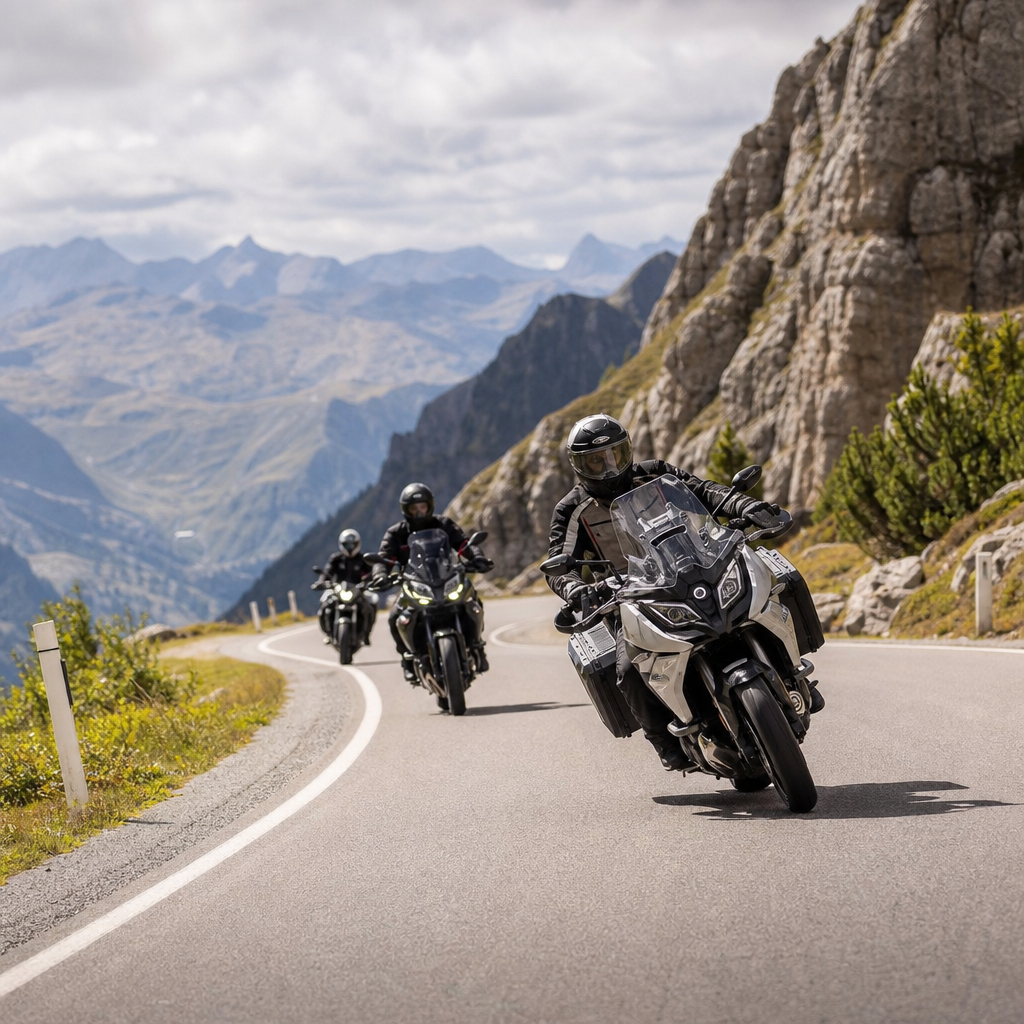
Most cruiser riders improve dramatically when they fix their eyes before they fix anything else. Your motorcycle goes where your attention goes. Looking at the shoulder, gravel patch, or centerline drift pulls you toward it. Looking to the corner exit gives your hands and body time to make subtle corrections. On the street, vision should move in layers: far ahead for curve shape, midrange for your lane position, then quick near-field checks for surface hazards. This scanning rhythm keeps the brain ahead of the bike.
Lane position is your next tool. For a right-hand curve, a left-of-lane setup usually increases your view and can open the radius, but only if there is no oncoming vehicle encroachment, debris, or surface damage near the centerline. For a left-hand curve, a right-of-lane setup can provide a better sightline while preserving space from oncoming traffic. The goal is not to apex like a racetrack rider. The goal is to maximize visibility, preserve safety margins, and create a smooth arc. On public roads, a late apex is usually the safest default because it reduces the chance of running wide at the exit.
To initiate lean, press the handlebar in the direction you want to go. Press right to go right, press left to go left. Countersteering is not a theory; it is how motorcycles turn at speed. Heavy cruisers may need a firmer, more deliberate press than lighter bikes, especially if they wear wide handlebars or a large front tire. Riders who merely “lean their body” without a positive steering input often hesitate at turn-in and drift wide. A clean press on the bar, followed by relaxed arms, lets the chassis settle.
| Cornering Element | Common Cruiser Mistake | Pro Technique | Why It Works |
|---|---|---|---|
| Entry speed | Braking too late | Finish major braking upright | Preserves grip for turning |
| Vision | Looking near the front wheel | Scan to the exit and back | Improves line and hazard detection |
| Steering | Passive lean without bar input | Firm countersteer press | Creates decisive, stable turn-in |
| Body position | Stiff arms and centered torso | Light inside shift, loose upper body | Reduces steering effort and chassis upset |
| Throttle | Chopping gas mid-corner | Smooth maintenance to roll-on | Stabilizes suspension and line |
Body Position and Ground Clearance Management
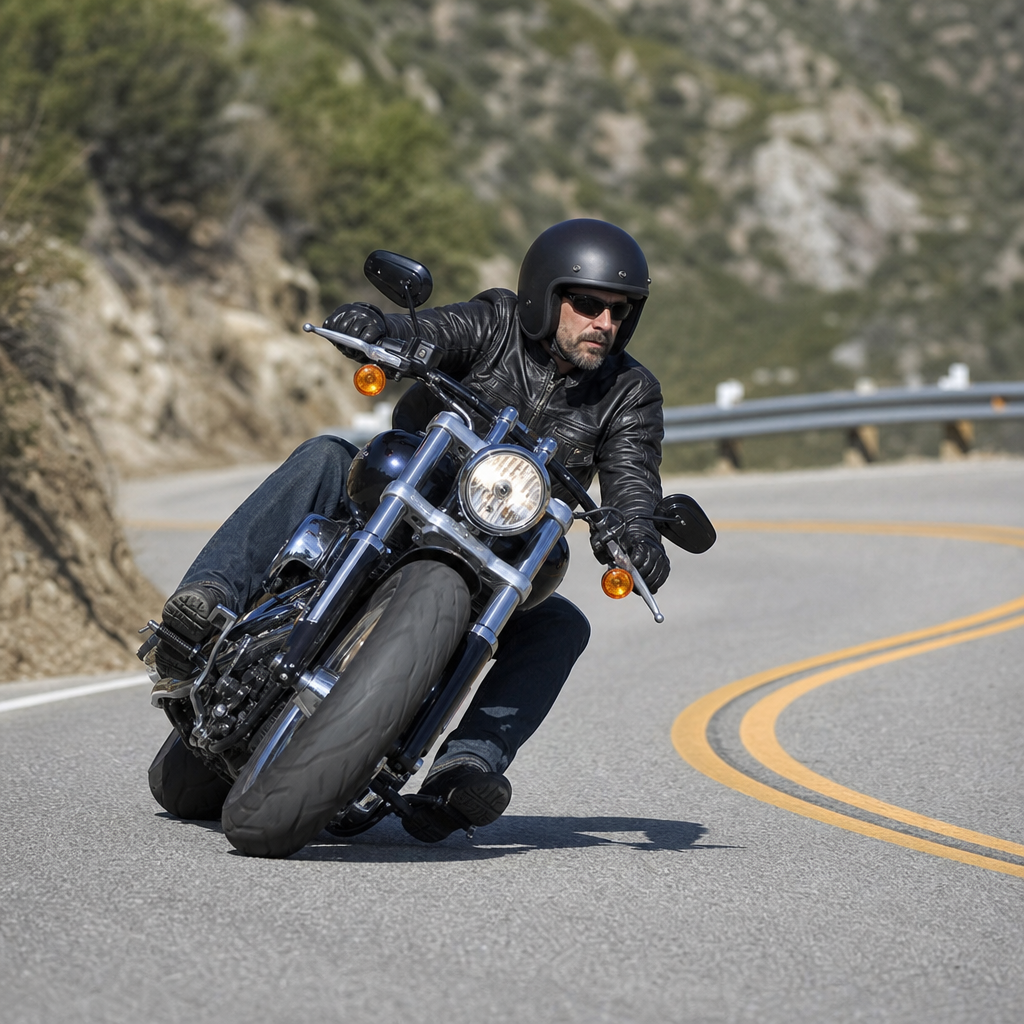
Heavy cruisers do not require dramatic hanging off, but body position still matters. A small shift of your torso and hips toward the inside of the turn reduces the lean angle the motorcycle needs for a given corner speed. That is valuable on a machine with floorboards, engine guards, or long exhausts that can touch down early. Think subtle, not theatrical: slide a half cheek to the inside, keep your outside knee in light contact with the tank or frame area, drop your inside shoulder slightly, and keep your head level with the horizon. This keeps the bike a little more upright without destabilizing it.
Foot placement is critical on floorboards and forward controls. Keep the balls of your feet or at least the midfoot positioned so toes are not dangling toward the pavement. I have seen riders startle themselves badly when a boot heel or toe contacts the road before the board feeler does. If your cruiser uses large floorboards, learn what touches first and how it feels. A light scrape from a feeler is information, not an emergency. Stand the bike up only if you have room and need it. Abruptly rolling off the throttle or jerking the bars when something scrapes can cause a bigger problem than the scrape itself.
Suspension setup directly affects clearance. Increase rear preload when carrying luggage or a passenger. Many touring cruisers sag excessively when loaded, and that lowers the rear ride height enough to make floorboards drag much earlier. If your bike has adjustable damping, add enough rebound control to prevent pogoing after bumps. If it does not, fresh shocks can transform the machine. Premium units from companies such as Öhlins, Progressive Suspension, or Fox are expensive, but on big cruisers they often deliver a larger real-world safety benefit than cosmetic modifications.
Throttle Control, Mid-Corner Stability, and Surface Hazards
Once the bike is leaned and pointed, throttle becomes your stabilizer. After primary braking is complete and lean angle is established, transition to neutral or lightly positive throttle. That tiny roll-on settles the suspension, reduces abrupt weight transfer, and helps the motorcycle track cleanly. Chopping the throttle mid-corner unloads the rear, increases forward weight transfer, and can tighten the line more than you intended. On shaft-drive cruisers, abrupt throttle changes can also amplify chassis reactions. Smoothness is not just elegance; it is traction management.
Corner exits are where torque-rich cruisers can either feel planted or unruly. Roll the throttle on only as quickly as sight distance and available traction allow. If you cannot see the exit clearly, hold maintenance throttle longer. If the road is cold, patched, or dusty, delay harder acceleration. Painted arrows, tar snakes, diesel spills near intersections, and leaf litter under trees all reduce grip, especially when the bike is leaned. A heavy cruiser with a broad rear tire may feel secure, but width does not guarantee traction. Tire compound, temperature, inflation, and surface texture matter more than appearance.
Rain changes priorities. Reduce lean angle, increase following distance, and smooth every input further. Avoid polished lane markings and metal utility covers when possible. Modern touring tires from Michelin, Dunlop, Bridgestone, Metzeler, and Pirelli provide strong wet performance, but no tire cancels physics. If your motorcycle has ABS and traction control, treat them as backup systems, not permission to override conditions. Electronic aids can save a mistake; they cannot create grip on oil or standing water.
Practice Drills, Training, and Building Real Skill
Advanced cornering skill is built methodically. Start in a parking lot with low-speed circles, figure eights, and offset weaves to improve steering precision and clutch-throttle coordination. Then practice quick but smooth countersteering inputs at moderate road speeds in a safe, empty environment. Next, work on corner-entry routines: roll off, brake upright, release pressure smoothly, turn in, hold maintenance throttle, and accelerate only when the exit opens. Repeat until the sequence becomes automatic. Repetition matters because stress narrows attention, and only ingrained habits survive surprise.
Formal training is worth the money. The Motorcycle Safety Foundation’s advanced offerings, state rider programs, police-style precision courses, and track-based street rider schools all teach transferable skills. While a cruiser is not a track bike, controlled environments let you explore braking pressure, line selection, and body position without oncoming traffic or roadside hazards. Riders often discover their motorcycles can lean farther, brake harder, and turn more cleanly than they believed. That confidence should produce more margin on the street, not more recklessness.
This Safety & Skills hub should guide your next steps. Pair this article with deeper resources on emergency braking, wet-weather riding, two-up handling, tire selection, suspension tuning, and post-ride self-review. The best cruiser riders are not the ones who look dramatic in corners. They are the ones who stay smooth, see early, choose speed wisely, and leave themselves options when the road changes.
Cornering like a pro on a heavy cruiser comes down to disciplined fundamentals applied with precision. Set entry speed early, use vision to read the road, countersteer decisively, shift your body subtly to protect ground clearance, and feed in throttle smoothly as the exit develops. Back those techniques with correct tire pressure, sensible suspension setup, and regular practice, and a big cruiser stops feeling reluctant and starts feeling predictable. That predictability is the real benefit, because it creates safety, confidence, and enjoyment at the same time.
If you ride a heavyweight cruiser, make this your baseline approach every time the road bends. Audit your setup, practice one skill at a time, and continue through the rest of The Open Road Safety & Skills articles to build a complete riding toolkit. The payoff is simple: smoother lines, fewer surprises, and far more control when it matters most.
Frequently Asked Questions
1. Can a heavy cruiser really corner well, or does the weight always limit performance?
Yes, a heavy cruiser can corner far better than most riders expect, but it does so in a different way than a sportbike or a lightweight standard. Weight absolutely affects how quickly the bike changes direction, how much braking distance you need, and how much effort is required at the bars, but it does not automatically make confident cornering impossible. In many cases, the real limitation is not the machine itself but rider technique, setup, and expectations. A long-wheelbase cruiser prefers smooth, planned inputs instead of abrupt steering, panic braking, or rushed line changes. When you respect that personality, the bike becomes surprisingly capable and stable through bends.
The biggest strength of a heavy cruiser in a corner is composure. These bikes often feel planted once they are settled into a lean, and that stability can inspire confidence if you are looking far enough ahead and making deliberate inputs. The mistake many riders make is trying to force a cruiser to behave like a short, agile motorcycle. Instead, the key is to set speed early, choose a clean line, initiate lean positively but smoothly, and maintain balanced throttle through the turn. When done correctly, the bike tracks predictably and the corner feels controlled rather than dramatic.
That said, heavy cruisers do have genuine physical limits. Ground clearance is often reduced, floorboards or pegs can touch down early, suspension travel may be limited, and cruiser tires are not always designed for aggressive lean angles. Those factors mean “cornering well” on a cruiser is not about chasing extreme lean or carrying reckless entry speed. It is about maximizing traction, preserving chassis stability, and using smart technique to ride within the bike’s design envelope. A skilled rider on a properly set-up cruiser can carry impressive corner speed safely, but the method is smooth precision, not brute force.
2. What is the most important technique for cornering a big V-twin or touring cruiser safely and confidently?
If you had to choose just one, it would be vision. On a heavy cruiser, where line changes take more time and mistakes are harder to correct at the last second, where you look has an outsized impact on how well you corner. Your eyes should go to the corner exit or as far through the turn as visibility allows, not down at the front fender, not at the centerline, and definitely not at the hazard you are trying to avoid. The motorcycle naturally follows your visual focus. When your head and eyes lead, your arms relax, your line smooths out, and the bike becomes much easier to steer accurately.
Right behind vision is doing all major braking before the turn, or at least before deep lean on a street-driven cruiser. Heavy motorcycles do not respond well to panic corrections in the middle of a bend. If you enter too fast, the bike feels reluctant to tighten its line, the suspension gets upset, and the rider often stiffens up. A better approach is to slow early, release the brakes smoothly, turn in with intention, and apply light maintenance throttle as the bike settles. That slight positive throttle helps stabilize the chassis and prevents the abrupt weight transfer that can make a big cruiser feel vague or unsettled.
Confidence also comes from consistency. Use the same sequence every time: assess the corner, choose entry speed, look through the turn, countersteer to initiate lean, relax your grip, and roll on smoothly as the exit opens. Riders who develop that rhythm tend to feel in control even on very heavy machines. Riders who improvise every corner tend to feel like the motorcycle is fighting them. The advanced part is not flashy body movement or extreme lean; it is mastering timing, smoothness, and visual discipline so the bike is never surprised by your inputs.
3. How should I use braking and throttle control when cornering a heavy cruiser?
Think of braking and throttle as tools for managing weight transfer. On a heavy cruiser, weight transfer is more noticeable because there is more mass moving around, often with softer suspension and a lower chassis. Hard, abrupt braking loads the front tire heavily, can compress the fork quickly, and may unsettle the bike if you are already turning. Chopping the throttle mid-corner can do something similar by pitching weight forward suddenly and tightening the chassis in an unhelpful way. Smooth transitions matter more on big cruisers than many riders realize.
The best street technique is to complete the majority of your braking while the bike is upright. Squeeze the front brake progressively rather than grabbing it, and use the rear brake in a supportive role to help settle the chassis. Because many cruisers carry weight low and rearward, the rear brake can feel especially useful at lower speeds and on corner approaches, but it should not replace proper front brake use. The front still provides the majority of stopping power. The goal is to arrive at turn-in at a speed you know you can comfortably hold, with the suspension calm and the tires free to focus on cornering grip.
Once you tip in, transition to a neutral or slightly positive throttle. That does not mean accelerating hard in the middle of the corner. It means rolling on just enough to keep the bike balanced and composed. As you approach the exit and can clearly see that the road is opening up, you can increase throttle progressively. On a torquey V-twin, be careful with abrupt roll-on, especially on worn pavement, painted lines, gravel, or damp roads. Big torque delivered suddenly can overwhelm rear traction more easily than riders expect. Smooth throttle application is what makes a heavy cruiser feel planted and professional through the second half of the turn.
4. Does body position matter on a cruiser, even if I am not trying to ride aggressively?
Absolutely. Body position on a heavy cruiser is less dramatic than on a sportbike, but it still matters a great deal for both safety and control. The goal is not to hang off dramatically; it is to help the motorcycle corner with less lean angle, less steering effort, and more stability. A simple shift of your upper body slightly toward the inside of the turn can reduce how much the bike itself needs to lean for a given corner speed. On a cruiser with limited ground clearance, that can be very valuable because it may delay hard parts touching down.
Just as important is what not to do. Many riders unknowingly make cornering harder by sitting stiffly, locking their elbows, pushing their body weight to the outside, or bracing hard against the bars. That creates tension and makes the bike feel heavier than it is. Instead, keep your torso relaxed, support yourself with your core, and let your outside foot and inside hip help anchor you. Keep your head level with the horizon and turn it to look through the curve. This naturally encourages better balance and smoother steering.
On floorboard-equipped cruisers and full-dress tourers, subtle positioning often works best. Slide your hips slightly to the inside before turn-in, keep your inside shoulder relaxed, and maintain light pressure on the bars rather than wrestling the bike. If you have a passenger, remember that their movement affects the bike too. A good passenger should stay aligned with the rider and avoid sudden shifts. With practice, these small body-position changes can make a heavy cruiser feel more cooperative, more precise, and less likely to drag hard parts unexpectedly in a bend.
5. What setup changes or common mistakes most affect cornering on long, heavy cruisers?
Setup plays a bigger role than many owners think. Tires are at the top of the list. If your tire pressures are off, if the tread is squared off from highway miles, or if the tires are old and hardened with age, cornering confidence drops fast. A heavy cruiser relies on predictable tire behavior because it cannot mask poor grip with quick corrections the way a lighter bike sometimes can. Always run the manufacturer’s recommended pressures for your load, and replace worn tires before they become a handling problem. A fresh, properly inflated set of quality tires can transform the way a cruiser tips in and holds a line.
Suspension is the next major factor. Many cruisers leave the factory set soft for comfort, but if preload is too low or damping is inadequate, the bike can wallow, run wide, or feel vague during corner entry and exit. If your model allows adjustment, setting rear preload correctly for your weight, luggage, and passenger load is essential. Even basic improvements such as fresh fork oil, upgraded shocks, or proper sag setup can make the chassis feel more controlled. Steering head bearings, wheel alignment, and worn bushings should also be checked because subtle chassis wear can show up most clearly in corners.
As for mistakes, the most common are entering too fast, staring at hazards, braking abruptly after turn-in, and reacting to scraping floorboards with panic. Scraping a floorboard or peg does not always mean immediate danger, but it is a warning that you are nearing the bike’s clearance limit. The correct response is to stay calm, avoid sudden steering or throttle changes, and reduce lean demand by adjusting speed and line when safe to do so. Another frequent mistake is trying to “muscle” the bike through every turn instead of using proper countersteering and planning. Heavy cruisers reward finesse. When the machine is maintained properly and the rider is disciplined with vision, speed control, and smooth inputs, cornering becomes far more confidence-inspiring than most riders ever expect.</p