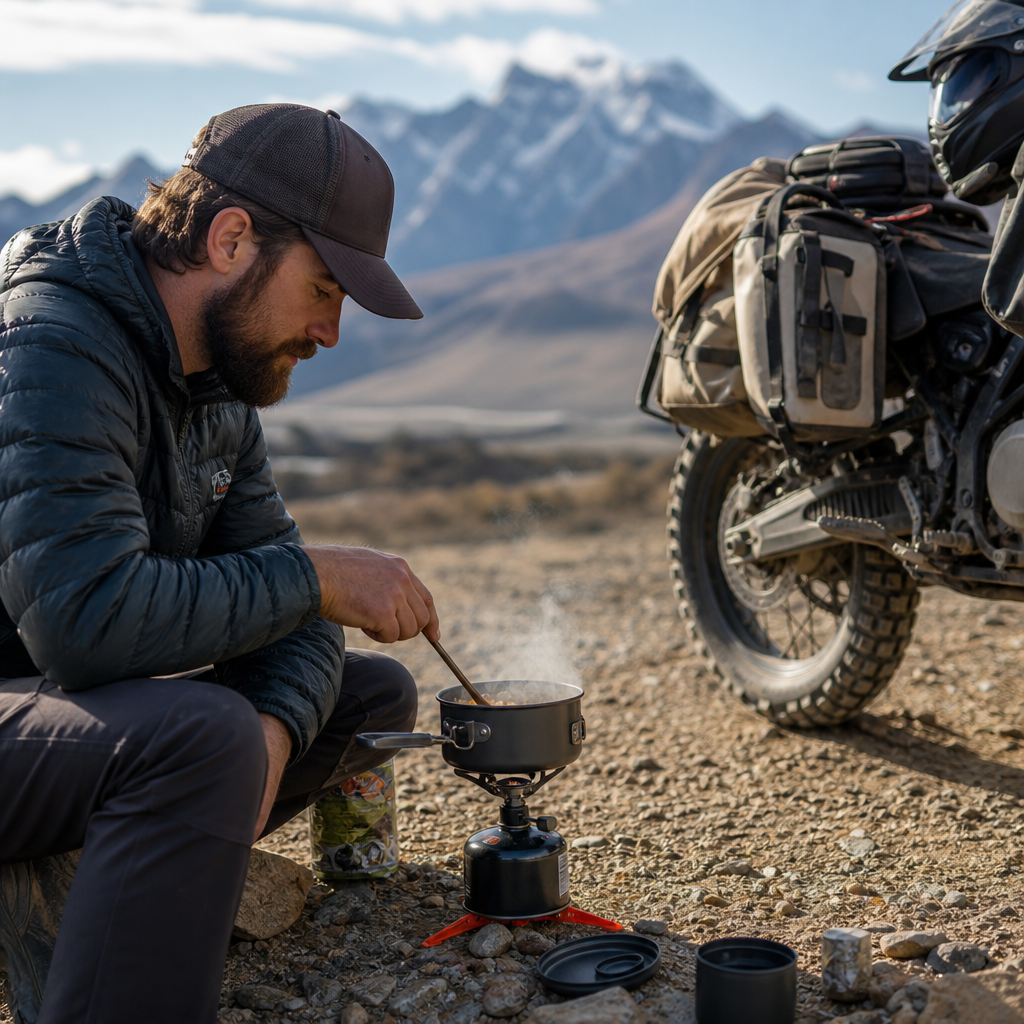
Cooking on the trail is one of the small routines that determines whether a long-distance ride feels sustainable or punishing. After years of bike tours, mixed-surface overnighters, and weeklong camp-based rides, I have learned that the best portable stoves for long-distance riders are not simply the lightest or the cheapest. They are the stoves that match how you travel, where you resupply, what weather you face, and how much real cooking you expect to do at the end of a hard day. For riders building a dependable touring and camping setup, the stove is a core system alongside shelter, sleep kit, water treatment, and luggage.
Portable camp stoves for bicycle touring generally fall into four categories: canister stoves, liquid fuel stoves, alcohol stoves, and integrated stove systems. A canister stove screws onto or connects to a pre-pressurized fuel canister, usually filled with isobutane-propane blends. A liquid fuel stove burns white gas, kerosene, or in some models unleaded gasoline from a refillable bottle. An alcohol stove uses denatured alcohol or similar spirits, while an integrated system combines burner, pot, wind protection, and heat exchanger into one optimized unit. Each type has strengths and limitations in packability, boil time, simmer control, fuel availability, cold-weather performance, and maintenance.
This matters because touring and camping are where comfort, efficiency, and self-sufficiency intersect. A poor stove choice can leave you searching for uncommon fuel in rural towns, struggling to boil water in wind, or carrying more weight than necessary. The right choice saves time at camp, cuts fuel waste, and expands your route options. This hub article covers the full touring and camping landscape for riders: how to choose a stove, which models stand out, how to compare them, what safety practices matter, and how your stove fits into a broader bikepacking or touring kitchen. If you are planning weekend escapes, cross-country road tours, rail-trail trips, or remote dirt expeditions, this guide gives you the practical foundation to build the rest of your camp system with confidence.
How to Choose a Portable Stove for Bicycle Touring and Camping
The first question is not which stove is best overall, but which stove is best for your style of riding. On credit-card tours with occasional campground stops, a compact canister stove is usually the best answer because it is simple, fast, and clean. On multiweek international tours or remote routes where outdoor stores are rare, liquid fuel stoves become more attractive because liquid fuel is easier to source globally. On ultralight overnighters where dinner is just dehydrated meals and coffee, a tiny burner or integrated stove may outperform bulkier systems. I have also seen many riders overbuy, carrying expedition stoves for mild summer routes where a 25-gram burner would have been enough.
Start with six criteria. First, fuel availability: can you buy canisters or stove fuel along your route, or will you depend on hardware stores, petrol stations, or pharmacies? Second, cooking style: are you only boiling water, or do you want real simmer control for rice, pasta sauces, oatmeal, and pan meals? Third, weather exposure: wind and cold drastically affect stove efficiency. Fourth, packability: a stove that fits inside one pot with lighter, sponge, and small fuel accessories makes camp setup easier. Fifth, stability: riders often cook on picnic tables, uneven dirt, roadside pullouts, or wet ground. Sixth, maintenance: field-serviceable stoves matter more the farther you travel from a gear shop.
Weight alone should not decide the purchase. In practice, stove system weight includes the burner, pot support, windshield if allowed, fuel container, repair kit, and the amount of fuel needed for your expected cooking pattern. A slightly heavier integrated system can be more efficient in wind, meaning lower fuel use over several days. Likewise, the lightest upright canister stoves can feel tippy with larger pots, which matters when you are cooking for two hungry riders. Good touring gear is measured by reliability per kilometer, not by marketing claims on a spec sheet.
The Best Portable Stoves for Long-Distance Riders by Stove Type
For most long-distance riders in North America and Europe, the sweet spot is still the canister stove. Models such as the MSR PocketRocket 2, Soto WindMaster, and Snow Peak GigaPower have earned loyal followings because they are compact, fast to deploy, and easy to use when energy is low after a long day. The Soto WindMaster stands out for superior burner design and wind resistance, while the PocketRocket 2 remains a benchmark for value and broad availability. If your touring and camping routine centers on boil-and-eat meals, tea, and morning coffee, this category gives the best balance of simplicity and performance.
Integrated canister systems go a step further. The Jetboil Flash, Jetboil MiniMo, and MSR WindBurner are especially strong choices for riders who prioritize fuel efficiency and sheltered burner performance. The MiniMo is notable because it offers better simmer control than many integrated systems, making it more useful for actual cooking rather than only boiling. I often recommend integrated setups to newer tourers because they reduce user error: pot and burner are designed to work together, the system packs neatly, and wind affects them less than bare-burner setups. Their downsides are cost, narrower pot compatibility, and sometimes awkwardness when cooking for more than one person.
Liquid fuel stoves still deserve serious attention. The MSR WhisperLite International and Primus OmniFuel are proven expedition-grade options for riders tackling remote routes, high elevations, or international tours where canister compatibility can become a headache. These stoves are louder, heavier, and more maintenance-intensive, but they run on widely available fuels and perform dependably in cold conditions. On a remote tour, I would choose a WhisperLite over a minimalist canister burner every time if fuel uncertainty was part of the route. The ability to refill a bottle at a small fuel stop can matter more than shaving 200 grams from your setup.
Alcohol stoves and ultralight systems occupy a narrower but still valid niche. Trangia remains the classic name here, and the complete Trangia cookset has an outstanding reputation for wind resistance and simple reliability. It is not the fastest system, and alcohol fuel can be inconsistent to source depending on country and labeling, but it rewards patient riders who value silence, simplicity, and decent real-cooking capability. DIY alcohol stoves are common in ultralight circles, yet for touring I prefer commercial systems because durability, pot support, and safety matter more than absolute gram counting.
| Stove type | Best for | Key strengths | Main limitations | Notable examples |
|---|---|---|---|---|
| Canister stove | Most riders, short to medium tours | Light, fast, easy to use | Fuel availability varies by region, weaker in cold | MSR PocketRocket 2, Soto WindMaster |
| Integrated system | Boil-focused riders, windy routes | Efficient, compact, sheltered burner | Higher cost, less flexible cookware | Jetboil MiniMo, MSR WindBurner |
| Liquid fuel stove | Remote or international touring | Fuel flexibility, cold-weather performance | Heavier, louder, needs maintenance | MSR WhisperLite International, Primus OmniFuel |
| Alcohol stove | Simple, patient camp cooking | Quiet, mechanically simple, good with windscreen systems | Slower, lower heat output, fuel sourcing varies | Trangia |
Fuel, Weather, and Route Planning: What Really Affects Stove Performance
Fuel logistics shape stove choice more than many riders expect. Isobutane-propane canisters are easy to find near outdoor towns, national parks, and larger cities, but much less predictable in small rural communities. Threaded canisters are common in many markets, yet not universal. Before a long trip, I map likely resupply points and identify outdoor retailers, farm stores, and hardware shops. On unsupported routes, that planning prevents bad decisions like carrying extra canisters “just in case,” which increases bulk and often negates the advantage of a lightweight stove.
Weather matters just as much. Upright canister stoves lose efficiency as temperatures drop because vapor pressure declines in the fuel canister. In real terms, that means slower boils and weaker flame output on cold mornings, especially when the canister is partly empty. Remote canister stoves with preheat tubes, as well as liquid fuel stoves, handle colder conditions better. Wind is the other major enemy. Even mild wind can double fuel use if your burner is exposed. Systems like the MSR WindBurner and Soto WindMaster are popular for a reason: wind resistance is not a luxury feature on open coastlines, high passes, or treeless campgrounds.
Altitude is less important than cold and wind, but it still changes cooking. Water boils at a lower temperature at elevation, so it may boil faster while food takes longer to hydrate or cook thoroughly. That matters for rice, pasta, and some freeze-dried meals. Riders crossing mountain ranges should carry a stove with stable output and enough fuel margin, especially if weather delays camp setup. I also advise a simple backup plan: cold-soak meals, bread and cheese, or ready-to-eat supermarket food. Touring and camping become easier when your dinner is not dependent on perfect stove conditions every night.
Building a Complete Touring and Camping Cook Kit Around Your Stove
The stove is only one part of a reliable trail kitchen. For solo riders, a 750 to 1000 milliliter pot is usually enough for boiling water and basic one-pot meals. Titanium pots save weight, but aluminum often distributes heat better for actual cooking and is usually cheaper. If you simmer often, bring a pot with a secure lid and stable handles. A long-handled spoon, small scrub pad, mini lighter, waterproof backup matches, and a compact knife complete the core kit. I also recommend a small mug only if it nests efficiently; otherwise, drink from the pot and save space.
For two riders, capacity and stability matter more than burner output alone. A 1.3 to 1.8 liter pot works well for shared pasta, soup, oatmeal, or freeze-dried meals split between bowls. Wider pots cook more evenly on canister stoves than tall, narrow mugs. If your stove has small pot supports, check compatibility before relying on a larger pot. This is where remote canister stoves and liquid fuel stoves often feel better in use. They sit lower, spread weight more securely, and inspire more confidence on uneven ground.
Storage on the bike should reflect frequency of use. I keep the stove, lighter, and mug-accessories bag near the top of a pannier or in a frame bag if there is room, because camp setup is smoother when kitchen items are easy to reach. Fuel should be isolated from food with strong odors and packed so valves or threads are protected. Never store a liquid fuel bottle where abrasion can wear through adjacent fabric. Riders using bikepacking bags rather than panniers should think about shape as much as volume; integrated systems often pack tidier into small handlebar or seat bag spaces than multi-part liquid fuel setups.
As the hub page for touring and camping, this topic also connects naturally to shelter choice, sleep system warmth, camp clothing, water filtration, food planning, and off-bike comfort. Stove decisions influence all of those. If you rely on boil-only meals, your food choices narrow but your kitchen gets lighter. If you want fresh cooking, your pot, fuel use, and cleanup routine all change. Building the best touring and camping setup means treating the stove as part of a whole camp workflow, not a standalone gadget.
Safety, Maintenance, and Common Mistakes Riders Should Avoid
Stove safety starts with location. Cook outside the tent, away from dry grass, and on a stable surface. Carbon monoxide risk in enclosed spaces is real, even with small stoves. I have seen riders try to cook inside vestibules during rain; if you must use a sheltered area, ventilation has to be excellent and the flame carefully monitored. Keep fuel canisters and bottles away from direct heat, and never use oversized windscreens around upright canister stoves because they can dangerously overheat the canister. Manufacturer instructions are not legal padding; they are operational limits.
Maintenance varies by stove type. Canister stoves need relatively little beyond keeping threads clean, protecting the burner head, and checking pot supports. Liquid fuel stoves require more discipline: periodic jet cleaning, pump cup lubrication, O-ring inspection, and testing before major trips. Riders who choose a WhisperLite or OmniFuel should practice priming and field cleaning at home first. The trail is a poor place to learn flare-up behavior. Alcohol stoves are mechanically simple, but spills can be hard to see because the flame may be nearly invisible in daylight, so careful fueling and a clear cooking area are essential.
The most common mistakes are predictable. Riders buy a stove without checking fuel availability on their route. They assume manufacturer boil times reflect windy real-world conditions. They choose unstable ultralight burners, then cook in oversized pots. They bring one tiny canister for a week because online calculators suggested it might work. They skip a lighter backup. The fix is straightforward: match the stove to the route, test the full kitchen at home, and estimate fuel conservatively based on actual meals. A reliable camp kitchen reduces stress, speeds recovery, and makes long-distance riding more enjoyable.
Choosing the Right Stove for Your Next Long Ride
The best portable stoves for long-distance riders are the ones that support the way you actually tour and camp. For most riders, a quality canister stove such as the Soto WindMaster or MSR PocketRocket 2 offers the best mix of low weight, ease, and everyday usefulness. If you want maximum efficiency in exposed conditions, an integrated system like the Jetboil MiniMo or MSR WindBurner is hard to beat. If your route is remote, cold, or internationally complex, liquid fuel stoves such as the MSR WhisperLite International and Primus OmniFuel remain the most dependable tools. If you prefer simplicity and patient camp cooking, Trangia still has a legitimate place.
The broader lesson is that touring and camping work best when every gear choice is tied to route realities. Fuel access, cooking style, weather, storage, and group size matter more than hype or trend. A stove should make camp easier, not more complicated. Once you have the right stove, the rest of your bike touring kitchen becomes easier to plan, from cookware and food strategy to packing and daily routine. Use this hub as your foundation for building a complete open-road camp system, then apply it to your next weekend loop, rail-trail tour, or cross-country ride. Choose a stove, test it before departure, and give yourself the gift of a hot meal wherever the road ends.
Frequently Asked Questions
What type of portable stove is best for long-distance riders?
The best portable stove for long-distance riders depends less on brand loyalty and more on the kind of trips you actually do. For many riders, a compact canister stove is the most practical all-around choice because it is light, fast to set up, easy to use after a tiring day, and widely available in outdoor towns and popular touring regions. If your main goal is boiling water for coffee, dehydrated meals, oats, soup, or simple pasta, a canister stove is usually the easiest and most efficient option. It suits riders who value convenience, quick stops, and low fuss at camp.
That said, not every tour is built around easy resupply and fair weather. Liquid fuel stoves make more sense for remote routes, international trips with uncertain fuel availability, and colder conditions where canister performance may drop. They are often heavier and require more maintenance, but they reward riders who need reliability over long distances and across varied terrain. Alcohol and ultralight systems can also work for minimalists, but they are usually better for riders who accept slower cooking times and have a very simple meal routine.
In practice, the best stove is the one that fits your food habits, your weather, and your resupply pattern. A rider doing fast overnighters with freeze-dried meals needs something very different from someone crossing rural areas for weeks and cooking rice, lentils, and vegetables nightly. Choosing a stove based on real use rather than marketing claims usually leads to better comfort, less wasted space, and a more sustainable touring routine.
Should I choose a canister stove or a liquid fuel stove for bike touring?
This is one of the most important decisions for touring riders because it affects fuel access, packing, cooking speed, and reliability. Canister stoves are the simplest option for most riders. They ignite quickly, burn cleanly, require little maintenance, and are ideal for straightforward camp cooking. If your route passes through outdoor retailers, larger towns, or popular bikepacking corridors, fuel canisters are often easy to find. They are especially appealing for riders who want to stop, boil water, eat, and sleep without dealing with priming, cleaning jets, or troubleshooting in the dark.
Liquid fuel stoves become more attractive when your route is longer, more remote, or less predictable. White gas, petrol, or multi-fuel compatibility can be a major advantage in regions where threaded canisters are scarce or unavailable. They also tend to perform better in cold weather and at higher elevations, which matters if your riding includes alpine camps, shoulder-season trips, or exposed high-country routes. For riders who cook regularly and need stable performance over many days, the extra complexity can be worth it.
The tradeoff is that liquid fuel stoves usually ask more of you. They can be louder, heavier, and messier, and they often require priming and occasional maintenance. For many long-distance riders, the decision comes down to predictability. If fuel availability is consistent, a canister stove is usually the more user-friendly choice. If you are crossing isolated areas, riding internationally, or depending on local fuel sources, a liquid fuel stove often offers more security and flexibility.
How important are weight and pack size when choosing a stove for long rides?
Weight and pack size matter, but they should not be treated as the only criteria. On long-distance rides, every item has to justify its place, and a stove that is compact and easy to pack can make camp life smoother. Small stoves fit more easily into frame bags, fork bags, or panniers, and lighter systems reduce the cumulative burden on the bike, especially over hilly terrain or rough surfaces. Riders focused on speed, minimalism, or technical routes often prioritize a stove that disappears into their kit and adds very little bulk.
However, chasing the absolute lightest setup can backfire if it forces compromises in stability, boil time, fuel efficiency, or cooking versatility. A tiny burner may look ideal on paper but feel frustrating when balancing a pot in wind, trying to simmer anything, or preparing food after a long wet day. In real touring conditions, a stove that is slightly heavier but more stable, more fuel-efficient, and easier to use can be the smarter choice. A few extra grams often matter less than not wasting fuel or struggling through dinner every evening.
It helps to think in terms of system weight, not just stove weight. The stove, fuel type, pot, windscreen, and expected trip length all affect what you actually carry. A very light stove paired with inefficient fuel use may not be lighter over the course of a week. For long-distance riders, the right balance is usually a stove that packs neatly, works reliably in the environments you ride through, and supports the kind of meals that keep you riding well day after day.
What features matter most in a portable stove for cooking real meals on the trail?
If you plan to do more than boil water, stove features become much more important. Simmer control is one of the biggest differences between a basic fast-boil stove and a more cooking-friendly setup. Riders who want to make rice, eggs, oats, noodles with vegetables, or one-pot meals need a stove with steady flame adjustment rather than an all-or-nothing burner. Good pot support also matters because narrow or unstable supports can make actual cooking stressful, especially on uneven campsites.
Wind performance is another major factor. A stove that works beautifully in calm conditions can become inefficient and frustrating in exposed terrain. Long-distance riders often camp in fields, mountain passes, gravel pullouts, or coastal areas where wind is part of normal life. Efficient burner design, compatibility with windscreens where appropriate, and dependable flame control help you cook faster and conserve fuel. Ignition systems can be convenient, but many experienced riders still carry a lighter because built-in igniters eventually fail.
Durability, ease of maintenance, and fuel efficiency also separate a good touring stove from a merely compact one. If you ride often, you want a stove that can handle repeated packing, damp mornings, dirty camps, and occasional neglect without becoming unreliable. For riders who cook regularly, these practical details matter more than flashy specs. A stove that supports real meals, handles imperfect conditions, and keeps fuel use predictable will contribute far more to comfort and recovery than one chosen only for minimum weight.
How do I choose a stove based on my route, weather, and resupply options?
The smartest way to choose a stove is to start with your route rather than the gear shelf. Ask where you will be able to buy fuel, what temperatures you are likely to face, how often you will camp, and whether you are cooking simple or substantial meals. If you are riding through populated areas with regular access to outdoor stores and mild weather, a compact canister stove is usually the most efficient and least complicated solution. It works especially well for riders whose meal plan centers on boiling water quickly and getting calories in with minimal hassle.
If your trip includes remote stretches, uncertain town services, cold mornings, or high elevations, you should think more seriously about a liquid fuel stove or a system known for stronger all-weather reliability. International touring makes this even more important because fuel canister compatibility varies by region, while liquid fuel can often be sourced more flexibly. Riders crossing mixed terrain for many days may also prefer a stove with better stability and broader cookware compatibility, especially if they intend to cook proper meals instead of relying on instant food.
It is also worth matching the stove to your riding style. Fast and light riders may accept a basic setup because they cook less and prioritize space savings. Slower, self-supported tourists often benefit from a more capable cooking system because camp meals become a bigger part of daily recovery and morale. In the end, the right stove is the one that fits your actual conditions and habits, not an abstract idea of what touring gear is supposed to look like. Good stove choices come from honest planning, and that usually leads to better meals, fewer fuel problems, and a far more enjoyable ride.