The 2026 Wyoming BDR is shaping up to be one of the most demanding backcountry motorcycle routes in the American West, not because it is the tallest, muddiest, or most technical every day, but because roughly 1,000 miles of remote basins, high plains, mountain passes, and energy-country two-track force riders to master a simple truth: distance and isolation punish weak preparation. In practical terms, this route sits at the intersection of adventure riding, logistics planning, field repair discipline, and western weather awareness.
For riders new to this corner of the sport, an ADV bike is an adventure motorcycle built to cover pavement, gravel, dirt, and primitive roads, while a BDR is a Backcountry Discovery Route, a mapped, mostly off-pavement journey designed for self-supported travel across a state or region. Wyoming adds another layer. “The Big Empty” is not just a nickname. It describes long fuel gaps, thin services, strong crosswinds, fast temperature swings, and stretches where a minor mechanical issue can become a trip-ending problem. I have ridden and supported multi-day western backcountry trips in conditions like these, and Wyoming consistently exposes shortcuts in setup faster than many better-known mountain routes.
This matters in 2026 and 2027 because modern BDR travel is changing. Navigation increasingly blends GPX tracks, offline mapping apps, satellite communication, and ride-specific updates pushed close to the season. Motorcycle electronics are better, but they also create new failure points. Popular middleweight bikes now carry more power, more rider aids, and often less tolerance for poor battery health or impact-damaged sensors. Meanwhile, route stewardship, wildfire closures, snowpack variability, and private land access require riders to check official updates repeatedly, not once at home and never again. A successful Wyoming BDR ride now depends as much on technical prep and information management as on throttle control or endurance.
What makes the 2026 Wyoming BDR different from other western routes
The Wyoming BDR will likely be compared with Colorado, Idaho, and the southern desert routes, but that comparison can mislead first-timers. Wyoming’s challenge is not nonstop extreme terrain. It is cumulative exposure. A rider can feel comfortable for hours on wide county roads, then suddenly face deep washboard, baby-head rocks on a climb, silty corners, livestock traffic, storm ruts, and gusts strong enough to move a loaded bike across a lane. That mix encourages overconfidence, and overconfidence is expensive in remote country.
Elevation remains a factor, especially in mountain sections where afternoon storms can turn a manageable pass into a traction problem. Yet the lower, open country is where many riders burn energy and fuel unexpectedly. Speeds rise, distances blur, and riders discover too late that hydration, chain lubrication, tire pressures, and navigation checks were treated casually. The safest assumption is that every day includes at least one variable that invalidates your morning plan.
For 2026, expect route notes, alternates, and seasonal warnings to matter more than the headline map. Agencies may impose temporary closures for fire activity, washouts, range operations, or wildlife habitat protection. The practical update for 2027 planning is this: build a route process, not just a route file. Download primary GPX tracks, verified alternates, county basemaps, and offline topo layers on two devices. Carry a paper state map even if you rarely unfold it. In Wyoming, redundancy is not nostalgia. It is risk control.
Motorcycle setup that actually survives Wyoming
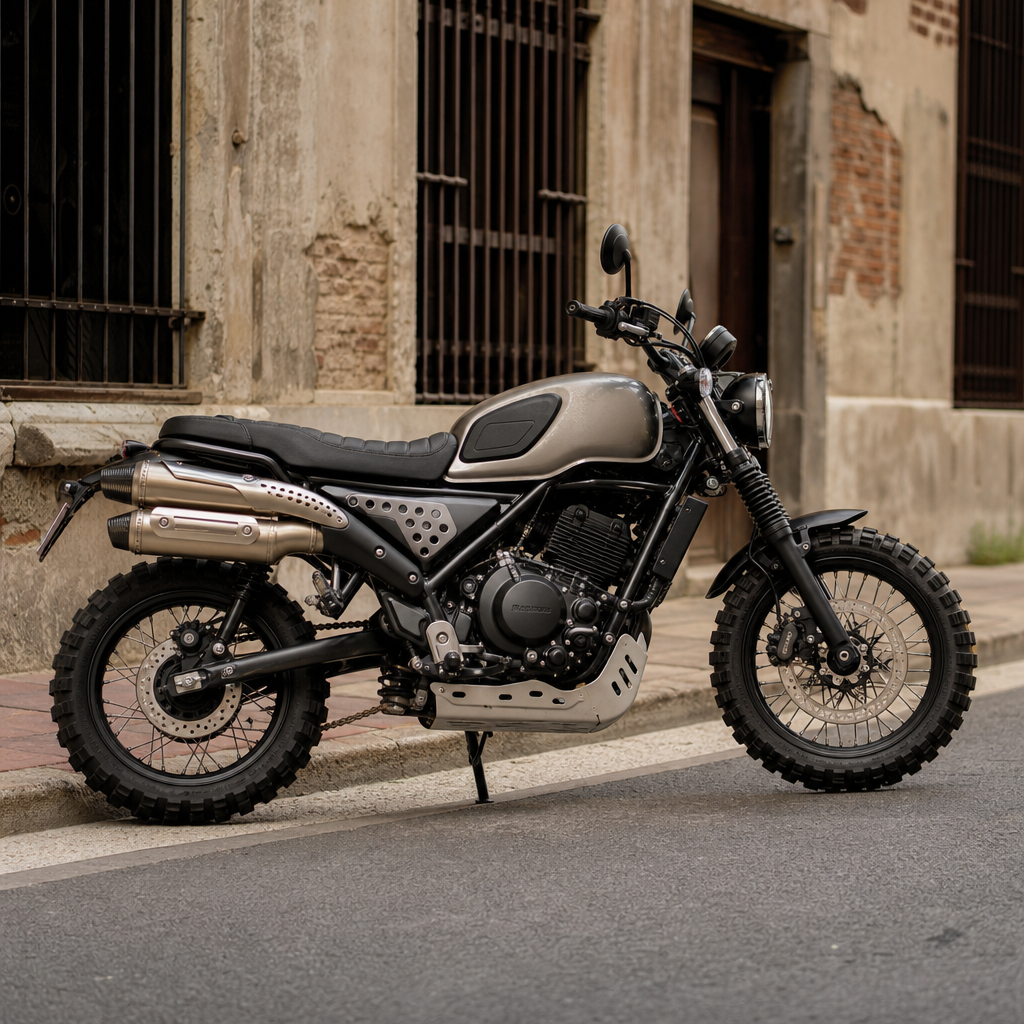
The best Wyoming BDR motorcycle setup balances range, protection, repairability, and rider manageability. Bigger is not automatically better. A fully loaded 1200cc machine can cover distance comfortably, but if the rider cannot pick it up repeatedly in sand, mud, or an off-camber cattle guard approach, the setup is wrong. In my experience, the sweet spot is often a well-protected middleweight in the 450 to 900 class with honest wind protection, stout handguards, skid plate coverage that protects the sump and linkage, and luggage that keeps mass low and narrow.
Suspension matters more here than accessory catalogs suggest. Riders commonly spend thousands on lights and luggage while ignoring sag, spring rates, and damping. Wyoming punishes that mistake with headshake on washboard, bottoming on rain-cut ledges, and rider fatigue from repeated chassis deflection. Set laden sag correctly, service fork oil and shock before the trip if intervals are due, and test the bike at full travel weight. A BDR should not be the first shakedown ride after installation.
Tires are the most argued component for western ADV travel, but the answer is straightforward: choose aggressive 50/50 or 60/40 patterns with carcass strength suited to rock impacts and long gravel miles. This is not the place for a mostly street-biased rear unless conditions are exceptionally dry and your pace is conservative. Tubeless riders should carry plugs, insertion tools, a pump, valve cores, and a sidewall contingency such as a boot. Tube-type riders need front and rear tubes, irons, lubricant, and practice. Field tire work at altitude in wind is slow even when you know what you are doing.
| Prep Area | Minimum Standard | Why It Matters in Wyoming |
|---|---|---|
| Fuel range | 200-mile real-world range | Headwinds, detours, and deep surfaces increase consumption |
| Tires | Aggressive dual-sport tread with 70% life | Sharp rock, loose climbs, and fast gravel punish worn rubber |
| Protection | Skid plate, handguards, radiator protection | Tip-overs and rock strikes are common far from help |
| Navigation | Primary and backup offline devices | Cell coverage is unreliable across large sections |
| Tools | Bike-specific repair kit tested at home | Generic kits often miss axle, Torx, or chain tools |
| Communication | Satellite messenger with SOS and tracking | Remote travel requires independent emergency capability |
Fuel, water, and luggage strategy for “The Big Empty”
If one decision defines whether riders enjoy or merely endure the Wyoming BDR, it is resource planning. Start with fuel. Manufacturer range claims are irrelevant. Calculate your bike’s loaded consumption in wind, on gravel, at elevation, and with repeated acceleration out of corners. Then add reserve. A bike that usually returns 50 mpg may drop sharply in sand, cold weather, or a sustained headwind. For that reason, I recommend planning around a conservative real-world figure and carrying auxiliary fuel if your dependable range is below 200 miles.
Water planning should be equally disciplined. In dry western air, riders often underestimate dehydration because sweat evaporates quickly. Begin hydrated, use an insulated hydration pack, and carry additional reserve beyond your daily drink volume. Water is not only for drinking. It supports first aid, chain cleanup in a pinch, cooking if you camp, and basic comfort when weather turns hot. Electrolytes matter because repeated hours of vibration, altitude, sun, and concentration produce cumulative fatigue that feels like poor riding skill when it is really poor hydration management.
Luggage should support daily access, crash survivability, and balanced handling. Soft luggage has become the standard recommendation because it reduces injury risk and generally tolerates falls better than metal boxes. Pack by frequency of use: navigation, snacks, layers, and first aid up high or in tank storage; tools, spares, and camp gear lower and centered. Every pound hung too far aft lightens the front wheel and worsens control in gravel. If you need proof, ride a washboard descent with six liters strapped behind the rear axle. The bike will explain the problem immediately.
Navigation, communications, and the 2026 to 2027 update cycle
Navigation on a modern BDR is no longer just about following a purple line. Riders need a layered system: official track files, offline map applications such as Gaia GPS or onX Offroad, a dedicated GPS unit or ruggedized phone, and a charging setup that does not cut out on corrugations. I strongly prefer route files loaded to two independent devices because phones overheat, mounts fail, and USB connectors vibrate loose. Hardwire power where possible, and test it on rough roads before departure.
Communication planning starts with the assumption that cellular service will disappear. A satellite communicator such as a Garmin inReach, ZOLEO, or SPOT gives riders emergency SOS capability and basic check-in messaging. Among these, two-way messaging is the more useful standard for group coordination and changing pickup plans. Share your itinerary, expected check-in windows, and escalation thresholds with someone who will act if you miss them. “No news means we are having fun” is not a rescue plan.
The update cycle for 2026 and 2027 deserves special attention. Route conditions can shift after spring runoff, severe thunderstorms, wildfire restrictions, or county maintenance. Snow drifts linger in shaded higher sections long after surrounding areas look clear. Before departure, verify BDR organization notices, federal and state land-management bulletins, local forest or district advisories, and weather trends from the National Weather Service. During the ride, check for same-day reports in gateway towns if locals mention washouts or active fires. In the West, current information is a safety tool, not a convenience.
Mechanical prep, spares, and field repairs that prevent trip failure
Most Wyoming BDR mechanical failures are predictable. Batteries that were “probably fine,” chains already near the end of adjustment, wheel bearings with slight play, bent brake levers, loose luggage racks, and neglected air filters become real problems after days of dust, vibration, and impact. The pre-trip service list should include fresh oil if due within the trip window, brake pad inspection, rotor and spoke checks, chain and sprocket assessment, wheel bearing inspection, coolant and hose review, fastener torque verification, and a clean or new air filter.
Carry spares based on your bike’s known weaknesses, not internet folklore. Common smart choices include fuses, a master link, spare levers, clutch cable if external, front tube even for some tubeless setups as a worst-case fallback, valve cores, bolts for luggage and bodywork, and JB Weld or metal epoxy for case damage. If your machine uses specialized tools for wheel removal, pack them and confirm they fit with your chosen tires and axles. I have seen well-prepared riders stranded by a missing 27-millimeter axle tool more than once.
Field repair competence matters as much as the kit. Practice removing both wheels, fixing a puncture, reinstalling the chain guide if knocked loose, adjusting controls after a tip-over, and bypassing a failed accessory circuit. Electrical diagnosis should stay simple: know how to isolate accessories, check battery terminals, inspect fuses, and identify pinched wiring near steering heads. If your bike relies heavily on ride-by-wire and traction electronics, understand how disabling or changing modes affects off-pavement control. Electronics help, but they do not replace mechanical readiness.
Rider skill, weather timing, and group management
Skill preparation for the Wyoming BDR should focus on the basics that matter late in the day: standing posture, vision through loose corners, clutch-throttle balance on climbs, braking on marbles, and energy management. Riders often train for obstacles and ignore the fatigue of ten straight hours making small corrections in wind and washboard. Build endurance before the trip with loaded practice rides, not just local loops on an unladen bike.
Weather timing is strategic. Wyoming mornings can be cold enough for heated gear, while afternoons may bring convective storms, hail, or lightning on exposed roads. Start earlier than you think you need to, especially if a pass or storm-sensitive section sits ahead. Mud changes the equation quickly, particularly on clay-based roads that pack into tires and fenders. Sometimes the fastest way through is to stop in a town, wait three hours, and let the road recover. Good judgment saves more time than aggressive riding.
Group management should be deliberate. Keep groups small enough to move efficiently, agree on fuel stops and rendezvous rules, and use staggered visual checkbacks so nobody silently disappears at an unmarked intersection. Match pace to the least experienced rider in the technical sections and to the shortest fuel range across the day. Ego destroys cohesion. The Wyoming BDR rewards calm systems, clear roles, and honest communication about fatigue, fear, and mechanical concerns.
The main lesson for surviving 1,000 miles of Wyoming’s “Big Empty” is that success comes from disciplined preparation, not heroic improvisation. Choose a manageable bike, set suspension for load, fit protective equipment that solves real failure points, and build a fuel and water margin that assumes wind, detours, and slow surfaces. Use redundant navigation, carry satellite communication, and monitor seasonal route changes right up to departure.
Just as important, treat mechanical prep and rider readiness as equal priorities. A fresh chain, healthy battery, and practiced puncture repair matter as much as line choice on a rocky climb. So do hydration, weather timing, and group protocols that keep everyone accounted for across long empty miles. Wyoming is rideable, spectacular, and deeply rewarding, but it is unforgiving of vague plans.
If this article is your starting point for ADV and BDR technical prep in 2026 and 2027, use it as your hub checklist. Audit your motorcycle, refine your luggage and repair kit, confirm your navigation stack, and track official route updates before you roll west. Preparation is what turns the Big Empty from a hazard into the reason you wanted to go.
Frequently Asked Questions
How difficult is the 2026 Wyoming BDR compared with other Backcountry Discovery Routes?
The 2026 Wyoming BDR is likely to challenge riders less with nonstop extreme obstacles and more with the cumulative stress of remoteness, mileage, weather exposure, and self-sufficiency. That distinction matters. Many riders judge difficulty by the number of rock gardens, deep sand washes, water crossings, or tight single-track style sections. Wyoming can certainly deliver rough two-track, loose climbs, ruts, washboard, mud, and variable surfaces at elevation, but the route’s real difficulty comes from how far you may be from help when something goes wrong. A minor mechanical issue, a navigation mistake, a late fuel stop, or underestimating weather can become a major problem when services are spread far apart and cell coverage disappears for long stretches.
In that sense, this route can feel harder than more obviously technical BDRs because it tests the full skill set of adventure travel rather than just riding technique. Riders need endurance, fuel planning discipline, navigation confidence, good risk management, and the ability to make field repairs under pressure. Long days in the saddle across high plains, basin country, mountain passes, and industrial energy-road networks can also be mentally draining because the terrain may seem manageable until fatigue, wind, heat, cold, or isolation start stacking up. If you can ride a loaded adventure bike competently off pavement, manage your pace, and stay ahead of logistics, the Wyoming BDR should be achievable. If you rely on frequent resupply, easy bailouts, or a support network always within reach, it may feel much tougher than the map suggests.
What kind of motorcycle setup works best for surviving 1,000 remote miles in Wyoming?
The ideal setup is not the biggest bike with the most accessories, but the motorcycle you can confidently ride, pick up, repair, and manage for multiple long days in changing conditions. Wyoming’s mix of fast gravel, rocky sections, two-track, occasional mud, and elevation changes rewards a stable, well-maintained adventure or dual-sport motorcycle with practical protection and realistic luggage. A midweight machine is often the sweet spot because it balances range, durability, and easier handling when the route deteriorates. Larger ADV bikes can absolutely complete the route, but they magnify fatigue and make recovery from mistakes more costly, especially when fully loaded.
Tires are one of the most important setup choices. Riders should prioritize aggressive, off-road-biased tires with strong puncture resistance over smoother, pavement-oriented options. Wyoming’s sharp rock, embedded debris, and rougher access roads can punish weak tire choices quickly. Suspension should be tuned for your actual loaded weight, not just your body weight, because poor sag and underdamped handling become more noticeable as the miles add up. Protective hardware like a skid plate, hand guards, radiator protection, and sturdy luggage mounting can prevent a small impact from ending the trip. Fuel range is equally critical. Even if your planned stops look close enough on paper, wind, detours, reroutes, or missed fuel opportunities can shrink your margins fast, so carrying extra fuel is often the smarter move.
Just as important, keep your packing disciplined. The farther and emptier the country gets, the more tempting it is to bring everything, but overloaded bikes are harder to ride and more likely to break parts or wear out riders. Carry tools that match your actual motorcycle, a reliable inflation and tire repair system, spare tubes if applicable, and the key consumables or small parts your bike is most likely to need. In Wyoming, a smart setup is one that supports self-reliance without turning the bike into an overloaded liability.
How should riders plan fuel, water, food, and daily mileage on the Wyoming BDR?
This route should be approached like a logistics exercise as much as a ride. Riders who succeed tend to plan conservatively and assume that at least one part of the day will not go according to plan. Fuel strategy starts with knowing your real-world off-pavement range, not the optimistic number you get from easy highway cruising. Deep gravel, strong headwinds, climbing, heavy luggage, and lower-speed technical sections all affect consumption. Before the trip, identify every confirmed fuel opportunity, note backup options, and build in reserve capacity so a closed station or a route change does not force an emergency decision. If your bike has marginal range for western BDR travel, carry auxiliary fuel and treat it as standard equipment rather than an optional luxury.
Water deserves the same seriousness. Wyoming’s wide-open country can be deceptively harsh because dry air, wind, sun exposure, and altitude increase dehydration even when temperatures do not seem extreme. Riders should start hydrated, carry more water than they think they will need, and avoid assuming natural water sources will be accessible, clean, or conveniently located. Food planning matters too, especially on long segments between towns. High-calorie, compact snacks that can be eaten during short stops help maintain energy and concentration, which is important because fatigue leads to navigation errors and poor decisions before it leads to dramatic crashes.
For daily mileage, resist the urge to chase aggressive numbers based on ideal conditions. A route through “The Big Empty” can look fast on a map but still consume hours with gates, photo stops, weather delays, unexpected road damage, reroutes, or simply the slower pace that comes with caution in remote terrain. Build your day around available fuel, weather windows, and bailout points. It is far better to finish a shorter day with reserves than to press into a long, exposed section late in the afternoon, low on fuel and energy, hoping everything works out. Wyoming rewards riders who leave themselves margin.
What repair tools, spare parts, and emergency gear are most important on a remote route like this?
On the Wyoming BDR, emergency gear is not a checklist item for peace of mind; it is part of the route strategy. The most important tools are the ones that let you fix the failures most likely to stop your specific bike: flats, loose controls, broken levers, chain issues, electrical problems, and vibration-related hardware loss. At minimum, most riders should carry a complete tire repair kit suited to their wheel type, a pump or inflator they have tested in advance, tire irons if needed, the correct axle and adjustment tools, spare tubes where appropriate, and a patch solution that actually works in field conditions. Beyond tires, bring the wrenches, bits, sockets, and pliers required for common trail-side tasks on your own machine, plus zip ties, safety wire, tape, spare fuses, and a compact multimeter or test light if you know how to use one.
Spare parts should reflect your bike’s known weak points. That might mean a clutch or brake lever, master link, shifter tip solution, fasteners, a fuel-line repair item, or a way to bypass or secure a damaged accessory. Riders often overpack generic gadgets and underpack the small bike-specific pieces that can save a trip. Navigation backup also belongs in your emergency system. Do not rely on one phone and one charging cable. Carry offline maps, route files on more than one device if possible, and a charging method that is secure over washboard and vibration.
For personal safety, a satellite communicator is one of the smartest items you can carry in country this remote. It gives you options when there is no service, whether you need to update family, coordinate a non-emergency extraction, or trigger SOS in a true emergency. Add a first-aid kit you know how to use, a layer system for sudden cold or storms, basic shelter capability in case an overnight stop becomes unplanned, and enough food and water reserve to endure delays. The goal is not to prepare for apocalypse. It is to avoid having a minor delay turn into a survival problem because the nearest help is a very long way away.
What is the best strategy for handling Wyoming weather, remoteness, and changing road conditions safely?
The best strategy is to treat every day as a risk-management exercise, not just a riding day. Wyoming can shift quickly from calm and scenic to punishing through wind, lightning, cold rain, early or lingering snow at elevation, heat in lower basins, or roads transformed by recent storms. Conditions that seem easy in the morning can become greasy, deeply rutted, or impassable after weather moves through, especially on clay-based roads and lesser-maintained energy-sector tracks. Riders should monitor forecasts before and during the trip, but they also need to remember that forecasts are only broad guidance in a state with big distances and changing elevations. The sky, the ground, and your available exit options matter just as much as the weather app.
Safe riding on this route starts with pacing. Remote miles tempt people to make up time, especially on fast gravel, but crashes often happen where confidence outruns visibility or surface reading. Ride within sight distance, keep enough energy in reserve to handle surprises late in the day, and be willing to stop early when conditions deteriorate. If rain threatens to turn a section into a traction problem, consider rerouting sooner rather than later. The farther you push into deteriorating conditions, the fewer good options you usually have. Group riders should establish clear spacing, communication habits, and decision rules before entering long empty sections so that fuel, pace, and stop points do not become chaotic.
Finally, respect the psychological side of remoteness. Wyoming’s