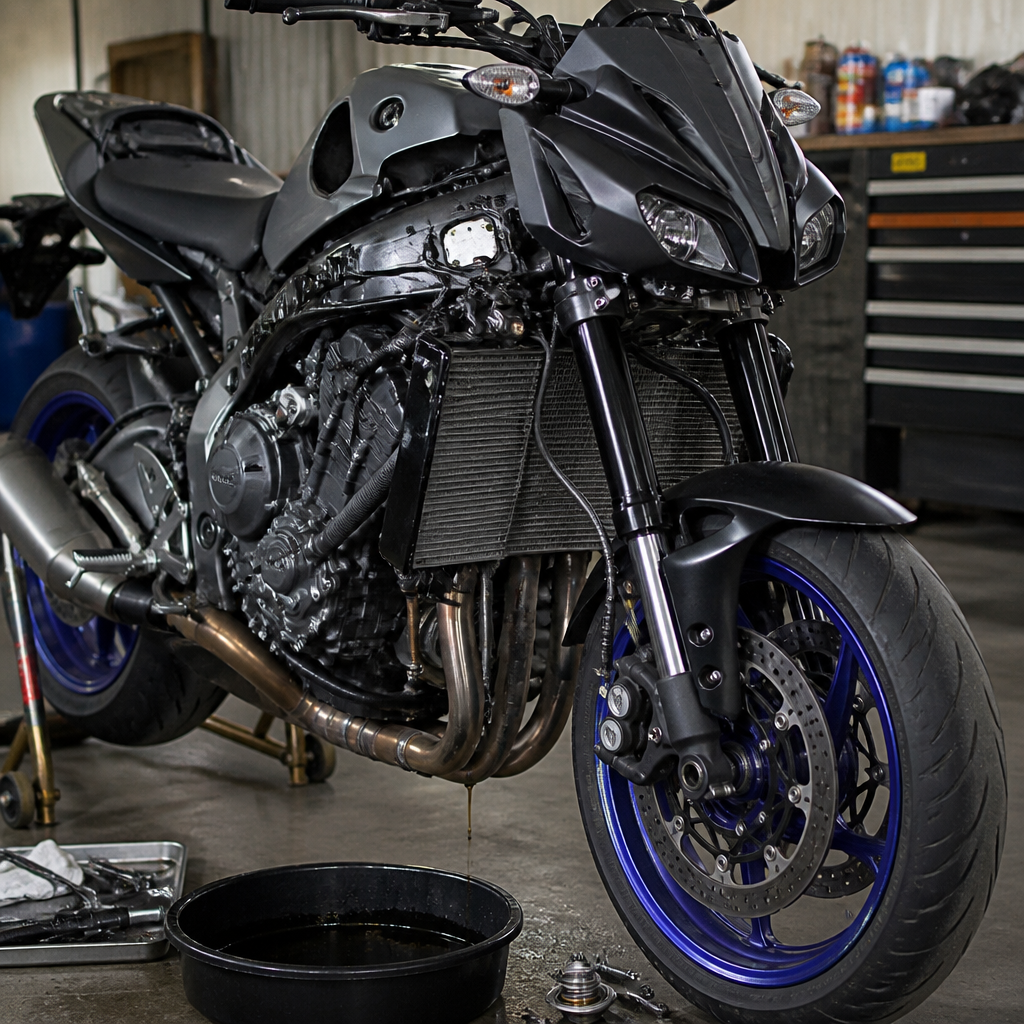
The Yamaha MT-10 is a brutally capable naked bike, but its 998cc crossplane inline-four also brings a maintenance reality every owner should understand: heat management is not optional. Yamaha MT-10 maintenance starts with cooling-system discipline, yet this model also sits inside a broader metric-motorcycle service world shaped by JIS fasteners, modern transmission technologies such as DCT, and the small specification differences that catch even experienced home mechanics. If you want reliable performance, stable operating temperatures, and fewer stripped screws or misapplied parts, you need a maintenance approach that connects all three areas rather than treating them as separate trivia.
In workshop terms, the MT-10’s cooling issues usually refer to high perceived heat at low speed, frequent fan cycling in traffic, and the way a high-output engine can magnify small weaknesses in coolant condition, radiator cleanliness, cap sealing, or airflow. The crossplane four is the same engine family known from the YZF-R1, retuned for street torque, and it naturally produces substantial thermal load. That does not mean the bike is defective. It means the cooling system must be serviced precisely, and owners must distinguish normal operating heat from warning signs such as coolant loss, boiling, overflow contamination, trapped air, or fan-control faults.
This matters beyond one motorcycle because metric-bike maintenance has its own rules. Japanese Industrial Standard screw profiles differ from common Phillips assumptions. Torque values are overwhelmingly metric, but thread pitch, hose sizing, and model-specific packaging create quirks that punish guesswork. Dual-clutch transmission service, while not applicable to the MT-10 itself, is part of the same maintenance literacy owners need when working across modern Japanese platforms. I have seen more preventable damage from using the wrong driver on a reservoir screw or universal coolant advice than from any exotic engine failure. Master the standards, and the bike becomes easier to own, diagnose, and preserve.
Understanding MT-10 cooling behavior and what is actually normal
The first question most owners ask is simple: does the Yamaha MT-10 run hot? The accurate answer is yes, in the sense that it generates a lot of heat and often feels hot to the rider, especially around the legs and seat in urban traffic. That sensation alone is not evidence of a fault. High-compression liter engines, compact radiator packaging, emissions-driven lean areas in road use, and a tightly wrapped exhaust layout all increase localized heat. On the MT-10, once road speed rises and airflow improves, temperatures generally stabilize. In stop-and-go conditions, the fan may cycle often, and the rider may feel significant radiant heat.
What should concern you is not heat by itself, but patterns. Repeated coolant smell after shutdown, unexplained reservoir drop, crusted residue near the cap or hose joints, fans that do not engage, or temperature behavior that worsens over time usually indicates maintenance is overdue or a component is failing. I treat baseline observation as part of regular service: note where the gauge typically sits in free-flow traffic, how quickly the fan comes on during idling, and whether both the radiator and overflow bottle remain clean and properly filled. That baseline makes later diagnosis far faster.
Plainly stated, the MT-10 cooling system depends on coolant quality, proper pressure retention, unobstructed airflow, accurate sensor input, and complete circulation through the water pump, radiator, thermostat, and hoses. If one element degrades, the whole system loses margin. Because this engine runs hot by design, reduced margin becomes noticeable quickly.
Core cooling maintenance for the crossplane four
The most effective MT-10 maintenance routine starts with scheduled cooling-system inspection, not reactive repair. Replace coolant at sensible intervals using a silicate-free, aluminum-safe motorcycle coolant that meets the manufacturer’s chemistry requirements. Old coolant loses corrosion inhibitors and can allow deposits that reduce heat transfer. I also inspect the radiator fins from the front and rear with a light; bent fins, road grime, bugs, and trapped debris measurably reduce efficiency. Clean gently with low-pressure water from the back side outward, and never flatten fins with aggressive brushing.
The radiator cap deserves more respect than it gets. System pressure raises boiling point, so a weak spring or damaged seal can create overheating symptoms without any dramatic leak. The overflow tank should be checked only when cold and filled to specification, not guessed at. Hoses should feel firm but not brittle, and clamps should show no staining. On any bike that has recently had coolant changed, I watch for trapped air. Air pockets can delay thermostat opening behavior, confuse temperature readings, and push coolant into the expansion tank unpredictably.
Fan operation is another key checkpoint. Confirm the fan spins freely with the ignition off and cuts in consistently when the bike reaches operating temperature. If it does not, diagnosis usually moves through the fuse, relay, fan motor, connector condition, and the temperature-sensing strategy used by the ECU. On modern Yamahas, electrical faults often hide in connectors exposed to heat and moisture, so visual inspection alone is not enough; look for green corrosion, heat discoloration, or looseness at terminals.
| Component | What to Check | Common MT-10 Symptom | Practical Fix |
|---|---|---|---|
| Coolant | Age, level, contamination, correct type | Rising temps, rusty residue, inconsistent cooling | Flush and refill with manufacturer-approved coolant |
| Radiator | Blocked fins, bent core, external debris | Runs hotter in traffic and warm weather | Clean fins carefully and inspect for damage |
| Radiator cap | Seal condition and spring pressure | Coolant smell, overflow changes, early boiling | Replace cap with correct pressure rating |
| Fan circuit | Fuse, relay, motor, connector integrity | Temperature climbs at idle without fan response | Test circuit and repair failed component |
| Thermostat and pump | Flow behavior, leaks, temperature consistency | Sudden swings or persistent overheating | Inspect and replace if flow is restricted |
Why JIS fasteners matter on Japanese motorcycle maintenance
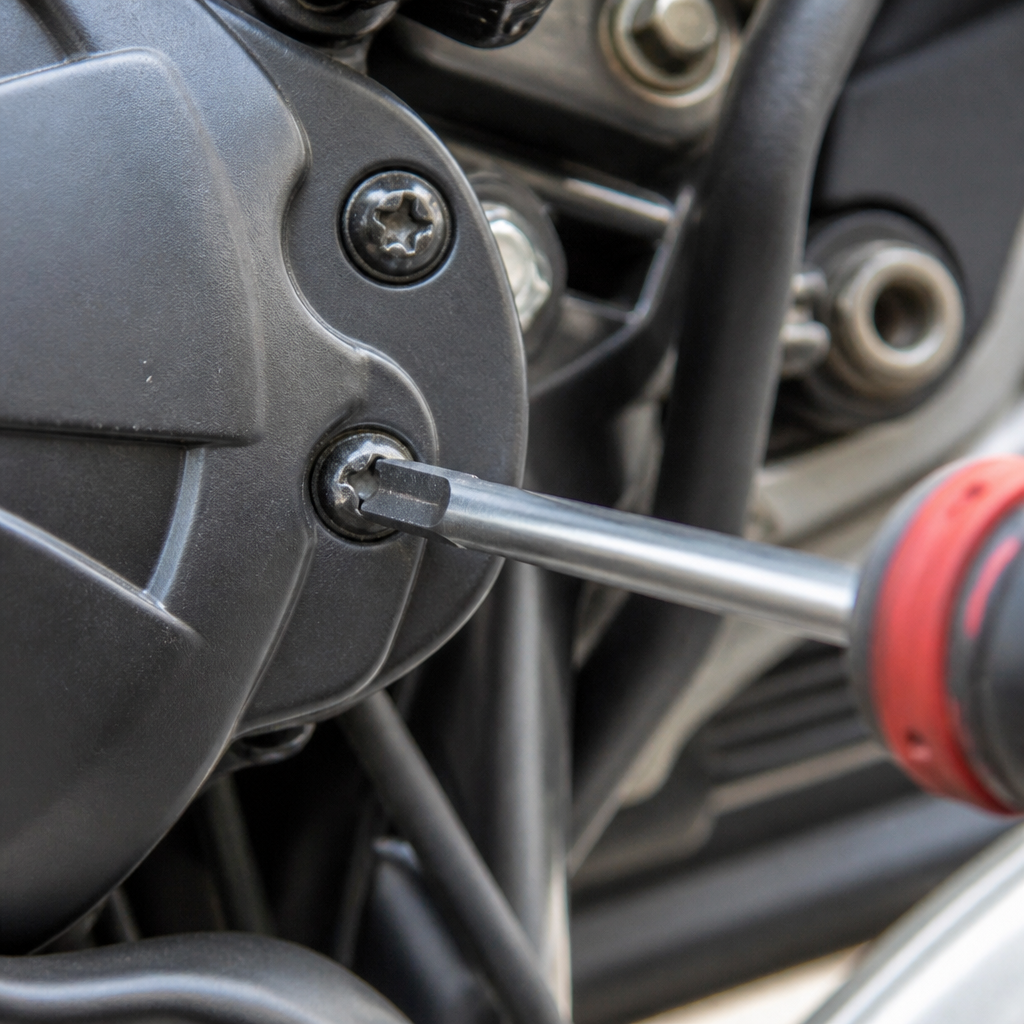
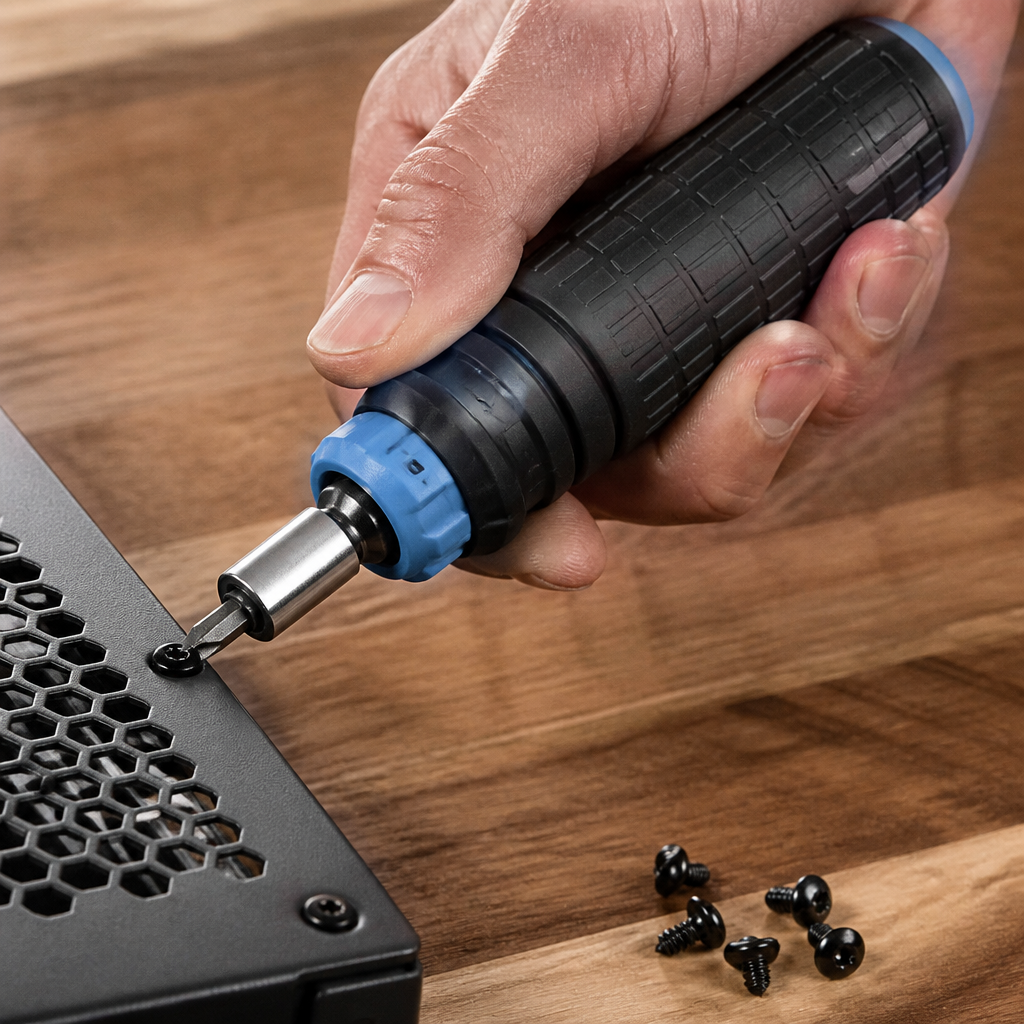
One of the most important metric quirks for any Japanese motorcycle owner is the JIS screw standard. Many riders believe they are dealing with Phillips screws because the heads look familiar. They are usually wrong. Traditional Japanese motorcycles use JIS crosshead screws in places like switchgear, reservoirs, carburetor hardware on older models, and body fittings. A Phillips driver cams out by design under high torque; a proper JIS driver seats deeper and transmits force more cleanly. On coolant service, that matters when you remove delicate reservoir screws or fairing hardware around the radiator.
I have repaired countless stripped crossheads caused by a household screwdriver set. Vessel, Hozan, and Engineer are trusted Japanese tool brands for this reason. If you work on metric bikes regularly, a JIS-compatible bit set is not optional workshop luxury; it is basic damage prevention. Even where newer fasteners have shifted toward hex socket or Torx, legacy JIS assumptions remain relevant across Japanese maintenance culture. Owners who learn this early avoid drilling, extractor work, and replacement hardware mismatches.
There is also a broader lesson here: standards are part of maintenance competence. Knowing thread pitch, drive profile, and torque unit is just as important as knowing fluid volume. Mechanical problems often begin as tool-selection problems.
DCT maintenance and why this hub includes it
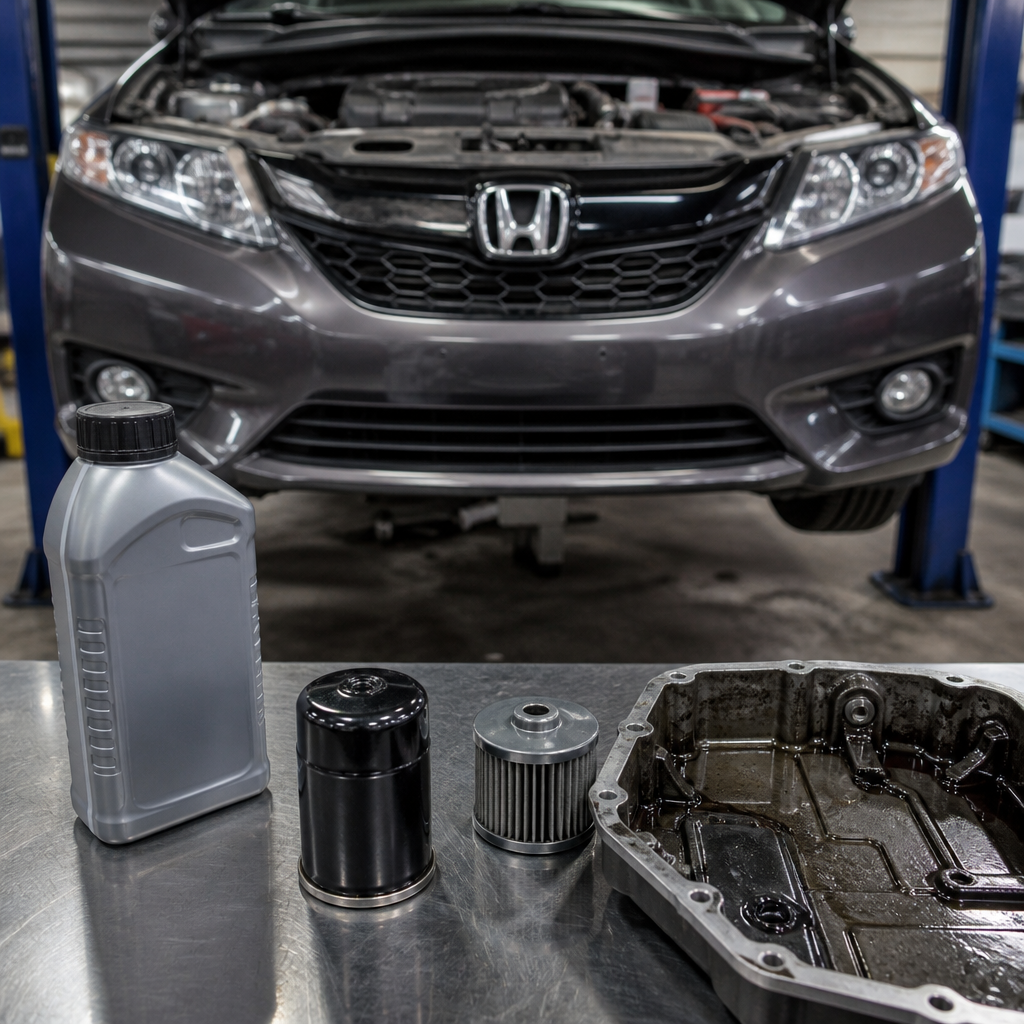
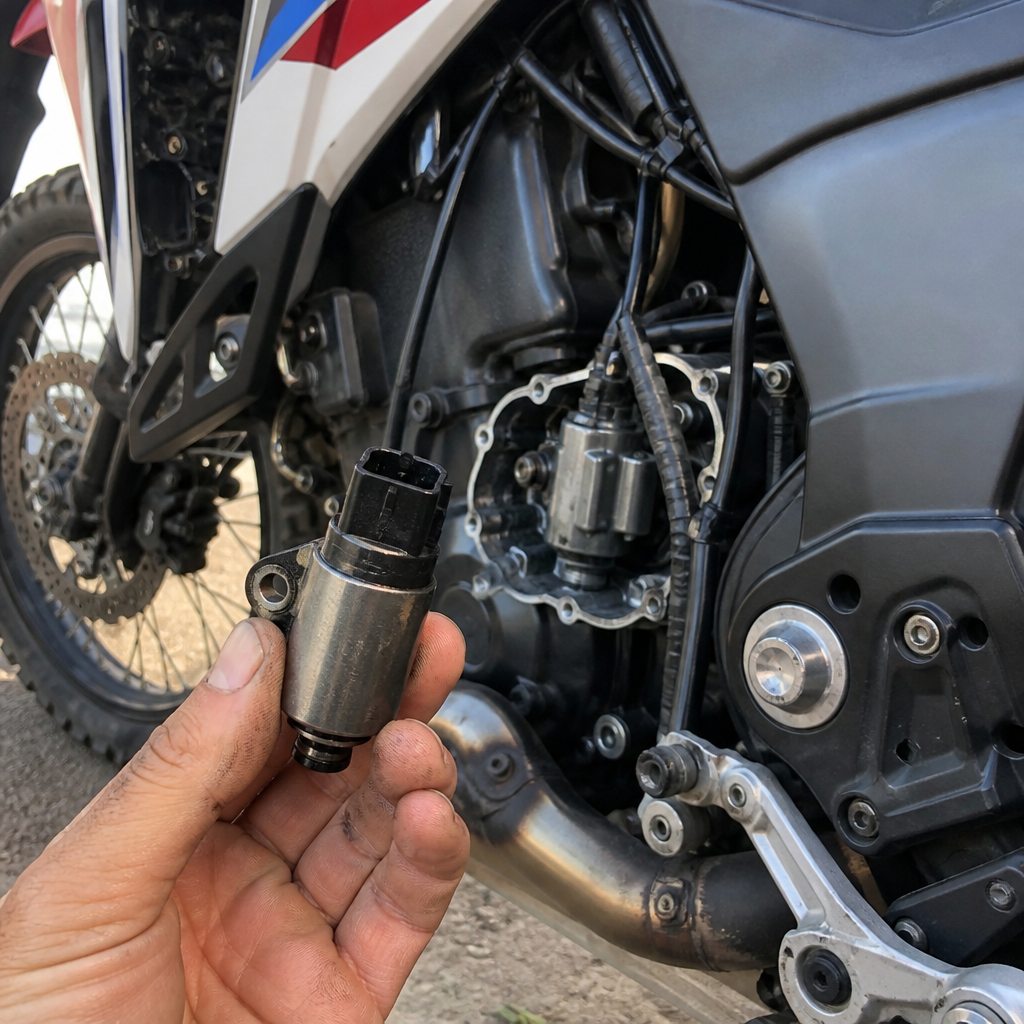
The MT-10 does not use a dual-clutch transmission, but this hub covers DCT maintenance because owners of metric motorcycles often cross-shop brands, maintain multiple bikes, or apply habits from one platform to another. Honda’s DCT system, used on models such as the Africa Twin, Gold Wing, Rebel 1100, and NC750X, changes the service conversation in ways worth understanding. DCT units require precise oil selection, disciplined change intervals, clean screens or filters where applicable, and attention to clutch adaptation behavior. They are reliable when serviced correctly, but they punish lazy fluid practices.
The useful comparison is this: on the MT-10, heat management centers on the cooling circuit and engine operating environment. On a DCT-equipped machine, thermal and hydraulic stability also affect shift quality, clutch control, and driveline smoothness. I have seen owners use generic automotive oil of the correct viscosity and still create poor shifting because wet-clutch friction requirements were ignored. Manufacturer specifications and JASO standards matter.
Including DCT in a metric maintenance hub also reinforces a mindset. Modern Japanese motorcycles are increasingly software-mediated and tolerance-sensitive. Whether you are bleeding an MT-10 cooling system or resetting adaptation after DCT service, accuracy beats improvisation. Service information, proper scan access where needed, and exact fluids are now standard parts of competent ownership.
Metric quirks that trip up even experienced home mechanics
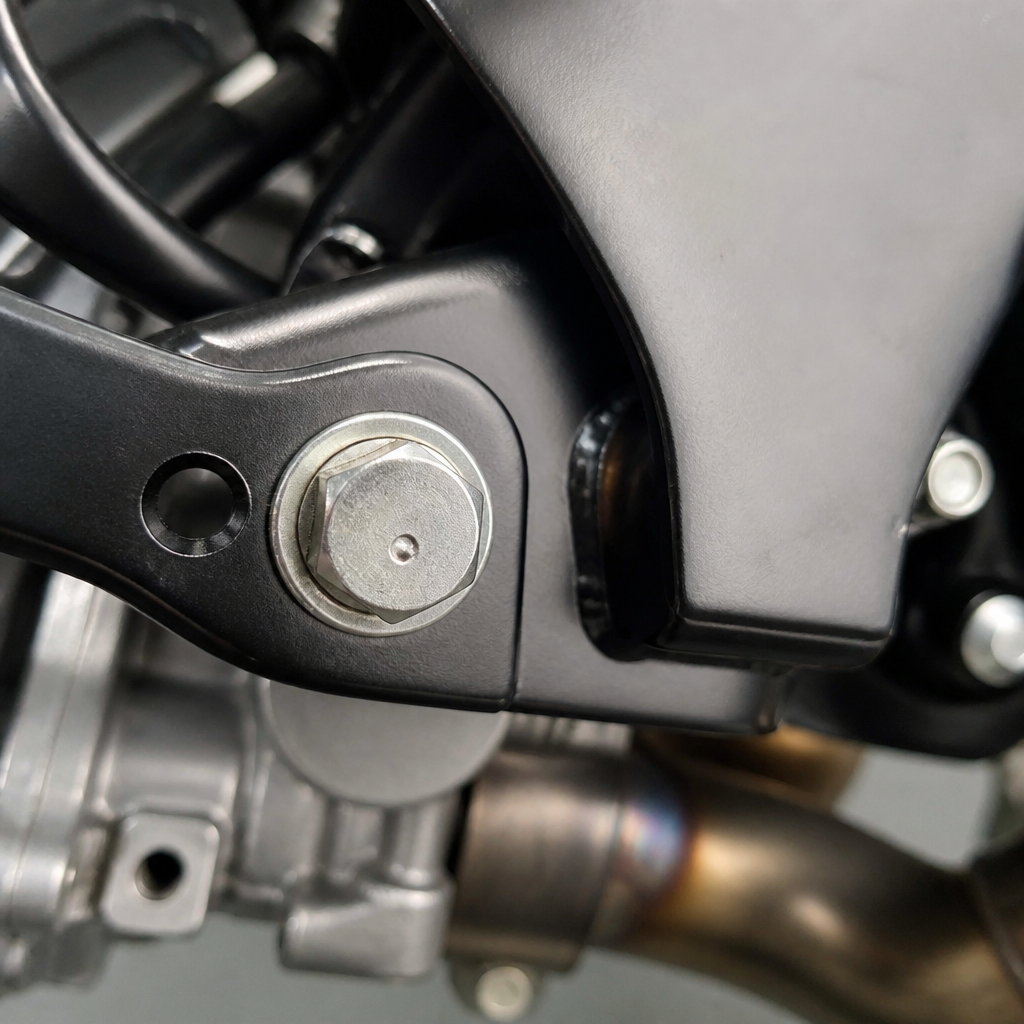
Metric motorcycle work sounds straightforward until the details pile up. Thread pitch is the classic example. Two M6 bolts can share diameter yet differ in pitch, shoulder length, flange design, and tensile grade. Replacing a lost fastener from a generic hardware bin can distort a plastic panel, bottom in an aluminum case, or provide inadequate clamp load on a bracket near the radiator. Japanese OEM fasteners are often selected for packaging and vibration resistance, not simply size.
Torque interpretation is another common failure point. Many service manuals list torque in newton-meters, and conversion mistakes remain frequent. Over-tightening small fasteners in aluminum housings is endemic, especially around coolant drains, thermostat housings, and cover bolts. A quality 1/4-inch torque wrench for low values is more useful on motorcycles than many owners realize. So is learning when torque specs assume clean, dry threads versus threadlocker or oil.
Fluid standards create additional quirks. Brake fluid ratings are not interchangeable with clutch fluid assumptions on every model. Coolant chemistry matters because mixed-metal systems can react badly to the wrong additive package. Even hose clamps vary: spring clamps maintain tension through heat cycles better than cheap worm-drive replacements in some applications. The practical rule is simple: if a Japanese motorcycle engineer chose a specific fastener style, clamp type, or fluid requirement, assume there was a reason and verify before substituting.
Building a reliable maintenance plan for the MT-10 and beyond
A strong maintenance plan for the Yamaha MT-10 combines routine checks, scheduled fluid service, and platform-specific tool discipline. Start with a monthly cold inspection: coolant level, radiator fin condition, visible hose health, water-pump area cleanliness, and fan unobstructedness. At service intervals, inspect the cap, refresh coolant according to time as well as mileage, and verify there is no hidden seepage under the tank or behind side covers. If the bike sees heavy commuting in hot weather, inspect more often. Urban heat cycling is harder on cooling components than weekend highway miles.
Next, build your toolkit around metric reality. Keep JIS drivers or bits, metric sockets in 6-point patterns, a low-range torque wrench, hose-clamp pliers, and a service manual with model-specific procedures. For owners managing several bikes, create a maintenance log that records coolant brand, fill date, torque notes, replacement part numbers, and any abnormal temperature event. That record becomes invaluable when a symptom returns a year later and you need to know whether the cap, thermostat, or fan relay has already been addressed.
The larger benefit of this approach is confidence. The MT-10’s crossplane four will always produce heat, but with proper cooling maintenance it remains stable, predictable, and durable. The same discipline protects you from common metric-bike mistakes, whether that means preserving JIS fasteners, selecting the right coolant chemistry, or understanding why DCT service demands exact fluids and procedures. Treat maintenance as a system of standards, not a collection of random tasks. Review your manual, upgrade the few tools that matter most, and inspect the cooling system before the next hot-weather ride.
Frequently Asked Questions
Why does the Yamaha MT-10 run so hot, and when should heat become a maintenance concern?
The MT-10 naturally produces a lot of heat because it uses Yamaha’s 998cc crossplane inline-four, an engine derived from a high-performance platform and tuned for strong real-world torque. In stop-and-go traffic, warm climates, or low-speed urban riding, that heat has less airflow available to carry it away, so owners often feel significant warmth around the legs and fuel tank area. That does not automatically mean something is wrong. High operating temperatures, frequent fan cycling, and noticeable radiant heat can all be normal traits on a liter-class naked bike with minimal bodywork to direct hot air away from the rider.
Heat becomes a maintenance issue when the motorcycle starts behaving differently from its normal pattern. Warning signs include coolant loss, a sweet smell after shutdown, visible seepage around hoses or the water pump area, fans that do not switch on when the bike is hot, unusually rapid temperature spikes, repeated overheating in conditions the bike previously handled, or residue around the radiator cap and overflow tank. Another red flag is a bike that runs hot at speed, not just in traffic, because that can point to restricted coolant flow, trapped air, thermostat problems, a weakened radiator cap, or blocked radiator fins. In short, the MT-10 is supposed to feel warm, but it should still control that heat predictably. Good Yamaha MT-10 maintenance means learning what is normal for your bike, then reacting quickly when the pattern changes.
What is the best way to inspect and maintain the MT-10 cooling system before overheating starts?
The best approach is routine, methodical inspection rather than waiting for a warning light. Start with the basics: check coolant level in the overflow reservoir when the bike is cold, inspect the radiator core for bent fins or debris, look over all visible hoses for swelling, hardening, cracks, or damp spots, and examine clamps for signs of seepage. On a motorcycle like the MT-10, even a small loss of coolant can reduce the system’s margin for handling traffic, summer heat, or aggressive riding, so catching minor issues early matters.
Next, pay attention to service intervals and coolant age. Coolant is not just colored liquid that prevents freezing. It also controls corrosion, lubricates the water pump, and supports stable heat transfer. Old coolant can lose protective properties and contribute to scale, deposits, and internal inefficiency. When replacing it, use the correct specification recommended for the motorcycle and bleed the system carefully, because trapped air pockets can mimic more serious problems by causing irregular temperatures and poor circulation.
It is also wise to inspect the radiator cap and fan operation. A weak cap can lower the boiling point of the system and push coolant into the overflow bottle prematurely. Likewise, if the fan motor, relay, connector, or temperature switch is not functioning correctly, the bike may be perfectly fine on the highway but struggle badly in traffic. Since the MT-10 lives in the broader world of modern metric-motorcycle maintenance, use the proper tools and avoid damaging JIS-style fasteners when removing covers or access panels. Small hardware mistakes can turn simple cooling checks into stripped-screw repairs, and experienced home mechanics know that preserving fasteners is part of doing the job right.
How often should coolant be changed on a Yamaha MT-10, and what should owners watch for during a coolant service?
Owners should always follow the factory maintenance schedule first, because model year and coolant type can influence intervals. As a general rule, coolant should be changed at the recommended time rather than waiting for obvious trouble, since degraded coolant often causes problems gradually. If the bike sees hard use, extreme heat, frequent commuting in traffic, or long periods of storage, being extra attentive makes sense. Cooling-system health is preventive maintenance, not just repair work.
During a coolant service, cleanliness and correct procedure matter as much as the fluid itself. Drain the old coolant thoroughly, inspect what comes out, and pay attention to contamination, discoloration, rust tint, oily residue, or debris. Those details can reveal corrosion, neglected service history, or unrelated mechanical concerns that deserve closer inspection. Refill with the correct premixed or properly diluted coolant type specified for aluminum motorcycle engines, and avoid mixing incompatible chemistries unless the manufacturer explicitly allows it.
The refill and bleeding process is where many home mechanics create problems unintentionally. Air trapped in the system can lead to erratic temperature readings, poor heater-core-style circulation through narrow passages, and overheating at idle. After refilling, run the engine through a proper heat cycle, verify fan operation, recheck levels after cooldown, and inspect for seepage. If bodywork or components must be removed, be careful with Japanese-spec fasteners and use correctly fitting drivers. The MT-10 is not unusually difficult to service, but like many metric motorcycles, it rewards precision. A rushed coolant change can create the exact overheating concern the service was meant to prevent.
What common parts fail or cause cooling-related problems on the MT-10?
The most common trouble points are usually not dramatic engine failures but smaller components that gradually reduce cooling-system effectiveness. Radiator fins can become clogged with road grime, bugs, or debris, cutting airflow. Hoses can age and lose elasticity. Clamps can relax slightly over time. The radiator cap can weaken and fail to maintain proper pressure. Thermostats can stick partially open or closed, creating either slow warm-up or overheating. Fan motors, relays, and electrical connectors can also become suspect, especially if the bike spends time in wet conditions or sees a lot of heat cycling.
The water pump deserves attention as well. If the pump seal begins to fail, you may see traces of coolant near the housing or weep area. That does not always mean catastrophic failure is imminent, but it does mean the bike needs inspection before a small leak becomes a larger cooling issue. The overflow tank and its connecting hose should also be checked, because a system that cannot properly recover coolant during heating and cooling cycles may appear inconsistent in level and temperature behavior.
Less obvious causes include air trapped after previous service, aftermarket accessories that obstruct airflow, damaged wiring to the fan circuit, and neglected external cleaning of the radiator. On some motorcycles, owners chase overheating by replacing major parts when the real issue is simple: a blocked core, low coolant, or a cap that no longer holds pressure. The MT-10’s engine is robust, but the cooling system depends on every small component doing its job. That is why disciplined inspection beats guesswork every time.
Can a home mechanic handle MT-10 cooling-system maintenance, or is this a job better left to a professional?
A competent home mechanic can absolutely handle many MT-10 cooling-system tasks, including visual inspections, coolant-level checks, radiator cleaning, hose inspection, coolant replacement, and basic fan-operation verification. The key is using the correct service information, the right tools, and a patient approach. This matters even more on modern metric motorcycles, where small differences in fastener design, panel removal order, torque specs, and bleeding procedures can make a routine job either straightforward or frustrating. If you are familiar with proper JIS tool fitment, careful fastener handling, and methodical reassembly, this is well within the reach of a skilled owner.
Where owners get into trouble is assuming all bikes service the same way. They do not. The broader motorcycle world now includes model-specific electronics, tightly packaged components, and even transmission layouts such as DCT on other platforms that change service access and procedures. The MT-10 does not use DCT, but that broader point still matters: never rely on generic advice when a model-specific process exists. For this bike, accurate coolant bleeding, proper torque, and correct coolant specification are what separate successful maintenance from recurring temperature problems.
A professional is the better choice if the motorcycle has repeated overheating, unexplained coolant loss, evidence of contamination, suspected thermostat or water-pump failure, electrical fan issues that require circuit diagnosis, or signs that combustion gases may be entering the cooling system. In those cases, proper testing saves time and prevents expensive guesswork. A good rule is simple: routine maintenance is very DIY-friendly, but recurring heat problems deserve professional-level diagnosis before they turn into engine damage. On an MT-10, managing heat is not optional, and taking the cooling system seriously is one of the smartest things an owner can do for long-term reliability.