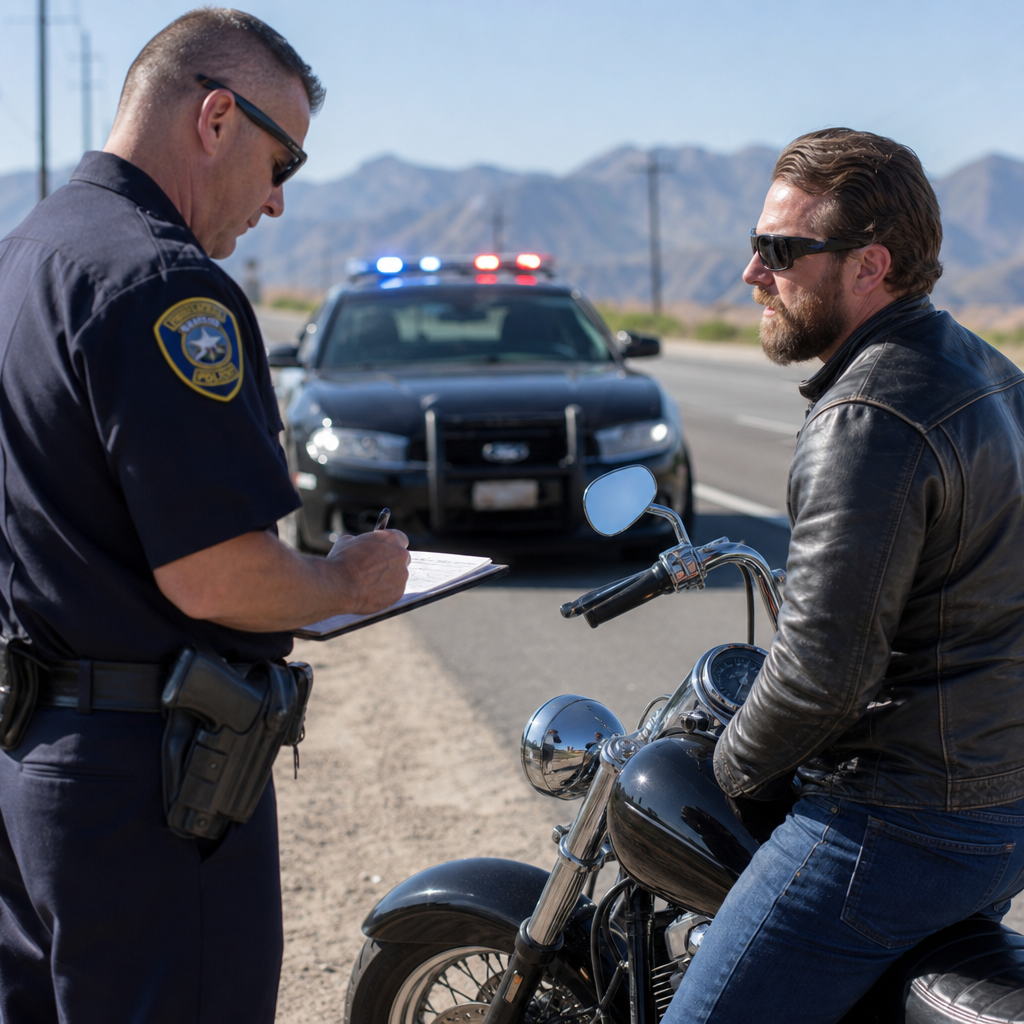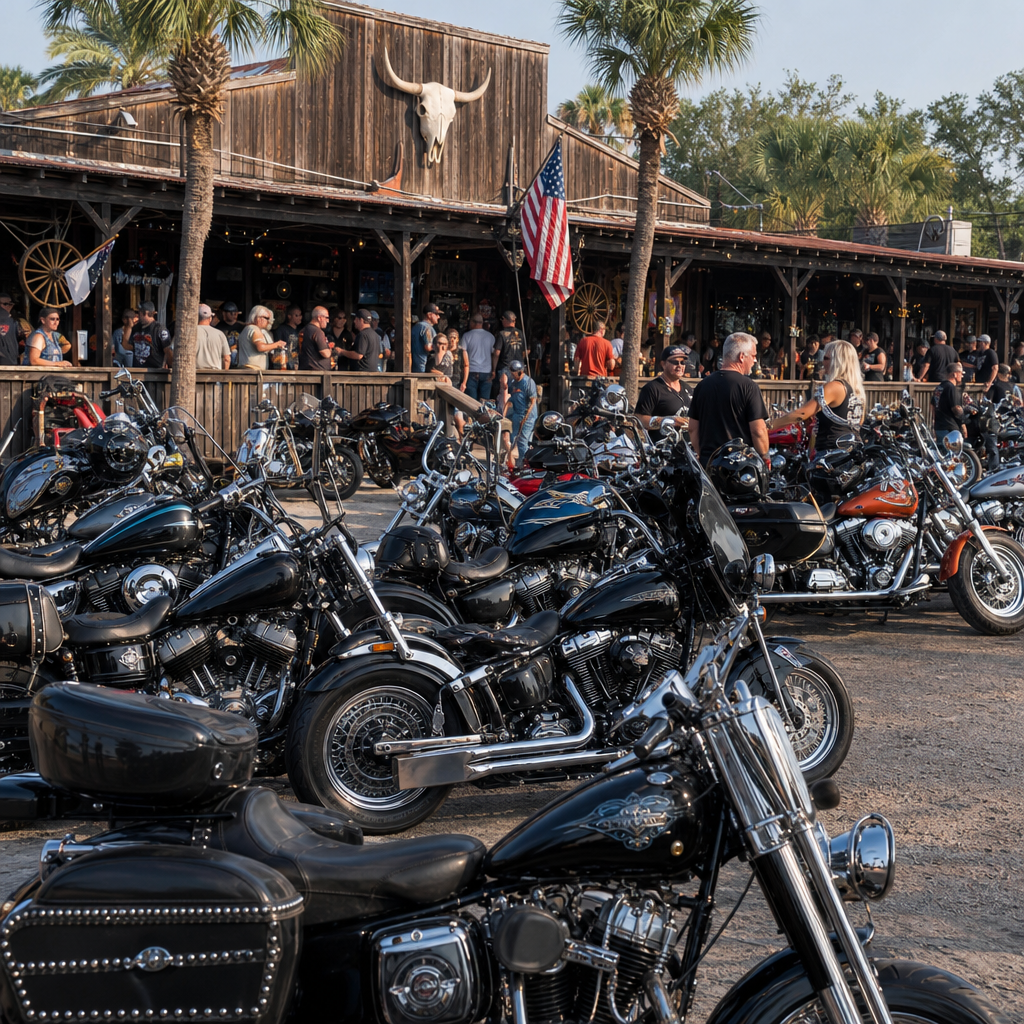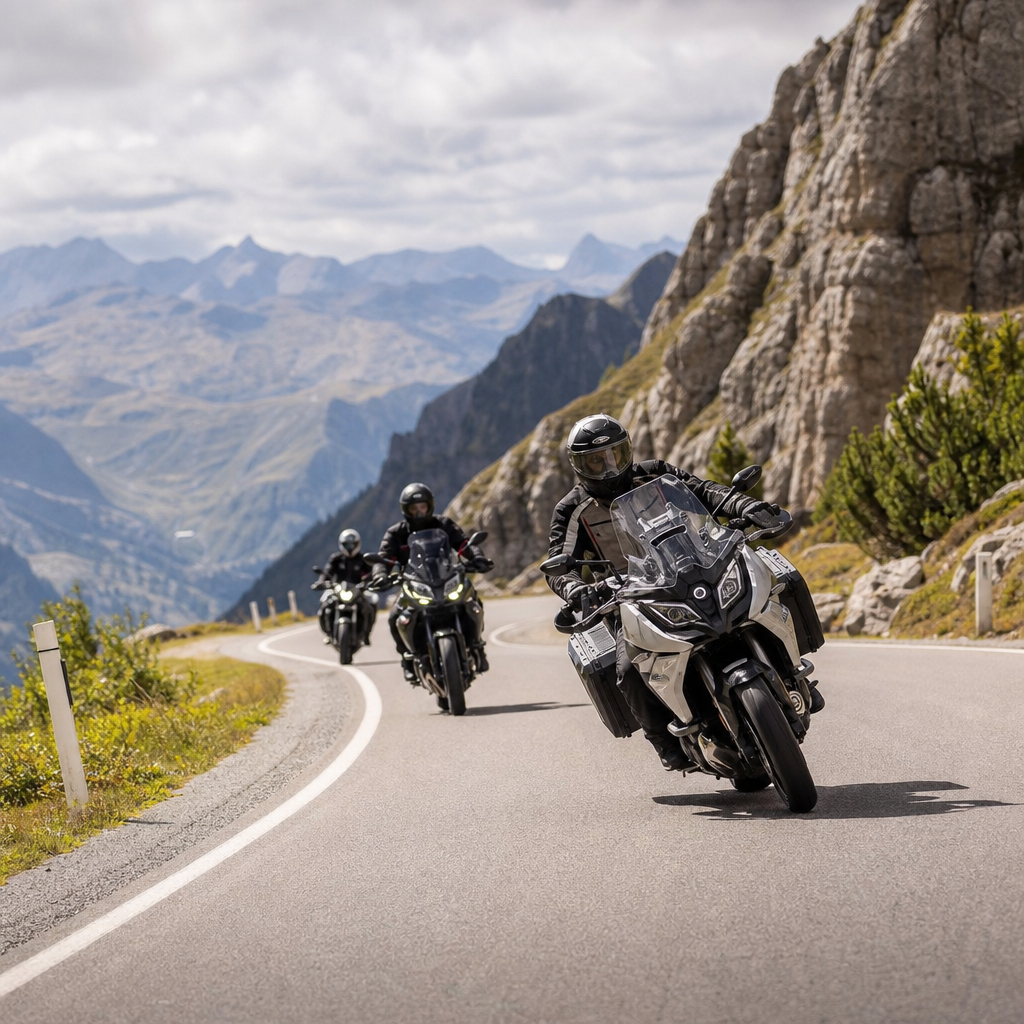
Motorcycling in 2026 demands more than a license and basic confidence, which is why every rider should take an advanced rider course in 2026. An advanced rider course is structured training for licensed motorcyclists who want to sharpen hazard perception, low-speed control, cornering technique, braking, road strategy, and risk management beyond entry-level instruction. I have worked with new commuters, long-distance tourers, returning riders, and experienced weekend canyon riders, and the pattern is consistent: most riders overestimate their skill in familiar conditions and underestimate how quickly traffic, weather, fatigue, or distraction can stack the odds against them. That gap matters because motorcycles offer less physical protection than cars, leaving outcomes heavily dependent on rider judgment, machine control, and preparation. Safety and skills sit at the center of every serious riding decision, from choosing tires to setting following distance to reading a left-turning driver at an intersection. A quality course creates repeatable habits under coaching instead of leaving riders to rely on trial and error on public roads.
The need is even clearer now because riding conditions have changed. Urban traffic is denser, dashboards are more complex, motorcycles are faster and more electronically assisted, and drivers are more distracted by in-car screens and phones than they were a decade ago. At the same time, many riders are entering the sport through lightweight commuters, adventure bikes, scooters, and high-performance middleweights that can all exceed legal speeds easily. Basic licensing courses usually teach foundational clutch control, starting, stopping, and simple evasive maneuvers. They rarely give enough time for advanced corner entry judgment, traction management, braking while leaned only within safe limits, visual scanning strategy, group riding discipline, or emergency decision-making at realistic pace. An advanced rider course fills that gap. It turns riding from a collection of separate actions into a system: see early, predict accurately, position deliberately, brake smoothly, steer decisively, and recover calmly. For a hub page focused on safety and skills, this matters because every related topic builds on the same principle: better-trained riders make safer choices sooner.
Advanced rider training closes the gap between licensing and real-world riding
The biggest misconception I see is that experience alone produces mastery. Time in the saddle helps, but unmanaged experience can harden bad habits just as easily as good ones. Riders often learn to “get away with” too much speed into corners, cover the front brake incorrectly, stare at roadside hazards, or sit in vehicle blind spots because nothing bad happened the last hundred times. Advanced rider training interrupts that cycle with coached repetition and immediate correction. Instructors break riding into observable skills: vision, lane position, throttle application, brake pressure, body posture, steering input, and escape route planning. That makes improvement measurable instead of vague. You do not just become “better”; you shorten stopping distance, widen your visual scan, reduce mid-corner corrections, and choose safer lines through intersections and bends.
Well-designed courses usually build around proven systems from organizations such as the Motorcycle Safety Foundation, RoSPA, IAM RoadSmart, and police-style roadcraft methods adapted for civilian riding. The exact curriculum varies by country and provider, but the best programs focus on hazard awareness, cornering judgment, braking technique, and street strategy rather than racetrack theatrics. That distinction matters. Street survival depends less on maximum lean angle and more on timing, observation, and smoothness. For example, many riders think cornering confidence comes from hanging off or entering faster. In practice, safer cornering comes from setting speed before turn-in, keeping eyes up through the vanishing point, using a stable throttle, and preserving a safety margin for debris, tightening radius, or oncoming encroachment. A strong course teaches those fundamentals in plain language and makes them stick through drills.
Safety benefits are immediate, practical, and measurable
The clearest reason to take an advanced rider course in 2026 is safety. Motorcycle crashes often involve recognizable patterns: failure to detect hazards early, excessive speed for conditions, panic braking, poor corner entry, and decision-making errors at junctions. Training addresses those patterns directly. Riders practice threshold braking in a controlled environment and learn how modern ABS behaves under hard stops. They learn why the front brake does most of the work on dry pavement, how weight transfer increases available grip at the front contact patch, and why abrupt inputs overwhelm traction. They also learn where the limits are. ABS reduces the chance of wheel lock, but it does not override physics, shorten every stop automatically, or create grip on gravel, diesel spills, painted lines, or cold tires.
Advanced courses also improve survival through observation routines. A disciplined visual scan means reading side roads, wheel movement, driver head position, brake lights several vehicles ahead, road surface texture, and the open space you may need if something goes wrong. When I coach riders through urban traffic, the most dramatic improvement usually appears in intersections. Riders stop fixating on the vehicle directly ahead and begin reading cross traffic, turn lanes, pedestrian movement, and blocked sightlines. That change alone can buy precious time. At highway speeds, even one extra second of recognition distance matters. At 60 mph, a motorcycle travels about 88 feet per second. Seeing a threat one second sooner can create enough room to brake, swerve, or avoid the problem entirely. Training turns those numbers into instincts.
Core skills every advanced course should teach
Not all courses are equal, so riders should know what a serious safety and skills program includes. The strongest advanced rider courses train the rider, not just the motorcycle. They focus on control inputs, mental processing, and repeatable roadcraft. A useful benchmark is whether the curriculum covers braking, cornering, hazard perception, low-speed balance, road positioning, and post-ride self-assessment. If a provider cannot explain how each module improves street safety, keep looking. The table below summarizes the core skill areas that belong in a 2026-ready course and why they matter on real roads.
| Skill area | What riders learn | Real-world benefit |
|---|---|---|
| Emergency braking | Progressive front brake application, rear brake support, ABS feel, straight-line maximum stopping | Shorter, more controlled stops in traffic and sudden hazard situations |
| Cornering | Entry speed selection, delayed apex thinking, vision through the turn, smooth throttle roll-on | Fewer run-wide mistakes and better stability on unfamiliar roads |
| Hazard perception | Scanning routines, predictive cues, escape route planning, risk ranking | Earlier recognition of threats at intersections, in traffic, and on rural roads |
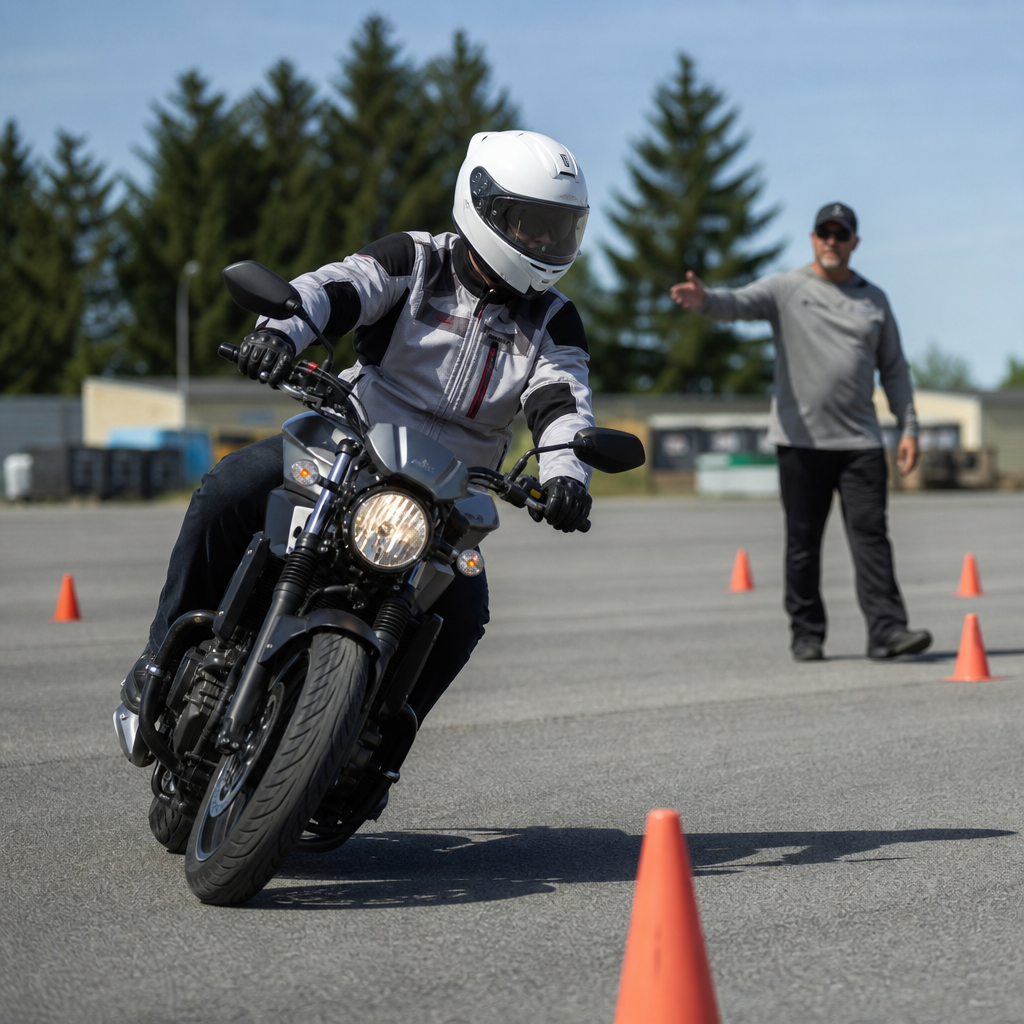
| Low-speed control | Clutch friction zone use, rear brake drag, head-and-eyes technique, tight turns | More confidence in parking lots, U-turns, filtering, and loaded touring situations |
| Road positioning | Lane placement for sightlines, traction, visibility, and buffer space | Improved conspicuity and safer options around blind spots and debris |
| Rider mindset | Fatigue awareness, pace discipline, emotional control, post-ride review | Better decisions when conditions, weather, or group pressure change |
These are not abstract concepts. Consider a common scenario: a rider enters a decreasing-radius right-hand bend on a country road. Without training, the rider may look at the edge line, panic, roll off abruptly, and drift toward the centerline. With training, the rider reads the bend earlier, sets a conservative entry speed, keeps vision high, maintains light maintenance throttle, and tightens the line smoothly with countersteering. The difference is not bravery; it is process. The same principle applies in parking lots, on mountain passes, during a rain shower, or when a delivery van suddenly stops in front of you. Advanced skill is simply practiced control under changing conditions.
Modern motorcycles make training more important, not less
Some riders assume rider aids reduce the need for training. In reality, the spread of ABS, traction control, cornering ABS, ride modes, quickshifters, radar cruise, and inertial measurement units makes advanced education more valuable. Electronics help, but they only work properly when the rider understands their purpose and limits. A rider who grabs the brake abruptly mid-corner may still overload available grip even with advanced systems. A rider who relies on traction control while using worn tires on a cold morning is still mismanaging risk. Training teaches riders how these systems intervene, what feedback they provide, and when they may mask poor technique rather than solve it.
Bike categories also create different training needs. Adventure bikes carry weight high and often run mixed-surface tires, which changes low-speed balance and stopping feel. Sportbikes respond quickly to steering input and can punish sloppy throttle control. Cruisers may have long wheelbases, floorboard clearance limits, and a lower center of gravity that affects cornering habits. Scooters place weight and controls differently, influencing braking and body position. Electric motorcycles deliver torque immediately and may feel deceptively simple because there is no clutch to manage. A proper advanced rider course accounts for these differences while teaching universal principles: smoothness, traction awareness, visibility, and space management. That is why training remains relevant no matter what you ride.
Advanced courses help every type of rider, from novice commuter to veteran tourer
One of the strongest arguments for advanced training is that it scales across experience levels. Newer riders benefit because they build good habits before bad ones settle in. Returning riders benefit because muscle memory often lags behind confidence after years away from motorcycles. Daily commuters benefit because repeated exposure to the same route can create complacency, especially in city traffic with buses, cyclists, and aggressive lane changes. Long-distance tourers benefit because fatigue, weather, luggage weight, and route complexity magnify small mistakes over many hours. Group riders benefit because staggered formation is not a safety shield if participants cannot brake consistently, hold lines predictably, or communicate hazards clearly.
I have seen veteran riders gain as much from advanced coaching as riders with only one season behind them. Experience often brings confidence in some areas and blind spots in others. A rider may be excellent in fast sweepers yet poor at parking-lot turns on a fully loaded bike. Another may commute flawlessly in rain but still enter blind bends too quickly on weekend rides. Mature riders also tend to appreciate the mindset portion of advanced training. Good courses discuss pace management, ego control, and when not to ride. The safest rider in a group is often not the boldest; it is the one who recognizes deteriorating concentration, changing traction, and social pressure before those factors become a crash chain.
How to choose the right advanced rider course in 2026
Choosing the right course matters as much as deciding to train. Start with the provider’s teaching method. Look for a curriculum that includes both classroom or theory components and on-bike drills, with clear learning objectives for each. Ask whether instructors are certified, actively ride on the road, and maintain current coaching qualifications. Small student-to-instructor ratios matter because feedback quality shapes improvement. A rider who hears “slow down more” learns less than a rider who hears “finish your braking earlier, move your head sooner, and delay your turn point by one bike length.” Precision is the difference between generic advice and real coaching.
Next, examine whether the course fits your riding goals. A commuter may need urban hazard management and emergency braking. A sport-touring rider may need cornering judgment and fatigue control. An adventure rider may want mixed-surface balance and standing technique in addition to pavement strategy. Also check whether the provider uses a closed range, escorted road ride, or both. Range work is ideal for isolating technique; supervised road riding shows whether those skills transfer under real traffic pressure. If available, refresher coaching every one to three years is worthwhile. Skills degrade, traffic changes, and riders evolve into new bikes and environments. Training should be treated like maintenance, not a one-time event.
Why this topic anchors every safety and skills decision
As the hub for safety and skills within The Open Road, advanced rider training connects every practical topic riders care about. Protective gear matters, but gear works best when a rider avoids the crash or reduces impact speed through braking skill. Tire choice matters, but tire performance only helps when a rider understands pressure, warm-up, load, and traction limits. Group riding etiquette matters, but disciplined formation depends on spacing, scanning, and smooth control inputs. Wet-weather riding, night riding, cornering lines, braking drills, road positioning, and motorcycle setup all make more sense when built on formal training. That is why this subject belongs at the center of the category. It gives riders a framework for evaluating all other advice.
The main takeaway is simple: every rider should take an advanced rider course in 2026 because modern roads punish hesitation, overconfidence, and weak fundamentals. Advanced training improves hazard perception, braking, cornering, low-speed control, and judgment in ways riders can apply immediately on every trip. It helps beginners develop safe habits, helps experienced riders correct drift in technique, and helps all riders adapt to faster bikes, denser traffic, and increasingly complex technology. If you want to ride longer, with more confidence and less unnecessary risk, book a reputable course, review your current habits honestly, and make advanced training the next upgrade you invest in.
Frequently Asked Questions
1. What is an advanced rider course, and how is it different from basic motorcycle training?
An advanced rider course is structured, post-license motorcycle training designed for riders who already know how to operate a bike but want to ride with more precision, consistency, and safety in real-world conditions. Basic training typically focuses on core skills such as clutch control, starting, stopping, shifting, basic cornering, and the rules of the road. That foundation is essential, but it is only the beginning. Once a rider starts commuting, touring, riding in traffic, tackling mountain roads, or returning to riding after years away, the challenges become more complex than what entry-level instruction can fully address.
Advanced courses go deeper into the skills that matter most once you are regularly on the road. That includes hazard perception, emergency braking, low-speed balance, cornering lines, visual discipline, body positioning, traction awareness, lane strategy, and managing risk before a situation turns into a close call. Instructors do not just tell riders what to do; they help them understand why specific techniques work, when to use them, and how to apply them under pressure. That is a major difference. The goal is not simply to pass a test. The goal is to become a rider who can read the road earlier, make smoother decisions, and maintain a larger margin for error.
In 2026, that difference matters more than ever. Roads are more crowded, drivers are more distracted, and many motorcycles now have advanced electronics that riders need to understand rather than blindly trust. An advanced course helps riders bridge the gap between basic competence and mature roadcraft. Whether someone is a daily commuter, a long-distance tourer, a weekend sport rider, or a returning motorcyclist rebuilding confidence, the course provides targeted coaching that basic licensing programs were never designed to deliver.
2. Why should experienced riders take an advanced rider course in 2026 if they have already been riding for years?
Experience is valuable, but experience alone does not always equal refinement. Many riders accumulate years on the road while also reinforcing habits that are inefficient, outdated, or risky. It is common to meet riders who have thousands of miles behind them yet still brake too late, look too close to the front wheel, run wide in corners, or rely on confidence instead of technique. An advanced rider course gives experienced riders a chance to pressure-test what they do well, identify weak points, and update their skills to match current riding conditions and motorcycle technology.
That is especially important in 2026. Modern traffic environments demand sharper anticipation and better decision-making. Riders face distracted drivers, complex intersections, dense urban commuting, and rapidly changing road surfaces. At the same time, motorcycles increasingly come with ABS, traction control, ride modes, cornering aids, and other electronic systems. These features can improve safety, but they do not replace skill. A seasoned rider who has never been coached on how to brake at maximum efficiency with ABS, manage traction in poor conditions, or use visual strategy effectively may be leaving a lot of performance and safety margin on the table.
Advanced training also helps experienced riders break plateaus. Many riders reach a point where they feel comfortable, but comfort can hide blind spots. A good instructor can spot subtle issues with corner setup, throttle timing, body tension, or lane positioning that the rider may never notice alone. Even highly capable riders often leave advanced courses saying the same thing: they did not realize how much smoother, calmer, and more deliberate they could be until someone showed them a better approach. In that sense, the course is not a sign that a rider is lacking. It is a sign that they take their craft seriously and want to keep improving.
3. What specific skills do riders improve in an advanced rider course?
An advanced rider course typically improves the exact skills that make the biggest difference in everyday safety and control. One of the most important is hazard perception. Riders learn how to scan farther ahead, recognize patterns earlier, and identify developing threats before they become emergency situations. That might include reading vehicle body language, spotting surface changes, anticipating left-turn conflicts, and understanding how intersections, blind driveways, weather, and traffic flow affect risk.
Low-speed control is another major focus. Many licensed riders are surprisingly uncomfortable with tight turns, U-turns, parking lot maneuvering, stop-and-go traffic, or riding with a passenger at walking pace. Advanced instruction helps riders improve clutch-throttle coordination, rear brake control, head-and-eyes technique, and body posture so the motorcycle feels more stable and predictable at low speeds. That translates into more confidence in city riding, fuel stops, parking situations, and any environment where finesse matters more than speed.
Braking and cornering are also central. Riders learn how to brake harder and more effectively in a straight line, how to reduce panic during emergency stops, and how to understand weight transfer and traction management. In cornering work, they often refine entry speed, line choice, visual timing, throttle application, and overall smoothness. Instead of simply “getting through the turn,” they learn how to set up the corner properly and keep reserve traction available. That creates a calmer, safer ride on everything from commuter routes to twisty back roads.
Just as important, advanced courses teach road strategy and risk management. Riders improve lane positioning, following distance, overtaking judgment, group riding discipline, and decision-making under changing conditions. These are the higher-level skills that tie everything together. Good riding is not just about machine control; it is about placing yourself in the safest position, at the safest time, with the best available options. That strategic mindset is often what separates a merely capable rider from a truly proficient one.
4. Is an advanced rider course worth it for commuters, returning riders, and casual weekend riders?
Yes, and arguably these groups stand to gain the most. Commuters benefit because they spend repeated time in the environments where risk is highest: intersections, traffic queues, lane changes, poor weather, low-light conditions, and the unpredictable behavior of rushed drivers. An advanced rider course helps commuters sharpen the exact skills that reduce daily exposure to common hazards. Better braking, earlier scanning, stronger lane strategy, and improved low-speed control can make a noticeable difference on every single ride to and from work.
Returning riders are another ideal fit. Someone who rode years ago may still remember the basics, but traffic density, motorcycle performance, and road demands have changed. Just as importantly, rust develops. Timing, visual habits, and instinctive control inputs often need recalibration. An advanced course provides a structured, supportive way to rebuild confidence without guessing your way back into proficiency. It allows returning riders to identify what still feels natural, what has faded, and what modern best practices they may not have learned the first time around.
Casual weekend riders benefit because occasional riding can mask inconsistency. If a person only rides on fair-weather weekends, they may not encounter enough varied situations to steadily develop strong defensive habits on their own. They might feel fine on familiar roads yet struggle when conditions change, traffic increases, or a surprise forces a quick response. Advanced training closes that gap. It helps casual riders become more deliberate, smoother, and less reactive, which often makes riding more enjoyable as well as safer.
In practical terms, the value goes beyond crash avoidance. Riders who take advanced courses often report less fatigue, better confidence, smoother control, and a stronger sense of command over the bike. They are not fighting the machine or second-guessing themselves as much. Whether someone rides every day, a few times a month, or after a long break, that improvement in confidence and competence is well worth the investment.
5. How can an advanced rider course make someone safer and more confident on modern roads in 2026?
An advanced rider course improves safety and confidence by replacing vague hope with repeatable skill. Many riders feel nervous in certain situations because they are unsure what to do when things go wrong. They may worry about emergency braking, decreasing-radius turns, wet roads, traffic pressure, or being forced to maneuver quickly around a hazard. Training addresses that uncertainty directly. When riders understand the technique, practice it correctly, and receive feedback from a qualified instructor, they become less reactive and more composed.
On modern roads in 2026, that composure matters. Riders are sharing space with distracted drivers, larger vehicles, navigation-dependent traffic patterns, and increasingly complex urban road design. A rider who can read hazards early, choose smart lane positions, and maintain a healthy safety buffer is operating at a major advantage. Confidence grows when the rider realizes they are no longer depending on luck or instinct alone. They have a process for seeing problems, planning ahead, and responding effectively.
There is also a mental benefit that should not be overlooked. Real confidence is not bravado. It is the quiet knowledge that you can manage the bike well, make sound decisions, and stay calm when conditions change. That kind of confidence tends to make riders smoother and safer, because they are less likely to overreact, tense up, or ride beyond their limits. A quality advanced course builds exactly that. It teaches riders to respect risk without being intimidated by it.
Ultimately, an advanced rider course helps riders create more margin in every part of the ride. More margin in braking. More margin in cornering. More margin in traffic. More margin in decision-making. That is why