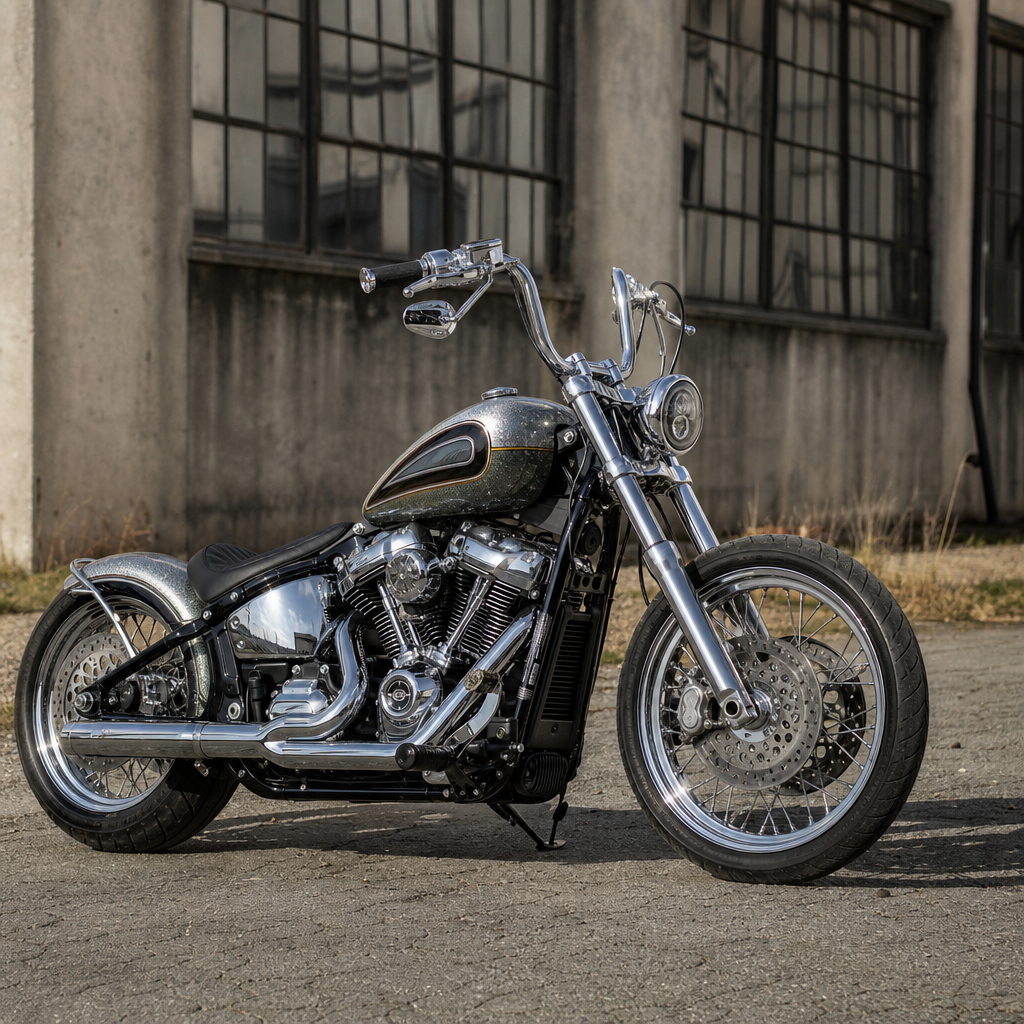
The 2027 Softail Standard sits at a useful crossroads for custom culture because it is mechanically modern, visually restrained, and open to strong stylistic direction. That makes it an ideal platform for the neo-chopper revival, especially for builders chasing Frisco style without losing everyday rideability. In practical terms, neo-chopper describes a contemporary interpretation of stripped, narrow, high-attitude custom motorcycles, while Frisco style refers to the Northern California tradition of compact tanks, tall bars, clean triangle lines, and a functional street stance shaped by urban riding. Around that core, today’s design conversation also includes Chicano lowrider influence, performance bagger engineering, and newer fabrication methods that let builders blend heritage aesthetics with reliable geometry, electronics, and braking.
I have watched this shift closely in workshops, at dealer open houses, and in independent fabrication studios where Softails now arrive as blank canvases instead of finished products. Builders are no longer asking whether a stock bike should be preserved. They are asking what visual language best matches the owner’s riding habits, budget, and mechanical tolerance. That question matters because style is not surface decoration. Tank shape affects reach and fuel range. Bar height changes steering leverage and shoulder fatigue. Wheel diameter changes trail, turn-in, and tire choice. Seat position influences both silhouette and control. The best customs look coherent because the design theory was settled before the first cut, weld, or parts order.
For the 2027 Softail Standard, this hub article maps the major design directions shaping custom culture right now: Chicano, performance bagger, Frisco, and the hybrid territory beyond them. The point is not to force categories. It is to explain the principles behind each look so a builder can make smart decisions with frame geometry, stance, paint, controls, and fabrication technology. If you are planning a full build, commissioning a shop, or simply collecting parts over time, understanding these design theories will save money, prevent mismatched components, and produce a motorcycle that feels intentional from every angle.
Why the 2027 Softail Standard is the right canvas
The Softail Standard works for this revival because Harley-Davidson’s hidden rear suspension preserves a hardtail-like profile while delivering modern comfort and stability. That visual structure matters. Frisco and related custom styles depend on an uninterrupted line from steering head to rear axle area, and the Softail frame gives builders that clean side view without the punishment of a true rigid. The Milwaukee-Eight platform also adds broad aftermarket support, which means tanks, bars, risers, seats, exhaust systems, brake upgrades, and tuning solutions are available from recognized suppliers rather than one-off guesswork.
From a fabrication standpoint, the 2027 model is especially attractive if Harley keeps the Standard trim simple, as it traditionally has. Less bodywork means fewer components to remove or work around. Fewer electronic rider aids visible on the surface also preserve the stripped look many neo-chopper builders want. In shops, that translates into faster mock-up time and cleaner packaging for internal wiring, mini speedometers, and tucked lighting. A basic bike gives the builder room to decide whether the final machine should lean traditional, aggressive, elegant, or all three at once.
There is also a cultural reason the Softail Standard matters. Dyna-based club bikes dominated the previous era, then performance baggers redefined what a large V-twin could do. The next wave favors lighter visual mass, stronger line discipline, and builds that photograph well without becoming static art. The Standard can move in that direction because it does not arrive burdened with a touring identity. It can become a Frisco street bike, a Chicano-influenced boulevard cruiser, or a sharp hybrid with performance components hidden beneath classic proportions.
Frisco style: the backbone of the neo-chopper revival
Frisco style is often reduced to a peanut tank and tall handlebars, but that shorthand misses the design logic. Historically, San Francisco riders adapted motorcycles for dense streets, short hops, and practical fuel management. Tanks were mounted high and level to maximize usable capacity and create a horizontal top line. Bars rose up to clear traffic and keep the rider upright. Fenders were shortened or deleted to reduce visual bulk. The result was not random minimalism. It was a coherent package centered on proportion, simplicity, and immediate road presence.
On a 2027 Softail Standard, a convincing Frisco build starts with the motorcycle’s centerline. The tank should appear compact yet deliberate, not tiny for its own sake. A narrow Sportster-style or custom coffin-inspired tank can work if the tunnel fit, petcock position, and injector clearance are solved correctly. Bar choice is equally important. Narrow apes, moto-style riser bars, or rabbit ears each send a different message, but all should preserve a light front end visually. Oversized touring bars flatten the bike’s character and dilute the effect.
Seat and rear fender decisions define whether the bike reads as authentic or costume-like. A slim solo saddle with visible backbone space supports the classic Frisco silhouette. A thick saddle or bulky pillion pad usually interrupts the line. Wheel choice should reinforce narrowness. Many builders prefer a 19-inch or 21-inch front with a modest tire profile because it lengthens the front view and sharpens the bike’s posture. Mid-controls often suit this style better than stretched forwards because they keep the rider centered and the machine ready for real city riding.
The strongest Frisco builds also respect restraint. In my experience, the best ones use fewer parts than the owner originally planned. A simple tank, proper bars, clean wiring, tight exhaust routing, and balanced stance do more than elaborate engraving or excessive brass accessories. Frisco style rewards editing.
Chicano influence: elegance, paint, and long-line cruising
Chicano motorcycle design comes from a different emotional and visual tradition. Where Frisco style feels compact and urgent, Chicano customs emphasize glide, presence, and refined detail. The influence is tied to lowrider culture, long forks, deep candy paint, chrome, mural work, spoke wheels, and a sense of ceremonial cruising. On touring models and Softails alike, the style values flow. Every line should extend the motorcycle rather than compress it.
Applying Chicano theory to a Softail Standard requires discipline because the platform is naturally shorter and more mechanical in appearance than a full dresser. The solution is not to copy an FL build part for part. Instead, borrow the principles: lengthen visual lines with a carefully selected front wheel, maintain smooth transitions from tank to seat to rear fender, and use paint as structure rather than decoration. A rich candy red, royal blue, or emerald green with panel work can visually stretch the bike more effectively than a random collection of bolt-ons.
Chrome and polished metal matter here, but balance matters more. Too much brightwork on a stripped Softail can feel unfinished rather than luxurious. A better approach is to choose focal points such as fork tubes, exhaust shields, wheel lips, or hand controls, then let paint carry the larger statement. Taller bars can still work, but on a Chicano-leaning build they should feel elegant, with enough sweep to soften the rider triangle. The final effect should suggest boulevard movement and cultural storytelling, not just height for height’s sake.
Performance bagger ideas that still belong on a stripped Softail
Performance bagger culture changed custom design by proving that style and speed no longer need to live in separate garages. Even if the Softail Standard is not a bagger, the engineering lessons translate directly. Riders now expect stronger brakes, better suspension damping, more rigid front ends, and meaningful tire grip. That expectation is healthy. A neo-chopper cannot rely on nostalgia when modern traffic, road surfaces, and rider skill levels demand predictable handling.
What carries over first is suspension philosophy. Cartridge forks, quality rear shock upgrades, and spring rates matched to rider weight do more for confidence than almost any cosmetic change. Brakes are next. A larger rotor, better pads, braided lines, and a correctly sized master cylinder transform control without altering the motorcycle’s silhouette. Then comes ergonomics. The performance scene taught builders to think in terms of leverage, hip angle, and cornering clearance, not just appearance. On a Frisco-influenced Softail, that usually means avoiding extreme rake changes, preserving trail within a sane range, and choosing bars and pegs that support active riding.
The design challenge is integration. A radial caliper or piggyback shock can look out of place if the rest of the bike is styled like a 1972 survivor. The answer is not to reject better components. It is to choose finishes and forms that harmonize with the chosen visual language. Black anodizing, machined aluminum, and understated branding often help modern parts disappear into a vintage-leaning build while still doing their job.
Comparing the core design directions
The fastest way to choose a build path is to compare the main visual systems side by side. Each one answers the same questions differently: How should the bike sit? What should draw the eye first? How much ornament belongs on the machine? Which riding position best fits the intended use?
| Style direction | Primary visual cues | Best use case | Main risk |
|---|---|---|---|
| Frisco | High narrow tank, tall bars, slim seat, reduced fenders | Urban riding, stripped street custom, lightweight visual profile | Overdoing minimalism and losing comfort or fuel practicality |
| Chicano | Flowing lines, rich paint, chrome accents, elegant stance | Cruising, show presence, cultural storytelling through finish | Adding length cues without preserving proportion |
| Performance-led hybrid | Upgraded suspension, brakes, aggressive ergonomics, subtle bodywork | Fast backroad riding, daily use, function-first custom builds | Mixing race-inspired parts with no visual cohesion |
In real projects, owners often want two or three of these at once. That is possible, but only if one style leads and the others support. A Frisco core can accept performance suspension and Chicano-grade paint. A Chicano build can use strong brakes and better shocks. Problems start when every category claims equal importance. The bike then reads as indecisive.
Fabrication technology and the new guard builder mindset
The new generation of builders works differently from earlier custom eras. Hand skills still matter, but digital planning now shapes better motorcycles. Cardboard templates are often followed by CAD scans, 3D-printed test pieces, and laser-cut brackets. Harnesses are shortened with OEM-grade connectors rather than crude splices. Tank mounts are mocked carefully to protect steering clearance, fuel pump access, and heat management. This is not sterilizing custom culture. It is reducing avoidable failure points.
I have seen small shops use desktop scanners to map backbone dimensions before committing to a tank conversion, which prevents expensive paint damage later. Others print temporary riser spacers or gauge mounts to test rider position before machining aluminum versions. Even basic software helps builders check seat height, bar reach, and wheel visual balance in profile photos before ordering parts. That process saves customers from chasing trends blindly.
The best fabrication shops also document compliance and safety. They measure brake line travel at full lock, verify tire-to-fender clearance under compression, and protect critical weld zones from cosmetic overgrinding. Reputable builders know that a clean bike must still be serviceable. Batteries need access. Wiring needs strain relief. Exhaust heat needs management near leg contact points and oil lines. Good custom work is not just what the viewer sees at a show. It is what the owner never has to worry about on a hundred-mile ride.
How to build a hub-worthy Softail: design rules that prevent expensive mistakes
If this article serves as the hub for design theory, the most useful takeaway is a set of rules. First, settle the stance before buying decorative parts. Wheel diameter, tire profile, rear ride height, and bar rise establish the motorcycle’s character early. Second, choose one dominant style language. Frisco, Chicano, or performance-led hybrid should guide every major decision. Third, spend money on contact points and control systems before vanity parts. Suspension, brakes, seat shape, grips, and peg placement determine whether the bike actually gets ridden.
Fourth, treat paint as architecture. Color, line work, and finish should reinforce the frame and tank relationship, not distract from poor proportions. Fifth, hide complexity wherever possible. Internal wiring, compact lighting, and tidy cable routing make a custom feel intentional. Sixth, test ergonomics with mock-up components before final assembly. A bar that looks perfect online may put the rider’s wrists in a terrible angle on the actual bike. Seventh, remember service intervals. Spark plugs, fuel connections, battery terminals, and diagnostic ports should remain accessible.
The 2027 Softail Standard deserves this level of planning because it can support serious design without becoming impractical. That is why the neo-chopper revival matters. It is not a retreat into nostalgia. It is a mature phase of custom culture where heritage forms are refined by modern engineering, fabrication discipline, and a clearer understanding of how motorcycles are actually used. Start with the design theory, follow through with coherent parts choices, and the result will look right, ride right, and age well. Use this page as your starting map, then move deeper into each style direction with purpose.
Frequently Asked Questions
What makes the 2027 Softail Standard such a strong base for a neo-chopper build?
The 2027 Softail Standard works so well for a neo-chopper build because it combines modern engineering with an intentionally understated factory presentation. In custom terms, that is a major advantage. You are not starting with a motorcycle that is already visually overcommitted to one theme, and you are not forced to undo a lot of styling before the real work begins. The bike gives builders a clean silhouette, dependable contemporary mechanicals, and a platform that can be pushed in a narrow, stripped, high-attitude direction without becoming impractical for regular street use.
That balance matters because the current neo-chopper revival is not just about copying old show bikes. It is about taking the energy of traditional custom culture and translating it into something rideable, durable, and usable today. The Softail Standard fits that goal almost perfectly. Its modern chassis, suspension packaging, and drivetrain reliability allow builders to focus on proportion, stance, control layout, and visual identity rather than constantly compensating for outdated hardware. In other words, the platform gives you freedom to chase style without sacrificing the kind of start-it-and-go confidence many riders now expect.
It also helps that the bike responds well to the classic visual cues associated with this movement: taller bars, a slimmer profile, a tidier rear section, selective chrome or polished metal, and simplified bodywork. Because the Standard begins from a restrained baseline, those changes read clearly. Each modification has room to speak. That is one reason the model sits at such an important crossroads in custom culture for 2027: it invites personality without demanding mechanical compromise.
What exactly is Frisco style, and how does it differ from a generic chopper look?
Frisco style is a specific custom language with roots in Northern California motorcycle culture, and it is more disciplined than the broad label “chopper” sometimes suggests. While many people use the word chopper to describe almost any long-forked or heavily customized V-twin, Frisco style traditionally emphasizes a purposeful street-ridden machine with a lean profile, elevated attitude, and stripped presentation. It is less about excess for its own sake and more about achieving a particular urban, aggressive, upright visual character.
Some of the cues commonly associated with Frisco-inspired builds include narrow lines, higher bars, a compact-looking fuel tank often mounted to sit tall, minimal body clutter, and a stance that feels alert and ready rather than laid-back and low-slung. Historically, this style also reflected practical riding realities. A bike built in that spirit was meant to be ridden in real conditions, not just posed in a parking lot. That practical edge is one of the main reasons Frisco style translates so well into the neo-chopper revival. It carries tradition, but it does not require a builder to abandon function.
Compared with a generic chopper look, Frisco style is usually more coherent in proportion. The goal is not simply to add radical parts. It is to create a motorcycle that feels tall, narrow, direct, and clean. On a 2027 Softail Standard, that can mean choosing components and geometry changes that reinforce a strong vertical attitude and uncluttered profile rather than chasing every old-school cue at once. The result should feel intentional, not costume-like. That is the key distinction: Frisco style is a cultural and visual discipline, not just a collection of aftermarket parts.
Which modifications best capture a Frisco-inspired neo-chopper look on the 2027 Softail Standard?
The most effective modifications are the ones that reshape the bike’s proportions first, then refine the details. In practical terms, that usually starts with the cockpit and tank area. Taller handlebars are one of the fastest ways to move the Softail Standard toward a Frisco-influenced stance, especially when paired with a clean control setup and carefully routed wiring. The bar choice should support the bike’s upright visual attitude without making the riding position awkward for everyday use. A good neo-chopper build is dramatic, but it should still feel natural at real street speeds.
Tank treatment is another major factor. Frisco style has long favored fuel tanks that appear compact and elevated, helping create that distinctive top-line and giving the motorcycle a leaner center section. On a modern Softail, builders may not literally replicate every historic mounting method, but they often aim for the same visual effect: a tank presentation that strengthens the bike’s narrow, high, and stripped identity. Combined with a slimmer seat, reduced rear clutter, and a cleaner fender arrangement, this helps transform the overall silhouette.
Exhaust, wheels, lighting, and finish choices also matter. A Frisco-inspired neo-chopper usually benefits from restraint. Instead of piling on decorative elements, builders tend to let shape, metal, and stance do the heavy lifting. Tight, clean lighting, selective chrome or polished accents, classic-looking rubber, and uncluttered side profiles all support the theme. Mid controls or thoughtfully chosen forward ergonomics can work depending on the intended outcome, but the best builds always maintain a sense of control and usability rather than drifting into pure caricature. The strongest approach is to modify with a hierarchy in mind: stance first, silhouette second, details last.
Can you build a Frisco-style neo-chopper without ruining the Softail Standard’s everyday rideability?
Yes, and that is one of the main reasons the 2027 Softail Standard is receiving so much attention in this space. The smartest neo-chopper builds do not treat rideability as the enemy of style. They use the platform’s modern mechanical foundation to preserve reliability and road manners while making visual and ergonomic changes that honor traditional custom influences. In fact, a well-executed Frisco-style build should feel sharper and more intentional, not less usable.
The key is avoiding modification choices that chase appearance while undermining function. Extremely compromised suspension setups, poorly planned bar and control positions, uncomfortable seat solutions, and impractical tire or brake decisions can quickly turn a promising build into a motorcycle that looks right only in photos. Builders who understand the neo-chopper revival usually take a more mature approach. They want the bike to start easily, run consistently, corner predictably, and remain comfortable enough for real riding. That does not make the build less authentic; if anything, it aligns closely with the practical roots of street-ridden Frisco customs.
On the Softail Standard, that often means preserving sound geometry, using quality parts, maintaining proper cable and line routing, and making ergonomic decisions based on how the motorcycle will actually be used. You can create a higher, narrower, cleaner machine without making it punishing. The best result is a bike that feels old in spirit but current in execution. That is exactly where the neo-chopper movement is strongest today: honoring style history while refusing unnecessary mechanical self-sabotage.
Is the neo-chopper revival for the 2027 Softail Standard about nostalgia, or is it actually pushing custom culture forward?
It is doing both, and that is why it matters. On one level, the neo-chopper revival clearly draws energy from earlier eras of custom motorcycle design. Builders are revisiting stripped silhouettes, stronger bar presence, narrower visual mass, and the hard-edged attitude that made traditional choppers and Frisco-style machines so influential in the first place. There is real nostalgia in that, but it is not passive nostalgia. It is selective and interpretive rather than purely imitative.
What makes the movement relevant in 2027 is the way those references are being adapted to a modern platform like the Softail Standard. Instead of treating heritage as a museum piece, builders are using it as a design framework. They are asking what still works, what still feels exciting, and what can be refined now that modern motorcycles offer better reliability, improved manufacturing, and more predictable road behavior. That process pushes custom culture forward because it keeps tradition active rather than frozen.
The Softail Standard is especially important in that conversation because it offers enough mechanical sophistication to support modern expectations while remaining visually open to meaningful transformation. That allows builders to create motorcycles that look rooted in custom history but feel entirely contemporary in use. So yes, the revival is nostalgic, but it is also an evolution. It is proving that classic custom values such as clarity of form, rider-focused attitude, and strong visual identity still have a place in the modern era when interpreted with discipline and technical intelligence.