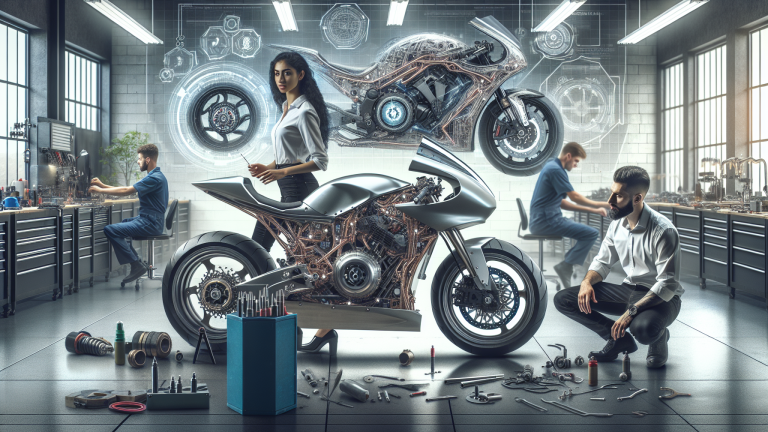
Female builders are redefining custom culture in 2026, turning what was once treated as a niche presence into one of the industry’s clearest growth stories. In the custom industry, “builders” includes fabricators, tuners, restoration specialists, metal shapers, composite technicians, engine assemblers, interior craftspeople, and shop owners who create one-off or limited-production vehicles, motorcycles, trucks, and specialty machines. “Builder profiles” are the stories, methods, credentials, and signature projects that explain how these professionals work and why their approach matters. I have spent years around fabrication shops, SEMA-floor launches, customer delivery days, and late-night dyno sessions, and the shift is impossible to miss: more women are leading projects, running profitable shops, winning classes, and attracting loyal audiences by pairing craftsmanship with disciplined business execution. This matters because custom culture rewards reputation, originality, and results. When female builders earn visibility, the industry gains new design language, stronger talent pipelines, and healthier standards for collaboration, safety, and customer service. For readers exploring custom culture, builder profiles are the practical entry point. They show who is influencing the market, which skills are most valued, how shops are evolving, and where the next generation of standout builds is coming from. In 2026, understanding female builders is not a side conversation. It is central to understanding where the custom industry is headed.
Why female builders matter to custom culture now
The custom industry has always celebrated individual vision, but for decades the public image of the builder was narrow. That image is changing because the work itself has changed. Modern custom projects blend CAD modeling, CNC machining, TIG welding, paint science, additive manufacturing, electronics integration, digital calibration, and content-driven customer acquisition. Those shifts reward precision, process control, communication, and multidisciplinary learning as much as physical shop labor. Female builders have entered and advanced within that environment by mastering technical systems and by running cleaner, more transparent operations.
Market forces reinforce the shift. Enthusiast demographics are broader than many legacy brands assumed. Women influence household vehicle spending, own collectible vehicles, participate in motorsports, and commission bespoke builds. Shops that reflect this audience are better positioned to win trust. In practice, I have seen customers respond strongly when a builder can explain metallurgy choices, suspension geometry, ECU strategies, and finish schedules without posturing. Competence closes deals. Female-led and female-staffed shops often stand out because they make the buying process less intimidating while maintaining exacting standards.
Representation also affects labor. The industry still faces a skills shortage in welding, bodywork, machining, trim, and diagnostics. Visible builder profiles create a recruiting pathway by showing apprentices, trade students, and hobbyists that there is room to build a career here. That visibility is not symbolic. It changes who applies, who stays, and who sees themselves becoming a lead fabricator, project manager, or owner.
What a strong builder profile includes
A useful builder profile does more than celebrate a finished vehicle. It documents the systems behind the result. The best profiles explain a builder’s specialization, years of experience, certifications or training, preferred materials, tooling, quality-control methods, customer process, and signature projects. For custom industry coverage, that detail matters because readers are not only looking for inspiration. They want to know who can actually execute a cage to spec, shape aluminum cleanly, tune a drive-by-wire setup, or restore a period-correct interior with modern durability.
When I evaluate shops and featured builders, I look for proof across six areas: technical mastery, consistency, originality, safety discipline, business reliability, and community impact. Technical mastery shows up in panel gaps, weld quality, wiring layout, and how a builder solves integration problems between old chassis and new electronics. Consistency appears in repeatable fit and finish across multiple projects, not just a hero build. Originality is visible in proportion, stance, color strategy, packaging, and how modifications support the vehicle’s purpose. Safety discipline means proper load paths, brake calculations, fire protection, shielding, and documentation. Business reliability covers estimates, scheduling, vendor management, and after-delivery support. Community impact includes mentoring, teaching, publishing process knowledge, or elevating others through collaboration.
For readers using this page as a hub, those criteria help separate influencer visibility from durable industry influence. The strongest female builder profiles combine both.
Where female builders are making the biggest impact
In 2026, female builders are shaping nearly every major lane of custom culture. Restomod shops are a visible example. Builders are taking classic platforms and integrating modern powertrains, ABS, upgraded cooling, digital instrumentation, and chassis reinforcement while preserving the character buyers want. Success in this area depends on systems thinking. A powerful engine swap is meaningless if steering geometry, NVH control, and heat management are ignored. Several female-led shops have built reputations precisely by finishing the whole package rather than chasing social-media moments.
Truck and off-road fabrication is another growth area. Long-travel suspensions, overland packaging, accessory power systems, recovery mounting, and weight distribution require rigorous planning. Builders who approach these jobs like engineering problems rather than accessory installs are gaining traction. Motorcycle customization shows a similar pattern. Female builders are excelling in frame modification, tank and seat fabrication, custom paint, and performance tuning while also changing the visual vocabulary of the scene.
High-end interiors deserve more attention than they usually receive in mainstream coverage. Trim, upholstery, acoustic treatment, and ergonomic redesign are often the difference between a build that photographs well and one that customers genuinely enjoy. I have watched interior specialists rescue projects that were technically impressive but uncomfortable, noisy, or visually incoherent. Many female builders have built authority in this discipline because they understand the relationship between tactile quality, daily usability, and premium value.
| Custom segment | Typical work | Why female builders are standing out |
|---|---|---|
| Restomod | Powertrain upgrades, chassis reinforcement, electronics integration | Strong process management and balanced performance-plus-usability decisions |
| Off-road and truck | Suspension design, armor, storage, power management | System-level planning around weight, safety, and real-world use |
| Motorcycles | Frame work, fabrication, paint, tuning | Distinct design language paired with precise craftsmanship |
| Interiors | Upholstery, trim, ergonomics, sound control | Attention to fit, tactile quality, and customer experience |
| EV and hybrid custom | Battery packaging, software calibration, thermal considerations | Comfort with new technologies and cross-disciplinary learning |
Skills, tools, and business practices behind the rise
The rise of female builders is not happening because standards have softened. It is happening because standards have become more measurable. A shop can now document scan data, alignment settings, dyno graphs, paint thickness, 3D-printed prototype revisions, and delivery checklists. Builders who adopt disciplined workflows earn trust faster, and many women entering the field have embraced that operational side from the beginning.
On the technical side, the most valuable skills in 2026 include TIG and MIG welding, CAD design in platforms such as SolidWorks or Fusion, harness design, ECU calibration with systems like Holley EFI or MoTeC, paint preparation, and advanced measurement. Metrology tools, laser levels, digital angle finders, and portable 3D scanners are becoming normal in serious shops. So are project-management systems that track parts, labor, change orders, and customer approvals. A builder who can fabricate a bracket is useful; a builder who can model the bracket, validate clearances, machine it accurately, and document the revision is indispensable.
Business practices matter just as much. The strongest shops publish clear service scopes, require documented approvals for changes, photograph hidden work, and build schedules around realistic vendor lead times. They also protect shop culture by standardizing safety procedures and reducing the chaos that burns out talented staff. This is one of the least discussed reasons female builders are reshaping the industry: many are not simply joining existing systems but improving them. Better process creates better builds, fewer disputes, and more referrals.
How media, events, and digital platforms amplify builder profiles
Coverage has changed dramatically from the era when a magazine photo spread could make or break a reputation. Today, authority is built across events, long-form video, shop social channels, podcasts, customer testimonials, technical explainers, and trade education. Female builders have used this environment effectively because it rewards clarity and consistency. A builder who can explain why a suspension pickup point moved, why a panel was gas welded instead of TIG welded, or why a paint system needed a specific primer stack can build trust with both enthusiasts and clients.
Major events still matter. SEMA, PRI, Goodguys, The Race of Gentlemen, King of the Hammers-adjacent scenes, regional bike shows, and marque-specific gatherings remain key discovery channels. But digital media extends the life of every build. A well-documented project can become a case study that keeps generating leads months after reveal. That is especially important for builder profiles, because custom buyers often research for a long time before placing a deposit.
There is also a feedback loop between audience and opportunity. Sponsors, suppliers, and OEM-backed programs increasingly look for builders who can communicate technical value to a broad audience. Female builders who combine hands-on credibility with media fluency are winning partnerships, teaching opportunities, and product-development roles. That reach, in turn, gives them resources to attempt more ambitious builds.
Challenges female builders still face
Progress is real, but the barriers have not disappeared. Access to capital remains a major issue for any independent shop, and it can be harder for newer owners to secure favorable terms for equipment, space, or inventory. There is still bias in hiring, sourcing, and customer interactions. Some builders continue to deal with the assumption that they handle design or marketing rather than fabrication, machining, diagnostics, or tuning. In my experience, the fastest way they counter that bias is with documentation and repeatable results, but they should not have to prove basic competence twice.
There are also pipeline challenges. Many people discover the trades too late because school systems still steer students toward four-year paths while underexposing them to collision repair, welding, machining, and motorsports technology. Harassment, weak mentorship, and disorganized shops can push talent out before careers fully develop. The industry loses when that happens.
Another challenge is tokenization. A female builder can receive attention as a novelty while her technical contribution is underexplained. Good builder profiles resist that by focusing on method, standards, and outcomes. The goal is not to flatten identity; it is to give readers a complete picture of professional capability. Coverage improves when it answers concrete questions: What problem was solved? What tools were used? What compromises were made? What did the finished vehicle achieve on the road, track, trail, or show field?
How to use this builder profiles hub
This hub works best as a map of custom culture through the people doing the work. Use it to identify standout female builders by specialty, from metal shaping and chassis fabrication to interior design, paint, engine assembly, and EV conversion. Compare profiles by shop scale, signature style, technical strengths, and project type. If you are a customer, this helps you narrow who is right for a concours restoration, a pro-touring street car, an overland truck, or a track-ready motorcycle. If you are a student or early-career fabricator, it helps you find role models, training paths, and shop environments worth pursuing.
As this sub-pillar grows, the most useful linked articles will go deeper into individual builder journeys, shop operations, standout builds, regional scenes, and the tools shaping next-generation craftsmanship. Read those profiles with a critical eye. Look for proof of process, not just polished reveal photos. Ask whether the builder’s strengths match your goals. Pay attention to communication style, revision discipline, and aftercare, because those are often the difference between a memorable build and a draining project.
Female builders are reshaping the custom industry in 2026 by raising standards in craftsmanship, project management, visibility, and mentorship. Their influence is visible in restomods, trucks, motorcycles, interiors, and emerging EV custom work. Strong builder profiles matter because they reveal the skills, systems, and values behind great vehicles, helping enthusiasts, customers, and future tradespeople make better decisions. For custom culture as a whole, the benefit is bigger than representation alone: more talent, better shops, broader design thinking, and a more sustainable future for the craft. Use this hub as your starting point, then explore the deeper builder profiles that follow and learn from the people setting the pace for the next era of custom work.
Frequently Asked Questions
1. What does “female builders” mean in the custom industry in 2026?
In 2026, the term “female builders” refers to women working across the full spectrum of the custom industry, not just in a narrow or symbolic role. That includes fabricators, tuners, restoration specialists, welders, metal shapers, painters, composite technicians, engine assemblers, upholsterers, interior craftspeople, electrical and calibration specialists, CAD designers, project leads, and shop owners. In practical terms, these are the people designing, building, modifying, restoring, and finishing one-off or limited-production vehicles, motorcycles, trucks, and specialty machines. The biggest shift is that their participation is no longer framed as an exception. Female builders are increasingly recognized for technical skill, repeatable results, business leadership, and creative direction.
Just as important, builder profiles in 2026 have become more substantive. They are not simply personality features or social media spotlights. Strong builder profiles now include a builder’s methods, credentials, fabrication specialties, quality standards, project documentation, customer outcomes, and the design philosophy behind the work. That matters because it moves the conversation away from novelty and toward measurable expertise. As a result, female builders are being evaluated on the same criteria as any top-tier shop professional: craftsmanship, reliability, innovation, safety, and the ability to deliver highly customized machines that perform as well as they look.
2. How are female builders reshaping the custom industry rather than just participating in it?
Female builders are reshaping the custom industry by influencing how shops operate, how projects are designed, how customers are served, and how the market defines excellence. Their impact is visible in both aesthetics and process. On the build side, many are introducing highly integrated workflows that combine design planning, digital modeling, fabrication precision, and finish quality in a way that reduces waste and improves consistency. On the business side, they are often helping modernize customer communication, project transparency, scheduling systems, and brand storytelling. That combination of technical depth and operational discipline is one reason their presence is being treated as a growth driver in 2026.
They are also broadening the industry’s creative vocabulary. Custom culture has always valued originality, but female builders are pushing that originality in practical ways: more tailored ergonomics, more thoughtful interior execution, better material pairings, smarter packaging solutions, and a stronger balance between visual identity and drivability. In many cases, they are bringing a more holistic mindset to builds, where performance, finish quality, user experience, and long-term serviceability all matter equally. That influence changes customer expectations and raises the standard across the industry.
Another major factor is visibility. As more female builders gain recognition through trade events, shop features, competition builds, brand collaborations, and online portfolios, they are helping redefine who is seen as an authority in custom work. That representation has a compounding effect: it attracts new talent, encourages apprenticeships, expands the customer base, and makes the industry more competitive overall. In other words, they are not simply entering the custom space. They are helping redesign its culture, talent pipeline, and business model.
3. Why are builder profiles so important to understanding this shift in 2026?
Builder profiles are important because they provide the clearest evidence of how the industry is changing. A strong profile does more than introduce a person and showcase a finished vehicle. It documents how that builder works, what skills they bring to a project, the tools and techniques they use, the types of builds they specialize in, and the results they consistently produce. In a custom industry where reputation has always mattered, detailed builder profiles help replace assumptions with proof. They show who can fabricate a chassis correctly, tune a modern powertrain, shape panels by hand, execute a period-correct restoration, or manage a complex commission from concept to delivery.
For female builders in particular, profiles matter because they highlight capability in a way that is visible to customers, peers, media, and future employers or collaborators. They create a record of craftsmanship and leadership. A well-developed profile may include certifications, years of shop experience, competition placements, manufacturer training, specialty techniques, before-and-after project documentation, and testimonials tied to real outcomes. That level of detail helps establish authority and gives the market a more accurate picture of who is driving innovation.
In 2026, builder profiles also have strong SEO and commercial value. Customers increasingly research shops and specialists online before committing to a project. Profiles that clearly explain expertise, process, and results improve discoverability and trust. They make it easier for clients to understand whether a builder is the right fit for a restomod, a race-prep package, a custom bike, a metal-intensive body conversion, or a concours-level restoration. In that sense, builder profiles are not just content assets. They are credibility assets that support growth, education, and better decision-making throughout the custom market.
4. What challenges do female builders still face in the custom industry, even as their influence grows?
Despite significant momentum in 2026, female builders still face several challenges that affect recognition, access, and long-term advancement. One of the most persistent issues is outdated perception. In some corners of the industry, there is still an assumption that women are more likely to be involved in styling, marketing, or front-office work than in fabrication, drivetrain assembly, advanced diagnostics, or structural metalwork. Even when that assumption is not spoken openly, it can influence hiring decisions, media coverage, and customer behavior. That means many female builders still feel pressure to prove technical competence repeatedly, even when their track record already speaks for itself.
Another challenge is uneven access to opportunity. Career growth in the custom world often depends on mentorship, shop culture, supplier relationships, and introductions to the right projects. If those networks are closed or slow to evolve, highly capable builders may have fewer chances to lead marquee builds, secure investment, or gain visibility through major events and publications. There can also be practical barriers, such as limited access to training pathways, fewer sponsorship opportunities, or a lack of representation in leadership spaces where industry standards and partnerships are shaped.
However, the important point is that these challenges are increasingly being addressed through stronger professional communities, more transparent hiring and apprenticeship practices, and broader recognition of measurable skill. Shops that want to stay competitive are learning that talent development cannot be based on outdated assumptions. Customers are also becoming more interested in craftsmanship and professionalism than in old stereotypes. So while barriers still exist, the direction of the market is clear: female builders are gaining ground because they are delivering quality work, building trusted brands, and demonstrating that the future of custom culture depends on a wider, more skilled, and more innovative talent base.
5. What does the rise of female builders mean for the future of the custom industry?
The rise of female builders signals a more capable, more modern, and more sustainable future for the custom industry. At the most basic level, it expands the talent pool at a time when many sectors of skilled trades and specialist fabrication need more trained professionals. That alone is significant. But the deeper impact is cultural and commercial. As more women become visible as expert builders, tuners, fabricators, and shop owners, the industry becomes better positioned to attract new entrants, support apprenticeships, and evolve beyond legacy gatekeeping. That creates a healthier pipeline of talent for restoration, performance, design, and specialty manufacturing work.
It also points to a future where custom projects are judged more rigorously on craftsmanship, functionality, engineering, and customer experience. Female builders are part of a larger shift toward professionalism in the custom space: clearer build documentation, more intentional design processes, better communication with clients, and stronger alignment between artistic vision and technical execution. Those are not minor improvements. They help the industry mature, improve margins, and earn more trust from a broader customer base, including collectors, enthusiasts, first-time custom buyers, and commercial clients seeking specialty vehicles.
Looking ahead, the most likely outcome is not a separate lane for female builders, but a redefinition of who leads custom culture overall. The shops and professionals gaining traction in 2026 are the ones combining craftsmanship, credibility, innovation, and business discipline. Female builders are increasingly central to that formula. Their rise suggests that the future of the custom industry will be more inclusive, more technically sophisticated, and more responsive to what modern customers actually want: exceptional builds backed by real expertise, documented process, and authentic authority.