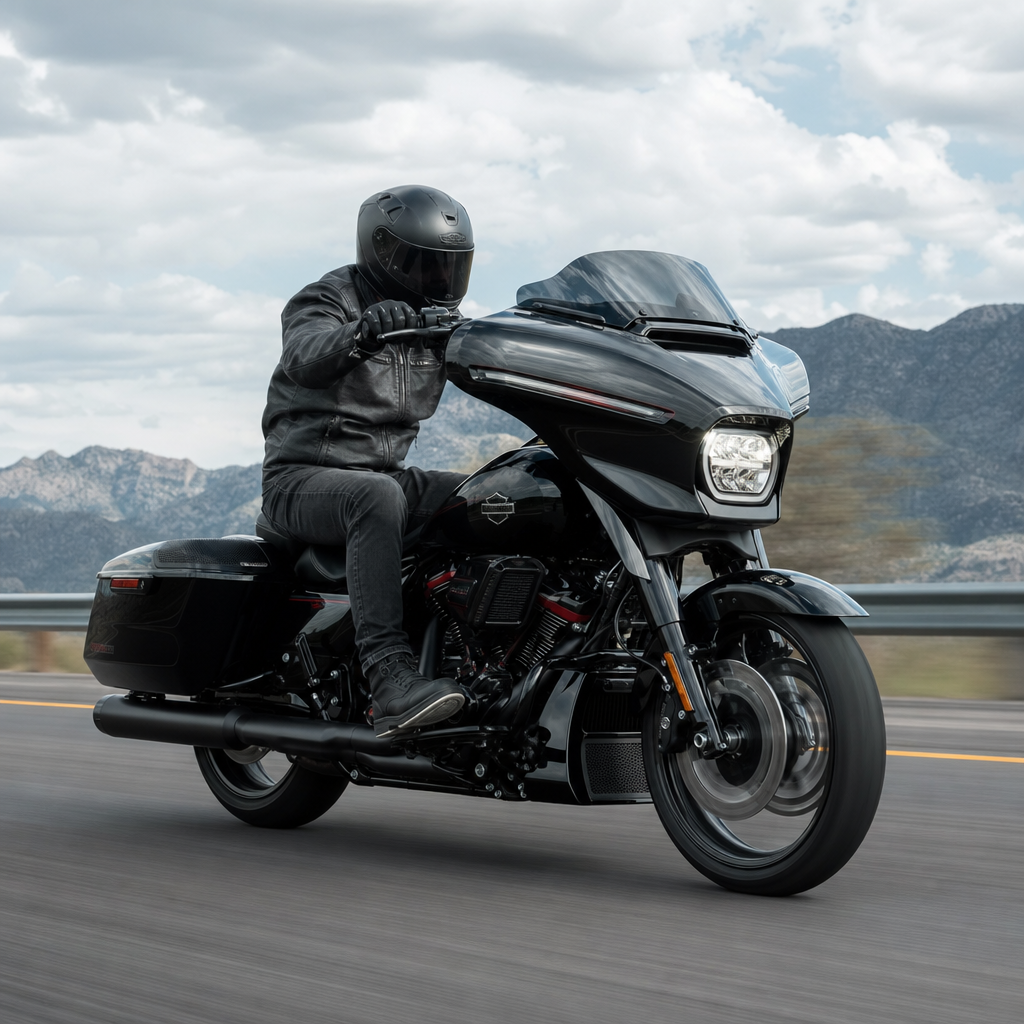
Performance bagger aerodynamics has moved from garage debate to measurable engineering, and the 2026 CVO ST sits at the center of that shift. In this context, aerodynamics means how air flows around a motorcycle and rider, affecting drag, lift, turbulence, cooling, stability, and rider fatigue at real highway speeds. Design theory matters because custom motorcycles are never only about speed; they express cultural identity, regional style, fabrication priorities, and a builder’s philosophy about what a touring V-twin should be. As someone who has spent long days around windshields, fork-mounted fairings, data loggers, and rider feedback sessions, I can say the most interesting question is no longer whether style hurts performance. The better question is which design choices create usable speed without erasing visual character.
This hub article covers the core design languages shaping today’s custom touring scene: Chicano, performance bagger, Frisco, and adjacent hybrids that borrow from club bikes, race setup logic, and show-bike detailing. The 2026 CVO ST provides a practical case study because it combines factory-backed performance intent with aggressive bodywork, premium suspension, integrated touring function, and unmistakable visual theater. That makes it useful for riders comparing custom trends, builders planning fabrication work, and readers looking for a clear explanation of why fairing shape, saddlebag profile, rider triangle, and front-end stance all matter. If you want one page that connects culture, design history, and on-road aerodynamic behavior, this is the hub to bookmark and use as a starting point for deeper build-specific articles.
Why the 2026 CVO ST is the right test case
The CVO ST matters because it represents a modern factory interpretation of the performance bagger formula: big-displacement V-twin power, rigid touring architecture, upscale materials, and bodywork designed to look fast before the bike turns a wheel. Harley-Davidson’s recent CVO and ST development has shown a clear commitment to balancing touring comfort with sharper handling and stronger high-speed composure. On a motorcycle like this, aerodynamics cannot be isolated from chassis geometry, suspension damping, tire profile, or rider position. A fork-mounted fairing may cut cleanly through air at one screen height and create helmet buffeting at another. Saddlebags can reduce wake chaos in one setup and add crosswind sensitivity in another depending on width, trailing edges, and the rider’s leg placement.
Testing at speed means looking beyond top-end bragging rights. Useful aerodynamic evaluation includes rider chest pressure at 70 to 90 mph, helmet turbulence, steering effort in dirty air behind trucks, lean-angle confidence during gusts, and thermal management around the engine and rider’s lower body. In practical terms, the CVO ST is fast enough and substantial enough that every change becomes noticeable. A taller windshield can make a six-hour ride easier yet increase instability when side winds hit broad front surfaces. A lower screen can clean up the bike’s look and reduce frontal area but force more wind onto the rider, increasing fatigue. These are not abstract tradeoffs; they influence how builders spec bars, seats, floorboards, suspension height, and front bodywork for real customers.
Performance bagger design theory in plain terms
Performance bagger design starts with a simple premise: a full-sized American touring motorcycle should corner harder, brake later, accelerate stronger, and stay calmer at speed than traditional dresser expectations suggest. The visual language follows that function. You typically see a fixed or aggressively shaped fairing, stretched but controlled side profile, firm suspension, larger brakes, performance tires, and rider ergonomics that place the torso into cleaner airflow. In my experience, the best performance baggers are not simply slammed show bikes with expensive parts. They are coherent systems. The fairing height matches the rider. The bars maintain elbow bend without turning the rider into a sail. The rear ride height preserves shock travel and swingarm angle. The bags complement wake management rather than just visual mass.
Aerodynamically, the style favors reduced turbulence and stable pressure management over nostalgic silhouette. The sharknose fairing is a good example because it directs air around the cockpit differently than a batwing, often changing how pressure builds at the rider’s shoulders and helmet. Front fender shape, fork-leg exposure, mirror placement, and hand guard design all affect airflow. Even small details matter. A gap between the tank and seat can create low-pressure disturbances around the hips. A badly chosen windshield lip can turn a smooth stream into a pulsing buffet. Riders often describe these effects emotionally, saying a bike feels planted or nervous, but those impressions usually trace back to very physical air-management problems or solutions.
How Chicano style approaches proportion and motion
Chicano motorcycle design is often misunderstood by riders who only see paint, chrome, and extended silhouette. In reality, it is a deeply intentional style language shaped by lowrider culture, neighborhood identity, long-bike elegance, and a strong sense of motion even when parked. Hallmarks can include stretched saddlebags, elongated fenders, spoke wheels, chrome accents, molded body transitions, rich metalflake or candy paint, and a lower, longer visual line. The priority is not lap times. It is presence, flow, and cultural continuity. Yet that does not mean aerodynamics are irrelevant. The way parts extend and taper affects drag, side area, and wake shape, especially at freeway speed where these bikes actually spend most of their miles.
From a functional standpoint, Chicano builds often trade absolute agility for visual proportion and highway grace. A longer front end or lower stance can change weight transfer and steering response. Taller ape hangers may increase rider exposure to the wind and create a larger frontal profile, but they also reposition the rider in a way that many owners consider essential to the bike’s attitude. Extended bags and fenders can visually smooth the bike’s tail, sometimes helping airflow detach more cleanly than boxier stock edges, though the gains are rarely the point. The design theory says beauty, identity, and cruising ritual come first. Smart builders today respect that while still using modern suspension tuning, hidden cooling upgrades, and cleaner body fitment to avoid making the bike slower, hotter, or less stable than it needs to be.
Frisco style and the anti-fairing aesthetic
Frisco style comes from a different instinct. It is leaner, more stripped, and more confrontational, with roots in San Francisco custom culture, narrow tanks, higher stance, minimal bodywork, and a motorcycle-first attitude that rejects excess touring bulk. In traditional Frisco thinking, the bike is exposed machinery, not an aerodynamic shell. Mid-height or tall bars, small tanks, solo seating, and minimal windscreens push the rider directly into the air. At speed, that creates obvious aerodynamic penalties, but it also reinforces the style’s raw honesty. Nothing hides the relationship between rider, chassis, and road.
Modern builders often borrow Frisco cues without accepting all the original compromises. A performance-minded touring build may use a tighter tank line, simplified side profile, or taller bar setup inspired by Frisco bikes while retaining a functional fairing and hard bags. That hybridization matters because it shows how custom culture evolves. Riders want emotional clarity and visual toughness, but they also want to ride four hundred miles in crosswinds without feeling beaten up. The lesson from Frisco style is not that aerodynamics are unimportant. It is that design should reveal the bike’s intent. If a machine is built to punch cleanly through air at speed, its components should say so as clearly as an exposed narrow-glide chopper says something entirely different.
Testing the CVO ST at speed: what actually changes airflow
When evaluating the 2026 CVO ST, I would focus on repeatable, rider-centered variables rather than marketing claims. The key test zones are windshield height, fairing pressure distribution, hand and shoulder protection, bag-side wake behavior, and crosswind response with a fully loaded versus lightly loaded chassis. Real testing starts with baseline passes at steady speeds, usually 60, 75, and 90 mph, followed by passing maneuvers, truck-wash exposure, and rider posture changes. We look for pressure on the sternum, helmet shake, wind roar, and how much correction the rider needs at the bars. Instruments help, but skilled rider notes remain valuable because buffeting often shows up in the body before it appears clearly in simple telemetry.
| Variable | What to Observe | Likely Effect on the Rider |
|---|---|---|
| Windshield height | Helmet turbulence, chest pressure, noise level | More protection if correct, more buffeting if too tall or too short |
| Fairing shape | Shoulder airflow, steering stability, pressure pocket | Better calm air pocket or increased side-wind sensitivity |
| Handlebar position | Elbow spread, torso angle, hand exposure | Comfort gain or larger frontal area and fatigue |
| Saddlebag profile | Wake cleanliness, rear stability, passing-truck behavior | Smoother tail airflow or more drag and push-pull motion |
| Ride height | Pitch attitude, front loading, gust response | Sharper feel with proper balance, instability if geometry is off |
One consistent finding across performance bagger testing is that the rider is a major aerodynamic component. Move the torso one inch higher with a different seat foam or bar rise, and airflow can shift from smooth to exhausting. That is why no fairing should be judged in isolation. The CVO ST may be highly refined in stock form, but custom owners immediately add bars, seats, different screens, engine guards, highway pegs, mirrors, and audio accessories. Each part changes the flow field. A practical builder tests combinations, not single catalog pieces, and aims for a setup that remains composed in the 70 to 95 mph range where real interstate touring happens.
Where custom culture and fabrication technology now meet
The most important change in the new generation of builders is that style decisions are increasingly informed by fabrication technology and test-minded thinking. CAD modeling, CNC brackets, 3D-printed prototypes, laser-cut mounts, and better composite layup methods allow builders to refine bodywork with tighter tolerances than earlier custom eras could manage affordably. Better fitment is not just cosmetic. Panel gaps, edge alignment, and surface continuity all influence airflow. A hand-built saddlebag lid that sits slightly proud can whistle or disturb the wake. A cleanly molded side cover transition can reduce turbulence and improve perceived quality at the same time.
This is where the subtopic of design theory becomes larger than any one bike. Chicano builders are integrating hidden audio, improved cooling, and stronger bag supports without losing period-correct visual grace. Performance bagger shops are using race-derived suspension data, brake upgrades from brands like Brembo, and tuning tools such as Dynojet Power Vision while paying closer attention to fairing and screen combinations. Builders influenced by Frisco minimalism are applying cleaner wiring, stronger mounting systems, and precision-machined controls so a stripped bike still functions reliably. The new guard understands that fabrication is not decoration. It is the discipline that lets cultural style survive contact with modern speed, traffic, and rider expectations.
Choosing the right design direction for a real rider
If you are deciding between Chicano, performance bagger, Frisco, or a blended build, start with use case before paint and wheel choice. A rider doing long freeway miles at 80 mph with luggage and a passenger needs stability, wind management, cooling control, and suspension travel more than dramatic silhouette alone. A city-focused rider who values line, chrome, and boulevard presence may accept higher drag or slower steering as part of the bike’s identity. There is no universal best style. There is only alignment between purpose, body size, roads, climate, and aesthetic priorities.
For most riders, the 2026 CVO ST points toward a smart middle path. It proves a big American touring platform can look premium, carry cultural weight, and still reward disciplined aerodynamic thinking. The takeaway for this design hub is simple: style families matter because they encode different beliefs about motion, visibility, comfort, and pride of ownership. Understanding those beliefs helps you build better and buy smarter. Use this page as your starting point, then explore deeper guides on fairings, bag design, rider ergonomics, fabrication methods, and regional custom influences before you commit to parts. The right motorcycle is the one whose shape, airflow, and attitude all say the same thing when the speed climbs.
Frequently Asked Questions
What does aerodynamics really mean on a performance bagger like the 2026 CVO ST?
On a performance bagger, aerodynamics is much more than a top-speed talking point. It is the total effect of how air moves around the fairing, front wheel, fork area, fuel tank, side cases, rider’s torso, helmet, and even the passenger space behind the seat. On the 2026 CVO ST, that airflow influences drag, front-end lift, side-to-side stability, wind buffering, cooling efficiency, and how fatigued the rider feels after extended highway miles. In other words, aerodynamics shapes both performance and comfort in a very real, measurable way.
At speed, a motorcycle is constantly negotiating clean air, disturbed air, and pressure changes. If the bike pushes too much air, drag rises and the engine has to work harder. If the airflow separates badly around the fairing or bags, turbulence can build around the helmet and shoulders, creating noise, buffeting, and instability. If pressure distribution is poorly managed at the front of the bike, it can also lighten steering feel or reduce confidence during aggressive riding. Good aerodynamic design tries to reduce those penalties without making the bike feel sterile or disconnected.
That is what makes the current performance bagger conversation so interesting. The 2026 CVO ST represents a category where styling, speed, touring practicality, and brand identity all collide. Builders and riders are no longer just asking whether a bike “cuts through the wind.” They are asking how the fairing shape affects rider pocket calmness, whether the bag design adds yaw sensitivity in crosswinds, how airflow supports engine cooling, and whether the bike remains planted when speeds climb. In that sense, aerodynamics on this platform is not theoretical. It is a functional part of how the motorcycle rides, feels, and communicates its purpose.
Why is aerodynamic testing important for the 2026 CVO ST instead of relying on styling instincts or rider opinion alone?
Styling instincts and rider feedback still matter, especially in a segment where motorcycles are closely tied to personal taste, regional trends, and custom culture. But they are no longer enough on their own, particularly for a machine like the 2026 CVO ST that is expected to deliver real performance at real highway and roll-race speeds. Aerodynamic testing matters because air is often deceptive. A fairing can look fast but create chaotic helmet turbulence. Saddlebags can appear streamlined but increase instability in crosswinds. A windshield that feels fine at 60 mph may become exhausting at 90 mph. Without testing, designers and riders are often reacting to symptoms rather than understanding the root cause.
Modern aerodynamic evaluation can include wind tunnel work, CFD modeling, pressure mapping, on-road data logging, tuft testing, and rider-reported comfort metrics. Each method answers a different question. CFD can show where flow is separating or accelerating. Wind tunnel work can isolate drag and lift behavior. Real-world testing reveals how the bike behaves in imperfect conditions such as truck wash, gusting crosswinds, lane changes, and rider movement. That combined approach helps engineers distinguish between what looks right, what feels right initially, and what actually performs well over time.
For the 2026 CVO ST, that is especially relevant because performance baggers occupy a unique middle ground. They are not fully faired sport-touring bikes, and they are not stripped naked performance machines either. Their shape includes compromises for comfort, luggage, engine packaging, heat management, and recognizable styling. Testing allows manufacturers and builders to understand those compromises more precisely. Instead of guessing whether a design change helps, they can measure whether it reduces drag, cuts buffeting, improves high-speed composure, or shifts airflow away from the rider’s chest and helmet. That kind of evidence moves the conversation beyond garage mythology and into repeatable engineering.
How do fairings, windscreens, and saddlebags affect high-speed stability on a performance bagger?
These components are central to the way a performance bagger behaves at speed because they define how air first meets the motorcycle and how it leaves the bike after passing the rider. The fairing is usually the biggest aerodynamic influence up front. Its angle, width, venting, and edge contours determine how much air is deflected, where pressure builds, and whether the flow remains attached or breaks into turbulence. A well-shaped fairing can reduce rider strain and help the bike feel settled. A poorly balanced one can create buffeting, wandering, and a sense that the front end is fighting the air instead of slicing through it.
The windscreen then fine-tunes the rider environment. Height, curvature, and rake angle can dramatically change the pressure pocket around the helmet and upper torso. Too short, and the rider may take direct wind blast that increases fatigue. Too tall or incorrectly shaped, and the screen may throw turbulent air right into the helmet, creating noise and head shake. The best setup is rarely about blocking all wind. It is about managing airflow so it stays predictable and less chaotic, especially as speeds increase.
Saddlebags matter more than many riders assume. Because they sit in a critical area behind the rider, they influence wake behavior, side-force sensitivity, and how stable the bike feels when passing through disturbed air. Their outer profile, trailing edges, and relationship to the rear of the bike can either help clean up airflow or add drag and instability. On a machine like the 2026 CVO ST, where style and bagger identity are non-negotiable, the challenge is to preserve that silhouette while reducing the aerodynamic penalties that can come with large rear bodywork. When the fairing, windscreen, and bags work together, the bike feels calmer, more precise, and less tiring to ride fast. When they do not, the rider often senses it immediately as turbulence, steering corrections, and fatigue.
Can better aerodynamics on the 2026 CVO ST improve rider comfort and reduce fatigue, or is it mainly about speed?
It absolutely improves comfort and reduces fatigue, and for many riders that is the more important benefit. Lower drag and better airflow management can contribute to speed, fuel efficiency, and overall performance, but the everyday payoff is often felt in the rider’s neck, shoulders, hands, and concentration level. A motorcycle that produces constant helmet shake, shoulder turbulence, or chest pressure can wear a rider down quickly even if the bike is mechanically strong and visually impressive. Better aerodynamics reduce those invisible stressors.
On the 2026 CVO ST, comfort-related aerodynamic gains would likely show up in several ways. First, smoother airflow around the helmet can reduce noise and buffeting, which helps lower mental fatigue on long rides. Second, a better pressure pocket around the torso can reduce how much the rider has to brace against the bars at highway speed. Third, improved side-wind behavior can make the bike feel less demanding in open-road conditions, especially on interstates, bridges, or exposed rural routes. Even small reductions in turbulence can make a major difference after an hour or two in the saddle.
There is also an important confidence factor. A bike that feels composed in the wind allows the rider to focus on line choice, traffic, braking zones, and throttle control instead of constantly correcting for instability. That matters on spirited rides just as much as on long-distance trips. In the performance bagger world, the ideal aerodynamic setup is not one that isolates the rider from all airflow. It is one that delivers useful wind protection, preserves feedback, and minimizes the kind of chaotic air that drains energy. So while aerodynamics can certainly help the CVO ST go faster or work more efficiently, its value is just as much about making speed sustainable and enjoyable.
How does aerodynamics fit into custom motorcycle culture when builders care just as much about style, identity, and fabrication philosophy?
That is one of the most compelling parts of the performance bagger movement. In custom motorcycle culture, design is never only functional. A fairing line, a bag shape, a stance choice, or a handlebar setup can communicate region, taste, riding intent, and allegiance to a certain school of building. For many builders, the motorcycle is a rolling statement of identity as much as a machine. That means aerodynamics cannot be treated as a purely clinical exercise where every shape is optimized with no regard for character. On a bike like the 2026 CVO ST, the real challenge is blending measurable performance with a visual language riders actually connect with.
That does not mean style and aerodynamics are in conflict. In fact, the category is evolving because more builders and riders now see aerodynamic function as another layer of craftsmanship. A well-executed fairing is not just attractive; it also manages airflow intelligently. A bag design is not only sleek; it also affects wake control and stability. A windshield is not merely a styling cue; it changes rider comfort and high-speed behavior. When those parts are developed thoughtfully, aerodynamic refinement becomes part of the builder’s philosophy rather than a compromise forced onto the bike.
For the 2026 CVO ST, this matters because it sits at the intersection of factory engineering and custom influence. It reflects a market where riders want the emotional impact of a bold, unmistakable bagger silhouette, but they also expect evidence-based improvements in stability, cooling, and rider comfort. That is why aerodynamic testing has become so relevant. It gives builders, tuners, and riders a more