Harley-Davidson’s Custom Vehicle Operations line has always been the company’s clearest statement about where premium American cruisers are headed, which makes a 2027 CVO roadmap worth examining now rather than after the launches arrive. In Harley language, CVO stands for Custom Vehicle Operations, the factory skunkworks that builds limited-production motorcycles with top-tier finishes, larger-displacement Milwaukee-Eight engines, upgraded electronics, exclusive paint, and parts that often preview changes later seen across the touring and cruiser range. For riders shopping the broader American cruisers category, CVO models matter beyond their price tags because they influence styling, feature adoption, dealer demand, and resale values throughout the market. I have tracked Harley model cycles through dealer ordering windows, emissions filings, supplier patterns, and launch timing for years, and the same pattern repeats: the expensive specials reveal the company’s next priorities before standard bikes do. That is why this page serves as a hub for New Rides coverage in American cruisers. If you want to understand what may happen to Street Glide, Road Glide, Road King, Low Rider, Breakout, touring technology, and premium bagger competition, you start with CVO. The useful question is not simply which paint set appears next, but which platform Harley is most likely to elevate, what hardware it can justify at a premium, and how those decisions respond to Indian, BMW, and even luxury automotive expectations that now shape motorcycle buyers’ assumptions.
Predicting the 2027 CVO lineup requires separating speculation from the signals Harley-Davidson reliably leaves behind. The strongest signals come from three places: recent platform overhauls, the age of current CVO nameplates, and the economics of limited-run manufacturing in York and associated supplier networks. A full redesign usually creates a two-to-three-year window for halo variants, because engineering costs have already been absorbed and premium trim can be added with strong margins. That is exactly what happened when Harley refreshed the touring family with the updated Milwaukee-Eight 121 VVT-powered CVO Street Glide and CVO Road Glide, then broadened the family with the performance-oriented CVO Road Glide ST. Looking toward 2027, the roadmap is less about fantasy and more about probability. Expect Harley to keep leaning into high-margin baggers, selective technology upgrades, and visually dramatic but mechanically rational specials. Expect fewer random one-off customs and more strategically placed flagship releases that support the core touring business. Also expect the American cruiser conversation to widen. Buyers now compare infotainment, rider-assistance systems, adaptive lighting, weight reduction, wheel design, premium audio, connected services, and accessory ecosystems with the same scrutiny once reserved for engine size and chrome. A solid forecast must address all of that. This article does exactly that, while also acting as the central guide for related New Rides coverage across American cruisers, from touring baggers to power cruisers and nostalgic icons.
What the current CVO cycle tells us about 2027
The first rule of predicting future CVO motorcycles is simple: Harley rarely spends flagship money on weak platforms. The strongest candidates are models with broad dealer appeal, healthy accessory attachment rates, and enough bodywork to showcase exclusive finishes and integrated electronics. That immediately favors touring baggers over minimalist cruisers. The current generation already proved the formula. The CVO Street Glide and CVO Road Glide introduced revised styling, a large touchscreen experience, Skyline OS, premium audio, and the Milwaukee-Eight VVT 121 engine in a package that justified six-figure showroom traffic even when buyers ultimately purchased lower trims. In practical retail terms, these bikes function as traffic builders and technology showcases. Dealers know that a customer who comes in to see a CVO may leave on a Street Glide Special equivalent, a Road Glide, or a highly accessorized standard bike. That sales dynamic is one reason Harley keeps CVO tied closely to touring.
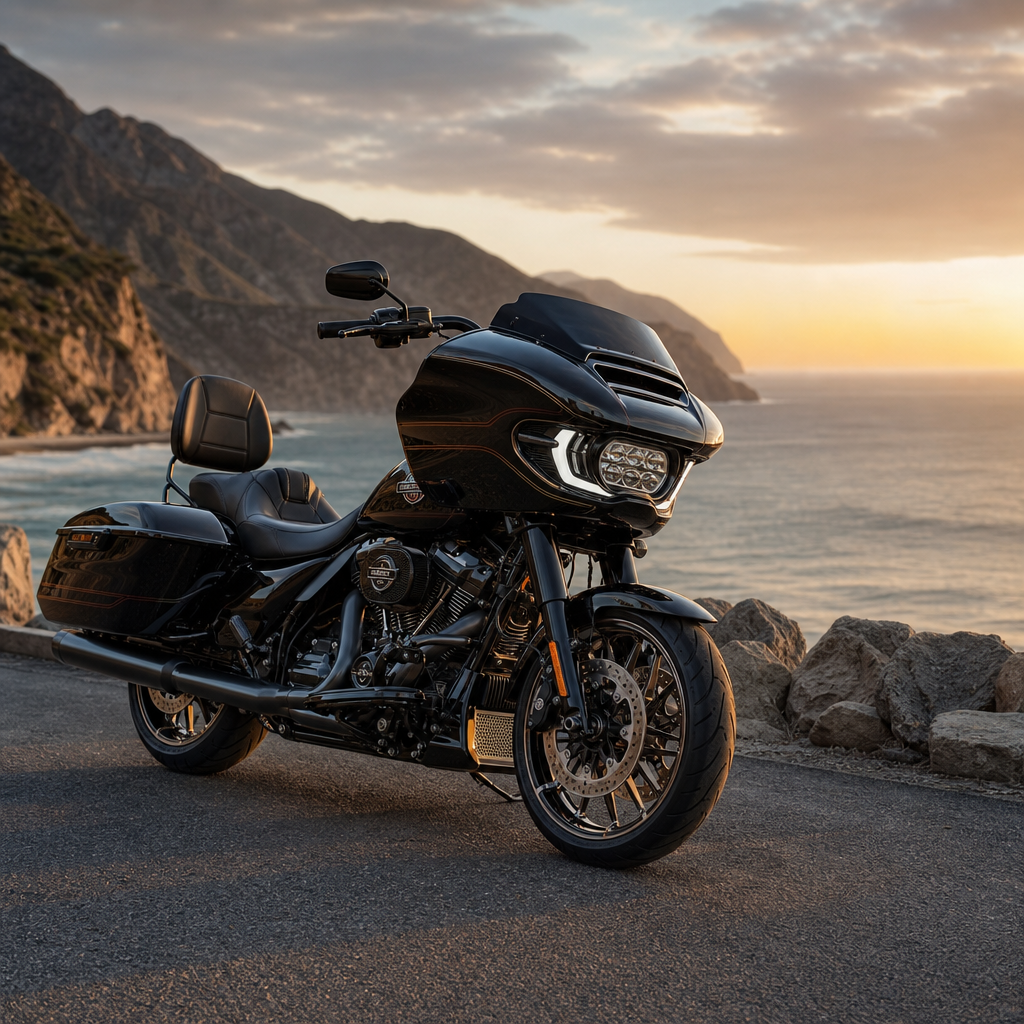
By 2027, the most likely roadmap continues this logic. A refreshed CVO Road Glide remains the safest bet because sharknose baggers dominate premium touring demand. The Road Glide platform performs especially well among long-distance riders who value fairing-mounted wind protection and stability. Harley also understands that customizers start with Road Glides because the silhouette supports aggressive paint, larger front wheels, and audio builds. A CVO Street Glide is nearly as likely, but its role may shift slightly toward luxury and design leadership while the Road Glide side carries more performance messaging. That distinction has already started to emerge. If Harley wants a three-bike CVO touring family again, the third slot could rotate between an ST model, a luxury variant with top-case touring intent, or a nostalgia-driven model that borrows CVO finishes without a full redesign. The pattern to watch is not whether Harley can build another expensive bagger; it is whether each CVO has a clear personality buyers can explain in one sentence.
The most likely 2027 CVO releases
Based on platform age, market demand, and Harley’s recent product strategy, three release paths stand above the rest. First is a 2027 CVO Road Glide that further refines aerodynamics, rider-assistance calibration, and display integration while retaining the 121 VVT architecture or a mildly evolved version of it. Second is a 2027 CVO Street Glide aimed at riders who want premium finish and audio-first luxury in a batwing package. Third is either a CVO Road Glide ST continuation or a new performance-touring CVO that blends blacked-out styling, lighter components, and a more focused suspension tune. The reason this third bike matters is competitive pressure. Indian’s Challenger Elite and Pursuit family proved there is real demand for factory-backed performance baggers that look custom but ride with sharper intent.
| Model candidate | Probability for 2027 | Why it makes sense | Main risk |
|---|---|---|---|
| CVO Road Glide | Very high | Strong bagger demand, clear flagship role, broad accessory appeal | Price ceiling if content gains are modest |
| CVO Street Glide | High | Luxury positioning, iconic batwing identity, premium audio showcase | Overlap with heavily optioned standard Street Glide |
| CVO Road Glide ST or equivalent | Moderate to high | Supports performance message and motorsports-inspired branding | Narrower audience than classic CVO touring buyers |
| CVO Road King revival | Moderate | Strong nostalgia, visual simplicity, collector appeal | Less bodywork limits premium tech storytelling |
| CVO Low Rider or Breakout variant | Low to moderate | Could broaden American cruiser reach beyond baggers | Lower margins and less room for integrated tech |
A CVO Road King revival is the dark horse. It would fit Harley’s heritage narrative and could arrive as a limited anniversary-style release with premium paint, forged wheels, a detachable touring setup, and the 121 engine. Enthusiasts would love it, and collectors would move quickly, but Road King bodywork gives Harley less space for the integrated screens, speakers, and aerodynamic story that now help justify CVO pricing. That makes it emotionally attractive but financially less certain. A CVO based on the Low Rider ST, Breakout, or another softail-derived platform is possible, especially if Harley wants this American cruisers hub to feel broader than baggers alone, yet those motorcycles are more likely to receive premium special editions than full CVO treatment. In Harley’s current business, touring remains the easiest place to defend a premium.
Technology and design features Harley is likely to add
If 2027 CVO models arrive as expected, the biggest changes will likely be refinement rather than reinvention. Harley has already moved to variable valve timing on the Milwaukee-Eight 121 in flagship touring applications, so the next step is improving how that engine feels across heat management, low-speed fueling, and ride-mode integration. Owners spending CVO money notice calibration details. They care whether throttle response in Rain mode is smooth in traffic, whether cylinder deactivation feels intrusive in summer commuting, and whether fan strategies and fairing venting keep heat away from the rider’s legs. Harley has improved these areas, but there is still room to sharpen the experience.
Electronics will matter even more. Expect a larger emphasis on software stability, faster touchscreen response, and better phone pairing because premium buyers compare motorcycles with modern cars. Skyline OS needs to feel reliable every day, not merely impressive on launch day. Navigation performance, glove-friendly controls, over-the-air update capability, and audio tuning by known suppliers such as Rockford Fosgate all support a premium story that riders can actually experience. Safety technology is another likely growth area. Harley’s Rider Safety Enhancements suite already includes cornering ABS, traction control, drag-torque slip control, hill hold, and tire pressure monitoring on many premium models. By 2027, refinements in sensor integration, warning logic, and user customization are more realistic than radical self-balancing gimmicks. Better adaptive or matrix-style lighting would also fit the premium touring brief.
Design changes will probably be more disciplined than some fans expect. Harley has learned that CVO buyers want exclusivity, but they still want a motorcycle that looks unmistakably like a Harley-Davidson. That means bolder paint layering, contrast-cut wheel options, machined details, textured inserts, integrated lighting, and cleaner cable management rather than futuristic bodywork for its own sake. The likely visual trend is premium dark finishes with selective bright accents, not a return to full chrome dominance. Premium paint technology also matters here. Harley’s layered finishes, fade effects, and hand-applied detailing help justify CVO premiums because customers can see the cost in daylight. In a showroom, that matters more than an abstract specification sheet.
How competition in American cruisers shapes the roadmap
No CVO forecast is credible without looking at rivals. Indian Motorcycle is the most direct pressure point because it competes for the same emotionally invested buyer who wants a premium American V-twin with strong factory backing. The Challenger and Pursuit families pushed liquid-cooled performance, frame-mounted fairings, and modern infotainment deeper into the conversation. Limited and Elite trims demonstrated that buyers will pay for upscale paint and equipment when the motorcycle feels genuinely distinct. Harley’s response has not been to copy Indian outright, but to double down on its own strengths: stronger brand heritage, deeper customization culture, and unmistakable styling continuity. A 2027 CVO lineup will continue that approach, emphasizing design authority and brand identity while quietly improving measurable performance.
BMW and even Honda affect expectations too, especially in touring technology. Riders cross-shop in ways purists often ignore. Someone considering a CVO Road Glide may also look at a BMW K 1600 Grand America for long-distance refinement or a Honda Gold Wing Tour for comfort, electronics, and passenger amenities. That does not mean those brands compete directly on image, but they set standards for switchgear quality, wind management, luggage usability, and software polish. Harley knows this. When CVO models improve displays, charging options, rider-passenger ergonomics, and suspension tuning, they are not only responding to American cruiser rivals. They are responding to the broader premium touring market where inconvenience is far less acceptable at this price point.
That competitive context also explains why 2027 is unlikely to bring a flood of experimental CVOs. Harley needs products that sell cleanly, support financing, and create confidence in the premium end of the lineup. In uncertain economic cycles, halo models must be aspirational but understandable. A refined Road Glide-based flagship, a luxury Street Glide-based counterpart, and a performance-focused third option all meet that standard better than a risky niche cruiser does.
What buyers should watch before official announcements
Riders who want to anticipate 2027 CVO releases should track a few practical indicators. First, watch Harley’s annual dealer meeting cycle and model-year timing. Premium bikes are often signaled by accessory catalog updates, new wheel families, audio partnerships, and parts homologation well before the public reveal. Second, follow emissions certification databases and parts fiches. They rarely provide full confirmation, but engine codes, calibration references, or new trim identifiers can narrow the field. Third, pay attention to which standard models receive fresh colors, minor feature tweaks, or carryover treatment in 2026. A mostly carryover year often sets up a stronger premium reveal the following season.
From a buying standpoint, waiting for a 2027 CVO only makes sense if you truly want the flagship package. If your priorities are touring comfort, strong performance, and personalization, a standard Road Glide or Street Glide with selected accessories may deliver better value. That is a point I make regularly after riding premium specials and comparing ownership costs. CVOs are best understood as complete statements. You buy them because you want the paint, the exclusivity, the integrated feature set, and the collector cachet in one factory-backed motorcycle. If you plan to change bars, wheels, seat, and audio immediately, the math often points elsewhere.
For enthusiasts following this American cruisers hub, the broader takeaway is clear. The 2027 CVO roadmap will likely reinforce, not redefine, Harley-Davidson’s direction. Touring baggers should remain at the center. The Road Glide is the strongest candidate for continued flagship status. The Street Glide should remain the style-and-luxury counterweight. A third CVO will probably carry a sharper performance or heritage angle, depending on market conditions and how strongly Harley wants to challenge Indian’s premium offerings. Across all of them, expect meaningful gains in software polish, rider-assistance refinement, paint sophistication, and premium component integration rather than radical platform upheaval.
That is good news for buyers because the best Harley-Davidson CVO motorcycles succeed when they evolve proven platforms instead of chasing novelty. They preserve the core appeal of American cruisers—big V-twin character, road-trip comfort, and unmistakable presence—while raising fit, finish, and technology to modern premium standards. Use this page as your starting point for New Rides research across the American cruisers segment, then compare the likely CVO developments against standard Harley baggers, Indian’s top trims, and any premium special editions that emerge before 2027. If you are planning your next bike, start tracking model-cycle signals now, define which features truly matter to your riding, and be ready when Harley’s next custom releases move from forecast to showroom reality.
Frequently Asked Questions
What is Harley-Davidson’s CVO program, and why does it matter when predicting the 2027 lineup?
Harley-Davidson’s CVO, or Custom Vehicle Operations, program is the brand’s factory-led premium division, created to build limited-production motorcycles that showcase the highest level of finish, technology, performance, and exclusivity available in the company’s lineup. In practical terms, a CVO model is usually more than a cosmetic upgrade. It often arrives with a larger-displacement Milwaukee-Eight engine, premium paintwork, exclusive trim, upgraded infotainment and rider-assistance features, refined suspension and braking components, and styling cues that frequently hint at where the broader Harley-Davidson range may be heading next.
That is exactly why the CVO program matters when discussing a 2027 roadmap. CVO bikes have historically served as Harley-Davidson’s clearest statement about future priorities in the premium American cruiser and touring space. If Harley is testing new design language, introducing a more advanced electronics suite, reworking ergonomics for long-distance comfort, or pushing a more powerful version of the Milwaukee-Eight platform, CVO is often where those changes appear first. That makes the lineup especially useful for forecasting.
Looking toward 2027, the CVO range should be viewed as both a halo product family and a strategic indicator. It can reveal how Harley-Davidson intends to balance tradition with modernization, how aggressively it wants to compete on luxury and performance, and which models it believes deserve the most attention from high-end buyers. For anyone trying to predict what is next, CVO is not just another trim level. It is Harley-Davidson’s premium roadmap in motorcycle form.
Which Harley-Davidson models are the most likely candidates for 2027 CVO treatment?
The strongest candidates are the models that already sit at the center of Harley-Davidson’s premium touring and performance-cruiser identity. That usually means the Street Glide and Road Glide remain near the top of the list, simply because they are the brand’s most visible bagger platforms and have become natural homes for CVO treatment. These motorcycles give Harley the broadest canvas for showcasing premium paint, advanced infotainment, large-displacement engines, aerodynamic refinements, audio upgrades, and comfort-focused touring enhancements. If Harley-Davidson wants to make a high-impact statement in 2027, a CVO Road Glide and CVO Street Glide would be logical anchors.
Beyond those staples, a CVO Road King or a more touring-focused Grand American variant is always plausible if Harley sees value in expanding luxury appeal beyond the fully faired bagger crowd. A CVO Road King, in particular, would speak to riders who want traditional styling paired with modern power and upscale factory finishing. It would also let Harley capitalize on a model name with deep brand recognition while giving it a fresh premium identity.
There is also room for performance-oriented possibilities. Harley-Davidson has increasingly leaned into the idea that custom and performance can coexist, so a 2027 CVO roadmap could include a limited-production cruiser or bagger aimed at riders who want more aggressive handling, sharper component upgrades, and stronger visual differentiation. Whether that takes the form of a highly specialized Low Rider-based machine, a performance bagger evolution, or a continuation of one of the company’s special project themes, the key point is this: Harley’s likely CVO candidates will be the models that best combine prestige, profit potential, and visibility within the lineup.
What kinds of upgrades should riders expect if Harley-Davidson launches new 2027 CVO motorcycles?
Buyers should expect a familiar CVO formula, but likely executed with even more emphasis on integrated luxury and technology. Engine upgrades will almost certainly remain central. That could mean a higher-output version of the Milwaukee-Eight platform, revised tuning for improved torque delivery, better heat management, and refinements that make the bike feel stronger without losing the relaxed character expected from a premium Harley-Davidson touring or cruiser model. Harley tends to use CVO as a platform for its most desirable factory powertrain specifications, so performance gains are among the safest predictions.
Electronics will probably be another major area of advancement. By 2027, riders should reasonably expect highly developed rider-assistance systems, selectable ride modes, improved traction control, cornering-aware safety features, more advanced connectivity, and a polished infotainment experience with better interface speed and usability. Harley-Davidson has already shown that premium buyers expect technology to feel seamlessly integrated rather than added as an afterthought, so future CVO releases will need to feel sophisticated from the dashboard to the handlebar controls.
Chassis and comfort refinements are also likely. Expect upgraded suspension components, stronger braking hardware, premium seat materials, improved wind management, and ergonomics tuned for both long-distance travel and everyday usability. Then there is the visual side, which is always essential in CVO. Exclusive paint schemes, special finishes, precision detailing, unique wheel designs, and model-specific trim will remain a defining part of the package. In short, 2027 CVO motorcycles will probably be judged not by one standout feature, but by how convincingly Harley-Davidson combines performance, craftsmanship, technology, and exclusivity into a cohesive flagship product.
Will the 2027 CVO roadmap focus more on luxury touring, performance, or new technology?
The most realistic answer is that Harley-Davidson will aim for all three, but luxury touring will probably remain the foundation. CVO models have long been strongest when they turn Harley’s touring platforms into rolling showcases for premium comfort, presence, and long-haul capability. That market still matters because it aligns perfectly with buyers willing to spend at the top end of the lineup. Large fairings, integrated luggage, premium audio, heated and comfort-oriented features, and visually dramatic finishes continue to make sense as the core of a CVO strategy.
At the same time, performance will likely play a bigger role than it once did. Harley-Davidson understands that premium buyers increasingly want more than a visually upgraded motorcycle. They want stronger acceleration, improved handling, better braking, and a machine that feels genuinely elevated on the road. That does not necessarily mean Harley will turn every CVO into a sport-oriented model, but it does suggest that future releases will need to feel sharper, more responsive, and more dynamically polished than older luxury-first interpretations of the CVO formula.
Technology may end up being the real differentiator in 2027. As premium motorcycles across the market become more connected and electronically advanced, Harley-Davidson’s CVO lineup will need to justify its price with a clearly modern ownership experience. That includes rider aids, digital integration, interface quality, and features that enhance convenience and confidence without diluting the classic Harley character. So while luxury touring is likely to remain the heart of the roadmap, technology and performance are increasingly becoming the proof that a CVO model is truly next-generation rather than simply high-end.
How accurate can a 2027 Harley-Davidson CVO prediction really be this far in advance?
No prediction can be treated as a confirmed product plan, especially this far ahead, but educated forecasting can still be very useful because Harley-Davidson tends to follow recognizable patterns in how it develops and positions CVO models. The company usually builds CVO releases around platforms with strong brand equity, high visibility, and clear premium appeal. It also tends to use CVO to introduce features, styling themes, and mechanical upgrades that fit broader market trends. By studying the current lineup, Harley’s recent product strategy, buyer demand in the touring and cruiser segments, and the evolution of premium motorcycle technology, it is possible to make informed predictions that go well beyond guesswork.
The key is understanding what CVO has historically represented. It is not random experimentation. It is a curated expression of Harley-Davidson’s most profitable and aspirational ideas. That means the likely 2027 releases will probably stay within a clear zone: flagship touring models, highly visible premium cruisers, larger Milwaukee-Eight engines, richer electronics, distinctive factory customs, and limited-production positioning designed to maintain exclusivity. Even if individual model names or specifications change, the strategy itself is usually consistent enough to analyze.
So while a 2027 roadmap should never be mistaken for an official launch schedule, it can still provide real insight into where Harley-Davidson is likely headed. For enthusiasts, dealers, and potential buyers, the value of the exercise lies less in naming every exact model and more in recognizing the broader direction: more premium content, more sophisticated electronics, more deliberate factory customization, and a continued effort to define what a top-tier American V-twin should look and feel like in the late 2020s.