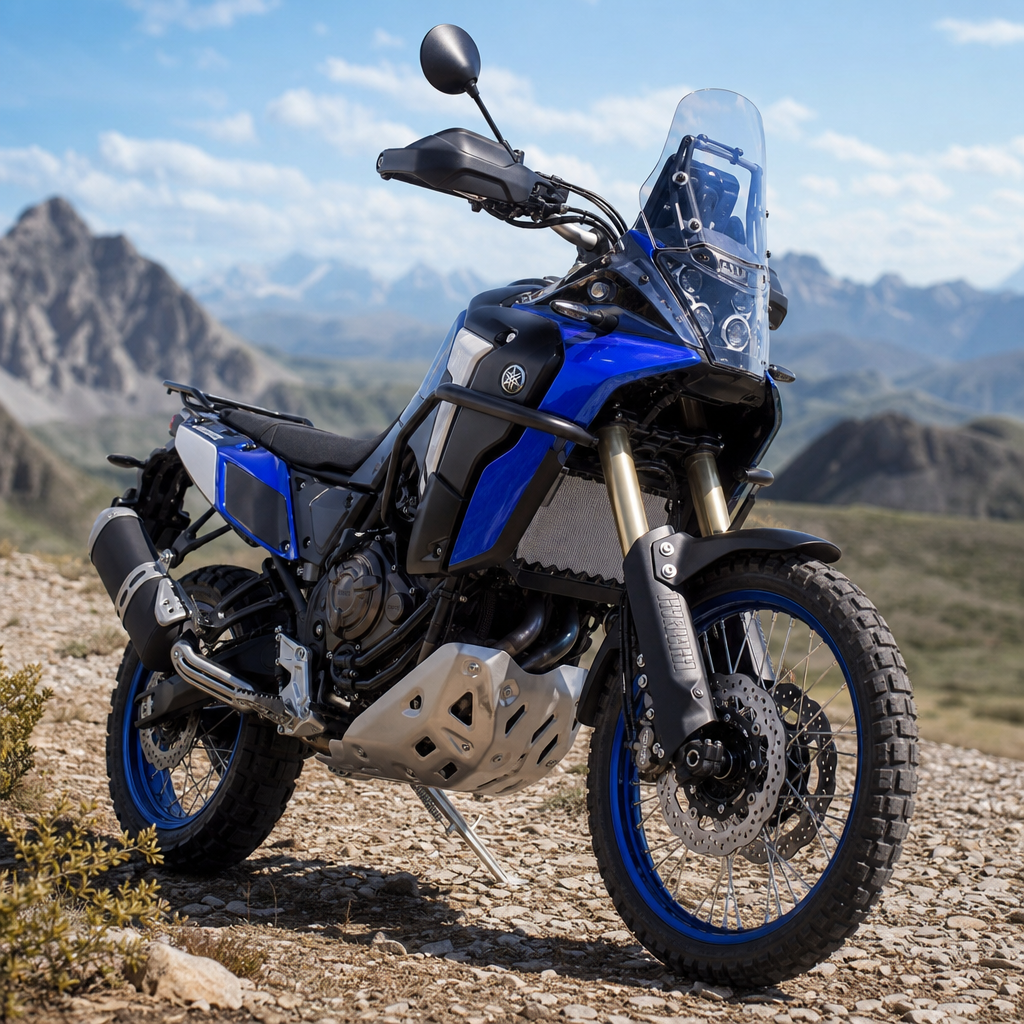
The Yamaha Ténéré 700 World Raid (2026) sits at the center of today’s adventure motorcycle conversation because it promises the range, chassis control, and travel-ready durability riders want, while raising the key question for American buyers: will this version officially reach the US, and in what exact specification? In Yamaha’s adventure lineup, the Ténéré name refers to middleweight dual-sport and travel-focused machines derived from rally principles, and the World Raid badge identifies the long-range, premium variant with larger fuel capacity, upgraded suspension, and equipment aimed at riders covering serious distance on mixed surfaces. For anyone shopping the Adventure & Touring category, this model matters because it represents a practical midpoint between lightweight enduro-biased bikes and heavy liter-class tourers. I have worked with middleweight ADV buyers long enough to see the same pattern repeatedly: riders want one motorcycle that can commute, cross states, handle gravel, and survive rough backcountry travel without becoming intimidating when the pavement ends. That is exactly the space the World Raid targets.
US availability matters as much as the hardware. Yamaha has not always mirrored European adventure offerings in the American market at the same time or with identical trim, and that affects pricing, emissions compliance, dealer ordering, financing, and accessory planning. Full specs matter because the differences that define a good adventure bike are rarely headline numbers alone; they are found in fuel tank shape, suspension stroke, wheel dimensions, electronics logic, service intervals, ergonomic adjustability, and payload. A true hub article for Adventure & Touring has to answer the practical questions riders ask before placing a deposit: how far can it go, how does it compare with rivals, what equipment is likely for the US, what should travelers know before outfitting it, and who is this bike actually for?
Based on Yamaha’s established Ténéré 700 platform and prior World Raid specification, the 2026 Yamaha Ténéré 700 World Raid should continue using the proven 689cc liquid-cooled CP2 parallel twin, a 21-inch front and 18-inch rear wheel set, long-travel suspension, switchable ABS, and a dual side-mounted fuel tank arrangement that lowers carried mass compared with a single tall tank. The open point is official US release timing and exact federalized trim. If Yamaha brings it stateside, it will likely appeal to riders who need genuine off-pavement capability without giving up highway comfort, serviceability, and the reliability reputation that has made the broader Ténéré 700 family one of the most referenced middleweight adventure platforms in recent years.
US availability: what American buyers should expect
As of now, the most responsible answer is this: US availability for the 2026 Yamaha Ténéré 700 World Raid remains dependent on Yamaha Motor USA’s official model-year announcement, but the bike is a credible candidate for release because the base Ténéré 700 has already established demand, dealer familiarity, and regulatory groundwork in America. In practical terms, Yamaha evaluates more than online excitement before approving a variant for the US. The company looks at homologation cost, projected volume, overlap with existing trims, accessory margin, and whether the equipment package aligns with American use patterns. From my experience tracking ADV model launches, premium variants arrive in the US when the manufacturer believes buyers will pay enough above the standard model to justify import complexity and inventory risk.
If Yamaha does launch the 2026 World Raid in the US, expect availability first through larger multi-line dealers with stronger adventure sales, followed by regional spread into established Yamaha stores. Initial supply would likely be tighter than demand, especially in western states where BDR-style travel, desert touring, and long-range mixed-surface riding are common. Riders should also expect any US-spec machine to carry EPA and CARB-compliant calibration, DOT lighting and reflector requirements, and the typical American-market documentation package. That may sound routine, but small specification shifts for compliance can affect weight, fueling feel, charcoal canister packaging, and even accessory fitment around emissions hardware.
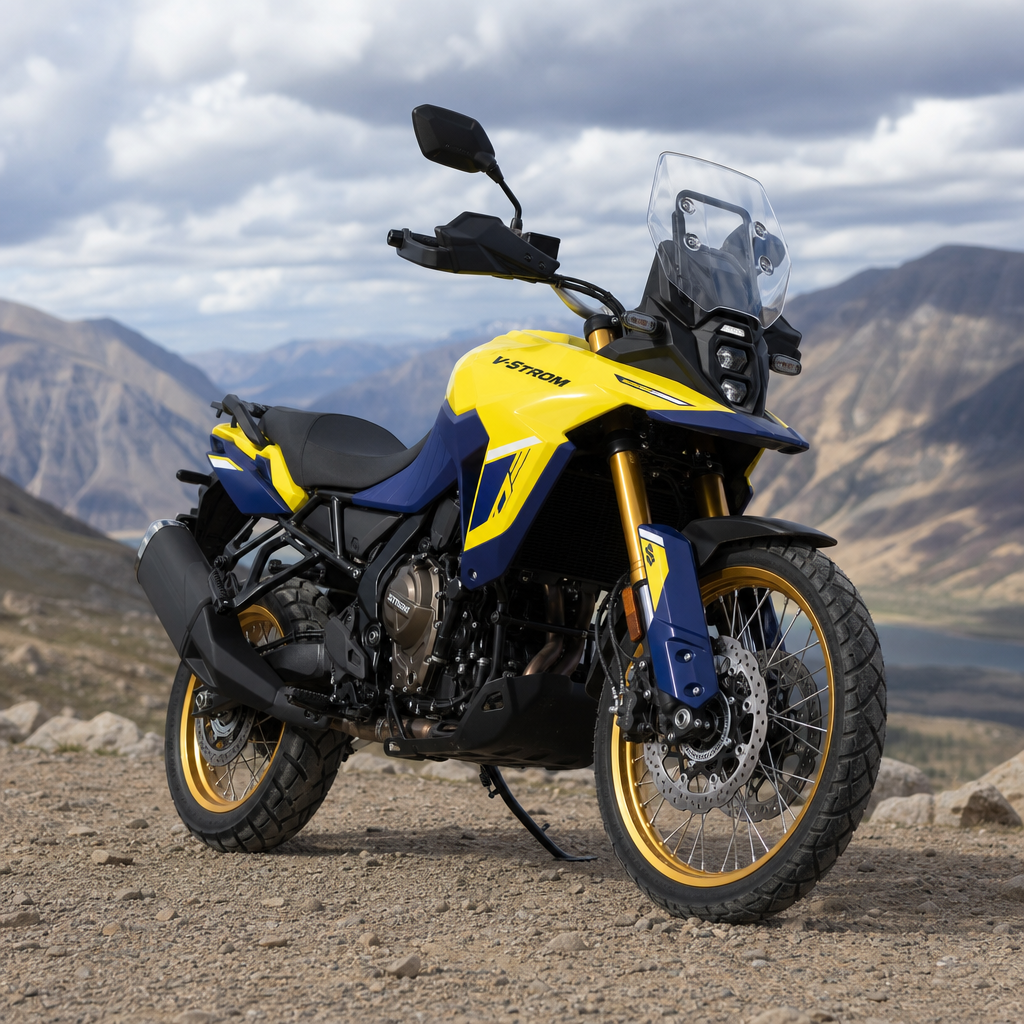
Pricing is the other major question. Historically, a World Raid-grade Ténéré lands above the standard Ténéré 700 by enough to reflect suspension, fuel capacity, display, steering damper, and travel-focused components. In the current middleweight adventure segment, buyers comparing Yamaha with the Aprilia Tuareg 660, KTM 890 Adventure, Suzuki V-Strom 800DE, and Honda Transalp will accept a premium only if the extra equipment clearly supports distance and off-road control. If US MSRP arrives too close to larger-displacement alternatives, buyers begin cross-shopping horsepower and electronics instead of durability and range. Yamaha’s strongest case is straightforward: the World Raid should be priced as the durable long-range specialist, not as a technology arms race bike.
Full specs: engine, chassis, dimensions, and equipment
The foundation of the Yamaha Ténéré 700 World Raid (2026) should remain the CP2 engine, one of the most successful parallel twins in modern motorcycling. This 689cc liquid-cooled DOHC eight-valve twin uses Yamaha’s 270-degree crank layout, which gives it V-twin-like pulse character with a broad, usable torque curve. In real riding, that matters more than peak-output bragging. The CP2 is known for clean low-to-midrange drive, predictable throttle response, and a low maintenance burden compared with more highly stressed engines. On existing applications, output has generally landed around the low-70-horsepower range with torque in the mid-40 lb-ft neighborhood, and that formula suits adventure travel because it pulls well at trail speeds while remaining relaxed on the highway.
The World Raid chassis is where the model separates itself. Expect a steel tube frame paired with a long aluminum swingarm, fully adjustable long-travel suspension, and geometry intended to balance front-end confidence in loose terrain with stable high-speed touring manners. Previous World Raid versions used premium KYB hardware with roughly 230mm front suspension travel and about 220mm rear travel, plus substantial ground clearance for rocky routes. Those numbers matter because this is not cosmetic adventure styling; they give the bike room to absorb washouts, erosion ledges, and loaded travel conditions that can overwhelm softer crossover machines. Tubed spoked wheels in 21-inch front and 18-inch rear sizes remain the most likely fitment, preserving broad tire choice for genuine off-road use.
Fuel capacity is the defining feature. The World Raid has previously used twin side-mounted tanks totaling around 23 liters, or approximately 6.1 US gallons. That is significant in this class. With realistic consumption often hovering in the mid-50 mpg range under mixed riding, riders can see theoretical range figures above 300 miles, though loaded travel, headwinds, sand, aggressive throttle use, and higher highway speeds reduce that. The side-mounted design also changes how the bike carries fuel. By moving volume lower and outboard rather than stacking it high over the frame, Yamaha improves slow-speed balance relative to what a single towering tank of equal capacity could produce.
| Category | Expected 2026 Ténéré 700 World Raid Spec | Why It Matters |
|---|---|---|
| Engine | 689cc CP2 parallel twin, liquid-cooled, 270-degree crank | Strong midrange, proven reliability, manageable power delivery |
| Transmission | 6-speed gearbox, chain final drive | Simple field service and broad gearing versatility |
| Fuel Capacity | Approx. 23 liters / 6.1 US gallons | Long range for remote travel and fewer fuel stops |
| Front Suspension | Fully adjustable KYB fork, about 230mm travel | Better control on rough terrain and with luggage |
| Rear Suspension | Fully adjustable KYB shock, about 220mm travel | Load-carrying support and off-road compliance |
| Wheels | 21-inch front / 18-inch rear spoked wheels | Best tire availability for serious ADV use |
| Brakes | Dual front discs, rear disc, switchable ABS | Essential balance between road safety and dirt flexibility |
| Display | TFT instrumentation with trip and travel data | Improved navigation and ride management |
| Steering | Steering damper likely included | Added stability on fast rough surfaces |
| Seat Height | Expected tall ADV stance, roughly 35 inches | Ground clearance and rider visibility, but not beginner-friendly for all inseams |
Electronics will likely remain intentionally restrained compared with highly digitized rivals. Yamaha’s approach on the Ténéré platform has traditionally prioritized reliability, simplicity, and direct rider control over layered intervention systems. That usually means switchable ABS, clear instrumentation, and practical ride data instead of a deep menu tree of ride modes, adaptive systems, and semi-active suspension. For many long-distance riders, this is a feature, not a missing luxury. Fewer systems can mean fewer failure points in remote travel and less distraction when conditions change quickly. The tradeoff is that riders who prioritize cruise control, advanced traction control, and smartphone-heavy integration may find other bikes more accommodating on paper.
How it fits the Adventure & Touring segment
The 2026 Yamaha Ténéré 700 World Raid belongs in the part of the market where true dual-surface capability still takes priority over showroom spec-sheet inflation. Adventure & Touring is a broad category, but buyers usually fall into three groups. First are pavement-first tourers who occasionally use graded gravel roads. Second are balanced ADV riders who split time between highways, broken backroads, and unpaved routes. Third are off-road-biased travelers who still need a plate, luggage, and real fuel range. The World Raid speaks most directly to the second and third groups. It is not trying to be a luxury touring motorcycle with token ADV styling. It is a travel bike designed around terrain, carrying capacity, and self-sufficiency.
That distinction becomes clear when you compare common ownership scenarios. A rider crossing Nevada, Utah, or sections of the Washington Backcountry Discovery Route values long range, 21/18 wheel sizes, impact-tolerant suspension, and a chassis that still feels composed after repeated hits. A rider mostly touring on pavement with a passenger may prefer a bike with a lower seat, broader rear accommodations, electronic suspension, and stronger wind protection. Neither use case is wrong; they simply demand different solutions. Yamaha has earned loyalty in this category by keeping the Ténéré line honest about its mission. The World Raid extends that philosophy by giving experienced riders more endurance without turning the platform into a heavy, fragile flagship.
This makes the bike an important hub reference for the wider Adventure & Touring subtopic. It sits in the same conversation as route planning, luggage systems, tire choices, protection parts, navigation equipment, and rider training. The World Raid is not just a new motorcycle release; it is a template for how many riders now define a capable travel machine: around 700cc, sub-liter weight expectations, real off-road wheels, practical maintenance access, and enough fuel to skip marginal gas stops. That formula explains why the middleweight ADV class remains the most strategically important battleground in current motorcycle development.
Real-world strengths, limitations, and likely competitors
The biggest real-world strength of the Yamaha Ténéré 700 World Raid is that it solves actual travel problems instead of imaginary ones. Range reduces route anxiety. The CP2 engine reduces ownership stress. Long-travel KYB suspension gives the rider a broader margin for error on rough surfaces, especially when luggage adds mass and momentum. The lower fuel carry from the dual-tank arrangement makes the bike feel less top-heavy than many riders expect from a 6-gallon-class adventure machine. Yamaha’s global parts network is another quiet advantage. When riders travel far from home, dealer density and supply familiarity matter as much as launch-control menus or headline horsepower.
There are limitations, and serious buyers should acknowledge them. Seat height can be intimidating, especially when the bike is fully fueled and loaded. Tubed tires are robust in many ways but can complicate roadside puncture repair compared with tubeless systems. Wind protection is usually functional rather than plush. Passenger comfort may be acceptable for moderate trips yet less ideal than on larger touring-oriented ADV models. The electronics package, while refreshingly simple, may feel sparse to riders coming from bikes with cruise control and sophisticated traction management. None of these are design failures; they are consequences of Yamaha choosing durability, simplicity, and off-pavement geometry over maximum convenience features.
Competitor context is essential. The Aprilia Tuareg 660 offers impressive chassis balance and a richer electronics suite. The KTM 890 Adventure delivers more power and strong off-road credentials, but some buyers still place a premium on Yamaha’s reputation for long-term simplicity. The Suzuki V-Strom 800DE has become a serious contender with a capable parallel twin and ADV-ready wheel sizes, though its personality leans differently in setup and ergonomics. Honda’s XL750 Transalp brings a versatile twin and broad brand appeal, but in stock form it positions itself closer to all-round travel than the World Raid’s more committed rough-route mission. Against this field, the Ténéré 700 World Raid stands out by being purpose-built, mechanically straightforward, and exceptionally range-conscious.
Buying advice for US riders and travelers
If you are waiting for the 2026 Yamaha Ténéré 700 World Raid in the US, the smartest move is to evaluate your use honestly before chasing the first allocation. Riders who spend most of their time on pavement, carry a passenger often, or value electronic convenience above all should also test bikes like the Transalp, V-Strom 800DE, or larger sport-adventure models. Riders planning BDR routes, remote camping loops, western desert travel, and long solo trips with minimal support should keep the World Raid near the top of the list. I always advise buyers to budget beyond MSRP: crash protection, skid plate coverage, better handguards, luggage racks, soft luggage, navigation mounting, and suspension setup for rider weight can change the ownership experience more than a catalog accessory bundle ever will.
Dealer communication matters too. Ask whether the bike is a confirmed US model or a dealer expectation, what deposit terms are refundable, and whether freight, setup, document fees, and accessory installation are itemized in writing. If official US availability is announced, reserve early but insist on an out-the-door price. Also check practical fit: can you manage the seat height on uneven ground, and can you lift the bike loaded? Adventure motorcycles are purchased with imagination, but they are lived with in parking lots, muddy campsites, and gas stations after ten-hour days. The right bike is the one that still feels workable when you are tired, far from home, and dealing with weather or terrain that did not follow the plan.
The Yamaha Ténéré 700 World Raid (2026) matters because it distills what many riders genuinely want from Adventure & Touring: a dependable middleweight platform, meaningful fuel range, proper off-road dimensions, and equipment chosen for function instead of gimmicks. US buyers should watch for Yamaha’s official confirmation, but the expected specification already paints a clear picture of the bike’s role. If it reaches America in near-global trim, it will be one of the most relevant long-range middleweight ADV options on the market. Use this hub as your starting point, compare the details that affect real travel, and shortlist the bike only after matching its strengths to the way you actually ride.
Frequently Asked Questions
Will the 2026 Yamaha Ténéré 700 World Raid officially be available in the United States?
That is the biggest question surrounding the 2026 Yamaha Ténéré 700 World Raid, and at the time most buyers begin researching it, the answer depends on Yamaha’s final North American product plan rather than on the bike’s global existence alone. Yamaha has offered different Ténéré 700 variants in different regions before, and the World Raid name has historically been associated with a more expedition-oriented version aimed at riders who want extended fuel range, upgraded suspension, and additional travel capability over the standard model. For US buyers, that means global press coverage and overseas specification sheets do not automatically confirm a US launch.
If Yamaha does bring the 2026 World Raid to America, the company would typically announce it through Yamaha Motor USA model-year releases, dealer communications, and official homologation details. American riders should watch for signs such as EPA and CARB certification listings, Yamaha USA website updates, dealer allocation information, and official pricing announcements. Until those appear, any claim of guaranteed US availability should be treated cautiously. In practical terms, the World Raid is exactly the kind of machine many American adventure riders have been asking for: a middleweight twin with long-distance range, off-pavement composure, and stronger travel credentials than a base model. That market demand makes a US release plausible, but only Yamaha can confirm whether the 2026 version will be sold here as a regular production motorcycle, arrive in limited numbers, or remain a non-US offering.
What makes the Ténéré 700 World Raid different from the standard Ténéré 700?
The World Raid version is generally understood as the more travel-focused, distance-ready evolution of the standard Ténéré 700 formula. Both bikes are built around Yamaha’s highly regarded middleweight adventure platform, but the World Raid badge signals a machine tuned for riders who want greater self-sufficiency on long routes, more composure over rough surfaces, and stronger support for loaded travel. The biggest distinction is usually fuel capacity. A World Raid model is expected to offer substantially more range than the base Ténéré 700, which matters enormously for western US backcountry riding, BDR routes, remote desert travel, and any trip where fuel stops are unpredictable.
Beyond range, the World Raid specification typically adds more advanced suspension hardware and chassis tuning intended to improve control when the bike is ridden aggressively off-road or loaded down with luggage. Riders also tend to look for upgraded cockpit equipment, enhanced wind protection, and a more expedition-minded electronics interface. In real-world terms, the standard Ténéré 700 is often appreciated for its simplicity and balance, while the World Raid aims to preserve that character but stretch it into a more serious overland tool. If the 2026 US-spec version follows the established World Raid concept, buyers should expect a machine that is less about urban commuting and more about long-haul adventure use, with specifications chosen to support durability, comfort, and confidence far from pavement.
What engine and performance specs are expected for the 2026 Yamaha Ténéré 700 World Raid?
The core expectation is that the 2026 Ténéré 700 World Raid will continue to use Yamaha’s proven CP2 parallel-twin engine architecture, the same basic platform that has made the Ténéré 700 so popular worldwide. This engine family is widely praised because it blends strong low- and midrange torque with reliability, manageable weight, and a character that works well in both technical off-road riding and sustained highway travel. For an adventure bike in this class, outright top-end horsepower is only part of the story. What riders really value is tractable power delivery, good throttle control in loose terrain, and enough flexibility to carry luggage, cruise at speed, and climb difficult surfaces without feeling overstressed.
Final US figures, if the bike is released here, would depend on emissions certification and Yamaha’s exact tuning for the 2026 model year. That could affect claimed horsepower, torque, fueling behavior, exhaust layout, and electronics calibration. Buyers should also pay attention to transmission gearing, clutch specification, ride modes if equipped, traction control strategy if included, and whether cruise control appears in the final spec. Those details can materially shape how the motorcycle feels on long trips. A World Raid version is expected to emphasize usable, real-world performance rather than headline numbers. In other words, the important spec sheet items are likely to be broad torque delivery, predictable throttle response, durable cooling and intake packaging, and a setup that remains dependable in heat, dust, altitude, and long-distance riding conditions.
What chassis, suspension, and fuel-range features are likely to define the 2026 World Raid?
The World Raid identity is strongly tied to chassis confidence and long-range practicality. Riders typically expect a larger-capacity fuel system, and that is one of the model’s most meaningful differences because it directly changes trip planning. More fuel capacity means fewer stops, more route flexibility, and greater reassurance in remote regions where fuel stations may be sparse or unreliable. On an adventure motorcycle, that is not just a convenience feature; it is part of the bike’s mission. A World Raid model is also likely to prioritize quality suspension with increased adjustability, helping the bike handle washboard roads, embedded rocks, luggage weight, and changing terrain more effectively than a simpler setup.
Suspension travel, damping control, wheel sizes, ground clearance, seat height, and curb weight all matter here, and buyers should evaluate them together rather than in isolation. A bike can offer impressive suspension components, but if it becomes too tall or too heavy for the intended rider, the advantages may not translate into better real-world confidence. The likely appeal of the 2026 Ténéré 700 World Raid is that it should aim for a middle ground: robust enough for serious off-pavement travel, but not so large or intimidating that it leaves the accessible middleweight category. Other important expected features include a rally-style standing riding position, skid-plate-ready lower protection, luggage-friendly rear structure, and ergonomics designed for all-day travel. In short, the chassis package is expected to be one of the World Raid’s strongest selling points, especially for riders who care more about control and endurance than luxury-bike bulk.
What should US buyers look for in the full specs before deciding whether the 2026 Ténéré 700 World Raid is worth waiting for?
For American buyers, the smartest approach is to go beyond the headline name and study the actual US-market specification line by line. Start with the essentials: official availability, MSRP, destination charges, release timing, and whether dealers are receiving meaningful inventory or only limited allocations. Then move to the performance and chassis fundamentals that affect ownership every day: fuel capacity, wet weight, seat height, suspension travel, wheel and tire sizes, load capacity, and electronic rider aids. These numbers tell you whether the bike is truly configured for US adventure use or simply marketed that way. A World Raid model can sound ideal on paper, but if pricing rises sharply or the weight and seat height grow beyond what a rider can comfortably manage, the value equation changes.
It is also worth looking closely at maintenance intervals, accessory support, subframe and luggage compatibility, wind protection, navigation or display functionality, and whether Yamaha includes practical touring features rather than requiring expensive add-ons. For many riders, the real deciding factors will not be peak power or branding, but the combination of range, comfort, reliability, and total cost to prepare the bike for travel. If Yamaha delivers the 2026 Ténéré 700 World Raid to the US with competitive pricing, proven CP2 durability, substantial fuel range, quality suspension, and thoughtful adventure-ready details, it could be one of the most compelling middleweight ADV options on the market. If key features are omitted or pricing overlaps too closely with larger, more premium alternatives, some buyers may decide the standard Ténéré 700 or a competing model makes more sense.